The first Robot Intelligent Perception Summit was held in Beijing, and Kingkong Technology officially launched its three-encoder products with great fanfare.
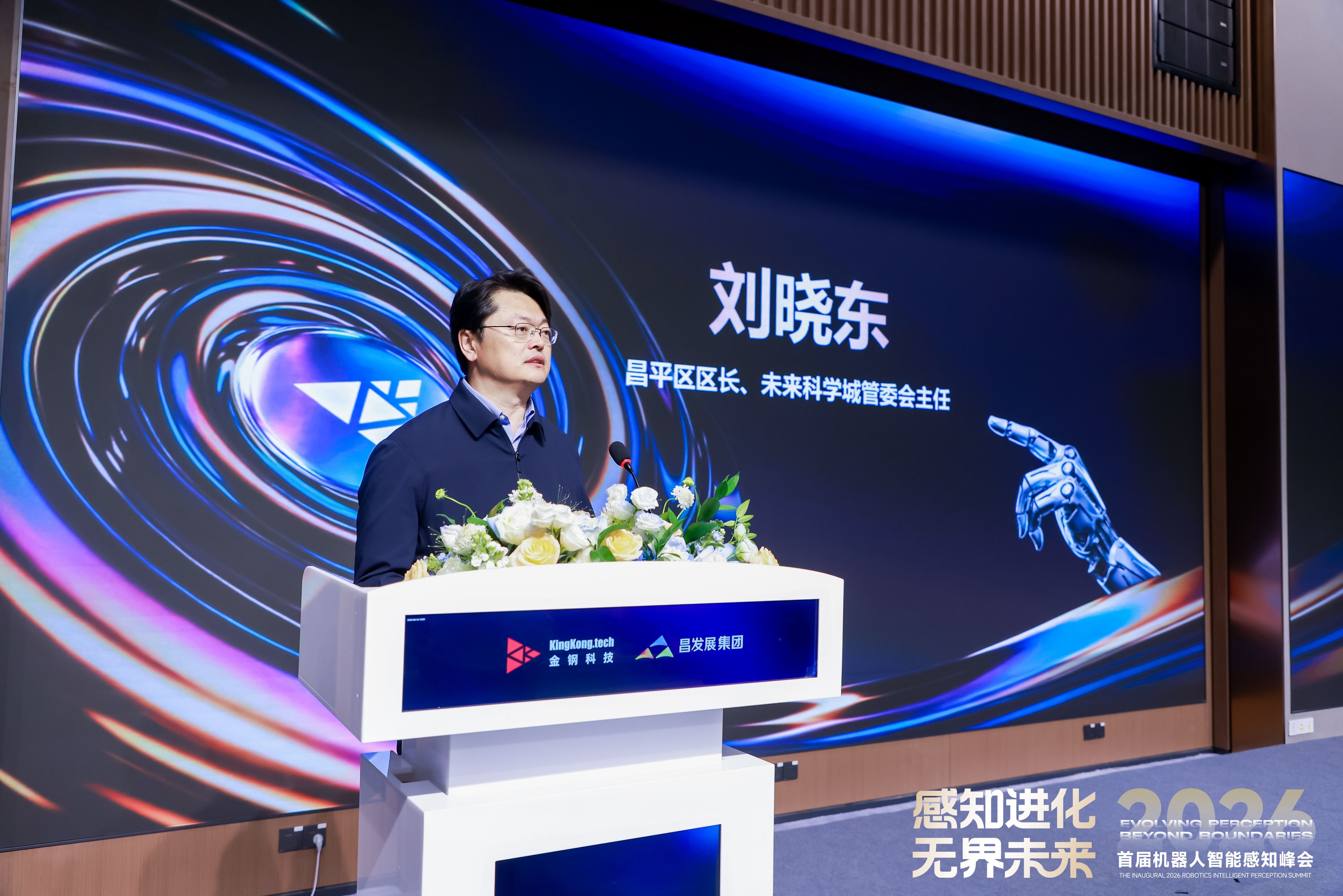
On June 16, 2026, the 1st Robot Intelligent Sensing Summit in 2026, jointly hosted by Beijing Jingang Technology Co., Ltd. and Beijing Changping Science Park Development Group Co., Ltd., was grandly held in Changping District, Beijing. More than 150 professionals in the sensing industry, including those from artificial intelligence enterprises, scientific research institutions, universities, industry associations, and investment institutions, participated in the summit. Liu Xiaodong, Deputy Secretary and District Mayor of the Changping District Party Committee, and Deputy Secretary and Director of the Management Committee of the Future Science City, attended the summit and delivered a speech. Liu Guangyi, the chief expert of China Mobile Group, and Liang Hongjun, the deputy director of the Intelligent Manufacturing and Equipment Industry Department of the Beijing Municipal Bureau of Economy and Information Technology, as well as relevant leaders from enterprises, scientific research institutions, universities, investment institutions, and industry associations in the fields related to robot sensing such as tactile, visual, position sensing, and lidar, participated in the summit.
The summit took "sensing" as the entry point, focusing on the integration of sensing and the co - construction of data standards. For the first time, it systematically integrated the leading enterprises and ecological resources in the entire robot sensing track, and intensively discussed the core issues in the entire sensing track, such as vision, touch, position sensing, lidar, IMU, and electronic skin, to promote the formation of industrial consensus, unified standards, and lay a solid sensing foundation for the large - scale implementation of embodied intelligence.
Relying on its geographical, technological, and talent advantages, Changping District has gathered a cluster of 185 robot enterprises, including Jingang Technology, and many world - class innovative products have emerged. This summit focused on the pain points of core technologies and built a high - level communication platform, promoting the robot industry to move towards high - end, intelligent, and international development.
Unify Sensing Standards and Interfaces to Solve the Problem of Large - Scale Robot Deployment
Intelligent sensing has been regarded by the industry as the core foundation for the autonomous operation, intelligent interaction, and safe operation of robots. Currently, the humanoid robot and embodied intelligence industries are on the verge of explosive growth, but they are facing three core pain points that restrict the overall leap of the industry. On the one hand, the standards are fragmented, and it is difficult to interoperate the sensing data of different manufacturers and different modalities, resulting in the lack of universality of the embodied model during training and deployment. On the other hand, the non - unified interfaces lead to high costs for software and hardware adaptation, and the whole - machine manufacturers have to repeatedly write "glue code" for adaptation. In addition, it is difficult to implement multi - modal sensing fusion, making it difficult to break through the "last mile" of the sensing system, which has become the core obstacle for robots to enter thousands of households.
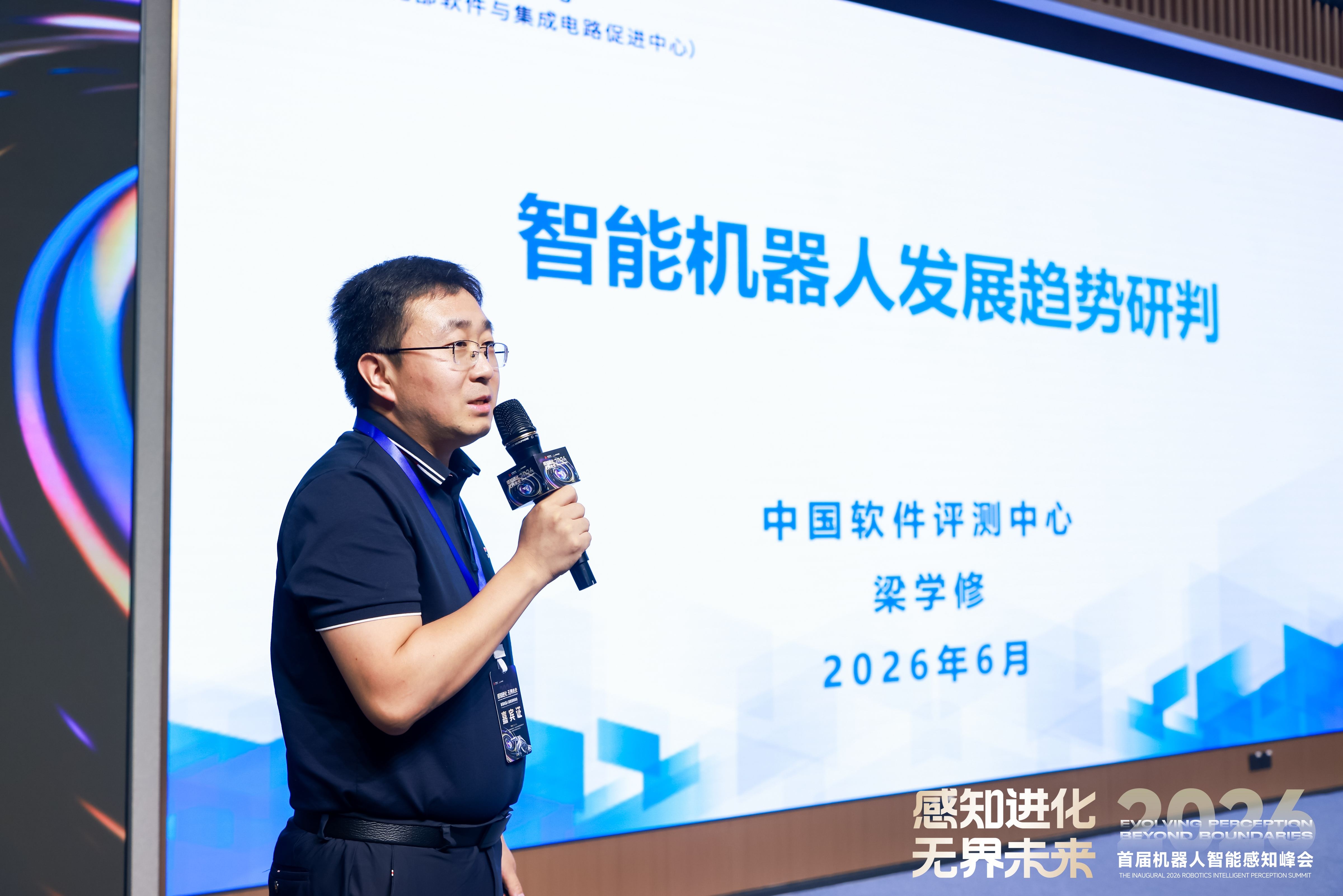
In the past few years, China's robot industry has achieved leap - forward development in aspects such as core component research, industrial chain construction, and scenario application expansion, and has become the global source of robot technology innovation. Liang Xuexiu, the general manager of the Artificial Intelligence Research and Evaluation Department of the China Software Evaluation Center and the secretary - general of the Beijing Robot Industry Association, pointed out that during the 15th Five - Year Plan period, China should strive to achieve an internationally leading level in the comprehensive strength of the robot industry, and sensing interaction is the top priority in core technology research, which is closely related to the construction of safety standards. Liang Xuexiu revealed that the evaluation center has jointly released the first domestic systematic evaluation benchmark for embodied intelligence, ET - Benchmark, with universities such as Tsinghua University and Fudan University, and completed the first large - scale application verification at the 2025 World Humanoid Robot Games.
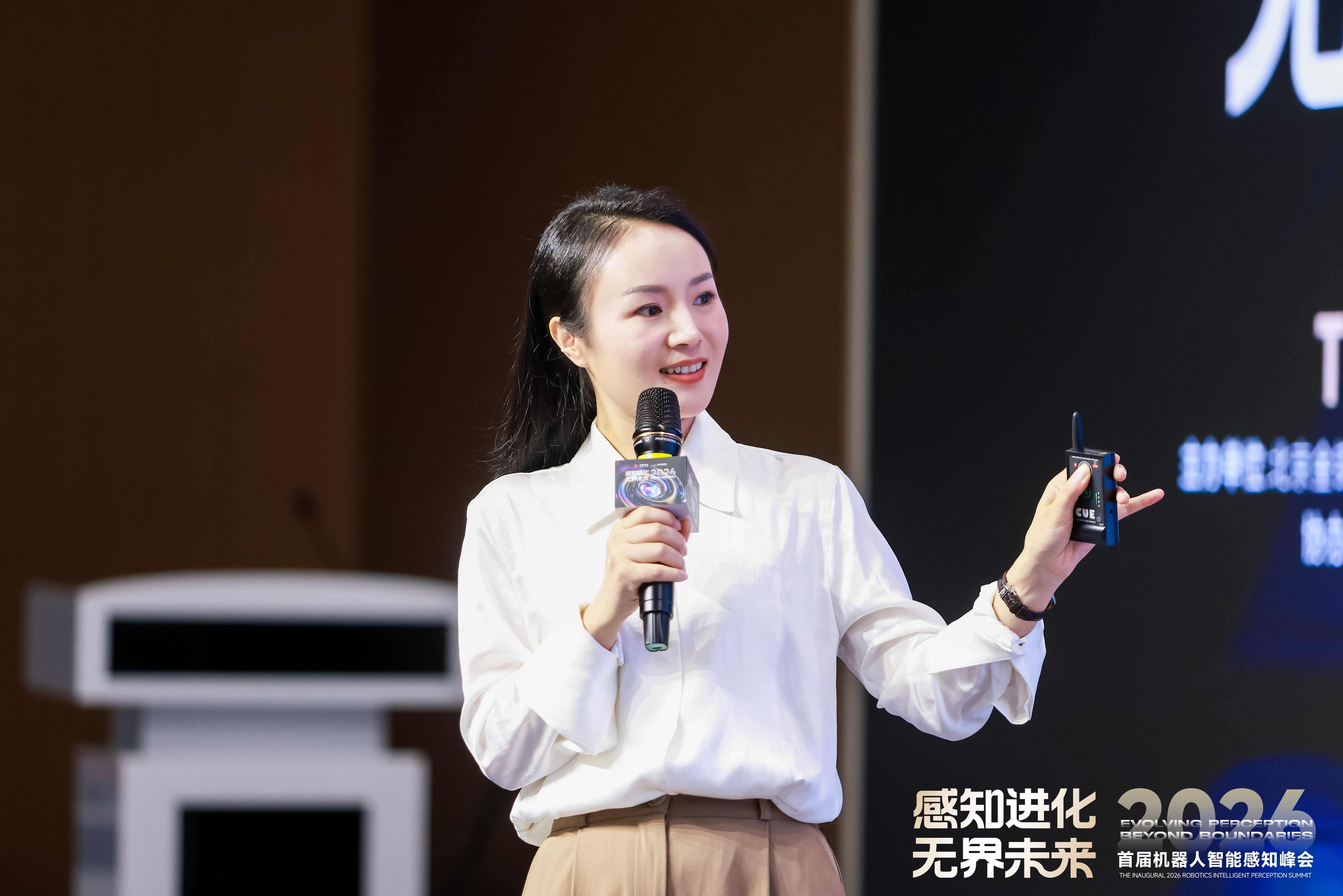
PaXini Tech is an infrastructure builder in the era of embodied intelligence. Ding Lishi, the director of public affairs of PaXini Tech (Shenzhen) Co., Ltd., introduced in her speech that the company has been deeply involved in Hall - type multi - dimensional sensing technology, providing leading high - precision tactile sensors and comprehensive embodied sensing solutions for global partners. Relying on its profound technical accumulation in force - tactile sensing, the company has broken through the "bottleneck" technology in the field of high - end sensors in China, achieving a leap from "relying on imports" to "global leadership" in tactile sensors. Currently, PaXini has built an all - stack product and solution for embodied sensing, including "full - link sensing hardware - full - modal data acquisition - OmniVTLA embodied model", empowering the rapid development of the industry in all aspects.
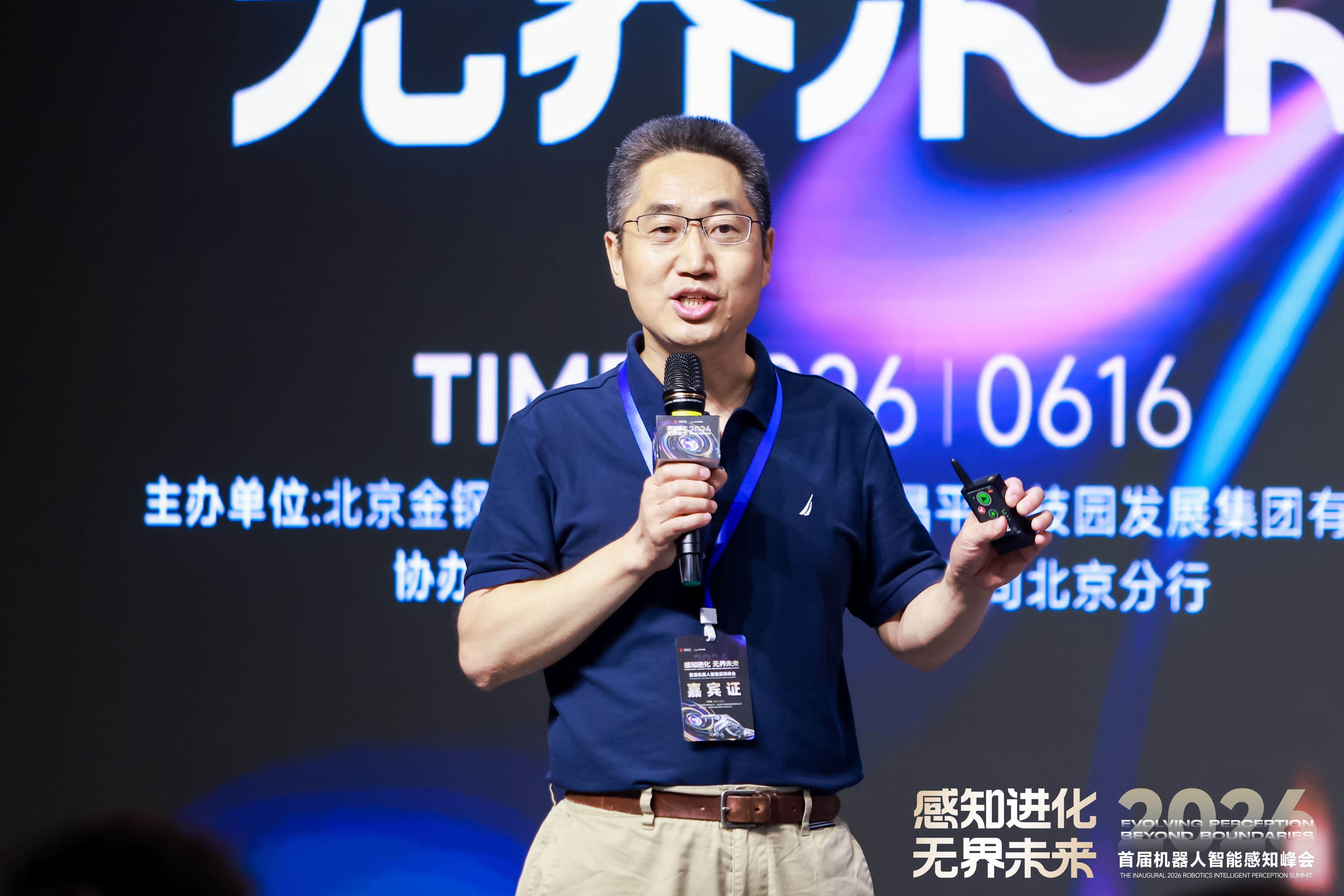
With the accelerated mass production of embodied intelligent robots, the demand for MEMS inertial sensors is increasing, and the requirements for the reliability and safety of the devices are also continuously rising. Zhang Longhai, the product director of Anhui InvenSense Micro - System Co., Ltd., said that after multiple rounds of technological iterations, InvenSense has self - developed a series of products such as high - performance MEMS gyroscopes, MEMS accelerometers, and six - axis MEMS inertial measurement units, which have the advantages of miniaturization, high performance, and high reliability. They are widely applicable to scenarios such as intelligent driving and humanoid robots, and can stably output attitude data under various complex working conditions, building an indispensable "global attitude sensing benchmark" for intelligent equipment.
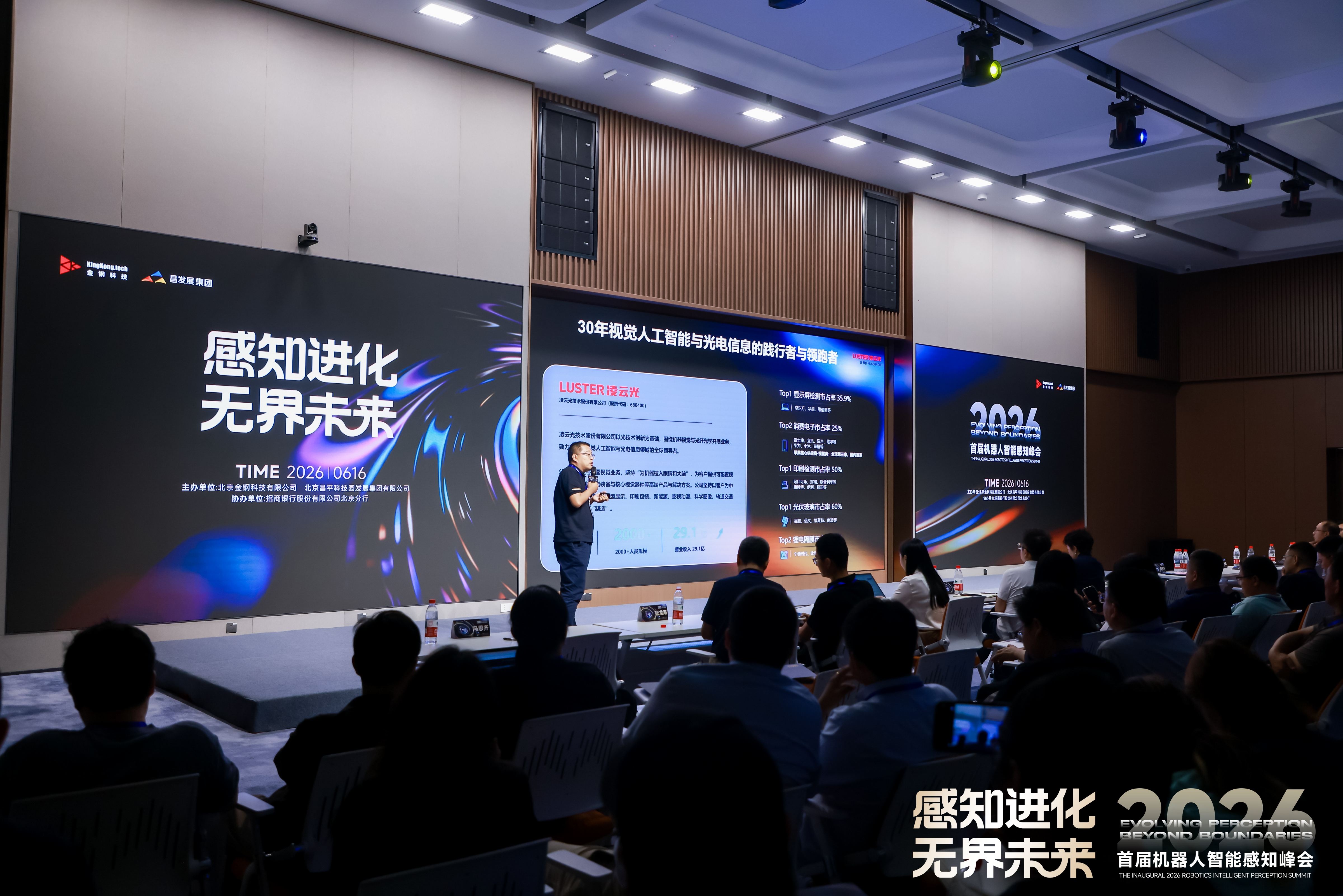
Facing the data bottleneck problem of "extremely scarce real interaction data" in embodied intelligence, Li Jianhui, the deputy general manager of marketing of Beijing Yuanke Vision Technology Co., Ltd., proposed that the competition in the embodied intelligence industry has shifted from competing in hardware to competing in models and data. The technical route has evolved from traditional VLA to WAM, and the data acquisition paradigm has also shifted from real - machine remote operation to a non - body mode centered on human body movements and first - person videos. Yuanke Vision has created a new system of "separate training of the big and small brains + world model", taking the acquisition of human body movement data as the core, replacing the high - cost real - machine remote operation, and taking into account data quality, acquisition efficiency, and cost. Relying on technologies such as optical - inertial fusion motion capture, multi - view stereoscopic video, VGGT, and 4DGS, it has completed 3D scene reconstruction, photo - realistic simulation rendering, and multi - modal mechanical data acquisition, breaking through the closed - loop of real acquisition → simulation training → real - machine deployment, and solving the problems of Sim2Real migration and generalization.
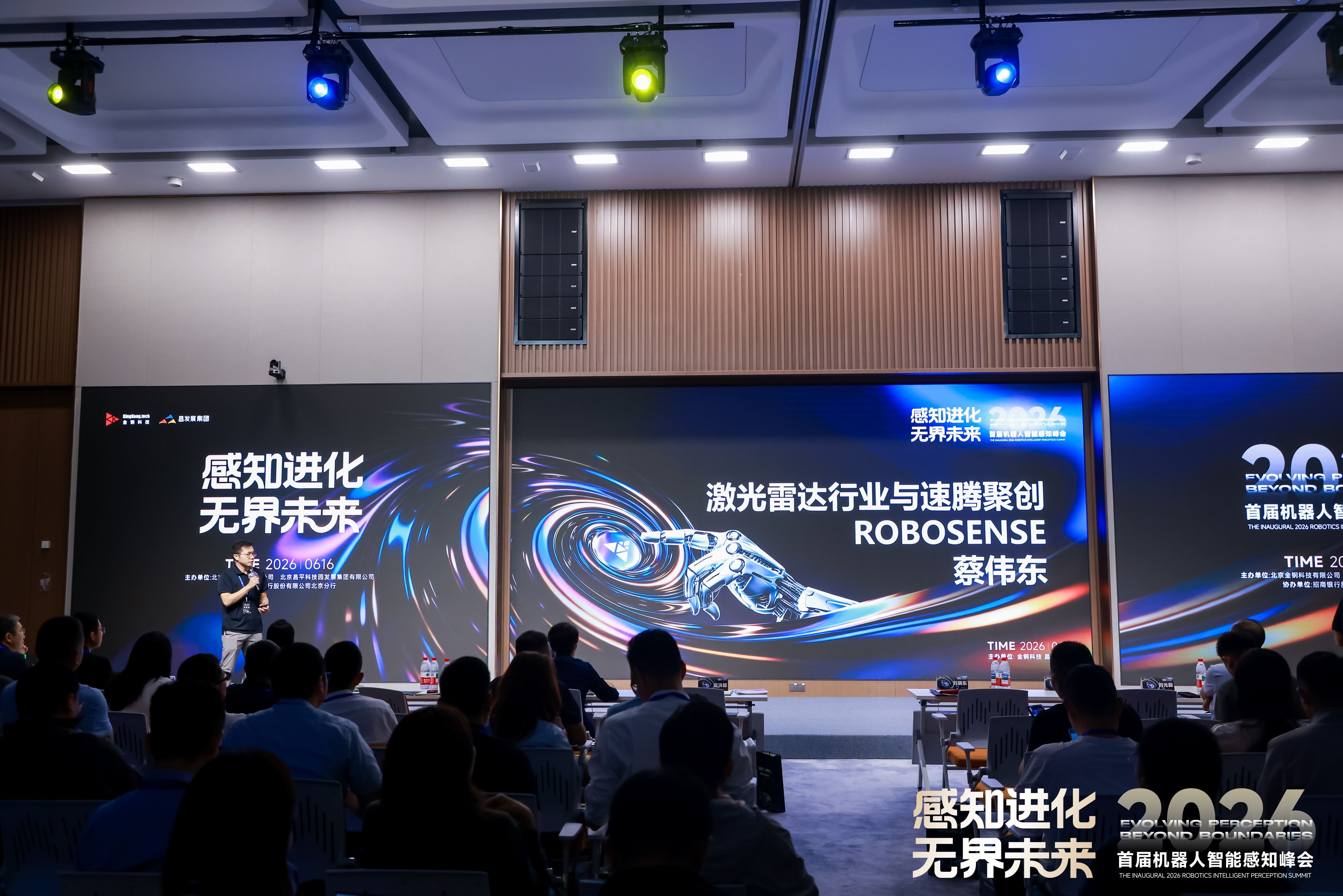
Cai Weidong, the ecological leader of Shenzhen RoboSense Technology Co., Ltd., revealed that the lidar field is accelerating its expansion from ADAS autonomous driving to the robot field. The company has released its self - developed "Phoenix" chip, a vehicle - grade SPAD - SoC with more than a thousand lines, and the "Peacock" chip, the world's largest - resolution large - area array SPAD - SoC. In addition to the automotive market, it provides standardized "robot eyes" for the trillion - level robot market and will give birth to a new form of super sensors. With the gradual mass production and implementation of the Phoenix and Peacock chips, RoboSense is solidifying its technological leading advantage into a moat with a chip - level generation gap, improving the upper limit of product performance while optimizing costs, promoting lidar to move from a high - end optional configuration to a standard configuration in the fields of vehicles, robots, industry, and consumer electronics, and further accelerating the real large - scale mass production process of humanoid robots.
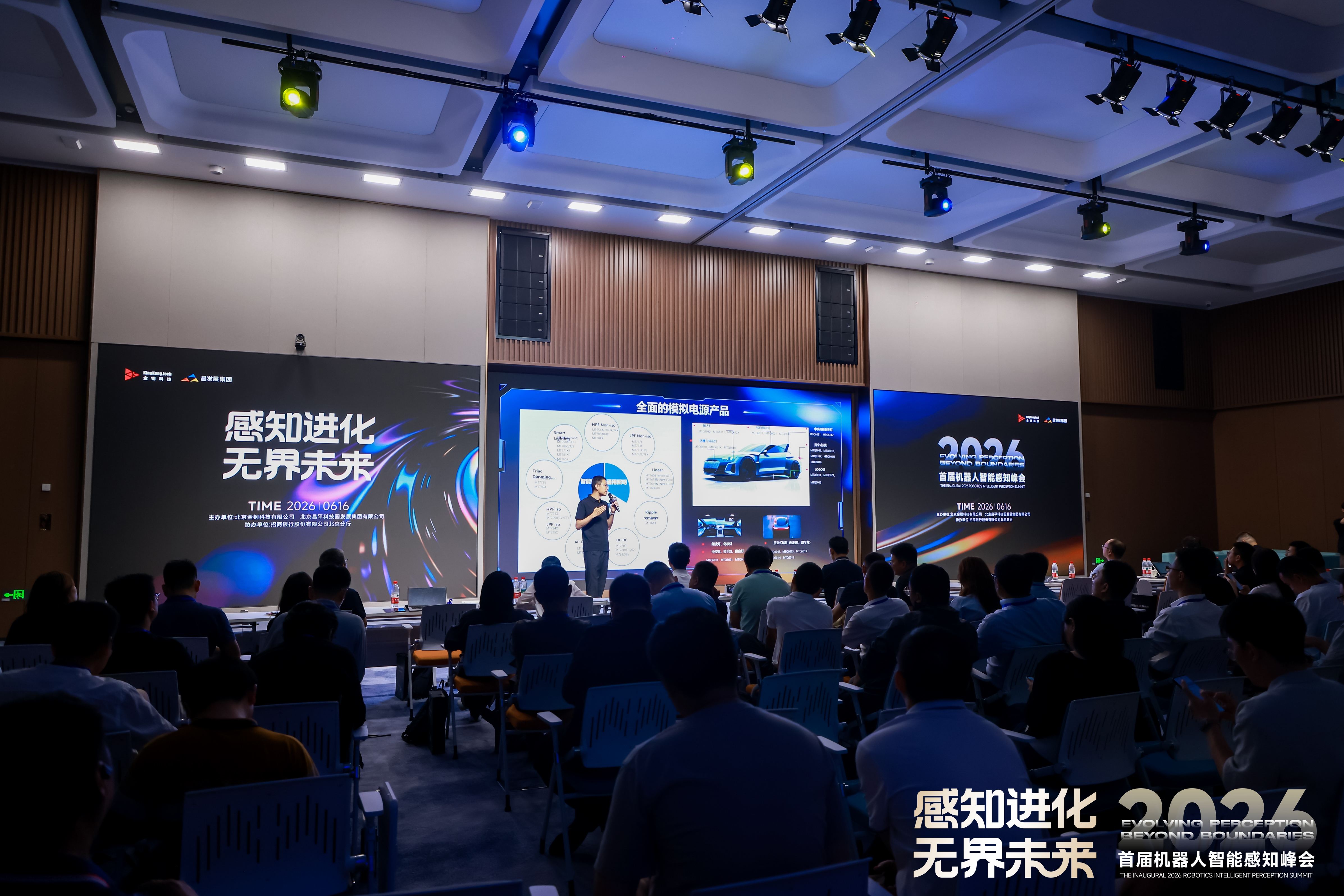
Jia Yifan, the person in charge of the enterprise development department of Meixincheng Technology (Beijing) Co., Ltd., said that the company has now built a series of chip matrices for "sensing, driving, and power supply". Relying on its existing optical sensing, magnetic sensing, driving, and power - supply chips, based on the chip - level multi - modal fusion technology, the 4D AI Sensor fuses RGB images, ToF depth information, and DVS dynamic vision information, achieving high - frame - rate output. It is committed to improving the sensing performance at the chip level and reducing the BOM cost and development complexity of robots.
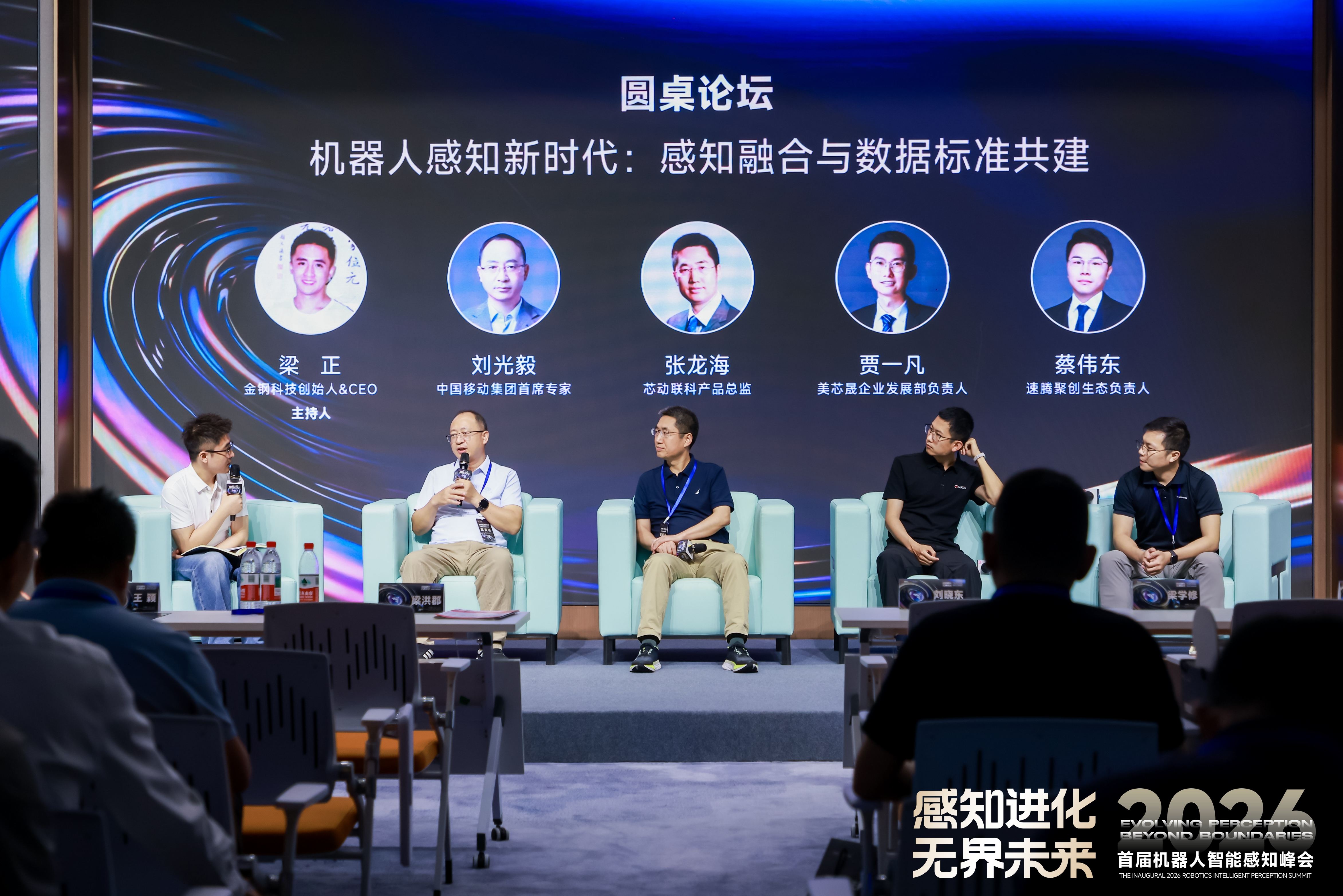
In addition, many industry representatives also carried out a thematic discussion on "the integration of robot sensing and the co - construction of data standards", having in - depth exchanges on core issues such as multi - modal sensing data standards, industry interoperability specifications, and the open ecosystem of the sensing system. The guests pointed out that the current fragmented state of sensors "operating independently" must be changed. Only by aggregating and processing multi - source data into standardized outputs can the "burden" on the central computing unit be reduced and the large - scale deployment of robots be accelerated. Not only should innovation at the device level be carried out to reduce costs, but also the scale effect and product standardization should be relied on to enable robots to truly solve users' problems.
Jingang Technology Releases Three - Encoder Solution, Defining the "Gentle Core" of Robots
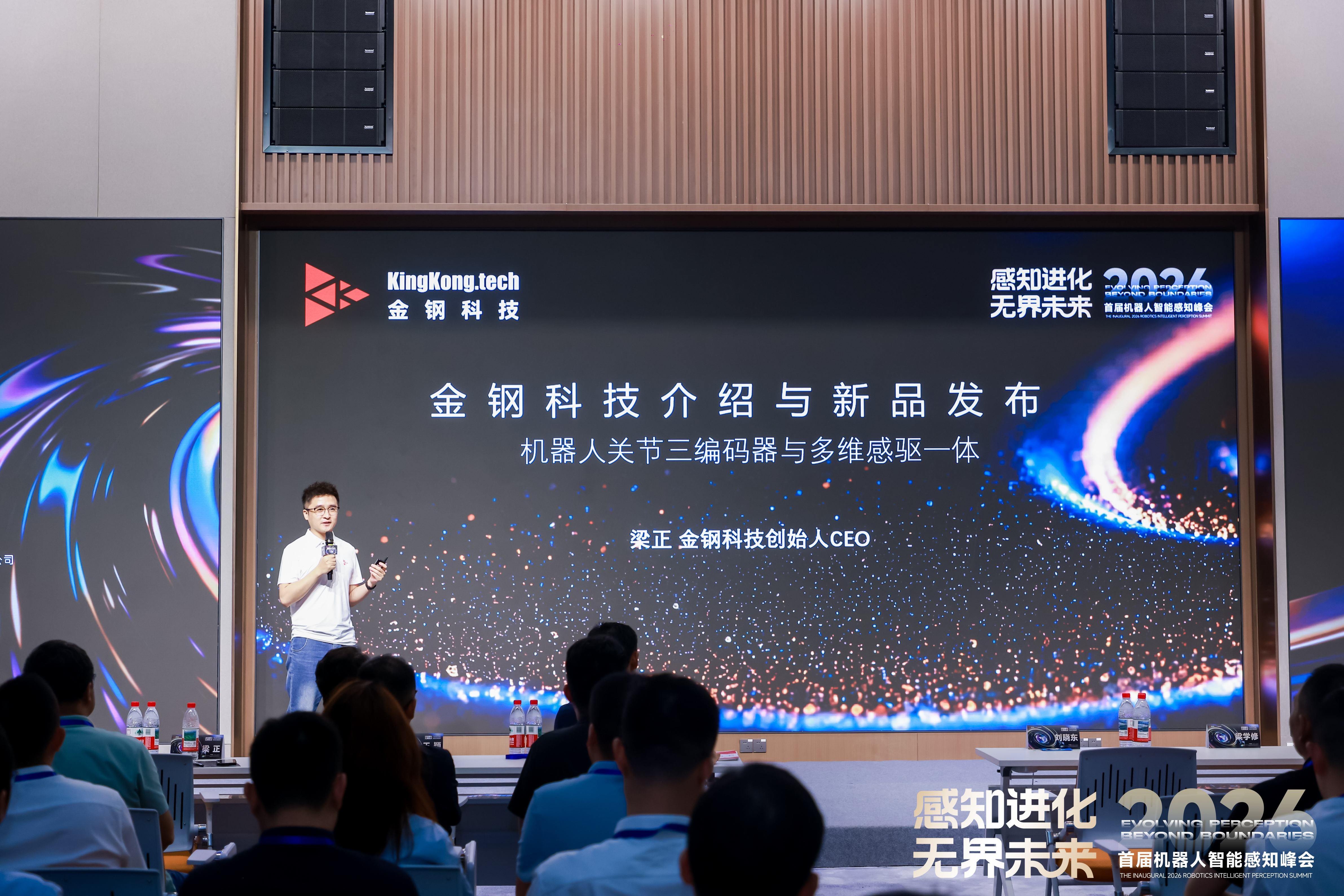
The large - scale implementation of embodied intelligence has put forward unprecedented requirements for the sensing accuracy, force control ability, and integration degree of robot joints. The traditional industry solutions have problems such as large size, difficult wiring, high maintenance difficulty, and high cost. Jingang's single - encoder and double - encoder solutions have largely solved the above problems. However, in the face of the new requirements brought by the continuous development of the industry, the single - encoder and double - encoder can only feedback a single position and cannot meet the high - order force control requirements. At the same time, the defect of joints "only knowing the position but not the force" is becoming more and more prominent in high - precision operation scenarios, becoming a significant bottleneck restricting the improvement of joint performance.
In response to this pain point, Liang Zheng, the founder and CEO of Jingang Technology, officially released the "three - encoder" joint solution and the multi - dimensional sensing and driving integrated technology product/solution at the meeting. He said that Jingang Technology maintains a market share of over 80% in the domestic magnetic encoder field for humanoid robots, and its globally innovative patterned magnetic encoding solution has reduced the encoder volume by 90% and supports a large hollow design. On the basis of position sensing, the three - encoder solution further achieves a breakthrough in the force (torque) sensing dimension. Jingang Technology's patterned magnetic technology can achieve high - precision and high - resolution measurement, sensing the internal deformation of joints with a high resolution of 0.0001°, which is like "sensing the deformation when twisting a steel pipe as if twisting a towel". It enables robots to have the fine operation ability of "cutting tofu, carrying a plate, folding clothes, and even combing hair", leading the joint control from the "double - encoder era" to the "force - sensing stage".
The multi - dimensional sensing and driving integrated technology deeply integrates sensing and driving, eliminating the modular data islands. Previously, data such as position, force, current, and temperature operated independently, like "professional military advisors in different fields". The integration of sensing and driving "disassembles and blends the military books in different fields" and then fuses all sensing data to make more intelligent decisions, reducing the strong requirements for single - point capabilities. The product provides two solutions, s3Driver (three - encoder sensing and driving integration) and s2Driver (double - encoder sensing and driving integration), with multiple cost options, providing key support for the evolution of humanoid robots towards lightweight, high flexibility, and high safety. This breakthrough not only has an epoch - making significance for humanoid robot manufacturers to break away from the industrial piecing - together thinking and create products dedicated to embodiment but also will promote the reduction of the intelligentization difficulty in professional application scenarios such as downstream semiconductor production, the automotive industry chain, precision assembly, rehabilitation medicine, and surgical assistance.
Liang Zheng said, "Sensing is the entrance to neural (embodied) intelligence. Without accurate sensing, there is no real - sense embodied intelligence. We hope to lead the intelligent sensing industry to a higher - dimensional evolution through technological innovation and ecological co - construction, enabling robots to truly understand the world and jointly promoting embodied intelligence to enter all industries."
The significance of the 1st Robot Intelligent Sensing Summit lies in starting from the sensing track, calling on industry colleagues to jointly promote the decoupling of software and hardware and the establishment of adaptation standards, and collaborating to answer the core question of "how robots sense the world". A more open and collaborative sensing ecosystem is emerging.