"Brexit into Asia": British Capital Begins to Shift to China
Recently, the old bureau noticed something quite interesting:
A well - established British shipping giant, Zodiac Maritime, placed an order with a Chinese shipyard, CIMC Raffles, to build 10 top - notch LNG dual - fuel car carriers.

The "specialized transport ships for new energy vehicles" produced by CIMC Raffles are equipped with LNG/fuel systems, have 7,000 standard parking spaces, a designed cruising speed of 19 knots, and a maximum cruising range of 30,000 nautical miles.
Before the ships are even delivered, half of their shipping capacity has already been "booked for the whole year" by Chinese new energy companies such as BYD and Geely.
The brilliance of this move by the British company of building ships in China and transporting cars lies in the fact that it not only has confidence in Chinese - made cars but also trusts Chinese - built ships. Moreover, it uses long - term freight orders to deeply bind the interests of both parties.
The story of Zodiac Maritime is a vivid and specific example of the current trend of "British capital flowing eastward."
Data shows that in 2024, the net outflow of British industrial capital (FDI) reached £33.32 billion (approximately $42 billion), accounting for 0.4% of GDP.
In 2025, this figure further increased to 2.13%.
Meanwhile, in 2025, British direct investment in China increased by 15.9% year - on - year, with a growth rate significantly higher than the global average.
Historically, British capital has mainly been invested in the United States and within the European Union.
However, in recent years, there has been a subtle change in the direction of British capital, and China has become a more attractive destination for it.
What kind of development logic lies behind this intriguing change?
Let's go to China!
Before we start the discussion, let's first clarify what "British capital" is.
It mainly consists of two parts:
One is industrial capital (FDI), which refers to the long - term investment made by multinational companies to expand the market and optimize the supply chain.
The other is financial capital, which is the asset allocation carried out by financial institutions using the global funds they manage.
If the enterprises or institutions behind these industrial and financial capitals are British, then it is "British capital."
Sometimes, the so - called "old money" we talk about in our conversations is not within the scope of our discussion today.
Because the so - called "investment" of "old money" mostly refers to wealth preservation, inheritance, and obtaining stable returns, which is a disguised form of saving rather than doing business.
So why does British capital want to come to China?
Advantages are often revealed through comparison.
In recent years, the return on investment in the UK has significantly decreased, and the risk of policy changes has increased.
For example, in November 2025, British Chancellor of the Exchequer Rachel Reeves announced the "Autumn Budget 2025," which planned to increase fiscal revenue by approximately £26.1 billion in the next few years through a series of "hidden tax increases."
Facing higher corporate and personal income taxes and the resulting thinner profits, British capital has turned its attention overseas, especially to the East.
What exactly did the British capital see when it opened its eyes to the world?
Unfairness!
By comparing the trade data between China and the UK, it is not difficult to find a huge gap:
In 2025, China's exports to the UK were approximately $85.09 billion (approximately 608.84 billion yuan).
Meanwhile, the UK's exports to China were approximately $18.65 billion (approximately 133.38 billion yuan).
Among them, the most absurd thing is that the largest category of the UK's exports to China is precious metals (mainly unforged gold), accounting for 54.5% of the share.
However, the UK's ace industries such as high - end manufacturing and pharmaceuticals, in which it excels, account for a very low proportion.
This means that the UK's proud technologies and industries are difficult to enter the Chinese market due to factors such as tariffs, standards, distance, and services.
What is even more worrying than the trade inequality is that when British products are far away from China, the world's largest and fastest - evolving industrial base and market, their product R & D is likely to be out of touch with market demand, and they may face technological depreciation.
The government will surely not ignore this.
On January 28, 2026, British Prime Minister Starmer visited China, accompanied by representatives of more than 50 British companies:
AstraZeneca, GlaxoSmithKline, Airbus, Standard Chartered Group, HSBC Group, Jaguar Land Rover, McLaren...
The British Prime Minister naturally has a strong appeal. However, the real motivation for these capital giants to visit is to re - evaluate China — what new skills this "industrial Cthulhu" has acquired and whether it welcomes their arrival.
China's policies have always been favorable.
Since September 2024, China has completely lifted the restrictions on foreign investment access in the manufacturing sector.
Whether it is in the automotive, aviation, or precision instrument industries, British companies can set up wholly - owned factories in China without the need to find Chinese partners for joint ventures.
The "Action Plan for Stabilizing Foreign Investment" issued in 2025 clearly states that it is necessary to ensure that foreign - invested enterprises can not only enter the market but also operate smoothly.
This includes specific measures such as simplifying the approval process, ensuring equal participation of foreign - invested enterprises in government procurement, and strengthening intellectual property protection.
A series of actions draw clear red lines through policies to ensure the basic returns of foreign investment.
Facing the combination of the rising return on investment in China and the falling return in the UK, guess which side British capital will choose with its actual actions?
New game, new rules
Looking back 48 years ago, when China had just embarked on the path of reform and opening - up, there was a generational gap between China's industries and those of developed countries.
When American, German, and Japanese companies came to China to build factories, we had to offer cheap land, arduous labor, and an open market.
As a weak country at that time, we had little access to the core technologies, advanced processes, and management concepts of developed countries when facing the "descending of capital."
However, half a century has passed, and the situation has quietly reversed:
In 2025, the global shipment volume of embodied robots was approximately 13,000 units, of which more than 84% came from China.
As the AI industry develops rapidly and green electricity restricts the development of global data centers, China's total installed capacity of renewable energy has reached 2.34 billion kilowatts, accounting for more than 60% of the world's total.
In 2025, when the blockade crisis in the Strait of Hormuz erupted and caused a severe shock in the global energy market, China's new energy vehicles captured 68% of the global new energy passenger vehicle market share.
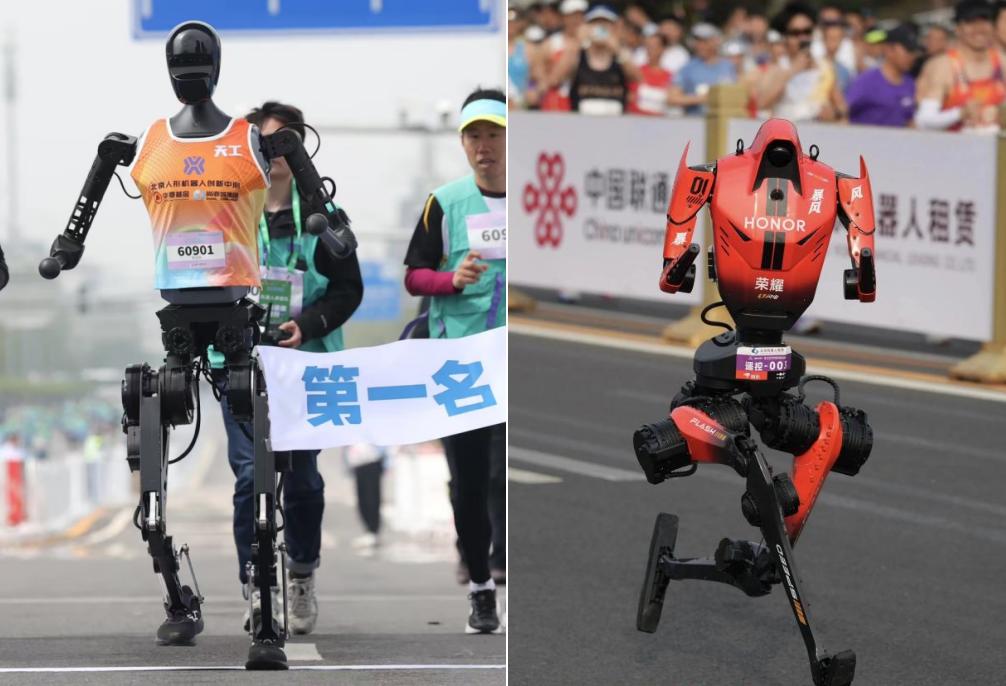
The two - time champions of the robot marathon: Tiangong (left) and Rongyao (right)
How did China achieve such a great leap in just a few decades?
First, there are inexhaustible supply chain resources.
Since 2010, China has ranked first in the world in manufacturing for 15 consecutive years, and the output of more than 220 major industrial products ranks first in the world.
This enables almost all products in the world to find the most efficient and cost - effective solutions in China.
What British capital values is the part where China's supply chain aligns with its key industries.
Take the pharmaceutical industry as an example.
As early as 2023, China had become the world's second - largest new drug R & D country, and approximately one - third of the global drug licensing transactions were reached with Chinese biopharmaceutical companies.
Since then, AstraZeneca, the largest British pharmaceutical company, has regarded China as its second - largest global sales market and a global innovation hub, and has successively reached R & D cooperation agreements with 15 Chinese local pharmaceutical companies.
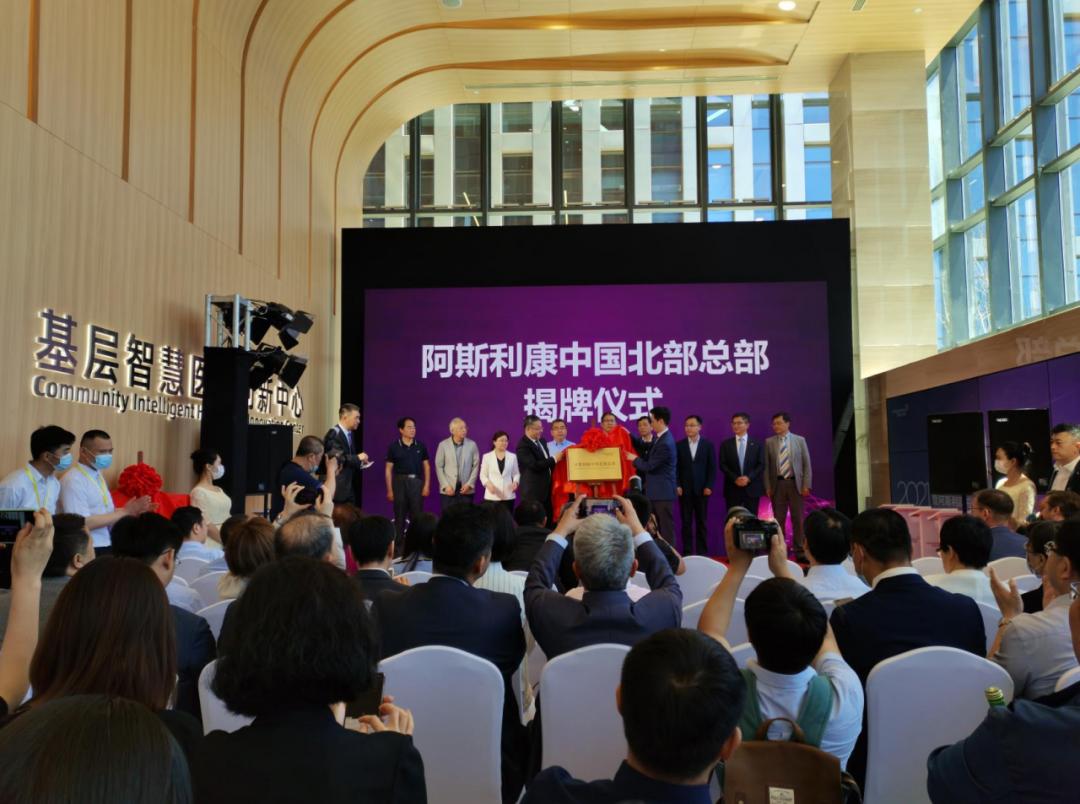
In 2025, against the backdrop of a sharp decline in the return on investment in the UK, AstraZeneca announced a five - year investment plan in China worth $2.5 billion, with the core being the establishment of a global strategic R & D center in Beijing.
Together with the R & D center it built in Shanghai before, the Chinese team has already led nearly 20 global clinical trials for it.
It can be seen that Chinese technology has actually penetrated into the core areas of the UK's advantageous industries.
Second, the Chinese market has a huge appetite and can absorb all products.
On the surface, with a population of 1.4 billion, China's market demand is bound to be huge.
However, a deeper analysis shows that the total population does not directly affect consumption ability.
The strength of the Chinese market lies not only in its large population base but also in the proportion of the middle - class population and the continuously upgrading consumption concept.
Let's compare China with the United States in this regard.
In terms of income level, the average per capita disposable income in China in 2025 was 43,377 yuan, while the average per capita disposable income in the United States was approximately between $65,000 and $67,000 (approximately 4.64 million to 4.79 million yuan), a difference of more than ten times between the two countries.
However, due to the large population base, China's total retail sales of consumer goods have exceeded 50 trillion yuan (approximately $696 billion), accounting for about one - third of the US consumer spending and more than 20% of the global retail sales.
More importantly, compared with the fixed social classes in the United States and the rigid consumption ability caused by severe income inequality, in China, there are 400 million people with a household annual income between 100,000 and 500,000 yuan. These "middle - class" people still have consumption potential and are continuously upgrading their consumption.
Where is the consumption upgrade of the Chinese people reflected?
By the end of 2025, there were 52.9 private cars per 100 households in China.
That is to say, more than half of Chinese families already own cars.
Meanwhile, in 2025, new energy vehicles accounted for 47.9% of the total new car sales in China.
That is to say, half of the families that bought cars last year chose more intelligent and environmentally friendly new energy vehicles.
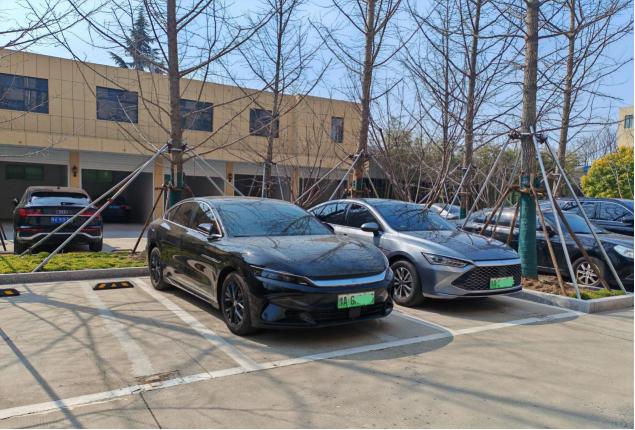
Domestic new energy vehicles can be seen everywhere
What drives China to build a strong supply chain and consumption power is a powerful vitality.
In the world pattern dominated by the West in the past, multinational companies played a "battle royale" survival game, competing for resources, talents, and profits.
Zero - sum games are not only emotionally and face - damaging but also costly, and they are often unsustainable.
In China's business ecosystem, companies play a "cultivation - style" game, building factories, improving infrastructure, and collaborating on products, making business thrive.
This is not a transfer of hegemony but is determined by the changes of the times.
In the old era of resource scarcity, Western countries relied on violence as the main means of competition and kept competing. Even now, many companies are still stuck in the path - dependence of resource - dominated competition.
In contrast, without the so - called "past glory," we can only keep pushing ourselves forward.
While catching up in the industrial field, we have built well - developed transportation infrastructure, a sound digital currency system, and a comprehensive trading network, paving the way for the circulation and use of all products.
Under the new rules, if British capital wants to enjoy the "China benefits" that we have worked hard to create, it has to offer enough equivalents for "exchange."
Such as core technologies, advanced processes, more sincere cooperation, and a more mature standard system.
This "exchange" is by no means an upgraded version of the humble "market - for - technology" model we adopted when jointly building factories with Japanese and German car companies in the past.
"The bigger the waves, the more expensive the fish!"
Although China has policy support for British capital, it does not blindly protect it.
Backed by a capitalist country with a history of more than 300 years, British capital has more far - reaching considerations when deploying in China:
Currently, the UK is in urgent need of industrial upgrading.
Since Brexit in 2020, the UK economy has shown a rather "sluggish" atmosphere.
The enthusiasm of enterprises for recruitment has generally decreased, and the number of people in the UK who are unemployed but not actively looking for jobs has significantly increased.

British street shops that have suspended business due to the economic downturn
The capital leaving the UK not only seeks its own way out and expands its profits but also bears the mission of restoring confidence in its home country.
Only the UK itself can help it get out of the shadow.
What can China do for them?
It can provide an industrial arena with clear rules but fierce competition and become a "sharpening stone" for each other.
Comparing with other countries in the world