Meituan exceeded 300 million GMV in 12 hours, while Tmall's growth multiplied by 5: The 618 liquor war that thrives on higher price points
During the 618 shopping festival in 2025, the instant retail of alcoholic beverages broke through the competition with the "10-billion subsidy". The price of Feitian Moutai once dropped below 2,000 yuan.
During the 618 shopping festival in 2026, on the same instant retail platform, Feitian Moutai was sold in the range of 1,700 - 1,800 yuan, which was even more expensive than some offline tobacco and liquor stores.
However, the sales volume skyrocketed instead. Meituan's sales of white liquor exceeded 300 million yuan in 12 hours, and the overall sales volume of Taobao Flash Sale's alcoholic beverages increased by 5 times.
Why is it that the more expensive it is, the more popular it gets?
The answer is not that consumers have become stupid, but that the competitive logic of instant retail has made a 180-degree turn within a year:
It has changed from who can offer a lower price to who can have the product available right when I want to drink.
This article will take you to decipher the password of scene premium in the instant retail of alcoholic beverages.
Three abnormal signals piece together a new map
Looking at the performance of the instant retail of alcoholic beverages during this year's 618 shopping festival, there are three abnormal signals.
Signal 1: The price has stabilized
During the 618 shopping festival in 2025, the wholesale price of Feitian Moutai dropped from 2,100 yuan to 1,960 yuan, a decrease of nearly 200 yuan in a month.
During the same period this year, the fluctuation of the wholesale price was only about 20 yuan. The price difference between online and offline is narrowing, and platforms are no longer relying on "breaking the bottom price" to attract traffic.
Signal 2: There are more platforms
Last year, Meituan Flash Sale was almost the only dominant player. The data of its white liquor sales exceeding 300 million yuan in 12 hours caught everyone's attention.
This year, Taobao Flash Sale and JD Instant Delivery have fully caught up. The sales volume of alcoholic beverages on Taobao Flash Sale on the first day increased by 5 times, and the sales of 157 liquor brands on JD increased by double. It has changed from "breaking through at a single point" to "blooming in an all-round way".
Signal 3: Liquor companies have become proactive
Last year, many liquor companies were forced to respond passively. When platforms sold at low prices, liquor companies were troubled by price control.
This year is different. Moutai Jiangxiang Liquor has launched nearly 3,000 official stores on Taobao Flash Sale. Wuliangye has joined hands with distributors to open brand lightning warehouses. Fenjiu's official flagship store has connected to the flash sale service, offering delivery in as fast as 4 hours.
More notably, nine leading liquor companies jointly launched 50ml "small-drinking bottles" for the first time, with the first release on Meituan Flash Sale.
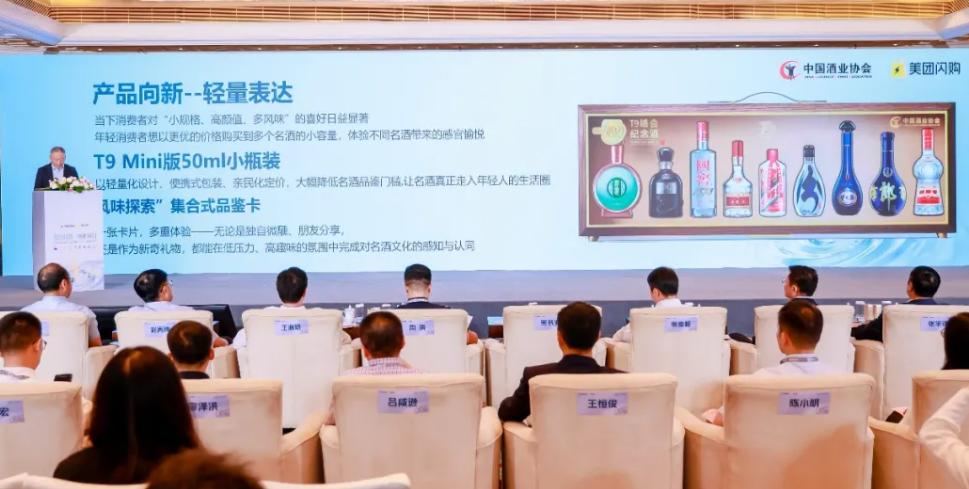
These three signals together point to the same fact: the instant retail of alcoholic beverages is bidding farewell to the "wild growth" stage and entering a new stage of "value competition".
The core of this transformation is not that the platforms have become smarter, but that the consumers have changed.
The underlying logic of "the more expensive, the more popular": what are consumers buying?
During the 618 shopping festival last year, the core motivation for consumers to buy alcohol on the instant retail platform was the low price.
If Feitian Moutai is 200 yuan cheaper than in tobacco and liquor stores, who can resist buying it?
During the 618 shopping festival this year, on the same instant retail platform, Feitian Moutai is more expensive than some offline channels.
However, consumers are buying even more aggressively.
Why?
Because what consumers are buying is not the alcohol, but "that just-right moment of need".
Let's take another look at a set of data: 73% of instant retail alcohol orders are delivered to residential communities, 70% occur during nighttime, and the proportion of young customers aged 18 - 35 is as high as 78%.
Translated into a picture: It's eleven o'clock at night, and you're halfway through watching a drama. Suddenly, you want to have a drink.
You don't want to change clothes and go downstairs, don't want to wait for three days for the express delivery, and don't want to store a whole case and take up space. You open your phone, place an order, and the alcohol is delivered in 30 minutes.
In this scenario, consumers are willing to pay an extra 10 or 20 yuan. What they are paying extra for is not the price of the alcohol, but the freedom of "not waiting" and the certainty of "being satisfied at this moment".
I call this the scene premium.
The pricing logic of traditional e-commerce is "cost + profit + price comparison". The one with a shorter supply chain and larger scale can sell at a lower price.
However, the pricing logic of instant retail alcohol is becoming scene value. The one who can more accurately capture my little moment can get the premium.
Last year, platforms were competing on who could offer more subsidies. This year, they are competing on who can deliver the alcohol I just want to drink at 10 p.m. at night within 30 minutes.
The "new game" between platforms and liquor companies: from price war to ecological war
As consumers have changed, the rules of the game have also changed.
The roles, relationships, and strategies of platforms and liquor companies are all being re - engineered.
Let's first look at the platforms
Meituan Flash Sale focuses on "infrastructure + trust".
It has built more than 2,000 forward warehouses for its own Waima Wine Delivery and jointly launched a "full - link authenticity guarantee system" with brands.
The reason why nine liquor companies chose Meituan for their joint first release is not the subsidy, but its ability to solve the deepest trust pain point of "fear of fake alcohol when buying online".
Taobao Flash Sale focuses on "ecosystem + traffic".
It has upgraded the "one - hour delivery" to a primary strategy. Relying on more than 55 million 88VIP members, it promotes alcohol to high - net - worth users. At the same time, it links up with Tmall Supermarket to form a traffic matrix.
JD Instant Delivery focuses on "logistics + supply chain".
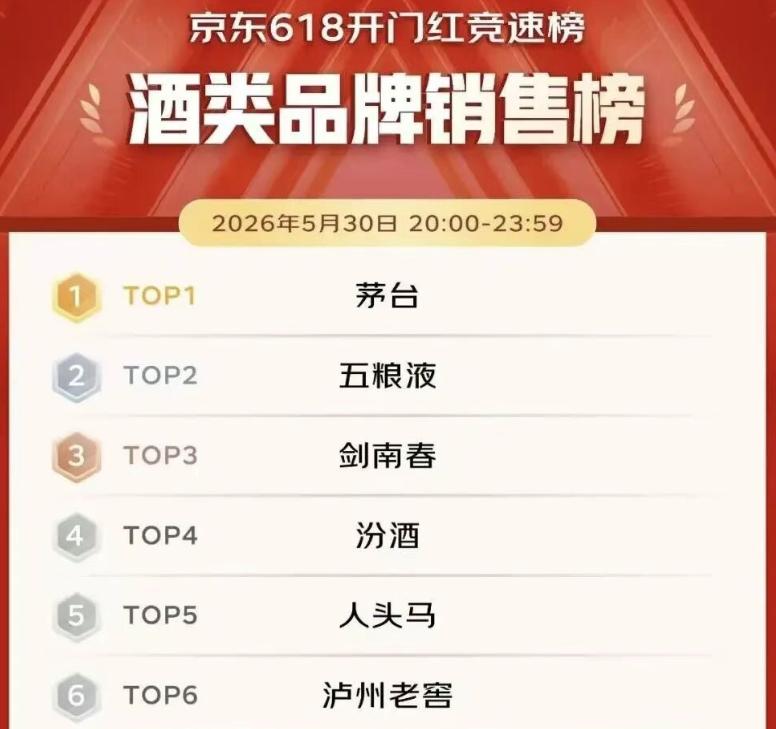
Relying on its self - operated logistics and the store network of "JD Wine World", it emphasizes the certainty of delivery and the quality of fulfillment.
The three platforms have different paths, but there is a common change: they are no longer just competing on subsidies.
Meituan has made the 9th of every month a white liquor festival to cultivate users' habits at fixed time points. Taobao has invested hundreds of millions of yuan, but the focus is on service experience and exclusive products. JD emphasizes "next - day delivery + invoicing" to serve business scenarios.
Now let's look at the liquor companies
Last year, liquor companies were dragged into the competition passively. When platforms sold at low prices, liquor companies were busy controlling prices and issuing statements.
This year, liquor companies have become proactive players:
Moutai Jiangxiang Liquor has launched nearly 3,000 official stores on Taobao Flash Sale, offering 30 - minute delivery.
Wuliangye has joined hands with distributors to open brand lightning warehouses, making a cautious but firm layout.
Luzhou Laojiao has created a closed - loop of "live - streaming + one - hour delivery". You can place an order in the Douyin live - streaming room and get the delivery within half an hour.
Nine leading liquor companies jointly launched 50ml "small - drinking bottles", specially customized for the instant retail scenario.
Why has the change been so rapid?
Because liquor companies have done the math: there is overstock in traditional channels, and the average inventory turnover days in the industry are close to 900 days. The offline growth is weak.
However, instant retail reaches 78% of young customers and 70% of nighttime scenarios - this is the incremental market that traditional channels can't reach at all.
But liquor companies are also very clear - headed.
This battlefield must be captured, but it must be carefully managed.
So Moutai chooses the "omni - channel" approach, not putting all its eggs in one basket. Wuliangye cooperates cautiously and controls prices by naming unauthorized stores. Luzhou Laojiao is aggressively innovative, using "live - streaming + one - hour delivery" for content conversion.
This is an "ecological war". It is no longer just the platform's unilateral subsidy, but the tripartite collaboration of the platform, liquor companies, and stores.
The platform provides traffic and data, liquor companies provide exclusive products and brand endorsement, and stores provide fulfillment and services. The three parties jointly create "scene value" and then share the premium.
The end of the price war is a zero - sum game, while the starting point of the ecological war is value co - creation.
What will the "second half" of the instant retail of alcoholic beverages compete on?
If the first half was about who was faster, the second half is about "who is more accurate", and later it will be about "who understands you better".
First stage (already passed): Compete on speed
The one who can achieve 30 - minute delivery wins.
But today, "fast" has become an infrastructure. Almost all mainstream platforms can achieve delivery within 30 minutes to 1 hour. Speed is no longer a barrier.
Second stage (now): Compete on scene matching
Who can predict that on a rainy night, which young people in which communities will want to have a drink? On Friday nights, which types of beer will have concentrated orders around barbecue stalls?
What this tests is not the delivery ability, but the data ability - through historical orders, weather, holidays, and regional consumption characteristics, to prepare goods accurately, price dynamically, and dispatch intelligently.
The one who can achieve "the goods are already in the nearest warehouse before you even think about what you want" can minimize the fulfillment cost and maximize the conversion rate.
This is "accuracy".
Third stage (future): Compete on user assets
When platforms and liquor companies have accumulated enough data on users' drinking habits - what flavor types they prefer, what price ranges, in what scenarios they drink, and how often they repurchase - they can achieve "personalized" recommendations and services.
It's not that users search for white liquor, but that the system recommends a niche craft beer that you may like when you are slightly drunk.
This is truly understanding you.
In the second half of the instant retail of alcoholic beverages, the key to victory is not the delivery speed, but who can reconstruct the "people - goods - scene" with data and make every bottle of alcohol appear at the most appropriate moment.
Conclusion
It's eleven o'clock at night, and you come across a great drama. Suddenly, you want to have a drink.
You open your phone and see that Platform A sells it for 130 yuan and it will be delivered tomorrow. Platform B sells it for 150 yuan and it will be delivered in 30 minutes.
You choose Platform B.
The extra 20 yuan you pay is not for the alcohol, but for the freedom of "not waiting".
This is the secret of the "more expensive, more popular" phenomenon in the instant retail of alcoholic beverages: When the industry learns to price for "emotions" and "scenarios", the price war automatically becomes ineffective.
From last year to this year, the instant retail of alcoholic beverages has completed a silent coming - of - age ceremony.
It is no longer an experimental field for e - commerce giants to burn money, but has truly entered the folds of consumers' lives - those late nights when you suddenly want to have a drink, those rainy days when you are too lazy to go downstairs.
What will be the next category to be reshaped by scene premium?
Maybe it will be fever - reducing medicine at night, flowers on weekends, or hot meals after overtime work.
This article is from the WeChat official account "Instant Liu's Views", author: Li Quan. It is published by 36Kr with authorization.