Meituan übertrifft 300 Millionen Yuan in 12 Stunden, Taobao verzeichnet ein 5-faches Wachstum: Der immer intensivere Getränkemarkt-Wettbewerb während des 618-Verkaufsfestes, bei dem teure Produkte besonders beliebt sind
During the 618 Shopping Festival in 2025, the instant online sales of alcohol products paved the way with "billions in subsidies". The price of Flight Mao - Tai once dropped below 2,000 yuan.
During the 618 Shopping Festival in 2026, on the same instant online sales platforms, Flight Mao - Tai was sold in the range of 1,700 to 1,800 yuan, more expensive than in some offline tobacco and liquor stores.
Nevertheless, the sales volume has instead increased significantly - Meituan's alcohol sales exceeded 300 million yuan in 12 hours, and the total sales of Taobao Flash Shopping for alcohol products increased five - fold.
Why does it become more popular the more expensive it gets?
The answer lies not in consumers becoming more stupid, but in the fact that the competitive logic of instant online sales has reversed 180 degrees within a year:
It's no longer about who is cheaper, but who can deliver the drink to me exactly when I want to drink it.
This article takes you through the secrets of the scenario premium in the instant online sales of alcohol products.
Three unusual signals paint a new picture
When looking at the performance of the instant online sales of alcohol products during this year's 618 Shopping Festival, there are three unusual signals.
Signal 1: The prices are stable
During the 618 Shopping Festival in 2025, the wholesale price of Flight Mao - Tai dropped from 2,100 yuan to 1,960 yuan, which is a decrease of nearly 200 yuan in a month.
This year, the price fluctuation was only about 20 yuan. The price difference between online and offline sales is getting smaller, and the platforms no longer prefer to "offer the lowest prices" to attract customers.
Signal 2: There are more platforms
Last year, Meituan Flash Shopping was almost "the only king". The data of 300 million yuan in alcohol sales in 12 hours impressed everyone.
This year, Taobao Flash Shopping and JD Instant Delivery have completely caught up - Taobao Flash Shopping's alcohol sales on the first day increased five - fold, and the sales of 157 brands of JD alcohol products doubled. It has changed from "individual successes" to "comprehensive prosperity".
Signal 3: The alcohol producers have become more active
Last year, many alcohol producers had to act reactively - the platforms sold at low prices, and the alcohol producers had difficulty controlling the prices.
This year is different: Maotai Jiangxiangjiu has opened nearly 3,000 official stores on Taobao Flash Shopping; Wuliangye has opened brand - fast warehouses together with dealers; Fenjiu has integrated its official flagship store into Flash Shopping and offers delivery within a maximum of 4 hours.
The most prominent is that nine leading alcohol producers have jointly launched 50 - ml "Small Enjoyment Bottles" for the first time, which are available on Meituan Flash Shopping for the first time.
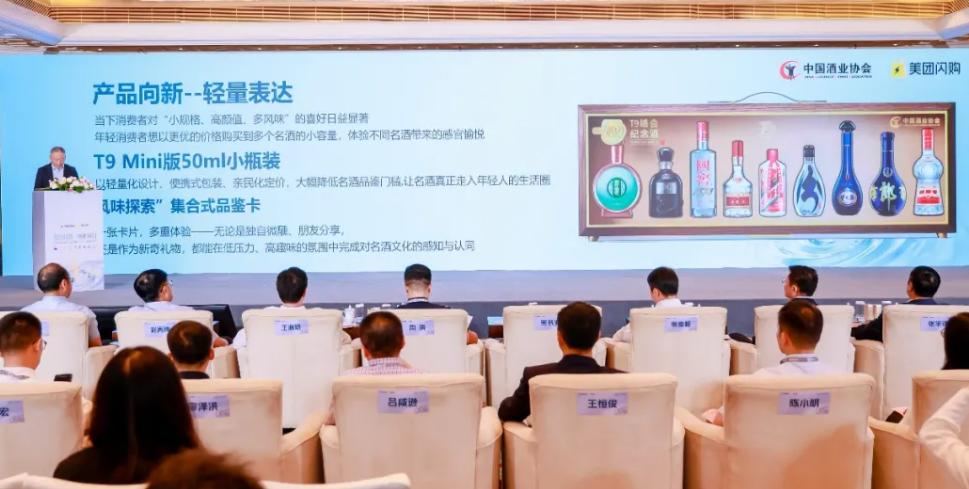
These three signals together point to the same fact: The instant online sales of alcohol products are saying goodbye to the "wild - growth phase" and entering a new phase of "value competition".
The core of this change lies not in the platforms becoming smarter, but in the fact that consumers have changed.
The underlying logic behind "The more expensive, the more popular": What are consumers buying?
During last year's 618 Shopping Festival, the main reason for consumers to buy alcohol on instant online sales platforms was the low price.
If Flight Mao - Tai is 200 yuan cheaper than in tobacco and liquor stores, who can resist buying it?
During this year's 618 Shopping Festival, Flight Mao - Tai is more expensive on the same instant online sales platforms than in some offline channels.
But consumers are buying even more.
Why?
Because consumers are not just buying alcohol, but "the exact right moment".
A series of data is still worth seeing: 73% of the orders in the instant online sales of alcohol products are delivered to residential areas, 70% are placed at night, and the proportion of young customers aged 18 to 35 is 78%.
Translated into a picture: It's eleven o'clock at night, you're watching a TV show and suddenly you feel like having a drink.
You don't want to change clothes and go downstairs, you don't want to wait three days for the delivery service, and you don't want to store a whole case of alcohol. You open your phone, place an order, and it will be delivered in 30 minutes.
In this scenario, consumers are willing to pay 10 or 20 yuan more. They are no longer paying for the alcohol, but for the freedom of "no longer having to wait" and for the certainty of "being satisfied at this moment".
I call this the scenario premium.
The pricing in traditional e - commerce logic is "Cost + Profit + Price comparison". Those with a shorter supply chain and larger scale can sell cheaper.
But the pricing of alcohol products in instant online sales is increasingly determined by the scenario value - whoever can best capture my little moment exactly can achieve a premium.
Last year, it was about who offered more subsidies; this year, it's about who can deliver the drink I want to drink at ten o'clock at night in 30 minutes.
The new game between platforms and alcohol producers: From price comparison to ecosystem competition
Since consumers have changed, the rules of the game have also changed.
The roles, relationships, and strategies of platforms and alcohol producers are being restructured.
Let's first look at the platforms
Meituan Flash Shopping focuses on "Infrastructure + Trust".
It has built over 2,000 self - owned pre - warehouses for Waima Sending Wine and jointly launched a "Whole - chain Guarantee System" with the brands.
The decision of the nine alcohol producers to choose Meituan for the joint first release is not based on subsidies, but on the fact that it can solve the deepest trust problem of "fear of fake alcohol products when shopping online".
Taobao Flash Shopping focuses on "Ecosystem + Traffic".
It has made "hourly delivery" a top priority and uses its more than 55 million 88VIP members to market alcohol products to high - net - worth customers. At the same time, it forms a traffic matrix with Tmall Supermarket.
JD Instant Delivery focuses on "Logistics + Supply chain".
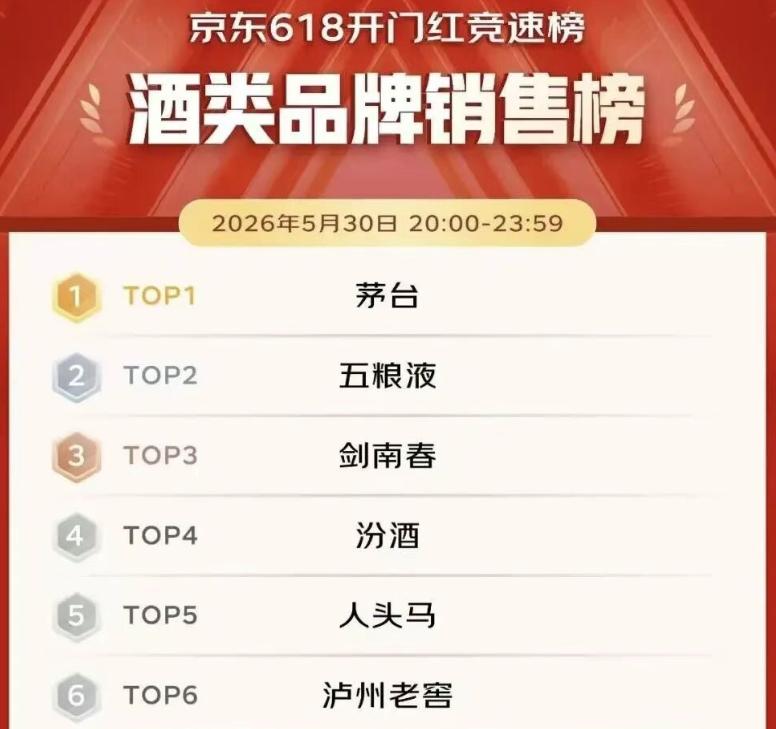
It relies on its own logistics and the network of "JD Wine World" stores and emphasizes the reliability of delivery and the quality of service.
The three platforms take different paths, but there is a common change: They no longer only rely on subsidies.
Meituan has made the ninth day of each month an alcohol festival to shape customers' purchasing habits; Taobao invests billions, but the focus is on the service experience and exclusive products; JD emphasizes "next - day delivery + invoicing" for business scenarios.
Now let's look at the alcohol producers
Last year, the alcohol producers were reactively involved in the competition - the platforms sold at low prices, and the alcohol producers had to take care of price regulation and give explanations.
This year, the alcohol producers have become active players:
Maotai Jiangxiangjiu has opened nearly 3,000 official stores on Taobao Flash Shopping and offers 30 - minute delivery;
Wuliangye has opened brand - fast warehouses together with dealers and carefully but firmly adheres to this strategy;
Luzhou Laojiao has developed a "Live - streaming + Hourly delivery" cycle, where you can place an order on the Douyin live - streaming page and have it delivered within half an hour;
Nine leading alcohol producers have jointly launched 50 - ml "Small Enjoyment Bottles", which are specially developed for the instant online sales context.
Why has the situation changed so quickly?
Because the alcohol producers have done the math: In traditional distribution channels, there is an overhang of inventory, and the average inventory turnover time in the industry is nearly 900 days, and the growth in offline business is weak.
In contrast, instant online sales reach 78% of young customers and 70% of night scenarios - this is a growth potential that traditional distribution channels simply cannot achieve.
But the alcohol producers are also very realistic.
They have to conquer this market, but they have to handle it carefully.
Therefore, Maotai chooses the "Multi - channel Strategy" and doesn't put all its eggs in one basket; Wuliangye cooperates carefully and controls prices by naming unauthorized stores; Luzhou Laojiao innovates aggressively and uses "Live - streaming + Hourly delivery" for content conversion.
This is an "Ecosystem competition", where it's no longer just about the platforms' subsidies, but about the cooperation between platforms, alcohol producers, and stores.
The platforms provide traffic and data, the alcohol producers provide exclusive products and brand building, and the stores provide service and delivery. The three parties jointly create "scenario value" and then share the premium.
The end of price comparison is a zero - sum game, the beginning of ecosystem competition is the joint creation of value.
What matters in the second half of the instant online sales of alcohol products?
If in the first half it was about who was faster, in the second half it's about "who is more accurate", and later "who understands you better".
First phase (completed): Race for speed
Whoever can deliver within 30 minutes wins.
But today, "speed" has become infrastructure, and almost all leading platforms can deliver within 30 minutes to an hour. Speed is no longer a competitive advantage.
Second phase (current): Race for scenario fit
Who can predict: If it rains tonight, which young people in which residential areas will feel like having a drink? On Friday night, which types of beer will be ordered the most near the barbecue stands?
This is not a question of delivery ability, but of data ability - through historical orders, weather conditions, holidays, and regional consumption characteristics, the platforms can precisely manage inventory, set dynamic prices, and intelligently plan delivery.
Whoever can ensure that "before you even think about what you want, the goods are already in the warehouse near you" can minimize the cost of service and maximize the conversion rate.
That's "accuracy".
Third phase (future): Race for user data
When the platforms and alcohol producers have collected enough data on users' drinking behavior - which flavors, price ranges, scenarios, and repeat purchases are preferred - they can offer a "personalized" recommendation and service.
It's no longer the case that the user searches for alcohol, but that the system recommends a niche craft beer to you in your slightly intoxicated state that you might like.
That's the true understanding of you.
In the second half of the instant online sales of alcohol products, it's not the delivery speed that decides, but who can restructure the "Person - Product - Scenario" relationship with data so that each bottle of alcohol finds its place at the right moment.
Conclusion
It's eleven o'clock at night, you're watching a great TV show and suddenly you feel like having a drink.
You open your phone and see that Platform A sells for 130 yuan and delivers tomorrow; Platform B sells for 150 yuan and delivers in 30 minutes.
You choose Platform B.
The additional 20 yuan you pay is not for the alcohol, but for the freedom of "no longer having to wait".
This is the secret behind the phenomenon of "The more expensive, the more popular" in the instant online sales of alcohol products: When the industry learns to evaluate "emotions" and "scenarios", the price