Chinese automakers are busy "shopping spree" overseas
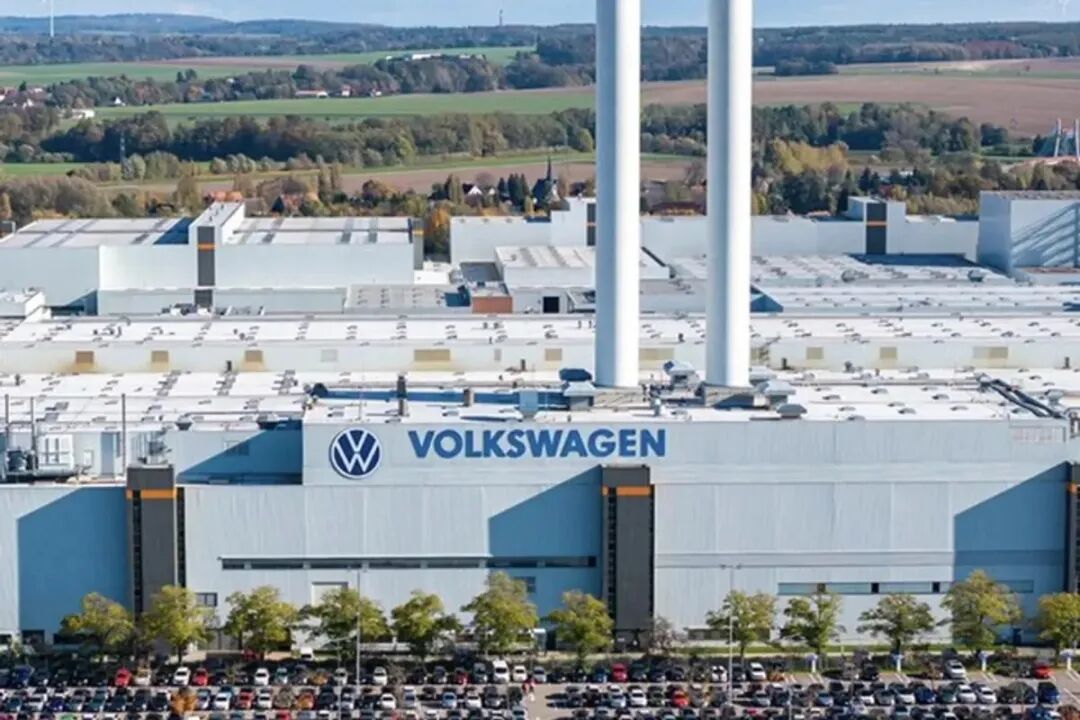
Let's start with XPeng Motors' overseas moves. Recently, there were reports that Volkswagen Group is exploring cooperation with Chinese companies. To put it simply, some of its factories have a very low production rate, so it might as well produce low - cost vehicles developed in China and vehicles of Chinese brands.
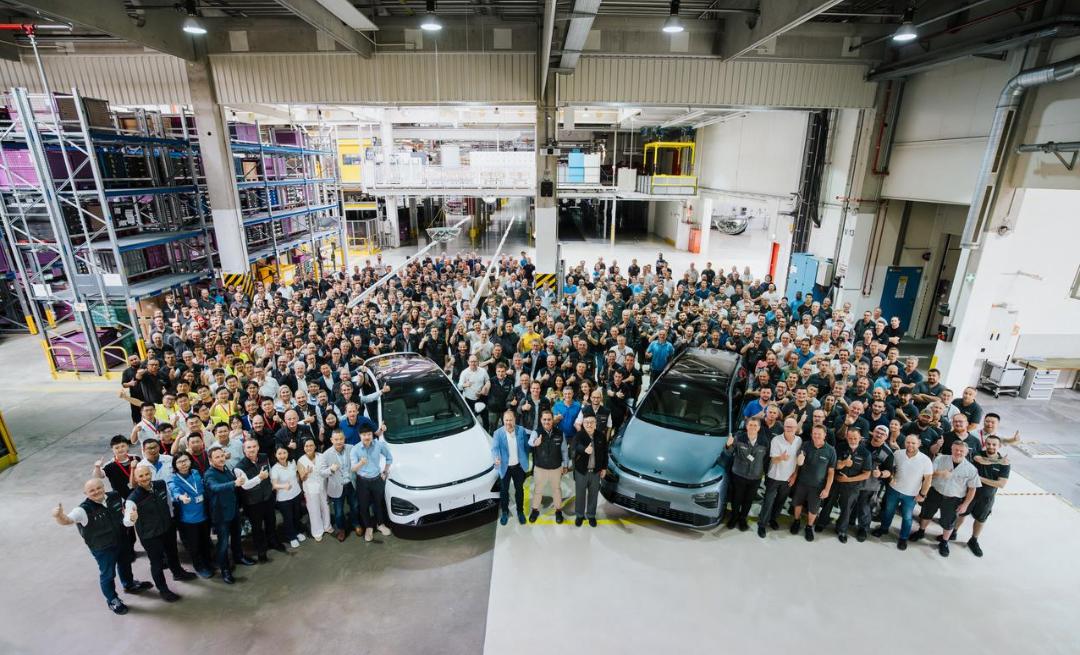
This potential cooperation partner is very likely to be XPeng Motors. On May 14th, another report stated that XPeng Motors is in talks with its shareholder, Volkswagen Group, and may acquire a factory in Europe to expand its sales in the region.
As early as 2023, Volkswagen invested approximately $700 million in XPeng and became one of its shareholders. Currently, XPeng outsources production to Magna in Austria. Given its strong desire to expand its European business, it's not ruled out that Volkswagen Group, as a shareholder, may have the idea of replacing Magna.
Moreover, on May 31st, XPeng Motors officially acquired 90.1% of the equity of EIDO, an electric - vehicle manufacturing entity under the Indonesian listed company PT Sinar Eka Selaras Tbk. This means that XPeng Motors has its first overseas factory.
XPeng's frequent overseas moves are just a microcosm of Chinese automakers' overseas acquisitions. This magnificent picture is still unfolding.
01
All - out Overseas "Shopping Spree"
Since the beginning of this year, Chinese automakers' actions to acquire overseas factories at a low price have been frequent, becoming a "phenomenal" event.
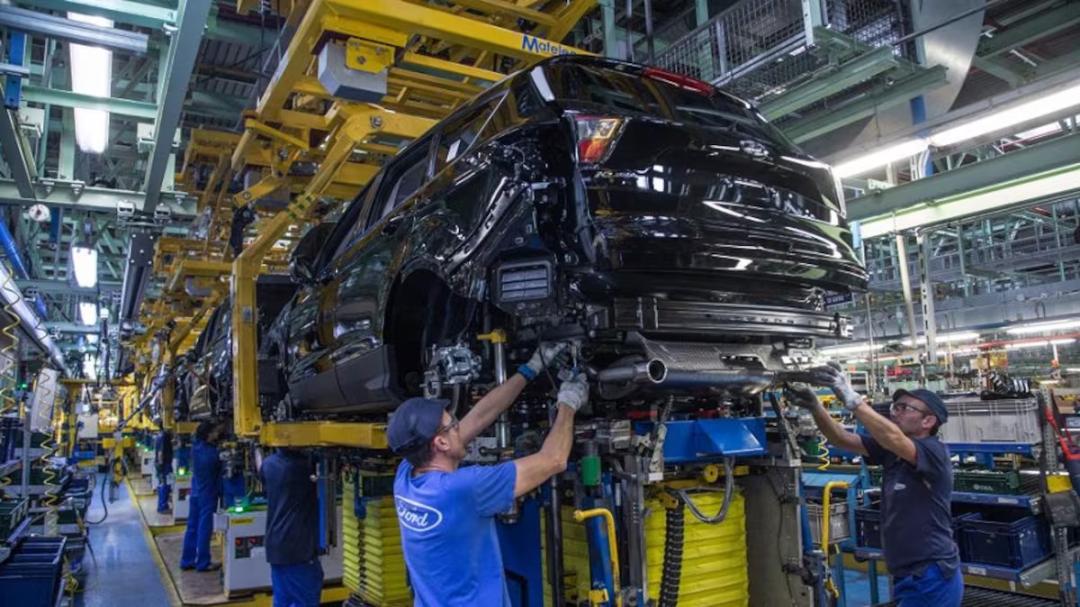
I also mentioned in my previous article "Buy, Buy, Buy: Chinese Automobile Companies' Overseas Acquisitions are Accelerating" that the latest target of Geely's acquisition is the BODY 3 assembly line of Ford's factory in Almussafes, Valencia, Spain.
For Geely, acquiring this factory line can avoid the 10% regular tariff and 18.8% anti - subsidy tariff imposed by the EU, enabling "European manufacturing". For Ford, it can revitalize idle production capacity, retain the employment of 4,142 employees, and reduce factory losses. It's a win - win situation.
Not only Geely, on May 13th, Li Ke, the executive vice - president of BYD, also said that the company is in talks with European automakers such as Stellantis Group, planning to take over idle or under - utilized factories in Europe.
A few days later, on May 20th, Stellantis Group issued a statement saying that it is discussing with Dongfeng Group the possibility of locally producing Dongfeng Group's new - energy models at its factory in Rennes, France.
Behind this, Dongfeng Motor and Stellantis Group have signed a memorandum of understanding. The two parties plan to establish a joint venture in Europe and plan to directly produce Dongfeng's high - end brand Voyah's electric models at the Rennes factory.
Obviously, as the saying goes, "the wheel of fortune turns". One side is "selling", and the other side is "buying". Leading domestic automakers such as BYD, Great Wall, Dongfeng, Chery, and Changan have all started their "shopping spree" globally.
Moreover, Chinese automakers' acquisitions of overseas factories show two distinct characteristics: First, the layout is precise, focusing on the three major markets of Europe, South America, and Southeast Asia; Second, the pace is fast, showing a strong expansion momentum.
As a seller, Ford not only sold its factory in Spain. Previously, it also sold its factory in Camacari, Brazil, to BYD. After BYD took over in March 2024, it took only 16 months to roll out the first vehicle. By May 2026, the cumulative number of vehicles produced exceeded 50,000.
Another one of the "Big Three" in Detroit, General Motors, sold its factory in Rayong, Thailand (including the vehicle manufacturing factory and the powertrain factory) to Great Wall Motors for 4.72 billion yuan (22.6 billion Thai baht) in 2020.
After the handover, Great Wall Motors added approximately 5 billion yuan (12 billion Thai baht) for the intelligent transformation and upgrade of the factory. On January 12th, 2024, the Ora Good Cat of Great Wall Motors rolled off the production line at the Rayong factory.
Moreover, Great Wall Motors later acquired the former Mercedes - Benz factory in Iracemapolis, Brazil, and put it into production in August 2025.
Chery reached an agreement with Nissan at the beginning of 2026 to acquire its factory in Rosslyn, South Africa. Recently, there were reports that the two parties signed a memorandum of understanding, and Nissan is preparing to produce vehicles for Chery at its factory in Sunderland, UK.
So, why are Chinese automakers so active in acquiring overseas factories?
The big background is that China's advantages in the new - energy vehicle sector have emerged. Coupled with the intense competition in the domestic market, the redundant production capacity needs to be released. As evidence, in the first five months of this year, the overall domestic market declined by 19.5%, while overseas sales increased by more than 60%.
Moreover, the rise of anti - globalization trade protectionism means that countries and regions such as the EU, Brazil, and India impose high tariffs on imported cars. For Chinese automakers, acquiring old factories at a low price is undoubtedly a "fast - track" to bypass trade barriers. It's an efficient "move - in - ready" model that fits the "light - asset + fast - paced" global layout.
As we all know, currently, there are three common ways for Chinese automakers to achieve local production overseas:
One is KD assembly, which is an entry - level option. Another is outsourcing production. For example, XPeng Motors outsources production to Magna's factory in Graz, Austria. The third is to build their own factories.
The latest way is overseas acquisition. As I said in my previous article, "The next step for Chinese automakers is overseas acquisition". Considering factors such as trade barriers, cost structure, and market response speed, compared with building new factories, acquiring factories has several advantages:
First, the price of acquiring a factory is much lower than the cost of building a new one. For example, the acquisition price of BYD's Ford factory in Brazil is only 1/4 of the cost of building a new factory of the same scale. This cost advantage can quickly achieve global production capacity layout and improve the efficiency of capital use.
Second, there is the issue of time cost. Building a new overseas factory, from approval, infrastructure construction, production line setup to production, takes at least 3 - 5 years. However, the transformation period after acquiring a factory only takes 6 - 16 months, which can gain valuable time and market windows.
Third, acquiring a factory can obtain ready - made production qualifications, supply chains, and skilled workers, saving the cumbersome processes of applying for qualifications, recruiting and training personnel, and setting up supply chains. It's a bit like moving into a fully - furnished house.
From the local perspective, after Chinese automakers acquire factories, they can "restart" the old production capacity and provide local people with a livelihood. It's a win - win situation, which lays a good foundation for Chinese automakers to "go global" and take root in overseas markets in the long term.
02
"The Bigger the Waves, the More Valuable the Fish"
Of course, there are also risks when Chinese automakers acquire overseas factories at a low price.
As the saying goes, "The bigger the waves, the more valuable the fish". The core risks can be roughly summarized into several categories, such as geopolitics, legal compliance, labor unions, financial valuation, post - acquisition integration, technology supply chain, and operating costs.
Among them, geopolitical and labor union risks are the most fatal, with the highest probability of integration failure (some data shows that the historical success rate in the industry is less than 10%).
Regarding geopolitical risks, it's obvious that with the rise of China's new - energy vehicle industry, it has been comprehensively suppressed in overseas markets.
For example, the EU's "Foreign Subsidies Regulation (FSR)" and the US CFIUS have listed Chinese - funded automakers as key review targets, rejecting or imposing strict conditions (such as a shareholding of ≤49%, technology isolation, and local executive seats) on the grounds of "national security/industrial security".
Not only is the security review in Europe and the US normalized, but there is also a risk of sudden policy changes and upgraded barriers.
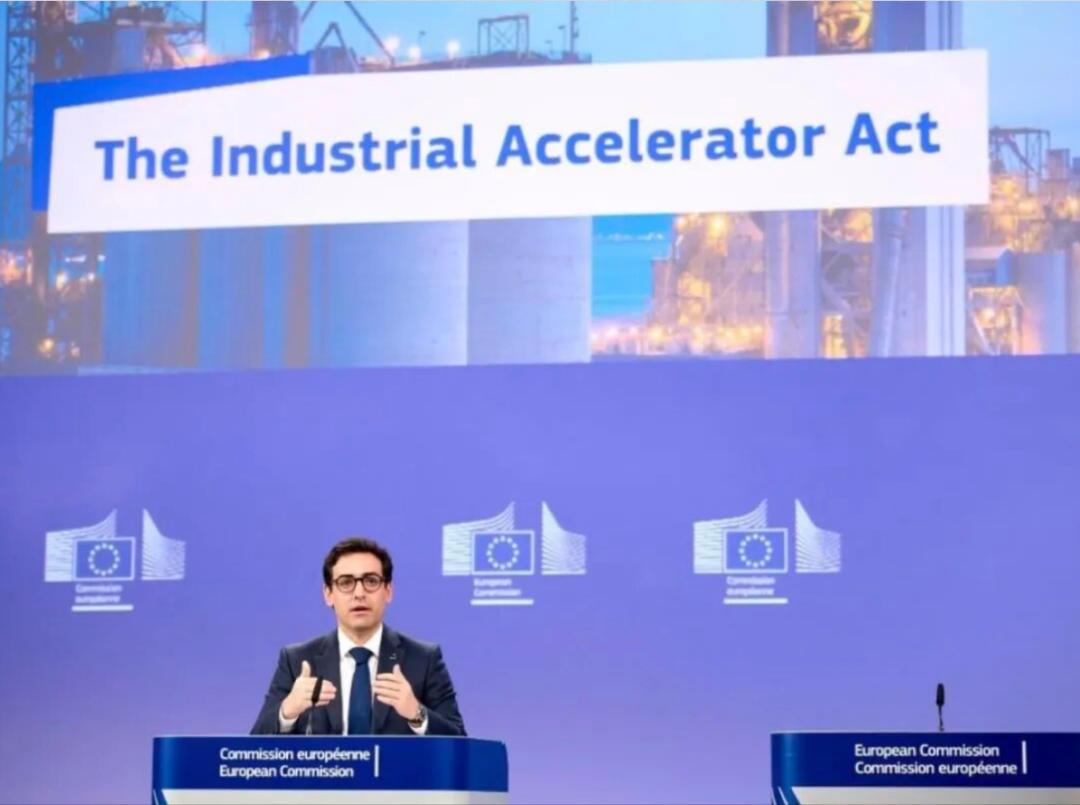
Recently, the European Commission officially announced the legislative proposal of the "Industrial Accelerator Act". The core logic of this act is clear: Europe has officially abandoned the traditional free - trade thinking and fully shifted to a protection model prioritizing industrial security.
The act requires that 70% of the components be of EU origin and that the core battery components be locally manufactured. More importantly, this new industrial rule almost completely replicates the core system of the "United States - Mexico - Canada Agreement (USMCA)". In essence, it's a suppression at the institutional and regulatory levels.
Countries like Mexico and Indonesia are even worse. They frequently adjust rules of origin, tariffs, and subsidy thresholds, directly weakening the core logic of "avoiding tariffs through local production". Of course, it's still much better than countries like India, which have no credibility.
In addition, there are also invisible barriers in the overseas right - hand - drive market with a scale of 2 billion. Right - hand - drive markets such as the UK, South Africa, and Australia have technical standard discrimination, channel exclusivity, and media stigmatization against Chinese - funded brands. Therefore, it's very difficult for brands like Chery and BYD to make breakthroughs in the UK market this year.
When it comes to labor and union risks, it's also the most thorny issue for Chinese automakers.
Unions in Europe, the UK, and South Africa have great power. Mergers and acquisitions must be approved by the unions. Their core demands are nothing more than job security, salary increases, and no reduction in welfare. Moreover, labor laws in Europe (Spain, Germany) and South Africa are very strict. Layoffs or salary cuts require union approval and high compensation (such as the "Mecanismo RED" protection mechanism in Spain).
Therefore, different from the domestic situation, the labor cost in overseas factories is highly rigid. For example, the hourly wage in European factories is generally between 40 - 60 euros, and welfare accounts for 40% of the salary. Coupled with union protection, the cost of dismissing employees is extremely high. In addition, old factories generally have redundant personnel, an aging workforce, and a high - welfare burden. Transformation to electrification also requires a huge amount of layoff compensation.
If Chinese automakers forcefully implement the domestic management model after acquiring a factory, it's easy to trigger strikes, work stoppages, and boycotts, and even government intervention. A real - life example is that SAIC's initial management method in its Thai factory led to a turnover rate of up to 35%. Finally, through the localized "overtime voting system", the employee turnover rate was reduced to a reasonable level.
This possibility of cultural conflict and talent loss reflects the cultural differences between the East and the West. China's centralized decision - making and efficiency - first approach conflicts with the Western emphasis on process norms, democratic participation, and individual rights. The game process in this regard will be very complex and long - term.
For another example, if the management is forcefully replaced and the domestic supply chain is promoted after the acquisition, it's easy to cause the collective departure of the core technology/management team, making the value of the merger zero. An example is the loss of the technical team after Ningbo Huaxiang acquired the automotive electronics business of Hella in Germany.
This risk of integration failure after factory acquisition, the so - called "buying but not being able to manage well", is also the most common lesson.
There is a problem of "holding shares ≠ control". Specifically, it includes problems such as isolation of IT/financial systems, resistance from local teams, difficulty in decision - making and execution due to cultural conflicts, low efficiency, and serious internal strife. There are also problems such as difficulty in technology transfer, supply - chain coordination, and channel integration. The final result may even lead to "1 + 1 < 1".
Another point is the long - term operation and cost risks that Chinese automakers need to face in overseas acquisitions, which require a "protracted war".
Idle factories in Europe and the US generally have production equipment from the fuel - vehicle era, and it's difficult to transform them into electric - vehicle production. Moreover, their technical standards do not match those in China. For example, the idle factories of Ford and Nissan have problems such as aging equipment, non - compliance with environmental protection standards, and poor production - line adaptability. The electrification transformation requires hundreds of millions to billions of euros and takes 1 - 2 years, during which there will be continuous losses.
In addition, the capacity utilization rate of idle factories is already low. Even after transformation and production, there is still the problem of capacity ramp - up, and the fixed - cost allocation is high, which will also lead to long - term losses.
For example, although BYD's factory in Brazil was put into production in 2025, it was still ramping up in 2026. According to Doubao's calculation, the loss in 2025 (half - year operation) was 400 - 600 million yuan, and the expected loss for the whole year of 2026 is 800 - 1.2 billion yuan. It is expected to achieve break - even in mid - 2027, that is, after the capacity utilization rate reaches ≥75%.
So, there is a lot of knowledge in the "game" of overseas acquisitions. However, overall, acquiring overseas factories is still a relatively realistic choice for Chinese automakers in the process of globalization.
Trending-wise, in 2025, China's automobile export volume reached 7.098 million vehicles, a year - on - year increase of 21.1%, ranking first in the world for three consecutive years. In 2026, this momentum is even stronger. In the first four months, the cumulative export volume was 3.127 million vehicles, a year - on - year increase of 61.5%.
The core driving force behind this growth is the global production - capacity network that Chinese automakers are accelerating to build. Decades ago, global automotive giants set up factories in China. Now, achieving local production through overseas factory acquisitions has become the key for Chinese automakers to expand globally. Solving problems in the process of development has always been our forte, so there's no need to worry about the future.