Yungu, the place that rarely sees Jack Ma, has launched Hangzhou's first high school AI specialty class.
News about Yungu School in 2026 has been coming one after another.
In February 2026, the school committee of Yungu School decided to make an additional investment of 1.06 billion yuan. The funds will be used for the second - phase construction of the school and its future development. So far, the cumulative total investment in Yungu has reached 2.2 billion yuan.
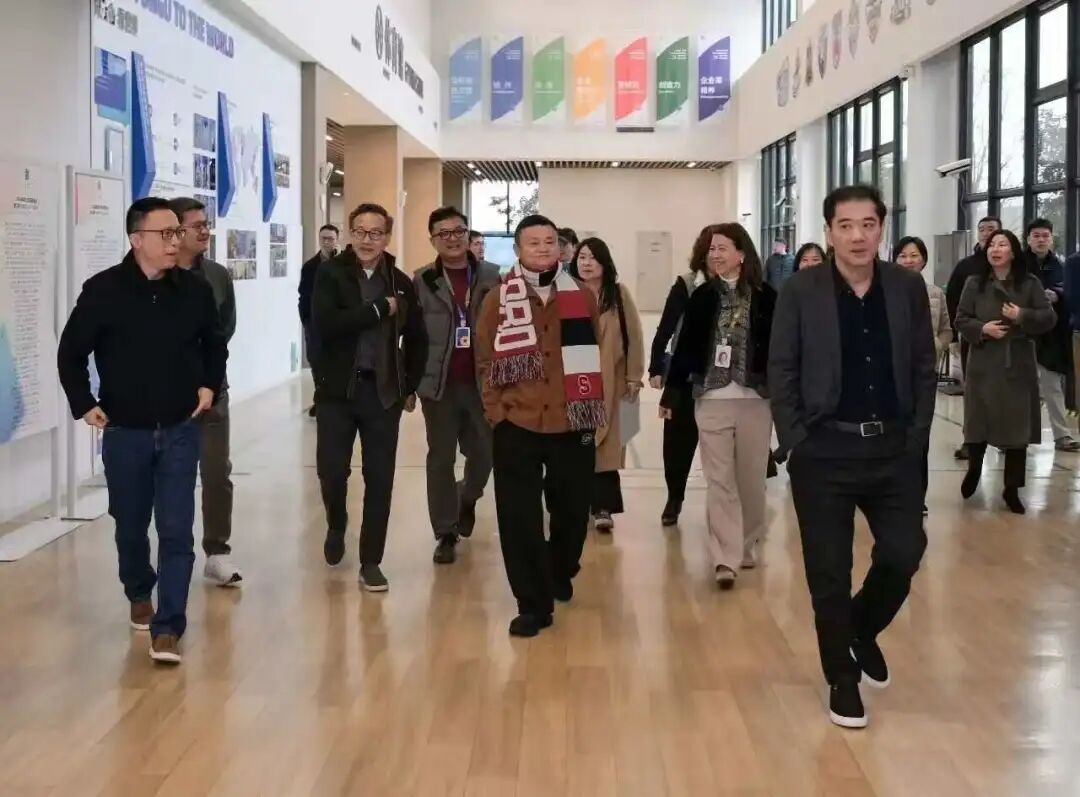
In March 2026, Jack Ma and a rare lineup of Alibaba executives made an appearance at Yungu School.
Jack Ma mentioned during the exchange: "The impact of AI is very significant, but the opportunities are also great. AI brings an opportunity for education to return to its essence. The time spent on rote memorization and question - brushing can be freed up to cultivate creativity and imagination. Children can have more time to play, learn music, painting, and do sports, and learn to share, feel, experience, listen, and understand from these activities..."
Soon, Yungu School took new actions around AI + education.
In April 2026, the "Special Class for Innovative Application of Artificial Intelligence" in the high school of Yungu School was approved by the Hangzhou Education Bureau.
This is also the first high - school AI special class in Hangzhou.
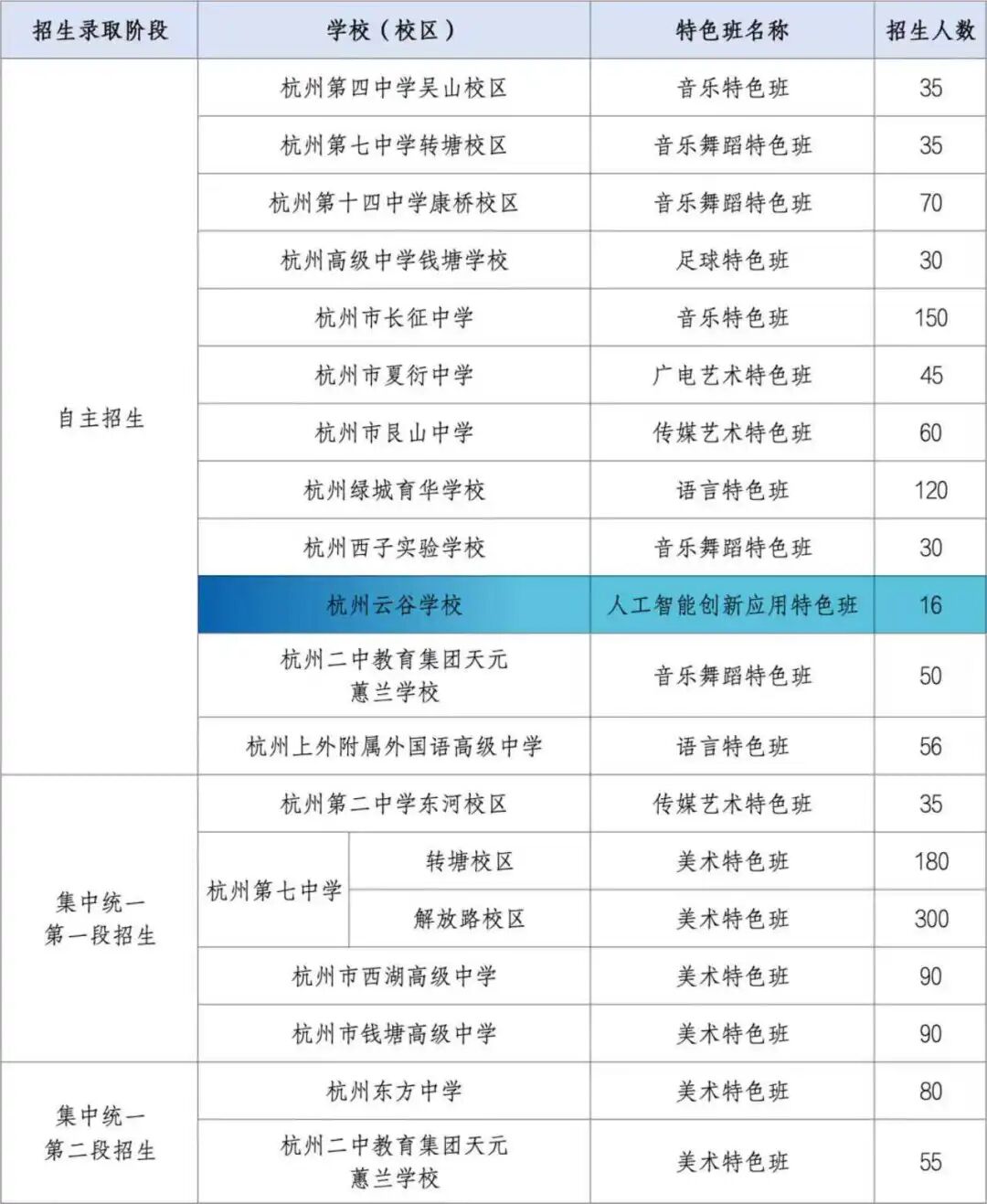
In 2026, this special class plans to recruit one class with a total of 16 students, mainly targeting "some children who already have strong learning abilities and a willingness to explore."
Regarding the original intention of establishing the class, Yungu Education said: "Let artificial intelligence truly enter the learning process, problem - solving scenarios, and creative practices of children, and create a project focusing on the cultivation of science and technology innovation talents for the future."
In Yungu's view, the special class for artificial intelligence should not just be a class for "being better at writing code."
As for what the "characteristics" of the "Special Class for Innovative Application of Artificial Intelligence" are, Yungu Education breaks it down into multiple aspects such as the cultivation path of AI innovative application, teaching design, curriculum construction, learning platform, and project practice.
Among them, in teaching design, the underlying support is scientific literacy and mathematical foundation, the key tool ability focuses on technological literacy, and the core goal is engineering creativity literacy.
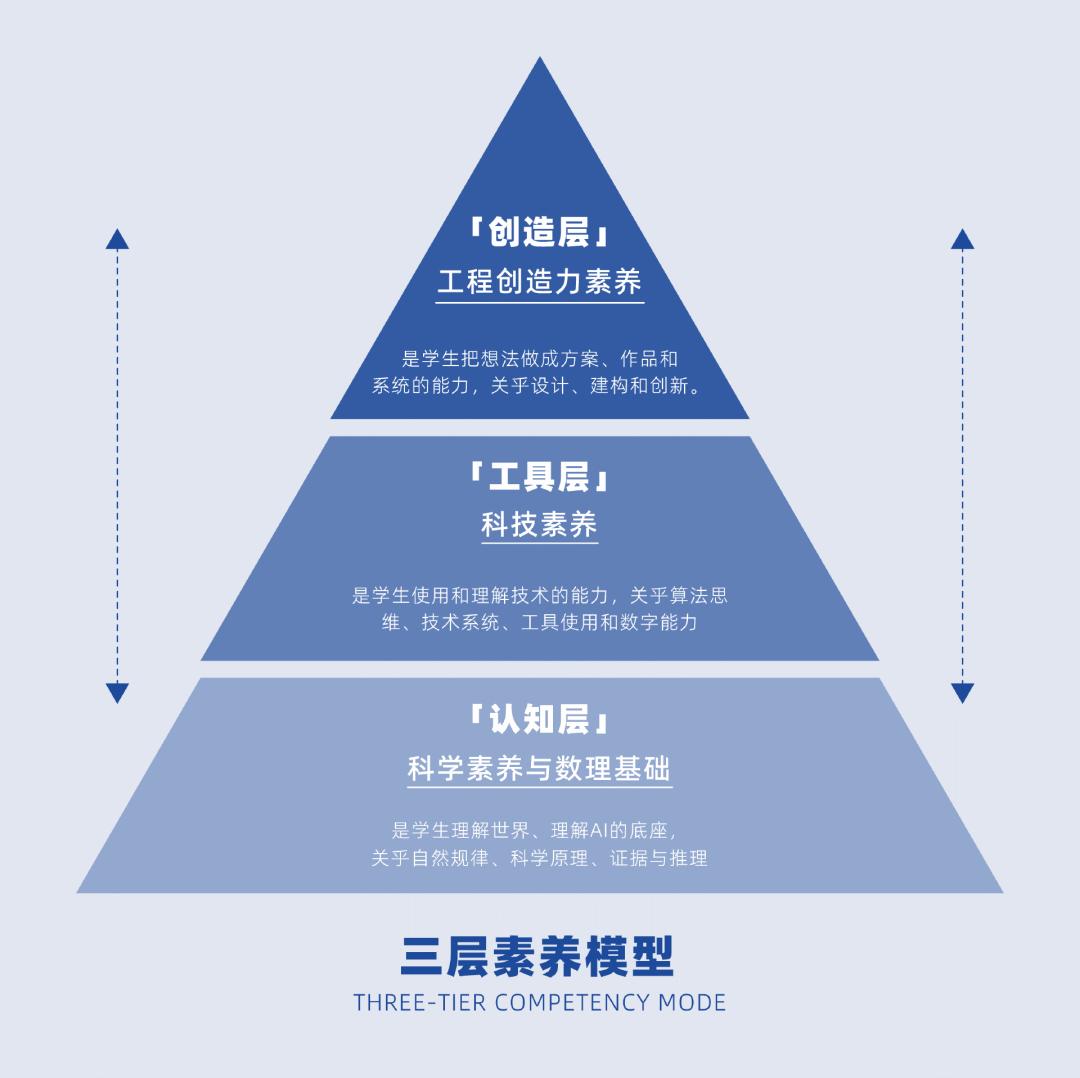
Yungu emphasizes that a solid mathematical foundation enables students to understand problems deeply, understanding of artificial intelligence and technology allows students to learn to use tools, and engineering creation enables students to turn their ideas into real works step by step.
The three - year consistent curriculum includes professional courses such as Principles of College Computer Science, Vibe Coding, Data Structures and Algorithms, AI Innovation and Development, Cloud Computing, Machine Learning, and Robotics, and is accompanied by mathematical support courses such as Calculus, Linear Algebra, and College Physics.
The learning process is in the form of PBL project - based learning + stratified class - scheduling.
There are also Alibaba Cloud services + local GPU clusters + robot hardware laboratories + data structure and algorithm practice platforms.
For the teaching team, Yungu has designed a resource support system of "collaboration between inside and outside the school", covering teacher allocation, college entrance guidance, and cooperation between industries and universities.
Yungu plans to cultivate future science and technology innovation talents who can face complex problems and carry out systematic creation through an innovation - practice - oriented project learning path.
On May 24th, last Sunday morning, Yungu completed the technical test for the 2026 Special Class for Innovative Application of Artificial Intelligence.
The exam is divided into:
1. Written test, with a total score of 120 points, including mathematical logic + information technology literacy and other contents;
2. Interview, with a total score of 80 points, including 20 - minute insights into AI application & learning ability.
This exam is for candidates who meet the enrollment conditions of various high schools in Hangzhou urban area. The minimum admission score for the 2026 high - school entrance examination is 550 points.
The calculation mechanism for the final assessment total score is: Technical test score × 3.25 × 70%+ High - school entrance examination score × 30%
It can be seen that compared with the high - school entrance examination score, for the Special Class for Innovative Application of Artificial Intelligence, Yungu attaches more importance to students' abilities such as mathematical thinking, insights into AI application, as well as their interest and basic understanding in fields such as computer science and robotics.
Actually, in late April, Yungu held discussions and sharing sessions with many industry experts in the fields of AI, technology, products, entrepreneurship, and youth science and technology education on the curriculum design of the special class.
From this sharing, we can also catch a glimpse of some key points that Yungu focuses on regarding the artificial intelligence special class.
Fu Wei, the technical advisor of Yungu School and a serial entrepreneur, mentioned that the artificial intelligence special class is most afraid of becoming a "programming class."
He pointed out that as the AI era progresses, it is more necessary to strengthen basic abilities in mathematics, physics, English, and writing, so that students can establish structured thinking, thinking close to the essence of things, and the ability to clarify problems. Basic disciplines determine the lower limit, while innovative education and practice of real - world problems open up the upper limit.
Zhang Kaifu, the former person - in - charge of Alibaba's Search and Recommendation Intelligence Division and International Digital Business, analyzed that in the future, the industry will value students' developer qualities, basic knowledge in mathematics and physics, expression ability, initiative, and the ability to solve real - world problems with AI.
He also proposed a method to test the effectiveness of the curriculum content: "If students have access to AI, what would they want to learn with it - that's what's worth teaching."
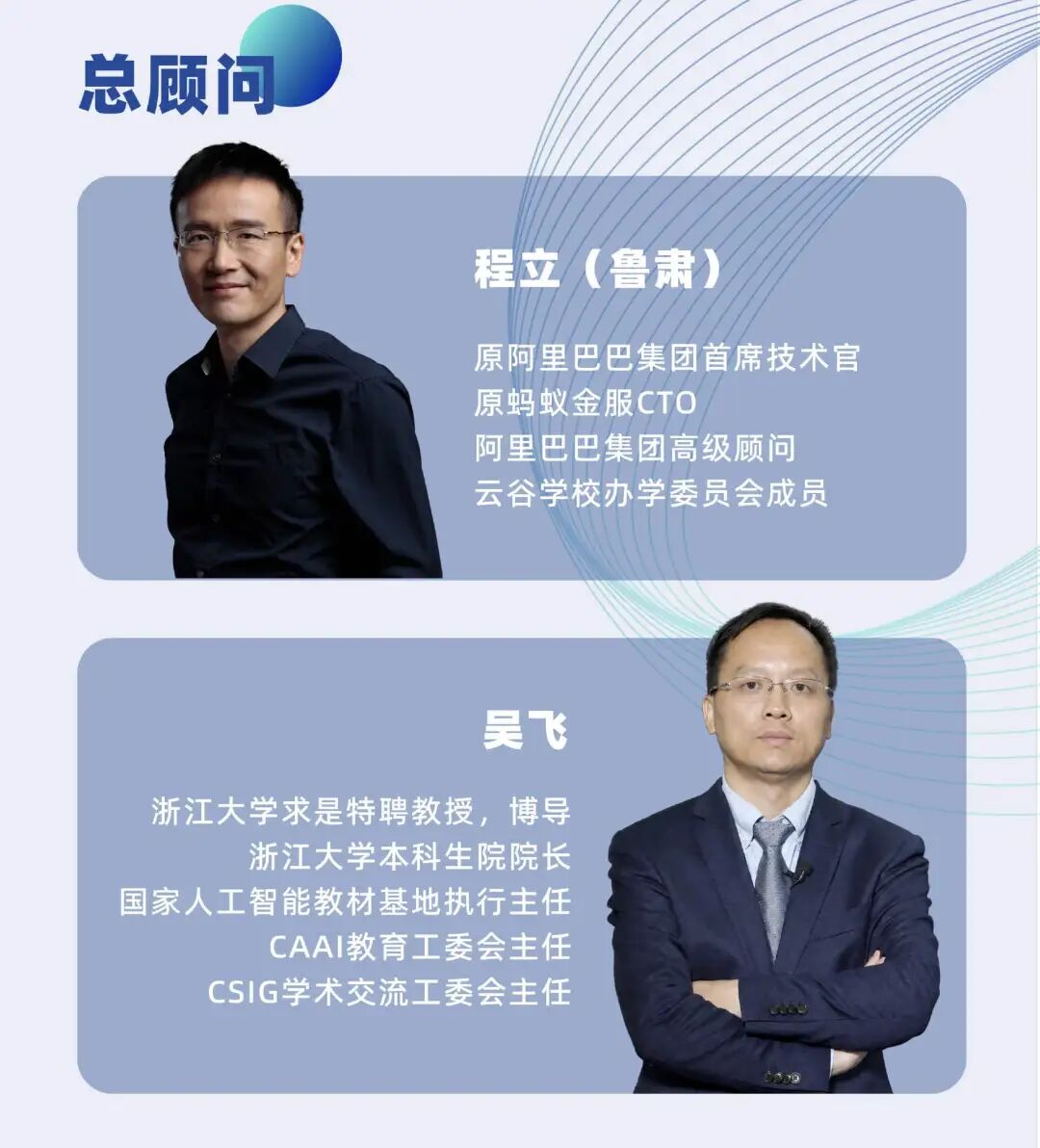
Wu Fei, a distinguished professor at Zhejiang University and the dean of the Undergraduate School, is also one of the general advisors of the special class. In a media interview, he pointed out that "artificial intelligence education should not be completed only in universities. If students can establish a basic and universal artificial intelligence thinking in the basic education stage and develop correct and comprehensive artificial intelligence literacy, it will have a better effect on talent cultivation in universities."
Wu Fei emphasized that at present, in terms of AI entering primary and secondary school curricula, teaching materials, courses, teaching staff, and training platforms are all in the exploratory stage.
The 16 spots released by Yungu are a pioneering practice.
This is also in line with the logic of Jack Ma's sharing at Yungu in March.
Jack Ma believes that whether a school belongs to the AI era is not determined by the number of AI servers it has or how strong its AI skills are. Because AI has a "chip", while humans have a heart. The biggest change in education in the AI era is that teachers can completely become "soul engineers" rather than knowledge instillers.
Jack Ma pointed out that in the future, it's not about letting children compete with AI in calculation and memory, but about letting children stay curious, learn to empathize and take responsibility, and have a sense of experience. Because curiosity, imagination, creativity, judgment, and aesthetic ability are the real abilities that education in the AI era needs to endow children with...
As a pilot for exploration in the field of AI + education, Yungu is also constantly making new attempts.
At the 2026 World Digital Education Conference, Wen Jia, the president of Alibaba's Public Affairs Department, introduced that Yungu encourages teachers to develop agents and AI applications by building an "AI Square" and supports teachers in continuous exploration in education and teaching. At the same time, the school integrates AI ethics throughout the entire process of students' AI learning, and solidly cultivates students' AI literacy for the future from three dimensions: AI cognition, AI tool use, and AI - assisted learning.
It is also learned that most of the agents and applications on the Yungu School platform are designed and developed by teachers themselves, covering almost all disciplines. According to official information, by the end of last year, there were more than 100 of them.
For example, in the primary school stage, there is an AI mini - game to help children memorize words; in the junior high school stage, there is a "Class Interaction and Growth System" to empower class management and interaction; there are also application challenges for history and mathematics review at the end of the semester; and there are some AI applications for experiential learning, such as an interactive application based on Li Qingzhao's poems and life experiences, which allows students to understand the characters step by step in different scenarios...
Such explorations have also emerged one after another in 2026.
In March 2026, on the occasion of the 80th anniversary of the founding of Beijing No.101 Middle School, the "Lingyi Academy" of the Yingcai College was officially established.
The name "Lingyi" is taken from the 0 and 1 in the most basic binary language in the computer world. This college is committed to strengthening students' "hard - core" skills in mathematical programming and algorithm development, and also attaches great importance to cultivating their comprehensive qualities of innovative thinking and responsibility, aiming to cultivate top - notch talents in the field of artificial intelligence who understand technology, are good at innovation, and are willing to take responsibility.
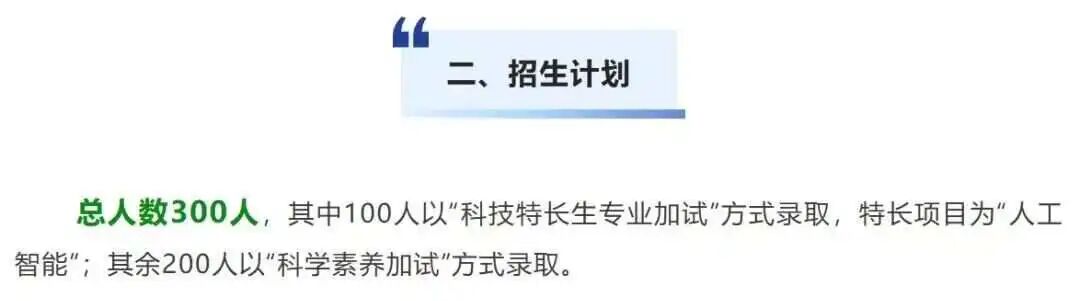
In April 2026, Nanjing Normal University High School added a "Science High School", recruiting 100 science and technology special - enrollment students with the specialty of "artificial intelligence"; there are also 200 spots in the early - admission batch for the "Science Literacy Test", directly releasing 300 positions, all related to "science literacy".
However, there have also been many voices on the Internet regarding Yungu's special class.
"Students with a high - school entrance examination score of over 550 already have a ticket to a good high school. By entering a traditional high school and following a more mature and systematic growth system to enter a good university, they can still choose majors related to artificial intelligence."
"Is it necessary to be so specific about the major at this stage?"
"In the first year of the first batch, I'm not brave enough to use the most important high - school stage for a trial."
"Maybe this is the class that can best cultivate teenagers in the AI era."
"Learning about AI is not as good as truly mastering it. The special class is an important step."
"What kind of families and children are more suitable for this class? Will it become a common class for the public in the future?"
...
Amid the discussions, Yungu's artificial intelligence special class has taken the first step in the growth path for teenagers to "understand AI, use AI, and improve AI."
This article is from the WeChat official account "Duozhiwang" (ID: duozhiwang), author: Feng Wei, published by 36Kr with authorization.