The more stingy Li Bin is, the more stable NIO's development will be.
In the first quarter of last year, NIO incurred a net loss of over 6 billion yuan, setting a record for the highest single - quarter loss since its listing. Its cash reserve dropped to less than 26 billion yuan, reaching the lowest level in recent years.
Facing public doubts and sarcasm, as well as the successive disappointments of suppliers and shareholders, Li Bin, the founder, chairman, and CEO of NIO, issued a solemn pledge: NIO, which had been in the red for ten consecutive years, must turn a profit in the fourth quarter of that year.
At that time, NIO had just launched two new models, LeDao and Firefly. However, the start was not smooth. The production ramp - up of LeDao L60 was difficult. Firefly, originally targeting overseas markets, was forced to turn to the domestic market due to tariff issues. As soon as it was unveiled, it was ridiculed as the "Six - eyed Flying Fish" and endured a lot of cold looks and mockery.
During that quarter, the monthly sales of the entire NIO company hovered around 10,000 vehicles, on the verge of survival. The shadow of the "darkest moment" loomed again. Li Bin later admitted that "less than 1% of the people in the world believed that NIO could make a profit at that time."
After that, Li Bin made a firm decision to promote the full implementation of the CBU (Cell Business Unit) mechanism in NIO. Relying on strict financial discipline and the rapid volume increase of two large pure - electric SUVs, NIO dispelled external doubts and extended the profit - making momentum to the first quarter of this year.
The focus of the outside world has shifted from "how NIO burns money" to "how Li Bin saves money."
01
The Valley of Death and the Novice Period
At the "Hundred - Person Conference" in April this year, Li Bin put forward a concept: The Valley of Death Effect for New Cars.
This term accurately summarizes a strange phenomenon in the current Chinese auto market: Some new cars sell like hotcakes as soon as they are launched, with orders pouring in like a tide. However, when the production capacity ramps up and the delivery ability stabilizes, the product's popularity melts away like an ice - cream in summer, leaving nothing behind.
The already limited technological leadership and price competitiveness are diluted by the endless stream of competing products. The order pool shrinks rapidly, and the "super hit" on the poster eventually becomes a "flash in the pan" in reality.
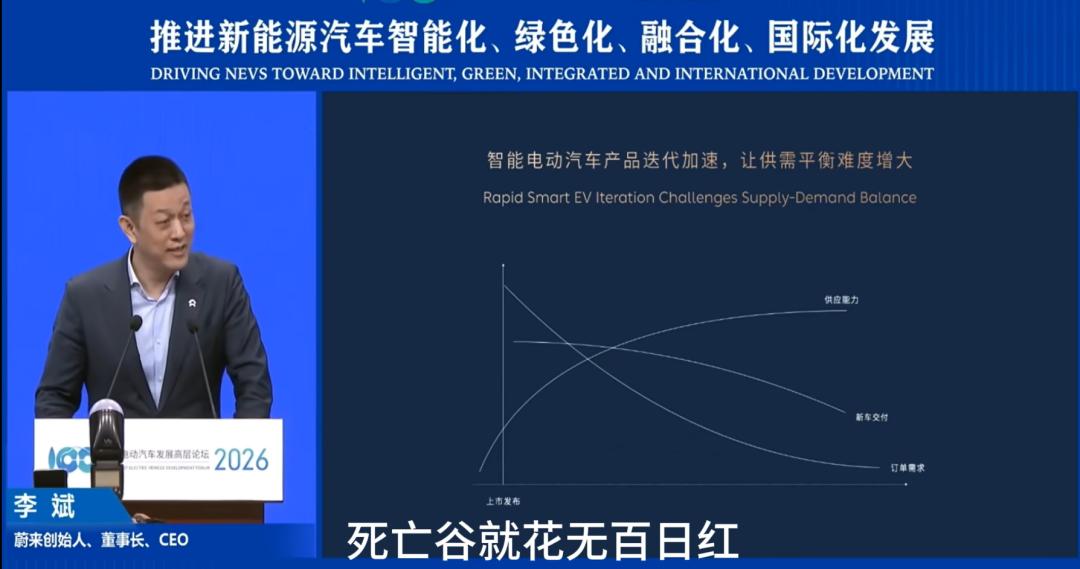
This phenomenon of "fast - coming and even faster - going demand" makes the mismatch between supply and demand a common occurrence in the auto industry. The "shelf - life" of most new cars is sharply compressed to less than a year. Li Bin summarized it as "flowers don't stay in bloom for a hundred days," and behind this is the "side effect" inevitably brought about by the rapid iteration of intelligent electric vehicle technology.
In the era of fuel - powered vehicles, due to the slow iteration of engine and transmission technologies, a new car would not undergo a mid - cycle facelift until at least 2 - 3 years after its launch, and a real - sense model replacement often took 5 - 7 years. Because the hot - selling cycle of products was long enough, car manufacturers had sufficient time to release production capacity, build up their reputation, and recoup their investments.
However, in the era of intelligent electric vehicles, everything has been accelerated, and everyone is being pushed to speed up.
Whether it is the three - electric system, intelligent chips, or AI algorithms, their iteration speed is constantly approaching "Moore's Law." The "shelf - life" of a new car is sharply compressed. If a car manufacturer cannot complete the production capacity ramp - up and form a continuous offensive during this most critical window period, then when competing products enter the market with newer technologies and lower prices, this car may fall into a "death spiral" and disappear into obscurity.
In the "9 - Series War" in the past two years, such tragedies have been staged one after another. A series of products, including Geely Galaxy M9, IM LS9, Fengyun T11, Lynk & Co 900, Voyah Taishan, Deepal S09, and Denza N9, have all failed to escape the fate of a high - start and low - finish. Some of them have seen their monthly sales drop to less than 500 vehicles.
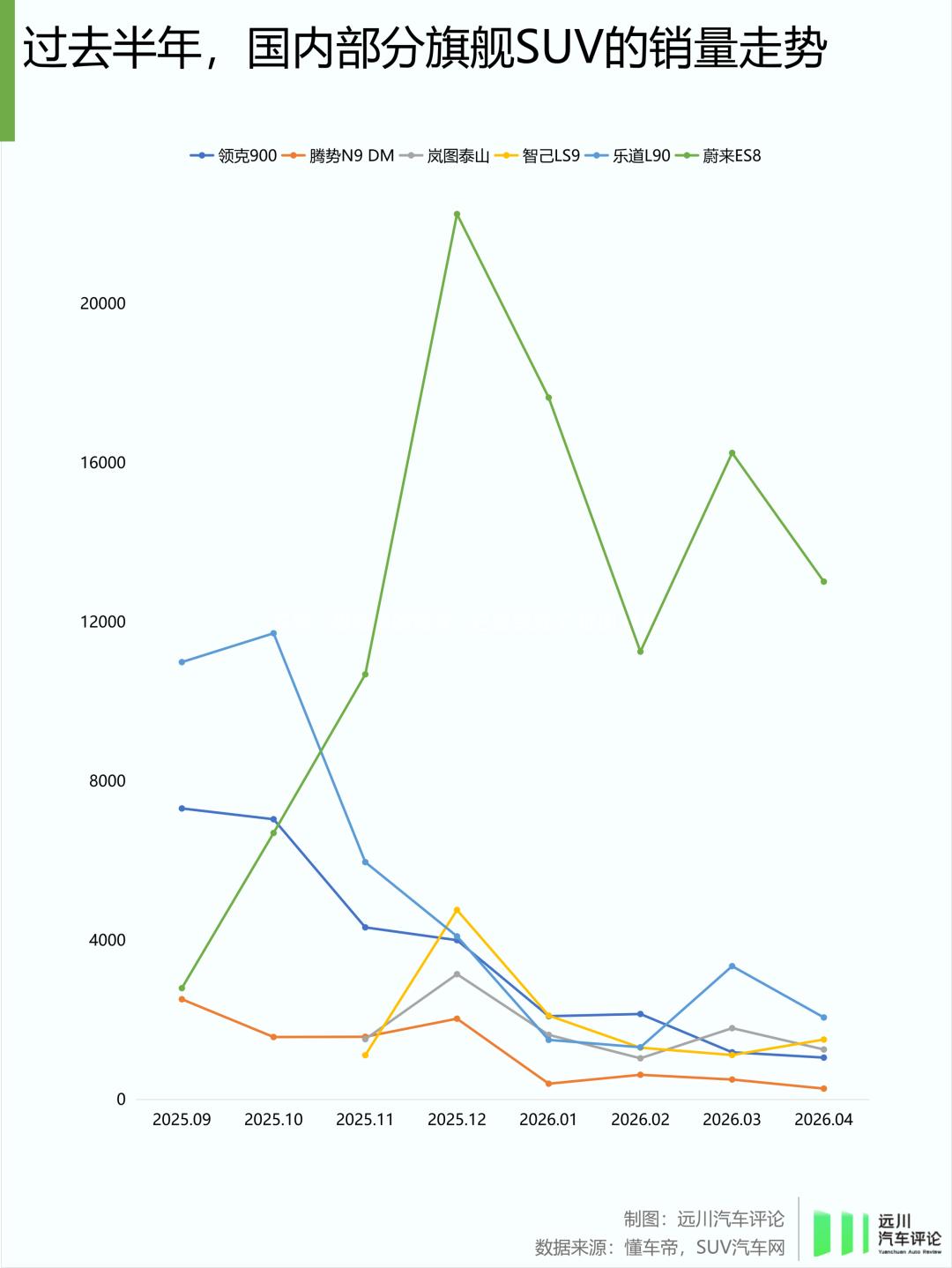
The NIO ES8 leads the way in the segment market.
In contrast, the third - generation NIO ES8, launched in September last year, is one of the very few flagship SUVs that can break out of the "Valley of Death Effect." It has delivered a cumulative total of 110,000 vehicles in 8 months since its launch, replacing the Wenjie M9 as the leader in this segment market.
It is precisely thanks to the outstanding performance of the ES8 that NIO's revenue in the first quarter of this year increased by 111.2% year - on - year. The gross profit margin of the whole vehicle reached 18.8%, and the average price per vehicle was 273,000 yuan. The operating profit has been positive for two consecutive quarters.
According to Qin Lihong, the president of NIO: "The NIO ES8 has returned to its rightful place."
Many people don't know that the ES8 is not only NIO's first mass - produced vehicle but also China's first real - sense luxury new - energy large - sized SUV, opening up the entire segment market. However, due to the immaturity of the market and technology at that time, as well as people's full of doubts about new car - making forces, the first - generation NIO ES8 only delivered a cumulative total of 64,000 vehicles in 4 years after its launch, with an average monthly sales of less than 1,500 vehicles.
In 2022, although the domestic intelligent electric vehicle market exploded and both technology and the market became more mature, the second - generation NIO ES8 was ill - fated. It happened to catch up with the sharp rise in the price of upstream battery raw materials, resulting in the starting price rising to 528,000 yuan. Even with the battery rental option, it still started at 458,000 yuan.
Facing the Li L9 and Wenjie M9, which have more advantages in terms of space size, charging convenience, luxury cockpit, assisted driving, and starting price, and mainly feature range - extended power, the second - generation NIO ES8 was no match. Its average monthly sales were only 1,000 vehicles in the two years after its launch.
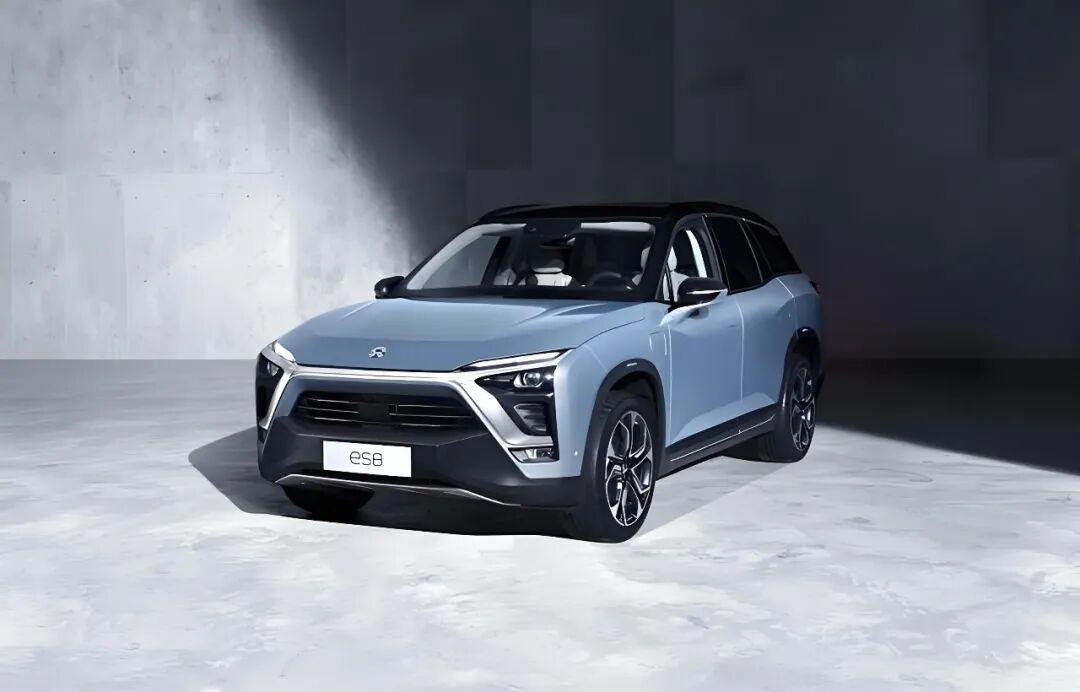
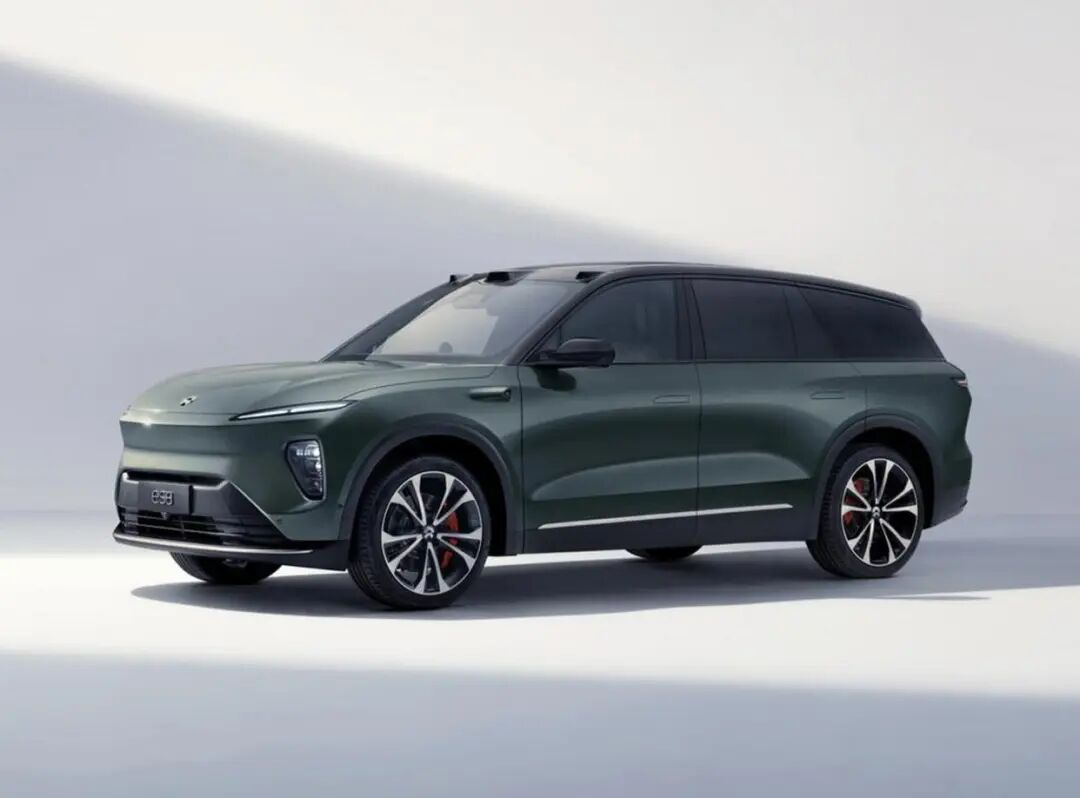
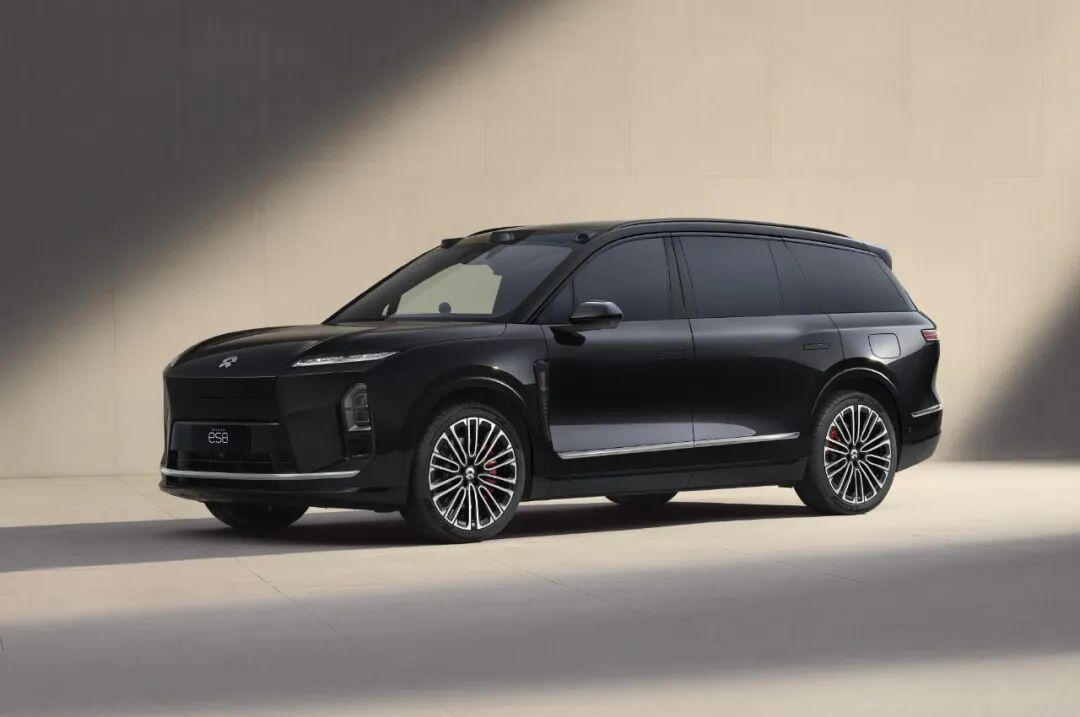
Over the past 8 years, the NIO ES8 has become larger, more luxurious, and more intelligent.
It wasn't until last year, when the pure - electric experience reached a new critical point, that the third - generation NIO ES8 officially sounded the horn of counter - attack.
It abandoned the "restraint" of the previous two generations. With a larger size and space, a more luxurious cockpit design, more standard features, a denser charging and battery - swapping network, and a lower starting price, it broke through the product circle. Then, by preparing for production in advance and ramping up production quickly, it maintained the product's popularity and attracted many orders from the 9 - Series models.
02
Both Differentiation and Integration
The LeDao L90 was launched 5 months earlier than the third - generation ES8. To avoid internal competition between the two models, NIO has set clear divisions of labor for the two vehicles: the LeDao L90 focuses on technology for the family, while the ES8 is positioned as a technological flagship suitable for both business and family use.
To create a price difference of more than 100,000 yuan, obvious distinctions have been made in terms of body size, battery capacity, power acceleration, intelligent driving hardware (mainly chips and lidar), zero - gravity seats, interior atmosphere, and screen audio.
Even some details have been carefully considered. For example, to meet the family users' pursuit of large space, the front trunk opening of the LeDao L90 is made lower, and its volume is 10L larger than that of the ES8.
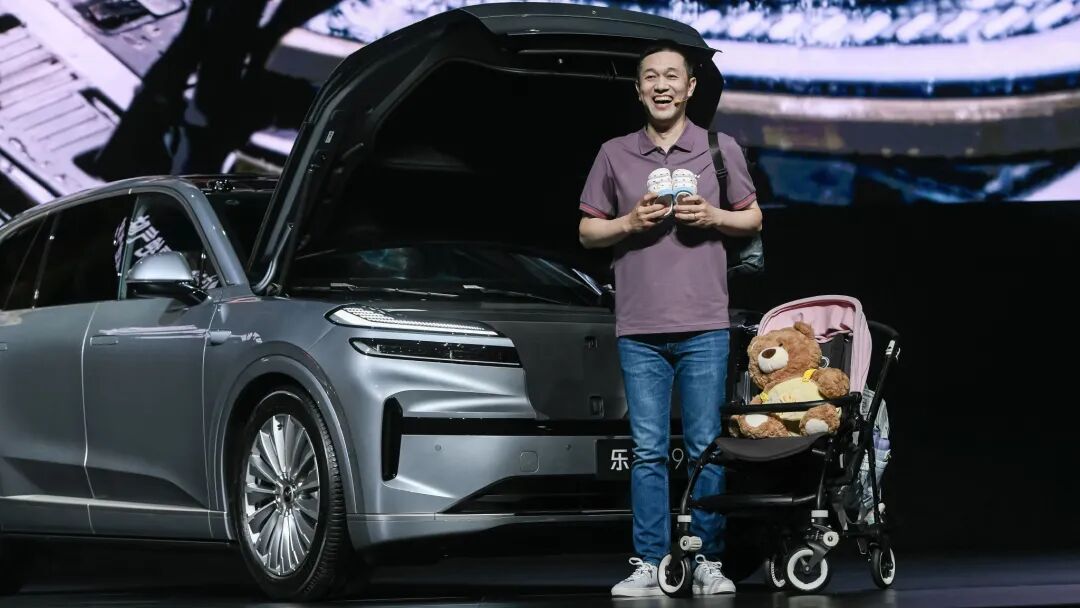
The front trunk of the LeDao L90 has a lower opening and larger space.
Theoretically, these two products with obvious price differences target different customer groups. However, in reality, after the large - scale delivery of the third - generation ES8, the sales of the LeDao L90 gradually declined, from the peak of over 10,000 vehicles in October last year to the current monthly sales of 2,000 - 3,000 vehicles.
Although Li Bin and Shen Fei, the president of LeDao, mainly attribute the reason to "the low brand awareness of LeDao," saying that LeDao's current brand awareness is only equivalent to that of NIO in 2019, an inescapable reality is:
If consumers choose the BaaS (Battery as a Service) option, the starting price of the third - generation ES8 is only 298,800 yuan, 160,000 yuan cheaper than the previous generation and only more than 30,000 yuan higher than the full - price purchase of the LeDao L90. This means that some consumers with a budget of around 300,000 yuan may skip the LeDao L90 and directly choose the more luxurious ES8.
In addition to the L90, the LeDao L60, originally expected to be the "killer of the Model Y," not only failed to fulfill the promise of "monthly sales of 20,000 vehicles" but also failed to boost NIO's sales to a higher level.
For LeDao, which targets the mass market and undertakes the task of increasing sales volume, monthly sales of 10,000 vehicles may only be the passing line for the L60. Without a hot - selling model with stable monthly sales of over 10,000 vehicles, it is difficult to support a complete product R & D, sales channel, and user operation system.
The setback of the L60 disrupted NIO's original plan. The originally independent division structure of LeDao was dismantled, and some delivery centers of the NIO and LeDao brands have been jointly operated since last year. This year, NIO plans to launch SKY stores covering three brands in the sinking market to further reduce costs and increase efficiency.
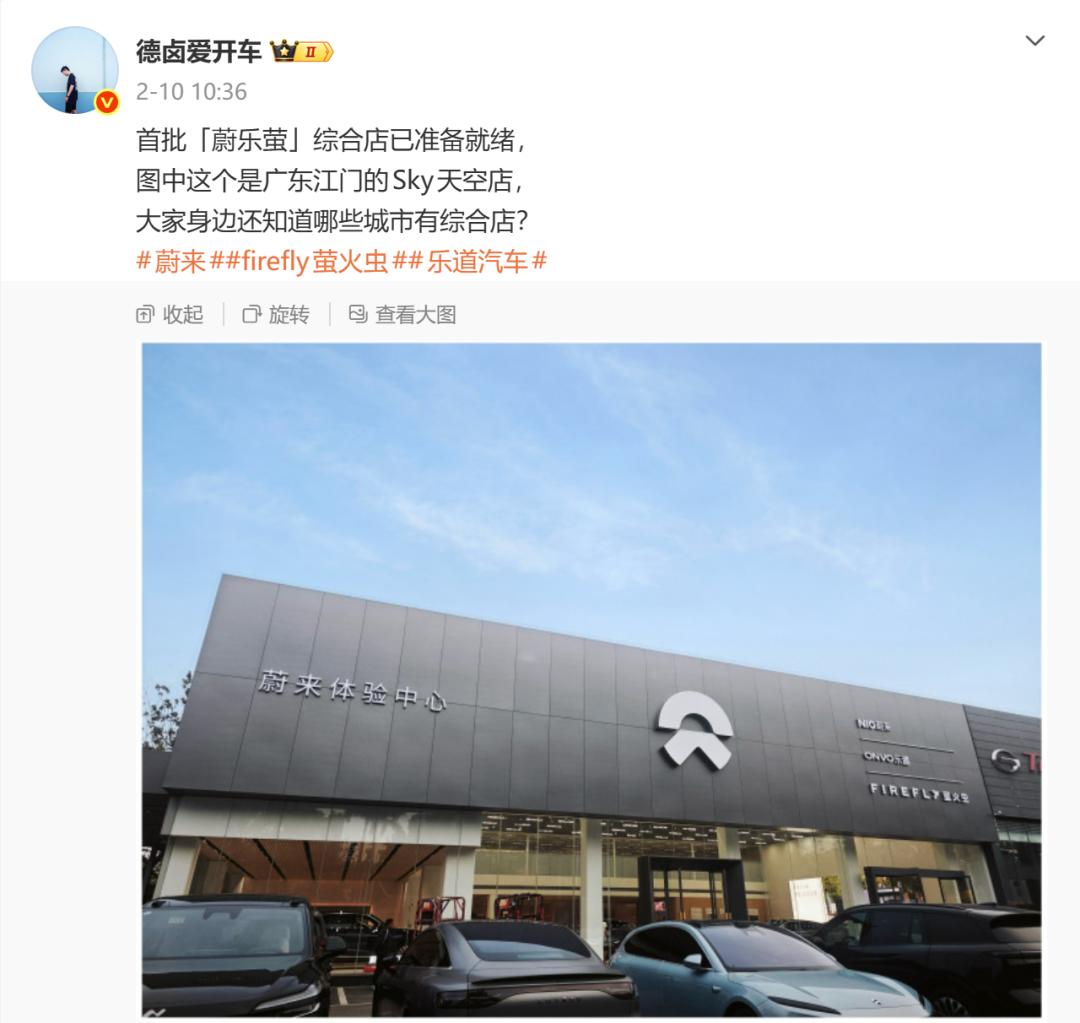
The SKY store that can accommodate three brands at the same time.
Although these adjustments were made passively, they helped NIO save a large amount of cash flow.
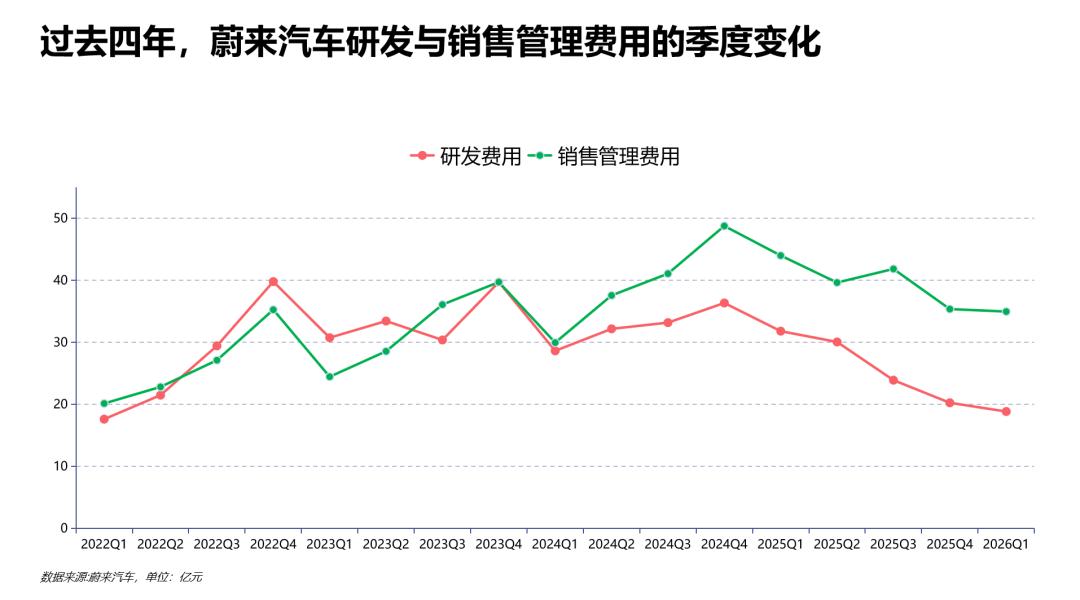
NIO's sales and management expenses reached a record high of 4.877 billion yuan in Q4 of 2024 after the large - scale delivery of the first - generation LeDao L60. Since then, they have been continuously decreasing. By the first quarter of this year, they have been "compressed" to 3.497 billion yuan, and the proportion of revenue has dropped from 24.7% to 13.6%.
Li Bin said at the first - quarter earnings conference that in the long run, the contribution rate of LeDao to NIO's overall sales needs to reach 50% or even more than 60%. However, in the past two quarters, this figure was only 30.7% and 16% respectively.
To further increase this proportion, LeDao needs to launch more competitive new products on the one hand.
Recently, LeDao launched the large five - seat pure - electric SUV, the LeDao L80. With the same space size, three - electric system, appearance and interior, and safety and comfort configurations, its starting price is 32,000 yuan lower than that of the L90. The refreshed L90 is equipped with the same self - developed intelligent driving chips and lidar as the ES8 in the mid - and high - end versions, achieving "more features without a price increase." According to a report by "LatePost AUTO" in March this year, LeDao is developing two new cars, one of which is a sedan.
On the other hand, NIO needs to strengthen the differences between the two brands in the "front - end" (product definition and brand concept) and improve the synergy between the two in the "middle - and back - end" (R & D design and channel services).
Only in this way can LeDao have higher brand awareness at the terminal, stronger competitiveness in terms of cost, and gradually build its own user pool, achieving "1 + 1> 2" together with NIO.
03
Contracting Production to Households and Assigning Responsibilities to Individuals
In the past two years, the outside world's criticism