Mystery of "Majiè": Huawei and Jianghuai "Recreate" Maserati
Maserati's cars are being sold for 350,000 yuan, yet still no one is buying.
This century - old luxury brand has, in just eight years, transformed from the most sought - after status symbol to inventory that dealers are forced to sell at discounted prices. Now, its self - rescue plan lies in a new energy vehicle jointly developed with a Chinese partner.
According to exclusive information obtained by "Yunjian Insight", Huawei Hongmeng Smart Mobility, Jianghuai Automobile, Stellantis Group, and its Maserati brand are in talks to jointly develop new energy vehicles under the Maserati brand. As planned, the four - party cooperation model is highly similar to Hongmeng Smart Mobility's "Five Realms": Huawei takes the lead in product definition and provides core technologies; Jianghuai participates in joint R & D and is responsible for production and manufacturing; Maserati provides styling design and brand endorsement.
The cooperative models will be divided into domestic and overseas versions. The domestic version will belong to the Zunjie brand, while the overseas version will carry the Maserati logo. The first model is currently in the styling design stage and is planned to go into mass production in the second half of next year.
According to informed sources, the cooperation has been in progress since the beginning of last year. Although the official agreement has not been signed yet, relevant R & D work is already underway.
The Arrival of "Maserati Realm"
In Huawei Hongmeng Smart Mobility's "Five Realms" layout, AITO, which cooperates with Seres, is the main force in terms of sales, while Zunjie, which cooperates with Jianghuai, represents the pinnacle of the brand and the ceiling of profits.
Currently, Zunjie has only one product: the luxury executive sedan S800, priced between 700,000 and 1 million yuan, targeting the Maybach S - Class. Since its launch in May last year, a total of 16,000 units have been sold, with a stable monthly sales volume of over a thousand units.
This figure may not be large in any market, but it is of great significance in its price range. In 2025, the annual sales volume of the Maybach S - Class in China was approximately 11,300 units, the BMW 7 Series was about 10,500 units, and the Porsche Panamera was around 12,400 units. As for the new energy models of these traditional brands in the same class, the average monthly sales volume is only dozens of units, not in the same league.
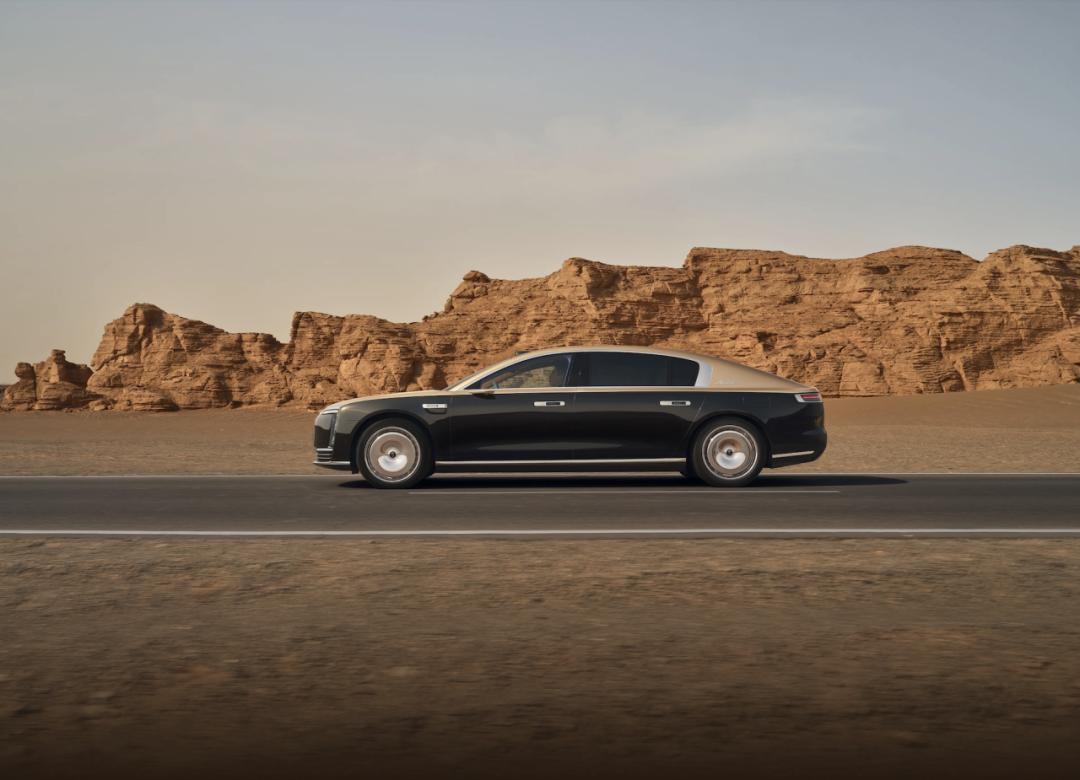
Zunjie S800
The S800 has catapulted Jianghuai into the ranks of luxury manufacturers overnight, and it also once again validates the "Hongmeng Smart Mobility" model promoted by Yu Chengdong: Automobile manufacturers hand over the leadership, allowing Huawei to define products and output technologies in exchange for a ticket to the next stage of competition. Although this model has not been successful for all cooperative brands, it is worth a bet for Maserati, which is in deep trouble.
Moreover, Stellantis has a precedent of cooperation with Chinese new energy vehicle manufacturers. In October 2023, it acquired approximately 21% of the equity of Leapmotor for 1.5 billion euros and obtained two board seats. The two parties also established a joint - venture company, "Leapmotor International" (Stellantis holds 51% of the shares), with a share ratio of 51:49, which is responsible for the sales and manufacturing of Leapmotor in overseas markets.
After receiving a financial boost, Leapmotor quickly accelerated. In 2025, its sales volume reached approximately 600,000 units, topping the list of new Chinese car - making forces. In May 2026, Bloomberg reported that the cooperation between the two parties was further strengthened, covering joint development of Opel electric models, transfer of the ownership of a factory in Spain, and expansion of joint procurement.
If investing in Leapmotor is to secure a fallback in the mass market, joining hands with Huawei and Jianghuai is a "revenge" plan for Maserati to return to the high - end market.
According to "Yunjian Insight", after the S800 and its subsequent "custom - made version", Zunjie will launch two MPVs in the second half of this year and two SUVs next year. Among them, the sports - style SUV is planned to have a version jointly developed with Maserati. In addition, sedans are also within the scope of potential cooperation.
Although Maserati does not directly join the "Hongmeng Smart Mobility" camp, to some extent, its products are already the de facto "Maserati Realm".
The Predicament of the "Noble Family"
For Stellantis, cooperating with Chinese automobile manufacturers is a self - rescue measure aimed at alleviating its passive situation in the electrification transformation.
Stellantis was established in 2021 through the merger of PSA and FCA. It owns 14 brands, including Fiat, Citroën, Peugeot, Alfa Romeo, and Maserati, and is one of the largest automobile groups in the world. Maserati is one of the oldest and most high - end brands among them.
In 2023, Stellantis' revenue reached 189.5 billion euros, and its profitability was second only to Toyota, Volkswagen, and Hyundai among global automobile manufacturers. However, its performance has since taken a sharp turn for the worse. Its sales volume dropped from 6.168 million units in 2023 to 5.484 million units (excluding joint - venture companies), and its profit turned from 18.6 billion euros in 2023 to a net loss of 22.3 billion euros in 2025.
Maserati's decline has been even steeper. Its global sales volume plummeted from less than 27,000 units in 2023 to approximately 7,900 units in 2025. China was once its largest single market globally - in 2017, Maserati's sales volume in China reached as high as 14,498 units, accounting for nearly 30% of its global sales. In 2025, this figure was only over a thousand units. The official guide price of the SUV Grecale, which is nearly 900,000 yuan, once dropped below 350,000 yuan at dealer quotes, almost a 60% discount.
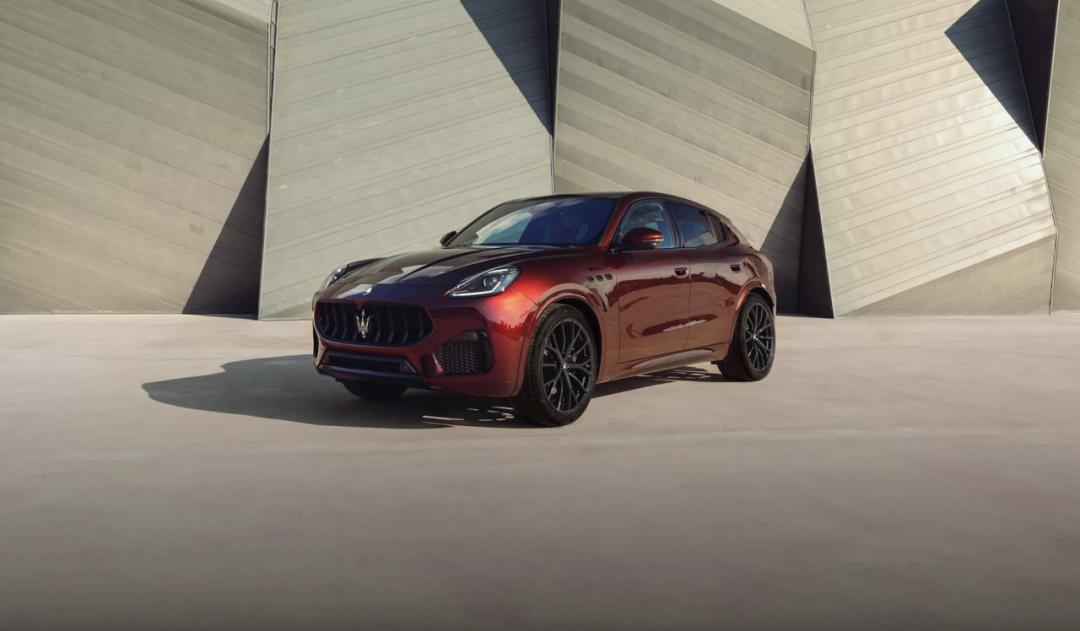
Maserati Grecale
The collapse of the price system has directly affected the brand premium. In the 2025 financial report, Stellantis recorded a goodwill impairment of 514 million euros for Maserati. This means that the management and external auditors have officially confirmed that Maserati's profitability and brand value can no longer support the existing asset valuation.
Stellantis has also paid a high price in the new energy transformation. Former CEO Carlos Tavares once implemented the radical "Dare Forward 2030" strategy, aiming to achieve 100% pure - electric sales in Europe and 50% in the United States by 2030, and invested tens of billions of euros in researching and developing pure - electric platforms and battery factories. However, the huge investment has yielded little results. In the second half of 2025, the group recorded an impairment of 22.2 billion euros, of which approximately 14.7 billion euros was used to write off unprofitable electric vehicle projects, including the Ram 1500 pure - electric pickup truck project that was halted midway.
Maserati's situation is also not optimistic. In 2020, it proposed the "Folgore Strategy", aiming to launch electric versions of all its models by 2025 and achieve full electrification by 2030. The few pure - electric models it has launched have only sold in double - digit numbers in some major European markets in a year; in China, its intelligent driving and cockpit experience have been comprehensively surpassed by domestic new energy vehicles in the 300,000 - yuan price range.
Apart from its iconic "Neptune's Trident" logo and the still - pleasant exhaust sound, it is difficult for Maserati to provide the new generation of Chinese consumers with a sense of luxury that matches its price.
Finding an ally in the Chinese new energy vehicle market has become the most realistic way out for Stellantis. For Huawei and Jianghuai, Maserati's Italian design heritage and international brand recognition are the keys for Zunjie to enter the European luxury market.
An Italian aristocrat with a century - old history but lost in direction, and a Chinese technology company that has redefined luxury in a decade, have placed their bets on each other.
This article is from the WeChat official account "Yunjian Insight". Author: Wang Hailu, Liu Yimo. Republished by 36Kr with permission.