Under the overwhelming pressure of the lowest profit margins in history, car companies' price hikes are spreading like wildfire.
After a long period of price cuts, unexpectedly, in the highly competitive year of 2026, the automotive market has entered a rare price - increase cycle.
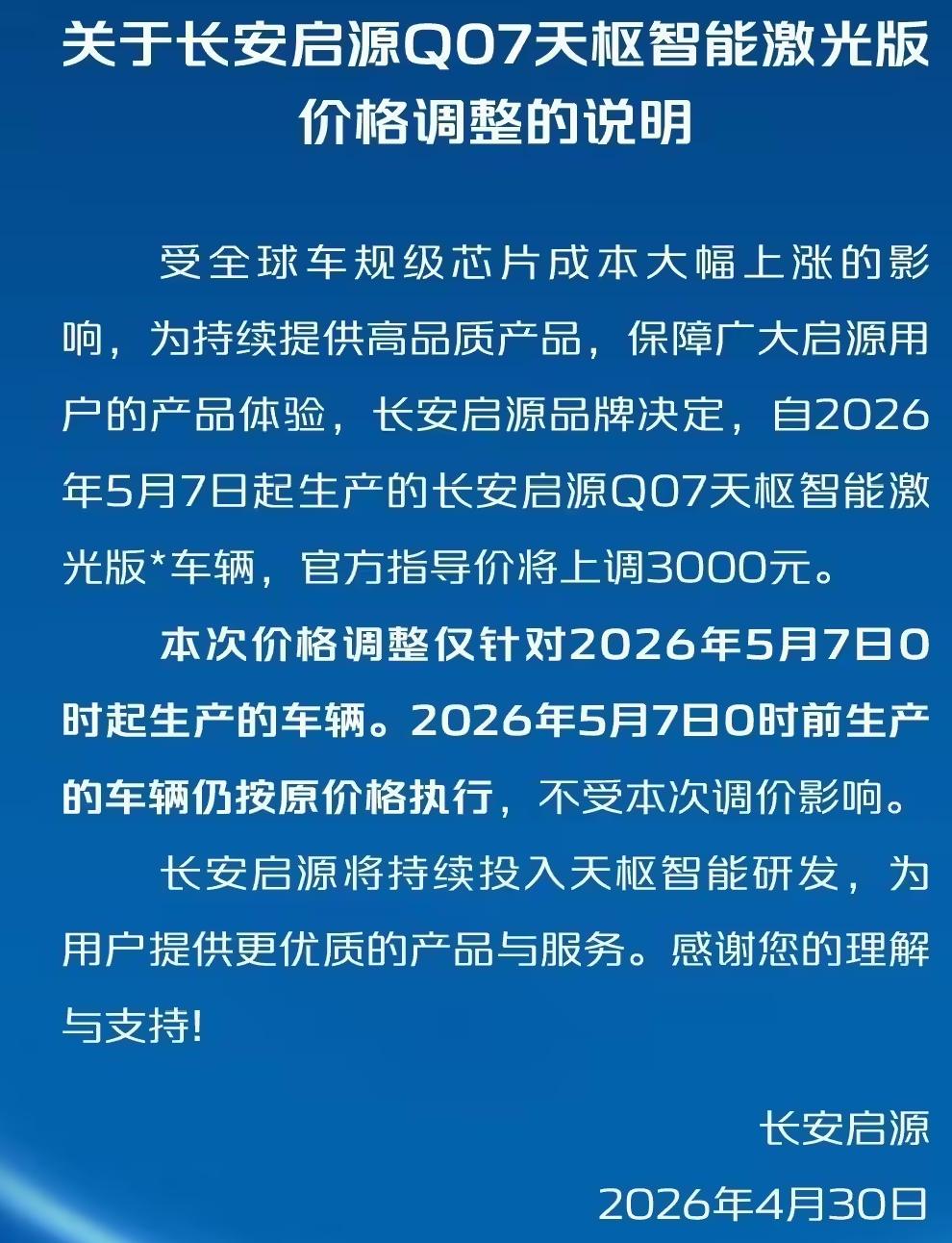
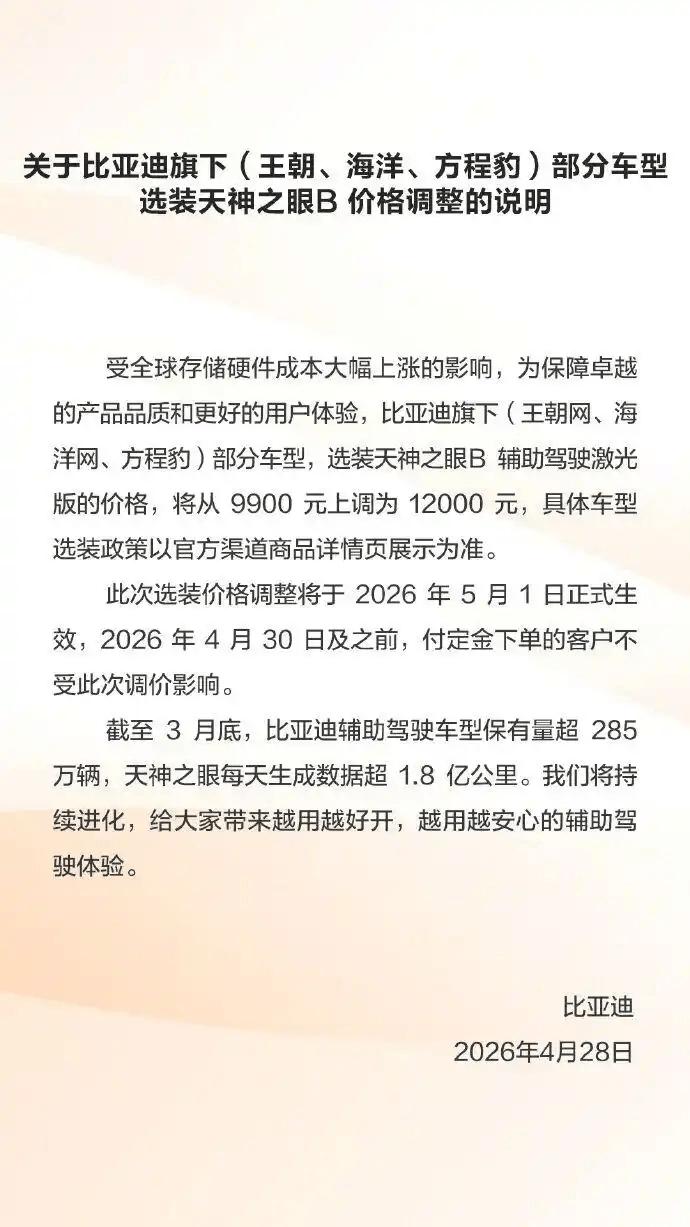
Recently, Changan Automobile and BYD have successively announced price increases for their models. Among them, the official guiding price of the Changan Qiyuan Q07 Tianshu Intelligent Laser Edition has been raised by 3,000 yuan. For some BYD models, the optional price of the assisted - driving laser version will be increased from 9,900 yuan to 12,000 yuan, a rise of 2,100 yuan. Once the news came out, it caused a great stir in the industry.
In fact, as early as the beginning of the year, there were already signs of price increases in the domestic automotive market: The long - range and high - performance versions of Tesla Model Y increased by 18,000 yuan and 20,000 yuan respectively; the prices of the new Xiaomi SU7 series increased by 4,000 to 8,000 yuan compared with the old models. NIO, ZEEKR, and XPENG also stated that the prices of their new models in the second quarter would be raised by 5,000 to 10,000 yuan.
Data shows that from January to March 2026, the average price of domestic passenger cars increased by 15,000 yuan, 15,000 yuan, and 7,000 yuan respectively compared with the same period last year. The price increase of new energy vehicles is particularly obvious.
Under the cost storm
A collective self - rescue by coincidence
The fundamental driving force behind this round of price increases is not the active strategic choice of car companies, but multiple irresistible forces from the upstream of the industrial chain.
First of all, the positive leverage of rising raw material prices is being greatly magnified in electric vehicles.
Since last year, the prices of raw materials have remained high. The price of battery - grade lithium carbonate soared from about 75,000 yuan per ton in mid - 2025 to 171,900 yuan per ton in March 2026, a rise of more than 125%. As of early May, the lithium price once touched the 200,000 - yuan mark. Power batteries account for 30% to 50% of the vehicle cost, and this alone has led to an increase of 3,000 to 5,000 yuan in the cost of each vehicle.
Meanwhile, the copper price has exceeded 100,000 yuan per ton, and the aluminum price has continued to rise. An electric vehicle uses up to 99.3 kilograms of copper, more than four times that of a traditional fuel - powered vehicle (22 kilograms), and the consumption of aluminum, tin, etc. is also much higher than that of traditional vehicles.
Lu Fang, the chairman of Voyah Automobile, said in April that if the upstream prices continue to rise, it will definitely be passed on to the end - users, pushing up the vehicle prices, and emphasized that "this is a high - probability event". Now, this statement has been verified.
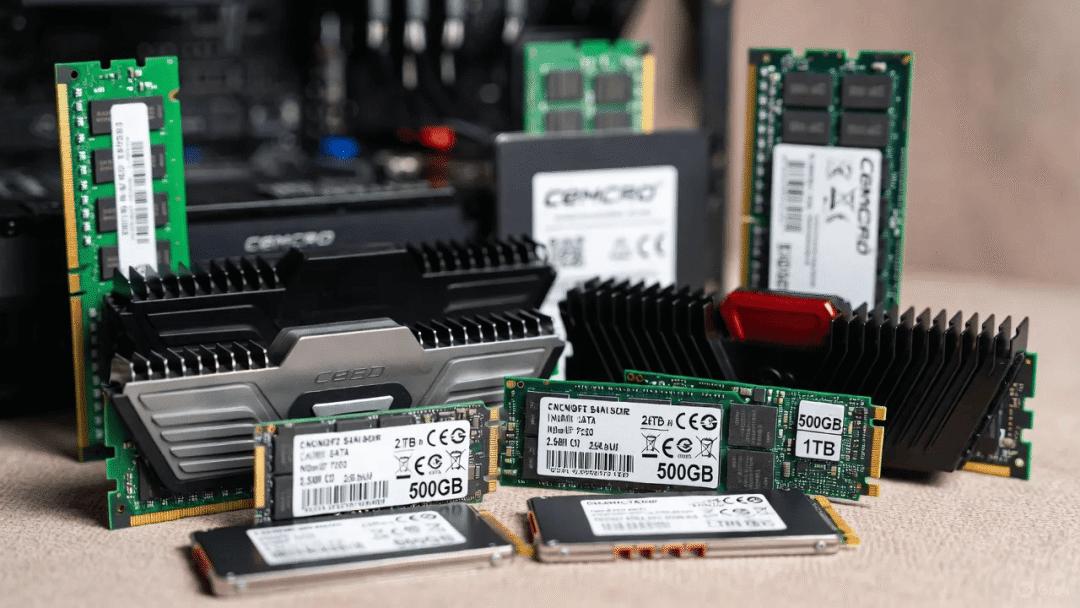
Secondly, the structural contradiction between supply and demand of chips between the currently popular AI and the automotive industry is becoming more and more obvious.
The underlying logic of the current round of price increases for memory chips is fundamentally different from the previous chip shortage. The chip shortage in 2021 was due to capacity squeeze under epidemic control, while the current chip dilemma is a systematic and cruel competition for strategic resources between the automotive industry and the artificial intelligence industry.
The explosion of generative AI has spawned an almost infinite demand for high - bandwidth memory in data centers. The memory usage of an AI server is 8 to 10 times that of an ordinary server. Storage giants such as Samsung, SK Hynix, and Micron have shifted their production capacity to HBM memory for AI servers, severely squeezing the production capacity of automotive - grade memory chips.
Data from UBS shows that the price of DRAM in the automotive application field soared by 180% in three months, and the spot price of high - end DDR5 memory increased by more than 300%. According to UBS estimates, the price increase of memory chips has sharply increased the cost of intelligent driving vehicles by 3,000 to 7,000 yuan per vehicle.
A month ago, Li Bin, the founder of NIO, revealed that the rising memory price might bring a cost increase of 3,000 to 5,000 yuan for high - end new energy vehicles. Meng Qingpeng, the vice - president of the supply chain of Li Auto, even judged that the supply satisfaction rate of automotive - grade memory chips in 2026 might be less than 50%.
More importantly, the profit margin of the automotive industry is continuously hitting rock bottom.
The three - year - long price war has pushed the industry profit to the limit. Public data shows that the sales profit margin of the automotive industry in 2025 was only 4.1%, and in the first quarter of 2026, this figure further dropped to 3.2%, with only 2.9% from January to February, hitting a new low in the past 10 years, far lower than the average level of 6% for downstream industrial enterprises. The room for car companies to bear the cost pressure is very limited.
Meanwhile, in the first quarter of 2026, the production and sales of passenger cars decreased by 17.4% year - on - year. The increase in scale could no longer cover the losses caused by price cuts. Under the huge pressure of declining sales, car companies have less and less room to maneuver, and they have turned to price increases as the most direct way out.
Other data shows that as of 2025, more than 50% of automotive dealers in the entire industry have fallen into losses. The decision - making variable of this long - term price war is shifting from aggressive expansion dominated by market share to a consensus retreat driven by survival instinct.
Not just in China
Price increases have become a global phenomenon
When we turn our attention to the overseas market, we find that price increases are not a unique phenomenon in the Chinese automotive market. Similar situations are also happening in the United States.
Relevant data shows that in the US market, the prices of Volkswagen's 2026 models have been raised by 1.9% - 6.5%. BMW has raised its prices twice in half a year, and Porsche, Lexus, and Volvo have also followed suit. The average price of new 2026 models has increased by nearly $2,000, five times the increase of the 2025 models. A Cars.com report points out that in the first quarter of 2026, the average price of new cars in the US automotive market increased by about $1,315 compared with the same period in 2025. A DBS research report points out that the average transaction price of all vehicles in the United States has increased by 0.3% since the beginning of the year, and the increase for electric vehicles has reached 3.8%.
The reasons for price increases in the US market are quite different from those in China, mainly due to a combination of factors such as tariff games and geopolitical confrontations.
On the one hand, the tariff stick across the Atlantic has become a reality. In April 2025, the United States imposed a 25% tariff on imported automobiles and parts. Relevant data shows that in 2025 alone, the total financial impact of these tariffs on automobile manufacturers and related suppliers was as high as about $35 billion. In May 2026, Trump announced that the tariff on European Union cars exported to the United States would be further raised from 15% to 25%. European car companies such as Volkswagen, BMW, and Mercedes - Benz are facing a new round of cost fluctuations in the US market. A Cars.com report points out that although some tariff policies have been adjusted after being ruled by the Supreme Court, the tariffs on aluminum, steel, and copper, as well as the 10% additional tariff, are still in effect.
On the other hand, the deep - seated effects of geopolitical confrontations are being fully transmitted through the supply chain. The situation in the Strait of Hormuz in the Middle East has been continuously turbulent. Since March 2026, the strait has been repeatedly opened and closed, and a large number of crude oil and liquefied natural gas shipments have been suspended. The daily loss of oil exports from the Gulf region once exceeded 13 million barrels. The soaring energy prices have been quickly transmitted along the industrial chain: the rising cost of petrochemical products has pushed up the prices of automotive raw materials such as tires (the price of butadiene, the raw material, increased by more than 100% in the first quarter), plastics, and coatings; the lengthened logistics cycle has led to delays in the arrival of parts at ports and a sharp increase in freight costs. The increase in crude oil cost alone has added an unexpected heavy burden to the vehicle manufacturing process.
If the tariff game is a visible open war, then the repeated "obstructions" of the Middle East energy channel are an invisible hidden injury. For the overseas market, price increases are not just a transfer of costs on the books, but a systematic resonance. When every connection point in the supply chain is tightened one by one, the price tag that consumers finally face has inevitably become a bill that has been repeatedly added to.
From price to value
Competition and cooperation are comprehensively upgraded
Under the nested pressure at all levels, the industrial impact brought about by this global price - increase wave will far exceed the numerical fluctuations on the price list. It is more like a watershed, promoting the automotive industry to gradually shift from low - level competition of trading price for volume to high - level competition and cooperation supported by technological premium and brand value.
On the one hand, the pressure - bearing capacities of different car companies have shown obvious differentiation, and the Matthew effect in the industry is accelerating.
Leading car companies have shown stronger resilience in withstanding pressure thanks to their scale advantages, supply - chain integration capabilities, and long - term strategic agreements. For example, many domestic car companies such as GAC, Great Wall, and Beiqi Foton have established a ten - year strategic cooperation relationship with CATL, covering technology R & D and supply - chain guarantee; BYD has implemented a full - chain profit - sharing strategy, combined with manufacturer replacement subsidies, to achieve a decrease rather than an increase in the end - user car - buying cost. In contrast, the survival space of small and medium - sized car companies is continuously being compressed, and low - end models are caught in a dilemma of "no one will buy if the price is raised, and they can't survive if the price is not raised". It is foreseeable that this cost battle will probably further strengthen the highly concentrated pattern of market competition.
On the other hand, the form of the price war is also quietly changing. Although the blatant wave of across - the - board price cuts is receding, price competition has not disappeared; it has just become more complex.
The National Information Center predicts that the passenger - car market will run smoothly in 2026, and the price war is coming to an end. The industry is shifting to a competition model driven by value and technology. A number of car companies no longer directly cut prices but adopt implicit price - increase forms such as increasing quantity without increasing price, adding new benefits for deduction, reducing terminal discounts, and canceling free financial subsidies. Nearly 30% of consumers have set the budget for their next car at over 300,000 yuan, indicating that terminal demand is shifting from low - price orientation to quality - oriented consumption. The signs of value competition replacing simple price competition are emerging.
In addition, the suppressing effect of price increases on the consumer side should not be ignored.
More middle - income groups may choose to wait and see with their money or even completely withdraw from new - car consumption when facing sudden price increases and the burden of large - scale consumption. The global new - car sales are expected to decline by about 1% in 2026, reflecting the squeezing of demand by price barriers. However, the long - term pain in the Chinese market may be more persistent: from a five - year perspective, with the continuation of the trade - in policy and the gradual stabilization of prices, consumer demand still has the momentum to rebound. But in the situation of price divergence and market caution, it will still take a longer time to restore the overall upward elasticity.
In the long run, although the profit margins of car companies are still under pressure in the short term, and the risk of high costs not corresponding to terminal price increases persists, the focus of competition in the new - energy vehicle industry has begun to shift from price to the horizontal integration of quality, innovation, and ecosystem. Leading car companies that can precisely control the upstream supply chain, build differentiated competitiveness in the intelligent field, and achieve dual - line growth at home and abroad will gain long - term pricing power and market initiative in this major industrial transformation. For latecomers, as the lithium - price and chip games gradually enter the deep - water zone, the remaining window period is becoming shorter and shorter.
This article is from the WeChat official account "Automobile Observation Autoobserver", author: Zhao Yuqi. It is published by 36Kr with authorization.