Unter dem drückenden Druck der bisher niedrigsten Gewinnmarge ist das Phänomen des Preiserhöhungs-Epidemie unter Automobilherstellern aufgetreten.
After a long period of price cuts, it was surprising that the automotive market in 2026, a year with fierce competition, entered a rare phase of price increases.
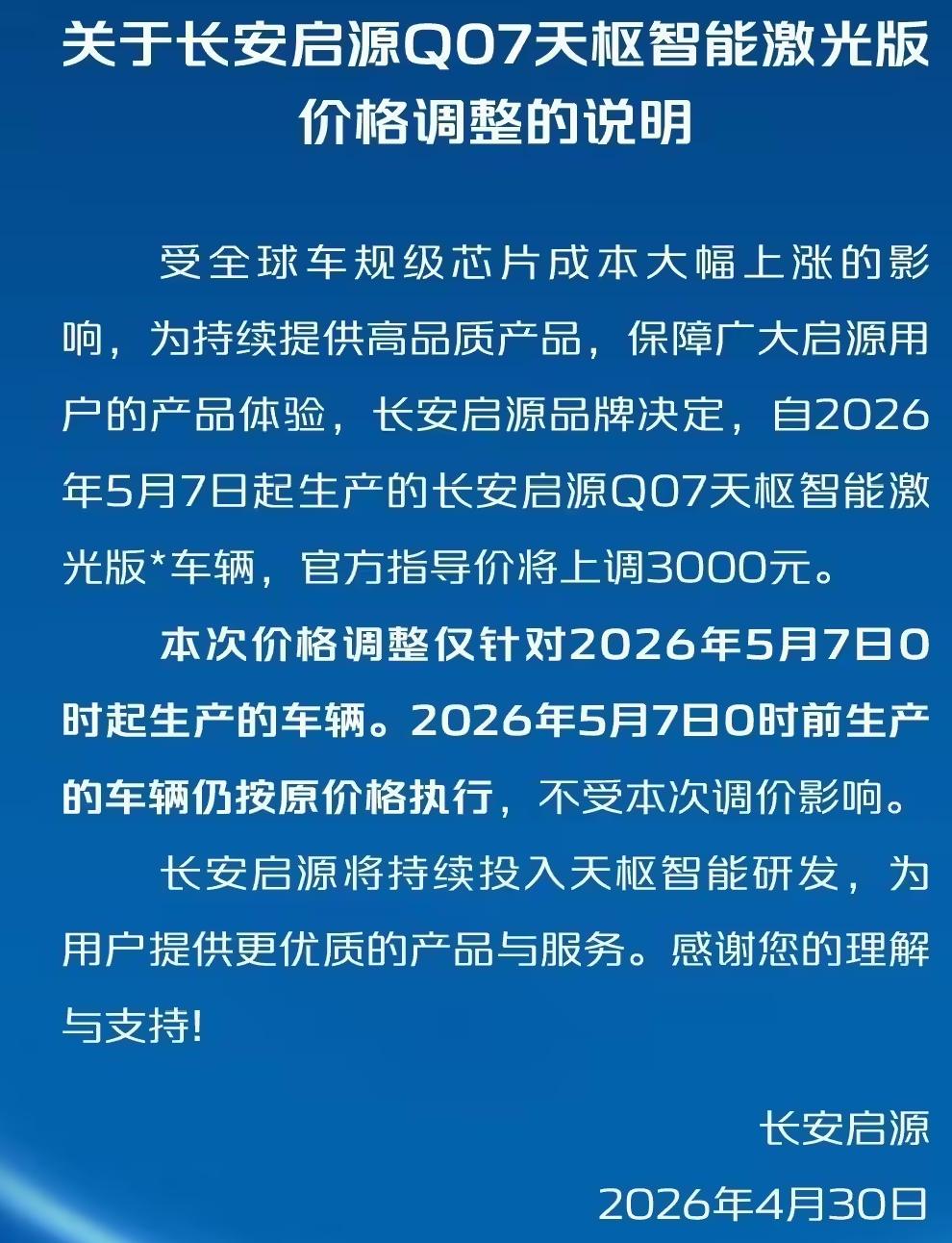
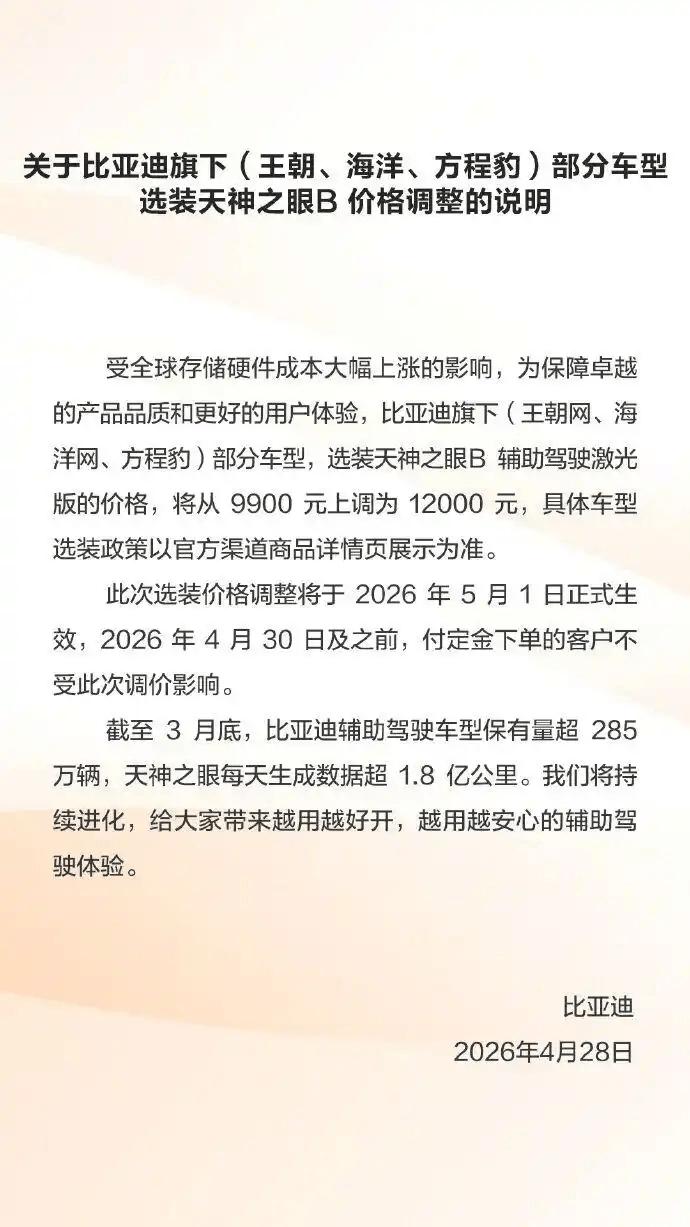
Recently, Changan Automobile and BYD have successively announced price increases for their vehicles. In particular, the officially recommended price of the Changan Qiyuan Q07 Tianshu Intelligent Laser Edition has been increased by 3,000 yuan. For BYD, the surcharge for the assisted driving function in the Laser Edition has been raised from 9,900 yuan to 12,000 yuan, which corresponds to an increase of 2,100 yuan. As soon as this news became known, it attracted attention in the industry.
In fact, there were already signs of price increases in the Chinese automotive market at the beginning of the year: The Tesla Model Y Long Range and the Performance Edition became 18,000 yuan and 20,000 yuan more expensive respectively. The new Xiaomi SU7 costs between 4,000 and 8,000 yuan more compared to the old model. NIO, ZEEKR and XPeng have also announced that the prices of their new models will increase by 5,000 to 10,000 yuan in the second quarter.
Statistics show that the average price of passenger cars in China from January to March 2026 has increased by 15,000 yuan, 15,000 yuan and 7,000 yuan compared to the previous year. In particular, the prices of electric vehicles have increased significantly.
Under the pressure of costs
A spontaneous collective rescue action
The driving force behind this price increase is not the conscious strategy of automobile manufacturers, but a series of involuntary factors from the upper value chain.
First of all, the price increase of raw materials has a strong impact on the electric vehicle industry. Since last year, raw material prices have been rising steadily. The price of battery - grade lithium carbonate has risen from about 75,000 yuan per ton in mid - 2025 to 171,900 yuan per ton in March 2026, which corresponds to an increase of over 125%. In early May, the lithium price even reached the level of 200,000 yuan. Since the battery accounts for 30% to 50% of the total cost of a vehicle, this has increased the cost per vehicle by 3,000 to 5,000 yuan.
At the same time, the copper price has exceeded the mark of 100,000 yuan per ton, and the aluminum price has been rising steadily. An electric vehicle consumes up to 99.3 kilograms of copper, which is more than four times that of a conventional gasoline car (22 kilograms). The amounts of aluminum, tin and other materials are also significantly higher than those of conventional vehicles.
Lu Fang, the chairman of VOYAH, said in April that if the prices in the upper value chain continue to rise, this will eventually be passed on to the final prices and increase automobile prices. He emphasized that this "is very likely" to be the case, and this prediction has now been confirmed.
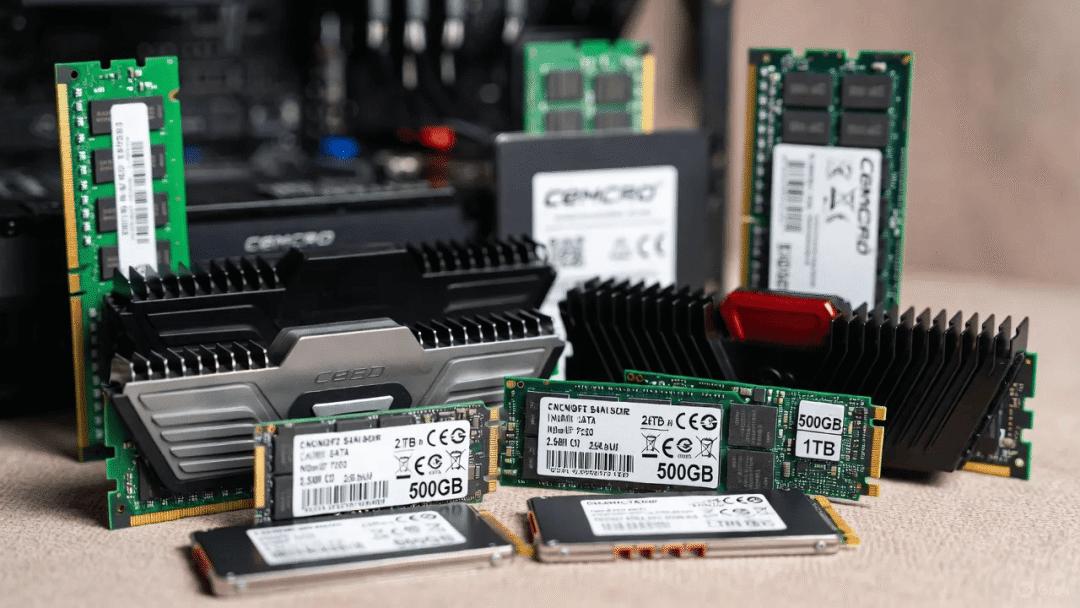
Secondly, the structural imbalance between supply and demand of chips for the automotive and AI industries is becoming more and more obvious.
The reason for the price increase of memory chips in this round is fundamentally different from the chip shortage in 2021. The chip shortage in 2021 was due to capacity bottlenecks during the pandemic, while the current problem is due to a systemic and fierce competition between the automotive and AI industries for strategic resources.
The boom in generative AI has created an almost unlimited demand for high - bandwidth memories in data centers. The memory demand of an AI server is 8 to 10 times higher than that of a normal server. Memory giants such as Samsung, SK Hynix and Micron have shifted their production capacity to HBM memories for AI servers, which severely restricts the production capacity of automotive - specific memory chips.
According to data from UBS, the price of DRAM chips for automotive applications has increased by 180% within three months, and the spot price of high - quality DDR5 memories has increased by over 300%. UBS estimates that the price increase of memory chips will increase the cost per vehicle for vehicles with intelligent driving assistance by 3,000 to 7,000 yuan.
A month ago, Li Bin, the founder of NIO, stated that the price increase of memories could increase the cost of high - quality electric vehicles by 3,000 to 5,000 yuan. Meng Qingpeng, the vice - president for the supply chain of Li Auto, believes that the coverage of the demand for automotive - specific memory chips in 2026 may be less than 50%.
It is also important that the profit margin of the automotive industry is constantly decreasing.
Three years of price war have almost reduced the industry's profits to the minimum. Official data shows that the sales profit rate of the automotive industry in 2025 was only 4.1% and dropped to 3.2% in the first quarter of 2026. Especially in January and February, the rate was only 2.9%, which marks a 10 - year low and is far below the average of 6% of downstream industrial enterprises. Therefore, automobile manufacturers have very limited room to bear the cost burden.
At the same time, the production and sales of passenger cars in the first quarter of 2026 decreased by 17.4% compared to the previous year. The increase in sales volume cannot compensate for the losses caused by price cuts. This has put automobile manufacturers under great pressure, and they see price increases as the most direct solution.
Further data shows that by 2025, more than 50% of automobile dealers were in the red. The decision - making factors in this long - term price war have changed from an aggressive expansion dominated by market share to a consensual retreat driven by the instinct for survival.
Not only in China
Price increases are becoming a global phenomenon
If we turn our attention to the foreign market, we find that price increases are not only a phenomenon in the Chinese automotive market. Similar situations are also occurring in the United States.
Corresponding data shows that in the United States, the prices of Volkswagen models were increased by 1.9% to 6.5% in 2026. BMW has raised prices twice within six months, and Porsche, Lexus and Volvo have also responded with price increases. The average price of new models in 2026 has increased by almost 2,000 US dollars, which is five times the increase in 2025. A report from Cars.com shows that the average price of new cars in the US market in the first quarter of 2026 has increased by about 1,315 US dollars compared to the same period in 2025. A report from DBS shows that the average transaction price of all vehicles in the United States has increased by 0.3% since the beginning of the year, while the price of electric vehicles has increased by 3.8%.
The reasons for the price increases in the US market are different from those in China. They are mainly due to tariff policies and geopolitical tensions.
On the one hand, tariffs in the United States have changed from a threat to a reality. In April 2025, the United States increased tariffs on imported cars and parts by 25%. Corresponding data shows that these tariffs caused a total financial loss of about 35 billion US dollars to automobile manufacturers and suppliers in 2025. In May 2026, Donald Trump announced that the tariffs on European cars would be increased from 15% to 25%. European automobile manufacturers such as Volkswagen, BMW and Mercedes - Benz therefore have to reckon with further cost increases in the US market. A report from Cars.com shows that although some tariff policy measures have been adjusted after a decision by the Supreme Court, the tariffs on aluminum, steel and copper as well as the additional 10% tariffs are still in effect.
On the other hand, the impacts of geopolitical tensions are being passed on through the supply chain. The situation in the Strait of Hormuz in the Middle East remains unstable. Since March 2026, the strait has been repeatedly closed and opened, which has severely affected the shipping of crude oil and liquefied gas. The daily loss of oil exports from the Gulf region has once exceeded 13 million barrels. The rapid increase in energy prices has spread along the industrial chain: The costs of petrochemicals have increased the prices of automobile tires (the price of butadiene, a raw material for tires, has increased by over 100% in the first quarter), plastics, paints and other automobile parts. The extension of logistics time has delayed the arrival of parts and significantly increased freight costs. Even the increase in crude oil costs has burdened automobile manufacturers with unexpected costs.
If tariff policy is a visible war, then the repeated "disruptions" of the energy supply from the Middle East are an invisible wound. For the foreign market, price increases are not only a transfer of costs to the bill, but also a systemic phenomenon. When every node in the supply chain is under pressure, the price that consumers have to pay in the end will inevitably be higher.
From price to value
The competition is being raised to a higher level
Under the pressure of all these factors, the global price increase in the automotive market will have far greater impacts on the industry than just the numbers on the price list. It is more of a watershed that leads the automotive industry from a low - level competition based on price strategy to a higher - level competition based on technological added value and brand value.
On the one hand, the resilience of automobile manufacturers varies significantly, and the Matthew effect in the industry will become stronger.
Leading automobile manufacturers show higher resilience thanks to their scale advantages, supply chain integration capabilities and long - term strategic agreements. For example, several Chinese automobile manufacturers such as GAC, Great Wall and Beiqi Foton have entered into a ten - year strategic cooperation relationship with CATL, which includes technological research and supply chain security. BYD has implemented a strategy of credit across the entire value chain and offered additional subsidies for the exchange of old vehicles to reduce the final cost for buyers. In contrast, the living conditions of small and medium - sized automobile manufacturers are becoming more and more difficult, and the cheap models are in a dilemma: If they increase prices, the vehicles will not be sold; if they do not increase prices, they cannot survive. It is foreseeable that this cost war will further strengthen market concentration.
On the other hand, the form of the price war is also changing. Although the wave of price cuts is slowly passing, price competition is not over, but has only become more complicated.
The National Information Center believes that the passenger car market will remain stable in 2026 and the price war will gradually subside. The industry is moving towards a competition driven by value and technology. Some automobile manufacturers do not directly increase prices, but use indirect price increases, such as increasing equipment without price increase, assigning additional benefits, reducing end - of - year discounts and abolishing free financing subsidies. Almost 30% of consumers have set their budget for the next car at over 300,000 yuan, which shows that the demand is shifting from price - seeking to a quality - oriented consumption pattern. Value competition is gradually beginning to replace the simple price war.
In addition, the inhibitory effect of price increases on the consumer side should not be ignored.
Many middle - income groups may wait for their purchase decision or even exit the new car market when faced with sudden price increases and high consumption costs. The global new car sales volume will decrease by about 1% in 2026, which shows the inhibitory effect of prices on demand. In China, however, the long - term crisis may last longer: If we consider a period of five years, there is still a possibility...