Li Xiang believes that chassis technology is the last shortcoming for Chinese new energy vehicles to dominate the market, and automakers should pay attention to it.
Li Xiang, the CEO of Li Auto, recently posted a dynamic, frankly stating that chassis technology might be the last short - board hindering Chinese cars from dominating the global market.
Li Xiang believes that in the past few years, Chinese new - energy vehicles have gradually reached the world - leading level in many aspects such as intelligent interaction, assisted driving, and energy power, and have been unanimously recognized by the industry and users. However, only in terms of the chassis, it can be said that they have always lagged behind top brands like Porsche and Ferrari.
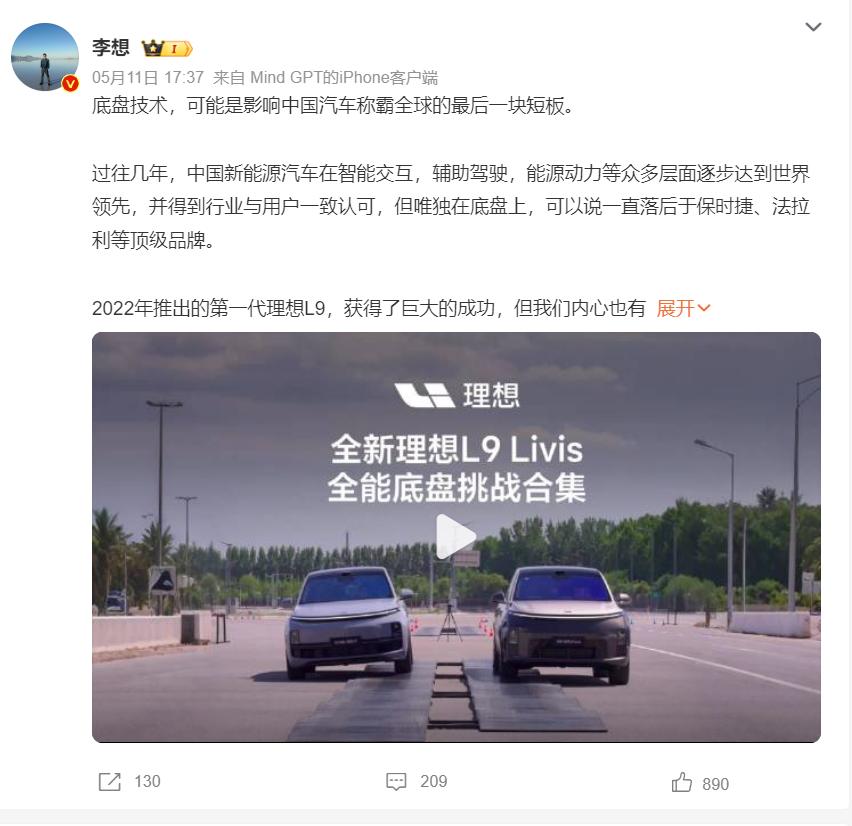
Li Xiang said this essentially to pave the way for the chassis technology of his company's new cars. It's still too early to draw a conclusion about the chassis technology of Li Auto's new cars, and it needs time to be tested. But Li Xiang's words have also exposed the short - board that new - energy vehicle manufacturers have always been reluctant to talk about and have been avoiding.
Objectively speaking, Li Xiang's words actually deliberately avoided the competitors. In fact, the chassis tuning of German BBA has always been very excellent.

There is a basic understanding in the industry that Japanese cars are economical and fuel - efficient, with low post - maintenance costs, while German cars have good driving quality and are stable at high speeds.
Germany is the only country in the world with highways without speed limits. From the very beginning of the design, the stability of vehicles at high speeds has to be considered. In order to meet the requirements of high - speed driving, the chassis of German cars is very solid.
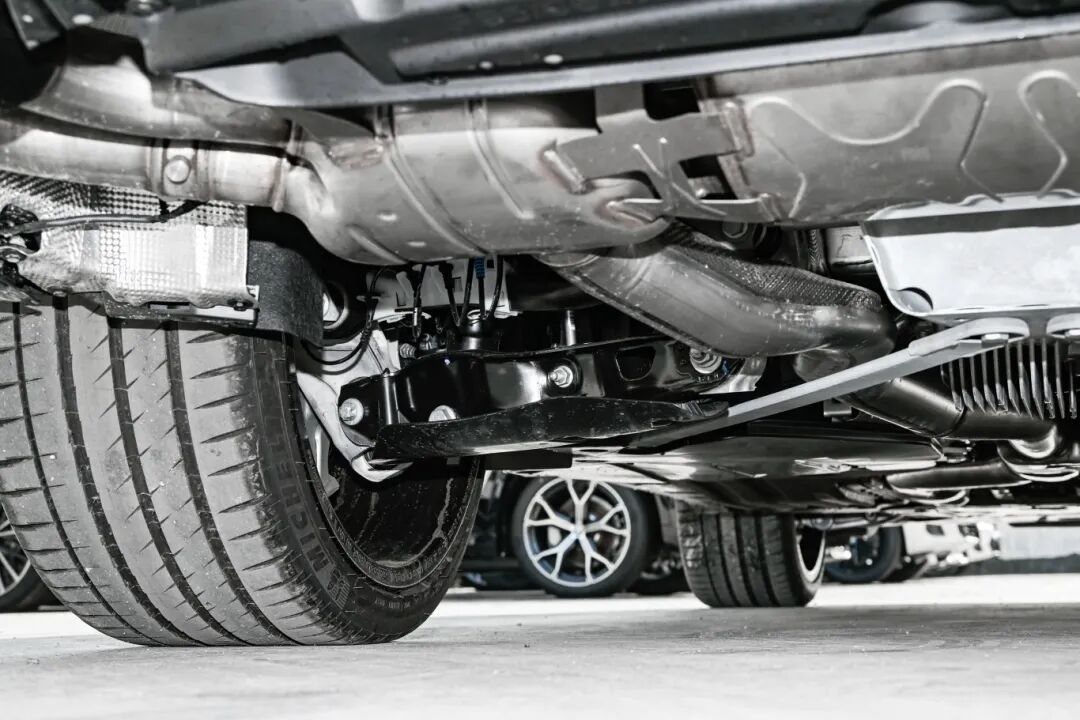
It has always been said in the industry that "ride in a Mercedes, drive a BMW". In fact, the handling and chassis of German cars, especially BMW, have always been recognized in the industry. When consumers go to a BMW 4S store for a test drive, the test - drive specialists of BMW will always show you a performance of smoothly taking a turn at 80 km/h, demonstrating the strength of its chassis.
The reason why Li Xiang mentioned Porsche and Ferrari instead of BBA is that in terms of positioning and price, BBA is in direct competition with domestic new - force brands like Li Auto, while Porsche and Ferrari are not.

Before Li Xiang, Yu Chengdong once said: "Accelerating from 0 to 100 km/h in 2 or 3 seconds has no meaning. What really matters is safety. When starting or turning, if you see other cars just flying away and drifting on the road, drifting into other lanes or onto the green belt. You can't drift casually."

Yu Chengdong's words actually directly pointed out the truth that the chassis technology of some new - energy vehicles lacks precipitation.
When it comes to electric cars replacing fuel - powered cars, new - energy vehicles have long promoted their strength through zero - to - hundred acceleration. In this regard, the power transmission of new - energy vehicles has changed from fuel to electricity. The electric motor can output the maximum torque instantly at startup, without the need to wait for the engine speed to increase to reach the maximum torque output like an internal combustion engine. Its power response is faster than that of fuel - powered cars.
However, the problem is that many car manufacturers pursue speed for the sake of speed. They only have speed but no safety. In China, major cities are currently facing the situation of a large population and a large number of vehicles, and the roads are extremely congested. Most of our domestic cities do not have the realistic conditions for high - speed drifting on the roads.

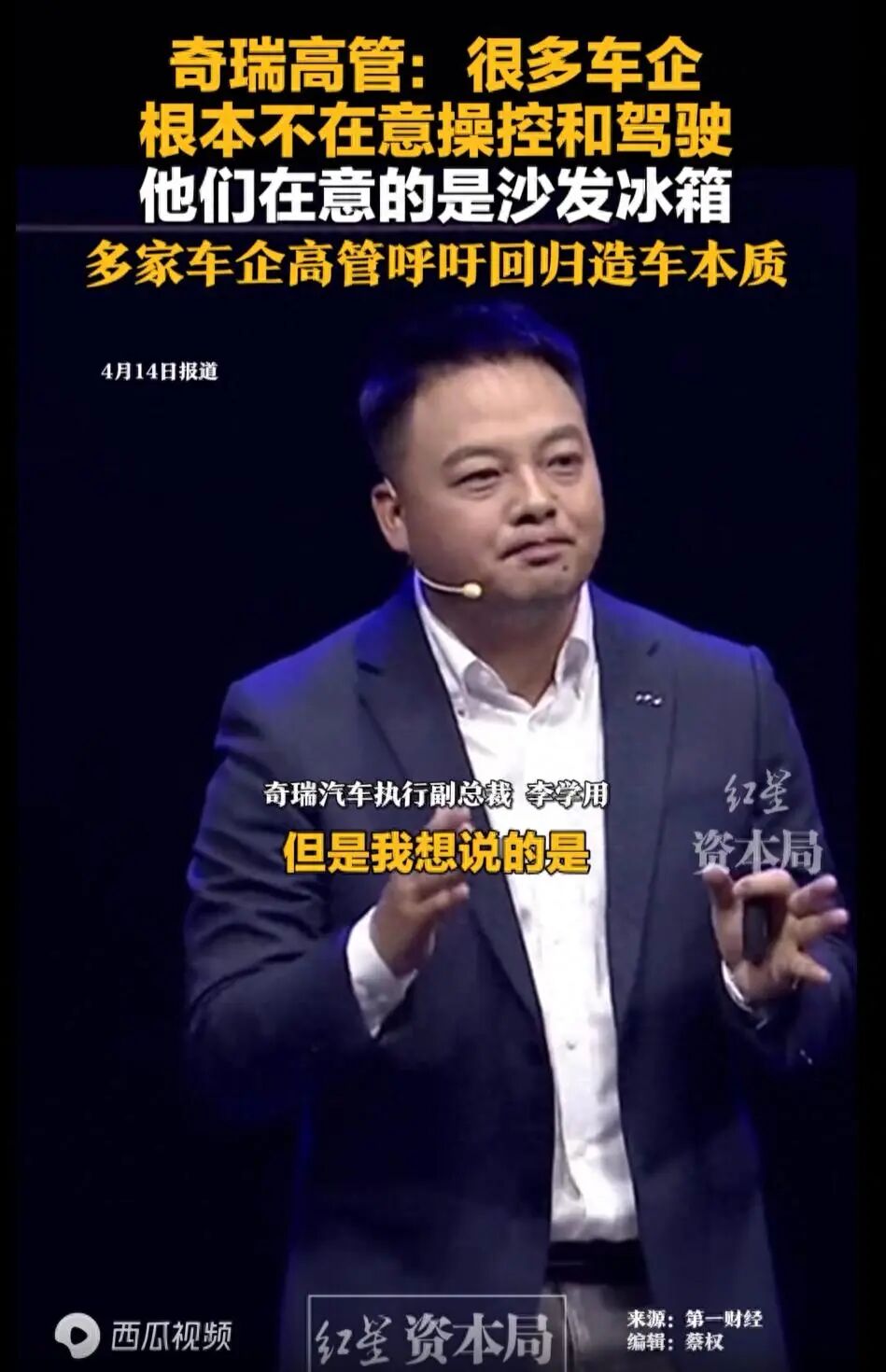
Not only Li Xiang and Yu Chengdong mentioned this point, but also a senior executive of Chery previously pointed out: "Almost no car manufacturers today mention handling. What they care about are sofas, refrigerators." The so - called good handling essentially comes from chassis technology.
If car manufacturers want to pursue speed, a prerequisite and core is to do a good job in chassis technology. Yu Chengdong once said that some car manufacturers can accelerate quickly on the road, but then drift into other lanes all of a sudden. Ultimately, it is because the chassis technology is not good and the chassis tuning does not meet the standard.
Electric vehicles naturally have fast acceleration. If they are not matched with the chassis tuning ability to be as stable as an old dog when taking turns and making sharp turns at high speeds, then the speeds of the two wheels will be inconsistent during rapid acceleration or turning, and the parameters of the vehicle stability control system will be incorrect. This often leads to the situation where some electric cars "wiggle like a dragon" and hit the green belt or guardrail when overtaking at high speeds.
This situation is rare in German BBA cars. This is because the chassis of German cars is often finely tuned by professional teams to achieve a balance between comfort and handling.
For example, when facing potholed roads, the suspension system can efficiently filter vibrations and resolve bumpy impacts. When driving at high speeds or on curves, the chassis is solid and stable, with sufficient support to effectively suppress body roll. Coupled with precise steering, the handling is flexible and full of driving pleasure.

The poor chassis technology of domestic new - energy vehicles is also reflected in the fact that some new - energy vehicles are prone to "twist their ankles" (suffer from chassis problems).
Just take a look at the chassis suspension of some new - energy vehicles of certain brands. A 2.5 - ton car has a chassis suspension as thin as an iron bar, and it can't support itself on uneven roads.
Now car manufacturers are promoting that their cars have five - link or eight - link suspensions. But if the links are just made of such thin iron sheets, what's the use even if they have twenty links?
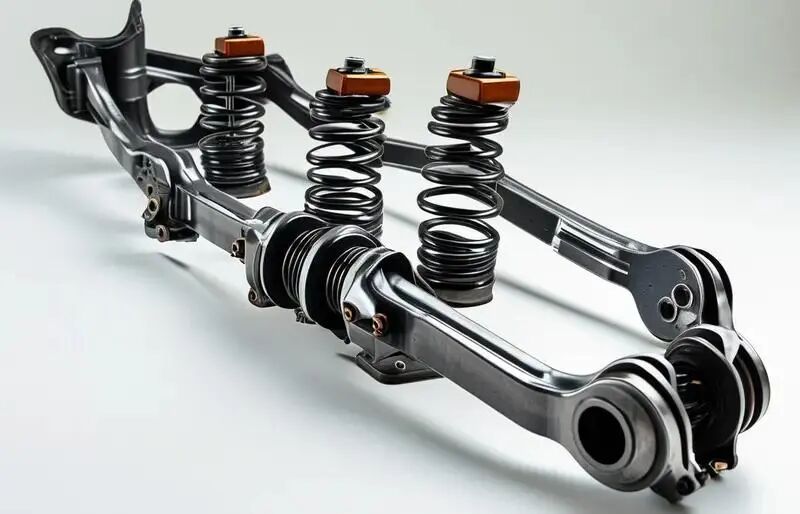
The frequent axle breakage and "twisted ankles" of new - energy vehicles seem to be due to the thin links on the surface, but in fact, it is the disconnection of the chassis design logic.
Many domestic new - energy vehicles do not design the chassis from scratch for electric vehicles. Instead, they directly use the old chassis structure of fuel - powered vehicles.
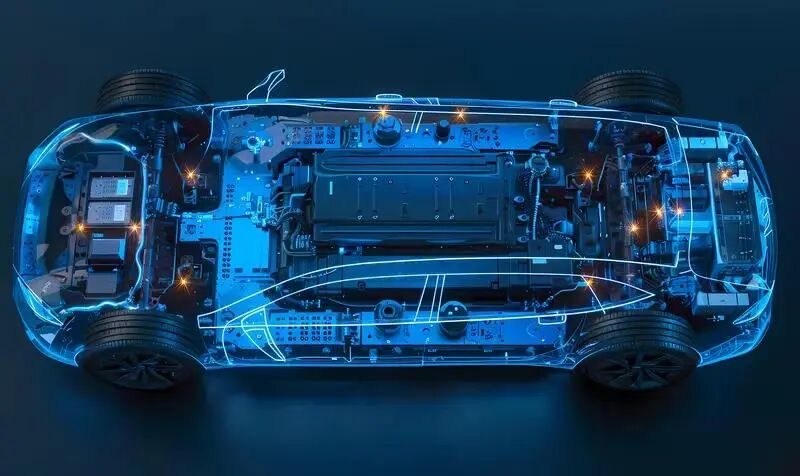
The weight of a traditional fuel - powered car is about 1.3 tons, while the weight of a new - energy vehicle is often 1.7 tons or even more than 2 tons, and the battery alone weighs at least 700 to 900 kilograms.
With nearly 1 ton of weight pressing on the chassis, how can those thin iron - sheet - like links withstand the impact when encountering a bumpy road? When hitting the curb or making an emergency brake, the suspension system often cannot withstand the huge impact and breaks.
For Chinese car manufacturers, they have established an advantage through electrification. To strengthen their competitiveness, they should build technical and quality - control barriers in the most basic and hidden safety components.
Li Xiang has raised the problem and torn off the fig leaf. It's time for domestic electric cars to make up for their short - board.
In the past few years, the industry has been most involved in the competition of large screens, voice control, refrigerators, color TVs, large models, and intelligent driving. These aspects have reached the ceiling.
Of course, these are also important, but many cars also have obvious common problems: they look magnificent in terms of parameters, but actually have a loose chassis and poor tuning when driving.
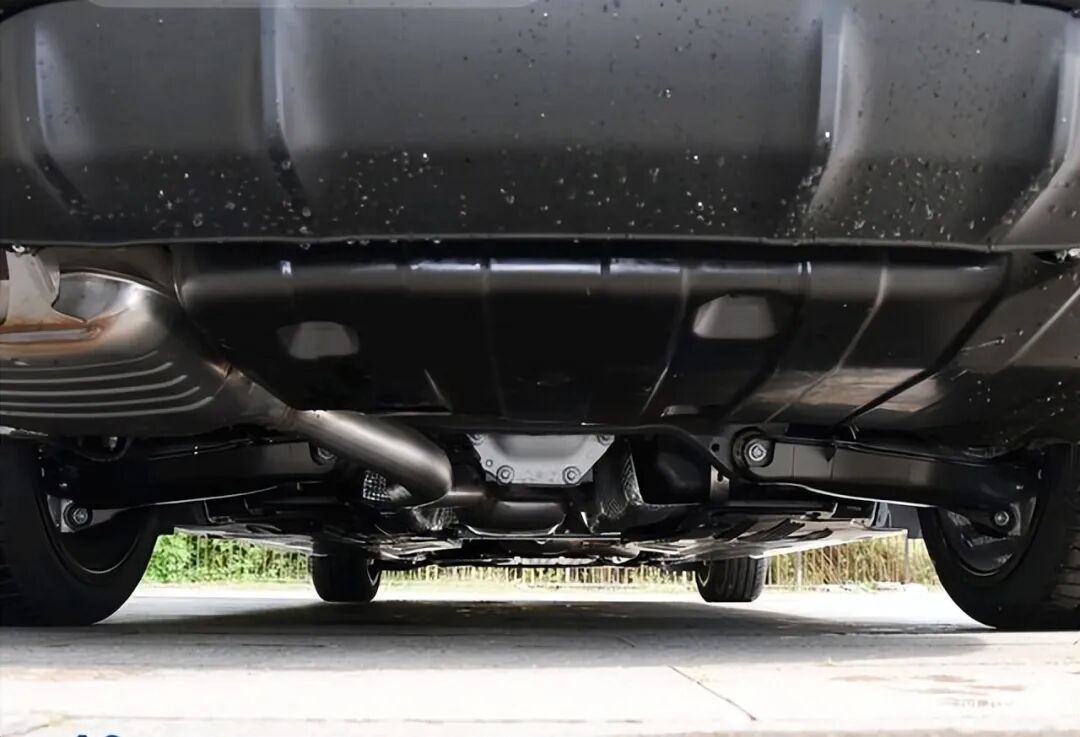
Whether a car drives stably, whether it makes you feel dizzy, whether you have confidence in the brakes, whether it passes over potholes rigidly, and whether you feel tired on a long - distance drive are all essentially related to the chassis.
Our car manufacturers have mainly focused on intelligent driving in the past, researching how to let users free their hands. However, a real car enthusiast loves driving and handling, and enjoys the process of driving.
Now our new - energy vehicles have done very well in terms of intelligence. Next, how to achieve a higher standard in the handling and driving experience of consumers and let consumers enjoy driving may also be a short - board that domestic new - energy vehicles need to make up for.
You should know that in terms of chassis tuning, electric cars have a natural advantage in structure - there is no engine, gearbox, drive shaft, or rear fuel tank. The middle of the whole car is like being hollowed out, leaving a large space. How to allocate the front and rear weights, how to arrange the suspension, and how to adjust the steering ratio can all be freely defined.
However, domestic car manufacturers are aware of their short - board in chassis tuning, so they use hardware to make up for the lack of software. Configurations such as air suspension and CDC electromagnetic shock absorption, which were once out of reach, have also begun to be used in models priced at around 200,000 yuan.
For example, Denza N7, Voyah FREE, XPeng G9, Xingjiyuan ET, Xingjiyuan ES, and even the Changan Shenlan G318, a model priced at less than 200,000 yuan, is equipped with air suspension.
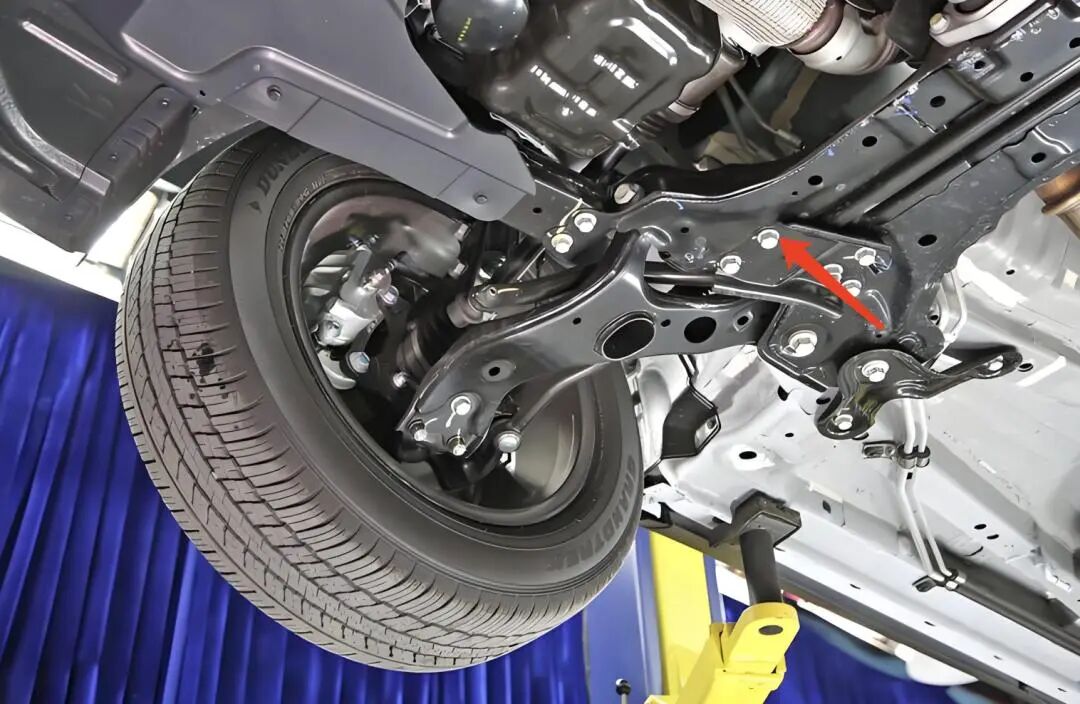
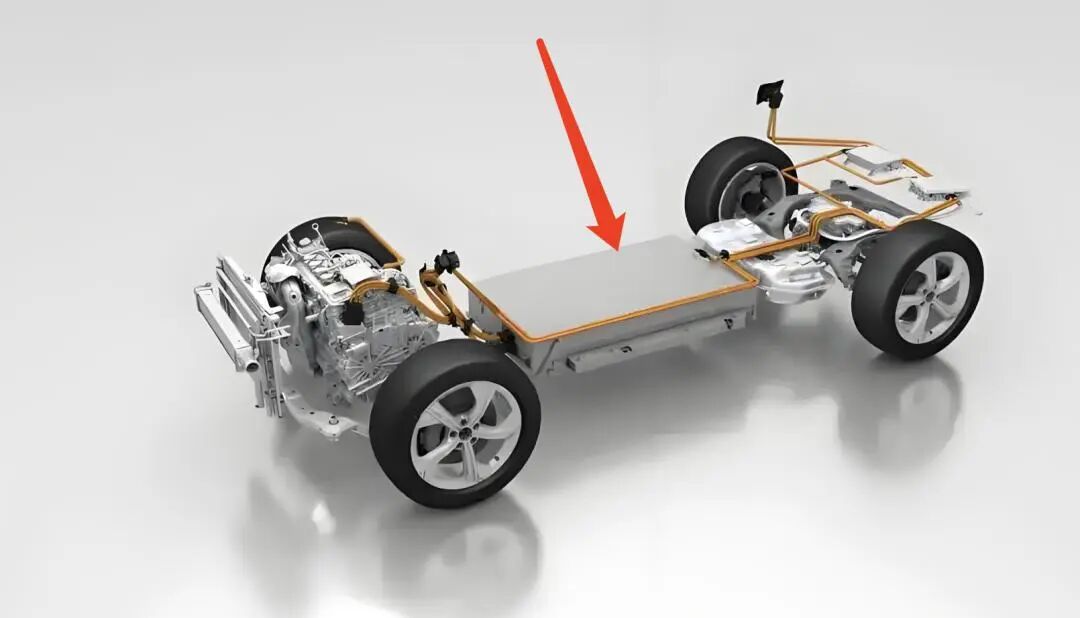
More importantly, the large battery of an electric car is like a "ballast stone" laid at the bottom, making the center of gravity of the whole car very low and stable. Not only is it less likely to roll over when taking turns, but there is also much less yaw and bumping during high - speed cruising.
Of course, as mentioned before, although the large battery is beneficial to the chassis of an electric car, it is also a weakness in avoiding axle breakage and "twisted ankles". In this regard, car manufacturers actually need to further optimize it.
Overall, in terms of chassis technology, domestic electric cars are stronger than domestic fuel - powered cars, and the progress is obvious.
BYD's Yunlian chassis and Huawei's Tuling chassis have both breakthroughly introduced technologies such as electrification and networking, and empowered the car chassis through software, creating a new technical genre for new - energy vehicle chassis.
Now, Chinese brands are also beginning to try to break through this most difficult field in a wire - controlled and electronically - controlled way.
We have already overtaken in the electronic field, but the mechanical skills of the chassis that have been accumulated for decades cannot take shortcuts. Of course, it is inappropriate to blame domestic brands with the decades or even centuries - long evolution of safety configurations of some automobile manufacturers.
But the most basic bottom - line is that when manufacturers build high - horsepower cars, they should give a relatively high consideration to safety and chassis technology. Otherwise, the car will have high speed but an unstable body, and the driving state will be uncontrollable, drifting on the road and harming both others and themselves.
For consumers, when buying a car, they should not only look at the surface configurations and parameters. The places that are not visible often test the conscience of the manufacturer. Don't be blinded by the fancy parameters. Solid chassis materials and safety guarantees are the insurmountable bottom - line for car manufacturers.
This article is from the WeChat official