It's Not a One-Man Battle: Cai Lei and His Uncurable Expedition
Cai Lei, who has been battling amyotrophic lateral sclerosis (ALS) for over six years, is gradually slipping into the end - stage of his life.
His ALSFRS - R motor function score has dropped from a full score of 48 to a single - digit number. His whole body muscles are continuously atrophying, his limbs are gradually paralyzed, and his motor function is almost completely lost. He can't lift his head, raise his hands, or utter a single syllable. His swallowing function is almost completely lost. In the past year, he hasn't tasted a hot meal. He can only maintain his life by nasogastric feeding of liquid food and nutritional supplements.
Even a simple action like moving from a wheelchair to a hospital bed requires four caregivers to lift, place gently, and move him synchronously, for fear that a little too much force might break him. At night, the numbness and tingling in his limbs wake him up more than ten times, making it hard for him to fall asleep all night. He has to wear a ventilator on his face 24 hours a day. A common cold can push him into the ICU without warning, putting him on the verge of death.
However, he has never stopped fighting. For more than ten hours every day, he connects with the world through an eye - control device. His eyes move slowly on the screen, and the cursor jumps little by little following his line of sight. One letter, one word, one sentence, Cai Lei painstakingly but stubbornly spells out a hopeful picture of drug pipelines, clinical data, patient follow - ups, and scientific research progress. With the last glimmer of his life, he has personally brought a life - saving drug to millions of patients, witnessing with his own eyes the transformation of SOD1 - type ALS from an "incurable terminal illness" to a disease that can be controlled, stabilized, and for which a future can be seen.
But he himself is not included in this hope.
He is saving the world but can't save himself.
Medical Breakthrough: SOD1 - type ALS "Conquered"
On the first day of the new year in 2026, Cai Lei typed out an open letter to all ALS patients in the country word by word using the eye - control device, announcing a major piece of news: SOD1 - type ALS "has been conquered". This disease that has plagued humanity for nearly two hundred years and is known as the "super terminal illness" is expected to be stopped by RAG - 17.
As a Chinese - original siRNA small nucleic acid drug, RAG - 17 is injected intrathecally through lumbar puncture, penetrates the blood - brain barrier, and reaches the central nervous system lesions directly. It silences the SOD1 gene, blocking the production of toxic proteins at the source and stopping the apoptosis of motor neurons that have been continuously "poisoned". From the investigator - initiated IIT trial, to the Phase I clinical trial, and now to the steadily advancing Phase II multi - center clinical trial, RAG - 17 has consistently delivered exciting results. On April 22, Zhongmeiruikang announced the positive Phase I clinical data of RAG - 17 in the treatment of SOD1 - ALS (amyotrophic lateral sclerosis, commonly known as ALS) at the 2026 AAN annual meeting: After a single dose, the pathogenic SOD1 protein in the cerebrospinal fluid decreased by up to 58.1%, and the maximum reduction of the core biomarker of nerve injury, NfL, was as high as 81%. These two indicators remained significantly reduced in a clinically meaningful way seven months after the administration; all adverse reactions were mild, and there were no serious adverse events; the condition of most subjects stopped deteriorating, and some patients showed functional improvement. The ice of ALS is starting to melt.
In this medical breakthrough, the fates of three ordinary people have been completely illuminated.
Xiaoliu, 29 years old, was the first to see the light. In 2020, at the age of 24, her left foot first became weak, and she often sprained her ankle. In just a few months, the muscles in her left leg atrophied at an alarming rate. After being diagnosed with SOD1 - type ALS at Peking University Third Hospital in 2021, her condition deteriorated rapidly month by month. It only took one year for her to go from being able to run and jump to being unable to leave the wheelchair. She was so thin that only bones were left, and her daily life was completely taken care of by her parents. She couldn't even keep up with the rhythm of the traffic lights when crossing the road.
In 2023, Xiaoliu's father saw the recruitment information for RAG - 17 in the patient group of the Jianyu Mutual Aid Home and grasped this life - saving straw. As an early subject in the IIT trial, Xiaoliu received regular intrathecal injection treatment at Tiantan Hospital for eight months. From then on, the wheel of fate turned: the muscle atrophy stopped, and even after stopping all other medications, her condition remained stable. Now, she can stand up on her own while holding on to the sofa, mop the floor, do the laundry, and tidy up the room. She speaks clearly and brightly, and can even take on part - time jobs such as photo - editing and video - cutting at home. She has changed from a patient waiting for death back to an ordinary person who can live, create, and laugh. Cai Lei calls her "the luckiest ALS patient in 200 years", and she has become the most vivid example that SOD1 - type ALS can be treated and controlled.
Teacher Wang, 53 years old, is a teacher of ideological and political education and law who has been standing on the podium of a higher education institution in Zhaoqing, Guangdong for more than twenty years. In May and June 2022, Teacher Wang's right leg suddenly started to cramp severely, and his big toe involuntarily curled up. The severe pain lasted for nearly a month. He went from one clinic to another in Zhaoqing, Guangzhou, and private clinics, and was misdiagnosed with a herniated lumbar disc for a long time. It was only when the muscles in his right leg visibly collapsed and atrophied that he realized something was wrong. In June and July 2023, he was diagnosed with motor neuropathy at the First Affiliated Hospital of Sun Yat - sen University in Guangzhou. Later, after a consultation by Professor Fan Dongsheng and several other experts at Peking University Third Hospital, he was finally diagnosed with motor neuropathy (related to SOD1 - type ALS). At the moment of diagnosis, he was almost on the verge of collapse. After that, his right leg became as stiff as a wooden stick, with coldness, muscle twitching, and pain tormenting him day and night. The thinnest parts of his calf and thigh were 6 centimeters thinner than those of his left leg. He walked unsteadily, and his dignity was gradually crushed by the disease. Introduced by a fellow patient, he contacted Cai Lei's team and entered the early IIT trial of RAG - 17. From the summer vacation of 2023 to August 2024, he completed a total of six lumbar puncture injections at Beijing Tiantan Hospital.
After taking the medicine, Teacher Wang's condition no longer deteriorated. His right leg felt much more relaxed, and he could walk nearly a kilometer on flat ground. The muscle twitching and pain were significantly relieved. He still insists on an hour of rehabilitation training every day and could even ride a bicycle occasionally. In order to give more opportunities to other patients in urgent need, he voluntarily gave up the chance to participate in subsequent clinical trials, just to bring a glimmer of light to more families in the dark.
Different from Xiaoliu and Teacher Wang, Xia Xu from Changchun, Jilin, had a slightly later onset and treatment time.
Born in 1989, he used to be a dynamic chemical plastics salesman, constantly on the go and full of hope for life. At the beginning of the onset, his walking posture was just a bit strange, and he couldn't stand on his tiptoes. But in just four or five months, his condition deteriorated like an avalanche: climbing stairs became difficult, and then he couldn't lift his legs at all. After March 2025, it became even more difficult for Xia Xu to walk. He had to use a walking stick when going out, and a wheelchair was prepared at home. Standing up after squatting became the most difficult challenge. He tried all the conventional drugs such as Riluzole and Edaravone, but saw no effect at all. In despair, he saw Cai Lei's story in the in - flight news and signed up for the Phase I clinical trial of RAG - 17 through the Jianyu Mutual Aid Home.
In July 2025, he received a lumbar puncture injection at Tiantan Hospital. After that, he truly felt that the "disease train" rushing towards the cliff had significantly slowed down. The rapid atrophy and progressive weakness that once filled him with fear were firmly stopped. He travels to Beijing for follow - up every two months, insists on cycling for rehabilitation, and his mindset has changed from despair to calmness and determination. In March 2026, he had a video meeting with Cai Lei, the pioneer in breaking through the ice. At that time, Cai Lei's body was extremely weak, and he could only communicate through the eye - control device. But the moment the video was connected, Cai Lei first gave him a gentle smile. At that moment, Xia Xu suddenly understood that this battle was never fought alone.
Fate's Turn: From JD Vice - President to Ice - breaker
Back on September 30, 2019, Cai Lei, 41 years old, was standing at the most glorious peak of his life. He was the vice - president of JD Group and known as the "first person of electronic invoices in China". He was famous for his thunderous executive ability. His career was booming, his family was perfect, and his son had just been born. The canvas of his life was waiting for him to paint freely.
However, the doctor's calm words "amyotrophic lateral sclerosis, ALS, Lou Gehrig's disease" shattered his world.
ALS is recognized as one of the world's top five terminal illnesses. Patients, in a completely conscious state, watch helplessly as their muscles atrophy, limbs freeze, and they suffer from respiratory failure. They are gradually "frozen" from body to soul. This is also the cruelest aspect of ALS.
Most people would collapse, compromise, and lie flat waiting for the end. Cai Lei chose to declare war.
He defined this confrontation as "the last entrepreneurship" and changed his online name "Stone", which he had used for more than twenty years, to the avatar of Sun Wukong - even if being suppressed under the Five - Elements Mountain, he would break through the stone and fight back desperately. On the wall of his office, the eight characters "Facing death to live, fighting ALS to the end" became the only belief in his remaining life.
He put aside his business empire and plunged into the unfamiliar field of neurodegenerative diseases. Starting from scratch, he connected with scientists, promoted drug pipelines, built platforms, and accelerated clinical trials. From a business elite to an ALS ice - breaker, he embarked on the path of a medical scientist.
Group Efforts: The Collaborative Force of Scientific Research, Patients, Hospitals, and Pharmaceutical Companies
The birth of RAG - 17 has never been a one - man fight. It is an era - defining joint effort that brings together scientists, pharmaceutical companies, hospitals, patients, and ice - breakers.
The origin of this effort comes from Professor Li Longcheng's scientific perseverance spanning two decades. As early as 2006, Li Longcheng was the first in the world to discover and name the RNA activation (RNAa) mechanism, becoming the global pioneer in this field. In 2017, he founded Zhongmeiruikang, determined to turn the original innovation in the laboratory into a real life - saving new drug. The emergence of RAG - 17 is more like a "serendipitous event": when the team was testing the efficiency of the SCAD™ central nervous system delivery platform, they selected siRNA targeting SOD1 as a tool and unexpectedly found that this pipeline was exactly aimed at the most definite pathogenic target of ALS. Thus, a drug seed that would change history was sown.
To solve the bottleneck of extra - hepatic delivery of double - stranded small nucleic acids (siRNA), the Li Longcheng team spent many years building the SCAD™ intelligent chemical - assisted delivery platform, which can efficiently deliver double - stranded siRNA drugs to the central nervous system and other tissues and organs. Compared with the single - stranded ASO drug Tofersen on the market, RAG - 17 works through the RNA interference mechanism, with its activity being 1 - 2 orders of magnitude higher. It can more efficiently and persistently silence mutant genes and block toxic proteins.
Pre - clinical data shows that RAG - 17 can extend the median survival time of SOD1 - mutant mice by 101 days, while in the data published for the marketed drug Tofersen, the same dose can only extend the survival time of SOD1 - mutant mice by 37 days.
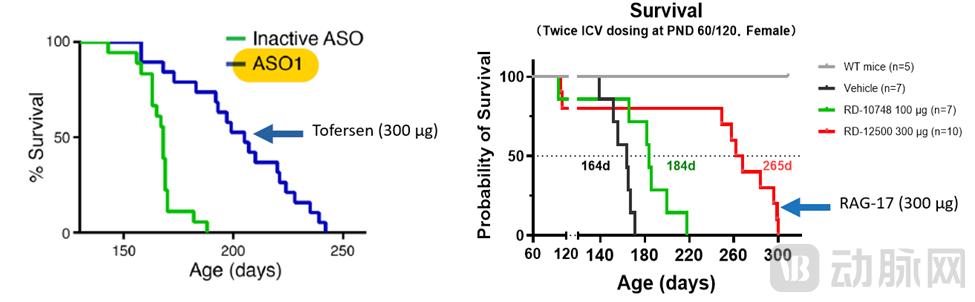
Data comparison between RAG - 17 and Tofersen (Provided by the interviewee)
The RAG - 17 project was launched in September 2020, completed pre - clinical animal experiments in 2022, was recognized as an orphan drug by the US FDA in 2023, and obtained clinical approval from the China CDE in 2024. Every step of RAG - 17 from the laboratory to the patients is a race against death.
It was Cai Lei who put this "train" on the fast track.
In April 2022, Professor Li Longcheng left a message for Cai Lei on the official account of the Jianyu Mutual Aid Home and received a reply on the same day. The two had an online meeting within three days and immediately finalized the cooperation. They quickly launched pre - clinical animal experiments at the animal base that Cai Lei had reserved in advance. When they met in Shanghai in August 2022, Cai Lei took out his phone and showed Li Longcheng the messages of help and news of the deaths of fellow patients one by one. Those desperate words made the two mission - minded people instantly reach the most solemn and tragic understanding: be faster, even faster, and grab time for the patients.
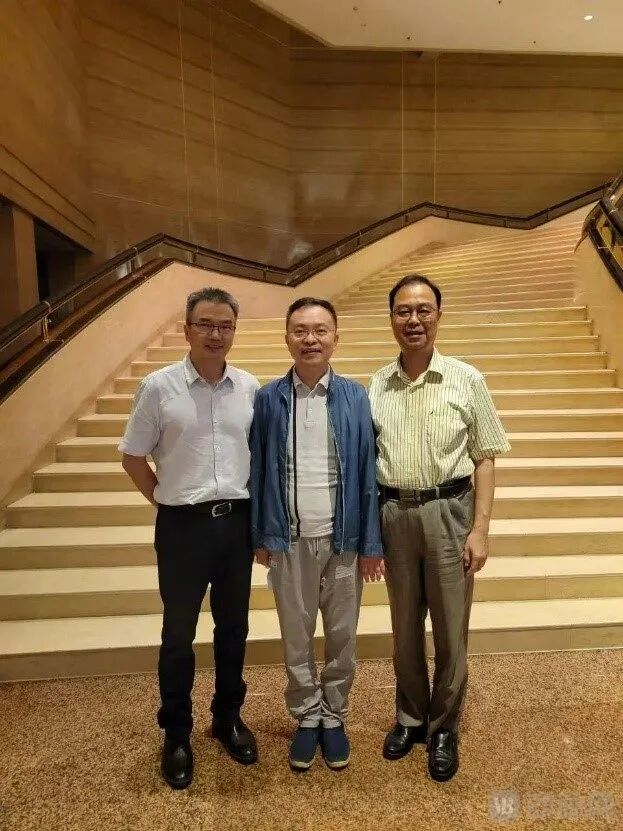
Cai Lei and Li Longcheng met in Shanghai in August 2022 (Left: Li Longcheng, Middle: Cai Lei; Provided by the interviewee)
Cai Lei's team supplemented the key pre - clinical resources, connected with top - notch clinical PIs, and used the world's largest ALS patient network to solve the most difficult pain point in rare - disease research - patient recruitment. This cooperation also gave rise to RAG - 21 targeting FUS mutations, which has also obtained FDA orphan drug recognition.
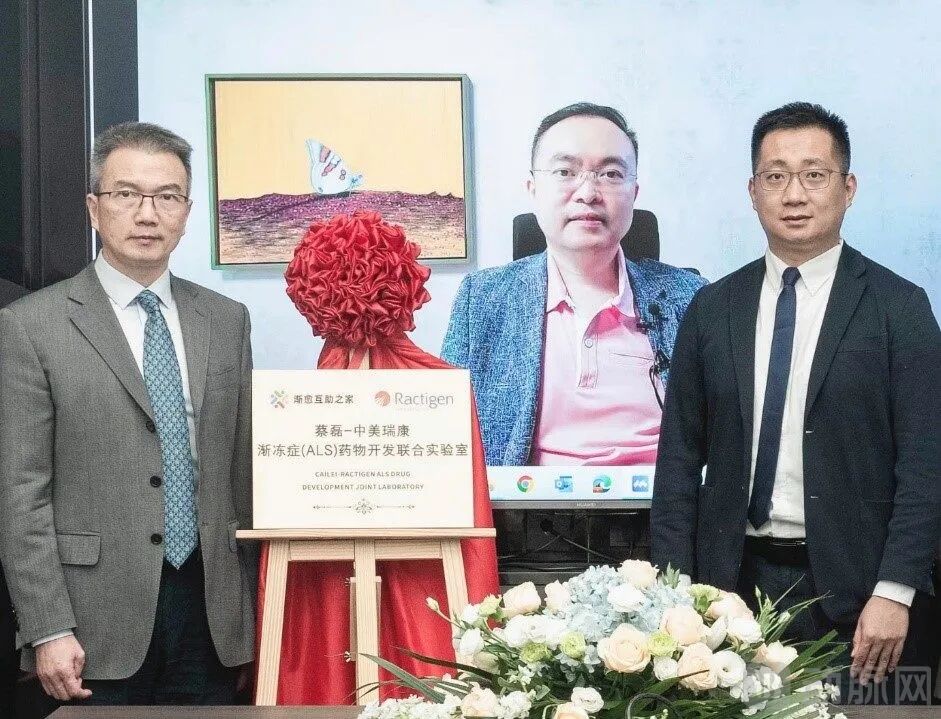
In April 2024, Cai Lei and Zhongmeiruikang established a joint laboratory for ALS drug development (Provided by the interviewee)
It is the Wang Yilong team from Beijing Tiantan Hospital that shoulders the main line of the entire clinical trial, steering the process from top - level design to implementation.
As the national leading PI for all stages (IIT, Phase I, and Phase II) of the RAG - 17 project, Tiantan Hospital undertakes core responsibilities such as formulating research plans, coordinating recruitment at sub - centers, building a CRO and statistical system, establishing a data safety committee, and writing summary reports. It is the key hub connecting pharmaceutical companies, scientists, regulatory agencies, and patients.
Wang Yilong, the executive vice - dean of Tiantan Hospital and the deputy director of the National Center for Neurological Diseases, frankly said that what impressed him most about RAG - 17 was that its self - developed delivery platform was more efficient and had a more lasting effect, and its animal experiment results were better than international similar products. Since China has long been blank in this field, he firmly believes that China must develop its own life - saving drugs, gain pricing power, and make them affordable for ordinary patients.