Swiss robotics technology company Mimic Robotics develops general-purpose humanoid robotic hands to enhance industrial automation levels | Top 100 Swiss Innovators
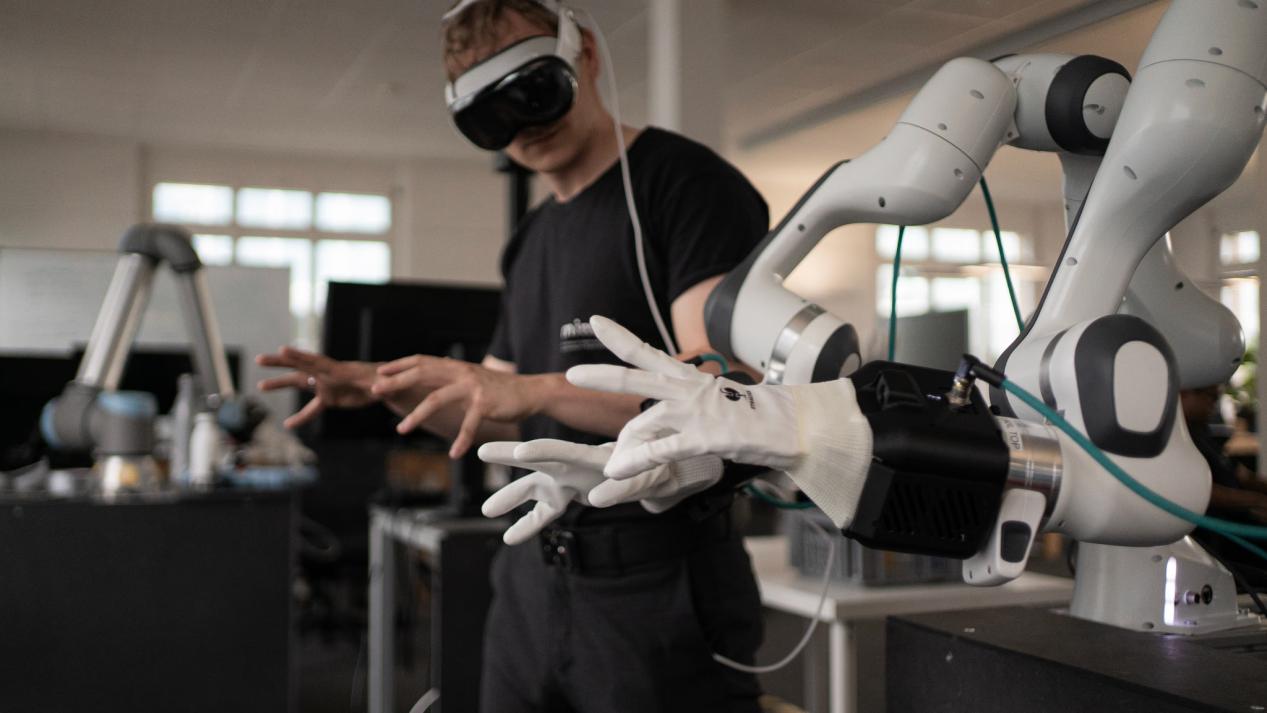
Image source: Mimic Robotics
The Swiss robotics technology company Mimic Robotics (hereinafter referred to as Mimic) was founded in 2024. The company is committed to developing general-purpose humanoid robotic hands. Based on the company's physical AI model, this robotic hand combines an AI-driven dexterous robotic hand with a mature existing robotic arm, enabling it to efficiently complete various industrial tasks.
Mimic is a spin-off company from the Swiss Federal Institute of Technology in Zurich, co-founded by Stefan Weirich, Elvis Nava, Stephan-Daniel Gravert and others. Stefan Weirich is the CEO of the company. His master's studies covered RWTH Aachen University, Technical University of Munich, and the Swiss Federal Institute of Technology in Zurich. He finally completed his master's degree at the Soft Robotics Laboratory of the Swiss Federal Institute of Technology in Zurich. His research focus was on the development of bionic tendon-driven robotic hands, and he once worked as a mechanical engineer at Siemens Healthcare. Elvis Nava is the CTO of the company. He holds a doctoral degree in robotics from the Swiss Federal Institute of Technology in Zurich and once served as a postdoctoral fellow at the Artificial Intelligence Center of the Swiss Federal Institute of Technology in Zurich. Stephan-Daniel Gravert holds a master's degree in electrical engineering and information technology from the Technical University of Munich and once served as a research assistant at the Soft Robotics Laboratory of the Swiss Federal Institute of Technology in Zurich.
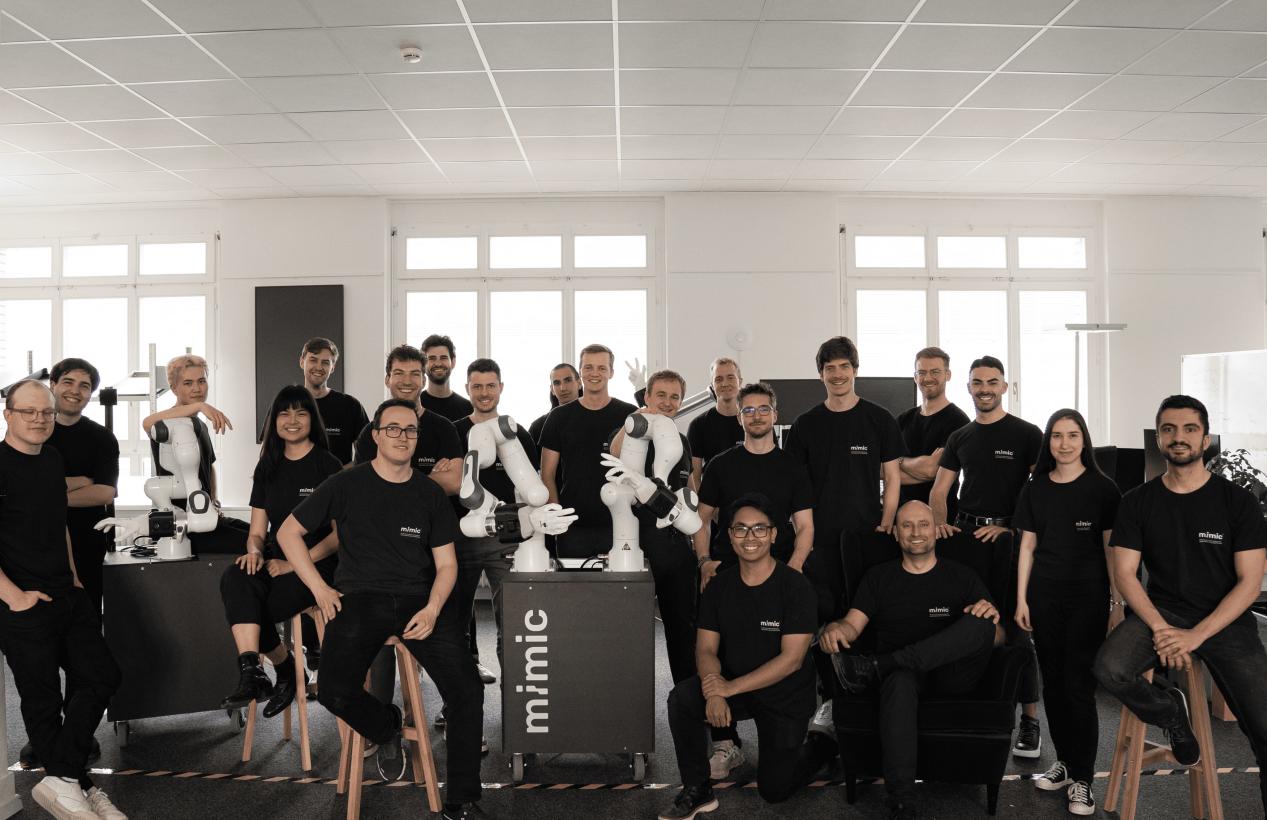
Image source: Mimic Robotics
Industrial automation has made great progress in the past few decades. However, in unstructured environments such as factory workshops designed for humans, millions of complex manual operations are still too complicated for standardized robots that rely on fixed programs and predetermined paths. Conventional automated robots are good at performing repetitive and pre-programmed actions in highly controllable environments. However, once faced with new tasks, they require expensive deployment and customized programming for each task, and often fail when the environment changes slightly, with limited flexibility and scalability. Humanoid robots also have limited application scope due to high costs and safety hazards. It is predicted that by 2035, the global market size of humanoid robots and dexterous robots is expected to reach $38 billion; and by 2040, the market size of the broader robotics market is expected to reach $200 billion to $1 trillion.
Precisely, quickly and flexibly manipulating various objects remains one of the major challenges in the field of robotics. Although significant progress has been made in areas such as motion and grasping in recent years due to advancements in learning-based control, model architectures, and robot hardware, achieving general-purpose, real-world dexterous manipulation still requires the overall integration of perception, data, hardware, and control.
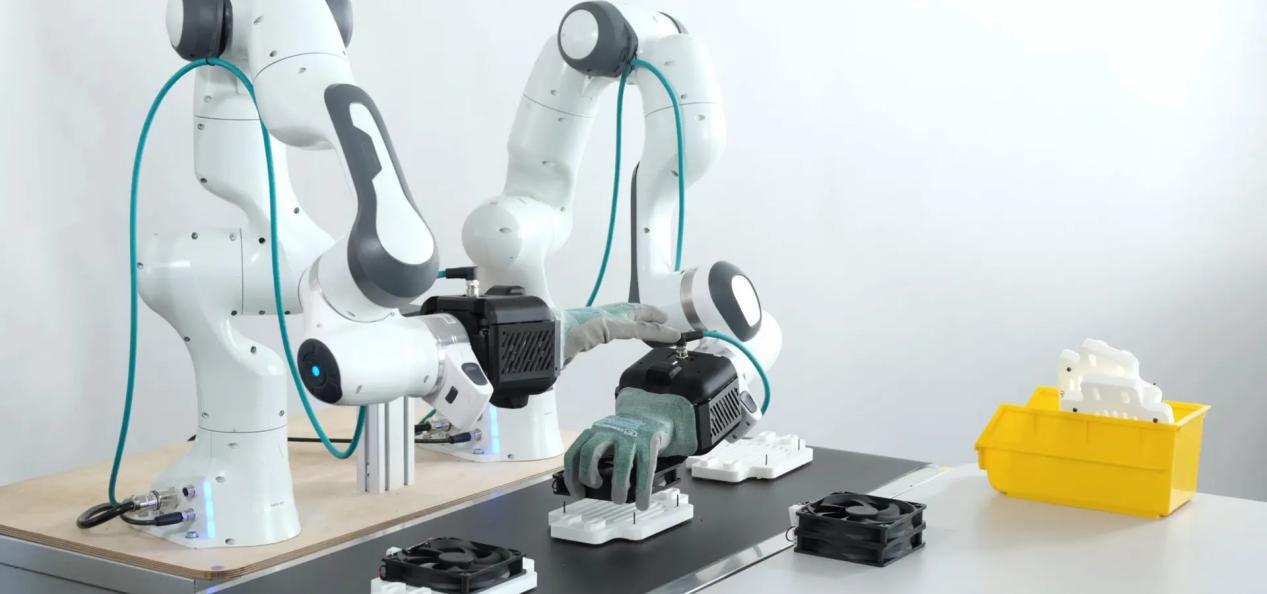
Image source: Forbes
Based on the physical AI model, Mimic has developed a general-purpose humanoid robotic hand. By combining an AI-driven dexterous robotic hand with a mature existing robotic arm, it can perform various industrial tasks at a skill level close to that of humans, with both high cost-effectiveness and rapid deployment advantages.
Mimic's core general physical AI model can be trained by collecting real-world factory data, thus solving the problem of the lack of high-quality motion data that has long restricted the development of robotics research. The model itself is a scalable remote operating system that can support both glove-based and Apple Vision Pro control interfaces simultaneously, and can quickly collect data on various real-world tasks, including picking and placing deformable objects, precise insertion, and classification of complex objects.
When in use, Mimic's general physical AI model first uses multi-modal pre-training such as images, language, cross-embodied robot data, and human video demonstrations to enable the robotic hand to quickly learn work tasks. Then, skilled operators wear the company's proprietary data collection equipment during daily factory operations. The model collects detailed hand and arm movement data from the real-time production environment for training the AI model, enabling Mimic's general-purpose humanoid robotic hand to accurately reproduce human operation skills. More importantly, the model includes a robust data collection protocol that uses targeted self-correcting data to identify and mitigate failure modes, ensuring that the robot can autonomously respond to changes in object position and orientation, handle interference, and correct its own behavior, thus operating seamlessly in human-designed environments. Moreover, the same algorithm of the model can be applied to any application scenario, ensuring simplicity and scalability.
On the basis of the existing model, Mimic has developed a general-purpose humanoid robotic hand. This robotic hand has 16 degrees of freedom, 21 joints, a payload of 7 kilograms, and a fingertip accuracy of ±0.5mm. It is equipped with a wide-angle wrist camera that can provide multi-angle and low-latency visual feedback and supports fine tendon-driven control. Its humanoid design makes it highly compatible with the pre-training and fine-tuning processes of human data. It can reliably handle harsh working environments and precisely operate fragile objects, filling the embodiment gap between humans and robots. The robotic hand can be equipped with a single arm or two arms and can be installed on a flexible fixed workbench or an autonomous mobile platform. Actual tests show that this robotic hand can help enterprises reduce operating costs by 70% and can be deployed within 1 hour.
Mimic's model and products are currently being piloted among top manufacturers, including Fortune 500 companies and global automotive brands. At the same time, the company has also established partnerships with leading multinational logistics suppliers.
In November 2025, Mimic completed a $16 million seed round of financing, led by Elaia and Speedinvest. Participating investors include Founderful, 1st Kind, 10X Founders, 2100, and Sequoia Scout. The funds will be used to accelerate the development of the company's general physical AI model and general-purpose humanoid robotic hand and to promote cooperation and deployment with leading global industry enterprises.

Mimic Robotics is one of the companies on the "TOP 100 Swiss Startups" list in 2025. The "TOP 100 Swiss Startups" brings together the best "Made in Switzerland" start-up and growth-stage technology innovation companies and is the most internationally influential benchmark list in the Swiss technology innovation field. Since 2011, this list has selected 100 of the most innovative and market - promising Swiss innovation companies and 25 Swiss growth-stage companies with the most unicorn potential across Switzerland every year, covering fields such as life sciences, engineering machinery, robotics, information and communication, low-carbon technology, and food technology. The "TOP 100 Swiss Startups" and its series of brand activities are iconic events in the Swiss innovation ecosystem, representing the highest level of Swiss innovation and the forefront of international investment and financing.
The Chinese version of the "TOP 100 Swiss Startups" in 2025 was honorably released by Insight Tech. Insight Tech is the Chinese authorized cooperation partner of the "TOP 100 Swiss Startups", responsible for the operation and promotion of the "TOP 100 Swiss Startups" in China and assisting the list projects in business cooperation with China. Insight Tech is a service provider for China - Europe (Switzerland) industrial innovation cooperation, committed to promoting the localization of Swiss innovation in China and the internationalization of Chinese industries through ecological construction and cross - border empowerment.
To obtain the complete list and industry lists of the "TOP 100 Swiss Startups", please visit the official account or website of Insight Tech.