Dialogue with SHEN Chengang of Feishu Shennuo: On the "new route" of going global, brand perception is becoming quantifiable
This year, a consensus in the overseas expansion industry is that the narrative logic of Chinese overseas brands may undergo a more thorough reconstruction.
After leaving the shallow waters of traffic, growth is no longer the only key word. Instead, it is a comprehensive test of brand power, product power, organizational power, and digital efficiency.
Meanwhile, the anxieties of overseas - going enterprises are also shifting.
In the past, the high - frequency questions were always about the survival methodology of "going from 0 to 1": How to ensure compliance? How to create a hit product? How to buy traffic? Now, the questions have become "How to take root after establishing a foothold? How to get out of the price war? How to compete with first - tier brands?"
Ultimately, all thoughts point to the same core: "How much is my brand really worth in the minds of overseas users?"
This is an era where "the more internationalized you are, the more you need localization." To take root and cross cycles in an unfamiliar cultural soil, you must break free from the homogeneous competition and occupy consumers' minds in the long term with quantifiable, decision - making, and manageable means.
As a leading marketing service provider that has served 100,000 overseas - going enterprises, Feishu Shennuo is undoubtedly a keen observer of this era. For the past 12 years, it has always been at the forefront of brand globalization, sensing the changes in the market. Facing the current widespread dilemma of "the more you invest in advertising, the slower the growth," this company is also committed to helping more brands find a breakthrough point in the new overseas expansion narrative.
By deconstructing the ability genes of the new generation of "overseas expansion champions," BeyondClick, a marketing service sub - brand under Feishu Shennuo Group that focuses on e - commerce and brand overseas expansion, jointly built and iterated the D - MES ability model with Ipsos, cooling the industry's anxiety from the perspective of rational investment and scientific operation.
For this reason, 36Kr conducted an exclusive interview with Shen Chengang, the founder and CEO of Feishu Shennuo Group. Before venturing into the unknown waters further, it helps overseas - going enterprises make fundamental thinking and strategic changes about the direction of marketing investment itself.
During the exclusive interview with 36Kr, Shen Chengang emphasized that in such a turbulent industry, Feishu Shennuo "has always breathed and shared the fate with overseas - going enterprises," and its own value is "to be at the forefront of overseas - going enterprises, being the infrastructure builder who blazes trails, paves roads, and builds bridges."
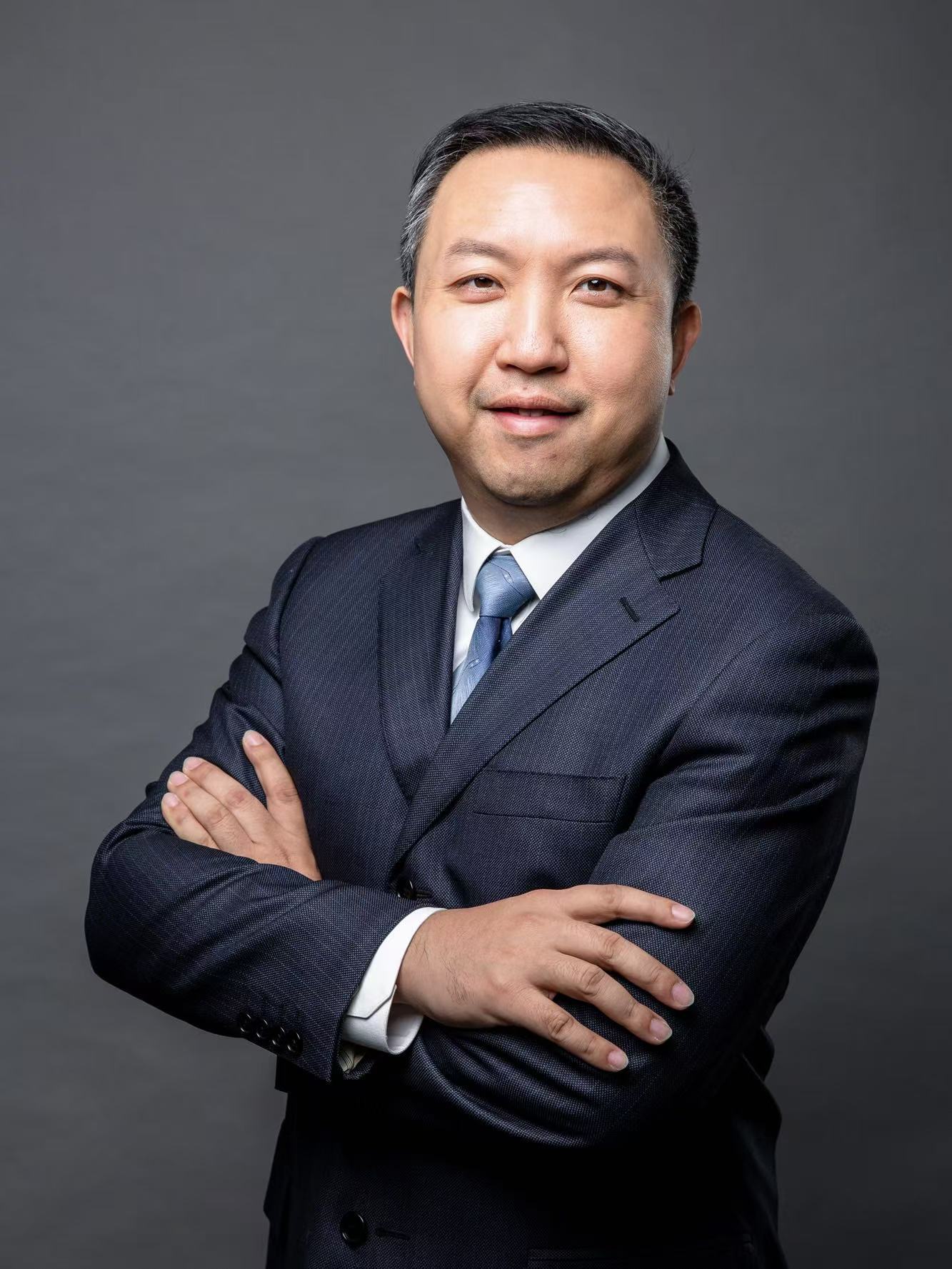
Shen Chengang, founder and CEO of Feishu Shennuo Group
After the ebb of the traffic tide, the evolution logic of Feishu Shennuo itself has also become a real microcosm of the changing needs of the Chinese overseas expansion corps in the transition from "buying traffic and selling hit products" to "building global brands."
The following is the transcript of the conversation between 36Kr and Shen Chengang, the founder and CEO of Feishu Shennuo Group, with the content edited:
01 A group of new sailors start to bid farewell to the "old route"
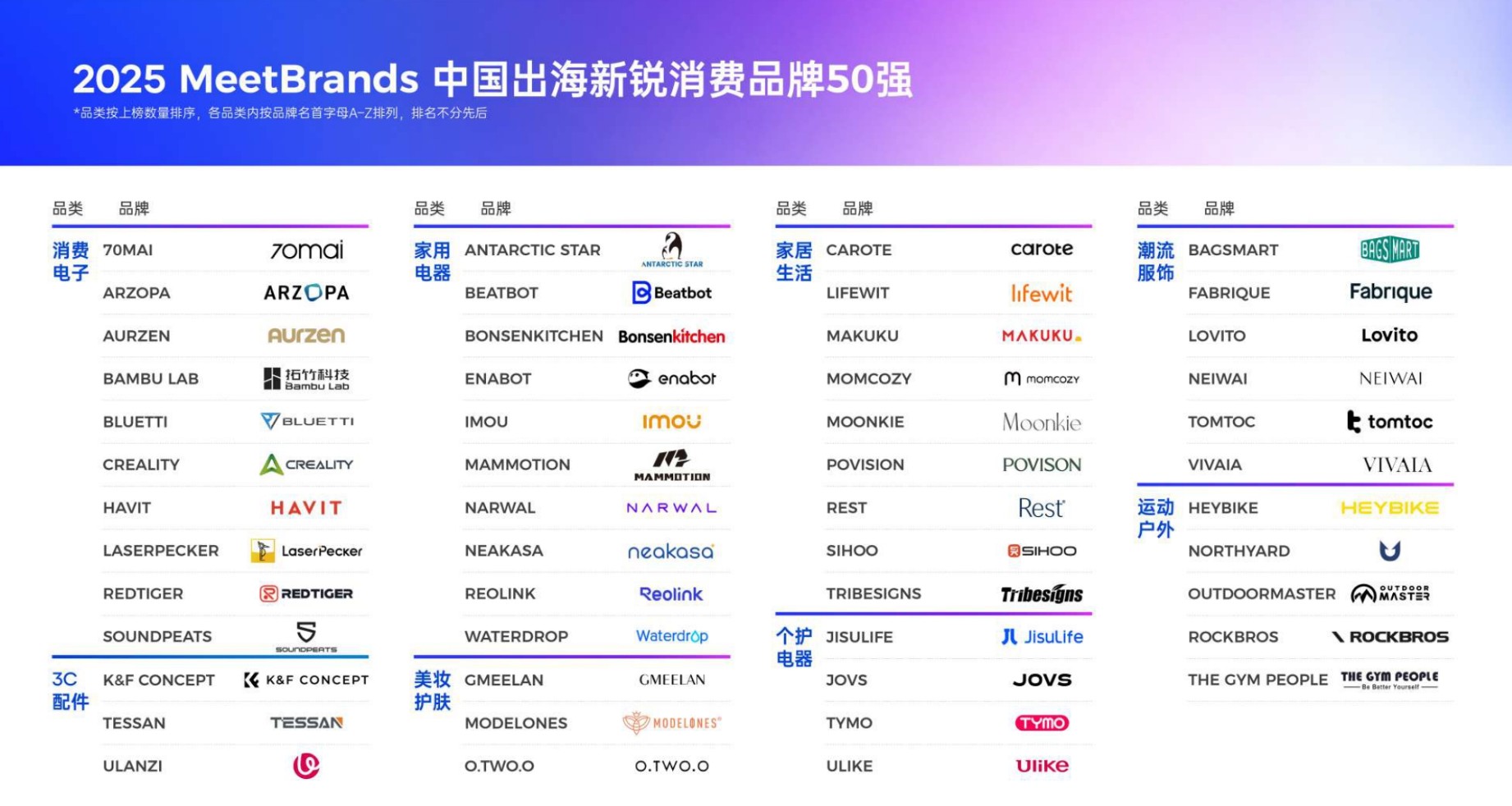
36Kr: At the beginning of the year, Feishu Shennuo released the list of "Top 50 Emerging Chinese Consumer Brands for Overseas Expansion in 2025 - MeetBrands". Compared with the enterprises that successfully expanded overseas five to ten years ago, what differences do this year's emerging brands have in terms of ability structure and growth path?
Shen Chengang: Compared with the early overseas - going enterprises, I think the newly listed brands in this session show several remarkable characteristics. Firstly, the category distribution is more diverse. Now our overseas - going enterprises have more penetration in the growing global consumer market, and more business opportunities have been discovered and explored. Secondly, the innovation ability of the products themselves has significantly improved. For example, in the 3C field, products like robotic vacuum cleaners have made very obvious progress in technological and experiential innovation and iteration compared with previous years.
Thirdly, and most importantly, the awareness of brand building has been greatly improved. Enterprises are no longer only focused on selling products but are starting to think about how to build the sustainable competitiveness of their products. We have observed that some overseas brands have continuously appeared on our Top 50 list, and some have even "graduated early" and moved towards becoming first - tier brands. For example, Insta360 may have mainly relied on product power to break through in the early stage of overseas expansion, but in recent years, its brand strength has been greatly enhanced.
Beyond the observable product and brand power from the outside, the more fundamental difference lies in the internal digital application level and organizational ability. How overseas - going enterprises manage their overseas teams and how they quickly respond to and iterate on user needs. These underlying digital - based operational capabilities are becoming the cornerstone for brands to go further and longer, and they also reflect the transformation of the overseas expansion model from "opportunity - driven" to "ability - driven."
36Kr: In the past period, overseas brands have been facing many "common" problems. For example, it is obvious that advertising investment is increasing, but GMV growth is slowing down. How do you view this phenomenon?
Shen Chengang: This is an obvious signal and an inevitable result of the intensifying global competition. We can see that global cross - border digital transactions are all growing, and everyone is flocking to the high - growth cross - border e - commerce track. However, the traffic on global platforms is limited. The growth rate of competition among global players exceeds the natural growth rate of platform traffic, so the price of traffic will naturally rise.
But the more crucial problem is that many enterprises are still using the logic of "short - term ROI" to operate in a market that has entered the long - term competition stage. Many enterprises confuse "sales investment" with "brand investment." We need to separate these two concepts: Is your investment for short - term sales conversion or for long - term brand mind - set building? In the past, people pursued ROI, such as "investing one dollar in advertising and earning three dollars back," which is a sales - oriented advertising model. But if you still rely on this short - cycle return method now, it is easy to hit the ceiling. When you regard "investment" as a long - term investment in the brand, its return may not be reflected in the overall sales increase until three months, six months, or even a year later. So, the ineffectiveness of traffic or the slowdown of GMV growth is a key signal, indicating that the stage of relying solely on traffic monetization is passing and reminding enterprises to fundamentally think about the advertising investment strategy.
36Kr: In the face of this signal, what fundamental adjustments do you think the business thinking of overseas - going enterprises needs to make?
Shen Chengang: There should be a shift from pure tactical traffic monetization to strategic user asset and brand value building. That is to say, enterprises can no longer only focus on short - term ROI but need to balance the relationship between short - term sales and long - term brand investment.
Although through refined operations and technological means, it is indeed possible to improve efficiency in the short term and relieve some growth pressure. However, it essentially solves the problem of "how to use the existing traffic more efficiently" rather than "where the growth comes from." After the disappearance of the traffic dividend, business owners need to think more about how to turn a part of the investment into a long - term investment in the brand and users' minds. This is also the problem that Feishu Shennuo, as an overseas expansion marketing consultant and technology service provider, has been helping customers solve - to find a more reasonable investment structure between short - term conversion and long - term brand building and make better strategic decisions.
36Kr: Compared with real international first - tier brands, what are the main gaps and weaknesses of our emerging overseas brands?
Shen Chengang: I think the main gap compared with first - tier brands lies in the ability to "continuously connect with consumers," which still needs to be verified. We can see that many brands can quickly make a single product a hit in a market or a country, which is a good start from 0 to 1. But is this sustainable? Can you continuously replicate such success in the same market and among the same group of people? Is the users' recognition of you also continuously rising? These questions test the all - round evolution ability from product, marketing, organization to digitalization. Currently, only a few leading overseas brands have verified such a stage. For emerging brands, it remains to be seen whether brand building is just a flash in the pan or if they can prove their sustainable competitiveness.
Regarding sustainable competitiveness, one of the more prominent challenges is that many emerging brands still have a gap compared with international brands in terms of their proximity to and in - depth understanding of overseas users. Taking domestic leading brands as an example, their success in China cannot be directly replicated overseas. The real challenge lies in whether you truly understand users in different markets and are even willing to re - define products for them. These considerations are essentially challenges of localization, which also drive the product design and development of brands in reverse. For example, in the case of new energy vehicles going overseas, understanding local users' usage habits is not just about solving the problem of whether the driving position is on the left or the right but also involves a lot of derivative local knowledge.
The more internationalized you are, the more you need localization. Currently, most emerging overseas brands have not really gone through these tests. There is no textbook for solving these localization problems. It must be developed by an international brand team through actual combat. So, we still have a lot of battles to fight. The advantage of our overseas brands lies in moving forward continuously. Whoever can make faster adjustments and iterations when encountering problems will become the core dividing line for future overseas brands to become global brands.
02 Crossing the shallows to find the "deep sea" of brand power
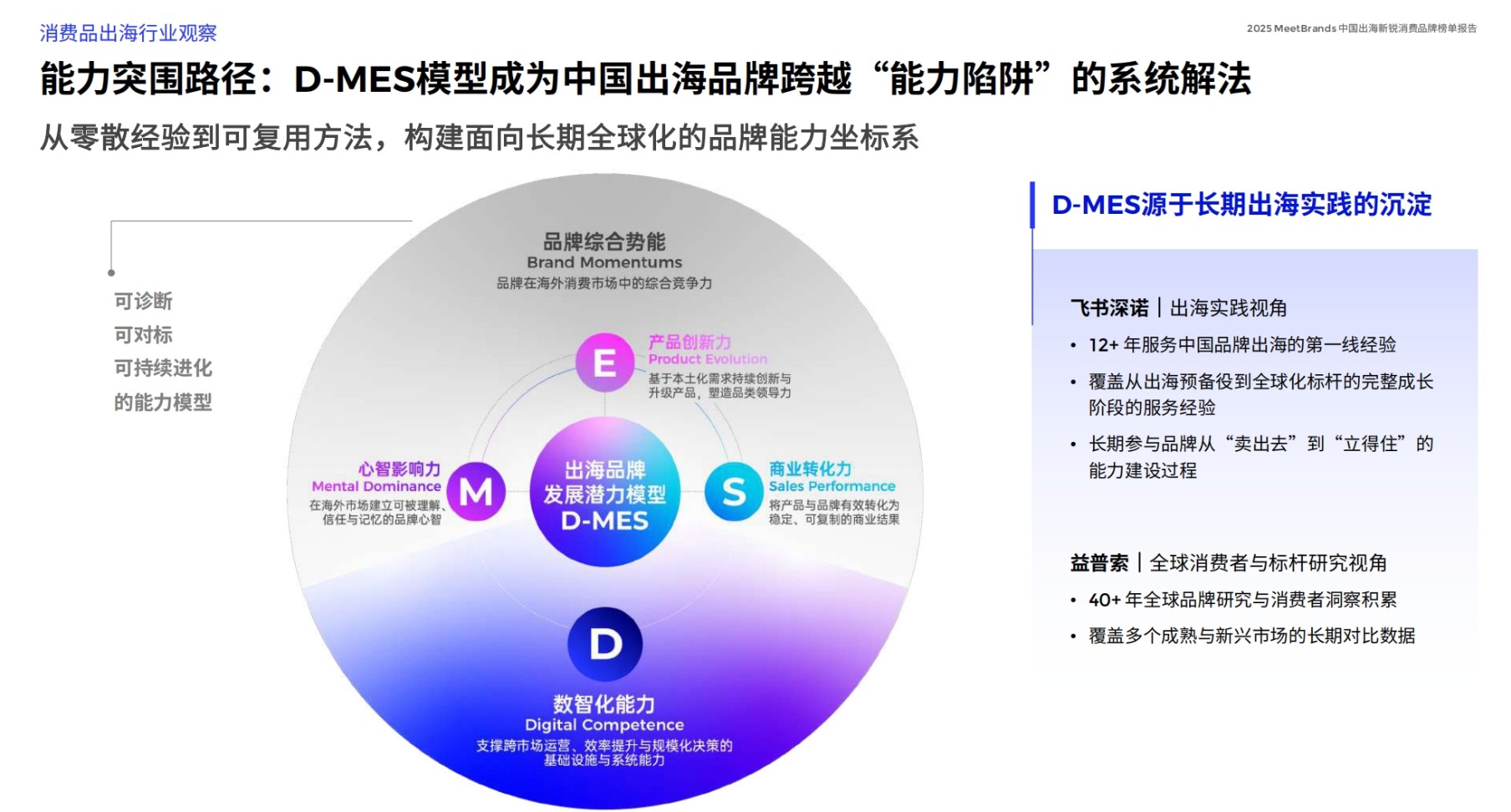
36Kr: Regarding the problem that brand ability is difficult to quantify, BeyondClick, a sub - brand under Feishu Shennuo, jointly proposed and upgraded the D - MES evaluation system with Ipsos. So, for overseas - going enterprises at different stages, how should they focus on these four abilities?
Shen Chengang: For overseas - going enterprises aiming to grow into global brands, the four dimensions presented in the D - MES model, namely digital intelligence ability, mind - set influence, product innovation ability, and business conversion ability, need to be considered simultaneously. Just as we hope that a child's growth can be all - around in terms of "morality, intelligence, physical fitness, aesthetics, and labor." However, in different life cycles, the focus of brand investment actually changes dynamically. At the initial stage of a brand, the first thing an enterprise needs to solve is whether the "product can work" and "whether the conversion can be achieved," completing the verification from 0 to 1. These are the product innovation ability and business conversion ability. After a single product achieves success, the growth logic will change - what determines the upper limit is no longer just the conversion efficiency but the brand's position in the users' minds. At this time, it is necessary to start considering the brand's influence on users' minds and how to use the internal digital ability of the organization to build sustainable core competitiveness. The role of Feishu Shennuo is to help enterprises judge and analyze which stage they are in and where they have weaknesses in which dimensions. We have an industry benchmark, allowing enterprises to clearly see their position in the industry, thereby identifying their strengths and weaknesses and finding the optimal balance point for resource investment at the current stage.
36Kr: Among these four abilities, the investment related to brand mind - set influence may be more difficult to quantify. In a practical business environment, how does Feishu Shennuo help customers calculate the "brand account"?
Shen Chengang: This is a very cutting - edge industry topic. From past business experience, brand measurement has often been "more of an art than a science," with more emotional perception in the industry. However, with the improvement of digitalization and AI capabilities, the path to solving this problem is becoming clearer: In the past, we could only look at the sales feedback at different stages, but now we can obtain data from more dimensions and with finer granularity, such as search volume, social media buzz, user reputation, and we can even conduct online surveys of global users directly. Based on these data, we can build a quantitative model to measure brand changes and associate it with the impact on sales and growth, not only in the short term but also in the medium and long term.
In most cases, brand investment will not immediately turn into direct conversion, but it will gradually affect user favorability and ultimately be reflected in dimensions such as repurchase rate, conversion rate, and user evaluation. However, from an overall industry perspective, the quantification of brand mind - set is still in a stage of continuous exploration, and true quantification still requires time for verification.
36Kr: Feishu Shennuo has evolved from being a "provider of traffic resources" to a full - service brand marketing provider today, going through different overseas expansion cycles. Do you think the current common traffic pain points are cyclical or irreversible?
Shen Chengang: Moving from relying on traffic to building brands and then to deepening digital capabilities is an irreversible trend in the development of the times. The development history of Feishu Shennuo has always reflected the evolution of customer needs, so the changes and leaps in our own service capabilities are also sufficient to confirm this point.
In the early stage, with obvious traffic dividends, what enterprises needed most was to quickly acquire users. Therefore, we provided global media resources and advertising - placement capabilities. As competition intensified, enterprises began to pursue higher advertising - placement efficiency, so we gradually strengthened our capabilities in advertising operation and digital creativity. In recent years, there has been an obvious change in customer needs - it is no longer just about "how to place ads more accurately" but about "how to build local brands and how to improve overall operational efficiency." In this context, we also made early - stage investments in underlying digital capabilities and integrated marketing systems.
Feishu Shennuo has always positioned itself as a "pathfinder" and infrastructure builder for enterprises going overseas. We hope to always be "one or two steps ahead of our customers," making advance investments and arrangements for the problems they will encounter in the future to counter the irreversible trend of the times. At this stage, only by being more determined and faster in the direction of branding and digitalization can long - term competitiveness be maintained.
36Kr: As a highly productized brand marketing digital platform, how does BeyondClick apply AI to industry practices? What role is AI currently playing in the integrated marketing chain?
Shen Chengang: First of all, we need to clarify that in the field of brand marketing, the essence of AI is still an efficiency - enhancing tool. It is not an all - powerful myth and a "panacea." In our service framework, the efficiency - enhancing effect brought by AI is mainly divided into two levels: execution efficiency and decision - making efficiency.
In terms of execution efficiency, for example, in generating advertising creative materials such as videos and graphic designs, AI has largely replaced repetitive manual labor. In terms of decision - making efficiency, it currently mainly addresses the question of "what is the right thing to do." For example, what kind of creativity can improve advertising effectiveness and conversion rates? If the decision is wrong, even the fastest execution can only lead to "doubling the effort but halving the result." So we use the massive data accumulated by Feishu Shennuo over the past decade to train AI, enabling it to judge which creativity and strategies work better in specific industries and scenarios. Then, based on this judgment, we guide the next - step execution and verify and learn from the results, forming a continuous cycle through continuous trial - and - error and reinforcement learning.
Based on this logic, we break down the marketing process into links such as strategic insight, digital creativity, media placement,