How to get unique AI startup ideas? YC partner: Stop looking at what others are doing.
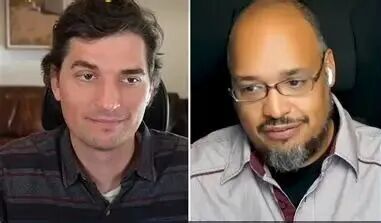
In the upsurge of AI entrepreneurship, countless people have flocked to this field, but truly unique and explosive ideas are few and far between. YC partners Dalton and Michael delved deep into the core issue of "how to come up with unique AI startup ideas" in their latest sharing. The following is a full transcript of the conversation.
I. The current startup environment: Great tools, poor ideas
Michael: The problem now is that the tools are so good that you can produce anything. Therefore, the bottleneck lies not in the building process, but in the ideas. Most ideas lack uniqueness.
Dalton: I'd even say that many people aren't even encouraged to come up with unique ideas. It feels like they're almost encouraged to do similar things - like, what just completed a seed round of financing? What sounds attractive to investors? Tell me how I can get funding.
This is especially evident on Twitter: Oh, OpenClaw is out, let's just copy it. That's the company I founded - quite perfunctory.
Michael: I think another strange thing is that those trying to start a company think they can reduce the risk of entrepreneurship by "doing what they see" - like projects that recently received financing or completed a Series B. I've seen so many examples of this: Someone says, "That thing has received a billion dollars in funding, so..." and then they just follow suit.
Dalton: Moreover, they inadvertently become part of the problem. Every time I go to YC interviews, there's always someone saying, "YC invested in a company doing xyz two batches ago. This validates the market's feasibility." I'd just sit there thinking: I invested in that company, but I didn't invest with that idea in mind. I actually invested in another project, and they changed direction during the process. So as an investor, this doesn't prove anything. I can't stress enough: There's no signal in what you call the "validation" source.
Michael: Trying to interpret what types of projects are in YC batches isn't entirely wrong, but it's definitely not completely right either.
Dalton: I think it's completely wrong. You're deciding where to spend the next 10 to 20 years of your life, yet you're looking at what others are doing and what financing they're getting. Come on, you should be more determined.
II. Don't look for what no one has thought of, look for what's been discarded
Michael: I really like this point you made: Look at what's in the trash can. Everyone has a set of criteria for screening startup ideas because our filters are very similar. If your idea - screening process is "find a good idea that no one has ever thought of before," you're going to have a hard time. There are billions of people in the world; you can't find something that no one has ever thought of.
What you really need to do is find an idea that has been abandoned. Others discarded it for some reason. Instead of trying to find something no one has thought of, look for something everyone thinks is bad.
Dalton: The classic example is Instacart.
Michael: I see many people in the ideation stage doing this: They talk to their friends and look for something all their friends like, thinking that's a good idea. But I'd suggest doing the exact opposite. If you talk to your friends and they say, "I'm worried about you. Your idea is terrible" - that's what happened to the founders of Airbnb, and their parents were worried about them.
Dalton: For many successful YC companies, their friends and family thought the idea was terrible at first. We always say that the way to get unique ideas is: You have to break away from consensus. Stay away from investor consensus and stay away from your friends' consensus.

III. How to break away from consensus: Do something that takes 10 years
Michael: Doing things is difficult. Saying you want to do something that takes 10 years, especially for young people, can be really intimidating. So, a simple trick is: Tell yourself it'll take 10 years, and then figure out how to compress it to 2 years. Then cut out all the things that might take more than two years to show results. If you want to "cheat," think about ideas that might take more than two years - this way, the chances of success will increase significantly.
Dalton: When you think of examples like OpenAI and Anthropic, the current consensus is: It's a good thing to be their founder. But 18 months ago? Can you imagine a weirder start than OpenAI's? It was initially a non - profit research lab, and there was no product for a long time during the rise of SaaS. Anthropic was also extremely strange; a lot of their early funding came from FTX. The whole story is so bizarre, and now it seems like everyone unanimously thinks it's great, but wow - they are typical examples of "non - consensus."
Michael: I'm not even denying that these stories are inspiring. But if you want to copy what worked for others in the past, it won't necessarily give you a truly unique idea.
IV. The era of information overload: Podcasts and VC content are killing uniqueness
Dalton: One of the factors that makes this harder is the amount of content released by venture capital firms. If you're a young founder, in the early 2000s, how much VC content could you access? It didn't exist at all. Back then, there was only The Wall Street Journal and Walter Mossberg writing tech articles, mainly about Apple's new Mac computers. TechCrunch was the first media to cover startups. Now we have a sea of content. I realized that our voices are also part of it.
Michael: We've never tried to explicitly tell founders what to think. It's more about telling stories and providing advice. But if all your life decisions are based on podcasts, that's exactly the definition of coming up with a lackluster idea. You heard that idea in a podcast, right?
Dalton: This is a common practice around the startup ideas we've always been thinking about.
V. Solving problems for yourself: An overlooked approach
Michael: Some of the startup projects I've worked on didn't get enough attention in the B2B SaaS era - the idea of "solving problems for yourself" or "being your own user." This style seems to be completely out of fashion now. People think, "Oh, if I'm doing something for myself, it can't grow big; the market isn't big enough." Or "I don't trust myself to choose the right thing."
Dalton: I think one important point of discussion is that VC podcasts or VC content always say that results in the tens or hundreds of billions of dollars are the most important. This triggers a lot of ideas - truly unique ideas can never fit into that framework. Take your startup as an example - Justin put a camera on his head and started live - streaming, and it didn't work. But was it a billion - dollar business opportunity? You'd filter it out. And Whatnot, one of my more successful investments at YC. Simply put, it's a trading platform for selling authentic Funko Pop dolls. Would you throw it away?
So, you should try to view investor advice and its application in startup concepts as "only a very small number of things can meet this standard." In the end, you'll get a lot of imitations and repetitive ideas because they meet this standard.
VI. Eccentrics are more likely to come up with unique ideas
Michael: I've found that sometimes, eccentric people are more likely to come up with strange - that is, unique ideas. The challenge we're facing now is that AI seems like a great place to make money, and many people who aren't really eccentric are deeply attracted to this space. When I say "eccentric," it's actually a compliment because in the United States, being eccentric isn't seen as a good thing. But a lot of successful ideas really seem strange, and when you meet the people behind them, you'll find that many of them are a bit odd.
Dalton: I sometimes wonder if the world of tech startups is still as inclusive of eccentrics as it used to be.
Michael: Those who don't follow the rules or are otherwise eccentric often do strange things on their own, and they usually don't need permission. They keep coming up with these strange ideas. Society tells them, "Shut up. We don't want to hear your stupid ideas about how to make things better." The system gradually grinds that trait out of you.
These people often do well in startups because they have no problem coming up with unique ideas. The bigger problem they might face is filtering - they're always coming up with new ideas, so they have to decide which unique ideas are worth investing time in. In contrast, many systems are "consensus machines." Those who are very good at calibrating and validating consensus often have the hardest time coming up with unique ideas because that nature of theirs has been worn away.
Dalton: Take YC itself as an example. Most investors who start funds have investment experience, a Harvard or Stanford MBA, and then work as assistants here. And Paul Graham? He wrote a Lisp program, built a website, got rich, and then decided to do something very strange that he came up with from first principles - allowing young people to apply for a summer program. It turns out that he's the VC that everyone likes to look up to. He's an eccentric, without traditional training, and he did something that an ordinary investor would never do. He created what he wished had existed when he was a founder.
VII. Not everyone is suited to be a founder - and that's okay
Michael: This is tricky. Many people watching this video might be thinking, "Is the startup world right for me?" I feel awkward - even though it's an exciting time in the tech industry, not everyone is suited to do this, and not everyone is good at coming up with good ideas. If it's your dream, you should definitely try starting a business. But if you really, really, really have a hard time coming up with unique ideas, it's perfectly okay to work somewhere else. You can still be part of it. Not everyone has to be that "eccentric shaman" who always comes up with strange ideas.
Dalton: If everyone were like that, society wouldn't function. Maybe you should work with someone a bit odd, and they should come up with the idea. That's what I do. I definitely wouldn't be involved in the process of putting a camera on Justin's head; I wouldn't make any contribution at all. So, you can always find a job and join with others.
VIII. Final advice: Be ready to be told "This is terrible"
Michael: It's hard to convince yourself that "I'm doing something that many people think is a bad idea." That's tough. I like talking about this because you should be mentally prepared. This is exactly the experience of all successful people. You should expect to be in that situation for a few years. If you're doing something that really excites you and you're willing to stay in that situation for a few years, as an investor, I'd be excited about it.
Dalton: When I meet someone who will move on if this method still doesn't work in a few months, I always say, "Oh, yeah." You're only investing 10%, but you want me to invest 100% - that's so strange.
So, for those watching, it's completely okay to be a maverick and do things that people think are strange. If you use the people in these videos as a screening condition to see if they agree with your idea - we say no. Don't seek approval from authority figures if you want to have truly unique ideas.
Michael: I'll go even further: We often fund ideas that we think are not good. We often work with founders who change their minds and do things that we think are not good. To be honest, I think my job is like being a doctor. I'm treating the patients who just walked in; I don't have a choice. I want to help these people succeed. Who am I to know if it will work?

Mark's summary: Unique AI startup ideas aren't heard from podcasts, copied from financing news, or derived from the consensus of friends and investors. They're often hidden in the "trash can" - those areas that have been rejected and discarded by everyone. They come from eccentrics who don't play by the rules, from the instinct to solve problems for oneself, and from the courage to spend 10 years doing something that others think is "terrible." If you don't have this talent, that's okay - find an eccentric with talent and join them.