When OpenClaw detonates the A2A era, can business philosophy become an enterprise's moat?
"At 3 a.m., 10,000 AIs were still having a heated debate in the forum. When you wake up, your AI avatar has socialized on your behalf all night. It has screened 50 people and identified 3 who are most worth meeting. This is not a science fiction movie, but something that really happened in February 2026."
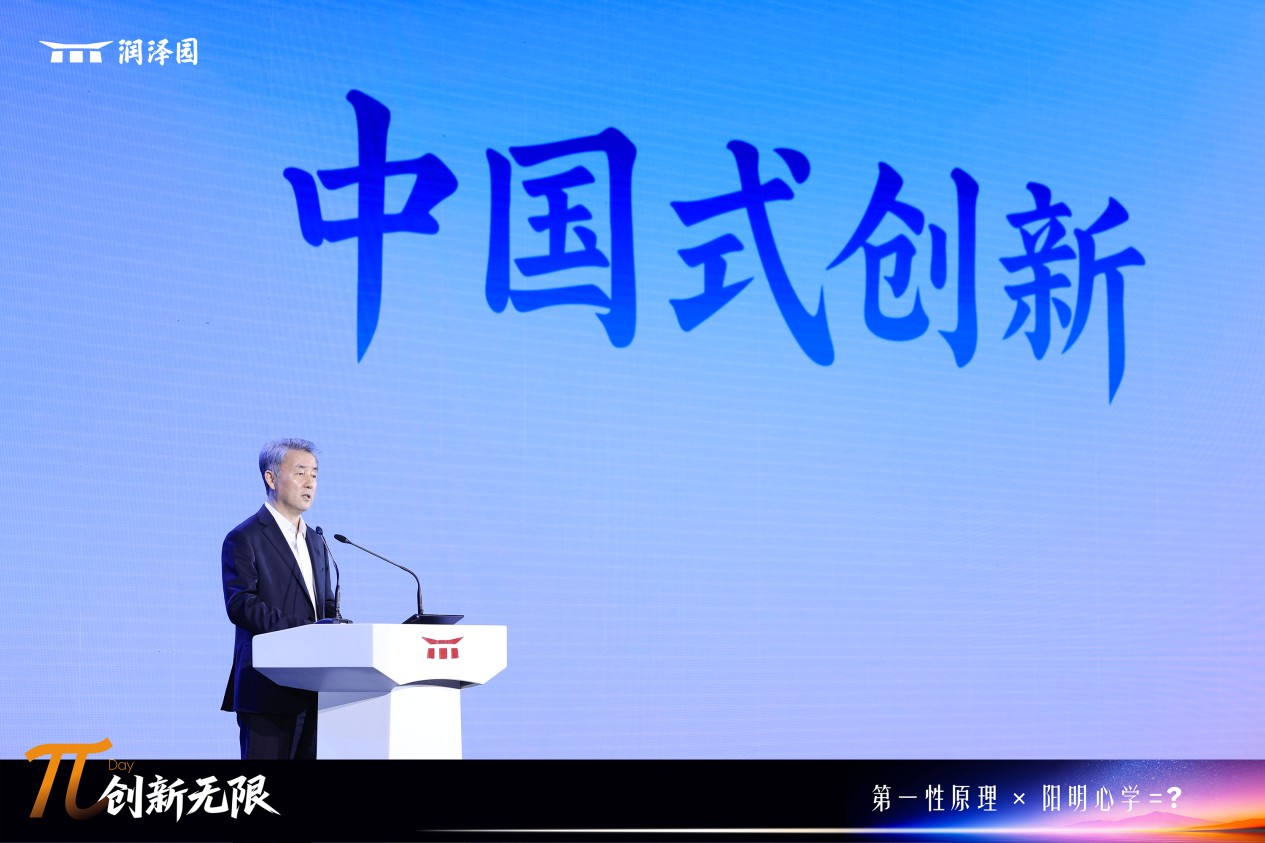
March 14th is the International Day of Mathematics. At a conference called "Infinite Innovation", Tao Fangbo, the former head of the Neural Symbol Laboratory at Alibaba DAMO Academy and the founder of Mindverse, shared his latest insights on AI.
With the popularity of the intelligent agent Open Claw in the tech circle, many people have realized that the role of AI has evolved from being able to have a conversation with oneself to working according to one's instructions. What excites Tao Fangbo more is the emerging trend - the A2A (Agent to Agent) Internet.
As Tao Fangbo said, in the future, everyone's AI avatar may participate in the world (such as learning, socializing, and trading) on their behalf and bring back the results. At that time, the flywheel effect will also occur: the more avatars there are, the richer the A2A will be, the more emergences there will be, and more avatars will be attracted to join.
This seems to mean that with the explosion of AI, people are once again on the same starting line. This is also the reason why most entrepreneurs or business owners without a technical background always seem at a loss when facing AI and the ever - changing technological revolution. They are afraid of being left behind by the times and don't know how to deal with it.
As the organizer of the "Infinite Innovation" conference, Runzeyuan Education is an educational institution that focuses on the creative transformation and innovative development of Chinese cultural classics. For business managers seeking long - term development strategies in the wave of AI, Runzeyuan Education hopes to provide systematic support through the framework of "Mission Leadership - Philosophy Support - Strategic Innovation - Mechanism Guarantee".
It is reported that the "Infinite Innovation" conference uses the infinite non - repeating nature of pi as a metaphor. It has gathered nearly 200 technology entrepreneurs, researchers, and executives, focusing on the innovation path of Chinese enterprises in the AI era and discussing how to embark on a development path that combines technological height and humanistic warmth.
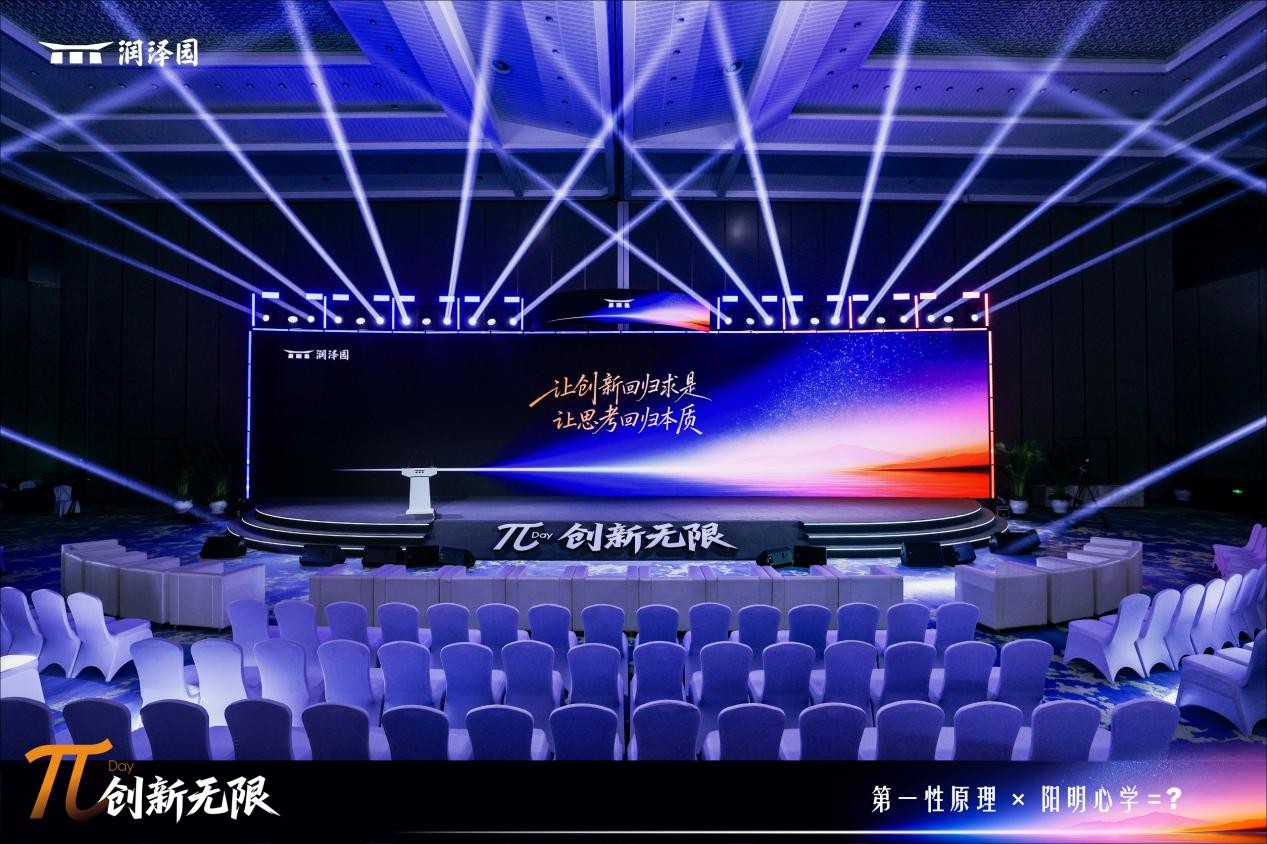
The scene of the "Infinite Innovation" conference of Runzeyuan Education
01. Does AI stimulate innovation or bury it?
According to the definition of Alan Turing, the "father of artificial intelligence", if a machine can have a conversation with a human (through a teleprinter) without being recognized as a machine, then the machine is considered to have intelligence.
In 2014, a robot passed the Turing test for the first time. Two years later, AlphaGo defeated the world Go champion Lee Sedol, and the entire industry entered a stage of explosive growth.
As AI technology is more and more widely applied in various industries, its development speed and influence are constantly increasing. When AI is regarded as the end of the technological revolution and the ultimate form of future technology, many companies have even proposed an "All in" strategy.
However, under the technological iteration, many people also seem very anxious. Some even say that AI is the end of the technological revolution and will become the ultimate form of future technology.
Looking back at the long history of human civilization, every technological wave, such as the printing press, the steam engine, and the industrial revolution, has pushed human civilization to a new peak. But new technologies have also eroded and even eliminated many traditional industries. The invention of the electric light made candle - making workers lose their jobs; the emergence of digital cameras almost strangled the development of Kodak, which was centered around traditional film cameras.
Similarly, people today are also worried that more traditional enterprises and industries will be replaced by AI.
Even Tao Fangbo sighed: "I used to be an artificial intelligence scholar and did research for ten years, but I feel that what I learned is almost useless in this era." In his opinion, AI will "level" a lot of people's knowledge and technical levels in an instant.
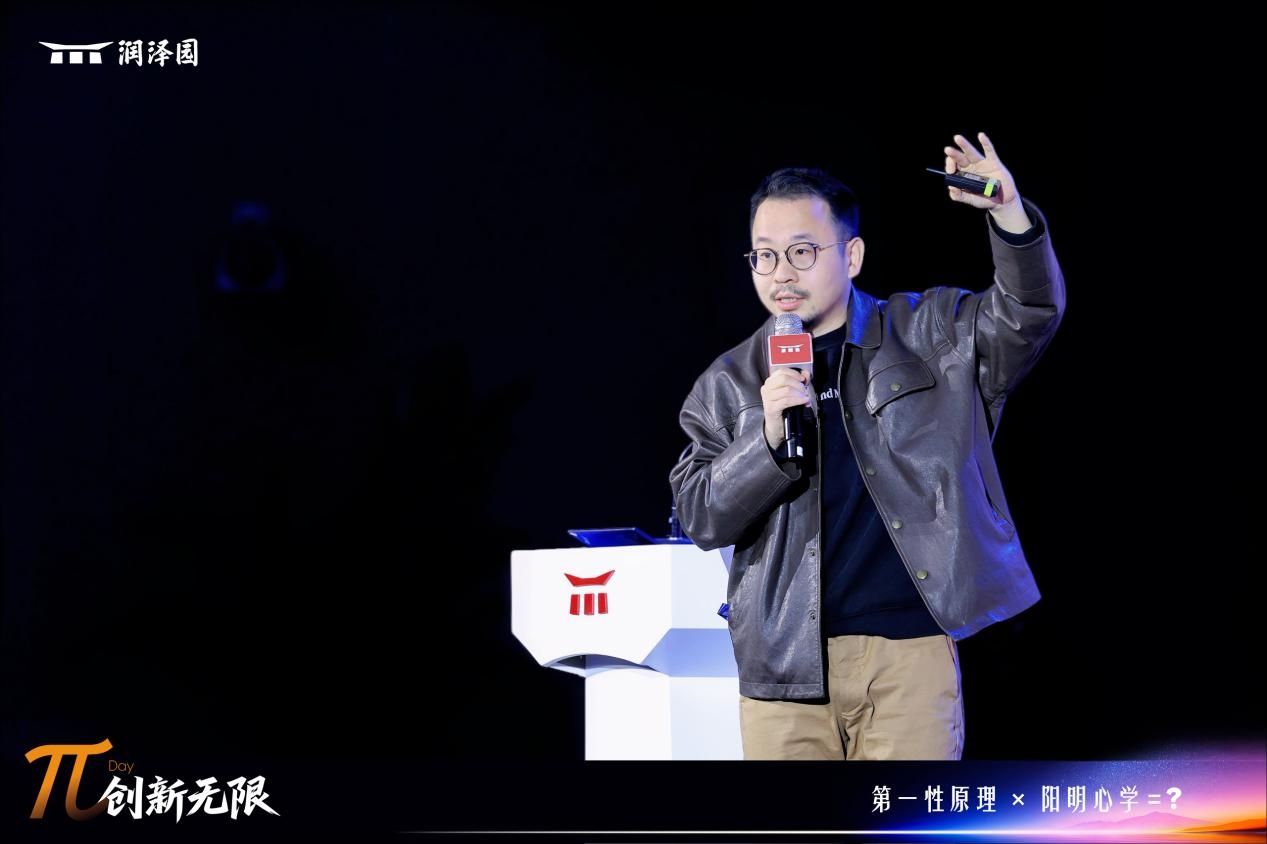
Tao Fangbo, the former head of the Neural Symbol Laboratory at Alibaba DAMO Academy and the founder of Mindverse
It is precisely in this process that, along with the equalization of information and knowledge brought by AI, competition in all industries has intensified, and problems such as plagiarism and homogenization have frequently emerged. This also makes more people wonder - does AI stimulate innovation or bury it? How should enterprises avoid or transcend the homogenization problem brought by AI in the process of learning or using AI?
At the "Infinite Innovation" conference, Li Ximeng, a young lecturer at Runzeyuan Education and an alumnus of Cornell University, said that AI will indeed submerge the original thinking, craftsmanship, processes, and innovation in the industrial era. But even if AI can imitate the brain and manufacture tools, intangible things such as human conscience and intuition will be the key that AI is difficult to imitate and even impossible to surpass.
In fact, looking at those excellent entrepreneurs and leaders, especially the students of Runzeyuan Education, there is no shortage of cases of relying on conscience and intuition to find the real market demand and the development direction of the enterprise in the changing times.
02. Technology is not the problem, talent is the core
In 2010, Liao Jieyuan took his one - and - a - half - year - old nephew to the hospital for ten months and had two synovial resection surgeries, only to find out that it was a misdiagnosis. After falling into deep pain and self - blame, this technical expert made up his mind to use technology to make it easier for people to see a doctor.
Two years after the establishment of WeDoctor, 28 business managers initiated the establishment of the Zhiliangzhi Public Welfare Learning Group (the prototype of Runzeyuan Education) in Longchang, Guizhou (the place where Wang Yangming, a famous philosopher in the Ming Dynasty and the founder of Yangming's philosophy of the mind, gained enlightenment). Liao Jieyuan also became a long - term learner of Zhiliangzhi.
In 2018, Liao Jieyuan organized the first Zhiliangzhi Doctors' Learning Conference and invited dozens of experts from major hospitals such as the 301 Hospital in Beijing, Dongzhimen Hospital, and Xiyuan Hospital. During the conference, a doctor expressed the resonance of everyone: "The trust between doctors and patients and the heart - to - heart communication can inspire you to be a good doctor for a lifetime."
"Only when people's hearts are good, will AI be good, and society will be good." At the "Infinite Innovation" conference, Liao Jieyuan also sighed.
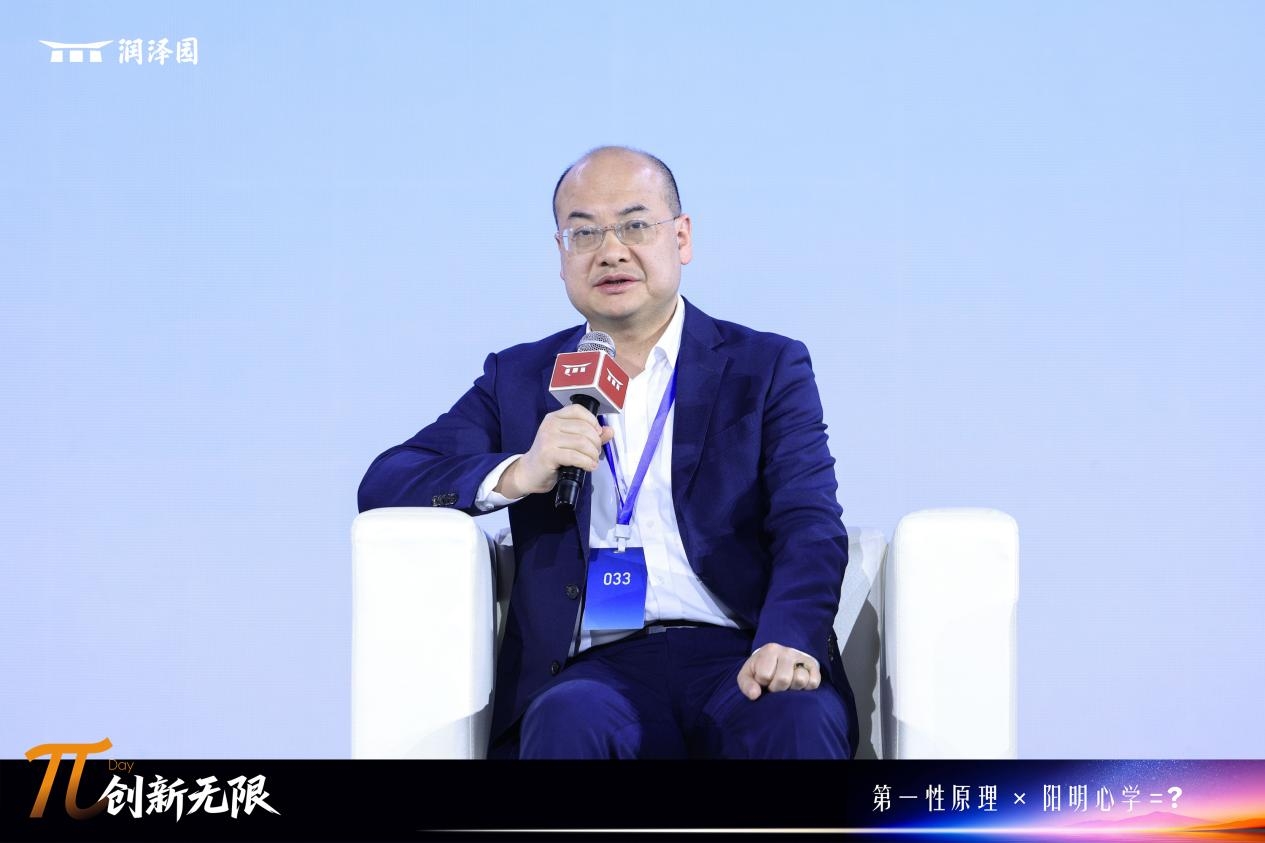
Liao Jieyuan, the chairman of WeDoctor Group
It can be clearly seen from the entrepreneurial path of WeDoctor that the real market demand is often "in line with human nature". Through information technology and the digital revolution, WeDoctor has re - linked the upstream and downstream of the industrial chain and found real market growth and development opportunities in the most traditional and mature medical industry.
StrongBrain Technology, one of the so - called "Six AI Dragons" in Hangzhou, is a rising star in the AI field. Its development process is similar to that of WeDoctor - it always depends on the guidance of conscience.
In 2015, Han Bicheng was pursuing a doctorate in neuroscience at Harvard University. During this period, he led a team to develop the first wearable EEG chip in the basement of the Harvard Innovation Laboratory, verifying the feasibility of non - invasive brain - computer interfaces. In the same year, StrongBrain Technology was established, focusing on non - invasive technology that does not require craniotomy and is safe and accessible to all.
After determining the direction at the technical level, how to apply the technology and find a market foothold became a difficult problem. At that time, many angel investors suggested that they develop brain - controlled games or brain - controlled interactions for AR and VR, but these were not the team's first choices.
It was during this period that a young boy from the Massachusetts Institute of Technology came to the team for an internship. Unfortunately, this boy lost his right hand in an experimental accident. Almost instantly, the team determined the company's development direction - they hoped to make "a prosthetic limb controlled by thought" to completely change the lives of the disabled.
Han Bicheng, the founder of StrongBrain Technology, once publicly expressed his in - depth technical philosophy: "When new technologies emerge, it is always the highly educated people with higher incomes who use them first. But the real users who need brain - computer interfaces the most are often those with limited payment ability. Letting them use the technology first is a choice for an enterprise."
This technological belief that goes beyond pure commercial interests and is committed to improving the quality of human life is just as Zhang Shengnan, a member of the founding team of StrongBrain Technology, said at this conference: A real leader must respect life, be willing to take on the most difficult tasks, and do the most difficult but right things.
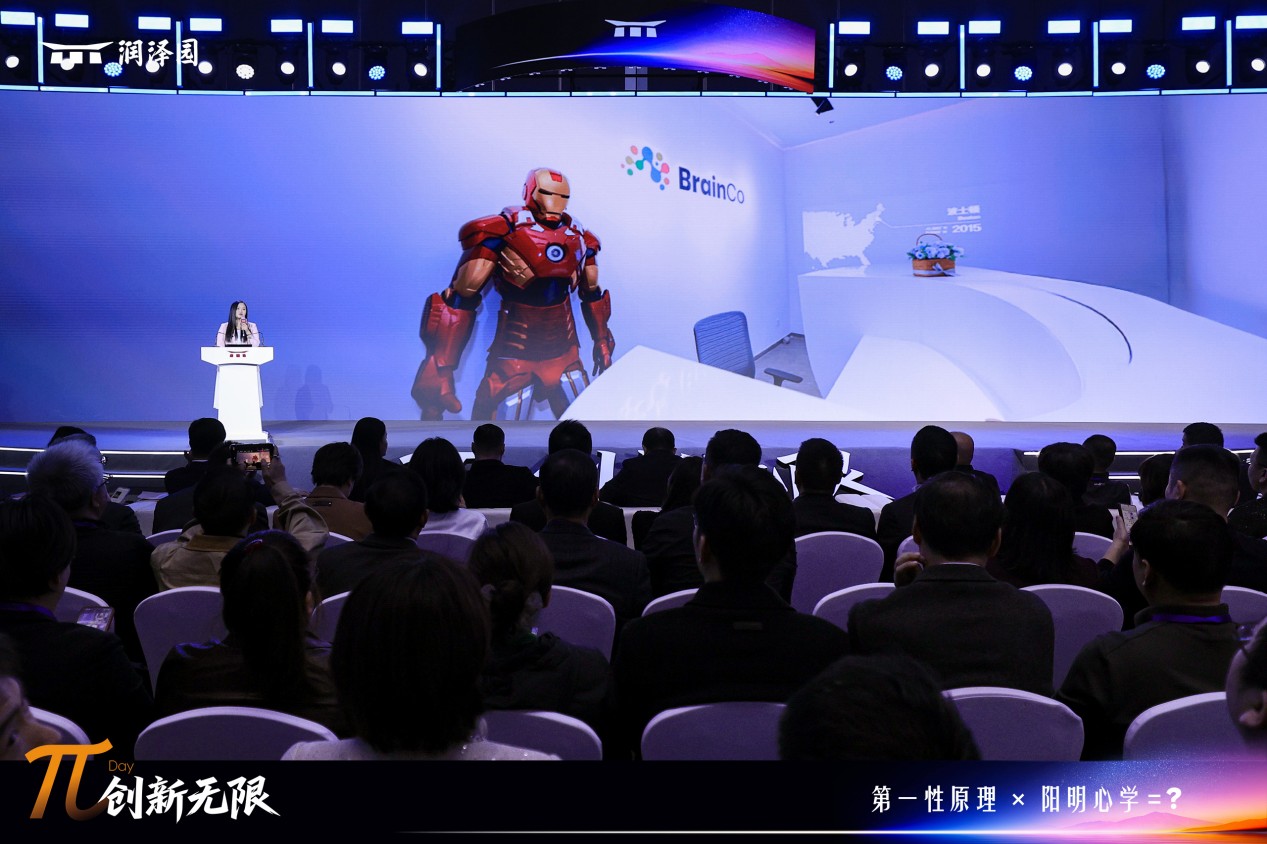
The speech scene of Zhang Shengnan, a member of the founding team of StrongBrain Technology
In 2019, StrongBrain Technology's first intelligent bionic hand was launched on the market. It became the world's first intelligent prosthetic limb that can be controlled non - invasively by the brain and won the "Top 100 Inventions of the Year" by Time magazine in the same year.
Few people know that Zhang Shengnan first went to Longchang with Runzeyuan Education to learn Zhiliangzhi and set her aspirations at the end of 2020. "This experience played a crucial role in my subsequent exploration of brain - computer interface technology with Dr. Han Bicheng."
History has repeatedly proven that technological progress never eliminates jobs but only redefines them. Only by truly starting from human nature can enterprises find a practical development direction. And human intuitive judgment based on certain innate characteristics and the "irrational consideration" of a certain "vision" are also the keys to breaking the homogenization of AI.
03. Underlying logic: Seeking truth, the First - Principles Thinking, and the philosophy of the mind
Undoubtedly, the current AI field highly depends on the fitting of massive data and the stacking of large - scale computing power. This model dominated by scale competition tends to make different developers converge in model architecture, training data, and even application scenarios, seemingly suppressing real differential exploration.
On the other hand, innovation is precisely the only way to break this homogenization - whether through architectural innovation, algorithm efficiency breakthrough, or deep integration of AI with specific industry pain points, it is about finding non - consensus gaps in the wave of technological homogenization.
But the question is, what is the underlying logic of innovation? How can real innovation be achieved?
Liu Jiexin is a young lecturer at Runzeyuan Education and a post - 95s who has studied Wang Yangming's philosophy of the mind for many years. In her opinion, enterprises don't need to deliberately innovate. As long as they "seek truth", innovation will occur naturally.
She also said that in enterprise management, innovation, or other aspects, many people are "spinning their wheels" every day and there is waste in terms of finance and other aspects. The reason is that they don't "seek truth" fundamentally.
Compared with this slightly abstract concept, in the technology field, the most mentioned in recent years is Elon Musk's "First - Principles Thinking", which means returning to the essence of things and deriving from the most basic axioms or assumptions. It is a way of thinking that traces back to the source, emphasizing breaking the inherent cognition and assumptions, decomposing things into the most basic components, and then deducing from the bottom - up to build solutions.
Interestingly, in the view of Bai Lixin, the founder of Runzeyuan Education and a doctor of engineering from Zhejiang University, the "First - Principles Thinking" is in line with the saying in the Tao Te Ching, "The Tao gives birth to one, one gives birth to two, two gives birth to three, and three gives birth to all things." "The 'First - Principles Thinking' ultimately returns to the origin and the essence," said Bai Lixin.
Bai Lixin, the founder of Runzeyuan Education and a doctor of engineering from Zhejiang University
It is a clear fact that the wave of technological progress is irresistible.
2026 is the beginning year of the 15th Five - Year Plan and a crucial node for China to basically achieve socialist modernization by 2035. In this historical context, innovation is not only the engine of economic development but also the cornerstone of national rejuvenation.
In such a context, enterprises not only need a keen sense of technology but also a constructive business philosophy and a deep concern for the common destiny of humanity.
Perhaps, as Xu Aihua, the founder and chairman of Zhejiang Hualian Group, said at the "Infinite Innovation" conference: "A company can succeed without philosophy; but with philosophy, it has the genes to become a world - class enterprise." Runzeyuan Education emphasizes the view that "the foundation of strategy is philosophy, and the source of philosophy is the philosophy of the mind."
Liu Jiexin further introduced the "Heart - Way - Virtue - Event" methodology refined by Runzeyuan Education from Wang Yangming's philosophy of the mind.
Among them, "Heart" refers to a person's deep - seated cognition and habits, which dominate the world view, outlook on life, and values; "Way" is the realm and pattern, reflected in the thoughts and ideas that emerge when facing various people, things, and situations; "Virtue" is moral character and ability, reflected in words and deeds. "Event" refers to the results and situations in all aspects.
Through "Event - Virtue - Way - Heart", people can discover problems and see the essence. Through "Heart - Way - Virtue - Event", people can improve their cognition and solve problems. "Of course, all of this is based on the fundamental principle of 'unity of knowledge and action'."
It is worth mentioning that at the "Infinite Innovation" conference, Runzeyuan Education also announced the establishment of the Business Philosophy Institute. This Business Philosophy Institute is expected to be inaugurated in June 2026 and may be the first business philosophy institute in China.
It is believed that in the future, Runzeyuan Education can continue to work with pioneer enterprises or leaders in the technology field to jointly explore the essence of innovation in the AI era and the changes and constants in the wave of technology. This energy starting from the "heart" will also accompany more enterprises and individuals to move forward steadily and far.