Li Dongsheng: From "Following" to "Leading", the Technology Manufacturing Industry Needs a "Long - Distance Run" of Capital
A chip as small as a fingernail and a large - sized LCD screen used to be a pain point for Chinese manufacturing.
In the past few decades, China has built a complete industrial chain and boasted huge production capacity. However, it has long been trapped in the dilemma of being "big but not strong" - advanced technologies are in the hands of others, and the phrase "lacking chips and screens" fully describes the helplessness of being held back by others.
Take the "lack of screens" as an example. China is the world's largest TV market, but domestic display panels used to rely on supplies from Japanese and South Korean enterprises for a long time. The import value of display panels was once second only to that of integrated circuits, petroleum, and iron ore.
The change started with a strategic judgment. In the "Made in China 2025" strategic document issued in 2015, the combination of technology and manufacturing was emphasized, and innovation was placed in a global position in the development of the manufacturing industry.
A narrative about "technology - based manufacturing" thus began. From high - end chips to industrial software, from precision instruments to special materials, cutting - edge technologies have started to empower manufacturing; and fields such as integrated circuits, semiconductor displays, and advanced materials have become the best test - beds for turning theories into reality.
In this transformation, the semiconductor display industry has taken the lead.
When China first started to heavily invest in display panel manufacturing technology, it had to learn from foreign enterprises. After the strenuous efforts of enterprises such as TCL CSOT and BOE in the LCD field, China currently accounts for 70% of the world's LCD production capacity.
More importantly, the domestic display panel industrial chain has achieved a full - scale reconstruction: Downstream from the LCD production line, enterprises such as TCL, Hisense, Xiaomi, and Lenovo are successively defining the next - generation TVs, mobile phones, and monitors; Upstream, a number of listed companies have been cultivated in the raw material links such as polarizers, liquid crystals, mask plates, and ITO targets, and the localization rate of some links has exceeded 60%.
This is also a microcosm of the development of technology - based manufacturing in recent years: the breakthrough of cutting - edge technologies is accelerating, and the process of domestic substitution in the industrial chain is speeding up. Behind this is the long - term heavy capital investment. In the LCD competition in the past decade or more, only domestic enterprises have raised more than 300 billion yuan in the capital market.
However, the mismatch is that the capital market prefers short - term returns and is concerned about long - term investment risks. The lack of compatibility between capital and industrial needs has become a gap that China's technology - based manufacturing industry must cross in its industrial upgrading.
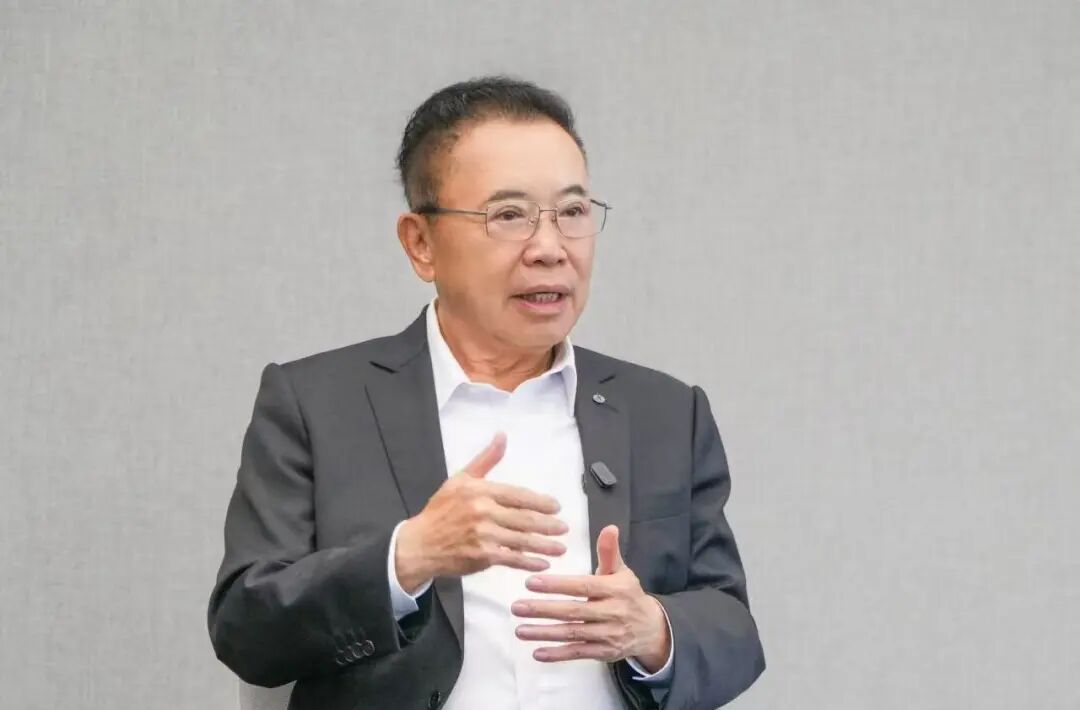
Li Dongsheng, the founder and chairman of TCL
Feeling deeply about the current development difficulties faced by the technology - based manufacturing industry, Li Dongsheng, a deputy to the National People's Congress, the founder and chairman of TCL, proposed during this year's Two Sessions that to cultivate world - class enterprises, capital support must be strengthened, and relevant policies should be introduced to support high - tech, heavy - asset, and long - cycle industries, so as to better support the development of the technology - based manufacturing industry and participate in global competition.
After decades of development, Chinese manufacturing has achieved the transformation from "nothing to something" and is moving towards "from something to excellence". In multiple fields represented by the semiconductor display industry, China has even achieved overtaking and is expected to compete for global industrial discourse power. In this future - oriented competition, both technology and capital will become important variables.
Heavy Investment Leads to Breakthrough in the Display Industry
Different from the exploration in cutting - edge technology fields such as artificial intelligence and robotics, technology - based manufacturing emphasizes the industrial application of technology. After a technological breakthrough, whether enterprises are willing to make bets, whether the industrial chain can be connected, and whether market opportunities can be grasped - each factor determines the final outcome, and behind it is the competition of capital strength.
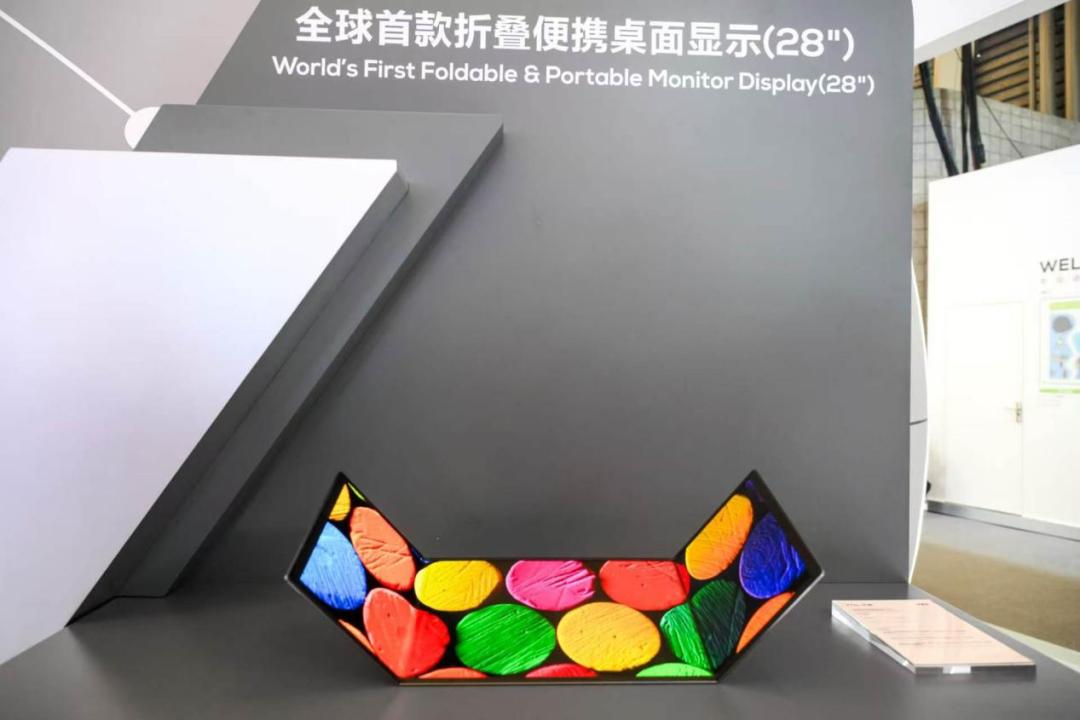
TCL CSOT's printed OLED folding screen
Data from the China Academy of Information and Communications Technology shows that the total financing in the domestic embodied intelligence field in 2025 was 73.543 billion yuan. For reference, in the semiconductor display industry, a representative industry of technology - based manufacturing, the investment in the two 11th - generation production lines (t6 and t7), the world's highest - generation lines built by TCL CSOT, was 46.5 billion yuan and 42.7 billion yuan respectively, which shows the "heavy - asset" nature of technology - based manufacturing.
Looking at the world, the pattern change in the semiconductor display industry over the past two decades has also verified this logic: whoever dares to make heavy investments during the technological iteration cycle may rewrite the industrial landscape.
The global display panel industry was initially dominated by LCD technology, and Japanese manufacturers held an absolute leading position. In the late 1990s, the South Korean government supported enterprises to enter the display panel industry by setting up funds and other means. With the government's financial support, a loose financing environment, and their own capital accumulation, South Korean enterprises such as Samsung and LG made counter - cyclical investments in LCD production lines during the global financial crisis and quickly surpassed Japan to become the global leaders in the display panel industry.
Around 2010, liquid crystal panels once became China's fourth - largest imported product, with a serious external dependence. The phrase "lacking chips and screens" once became a summary of the lack of core technology in Chinese manufacturing.
The display panel is the core link in the upstream of the TV industrial chain. Li Dongsheng deeply felt the development dilemma caused by the technological gap. In 2009, he decided to establish TCL CSOT to enter the display panel industry and invested 24.5 billion yuan to build the t1 production line of TCL CSOT.
At that time, the new round of the global financial crisis had just subsided, and overseas enterprises had slowed down their investment in new production lines. Referring to the competition path of the Japanese and South Korean display panel industries, the "counter - cyclical layout" strategy brought the possibility of overtaking. However, compared with the financial system support of "national strength" for companies like Samsung and LG, TCL was under huge financial pressure in its investment in the display industry.
The investment in the 24.5 - billion - yuan production line included 10 billion yuan in capital, 8.3 billion yuan in bank loans, and other construction financing. It should be noted that TCL just turned a profit in 2007, and this investment exceeded TCL's net assets at that time. If it failed, TCL might be on the verge of bankruptcy.
Fortunately, the panel market gradually recovered after the financial crisis, and the panel price returned to an upward cycle. The t1 production line of TCL CSOT was put into production in August 2011 and achieved profitability in the same year. It reached full production in September 2012, and its net profit reached 2.26 billion yuan in 2013.
After that, TCL CSOT maintained a rapid pace of production line iteration, using the profits and operating cash flow from the previous - generation production lines to support the construction of the next - generation production lines. From the 6th - generation line, the 8.5th - generation line to the 11th - generation line, TCL CSOT has invested more than 300 billion yuan in total so far, seizing every opportunity for production line iteration and ensuring its long - term competitiveness.
The capital market played a key role in the construction of domestic panel production lines. From 2021 to 2025, TCL Technology had three refinancing operations, raising a total of about 18.3 billion yuan. During the same period, it spent 32.3 billion yuan to acquire the project equity held by the industrial fund. The long - term capital support enabled both the investors and TCL Technology to achieve good returns. More importantly, it enabled China's panel industry to achieve leap - forward development.
Liao Qian, the senior vice - president and board secretary of TCL Technology, said that the intensive industry consolidation from 2020 to 2025 was the "final battle" of the LCD industry. After that, the industry pattern rapidly converged, and Chinese enterprises basically took the leading position in the global LCD industry.
This is a typical narrative of achieving industrial overtaking with the help of capital. State - owned capital, market - oriented funds, and enterprise funds each play their own roles. The smooth financing channels provide the possibility for the cooperation of diversified capital, enabling enterprises to seize the time window and allowing technology to be continuously iterated.
The industrial competition has not stopped. The second half of the display panel industry has begun, and Chinese display panel enterprises are now on the same starting line as South Korean enterprises in terms of technology. South Korean enterprises are making large - scale investments relying on their capital advantages, firing the "starting gun". The overtaking of China's display panel industry should no longer rely on the all - out efforts of a single enterprise. It urgently needs a more complete systematic support.
Driving by Both Technology and Capital to Compete for the Future of the Industry
The new - generation display technologies include quantum dot display, Micro LED, printed OLED, etc. Currently, various display technologies have emerged in different application scenarios due to their different characteristics.
Among them, OLED technology has the characteristic of self - luminescence. It can make the screen very thin while having higher color contrast and faster response speed. It is also the mainstream choice for flexible screens, becoming the mainstream technical route in the panel industry and is penetrating from small - sized to medium - sized screens.
Panel industry veterans such as Samsung and LG have strategically withdrawn from the LCD field and heavily invested in OLED. In January this year, Samsung Display's 8.6th - generation OLED panel production line was officially put into production. Previously, LG Display had built a high - generation OLED production line and was the first to launch large - screen OLED TVs in the market.
Most South Korean enterprises choose the FMM evaporation route, and some small - sized production lines of domestic enterprises also adopt this technology. The advantage of this route lies in its mature process, stable supply chain, and the material system and equipment platform that have been verified through years of mass production. However, the disadvantages are also obvious. When the products move towards larger sizes, manufacturers must find alternative solutions.
TCL CSOT has chosen another technical route: printed OLED technology. This technology does not need to heat the materials in a vacuum environment and deposit the materials through a metal mask like the FMM evaporation route. Instead, it directly deposits the materials by printing through inkjet.
The advantages of printed OLED are lower cost. It does not require expensive metal masks and significantly reduces the vacuum process. The complexity of the equipment is also lower, and it is more flexible in size and shape adjustment. At the same time, the material utilization rate is high. The material utilization rate of printed OLED exceeds 90%, while that of the evaporation process is less than 30%. From the perspective of product size and investment return, printed OLED technology has greater potential.
The market demand is also on the verge of an explosion. Previously, most OLED production lines were for small - sized screens such as watches and mobile phones. The new - generation OLED production lines will mainly be 8.6th - generation lines for medium - sized screens such as monitors, laptops, and in - vehicle displays. In 2023, Huawei first used medium - sized OLED screens on its iPads, and high - end tablets such as those from Samsung and Apple have also successively adopted OLED technology. According to data from UBI Research, the shipment volume of OLED monitors in 2025 was about 3.2 million units, a year - on - year increase of about 64%.
Zhao Jun, the senior vice - president of TCL Technology and the CEO of TCL CSOT, said that after relatively mature conditions are met in terms of technology, supply chain, finance, and customer feedback, production lines should be decisively laid out. If waiting until all technical difficulties are solved before putting into production, it will be postponed by at least one year, which will lead to missing market opportunities.
In October 2025, TCL CSOT invested in building an 8.6th - generation printed OLED production line, with the first - phase investment amounting to 29.5 billion yuan. This is the world's first large - scale mass - production 8.6th - generation printed OLED production line, which is expected to be in mass production in the second half of 2027.
Of the 29.5 - billion - yuan investment, 17.7 billion yuan in registered capital was contributed by TCL CSOT and the Guangzhou Industrial Fund at 60% and 40% respectively, and the remaining funds were solved through financing methods such as syndicated loans. The diversified combination of enterprise self - owned funds, long - term capital such as state - owned capital, and market capital such as banks is a common choice for the domestic display panel industry when facing the construction of high - tech, heavy - asset, and long - cycle production lines.
In comparison, foreign enterprises such as Samsung and LG have a large amount of capital accumulation, diversified financing methods, and long - term government support, and are more competitive in terms of systematic capital support.
Data shows that as of the third quarter of 2025, the total assets of LG Electronics and Samsung Electronics were 48.004 billion US dollars and 374.237 billion US dollars respectively, with asset - liability ratios of 59.92% and 21.04% respectively, and interest - bearing debts of 9.377 billion US dollars and 11.097 billion US dollars respectively. Compared with domestic enterprises such as TCL Technology, they have less financial pressure and more capital to support the construction of OLED production lines.
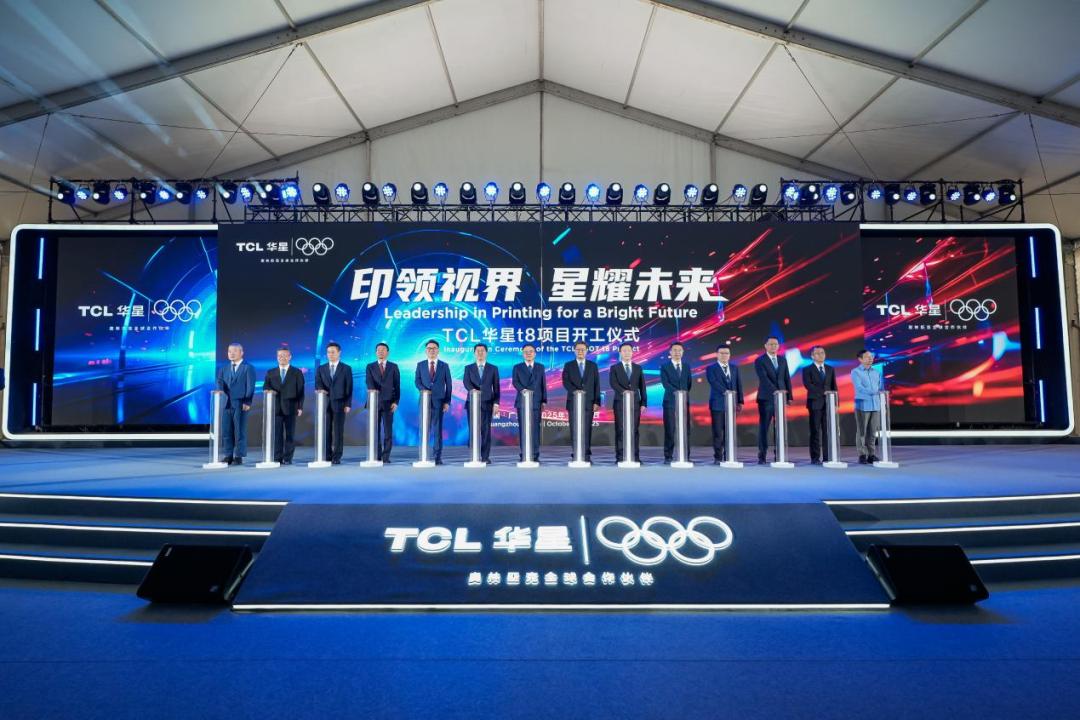
The inauguration ceremony of TCL CSOT's t8 production line
Facing the "uncharted territory" of new - generation display technologies, there is no generational gap between Chinese and South Korean enterprises. Any technological or production - line overtaking may affect the global competition pattern. However, the cruelty of the "uncharted territory" lies in that to transform the "unknown" into the certainty of mass production and marketization, more technological breakthroughs are needed, and continuous capital support is even more required.
Expand Financing Space and Introduce "Long - term Capital"
With the development of China's technology - based manufacturing industry, when "fighting" against overseas giants at the new moment of industrial upgrading, such battles will gradually appear in more industries.
Li Dongsheng noticed that China's industrial output value already accounts for nearly 30% of the world's total, and its overall scale has remained the world's leading for 15 consecutive years. However, there are still some short - comings in a few high - tech fields such as integrated circuits.
"In fields such as integrated circuits and semiconductor displays, as well as some other fields that require continuous investment but with relatively less capital input, such as industrial software and large AI models, we need to keep investing." Li Dongsheng said.
Take integrated circuits as an example. Chips with more advanced processes have stronger computing power and are a must - fight territory for artificial intelligence. Currently, the domestically - controllable process of integrated circuits in China has been upgraded from 28nm to 14nm, and there is a risk trial production at 7nm. However, there is still a considerable gap compared with the international 3nm process.
In the early stage of enterprises, with the help of industrial funds, enterprises can obtain "start - up funds" to achieve technological breakthroughs. The National Integrated Circuit Industry Investment Fund, established in 2014, has gone through three phases so far, with a cumulative investment of more than 640 billion yuan and more than 150 invested enterprises, basically constructing an industrial system covering the entire semiconductor industrial chain.
After having a certain amount of orders and revenue, enterprises can continue to obtain financing in the capital market through listing