3G Capital's Managing Partners Discuss PE M&A of Consumer Brands: Selecting Prime Targets, Long-term Holding, and In-depth Operations
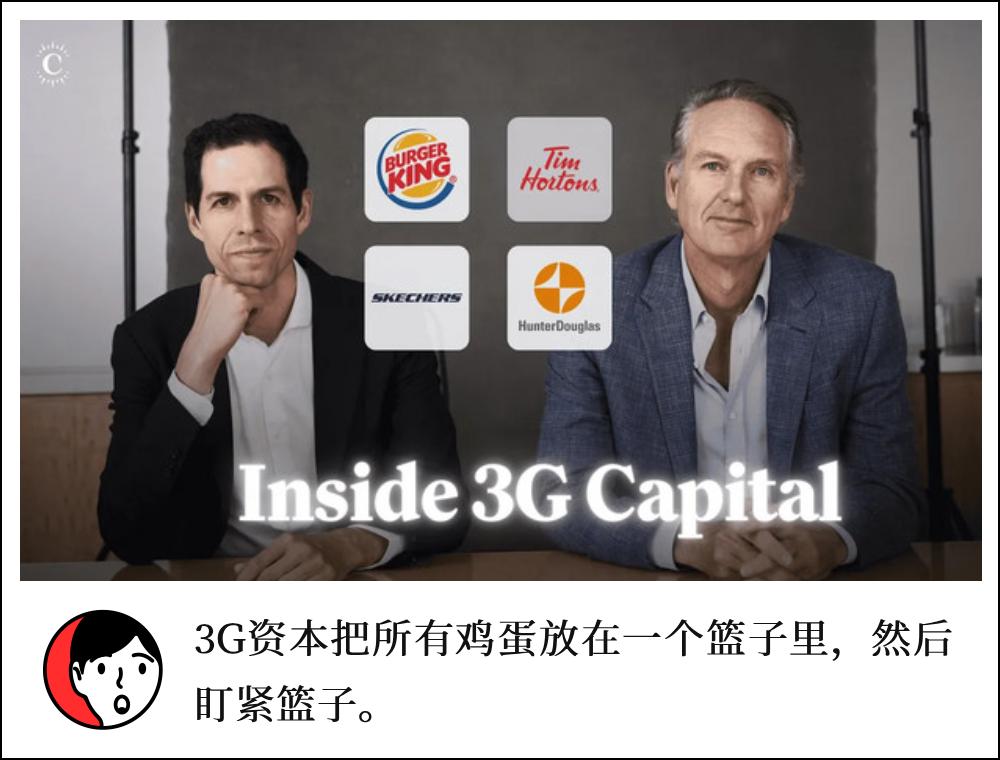
In February, Alex Behring and Daniel Schwartz, two managing partners of 3G Capital, had an in - depth communication with Patrick O'Shaughnessy, the host of Invest Like the Best. They shared in detail 3G Capital's investment and M&A model, internal organization, and talent management philosophy.
What is best - known is 3G Capital's unique M&A investment model. Different from traditional private equity funds, 3G Capital's model is to find an investment target for each fund and invest a large amount of its own capital and the best talents. It participates deeply in corporate operations as an operator.
Alex Behring was once the CEO of the largest railway company in Latin America, and Daniel Schwartz was also the CEO of Burger King. Moreover, they dare to use young people as managers of acquired brands. Daniel Schwartz was only 32 years old when he became the CEO of Burger King, and its CFO was only 26 years old. 3G believes that talent is more important than seniority, and "seniority - based promotion" is the biggest misunderstanding in motivation.
The two partners of 3G Capital believe that the core of management is the high - level unity of management rights and ownership. As investors acquiring a brand, the managers should also be the owners of the company. One of 3G Capital's most successful cases is the investment and acquisition of RBI, the parent company of Burger King. Currently, the return multiple of this investment is about "30 times and still growing".
In the past few years, Chinese PE institutions have also begun to accelerate the acquisition of majority stakes in overseas brands. In the catering brand field, since CITIC Capital acquired and successfully operated McDonald's, it shows that Chinese PE institutions already have sufficient operational strength to make overseas brands more successful in the Chinese market.
In the past period, for the majority - stake M&A of brands such as Starbucks China and Burger King China, Chinese PE capital has begun to deeply participate in operations. 3G Capital's model has also attracted the interest of more institutional investors.
Looking at past successful cases, the uniqueness of the Chinese market often depends on digital operations and the pursuit of cost control. In these two aspects, Chinese institutions will also invest more energy. In the interview, the two partners of 3G Capital also mentioned that 3G hopes to find targets that can be "empowered" by technology rather than being disrupted by technology. They do not invest in technology - oriented companies (which can disrupt others but are also easily disrupted by others). They invest more in companies that "can be described in just a few words": hamburgers, curtains, coffee, beer... And the latest two investments are from family - owned businesses that have been operating for decades. The families hope that 3G Capital will be the ultimate destination for excellent family - owned businesses, and the high - net - worth individuals of these families are often LPs of 3G.
In this conversation, Alex and Daniel deeply discussed the origin of their concept of investing in only one company per fund, the evolution of the definition of a great company in the past two decades, the unique capital structure and talent cultivation mechanism, and the lessons learned from transactions such as Kraft Heinz. They emphasized the importance of anti - disruption, the owner's mentality, and long - termism in investment decisions.
The following is the edited version (with some deletions) of the interview text organized by "Mingliang Company":
Q: Patrick O'Shaughnessy
A: Alex Behring Managing Partner of 3G Capital
D: Daniel Schwartz Managing Partner of 3G Capital
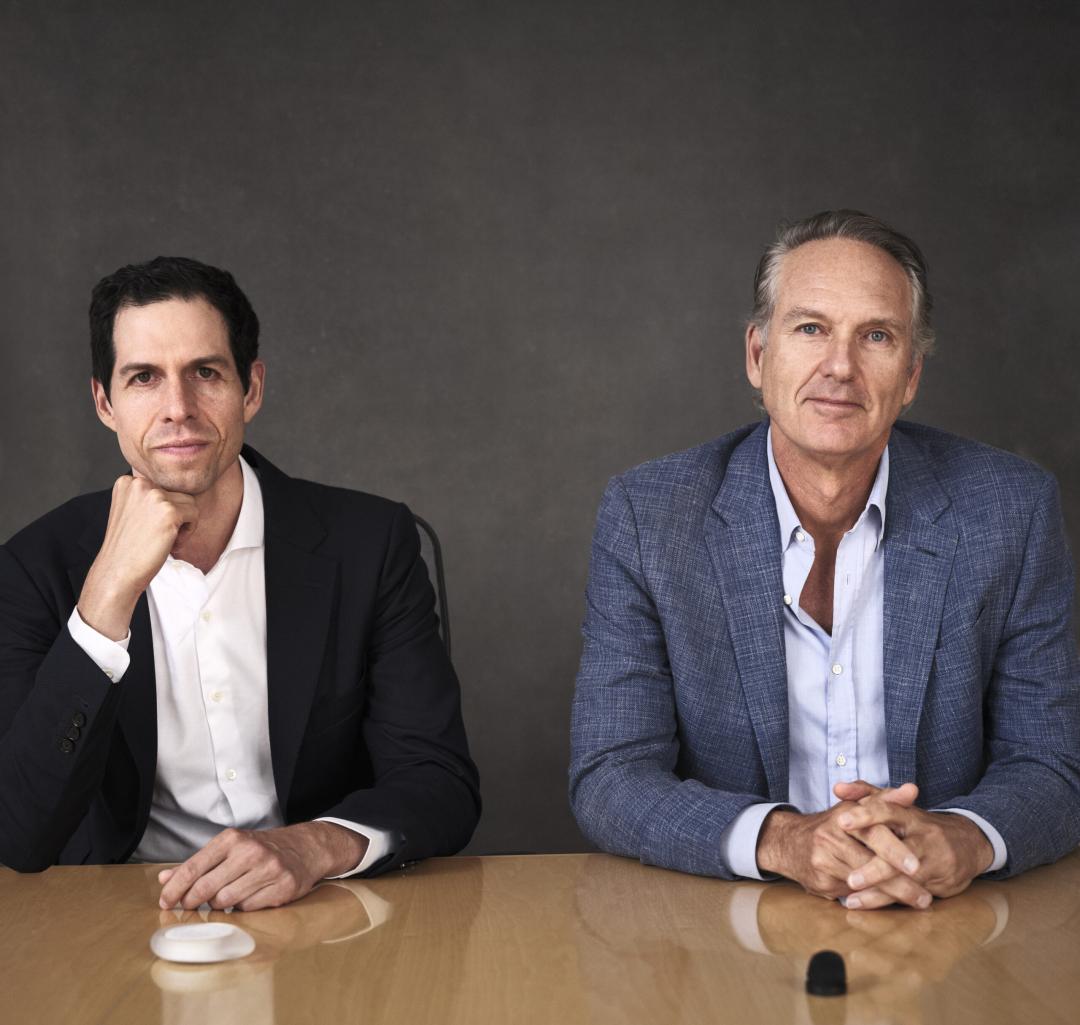
Daniel Schwartz and Alex Behring (right) (Source: Colossus)
01
3G Capital's Unique Model: Investing in Only One Company per Fund
Q: I'd like to start with the concept of investing in only one company per fund. To be honest, I think this idea is really cool: a large pool of capital is used for only one thing - you have to research countless companies and do a lot of work to finally select that one. Where did this concept come from? It must have a profound impact on investment strategies, corporate culture, team, and talent structure. Investing in one company per fund sounds very different, and I know it's related to our previous communication. How did it come about?
A: It comes from our Brazilian background. Our co - founders made an investment in the beer industry back then, and the result was very good. Later, they started doing private equity in the predecessor of this institution in Brazil and also tried more traditional approaches, and the results were okay. But we learned several lessons from it: First, truly, truly great companies are scarce and there aren't many to begin with; second, even if they exist, they are often not operable - it's not that you can invest in them as you wish. Therefore, if you want to invest a large amount of your own capital and plan to participate deeply, then the human resources and time you need to invest are also scarce resources. When I founded this company in New York in 2004, these understandings were already very clear. Our premise is: as long as we want to intervene in a company in a strategic and long - term way, we do only one thing at a time.
D: We have a luxury: we only need to find one great company at a time. I think if you're investing your own money and look at investments from this perspective, you'll be more willing to wait patiently until you encounter a truly great company. Put another way: it's already difficult for us to find one great company worth investing in, so how can we find 10? It's difficult to find one person who can be a great CEO, so how can we find 10? So I think it's great to occasionally buy a company and then send our top players to participate deeply.
Q: Knowing that you're investing in only one - putting all your eggs in one basket and then keeping a close eye on the basket - does it bring psychological fear or pressure? What's that psychological feeling like?
A: Rather than being psychological, I think it shapes our investment process - we will very rigorously analyze what the downside scenario might be. For us, the downside must mean capital preservation and also obtain some small returns. This will drive decisions at the business level and also at the capital structure level. I think it is most obviously reflected in the capital structure. Looking back at the companies we haven't bought and the transactions we haven't made over the long - term, many times it's not because we can't find the path to the best - case scenario, but because we're not confident enough about the potential downside scenario.
D: I think this is the healthy pressure we impose on ourselves to ensure that we don't compromise on the quality of the company. We'd rather do nothing than...
A:... stretch the capital structure too tightly.
D: Right. We want to buy great companies, and then use the appropriate leverage - not over - leverage. Of course, this makes risk pricing more difficult. In the traditional portfolio approach, if you have 10 companies and one of them has some idiosyncratic risks, the portfolio can share the risk. But we only have one, so it's more difficult to price the risk, and we'll take this into consideration. On the other hand, our team will be very excited about making a great deal, and many times they'll bet their careers on it: just like Alex's acquisition of the railway in Brazil back then; and like my acquisition of Burger King. When you bet your reputation on one thing, you'll hold it to the highest standards.
Q: Twenty years have passed from around 2004 to today. After researching many companies and personally operating five or six companies, what's the biggest change in your definition of a great company? Where has your view changed most significantly?
A: Over the years, we have to continuously refine the investment process for judging whether a company is great as technology changes. Compared with 20 years ago, the possibility of a company being disrupted is significantly higher today. Therefore, in the investment process, the discussion around disruption risk needs to be more detailed and in - depth.
D: I agree. Disruption and disintermediation. Now we can better understand that companies that control end - customer relationships are more valuable. With this, the probability of you being bypassed by new disruptive forces is lower - it sounds straightforward, but it's true.
Q: How did you learn the lesson of disintermediation most profoundly?
D: Since 2004, we've been tracking catering companies, as well as packaged food and FMCG companies. You can see a continuous change in society: the share of private labels is constantly increasing. If you're a large retailer, such as Walmart, Amazon, or Costco, and you control the customer relationship, you have the ability to disintermediate the companies that supply you. Kirkland is a typical example - it's a very powerful brand and one of the largest brands in the United States. Comparing the catering industry: Burger King, Tim Hortons, Popeyes, Firehouse Subs - these are all strong brands. Each brand controls the relationship with end - consumers. So if you want to eat a Whopper, you'll go to Burger King; in the case of Hunter Douglas, if you want to buy window blinds, you'll go to Hunter Douglas' dealers or our on - site service channels. So we understand this point better now.
Q: Munger used to say, show me the incentive mechanism and I'll tell you the result. Besides investing in one company per fund, I also want to know about other differences in your capital arrangement: Who are the LPs? How are the incentives designed? How are the fees charged? Almost everything you do is a bit different from the traditional model. Can you walk us through it? Because these settings will determine the result.
A: There are a few differences. First, the proportion of house capital is very high - our group of co - founders, partners, etc., are one of the largest investors in each transaction we make. Second, apart from our capital, the source of the remaining capital is also different from traditional PE: the proportion of high - net - worth individuals and families is higher, and of course, there are also some sovereign institutions, but the composition of LPs is very different. Third, we've designed some mechanisms over the years that allow us to hold for a very long time. For example, our investment in RBI has lasted for 15 years and is still ongoing. So I think these three points are the main differences.
D: There's another big difference: many people here have both investment and management experience. Alex was once the CEO of the largest railway and logistics company in Brazil and also in Latin America; I was the CFO and CEO of Burger King (now RBI). Other partners are similar. I think the experience of being both an operator and an investor makes us better investors; it also allows us to send our partner teams to deeply participate in operations when intervening in a company - these people have also been CEOs, CFOs, or operation managers, and they are well - incentivized and highly aligned with our and LPs' interests, and they work directly towards creating company value.
02
How Long - Term Relationships Facilitate Deals: Waiting 15 Years for the Investment Window of Hunter Douglas
Q: With such a high proportion of your own capital, you're taking more direct responsibility for all LPs. Taking Hunter Douglas as an example (a deal about three or four years ago), how long are you willing to interact with a company in the long - term? Specifically in this case, how long did it take you to understand this company, and how was the deal facilitated?
A: I first met Ralph in the mid - 2000s. We met in Switzerland first, and later I got to know his family very well - two sons, one used to live in Greenwich and the other near New York. We maintained a good relationship for many years. It wasn't until a few years ago that Ralph was getting older and started arranging family affairs and also wanted to solve a practical problem: one of his sons, David (now our partner at Hunter Douglas), wanted to continue participating in the company. At the same time, he was also very concerned about what would happen to Hunter Douglas after the family had owned it for 100 years. Against this background, we started formal discussions. It was already mid - 2021. I visited his home in Switzerland and talked about this. He was considering various options at that time, and the result of that conversation was that he would give us a window period to submit a proposal; if he liked it, he would proceed - that's roughly how it started.
Q: That means you invested about 15 years to get this window period?
A: In this case, yes.
D: We keep repeating the term "window period", and I like it. But let me add some background: you have a long - term relationship with Ralph; I first met David in 2007. David is Ralph's son and is now our partner at Hunter Douglas. He rolled his shares over (continued to hold) in the deal a few years ago. They also invested with us in Burger King back then. We've built a strong relationship and respect. In 2011 or 2012, David came to visit Burger King and we gave a presentation. I remember he said at that time: this reminds me of Hunter Douglas in some ways - the entrepreneurial, startup - like culture in a traditional industry. Over the years, we've also continuously followed their business and watched David make some transformative M&As that made Hunter Douglas closer to direct - to - consumer: selling through both dealers and directly to consumers. We've admired this company for many years. We've been tracking this company for a very long time before Alex and Ralph talked about succession and the next step. So we're really playing the long game.
Q: Many people may have seen this company, and its products are intuitive and easy to understand. Can you use it as an example to explain the standards of the companies you like? Describe the business, but more importantly: what was most attractive to you about it during the deal?
A: This company basically controls the customer relationship, and neither customers nor suppliers are concentrated. It's in a very good position in the industry. Window coverings are not high - frequency purchase items. You don't buy them every week, or even every year, so this is very beneficial for the business. And many times, they are bought in the context of home decoration, but they are not a major part of the total decoration cost. Quality is very important. Our quality is even too good in a sense - I wish people would replace them earlier.
D: The total addressable market (TAM) for indoor and outdoor window coverings is about $70 billion. Hunter Douglas is far ahead and is the largest player. We have both large - scale manufacturing and large - scale distribution: whether through our own sales team or the exclusive distribution network, we can deliver within one to two weeks - which basically meets consumers' expectations. The products are basically custom - made, so there is no single SKU, but there are billions of combinations of styles, colors, patterns, and sizes. This company had been in existence for about 100 years before we acquired it. We talk about world changes and disruption risks, but we are very sure that the sun rises and sets as usual every day. People like natural light, and the windows of houses are getting bigger, so this is a product that will exist in the long - term. We are the number one in the industry, with some sales growth and a little price growth. In addition, this industry has a long - term M&A integration (roll - up) attribute: continuously acquiring small players, and we are the natural destination for many small players.
Q: It sounds like this is the ultimate case: no two kids in a Silicon Valley garage will figure out how to disrupt Hunter Douglas - it doesn't make any sense.
D: I think this is an industry with a large but not infinite TAM, and we have the combination of large - scale manufacturing