Investors behind Zhipu and Galaxy Computing: How I Keep Backing the "Six-Sided Warriors"
Chen Weiguang, a managing partner at BlueRun Ventures, still clearly remembers the first time he met Wang He, the founder of Galaxy Universal, in July 2023. They had a three - hour conversation and even forgot to eat. Wang He didn't talk much about the specific implementation path of robots. Most of the time, they discussed how to achieve the deep integration of the physical world and artificial intelligence.
“He repeatedly emphasized to me that this is a long and difficult ‘journey to the west.’” Chen Weiguang recalled, but he still felt extremely excited.
BlueRun Ventures is one of the investors in Galaxy Universal's seed round and has continued to invest in multiple subsequent financing rounds of the project. As one of the few senior managing partners in China who are still actively involved in reviewing projects at the front - line, Chen Weiguang always maintains his keenness and patience when dealing with early - stage projects.
AI and embodied intelligence are key areas for the BlueRun Ventures team. For example, BlueRun has invested in Dark Side of the Moon, Genspark, Dancing with AI, RockFlow, and Vivix in the model and application layers; it has bet on companies like ZHIYUAN ROBOTICS, Galaxy Universal Robotics, Tashizhihang, Lingchu Intelligence, and Hillbot in the field of embodied intelligence; and it has made layout in the direction of AI hardware such as VITURE, Keyi Technology, and Haivivi...
“Actually, some investments are still under the radar and haven't been officially announced,” Chen Weiguang said. He introduced that BlueRun Ventures meets 1,000 to 2,000 projects each year, “and may only invest in 1% of them.”
Regarding the embodied intelligence industry, Chen Weiguang put forward two observations: First, the future market size of embodied intelligence will be at least 10 times that of the automotive market. The annual sales volume of cars is about 100 million units, while embodied intelligence (intelligent robots) targets the world's approximately 3.5 billion working population. If each person is equipped with 1 unit, or even 2 - 3 units, the potential demand could reach billions of units. Second, once the generalization ability of intelligent robots is improved, a single device can be reused in multiple scenarios such as factories and logistics in the future. Compared with the past “functional robots,” the marginal cost will be significantly reduced, thus changing the future production model.
For this reason, when interviewed by China Entrepreneur at the end of 2025, Chen Weiguang was very optimistic about the prospects of “AI + hardware” in the next decade.
Highlighted views from the article:
1. Embodiment does not equal humanoid robots. Embodiment is the combination of the physical world and AI. People should think of embodiment as the interaction and delivery of AI combined with hardware in the physical world.
2. Investors in the embodied intelligence track are quite enthusiastic, and valuations and financing amounts are rising rapidly. Entrepreneurs should be more calm and focus on solidifying their products and businesses.
3. Embodied intelligence is a systematic project. It doesn't rely solely on algorithms or better hardware. The team needs to have strengths in various aspects including the ecosystem, scenario selection, and financing. The most worrying thing is a significant weakness in one area. The best teams are all - rounders.
4. Among the world's 8 billion population, 3.5 billion are employed. If each worker has an embodied robot to assist in work and life, their productivity will be greatly improved. Therefore, the future market size of embodied intelligence will be at least 10 times that of the automotive market.
The following is a dialogue between China Entrepreneur and Chen Weiguang, with some content deleted.
01
Embodied intelligence teams should be “all - rounders”
China Entrepreneur: BlueRun started investing in robots in 2015. When did you think embodied intelligence was a track worth laying out? Was it because of GPT - 3.5, or were there any other landmark events?
Chen Weiguang: I think investment is a process of repeated exploration from both the bottom - up and top - down perspectives. From a top - down view, we saw the inflection point of AI. Before, they were all functional robots, just like the mobile phone industry before 2008, which only had feature phones with single functions like making calls or playing games. After the emergence of Jobs' iPhone, mobile phones became multi - functional.
As the capabilities of AI and machine learning improve, robots are becoming more generalized. However, this generalization is more reflected in actions, such as robots being able to dance, fight, etc.
The emergence of large - scale models means that robots have the ability to interact.
We saw a significant improvement in AI, similar to the improvement of software capabilities in the iPhone back then, enabling things that were previously impossible.
From a bottom - up perspective, in the process of contacting entrepreneurs, we saw teams that could better integrate the “brain” and “cerebellum” of software with hardware. If the team combination is not strong enough, or not what we often call “all - rounders,” that is, they understand the “brain,” “cerebellum,” and the body of the robot, even if we identify the inflection point, we can't invest. Coincidentally, at that time, teams with all - round capabilities emerged, so we continued to invest. We invested in ZHIYUAN ROBOTICS and Galaxy Universal Robotics around the same time.
China Entrepreneur: How did you discover these two projects?
Chen Weiguang: I'm quite familiar with the founding team of Galaxy Universal Robotics.
Later, I had a conversation with Wang He, another co - founder and CTO, for three or four hours and even forgot to have dinner. He rarely talked about how to make robots specifically but spent a lot of time discussing how to deeply integrate the physical world with artificial intelligence. I thought that Galaxy Universal Robotics could integrate software and hardware to achieve embodied intelligence, so I decided to invest.
Regarding the ZHIYUAN ROBOTICS project, our team noticed Peng Zhihui (co - founder, president, and CTO of ZHIYUAN ROBOTICS) early on. After hearing that he might start a business, we actively contacted him. Initially, ZHIYUAN ROBOTICS only focused on hardware. When we talked later, they had started to think about further deepening in the software field, which was quite in line with our understanding.
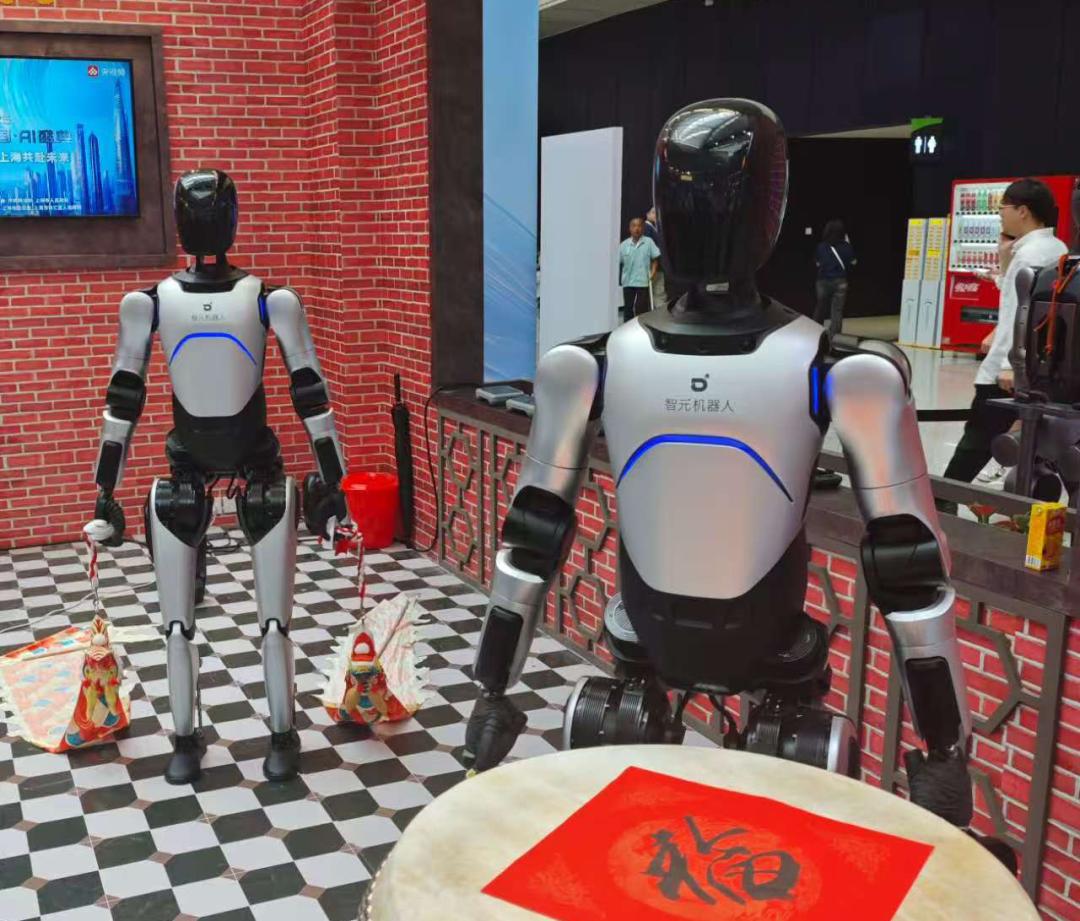
ZHIYUAN ROBOTICS. Photography: Kong Yuexin
Although Galaxy Universal Robotics and ZHIYUAN ROBOTICS seem to be doing the same thing, they focus on different scenarios.
China Entrepreneur: You're still continuously paying attention to embodied intelligence. Has the investment logic changed since you invested in the first company?
Chen Weiguang: I think it's still about scenarios. Among the world's 3.5 billion working people, there are many scenarios in various occupations. Currently, the manufacturing industry, logistics, and daily life scenarios are quite clear, and there are great opportunities in these three scenarios. After achieving success in one vertical field, it's relatively easy to expand to the next vertical industry once the data starts to circulate.
For example, Tashizhihang has broken through in flexible and precise manufacturing and solved the “Goldbach Conjecture” in the field of industrial automation - wire harness manufacturing. This is not only a success in a single scenario but also provides a verifiable and replicable industrial - level practical sample for the industrialization of the Scaling Law of embodied intelligence.
As for whether these embodied intelligence companies will compete with each other, I think the market is too large. Although they are all robots, they replace different jobs or improve efficiency in different types of work.
China Entrepreneur: But isn't the competition for talent among these companies quite common?
Chen Weiguang: For ordinary engineers, I think it's okay. After all, China has an advantage in the engineer dividend for at least the next five years. The competition for top - tier and outstanding talents is definitely more intense.
China Entrepreneur: You're almost the first institutional investor in embodied intelligence. Investment in the early stage is usually very risky. Have you had any failed cases in embodied intelligence?
Chen Weiguang: Not yet. All these embodied intelligence projects are developing well, and subsequent financing has also been quite fast. We spent a lot of time researching the top - tier people in the market, had in - depth conversations, and extended our reach widely, so we can roughly assess the level of each project.
China Entrepreneur: How do you design a framework based on certain variables or parameters to screen projects and entrepreneurs with a relatively high success rate? Are there any “no - go areas” for you?
Chen Weiguang: If the team has a strong scientific research background but lacks expertise in other areas, we may be more cautious. Because embodied intelligence is a systematic project. It doesn't rely solely on algorithms or cutting - edge technologies. Of course, the team needs to have strengths in various aspects, but the most worrying thing is a significant weakness in one area.
China Entrepreneur: How do you evaluate projects when reviewing them?
Chen Weiguang: For example, if there are 6 evaluation indicators, we don't require each indicator to score 90 points, but at least 70 - 80 points for each.
Of course, this scoring cannot be based on the product or revenue because when we invest, the product may just be a movable sample and may not be able to perform tasks. We may score based on these 6 indicators, such as what they've done in the past, the core points and thinking points in our communication with them. A strong team will think more deeply and comprehensively.
China Entrepreneur: What are the key capabilities you value in the field of embodied intelligence?
Chen Weiguang: I think embodied intelligence is different from other niche tracks. For example, when investing in AI applications, the key is whether they can capture users' needs and develop rapidly. However, embodied intelligence is a systematic project. If there are obvious weaknesses in capabilities, problems may easily arise.
For example, the founder needs to understand hardware, software, and AI algorithms, and also have the ability to raise funds and build an ecosystem. At present, the most crucial thing for entrepreneurs is to find suitable scenarios, design products based on scenarios, and establish differentiated advantages to fully unleash the latest capabilities of AI. After the industry matures, the ability to build an ecosystem will become even more important.
02
The future trend is hardware + AI
China Entrepreneur: Against the backdrop of the continuous warming of the industry, are you still looking into embodied intelligence?
Chen Weiguang: We're still continuously looking into embodied intelligence. However, I think the real big trend is the combination of hardware and AI. For example, a car is also a robot. China is very strong in consumer hardware, as demonstrated by DJI. But that may be the previous generation. In the future, there will be many projects in consumer hardware + AI that can meet daily needs, and we're also looking into this area.
For example, we've also made some investments in AI glasses. Some people may think that embodied intelligence equals humanoid robots, but I think this is too limiting. People should think of it as the combination of AI and hardware.
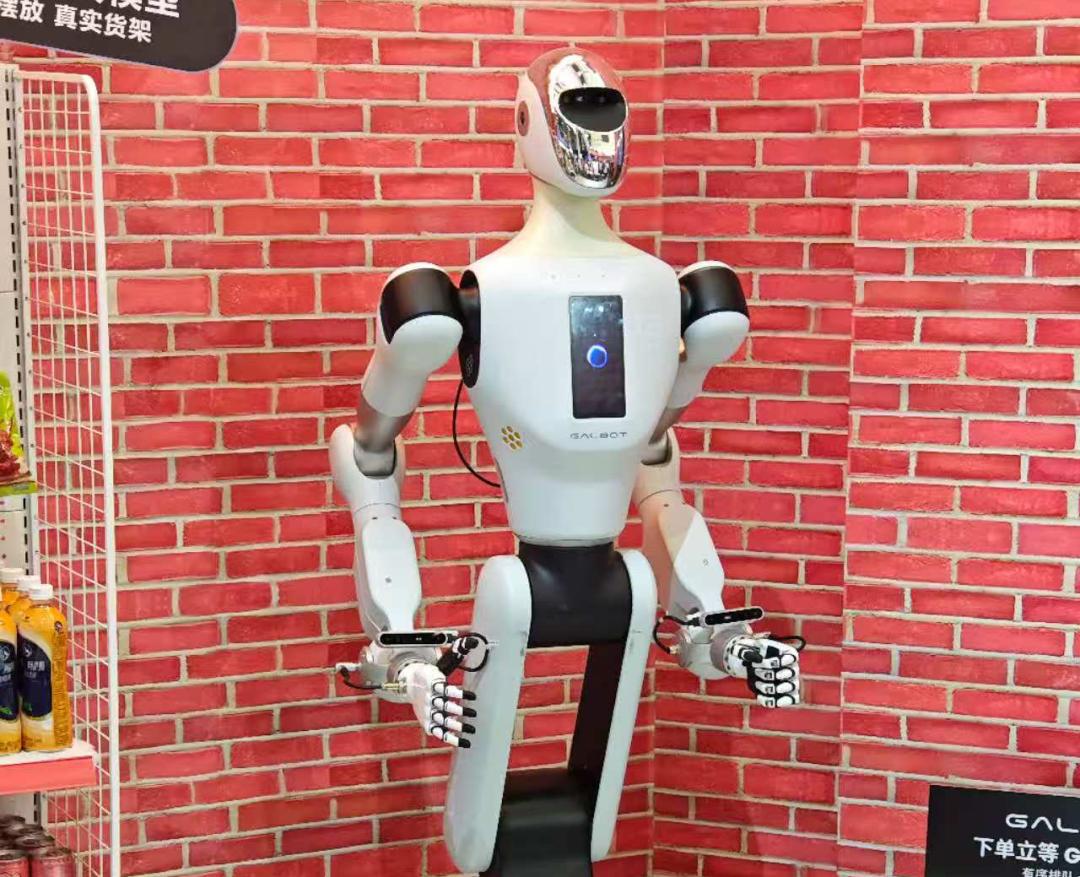
Galaxy Universal Robotics. Photography: Kong Yuexin
Life isn't just about getting an answer from AI. Ultimately, the answer needs to be translated into results. These results may require hardware to complete, or an Agent to analyze and generate documents such as PPTs and Excel spreadsheets, or structured reports suitable for board meetings. This is where AI can truly produce results and effects.
The same goes for the combination with hardware. There are still many hardware devices that require human operation. For example, current mobile phones aren't truly AI - enabled. If I'm going on a business trip to Africa, I need to search for information, buy tickets, and arrange the itinerary myself on my phone. In the future, could I just say “arrange a business trip” to my phone, and it would automatically buy tickets and even arrange a robot to pick me up when I land?
In the future, whether through the combination of software and hardware or better Agents, many tasks that we used to handle ourselves won't be necessary anymore.
Many people may be worried that if a boss has 40 employees and uses AI, these 40 employees will lose their jobs. I don't think so. With cheaper robots and more user - friendly Agents, these 40 people can become bosses themselves.
If they can become bosses through AI and robots and earn money, they can consume, and others will use their Agents and robots to serve them. So, it's not as pessimistic as people think.
Of course, those who don't learn about AI or understand robots will definitely have a hard time.
China Entrepreneur: Do you sense any chaos or bubbles in the industry?
Chen Weiguang: Currently, a lot of capital is flowing into the robotics industry, so there may be cut - throat competition.
China Entrepreneur: Have you ever been involved in competing for projects?
Chen Weiguang: Definitely, especially for top - notch projects.
China Entrepreneur: Facing the current investment and financing environment, what suggestions would you give to the embodied intelligence projects invested by BlueRun?
Chen Weiguang: Frankly speaking, we mostly advise founders not to raise funds too quickly before achieving good business monetization results. Because the track is quite hot right now, and we don't know what the situation will be like next year. Once they raise a large amount of money but can't meet the expectations, it will be quite troublesome later. For teams that have already raised a relatively large amount of money, we'll advise them to focus on commercialization. After all, they have enough funds and should spend more time on business. For teams that haven't raised much money and need more time to develop their products, we'll encourage them to raise as much as possible.
China Entrepreneur: Previously, people thought that the capital heat wave might cool down by the end of 2025 or the beginning of 2026. Do you think it has cooled down recently?
Chen Weiguang: It's not about “cooling down.” From an investment perspective, for the next team you invest in, whether in terms of the selected scenario or technology, it should be quite different from the previous teams because most available projects have already received investment.
As long as there is a better team that finds a scenario not covered by others and has significant technological variables, I think they can still raise funds. Currently, embodied intelligence technology is not yet mature. It can operate in factories, but it's difficult to use it at home to take care of the elderly. If you can develop a low - cost robot that can take care of the elderly at home, this disruptive technology will definitely be able to attract investment because others can't do it now.
03
China's advantages in the big - power competition
China Entrepreneur: After a year of rapid development in the embodied intelligence industry, do you think there are more or fewer consensuses in the industry? What consensuses have been formed, and what might still be non - consensuses?
Chen Weiguang: I think there are several consensuses. One is that China's supply chain is extremely powerful. If the supply chain isn't mature, the development of the system can't be so rapid. This is also related to