GGV Capital Interviews Jufu Technology: The Potential of 3D Printing Has Far from Been Fully Unleashed - Investment Notes, Issue 241
As 2025 is coming to an end, we recently successfully held the 2025 Annual Meeting of GGV Capital's RMB Fund. This year, we gathered many investors, founders of well - known enterprises, and important partners to conduct in - depth dialogues and sharing around cutting - edge fields such as AI, intelligent manufacturing, digital healthcare, and embodied intelligence.
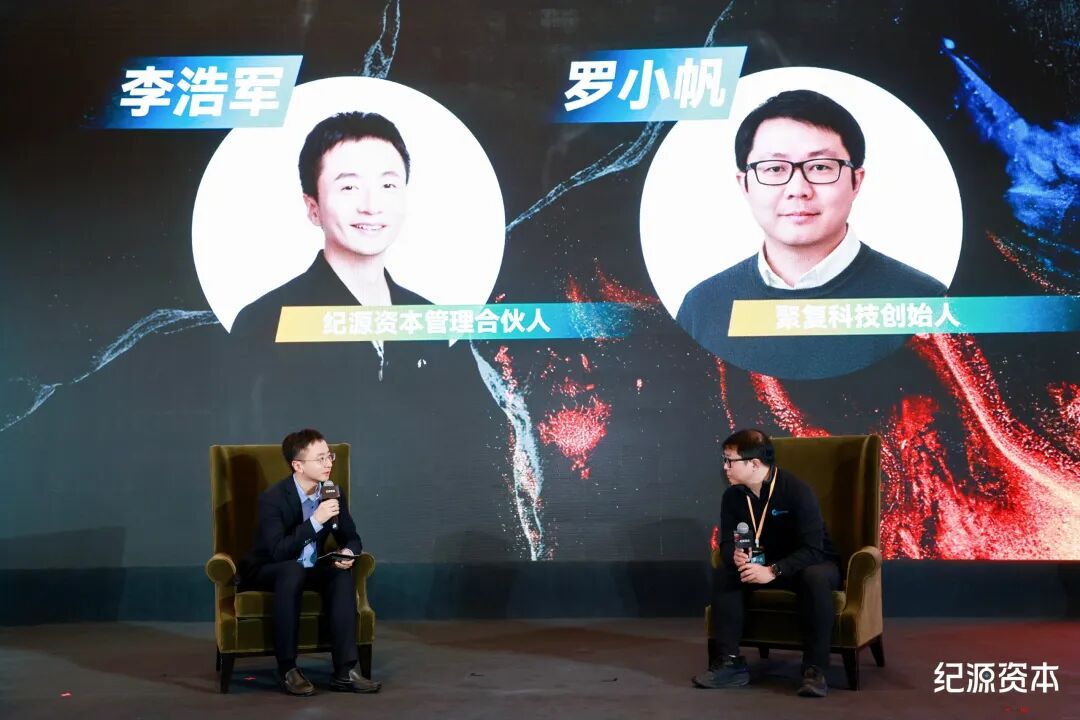
The following is a dialogue between Li Haojun, Managing Partner of GGV Capital, and Luo Xiaofan, Founder of Polymaker:
Li Haojun: You may not be familiar with the name Polymaker. But if you know about 3D printing, you must have heard of the name Polymaker. Polymaker is a company focusing on the field of 3D printing materials.
In recent years, with the continuous exploration of the consumer - grade market for 3D printing, this industry has become bustling again. As a domestic pioneer in the 3D printing field for more than a decade, does Mr. Luo have any feelings to share about entering this field during the early days of entrepreneurship? It seems that the name "Polymaker" itself has a story behind it?
Luo Xiaofan: Okay, thank you, Mr. Li. Regarding the company's name, it's because the four of us founders are all alumni from Fudan University. So we came up with such a name with a "science - geek style". We thought of many other names at that time, but only "Polymaker" was approved in the end, so it became our only choice and has been used ever since.
Regarding the origin of entrepreneurship, I became interested in 3D printing during my doctoral studies in the United States. From 2010 to 2015, I witnessed the first wave of 3D printing entrepreneurship in the United States up close. At the same time, I observed that most of the startups in this industry at that time were mainly engaged in making printers and other related equipment. From the perspective of a person with a background in materials science, 3D printing is essentially a brand - new material processing technology, which will inevitably put forward many new requirements for materials.
There were no enterprises specifically engaged in the development of 3D printing materials in the market at that time. Based on our intuitive judgment, we believed that in the long - term, as 3D printing technology matures, the related materials market will also be driven. As for when exactly this "driving" would occur, we really couldn't make an accurate prediction. At that time, we founders were very young. With an optimistic outlook on the development prospects of 3D printing materials technology, we decided to start this business. It has been thirteen years until now.
Li Haojun: In these thirteen years, the 3D printing industry has experienced ups and downs and undergone great changes. If you were to review the development of the industry in the past few years now, which aspects do you think exceeded your initial expectations? And which aspects did not meet your expectations?
Luo Xiaofan: I think the core lies in how to define "expectations". I remember there was a good saying: For a new technology, people tend to overestimate it in the short - term and underestimate it in the long - term development - this saying is very appropriate in the 3D printing industry. The entire industry has experienced the emergence and bursting of two bubbles, and has also gone through two cycles of being overestimated and underestimated.
The first cycle occurred from 2013 to 2014, which was exactly when we started our business. In fact, at that time, we could already see the signs that the first bubble was about to burst. 3D printing was also a popular entrepreneurial direction in the United States at that time. Startups at different stages and in different directions emerged one after another, attracting a lot of financing. Today, many of the companies we cooperated with at that time no longer exist. The market had very high short - term expectations for 3D printing at that time, believing that 3D printers would quickly enter thousands of households like personal computers back then. Obviously, it did not meet those expectations.
In the second cycle, a new batch of 3D printing companies adjusted their expected directions: 3D printing would transform the manufacturing industry to a large extent in a very short window period. However, in recent years, we have seen that many foreign startups that emerged with this wave, including some that have been listed on the NASDAQ, are now in trouble or even no longer exist.

It seems that people's short - term expectations for the 3D printing industry are always unfulfilled. But if we look at it from a ten - year or even longer cycle, we will find that some of the early industry visions are actually being realized. For example, the shipment volume of low - cost 3D printers has reached millions today, and it may exceed tens of millions in one or two years.
Actually, it's not just 3D printing. In any industry, people tend to be overly optimistic about the short - term market expectations due to some technological breakthroughs, and overly pessimistic about the long - term development because they don't see the expected results in the short - term. From a more macroscopic perspective today, as a brand - new manufacturing technology, 3D printing conforms to the development law of a technology from its emergence to gradual penetration into different industries and then to large - scale application. On the whole, its pace is healthy and steady. I also believe that in a larger time scale, it will eventually meet people's expectations.
Li Haojun: In the past few years, the 3D printing market has developed rapidly at the equipment level. As you just mentioned, especially for small, consumer - grade equipment, the shipment volume has increased from hundreds of thousands to millions. When people talk about the 3D printing industry, they often think more of these equipment companies. However, as a materials company, the role it plays in the industry is also very important, but it may not be well - known to everyone and is sometimes even overlooked. Why do you think materials are important for 3D printing?
Luo Xiaofan: The logic behind this is not difficult to understand. First of all, 3D printing has requirements for the stability and consistency of its results. The impact of the printing materials on this is usually decisive.
Secondly, the properties of materials also determine the breadth and depth of their applications. 3D printing equipment only solves the problem of forming. However, whether it is a product or a component formed, in its specific application scenarios - such as medical, automotive, and even aerospace - different functional requirements will arise. These functional requirements cannot be met by equipment but by materials.
Li Haojun: So, can we assume that the materials used in consumer - grade 3D printing equipment are relatively simple, while the materials used in some specific industries may be more complex and have higher technological content?
Luo Xiaofan: Maybe we can't simply define the simplicity and complexity with one sentence. Sometimes, when using consumer - grade products, users may just want to have the fun of creation. At this time, users don't have the same requirements for materials as in industrial - grade scenarios. But this doesn't mean that there are no material requirements for consumer - grade products. Users may need the materials to be safer, more beautiful, or have a better touch. The requirements for consumer - grade products are actually not low, they are just different from those of industrial - grade materials.
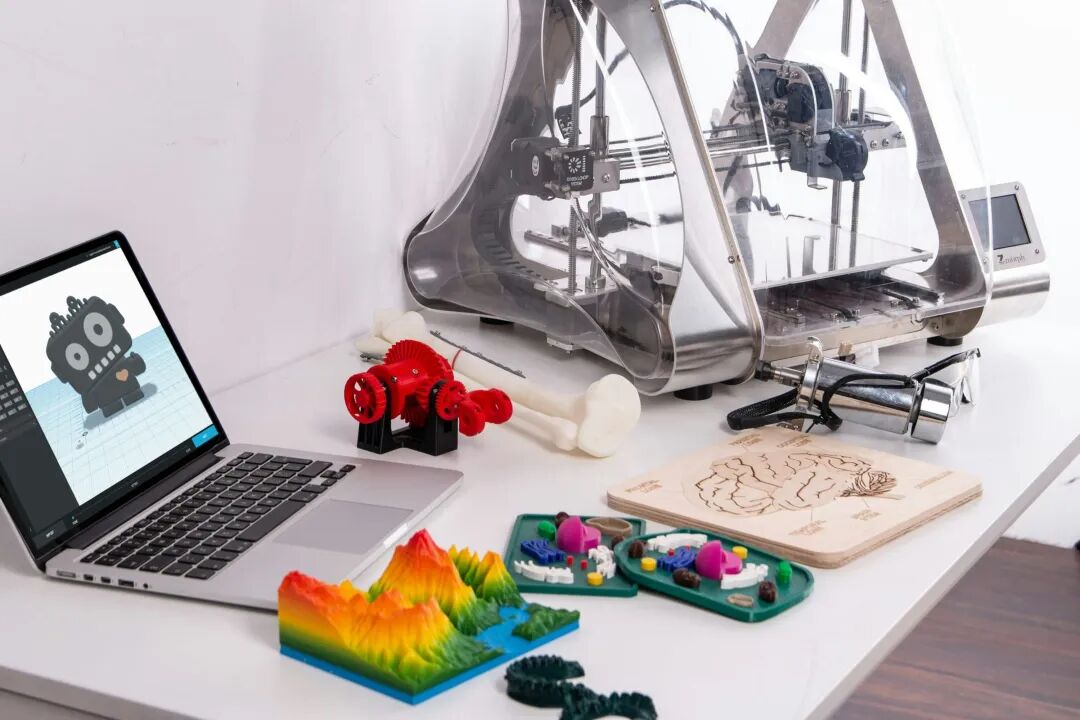
Li Haojun: This topic makes me think of another question: Are there any front - end pain points in demand that can trigger technological breakthroughs in the materials field, so as to develop better materials to serve the application scenarios? Can you share some experiences from our own R & D process?
Luo Xiaofan: This is a very interesting question. 3D printing itself is an innovative technology, and the applications it contacts downstream are often innovative as well. So, it creates a "chicken - and - egg" problem - who should take the first step in making a breakthrough? Who should lead the development of the other?
Actually, we really hope that customers can clearly tell us what they want. But in fact, we found that if we don't show customers a possibility, they may have difficulty putting forward their requirements. So, in the early years, our R & D was often driven by engineers. Instead of anchoring a clear customer demand, it was more based on everyone's understanding of technological trends and even the engineers' own interests to propose a R & D direction.
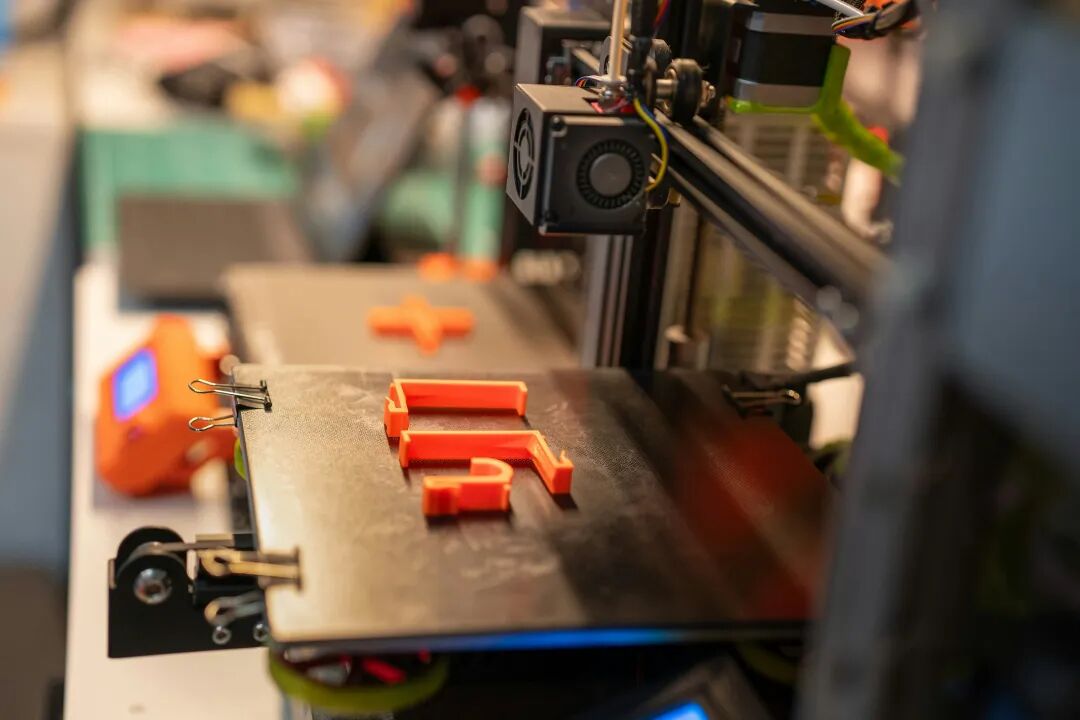
As a result, we were bound to take some detours. Although we made a lot of innovations from scratch at that time and won a good industry reputation, after 5 or 6 years of entrepreneurship, some market feedback made us start to reflect: Were we just indulging in our own world? Were we out of touch with the market?
So, we started to adjust our R & D approach, focusing more on the research and output of existing market demands. After some time, we found that this adjustment seemed to be a bit excessive, making the entire R & D team's work rather passive - if customers didn't tell us what to do, we wouldn't do anything.
What we need to do now is to find a balance between the above two states. However, there is one thing we always believe in: Innovation must be full of uncertainties and difficult to be defined in a standardized way. If a certain technology or product can be clearly defined now, then the degree of innovation of this thing may not be very high.
Li Haojun: Talking about this, we will think of another question: In the traditional 2D printing market, printing materials often have the concepts of "original" and "original factory". So, why in the 3D printing era, people generally use third - party materials? Why aren't the materials for 3D printing self - developed by equipment manufacturers?
Luo Xiaofan: I think the core of this question lies in two factors: the difficulty of process integration and the richness of application scenarios.
In the 2D printing field, the difficulty of technology integration is very high. The window for integrating inkjet, print heads, and various printing materials is very narrow. Enterprises other than equipment manufacturers have difficulty entering the market, so it is very difficult to build the entire industry ecosystem in an open - source way.
Moreover, the application scenarios of 2D printing are relatively single. While 3D printing is essentially a manufacturing technology, and the subsequent application scenarios are extremely rich. So, it is difficult to complete manufacturing with one or a few materials. For example, on a car, hundreds of materials are used. Behind a more diverse list of materials, naturally, more third - party material suppliers are needed.
Li Haojun: The game situation in the entire 3D printing market is indeed very complex, and it also involves geopolitical factors. In the early days, the industry was basically dominated by European and American players. However, today we can all see that Chinese players are becoming increasingly powerful in the 3D printing industry. Polymaker is also a very important part of the industry chain in this market. How do you view the current global competition pattern of the industry? What position do Chinese related enterprises occupy in the global pattern?
Luo Xiaofan: We should note that the first two large - scale developments of the 3D printing industry were generally led by European and American enterprises. Many breakthroughs from scratch were made during these two developments, with a lot of innovations in original technologies and original processes.

The current rapid growth of the 3D printing industry is led by Chinese enterprises. Objectively speaking, Chinese enterprises have made relatively few contributions in innovation. However, in terms of engineering capabilities and product capabilities, Chinese enterprises still have very strong leading capabilities. Of course, we don't know if this will become an industry norm.
Li Haojun: Let's get back to the discussion on the development of the entire 3D printing industry. We know that the market has experienced explosive growth in the past few years. In your opinion, on a longer - term scale, what stage has the 3D printing market reached at present? How much development space is there in the future?
Luo Xiaofan: This is just my personal view: I think the 3D printing market is still in a very early stage - First, there is still a lot of room for improvement in the technological maturity of the entire industry; Second, the popularity of this technology and its products is not high enough.
Ten years ago, whether talking to enterprises or individuals about 3D printing, they often didn't know what it was. Now, most people do have a concept of this technology, but there are still very few people who can really use it well. In the manufacturing toolbox of the entire human world, 3D printing should already be an important tool, but the proportion of this tool in the toolbox is still very small