In the second half of the e-commerce era, how can we fight the "resilience war" of the next-generation cross-border supply chain?
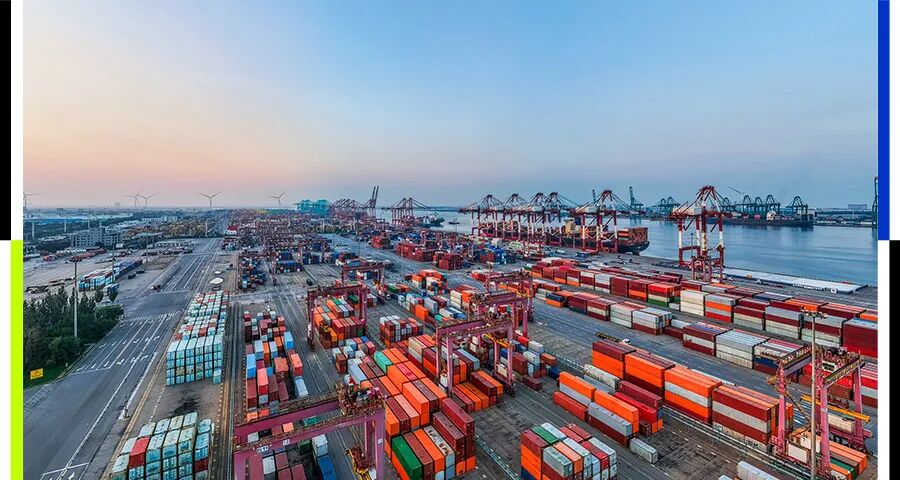
In 2017, in Qiqihar, a traditional industrial city, Zhou Ge, the founder of the outdoor brand ZAPT, with only 4,000 yuan and the question of "Why are Chinese goods so expensive in the United States", started his entrepreneurial journey in a residential house.
At that time, he was not only facing a shortage of funds but also logistics problems - all goods had to be sent to Beijing first and then transferred. "The logistics speed was far behind the plan."
Zhou Ge recalled, "Some logistics companies disappeared after receiving the goods, and some lost the packages on the way. What's more troublesome is that the freight weight agreed upon doubled when the goods reached the destination."
In Zhejiang, a province with a developed manufacturing industry, Great Star Technology, founded in 1993, is also facing complex challenges in cross - border logistics.
"Compared with domestic logistics, cross - border logistics is like a never - ending marathon," Li Feng, the senior vice - president of Great Star Technology, described it like this. "From shipping to receiving goods, it has to go through multiple links such as ocean shipping, customs clearance, and transfer, which often takes one or two months. Port strikes, weather changes, and customs clearance delays can all slow down the whole process."
The real dilemmas of these Chinese sellers are all microcosms of the collective pressure on the efficiency, resilience, and flexibility of the global supply chain.
According to eMarketer's prediction, the annual transaction volume of global retail e - commerce outside China will reach 3.15 trillion US dollars in 2025. In this huge market, any fluctuation in the supply chain means huge opportunities or losses.
Cross - border e - commerce is entering a "new battlefield": First, the market is new. The Middle East, Latin America, Japan, South Korea, India, Australia, etc. have become new hotspots. Second, the capabilities are new. The focus of competition has shifted from traffic and price to global supply chain capabilities.
With the fluctuations in global economic and trade, cross - border fulfillment is facing greater pressure. When the e - commerce competition enters the second half, rethinking the value of the supply chain has become a development proposition that cross - border sellers must face.
01 Don't Put All Your Logistics Eggs in One Basket
In the past few decades, we have witnessed the growth of the global supply chain - goods start from Asian factories, cross the ocean, and are delivered to consumers in Europe and the United States.
Today, this chain still seems precise, but its inside has been quietly changing.
The impetus for change comes from two ends. One end is the fluctuations in the geopolitical pattern and the adjustment of trade policies. This makes enterprises begin to realize that it is too risky to put all their eggs in the same global basket. The other end is consumers' desire for instant gratification. Most online consumers expect to receive cross - border goods within 2 - 3 days.
Some sharp - eyed sellers have already started to take action. After experiencing some setbacks, Zhou Ge's team switched to Amazon Fulfillment by Amazon (FBA). In his opinion, this was a crucial step in the company's development.
"At first, we thought the cost had increased, but in the long run, the benefits it brought far exceeded the expenditure. After using it, we found that the benefits far exceeded the expenditure - the sales volume at least doubled by 1.5 times, and it also allowed us to free up our energy to focus on product development and operation," Zhou Ge said. Now, more than 95% of their orders are fulfilled through FBA, and even in a small city, they can provide a logistics experience "no less than that of local sellers".
The particularly powerful aspect of FBA lies in the direct connection between delivery speed and sales performance, which is also confirmed by data: Compared with two - day delivery, the sales of same - day delivery sellers increase by about 20% on average.
A deeper - level change has occurred at the level of the supply chain network architecture. This year, Amazon Global Selling has newly launched the "Next - Generation Cross - Border Supply Chain". Its vision is that cross - border e - commerce enterprises only need to list their products on Amazon once and store their goods in the warehouse at the source location once to achieve global sales.
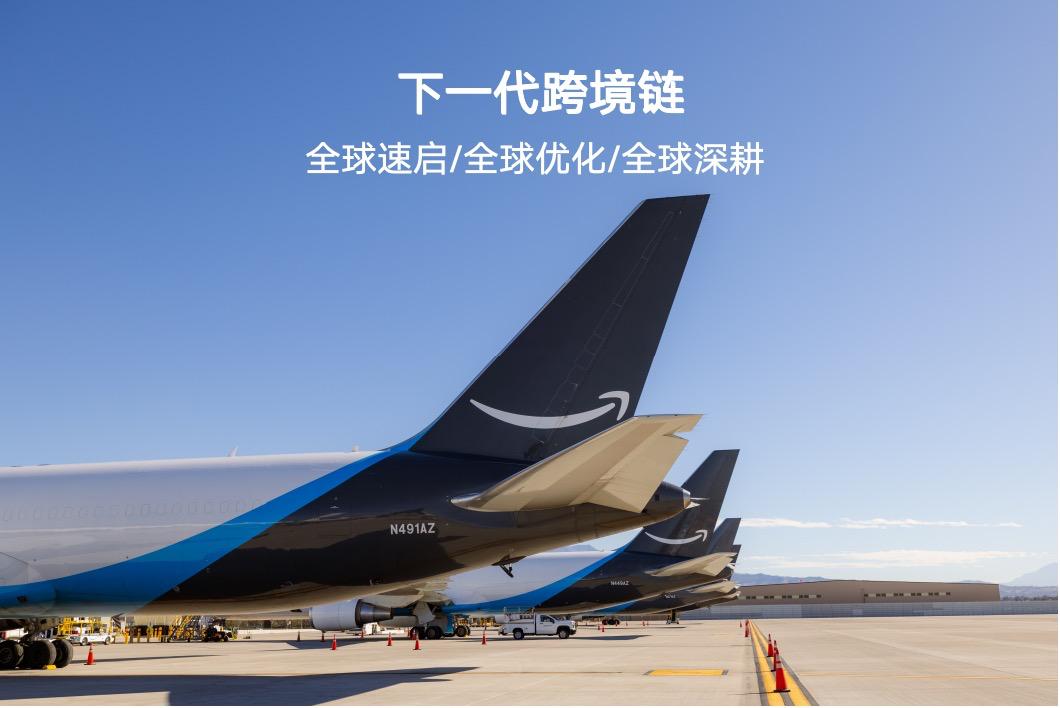
Among them, Amazon announced the global launch of the Amazon Global Smart Hub Warehouse (GWD) and set up the world's first GWD warehouse in Shenzhen, China, which will be fully open to Chinese sellers in March 2026.
GWD is a core part of Amazon's overall supply chain solution. Sellers only need to send their goods to the GWD warehouse, and Amazon will be responsible for all the remaining cross - border logistics and delivery links, such as customs declaration and clearance, and cross - border transportation. Sellers don't need to manage multiple service providers themselves, which greatly simplifies the cross - border supply chain management for sellers.
Therefore, GWD is very suitable for small and medium - sized sellers to flexibly test new markets, replenish goods accurately according to demand, and significantly reduce the initial inventory investment and sunk costs. Compared with Amazon Smart Satellite Warehouse (AWD), sellers using GWD can reduce their storage costs by 20 - 40%.
"We hope that global layout is not just the patent of 'top sellers'. We hope that small sellers also have a way to test the global market," said Dai Jingfei, the vice - president of Amazon Global and the head of Amazon Global Selling.
Actually, this technological innovation is of great significance in logistics economics - by moving the inventory nodes forward to the manufacturing end, it realizes the precise scheduling of "inventory is transportation capacity", and significantly reduces the time and cost of multi - level transfer in the traditional model of "factory - port - overseas warehouse".
"This innovative measure enables sellers to reach global customers with a single global inventory pool from the very beginning," Sunny Jain, the vice - president of Amazon Global and the head of Amazon Logistics, emphasized to 36Kr.

Sunny Jain, the vice - president of Amazon Global and the head of Amazon Logistics
Meanwhile, Amazon Global Logistics (AGL) is also rapidly expanding its network and strengthening end - to - end services. Currently, AGL has opened multiple routes from China to the United States, the European Union, the United Kingdom, etc., added Vietnam as a departure point, and opened a sea - shipping route from Vietnam to the United States.
36Kr learned that in 2025, AGL also added 6 domestic pick - up cities and now covers more than 230 cities and related regions across the country. In 2026, AGL will continue to expand more international routes and plans to add shipping services from China to Canada and Australia.
In today's world with prominent international environmental uncertainties, the supply chain itself has become even more important.
For Chinese sellers, this means that they must rethink their global inventory layout strategy and transform from "regional specialists" to "global generalists".
Especially for small and medium - sized sellers, the thresholds for self - built logistics and data analysis are very high. Outsourcing the "infrastructure" of the supply chain can enable them to focus more on the products themselves.
02 Leave the Decision - Making to the "Cloud Brain"
In the past, it might have required an experienced operation director to "make the call" on deciding which warehouse in the United States to send 10,000 pieces of goods to.
Today, this decision can be left to data and algorithms.
Great Star Technology is facing a typical multi - category, multi - scenario logistics decision - making problem: They finally chose a refined strategy of using FBA for small - sized products, overseas warehouses for large - sized products, and AWD services as a supplement to allocate inventory. Behind this is the result of a comprehensive judgment on the sales speed, turnover rate, and customer expectations of different products.
A more forward - looking layout is reflected in the active grasp of the market rhythm. Henry, the founder of BSQ, revealed a key insight to 36Kr: "Amazon has an intelligent prediction system that can assist us in calculating inventory replenishment. For example, it can calculate the demand for TV brackets based on the consumption trend of TVs."
Sunny Jain also gave an example to 36Kr. By analyzing regional differences, such as the sales of sunscreen in summer or ski goggles during the peak skiing season. These predictions have increased the long - term prediction of promotional activities by 10% and the regional prediction of millions of popular products by 20%.
All these mark a fundamental change in the decision - making logic - which means that inventory is no longer just a passive response to orders but an active layout based on future demand.
NanJia Technology has applied this "forward - looking layout" more thoroughly. As a nail - art category with strong seasonality, they have built an "FBA forward - looking reservoir" through AWD, storing the inventory needed for the peak season in advance and at a low cost in the AWD warehouse closer to consumers.
When the sales peak comes, the system automatically triggers replenishment, and the inventory quickly flows into the FBA network. This not only avoids the capacity limit during the peak season but also seizes the sales opportunity, truly realizing "stocking up in the off - season and having hot sales in the peak season".
After the inventory layout is completed, how to efficiently and accurately deliver the goods from the warehouse to consumers is another efficiency revolution. The protagonist of this revolution is gradually shifting from humans to robots and artificial intelligence.
In Amazon's new - generation operation centers, robot systems such as Sequoia, Titan, Vulcan, and Blue Jay form a collaborative combination. They are no longer independent operating units but are commanded by a central system to jointly complete complex processes from storage, picking, handling to sorting.
For example, the Blue Jay system can coordinate multiple robotic arms at the same time, compressing the "picking, storing, and combining" processes that originally required three independent workstations into a smooth space, greatly improving space utilization and processing speed.
More important than the "hands" (robots) is the "brain" (artificial intelligence). Agent - based AI systems like Project Eluna are playing the role of a "super dispatcher" in the warehouse. It can analyze the data of the operation center in real - time, predict possible congestion or efficiency bottlenecks, and actively provide solutions to operators, such as "it is recommended to transfer personnel to the No. 3 sorting line to avoid backlogs". 36Kr learned that currently, the delivery processing efficiency of this operation center has been increased by up to 25%.
In addition, Sunny Jain revealed that the seller assistant now has enhanced agent AI functions, actively reminding sellers before incurring over - aged inventory fees and providing specific suggestions to optimize their operations. The new profit analysis control panel also integrates cost data from multiple sources to guide sellers to achieve better profitability.
Peng Jiaqi, the vice - president of Amazon China and the head of Amazon Global Selling's global products, also added that through the new basic AI prediction model, the predictability of consumer demand has been greatly improved. The prediction of promotional activities has increased by 10%, and the prediction of popular products in different regions has increased by 20%.
The essence of this series of technologies is to shift the core competitiveness of the supply chain from fixed assets and human - resource scale to the quality of data and algorithms.
This is especially important for small and medium - sized enterprises. This kind of cloud - like intelligent service has extremely low marginal costs, allowing them to obtain supply chain planning capabilities comparable to large enterprises with a relatively small investment.
"The GWD warehouse in Shenzhen is just a start - we hope to build a network in global manufacturing centers, creating a seamless flow of goods from factories to customers, with every step optimized by AI," Sunny Jain said.
The popularization of technology is providing fairer competition tools for sellers with different starting points.
03 Break Down the Walls of Supply Chain Infrastructure
Currently, the way of doing cross - border e - commerce is no longer as simple as listing products for sale.
Zhou Ge has experienced a typical transformation. Initially, his store "was like a grocery store, and we didn't know what sold well and what didn't".
Through market insights, he found that outdoor products have high customer loyalty and a strong repurchase rate. So he resolutely focused on the outdoor equipment field. "We developed our own brand, focused on the outdoor equipment field, and emphasized functionality and practicality more."
Great Star Technology has gone through a more profound transformation path - from behind - the - scenes OEM to front - stage brand. Li Feng calculated the brand account: It is not easy to be replaced, can control profits, and the factory can stock up more flexibly.
Brand building is not just about changing the logo. It is a systematic re - evaluation of value. More importantly, when there are supply chain storms or market fluctuations, the trust accumulated by the brand will become the most stable "ballast stone" for the enterprise.
Brands need a broader space, and so does the brand's supply chain. Today, Amazon's supply chain system is evolving from "exclusive service" to "open infrastructure". Its newly launched Amazon Supply Chain by Amazon (SCA) is like a set of Lego bricks, modularly integrating cross - border logistics, intelligent warehousing, multi - channel distribution, and other capabilities for sellers to choose according to their needs.
What's more worth mentioning is that Amazon has extended an "olive branch of logistics" to other online sales channels and social e - commerce. Through the "Multi - Channel Fulfillment (MCF)" service, sellers can use Amazon's warehouses and logistics to process orders from SHEIN, Shopify, Walmart, etc.
Amazon data shows that the inventory out - of - stock rate of sellers using MCF has been reduced by 19%, the inventory turnover rate has been increased by 12%, and with the unified inventory pool, the average sales of sellers have increased by 19%.
This open strategy breaks down industry barriers, enabling sellers to use Amazon's logistics network to serve other sales channels and achieve true omnichannel operation.
Currently, many leading brands have started to layout an "ecosystem - level" strategy. ZHIOU Home has clearly put forward the "ecosystem - building, digitalization, and globalization" strategy, deeply integrating its design capabilities, China's manufacturing advantages, and the platform's logistics and data network to provide a better experience for global consumers.
36Kr learned that ZHIOU Home's global supply chain layout has entered the "regional in - depth development" stage, and it has built warehouses in Southeast Asia and other places.
It is not difficult to see that the launch of Amazon Supply Chain by Amazon (SCA) has pushed the maturity of supply chain services to a new height.
This solution integrates multiple advantageous Amazon products such as Amazon Global Logistics (AGL), Amazon Smart Satellite Warehouse (AWD), Amazon Multi - Channel Distribution (MCD), Amazon Fulfillment by Amazon (FBA), and Amazon Multi - Channel Fulfillment (MCF), aiming to provide end - to - end cross - border supply chain management services for sellers.
In this era when everything can be cross - border, sellers not only need to think about "how to sell the goods" but also solve the problem of "how to keep selling". With the fluctuations in the global trade environment becoming the norm, the "resilience" of the supply chain is no longer just a safety line; it can itself become a competitiveness driving growth.
When customs suddenly conduct strict inspections, ports are unexpectedly congested, or a certain shipping route is temporarily suspended, a resilient supply chain can quickly activate alternative plans - immediately switch the transportation route, transfer goods from warehouses in other regions, or even temporarily activate alternative logistics service providers. In daily operations, with the help of the intelligent prediction system, sellers can more smoothly cope with the off - peak and peak sales seasons, plan inventory in advance, and neither run out of stock nor over - stock.
A deeper - level answer may be found in Amazon's previously released report "Resilience Reconstruction - 2