Wang Xiaofei, Founder of Malujiji Brand: Behind the five-year journey of Malujiji lies 30 years of exploration and dedication in the catering industry | WISE2025 King of Business
From November 27th to 28th, the 36Kr WISE 2025 Business King Conference, known as the "annual technology and business trendsetter", was held at the Conduction Space in the 798 Art District in Beijing.
This year's WISE is no longer a traditional industry summit, but an immersive experience carried by the theme of "technology-powered exciting short dramas". From AI reshaping the boundaries of hardware to embodied intelligence opening the door to the real world; from brand globalization in the wave of going overseas to traditional industries equipping with "cyber prosthetics" - what we restore is not only trends, but also the insights refined through numerous business practices.
In the following content, we will deconstruct the real logic behind these "exciting dramas" frame by frame and witness the unique business scenery of 2025 together.
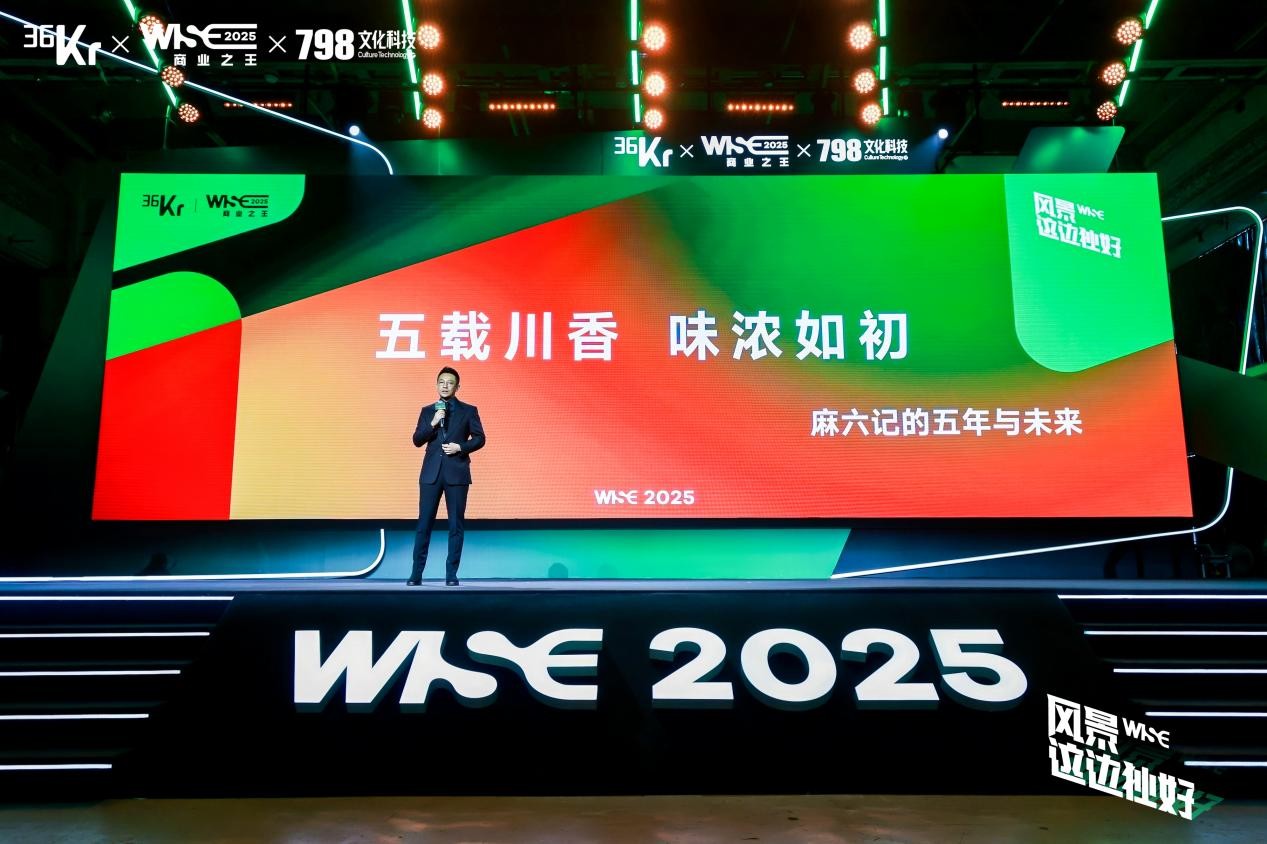
The conference site
The following speech is from Mr. Wang Xiaofei, the founder of the Malujie brand, and has been compiled by 36Kr -
Distinguished guests and dear friends, good morning!
The theme of my speech today is "Five Years of Sichuan Flavors, as Strong as Ever: Malujie's Five Years and Future". The past five years since the birth of Malujie are inseparable from our 30 - year exploration and perseverance in the catering and food industries since 1990.
When it comes to Malujie, the first thing that comes to mind for many people may be its offline restaurants. We now have 48 directly - operated stores, with the first one located in the China World Trade Center in Beijing. Then, people may think of our best - selling product, the instant spicy and sour rice noodles in a bucket, which are mainly promoted on e - commerce platforms and in offline supermarkets and convenience stores. Recently, we have developed a new business model by opening small spicy and sour rice noodle shops, aiming for an average customer spend of about 20 yuan per person, and we are also promoting chain franchising.
Actually, Malujie is not limited to these products. It represents the ideal of us catering professionals after years of exploration and finally coming together.
Let me take you back further and introduce our development history. In 1990, my mother went abroad for the first time and earned her first pot of gold. At that time, she worked various odd jobs like washing hair and moving things for people in Toronto. After saving up 10,000 US dollars, she decided to return to China to start a business.
Why did we choose Sichuan cuisine? I grew up in a hutong in Beijing, outside the Chaoyangmen area, not really in the city center but near the Second Ring Road. There was a Sichuan restaurant opened by a Sichuan native near our home. My father was very busy, and every weekend, he would take us to this Sichuan restaurant. After my mother returned to China, she found the owner of this restaurant and asked if he could introduce some chefs to her. That's how we opened our first restaurant, Alan's Restaurant. My mother was the general manager, my uncle was in charge of finance, and we had two chefs introduced by the Sichuan restaurant. I used to go there to work every Saturday afternoon, clearing plates and working as a waiter. That's when the first Sichuan restaurant named Alan's Restaurant was born.
By 2000, I was studying in France. I took my mother on a trip with a tour group to many European countries. When you visit these European countries, you must taste the local cuisine. She was deeply impressed, even shocked, by the Western food presentation, restaurant design, the attitude of the waiters, and the concept of catering. After she came back, she found a French designer to design a Sichuan restaurant in a commercial complex. That's how the first South Beauty restaurant was born in 2000.
For us, there were several very important turning points in the development of South Beauty. The first was when South Beauty became one of the five major catering service providers for the Olympics, serving a total of 8 venues.
During the same period, we also opened a large - scale comprehensive catering venue designed by the world - famous designer Philippe Starck. This venue included a gallery, a bar, 36 private rooms, a restaurant, and the now - popular Chef's Table.
Later, we built the Lan Club on the Bund in Shanghai. At that time, I had just graduated from France and was learning in the hotel kitchen. So, I set the standards for the Lan Club according to today's Michelin three - star restaurant standards. For example, guests were not allowed to enter the restaurant in shorts and slippers, and we encouraged people to treat dinner as a formal occasion. What we call "elegant dining" today, I think, is about providing a 360 - degree dining experience, including the taste of the dishes, food presentation, background music, lighting, and the dressing of other guests. I believe that the overall dining atmosphere is the emotional value that a catering brand should provide to consumers.
I think the design of the Lan Club, if promoted on content platforms today, would have an even better effect. Back then, it was already reported by many print and fashion media.
Since 2014, we have stopped operating the South Beauty brand, and everyone gradually went their separate ways in the market. For example, I often traveled between Taiwan and the Chinese mainland, looking for investment opportunities and trying various things, but none of them were very successful. Our CEO and the executive head chef also returned to their hometowns and opened their own restaurants. Some opened 5 or 6 chain restaurants, while others had 2 or 3. Everyone was still struggling in the catering industry.
By 2020, after staying in Taipei, China for 7 months, I felt it was time to start a new business again. During that half - year, I observed many future trends in the catering industry, such as focusing on cost, floor - space efficiency, and labor efficiency. You know, Taipei is small and has a much smaller population than the Chinese mainland, but why can so many chain enterprises emerge there? It's because they have maximized floor - space efficiency.
In 2020, we embarked on a new journey in the Sichuan cuisine business.
In July, I brought the Qilin logo designed in Taiwan and the name "Malujie" back to Beijing. On December 10, 2025, the first Malujie store in the China World Trade Center will celebrate its fifth anniversary. So far, this store has not launched a take - out service because there are always long queues of dine - in customers. I want to focus on serving the dine - in customers well and maintain the service quality and food quality of the first store.
This business venture is very different from the previous ones. I used to operate the Lan Club and had the Michelin - style concept. For example, the South Beauty store in the Zhengda Plaza was 5,000 square meters and had an average daily turnover of 500,000 yuan. But now, the market has changed. The labor cost is 3 - 5 times higher than before, and the rent cost has even increased several times. The large - store model is no longer viable.
Therefore, we decided to adapt to the market changes. The first Malujie store is located in the China World Mall, covering an area of 268 square meters. At its peak, we can receive 800 customers a day and turn the tables 8 times.

The conference site
I also proposed for the first time that restaurants should not only focus on the gross profit of dishes but also on the net profit. Because floor - space efficiency and labor efficiency are the most important cost - control points. We should provide better dishes to consumers, increase the table - turnover rate, and boost the turnover. So, we have a catering model with low gross profit but high net profit.
Another important aspect is the retailization of catering. From the first day of Malujie's opening, I hoped to serve billions of people in China through our products. We started looking for factories in Sichuan. At first, we wanted to produce compound seasonings, and later, we explored instant dishes, aiming to turn the popular dishes in our restaurants into convenient home - cooked meals.
Finally, the spicy and sour rice noodles stood out. So far, the cumulative sales of Malujie's spicy and sour rice noodles have exceeded 170 million buckets. They are delicious and affordable, with 7 ingredients in each bucket and priced at 6.9 yuan, offering good value for money.
Currently, Malujie has three business models:
1. Malujie Chinese - style Sichuan cuisine restaurants: Specializing in freshly - cooked traditional Sichuan cuisine.
2. Malujie's retail business: Centered around spicy and sour rice noodles, accompanied by snacks, vegetarian products, etc. There are more than a hundred products in six categories, covering online platforms such as Kuaishou, Douyin, JD.com, and Tmall, and offline distribution in 150,000 supermarket outlets. The products are also exported overseas.
3. Malujie small spicy and sour rice noodle shops: More than 150 stores mainly offering spicy and sour rice noodles and other Chengdu street snacks. After validating the business model through self - operation in the early stage, we have opened it up for franchising, with an average customer spend of about 20 yuan per person.
About 8 million consumers visit Malujie restaurants every year. In fact, the total number of our fans across all platforms is less than 8 million. I believe that these consumers don't come to Malujie because of me or anyone else. What attracts and retains them must be our dishes, service, and emotional value, which lead to continuous repeat purchases. Currently, our online repeat - purchase rate is over 70%, and the offline repeat - purchase rate is over 60%.
Yesterday, I discussed with my colleagues that starting this year, we will streamline the SKUs of our online products, focusing on spicy and sour rice noodles and aiming to promote 1 - 2 snack products every four months.
This is because in the retail industry, the more product lines there are, the higher the inventory will be, and it will also tie up capital. So, we need to make our product range smaller but more refined. For example, our core retail product, Xiaowang Sausages, has an annual sales volume of over 40 million pieces, and the manufacturer is located in Beijing.
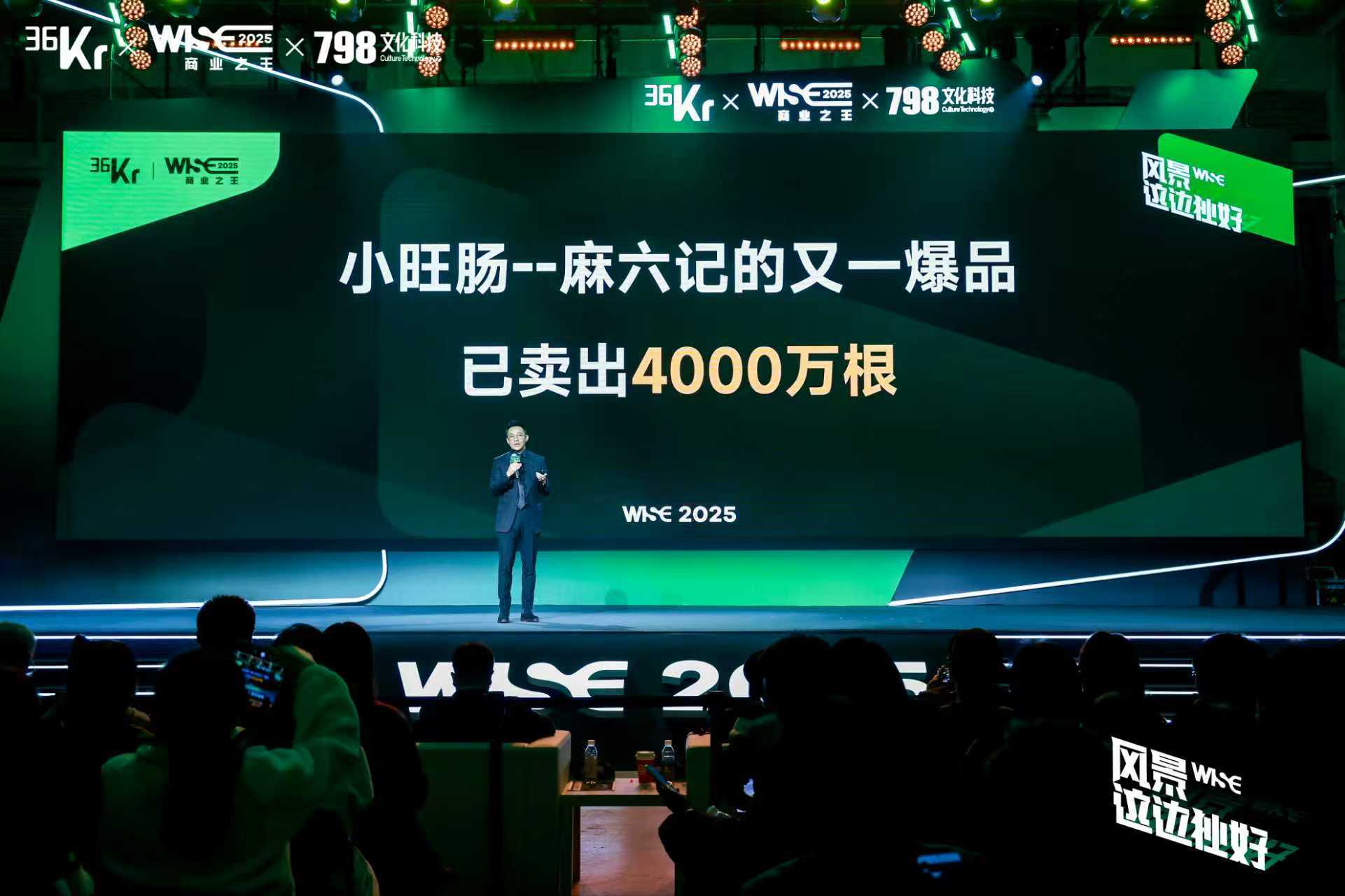
The conference site
When it comes to making our business smaller and more refined, we also need to launch new brands according to market changes. You may not believe it, but the most profitable stores in our group are the ones in the Wancheng Mall in Hohhot and Shijiazhuang. In cities with a population of millions, the stable supply of commercial space in shopping malls provides us with a stable business environment.
This year, we plan to launch a new brand called Little Malujie. The average customer spend at Malujie restaurants in Beijing, Shanghai, and Guangzhou is about 100 - 110 yuan, and after discounts, it's around 80 - 90 yuan. This is not low - end enough. Our new brand, Little Malujie, is mainly targeted at young people in second - and third - tier cities who are returning to their hometowns to start a business and have certain requirements for the quality of life.
The model in the picture is designed for Beijing and Shanghai. It covers all - day consumption including afternoon tea, dinner, and cocktails. The menu is more streamlined than that of Malujie, and the average customer spend is controlled at about 60 - 70 yuan.
The other version is a Little Malujie store we are about to open in Shijiazhuang, with an area of about 180 square meters. We still adhere to traditional Sichuan cuisine, but it is more down - to - earth. Popular traditional dishes like boiled fish and Mao Xuewang will not be sold in Little Malujie. Instead, we choose to make some down - to - earth traditional Sichuan snacks, making them both beautiful and delicious, so that consumers can taste traditional Sichuan cuisine at a lower price.
I'm very honored today. It's been a long time since I last shared what we've been doing at Malujie in the past five years and the past 20 years in such a positive - energy - filled event with so many enterprises and media. Now, I mainly focus on site selection, product R & D, and dish improvement, and I appear in public and engage in live - streaming sales less often.
Because the name "Malujie" is the brand and the foundation of our company. I believe that as long as we do a good job in dishes and service, our company will thrive in the long run!
I also hope that you will pay more attention to Malujie and visit our restaurants to give us your valuable suggestions. Thank you!