The war behind reusable rockets: Whoever occupies the orbit occupies the future.
On December 21, 2015, when the first stage of SpaceX's Falcon 9 rocket gently landed at the landing site in Cape Canaveral, Florida, USA, people at the rocket mission control center erupted into thunderous cheers. This was not just a technological demonstration; it announced the end of an era and the beginning of another.
Ten years later, today, the race for reusable rockets has begun. On December 3, 2025, the Zhuque-3 (ZQ-3) Yao-1 rocket, a liquid oxygen methane launch vehicle independently developed by LandSpace, a Chinese commercial aerospace company, successfully completed its maiden flight and entered orbit.
This "rocket race" is not just about saving money. It is a century - long game between countries regarding "orbital sovereignty", "space infrastructure", and other aspects, and a space battle for the future order.
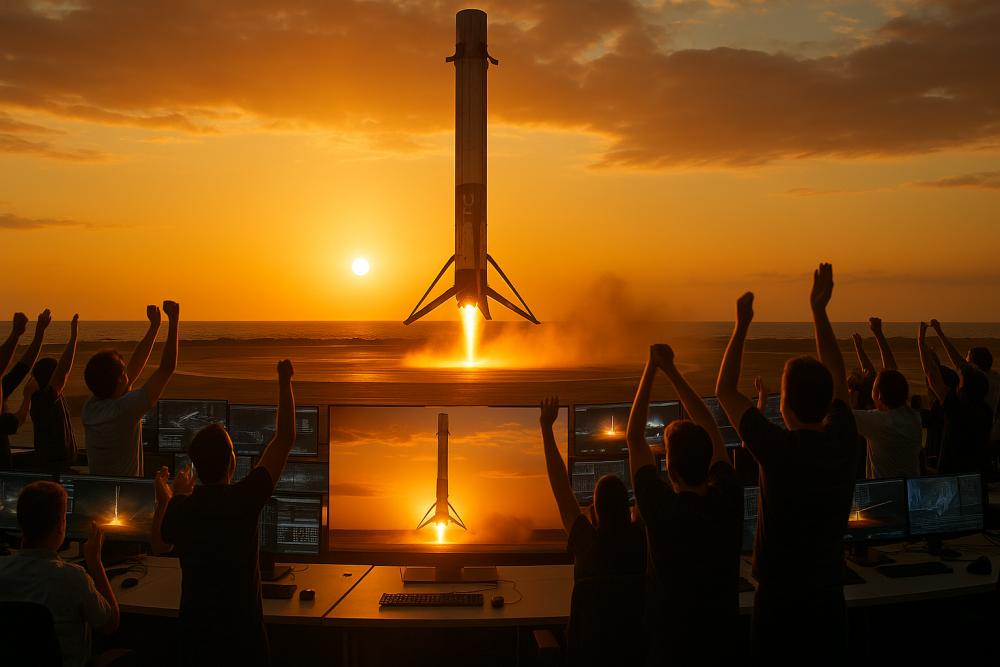
This image is created by an AI tool.
01 The competition for reusable rockets is essentially a fight for the "right to launch frequency"
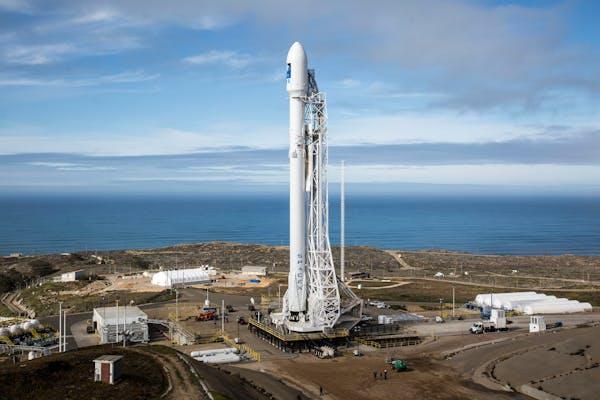
The economic value brought by reusable technology has been fully verified by SpaceX: by recovering and reusing boosters, the cost of a single launch can be directly reduced by more than 70%. According to relevant official data, the Falcon 9 controls the launch cost at about $3,000 per kilogram, while the target of the Zhuque-3 is 20,000 RMB per kilogram (about $2,800 per kilogram). The two are already in the same cost range.
Even more radical is SpaceX's next - generation Starship. Its fully reusable design aims for a breakthrough target of $10 per kilogram, a 99% reduction compared to the space shuttle era, which will completely rewrite the cost structure of the space economy.
However, more strategically significant than saving money is the high - frequency launch capability. After all, traditional rockets often take months or even years to be ready for another launch, while the Falcon 9 booster can be reused in just 21 days (average level, not the fastest record). The multiple - fold advantage in launch frequency not only enables faster deployment of satellite constellations and more agile defense deployments but also turns space launches from an "occasional show" into an "everyday thing".
If successfully achieved, space travel will become as routine as taking an airplane. It will no longer be the exclusive toy of billionaires and national teams but will transform into a huge "economic ecosystem" that ordinary people can participate in and benefit from. It is precisely this disruptive low - cost and high - frequency advantage that makes most satellite companies now prefer to use reusable rockets to go into space. According to statistics from the well - known intellectual property consulting firm PatentPC, the U.S. Space Force approved the use of reusable boosters for military missions in 2021, saving more than 30% of the expenses with just this measure.
02 The three "competition arenas" behind the scenes
When this double revolution in cost and frequency completely changes the rules of the space economy game, and the cost of human access to space drops to one - tenth or even lower of the original, many previously unfeasible business models suddenly become viable - such as global satellite Internet, space manufacturing, space tourism, and even lunar base construction, all have changed from science fiction to commercial projects that can be seriously planned.
If it were just for commercial profit, governments around the world would not be so anxious. The global competition triggered by reusable rockets is essentially three "competition arenas regarding the future order".
The first competition arena: The "land - grabbing movement" for low - Earth orbit
Space may seem infinite, but the low - Earth orbit space suitable for human use is extremely limited. According to CCID data, the Earth's low - Earth orbit is expected to accommodate only about 60,000 satellites. By 2029, it is estimated that about 57,000 low - orbit satellites will be deployed, leaving little available orbital space.
This is not a technical problem but a physical constraint. Satellites need to maintain a safe distance from each other to avoid collisions, and specific orbital heights and inclinations correspond to different service capabilities. The best orbital positions are as scarce as prime locations on Earth.
The international rules follow the "first - come, first - served" principle - whoever occupies first has the right to use.
Even scarcer is the spectrum resource. Satellite communication relies on radio frequency bands. For example, the C - band and Ku - band are mainly used. Among them, the Ku - band (about 12 - 18 GHz) and Ka - band (about 26.5 - 40 GHz) have become the core development directions but face different degrees of pressure. With the large - scale deployment of Starlink and OneWeb constellations, the Ku - band shows signs of saturation. The Ka - band, with its larger available bandwidth, is becoming the focus of high - throughput services and is the next focus of competition among countries.
Reusable rockets play a decisive role in this "land - grabbing movement". A high launch frequency means that large - scale satellite constellations can be quickly deployed to occupy the optimal orbits and frequency bands. When a country or company can occupy the low - Earth orbit at an overwhelming speed, later entrants may face the dilemma of "nowhere to place" their satellites even if they have the technology.
The second competition arena: A life - and - death struggle for communication sovereignty
The competition in reusable rocket capabilities is also a competition for communication sovereignty.
SpaceX's Starlink project has already deployed thousands of satellites and is establishing a global satellite Internet. This is not just a simple commercial service but a new type of strategic capability.
For major powers, this is an unacceptable strategic vulnerability. When a foreign private company can provide (or cut off) Internet access to your territory, it essentially means the surrender of sovereignty.
The third competition arena: The first - mover advantage in space infrastructure
The deeper competition is for control of the infrastructure of the future space economy.
When the launch cost drops to a few hundred dollars per kilogram, space will transform from an "exploration field" to a "development field". From in - orbit manufacturing, space data centers to lunar resource mining, all these future industries require one prerequisite: cheap space transportation. Whoever masters this ability holds the ticket to the space economy.
SpaceX is not only building Starlink but also developing the Starship, a fully reusable super - heavy rocket aiming to reduce the launch cost by another order of magnitude. If successful, it will be able to transport goods and people between the Earth, the Moon, and Mars on an unprecedented scale. This is not science fiction. SpaceX has already completed multiple test flights of the Starship.
China is also accelerating its layout. From the end of 2025 to 2026, China's commercial aerospace may witness the intensive maiden flights of reusable rockets, including the Zhuque - 3, Lijian - 2, Tianlong - 3, Yinli - 2, Hyperbola - 3, and Pallas - 1.
This is a race against time. Industry insiders predict that 2025 is not only a crucial year for China's commercial aerospace to enter the reusable era but also a turning point for the industry to enter the stage of survival of the fittest. Enterprises that first make breakthroughs in reusable technology are expected to stand out in this space competition.
03 The price of falling behind: Warnings from Europe and Japan
Of course, not all players have kept up with the pace of this competition. Countries such as Europe and Japan are still on the way to catch up.
The Ariane 5 rocket of the European Space Agency was once the mainstay in the commercial launch market. However, facing the price competition from SpaceX, it gradually lost its market share. The Ariane 6 completed its maiden flight in July 2024, but it is still a traditional single - use rocket. The European Space Agency signed a contract with ArianeGroup in December 2020 to build the Themis reusable rocket stage demonstrator, aiming to be competitive by the 2030s.
This means that while China and the United States have achieved large - scale application of reusable rockets from 2025 - 2026, Europe may not master mature technology until the 2030s. A ten - year technological gap may be fatal in space competition - the best orbital positions will be occupied, the spectrum resources will be allocated, and Europe will have to accept the game rules set by others.
Japan plans to use reusable rockets as the next - generation transportation means for the H3 rocket and plans to put them into actual use after 2030, aiming to significantly reduce the launch cost. However, this schedule also means that Japan will rely on other countries' launch services in the next five to ten years.
For former space - power countries, this is not only technological backwardness but also strategic passivity. When you cannot independently access space, you cannot independently build satellite constellations, ensure communication sovereignty, or participate in the division of labor in the future space economy.
04 The space race of reusable rockets benefits the public
The space race is no longer just an "otherworldly matter" for billionaires and research institutions. The changes brought by reusable rockets directly affect everyone on Earth.
1. Cheaper and faster broadband
Imagine that remote mountainous areas, private yachts, and even ocean - going cargo ships can enjoy high - speed Internet, all thanks to the giant satellite constellations (such as Starlink) supported by reusable rockets. A lower launch cost means more satellites in space, a wider coverage of high - speed networks, stronger network redundancy, and an infinitely reduced chance of disconnection.
2. A cleaner and more environmentally friendly space
Reusable rockets recover discarded boosters, reducing waste emissions by up to 80%. This not only reduces the risk of space debris but also reduces ocean pollution. This makes reusability a more sustainable option for space exploration, in line with the growing global concern for corporate responsibility and environmental sustainability.
3. Technological spill - over benefits Earth's industries
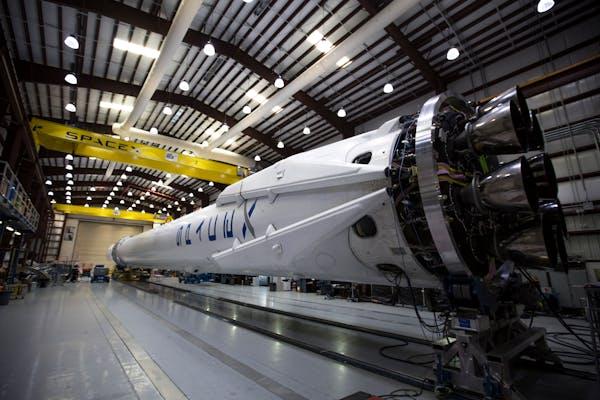
In the process of developing reusable rockets, technologies such as high - performance materials, 3D printing, advanced alloys, and autonomous systems have been put into practice, directly benefiting the aviation, automotive, manufacturing, and even medical industries. It can be said that every take - off of a rocket promotes technological progress on Earth.
05 The final battle: The fight for "space infrastructure hegemony"
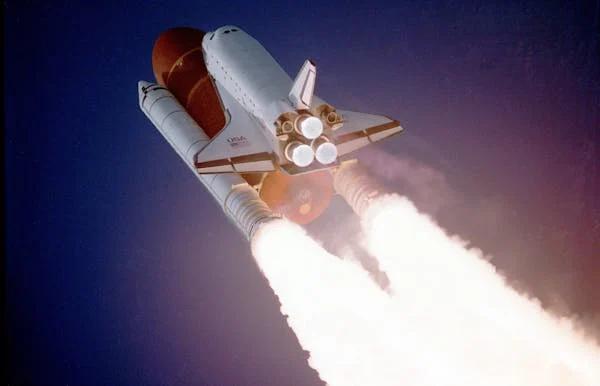
As reusable rockets significantly reduce the launch cost, the industry's competition focus has shifted from simple "carrying capacity" to how to use low - cost launches to build a "space service" model with long - term profitability.
Whether it is providing high - speed broadband for private aviation and ocean - going ships or building commercial space stations, SpaceX hopes to turn "rockets + Starlink" into the basic network of the space era and become the "infrastructure contractor" of the future orbital economy. The maiden flight attempt of the Zhuque - 3 also means that China's commercial aerospace has begun to have the technological foundation to challenge this monopolistic pattern.
Reusable rockets are not just technological innovations. They are catalysts for economic growth, international cooperation, and sustainable development, and the key to unlocking human "orbital ambitions". In this global "orbital sovereignty" battle, whoever can continuously innovate and master the power of "rapid reuse" will seize the future and dominate the new era of space commercialization and exploration.
Source of reference materials:
https://patentpc.com/blog/reusable-rockets-vs-disposable-rockets-market-trends-and-cost-reduction-stats
https://www.astro-politics.org/articles/from-one-launchpad
https://www.ainvest.com/news/spacex-accelerated-launch-cadence-implications-space-economy-2511/
https://www.global-aero.com/how-fully-reusable-rockets-are-transforming-spaceflight/
https://www.iiss.org/online-analysis/six-analytic-blog/2025/05/orbital-ambitions-leo-satellite-constellations-and-strategic-competition/
https://techgenyz.com/reusable-rockets-private-startups-challenging-spacex/
This article is from "Tencent Technology". Authors: Aerospace science popularization experts Li Liang and Helen. Editor: Zheng Kejun. Republished by 36Kr with authorization.