Unter falscher Identität in die Fangemeinde eines nach 2010 geborenen Influencers eingetaucht: Ich beobachte, wie Kinder „Daten machen“
When using the Internet, children sometimes feel that they have difficulty communicating with their parents. Compared with their parents, their way of perceiving and describing the world has already changed significantly.
Those who can still be called "children" today were all born after 2010. With them came the smartphone and the explosively growing mobile Internet world. Since then, the world can consist of various apps.
Zhang Yana, a 42 - year - old English teacher at a middle school, once logged into her 13 - year - old daughter's short - video account to find out what she watches on the two days a week when she is allowed to use the tablet. Zhang Yana knows that her daughter likes some bloggers and likes some fan - made videos. From an adult's perspective, these videos are not particularly well - produced; many of them are just a compilation of materials, but her daughter still seems to be very interested in these contents.
In this Internet ocean, the daughter actively moves back and forth between different videos and leaves some incomprehensible keywords, such as "contact deletion" (i.e., removing followers and canceling friendships), "add favorite ×× friends" (i.e., adding friends who like the same idol/role as oneself), and waits for like - minded people to "save" and recognize her.
This is the world that only belongs to children, with its own rules and power distributions. It is organized around a certain Internet star, like throwing a stone into the lake and the waves spreading outward. Children connect with, accept, and exclude each other. In the end, on the water surface remain the needs and concerns of children, which may have nothing to do with the Internet star itself anymore.
01
The Irresistible "Touching of the Internet"
In the stories of parents and children, the first time a child uses the Internet always starts with getting their own device. In fact, the post - 2010 generation has completely grown up with social media, and the actual time when they first come into contact with the Internet is often much earlier.
Mu Yan, a 14 - year - old student, had already mastered the usage rules of platforms like Douyin and Kuaishou before she had her own device and account. Since primary school, she was allowed to use her parents' phone from time to time, and in one or two hours, it was enough for her to find contents and bloggers that interested her.
Zhang Yana is rather conservative in deciding to allow her children access to the Internet because her family has seen many "children ruined by mobile phones". In her and her husband's plan, it is forbidden for their daughter to use the phone, and her daughter's access to the Internet world must be controlled to minimize the interference of Internet addiction.

On November 18, 2025, in Melbourne, Australia. The 12 - year - old Internet star Ava Chanel Jones is with her mother. According to local policy, starting from December 2025, the use of social media by people under 16 will be prohibited. (Photo /AFP/CFP)
This concern is not unfounded. The data study by Jane Twenge, a psychology professor at San Diego State University in the United States, has shown that the years 2011 - 2012, when smartphones were widely spread, were an important turning point for the mental health of teenagers. The depression rate, suicide rate, and the feeling of loneliness among teenagers suddenly increased in these two years.
The strict control rhythm of parents over the Internet was first disrupted by online classes. During the period of online classes, there suddenly emerged an unprecedented permission for children to have their own electronic devices. Qi Qi, who was in middle school at that time, also got her own phone in this situation. The school where Qi Qi studies not only requires students to be online during class but also requires them to keep the camera on during the night break.
Adults still try to strictly distinguish between "Internet time" and "study time" for children, but for children, this boundary quickly blurs.
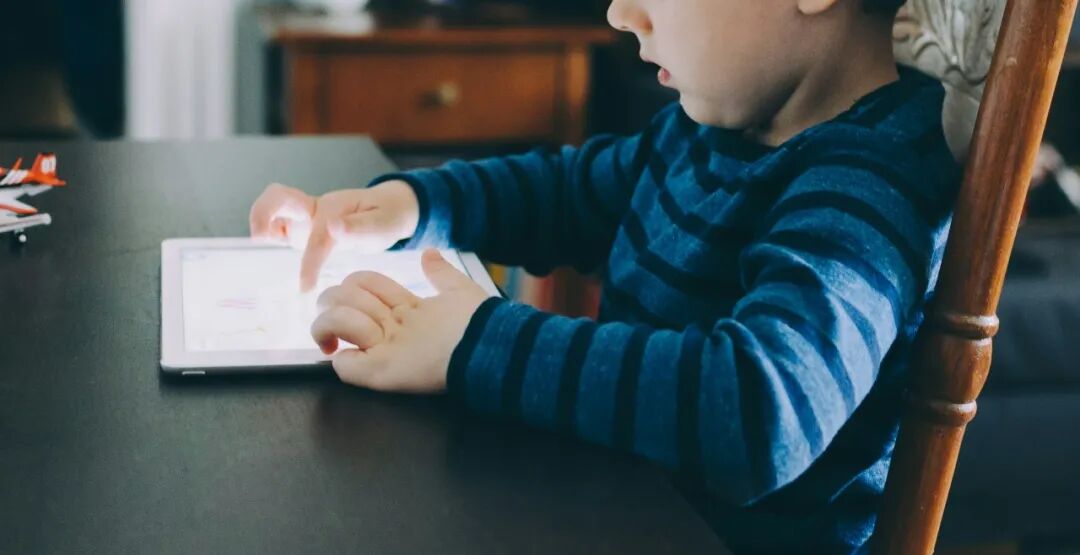
(Photo/Unsplash)
Mu Yan and Qi Qi, who got phones because of online classes, quickly registered their own social media accounts. In this way, they have an independent personality and identity in the Internet world and also their own undisturbed algorithm.
Although their expressions clearly show childish features from an adult's perspective, they are sure that no one in the Internet knows that there is a minor behind the account, and that their comments and works will be treated more seriously and fairly.
Mu Yan says that she believes in this fairness and is willing to spend energy on it. She runs an account for a fan group of dance students. Mainly, she collects and shares the news and daily lives of famous dance students and makes video montages. These dance students are about her age, and the number of their fans ranges from a few thousand to a few hundred thousand. Most of them are preparing for the entrance examination to the middle level of a professional dance school or have already passed it. In the six - year middle - school stage, they mainly learn dance courses.
Mu Yan has to select clips from the videos that these dance students post on social media, add music, texts, and effects, and create new montage videos from them. She also knows all the dance schools in the market. If there is not enough material from the dance students themselves, Mu Yan looks for their pictures in the accounts of their schools and teachers and inserts them into her montage videos.
Mu Yan has placed a montage video of a girl who was admitted to the middle level of a dance school this year at the top of her page. This is also one of the most liked videos on her page and has 136 likes. The girl has 250,000 fans, and the account is managed by her mother. The girl is also a star student of the dance school. The "short film about the journey to the small entrance examination" that Mu Yan made for her lasts 4 minutes. It starts with pictures of her when she was still a child and learning to dance, and then there are constantly new pictures and scene changes until the last updated clip before her "admission".
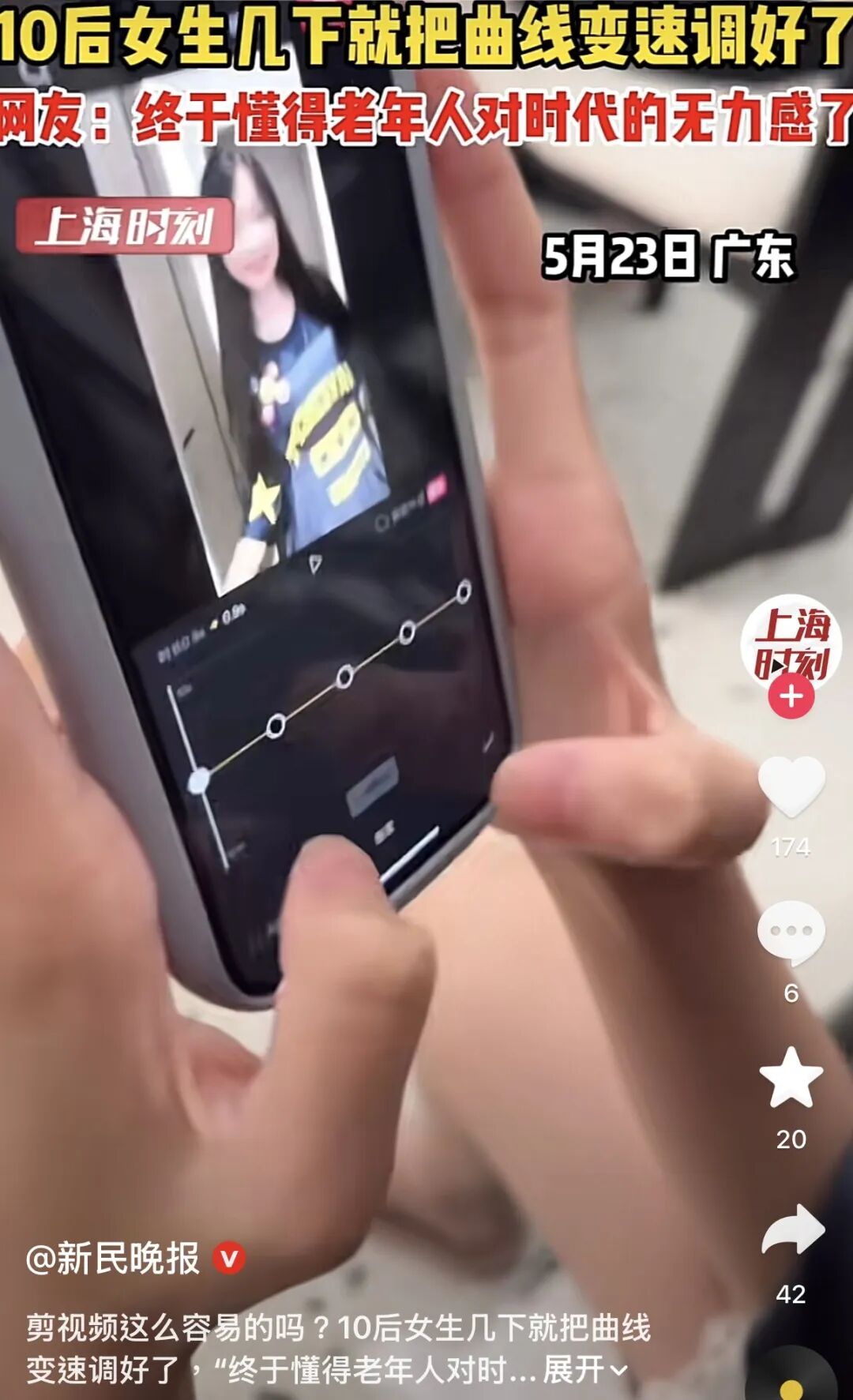
The post - 2010 generation masters video montage. (Photo/Xinmin Evening News)
Mu Yan explains in the texts of her videos in which time period each picture was taken. To write these short texts, she has to find important information from a huge amount of information, such as the bloggers' answers to fans and the comments of passers - by. Mu Yan says that it took her a whole day to edit this video.
This kind of growth - record videos of small bloggers is one of the most popular content types in the community. Qi Qi, who is now studying at university, is a fan of a small blogger with 600,000 fans. Qi Qi's account has been run since her high - school graduation and now has 22,000 fans. She publishes videos on Douyin and Xiaohongshu at the same time. At first, most of her videos were themed "growing up while dancing", and the number of her fans quickly increased to over a thousand in three months.
Maybe because she is already an adult, Qi Qi views the topics, fans, and reach more calmly and objectively. She says that the high reach of these growth videos is largely due to the fact that the small blogger himself is relatively well - known. On the other hand, some passers - by are also touched by the growth and determination of a little girl. Under the direct comparison of the montage videos, many people also sigh that "it costs a lot of money and effort to raise such a child".
The 14 - year - old Mu Yan doesn't seem to be so calm. In her story, the reach of her account depends on many factors: montage skills, production time, update frequency, and the maintenance of the relationship between her account and fans.
She emphasizes to me that each of her videos was "manually" created by her and that she searched for all the materials herself without the help of AI. But under each carefully produced video, Mu Yan leaves a comment like "The dream is hard, growth will be observed, and companionship will be promised". The style of these texts is similar and contains the common emojis of AI - generated texts, like open letters of support. Mu Yan also writes another comment and "marks" all her "mutual followers" and asks for likes and comments.
02
"Add Friends", "Personal Choice", "Contact Deletion",
The Social Grammar of Children
Mu Yan's account has 3,325 fans. Judging from the style of the account, most of them are her peers. The number of accounts she follows is even larger, namely 3,624. I ask her: "Can you keep track of all the updates of so many people?" Mu Yan says: "Because I go to school, most of them update their contents weekly, and besides, they 'mark' me when they post something new."
This seems to be a network - social rule that is widespread in this generation. Under Mu Yan's own videos, the most common comments are "I'm here" or "11", which mostly come from the accounts she has "marked" in the comments. This little thing to help the data of her "mutual followers" is a "reach - assistance agreement" between them.
But no one can say exactly how much this assistance agreement can influence the video data. Qi Qi mentions that the few "viral" videos she made on her account were all due to platform promotion, "Passers - by also saw them, and the videos hit the mood of the crowd".
Another rule in the Internet world of the post - 2010 generation is the strict protection of copyright. Mu Yan has directly written "Do not reproduce" in her ID, and each of her videos is protected by copyright. Another girl named Dang Dang has demanded on her homepage that Mu Yan publicly apologize to her because Mu Yan's secondary - creation video used a clip from a video of a dance - student blogger. This clip was published by the blogger in a group chat, but he has explained that he only allowed Dang Dang to use it.
Behind the assistance agreement lies an invisible tension. Under the video that Mu Yan spent a whole day producing, she has written three comments and "marked" more than 30 of her fans and friends: "Dear babies, give me likes, thank you." Among the many "mood - making comments", a comment stands out: "I've already liked it, don't mark me anymore", and there is an "explosion" emoji attached. Behind this friendly assistance agreement, there seems to be an inexpressible social pressure, and honest people will express their opinions openly.
I clicked on the homepage of the commenter and found that he is also a dance enthusiast. In contrast to Mu Yan, he always points the camera at himself in his videos and shows his basic skills or his trial days. The number of his fans is a little less than that of Mu Yan, but in his comment area, there are more people who friendly ask him: "Do you want to be friends?"
"Do you want to be friends?" means "Do you want to make friends?", and "You 1 I 2" means "The order of the friendship request is: You follow me first, and then I follow you back". Their language system is very simple and has not been captured and decoded by AI yet. Newcomers to this world have to invest some time and energy to understand it.
Under the video in which Dang Dang demands that Mu Yan publicly apologize, many people have commented: "Support you" or "Support fff" (to express support). Some have also commented: "Baby, you are my personal choice, I've listed you on my homepage." The so - called "personal choice" is a kind of network marking with a sense of belonging: The account owner publicly states which creator he likes the most and notes his position in his profile description.
The British anthropologist Robin Dunbar proposed the concept of the "Dunbar number" when studying human sociality, i.e., the upper limit of the number of social relationships that a person can maintain is 150, and the number of people with whom one regularly interacts is no more than 50. If this number is exceeded, the neocortex of the human brain can no longer function normally, and the quality of social interactions will decline overall.
