After the food delivery war, Meituan, JD.com and Alibaba have all set their sights on the kitchen sector.
One year after the food delivery war, internet giants have shifted to a new battlefield.
In November 2026, Taobao Flash Shopping, the instant retail platform under Alibaba, quietly hung up the orange signboard of "Jiwa Canteen" in four blocks of Qinghu, Dalang, Bantian and Minzhi in Shenzhen.
In fact, it is not new for internet giants to march into the back kitchen. A year ago, Meituan had already launched Raccoon Canteen; JD.com laid out 7Fresh Mini Kitchen, extending its business tentacles from food delivery transactions to the catering production link.
The specific practices of the three major platforms are different: Meituan attracts merchants to settle in by building a centralized shared kitchen; JD.com adopts the heaviest model, where the platform deeply controls links such as food ingredient procurement and cold chain transportation, and even provides equipment and cooking robots, while operation partners provide venues and are responsible for localized operation, and dish partners participate in dish R&D; Taobao Flash Shopping adopts the brand authorization model, where the platform outputs traffic and standards, grants merchants the right to use the "Jiwa Canteen" brand, and merchants take full responsibility for their own profits and losses.
Whichever approach is adopted, it shows that the giants are not willing to only act as intermediaries that facilitate transactions, but also deeply intervene in links such as kitchens and supply chains.
In the past, catering merchants and platforms mainly played games around commissions, traffic and promotions. But when the giants try to break into the back kitchen, new changes are taking place in the operation of merchants.
01
Why has the kitchen become the new battlefield?
Why are internet giants collectively targeting the kitchen? The fundamental reason is that the industry competition logic is changing, and the price war that relies on burning money for subsidies to seize users will eventually be unsustainable.
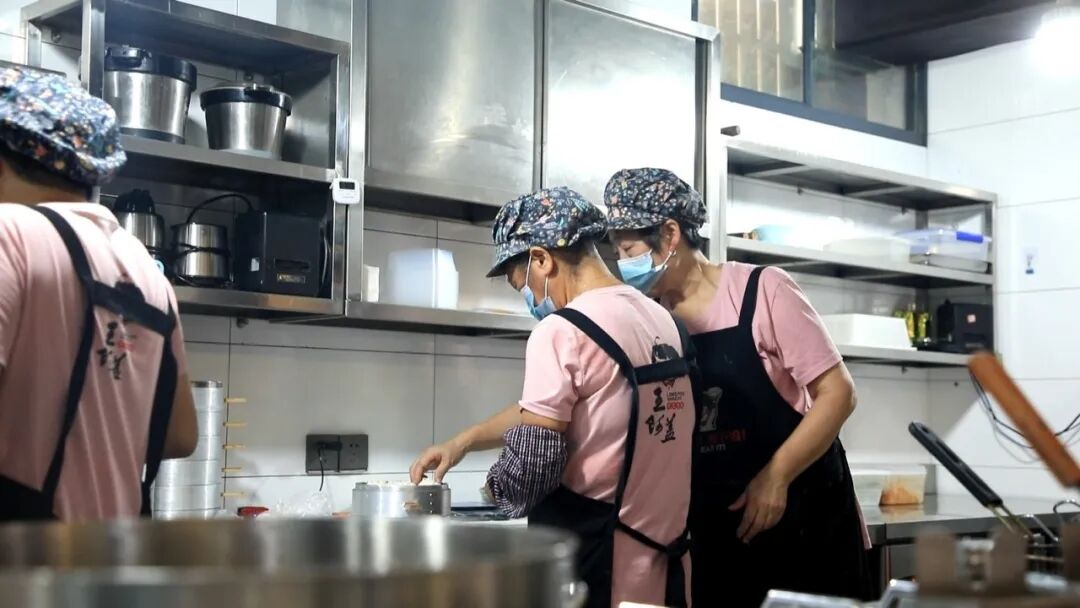
The battlefield of internet giants has shifted to the back kitchen. (Source: Internet)
According to estimates from HSBC research report, Alibaba's instant retail business lost 87 billion yuan from the second quarter of 2025 to the first quarter of 2026. Meituan and JD.com lost about 44 billion yuan and 42 billion yuan respectively in the past year due to the food delivery war.
After investigating more than 40,000 catering merchants, the research group of Fudan University also found that even in the month with the largest platform subsidy, the order volume of merchants increased by 7%, but the total profit decreased by 8.9%. In March this year, with the intervention of regulatory authorities, the price war among the three major platforms was finally stopped.
With the deepening of competition in the food delivery market, platforms share merchants and riders, and differentiation gradually disappears. All platforms are eager to extend to the upstream of the catering industry to find new increments.
At the same time, with the increasingly strict supervision of food safety, the compliance cost of food delivery supply platforms is also increasing.
In April 2026, seven platforms were fined and confiscated 3.597 billion yuan for the series of "ghost food delivery" cases, involving more than 67,000 ghost shops. This is the largest fine since the implementation of the Food Safety Law. This means that platforms can no longer shirk their responsibilities as intermediaries for transaction matching as in the past, and must assume the responsibility of supervising settled merchants.
For consumers, the food delivery experience depends not only on the delivery speed and price, but also on the quality of the meal itself. If the food output capacity, ingredient quality and operation level of merchants are uneven, the platform cannot guarantee the consumer experience.
Therefore, in order to build users' trust in the platform, hold their ground in the fierce competition and rebuild their own advantages, the platforms have unanimously attacked the upstream. Through centralized kitchens, unified brands, supply chain integration and standardized management, the platforms try to reorganize production, and reduce the uncertainty of food delivery business to a certain extent.
In the past, catering merchants purchased, processed and stored ingredients separately, and there were certain differences in the procurement scale, suppliers and management capabilities of different stores. But now, JD.com uses its own supply chain resources to send meat and pre-processed vegetables to stores after factory pretreatment, testing and cold chain transportation, and then the stores make the meals. Meituan centrally allocates venues and infrastructure by building shared kitchens, and incorporates supply chain services into its layout.
In the past, it was difficult for platforms to grasp the actual production situation of settled merchants. But now, by building its own Raccoon Canteen, Meituan emphasizes open and transparent kitchen, food safety diary and on-site management. JD.com strengthens food safety management and enhances user trust through back kitchen live broadcast, food ingredient supplier publicity and supply chain screening.
More importantly, platforms can build their own brands and tap consumption increments by building kitchens.
JD.com has transformed its supply chain capabilities into the supply of high-quality meals of 7Fresh Mini Kitchen; Meituan uses Raccoon Canteen to attract scattered catering merchants to settle in centrally; Taobao Flash Shopping has expanded the supply of affordable meals through Jiwa Canteen.
Of course, the three giants are all targeting the kitchen, and there are their own strategic considerations behind it.
As the leader in the food delivery industry, Meituan's top priority is to stabilize its basic market. By providing the "infrastructure" of Raccoon Canteen, it tries to enhance consumer trust with "open and transparent kitchen", and also shows its determination to crack down on ghost food delivery.
JD.com's ambition is to transform the catering industry with its supply chain capabilities, and use the provision of affordable meals with controllable quality as a weapon for differentiated competition, to divert traffic to its instant retail ecosystem.
Taobao Flash Shopping tries to attract traffic in the scenario of rigid demand for catering with a lighter model and lower trial and error cost. After all, in the past, consumers' perception of Taobao Flash Shopping was concentrated on supermarkets and fresh food. If it does not expand the supply of rigid demand meals in time, this part of traffic will be lost to competitor platforms.
So the question arises, when the three giants start to layout the kitchen, what does it mean for catering merchants?
02
Platforms run the kitchen: What do catering merchants get?
When internet giants march into the kitchen, it is easy to remind people of competing for profits with the people. But for small and medium-sized catering operators, models like Raccoon Canteen and 7Fresh Mini Kitchen do provide another choice besides traditional store opening — merchants have the opportunity to open stores at low cost with the help of platform resources.
First, the operation threshold and operating cost of some stores have the opportunity to be reduced.
For the operation of traditional catering stores, only the preliminary work of finding shops, decorating kitchens and purchasing equipment requires a large amount of capital. In the later stage, it is also necessary to recruit staff, purchase ingredients, apply for certificates and conduct daily management.
Raccoon Canteen reduces the cost of catering operators in rent, water and electricity, and decoration by building shared kitchens. According to the investment promotion information of Raccoon Canteen, all kinds of catering merchants can apply for settlement as long as they meet the food safety requirements, accept transparent operation and relevant transformation.
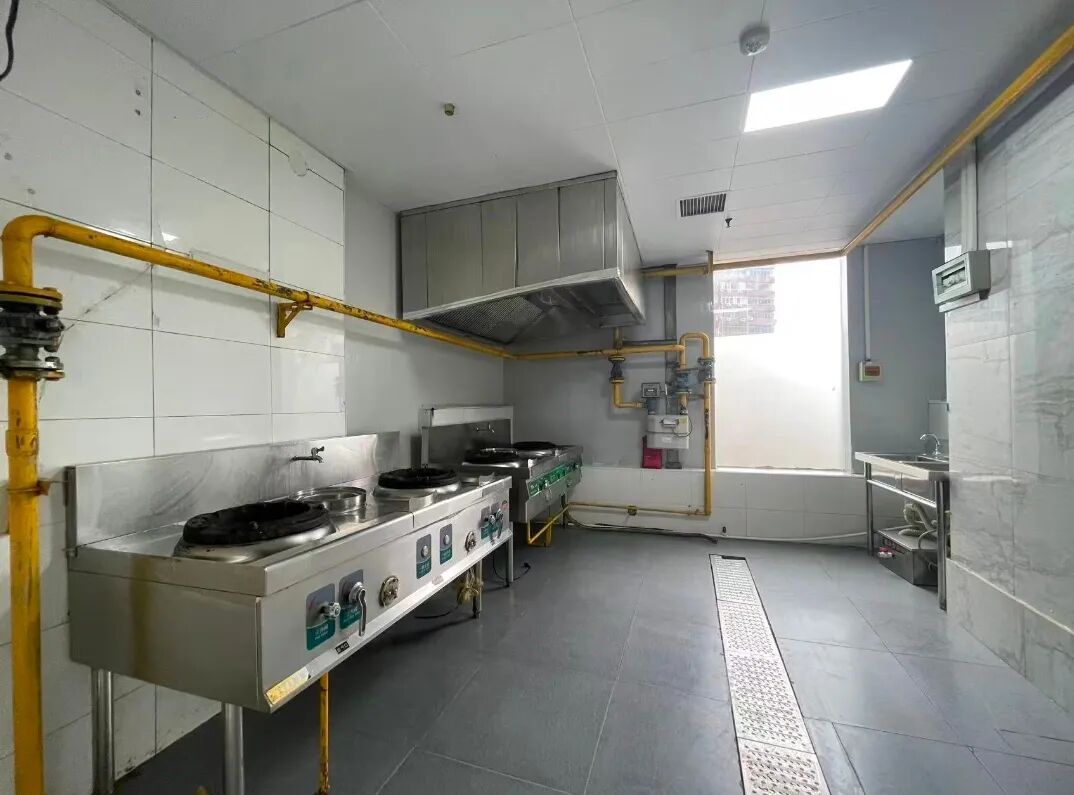
Catering merchants can directly use the infrastructure provided by the platform. (Source: Xiaohongshu @ Meituan Raccoon Canteen Investment Promotion)
Second, platform brand and traffic resources may bring new order opportunities.
Many small and medium-sized catering merchants lack popularity and operation capabilities, so even if their dishes are of high quality, they cannot rank high on the platform. The launch of a unified brand by the platform helps to improve the exposure of small and medium-sized catering merchants.
Meituan officially disclosed that one month after the launch of Raccoon Canteen, the search volume of relevant keywords increased by more than 40 times month-on-month, the overall exposure of settled merchants increased by 164%, and the order volume increased by 60%. It can be seen that the platform kitchen does have the opportunity to bring new traffic entrances for settled merchants.
The sales volume of Jiwa Canteen tested by Taobao Flash Shopping is also considerable. As of press time, the Taobao Flash Shopping platform shows that the Dalang store and Bantian store have monthly sales of over 9999, the Minzhi store has monthly sales of over 7000, and the Qinghu store has monthly sales of over 5000.
Third, relying on the platform's supply chain and standardized operation capabilities, the procurement cost of catering merchants has the opportunity to be reduced.
In the past, small and medium-sized catering merchants had limited procurement volume, so it was often difficult to obtain stable purchase prices. Fluctuations in food ingredient prices and temporary out of stock of suppliers will affect daily operation. The platform kitchen can integrate procurement demands, improve bargaining power through the supply chain system, and help merchants reduce procurement costs.
03
The other side of settling in the platform kitchen
A question worth thinking about for catering merchants is: after settling in the platform kitchen, can merchants still make decisions about their own business?
In actual operation, the platform is very likely to fall into the role of both athlete and referee.
In the past, the platform did not participate in business activities, and at least could guarantee a neutral identity. When the three major platforms all try to run the kitchen, who can ensure the fairness and impartiality of the platform in traffic distribution, search ranking and subsidy inclination?
Even if Meituan states that Raccoon Canteen will resolutely not operate on its own and will not compete with merchants, who can be sure that the food delivery stalls in Raccoon Canteen and ordinary restaurants are treated equally by the algorithm?
Not only that, due to the intervention of the platform, the game of operation responsibilities between small and medium-sized merchants and large platforms has become more complicated.
For example, under the brand authorization model of Jiwa Canteen, if consumers encounter food safety problems, how will the responsibilities be divided between the platform and the actual operator?
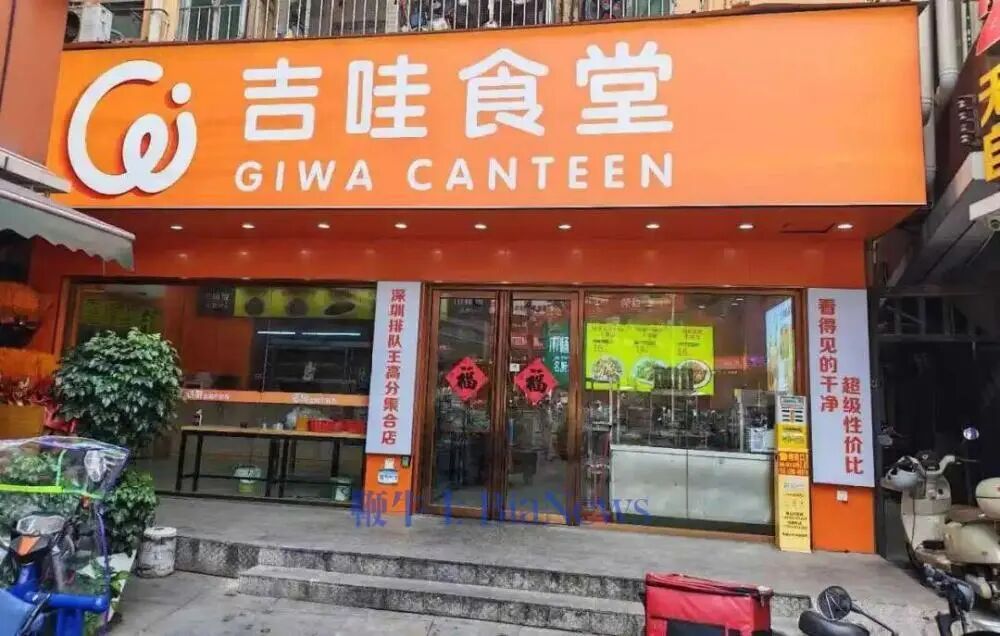
Jiwa Canteen. (Source: Internet)
For catering merchants, the growth of orders does not mean the growth of net profit.
After investigating Shenzhen merchants in the food delivery war, Yangcheng Evening News found that for a 40.88-yuan food delivery order, after deducting activity funds, technical service fees and delivery fees, the actual amount received by the merchant was 23.93 yuan, while the cost of ingredients was nearly 20 yuan. Another sugar water shop had a total monthly food delivery product amount of more than 8000 yuan, and the estimated actual income after deduction was only 3296 yuan. These operating data of non-platform kitchen merchants are enough to illustrate the common problem of catering merchants: more orders do not necessarily mean more profits.
Platform kitchens cannot avoid this problem either. Whether shared kitchens can really reduce comprehensive operating costs, whether brand authorization can bring enough orders, and how much is left after dish sharing and relevant fees are deducted, all depend on the actual operation situation.
The more critical problem is that the users accumulated by catering merchants in the platform canteen may not belong to themselves.
For catering merchants, the platform brand can indeed reduce the customer acquisition threshold, but consumers' brand perception will also accumulate more on the platform brand. In the long run, it is actually not conducive for merchants to accumulate stable repurchase groups and establish brand awareness.
Take Jiwa Canteen as an example. The stores adopt unified brand identification. When consumers search and purchase on the platform, the first thing they see is Jiwa Canteen, not the specific catering operator behind it. If the cooperation ends, can merchants continue to use the original dishes, formulas and operation resources? Can the order data in the platform background be taken away? These remain to be confirmed.
If merchants mainly rely on the platform brand to obtain orders during the cooperation period, then after the cooperation ends, merchants may not have their own competitive advantages.
04
Conclusion
Although the three internet giants have collectively targeted the upstream supply of the catering industry and tried to change the industry's production, kitchen construction is ultimately a hard bone to crack. At present, the actual number of store constructions has a significant gap with the platform's goals.
In July 2025, Meituan officially launched Raccoon Canteen and announced that it will invest in the construction of 1200 stores nationwide in the next three years. As of now, only 28 stores have been launched. In the same period, JD.com announced that it will build more than 10,000 7Fresh Mini Kitchens in the next three years, and there are only more than 100 operating stores so far; as for Taobao Flash Shopping's store opening plan, it has just started in November 2026.
In the short term, platforms are full of ambition to build kitchens. However, whether each model can work depends on whether catering merchants can really obtain empowerment from the platform in terms of traffic, brand and supply chain, and get steady returns.
This article is from the WeChat Official Account "BrandPrism", written by Li Qiao, edited by Tian Tian, and published with authorization by 36Kr.