Zheng Yuanjie uses AI to bring his fairy tales back to life, while actors have their faces "stolen" by AI to harvest online traffic.
Zheng Yuanjie, known as the "King of Fairy Tales", is back with AI animated films.
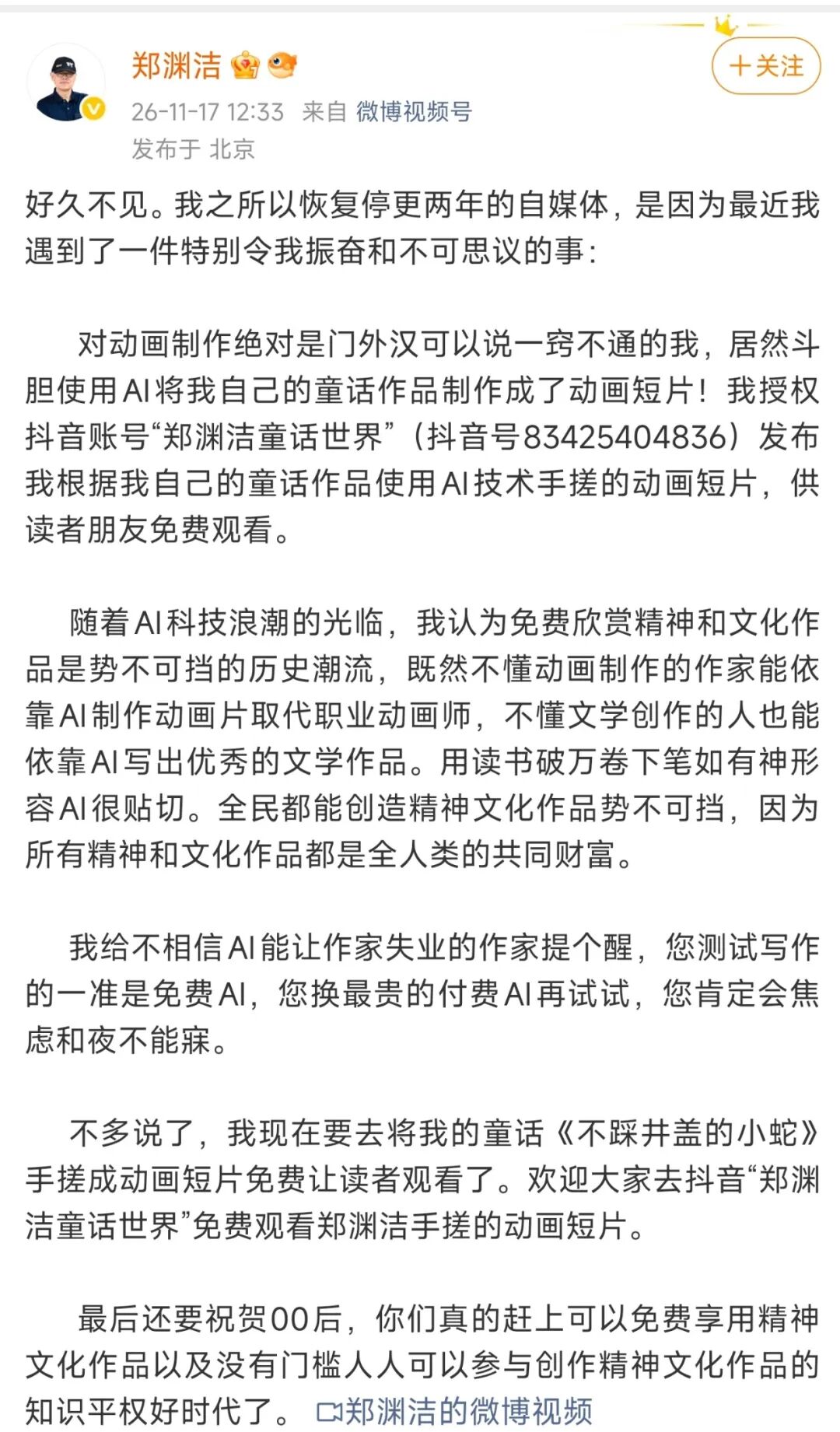
Image source: Weibo
On November 17, Zheng Yuanjie announced his "career shift": he will use AI to handcraft short videos from the fairy tales he wrote in the past, authorize the Douyin account "Zheng Yuanjie's Fairy Tale World" to release these works, and make them free for all readers to watch.
While original creators bring AI into their studios to rework their own works, many familiar faces and voices have already "started production" elsewhere without signing any authorization agreement.
The other side of AI technology development has let the public see that the faces of actors from the 1987 edition of *A Dream of Red Mansions* were misappropriated without permission, and were tampered into the short drama "Daiyu's Rebirth and Revenge". Some actors even saw their cloned version in the early morning, selling essence liquid in the live streaming room.
This throws out a realistic question: While encouraging technological innovation, how to protect everyone's face and voice from being arbitrarily taken as raw materials for AI content production.
01
"The 71-year-old will keep working hard"
Let's first focus on Zheng Yuanjie's widely discussed AI animation attempt.
As early as October 24, the Douyin account "Zheng Yuanjie's Fairy Tale World" began to update. Those fairy tales that originally lay in the pages of books are being made into animated short films one by one by him with AI video generation tools.
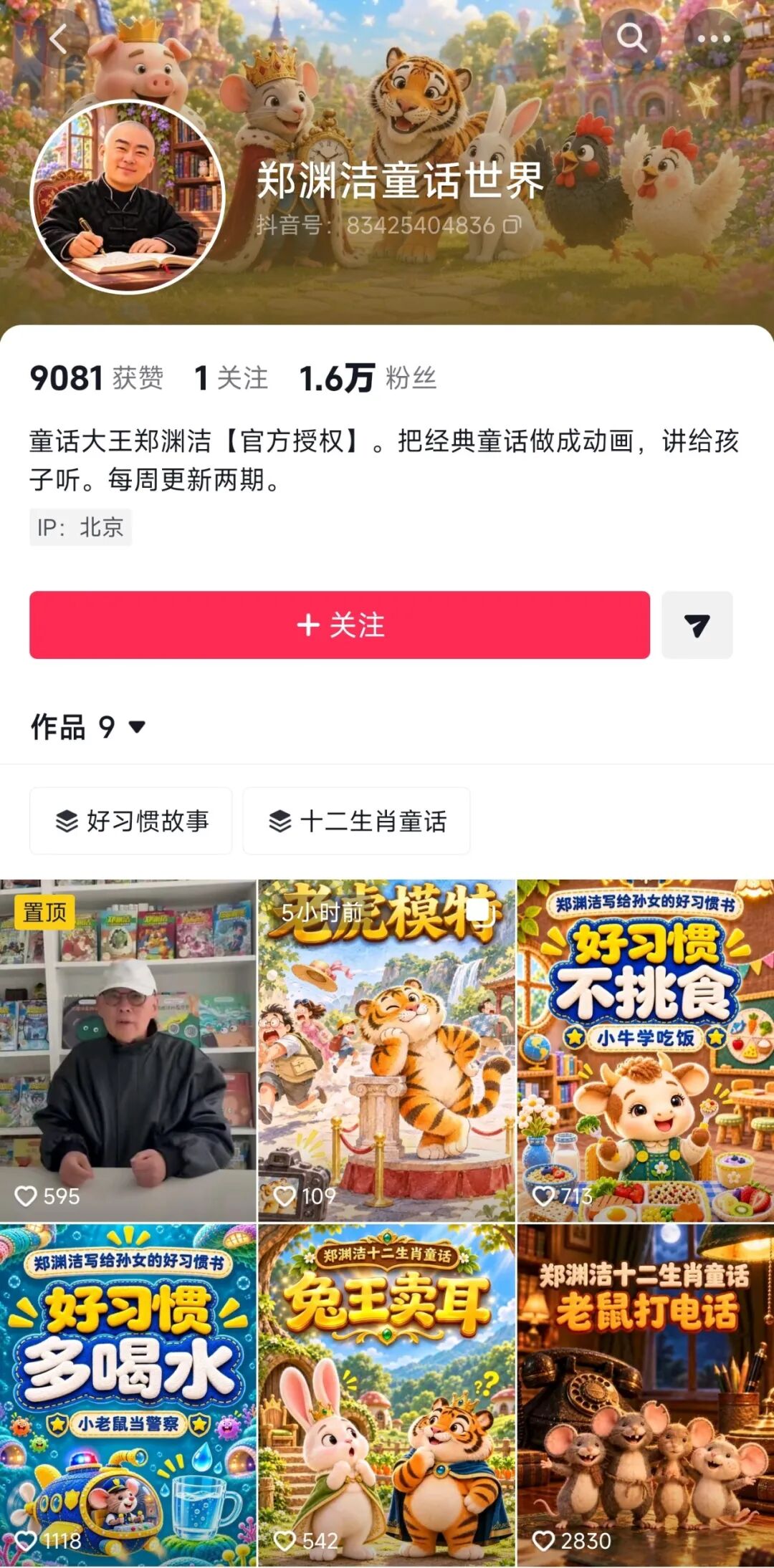
Image source: Douyin
At present, the account has about 16,000 followers, and two series of videos, *Good Habit Stories* and *Chinese Zodiac Fairy Tales*, have been launched. Fairy tales such as *Black Hen White Hen* and *Mouse Making a Phone Call* have been made into animations of about 4 to 5 minutes per episode.
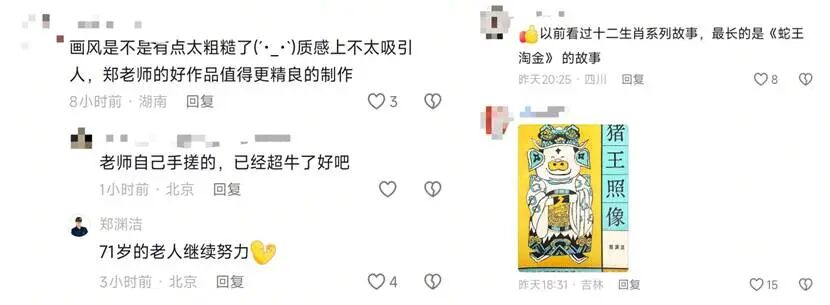
Image source: Douyin
After these animations were launched, they sparked a wave of collective nostalgia. In the comment section, some readers posted the covers of their long-stored old books, counting the most impressive chapters in the Chinese Zodiac series. However, some netizens pointed out that the style of the AI animations is relatively rough and the texture is not exquisite enough, Zheng Yuanjie himself also appeared in the comment section and responded: "This 71-year-old man will keep working hard."
Zheng Yuanjie's use of AI to make animations is not a whim test. He has long paid attention to the impact of AI development on literary and artistic creation.
In February 2023, in his reply to Zhou Ping, a primary school student who wrote to him 35 years ago, he publicly talked about the impact of ChatGPT on the writing profession for the first time.
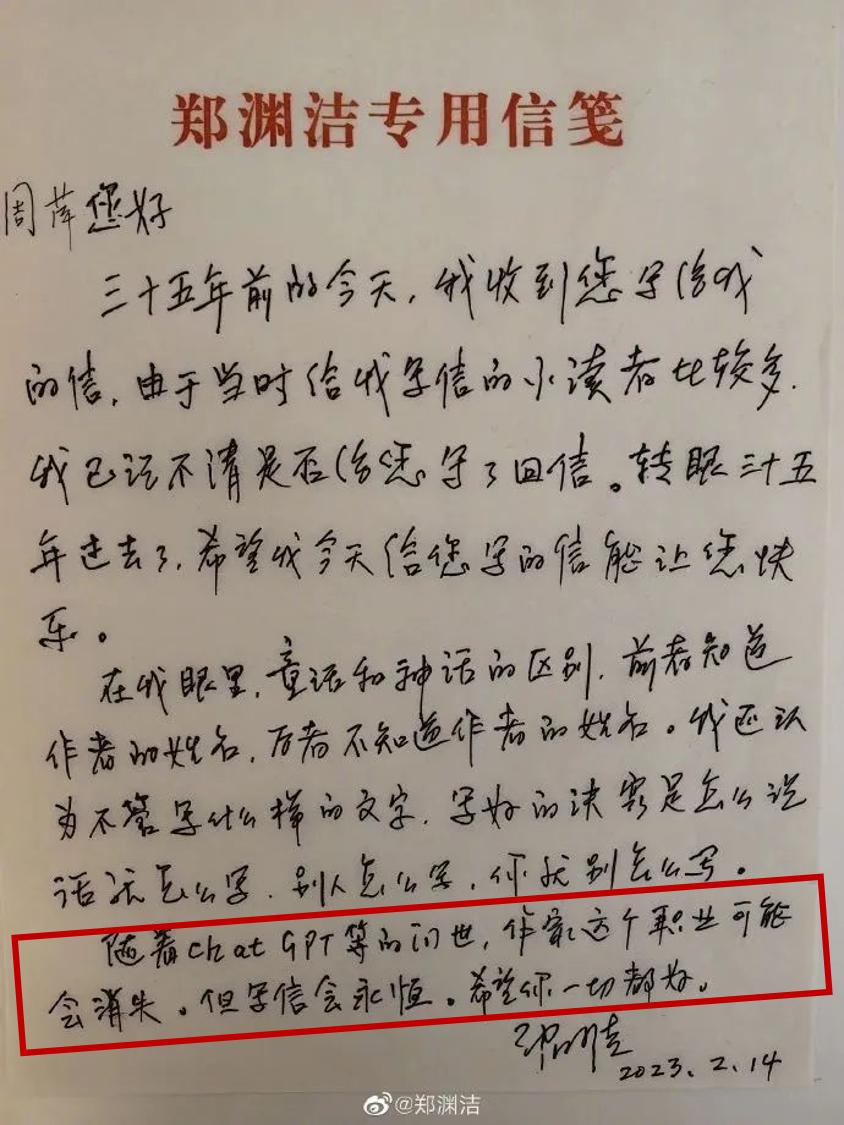
Image source: Weibo
He confessed in the letter that "With the advent of artificial intelligence such as ChatGPT, the profession of writer may disappear, but writing letters will be eternal." That was his first response to the AI wave from the identity of a writer.
In an interview in February 2025, Zheng Yuanjie said that he gave AI instructions to write fairy tales for the first time. He joked that he had imagined today's AI era in his works as early as 30 years ago. This time, he specifically gave AI instructions to ask it to imitate his writing style and write a story with Pipi Lu as the protagonist, describing all the scene settings, character appearances and character relationships in great detail.
AI only took 4 seconds. After reading the generated story, Zheng Yuanjie admitted: "I can't write better than the AI version of Zheng Yuanjie."
But he did not deny creation itself because of this. He judged that the AI era is bound to come, and the fact that writers will be replaced "may make some people anxious". What humans can do is "do things that AI cannot do". In his eyes, that thing is imagination.
Now, the 71-year-old Zheng Yuanjie announced his "career shift", using AI to turn the fairy tales he has written for decades into short films and release them to readers for free, which is logical. This time AI is not taking over writing, but the imaging link that he could not complete in the past.
02
Directors embrace AI and also face the realistic anxiety of the industry
Directors in the film industry are also responding to the AI wave in their own ways.
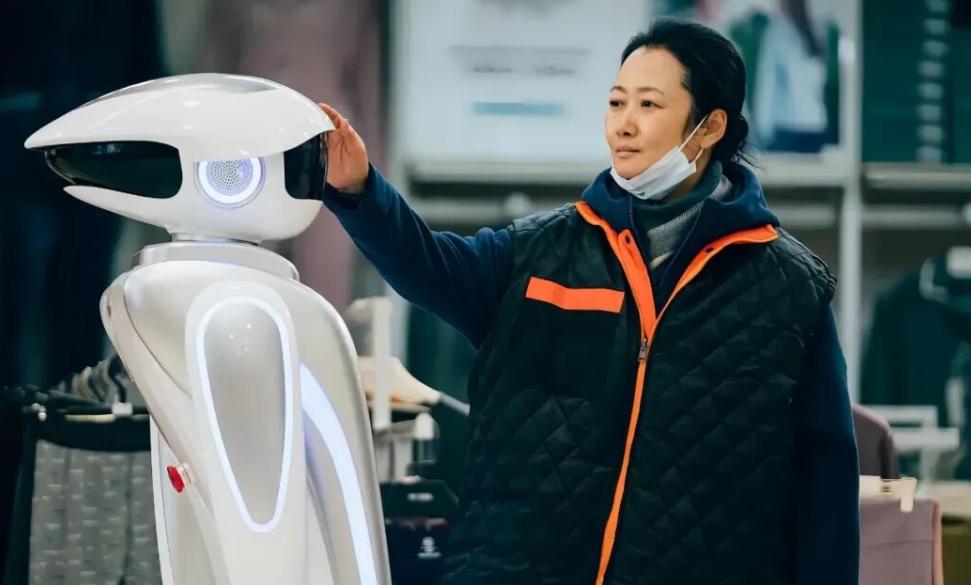
The still of Jia Zhangke's film *Ash Is Purest White*, Zhao Tao plays Qiaoqiao in the same frame with an intelligent robot. Image source: Internet
Jia Zhangke, the sixth-generation director famous for *Xiao Wu* and *Still Life*, did not use AI for special effects in *Ash Is Purest White* in 2024. Instead, he let the heroine meet a food delivery robot at the entrance of the supermarket. The robot scans her expression, says she "looks sad", recites a famous saying to comfort her, but can never understand the real loneliness of a living person.
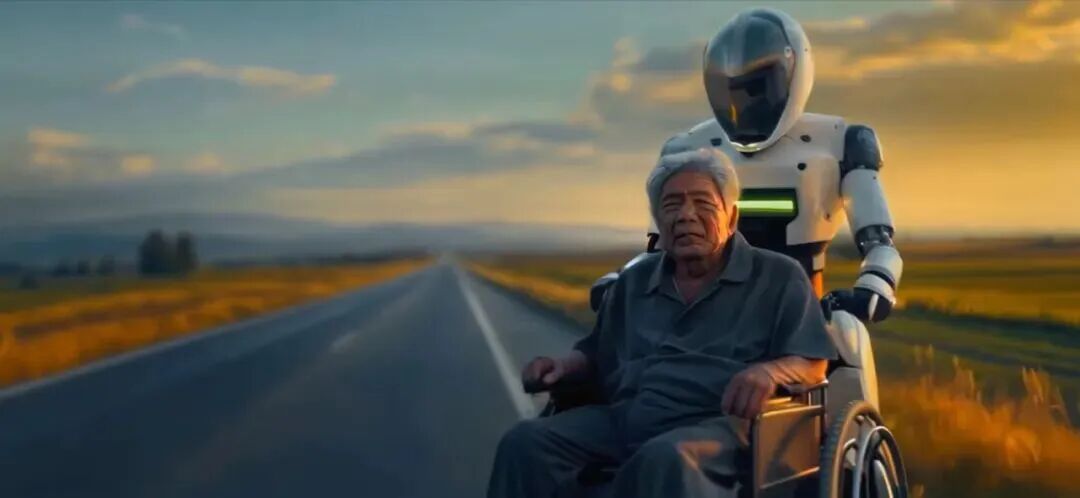
The AIGC short film *Wheat Harvest*. Image source: Internet
At that time, he talked more about how technology enters the lives of Chinese people. However, at the end of 2024, his AIGC short film *Wheat Harvest* was launched, and robots really walked into the wheat fields of Fenyang, Shanxi.
The 6-minute-14-second film is not long, but it made him start to discuss AI lens language, character consistency and spatial stability, and also made him realize that creators need to learn how to get along with this new language.
Jia Zhangke did not stop at a single attempt. In February 2026, he launched *Director Jia Dance* as a producer. Two AI-generated versions of himself appeared on the screen: one retained stuttering and a fixed smile, while the other was clear and stable enough to be close to real shooting.
Jia Zhangke does not agree to regard the relationship between AI and live-action films as a life-and-death substitution. He emphasized that real shooting, special effects and AI generation are not mutually substitutive, but complementary creative methods. The most touching moments in movies will always come from on-site accidents, real physical sensations and human judgment.
Director Zhang Yimou's latest statement has hit the survival anxiety of the film industry.
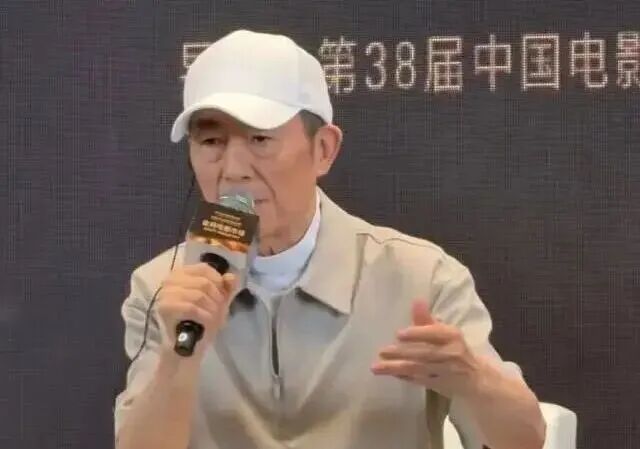
Zhang Yimou speaking at the forum of the 38th China Film Golden Rooster Awards. Image source: Internet
In the dialogue of the Golden Rooster International Film Festival on November 7, he gave his judgment: AI is a very good tool, but it puts the entire film industry under great pressure.
He observed that the most intuitive change took place at the audience's attention end. In airports and high-speed railway stations, people are scrolling down AI short dramas and short videos that are free or even attract new users with subsidies. In contrast, theater movies require audiences to pay and go to the cinema specially.
Zhang Yimou could not help asking: When AI content can compete for attention at zero cost, will audiences still be willing to go to the cinema?
Zhang Yimou's concerns go far beyond box office. He judged that AI-generated images will reach a level of authenticity that can pass for real in three to five years. At that time, ordinary people can complete the work of screenwriters and directors with the help of tools, and movies will no longer be the elite art of a few people.
But what follows is a vacuum of a whole set of industry rules. Should film festivals accept AI feature films? Can theaters screen AI works? What standards should the evaluation system use? There are no answers to these questions so far.
From this point of view, AI has become an unavoidable variable in current literary and artistic creation. As the creation threshold continues to be lowered, the protection of personal portrait rights, voice rights and the copyright of classic works is facing unprecedented severe challenges.
03
Faces and voices have become unauthorized production raw materials
In mid-November, an AI short drama called *Dreaming Back to the Red Chamber* was serialized on video platforms.
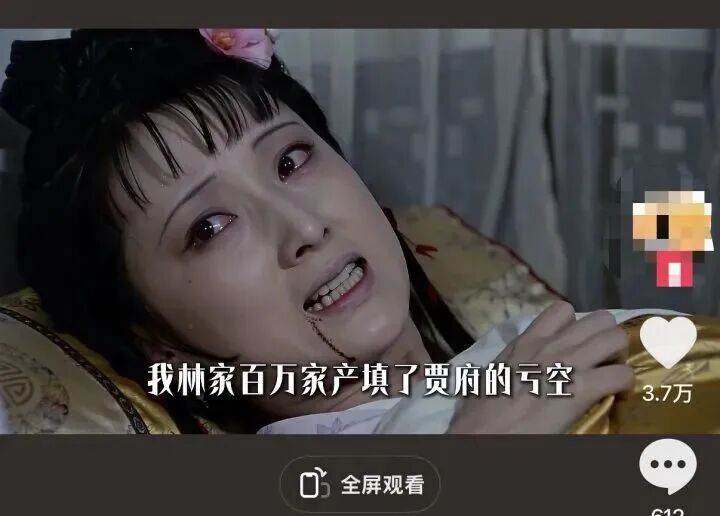
Still of *Dreaming Back to the Red Chamber*. Image source: Internet
It uses the footage of the 1987 edition of *A Dream of Red Mansions* as the foundation, extracts the facial features and performing charm of actors such as Chen Xiaoxu, Zhang Li, Deng Jie and Li Ting, and synthesizes them into the plot of "Daiyu's Rebirth and Revenge". In the drama, Lin Daiyu slaps Xue Baochai in the street, and Grandmother Jia kneels down to Daiyu. The original work has been rewritten into a satisfying domestic struggle story.
On November 16, Zhang Li, the actor who played Xue Baochai, spoke publicly: I have never authorized any institution to use my portrait for AI synthesis, and I reserve the right to pursue legal responsibility.
Li Haiquan, a lawyer from Shanghai Shenyihe Law Firm, told *Phoenix AI Research Institute* that actors can claim portrait rights and performer rights. The former prohibits forging and using their portraits with AI technology, and the latter includes indicating the identity of the performer, protecting the performance image from distortion, and permitting others to copy and spread their performances.
Although the original work *A Dream of Red Mansions* has long entered the public domain, modern annotated versions, sequels and scripts are still under protection. The producer of the 1987 edition of *A Dream of Red Mansions* enjoys the copyright of this audiovisual work, and can pursue the responsibilities of copying, adaptation, information network dissemination, as well as distorting the original work and destroying the integrity of the work.
Behind these rights is a very specific account.
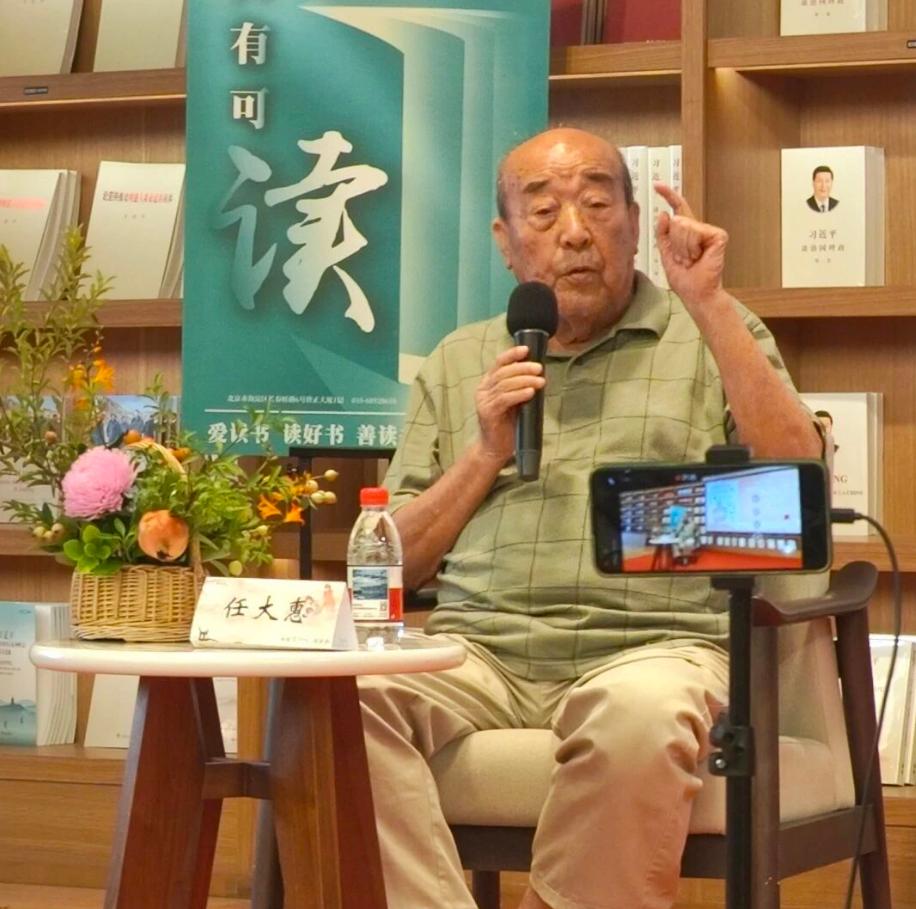
Ren Dahui, the production manager of the 1987 TV series *A Dream of Red Mansions*. Image source: Internet
The 1987 edition of *A Dream of Red Mansions* was shot for three years, with a total investment of about 6.9 million yuan for 36 episodes, less than 200,000 yuan per episode. Most of the budget was spent on on-site shooting at 219 scenic spots in 10 provinces and cities across the country, on more than 2,700 sets of hand-made costumes, and on the 13 pieces of music written by Wang Liping in one year and nine months.
Today's top long dramas are more expensive. The total investment of a S+ costume drama is often between 300 million and 800 million yuan, and the production cost per episode ranges from hundreds of thousands to millions of yuan. Actors, venues, costumes, props, post-production, every link is a hard expense.
However, the producer of *Dreaming Back to the Red Chamber* does not need to hire actors or build sets. It can update dozens of episodes after running the model once, and the actor himself saw his "new drama" for the first time on the hot search list.
How low is this threshold? Some media have tested that a 41-second AI celebrity video can be customized with a deposit of 40 yuan, and all of them passed the review after being posted on multiple video platforms.
The public quotation for customizing a reusable digital human image is 1500 to 2000 yuan, and it can be called infinitely later.
The price of compliant face authorization is mostly 100 to 500 yuan per sheet. Professional actors are priced according to the