From being the darling of the capital market to bankruptcy and restructuring within four years, what exactly went wrong with the bicycle business?

The European bicycle industry has entered a "cold winter", while the domestic market presents a more complex mixed landscape of ups and downs.
As 2026 is drawing to a close, the global bicycle industry seems to have not yet stepped out of the cyclical trough. From the "hard to get a single bicycle" situation in 2022 to the current "big test of destocking", only four years have passed in between. During the process of the bicycle industry going through the cycle, some enterprises have already collapsed.
In August this year, Accell Group, the leading European bicycle enterprise, announced the launch of bankruptcy proceedings. At its peak, Accell owned more than ten well-known brands including Batavus, Sparta, Haibike, Ghost, Lapierre, and Raleigh.
Recently, there has been the latest news about the Ghost brand. According to the original plan, the Ghost brand previously announced that it would cease operations as no suitable acquirer had been found, and the remaining bicycle inventory would be sold as a package to a single distributor.
But a few days later, a turnaround emerged in the shutdown matter — Singapore's DuTech Group funded the acquisition of the Ghost brand and all its related intellectual property rights. This group is a company established to acquire Accell's German assets, and it has already taken over the two major bicycle brands Haibike and Winora before.
The bankruptcy of Accell Group and the successive sale of its brands are only a microcosm of the in-depth adjustment experienced by the global bicycle industry. From the skyrocketing demand and enterprise capacity expansion during the pandemic period to the inventory backlog and price competition after the consumption boom faded, the global bicycle industry is paying the price for the previous round of radical expansion.
This adjustment also took place in the Chinese market. According to data from the China Bicycle Association, from January to June 2026, the output of bicycle enterprises above designated size decreased by 3.9% year-on-year, and the output of electric bicycle enterprises above designated size in the first half of the year decreased by 19.5% year-on-year. Although the difficulties and their causes faced by different markets are not exactly the same, the slowdown of industry growth and intensified market competition have become the reality that bicycle enterprises have to face.
When the former industry giant goes bankrupt and its well-known brands are split and sold, this cyclical adjustment of the global bicycle industry is obviously far more than just destocking. A reshuffle involving enterprise survival, brand value and industry pattern is continuing to unfold.
Brand shutdowns and declining revenue, the European bicycle industry enters "cold winter"
In 2022, the global bicycle market was still immersed in the consumption boom spawned by the pandemic. At that time, the demand for e-bikes in Europe grew rapidly, and tight supply chains and extended delivery cycles became the norm of the industry.
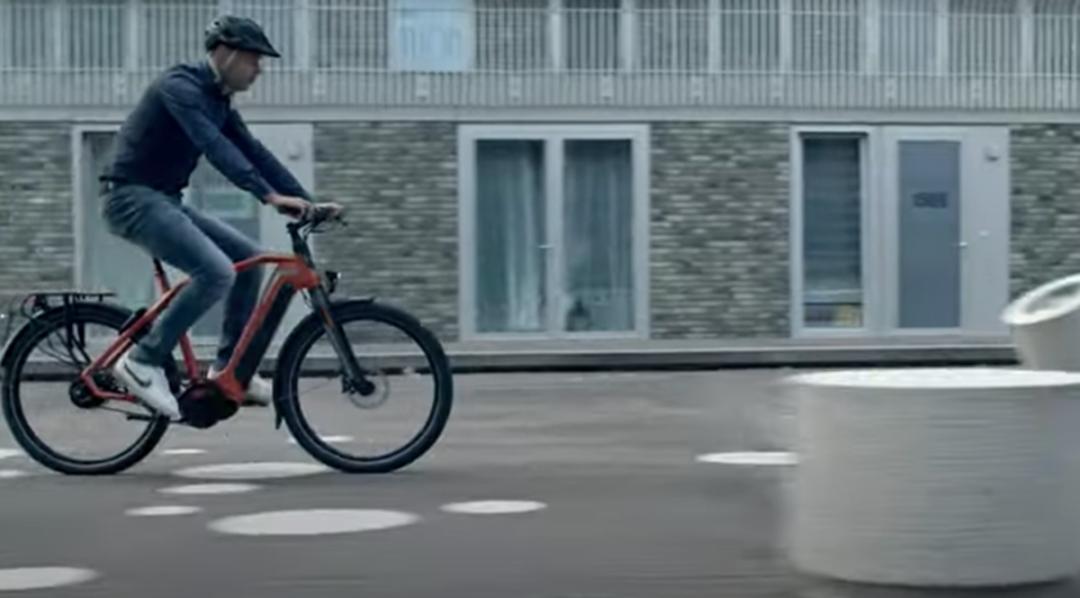
It is also under this background that KKR, the US private equity giant, joined hands with the investment institution Teslin to acquire the Dutch bicycle group Accell at a price of 58 euros per share, totaling about 1.56 billion euros, betting on the long-term growth of the European bicycle market.
However, this acquisition made at the industry high soon encountered a cycle reversal.
As the pandemic dividend faded and consumer demand returned to normal, the orders and production capacity previously increased by enterprises to cope with the situation of supply falling short of demand were instead transformed into a large amount of inventory. In order to recover funds, brands and distributors continued to cut prices for promotions, squeezing profit margins.
According to a report by the British Financial Times, Accell's revenue in 2023 decreased by about 10% year-on-year, and combined with factors such as inventory impairment, its performance turned from profit in the previous year to large losses.
The high-leverage acquisition further amplified the operating pressure. In 2024, Accell had to start debt restructuring with creditors; in February 2025, the company announced the completion of capital restructuring, reducing the operating group's debt to about 800 million euros. However, debt reduction did not reverse the market downturn. In February 2026, KKR handed over control of the company to creditors; by August, Accell's Dutch entity was granted a moratorium on payment, and many subsidiaries in Germany also applied to initiate bankruptcy proceedings.
From a growth target in the eyes of capital to having to split and sell brand assets, Accell only took four years.
It is not only Accell that has encountered the cold winter. The Dutch e-bike brand VanMoof declared bankruptcy as early as 2023; the German mountain bike brand YT Industries entered bankruptcy reorganization proceedings in 2025. Even Canyon, which has strong brand appeal, saw its revenue drop by 7% year-on-year in 2025, and announced plans to cut up to 320 jobs in early 2026.
When the decline in overall industry demand and inventory pressure overlap, the growth model of the European bicycle industry that used to rely on rapid capacity expansion and capital investment is undergoing a cruel test.
Interleaved financial performance, China's bicycle market experiences "K-shaped differentiation"
While the European bicycle industry is going through reshuffling, the Chinese bicycle market is also facing adjustment pressure. However, judging from the financial reports of several leading enterprises, the domestic market presents a more complex mixed landscape of ups and downs.
As the global leading bicycle manufacturer, the performance change of Giant Group, the parent company of Giant, is quite representative. In 2025, Giant Group's annual revenue was NT$60.25 billion (about 12.2 billion RMB), down 15.5% year-on-year. Among them, due to the previously high sales base in the Chinese market, the business of its own brands declined.
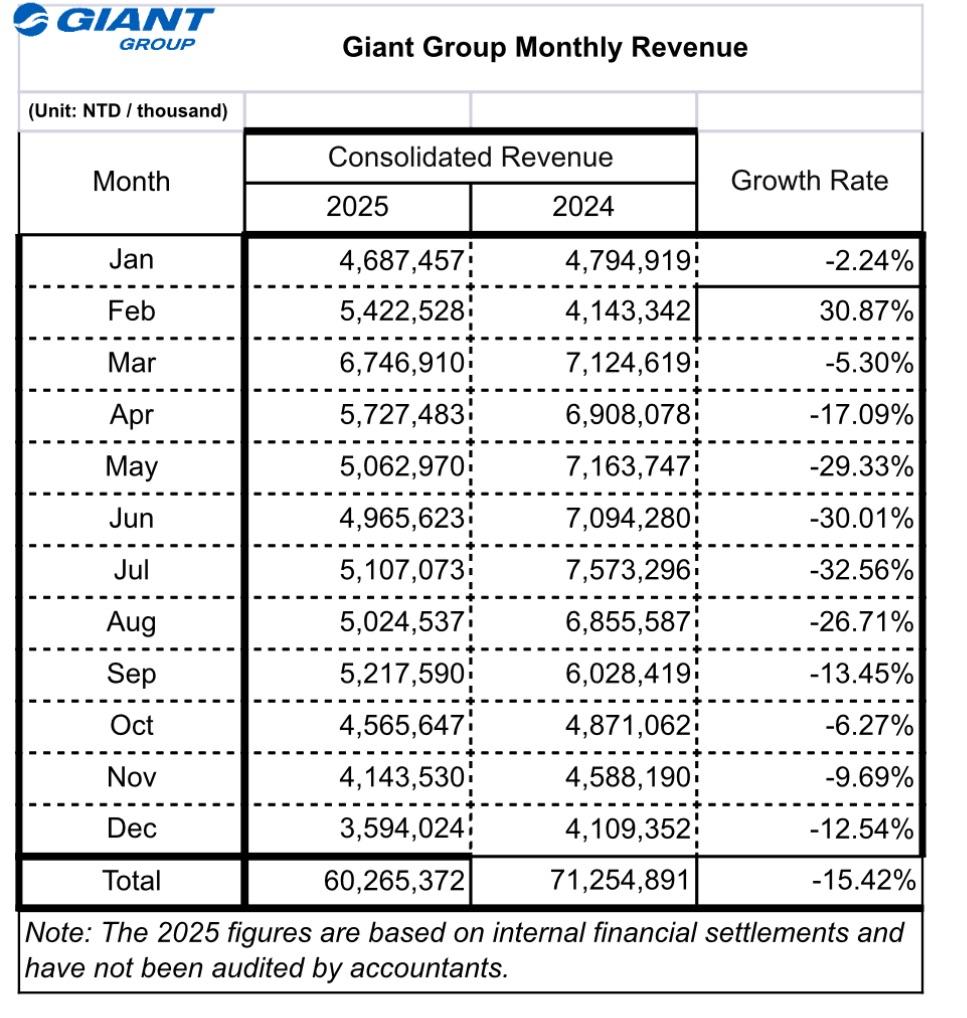
Entering 2026, Giant Group's operating conditions have improved. According to the financial report released on November 9, the group's cumulative revenue in the first three quarters was NT$45.5 billion (about 9.2 billion RMB), down 5.1% year-on-year; but the revenue in the third quarter alone increased by 6.2% year-on-year, achieving positive growth for two consecutive quarters. It is worth noting that driven by the new flagship bicycle products, the performance of Giant Group's own brands in the Chinese and European markets in the first three quarters both achieved year-on-year growth.
The performance of Shimano, the leading bicycle component manufacturer, also reflects the coexistence of industry recovery and weak demand.
In the first three quarters of 2026, Shimano's global bicycle components business revenue reached 278.361 billion yen (about 11.6 billion RMB), up 4.6% year-on-year; operating profit increased by 10.9% year-on-year. However, Shimano specifically pointed out in its financial report that the demand for road bicycles in the Chinese market is still weak, and the sales of mountain bikes for commuting and school use have also weakened. Although channel inventory is gradually improving, the consumer side has not fully recovered.
In contrast, Dahon Technology, which is deeply engaged in the folding bicycle market, has handed over another different transcript.
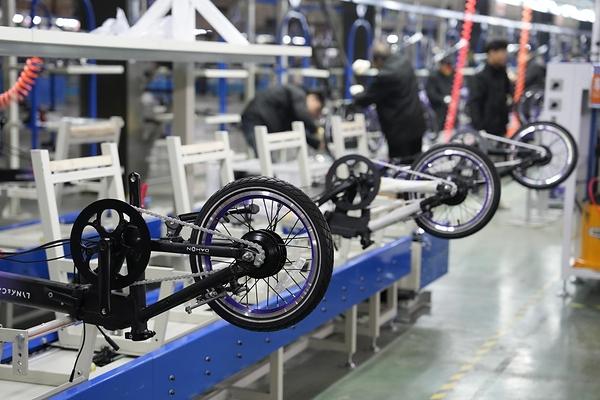
In the first half of 2026, Dahon Technology achieved revenue of 490 million yuan, up 53.7% year-on-year; the attributable profit to shareholders was 66.91 million yuan, up 72.3% year-on-year, and the gross profit margin rose to 35.2%. Among them, the Chinese market contributed about 451 million yuan in revenue, and domestic online direct sales revenue increased by 84.3% year-on-year, becoming an important driving force for performance growth.
On the one hand, the traditional bicycle industry is facing slowing demand and inventory adjustment, on the other hand, niche categories such as folding bicycles still maintain growth. The different operating performances of the three enterprises reflect the structural changes that China's bicycle market is experiencing.
From the perspective of Titan Sports Economic Observation, as cycling is gradually integrated into multiple scenarios such as sports fitness, urban commuting and social leisure, the growth logic of bicycle consumption is also changing. For industry enterprises, the era of gaining growth by relying on the overall expansion of the market is fading away. How to find new growth space in segmented demands is becoming the key to competition in the next stage.
Cycling popularity remains high, but why is the bicycle business getting harder?
In recent years, from urban greenways to suburban roads, cycling has gradually become a popular sport and social way for young people. With the rise of cycling events, cycling clubs and cycling tourism, the consumer market formed around this sport is also expanding.
According to the data disclosed by the Chinese Cycling Association, by the end of 2025, there were about 40 million cycling sports participants across the country, and about 10 million active participants. In the past three years, 3,248 cycling events have been held nationwide, and the participation base of cycling sports has been continuously expanded.
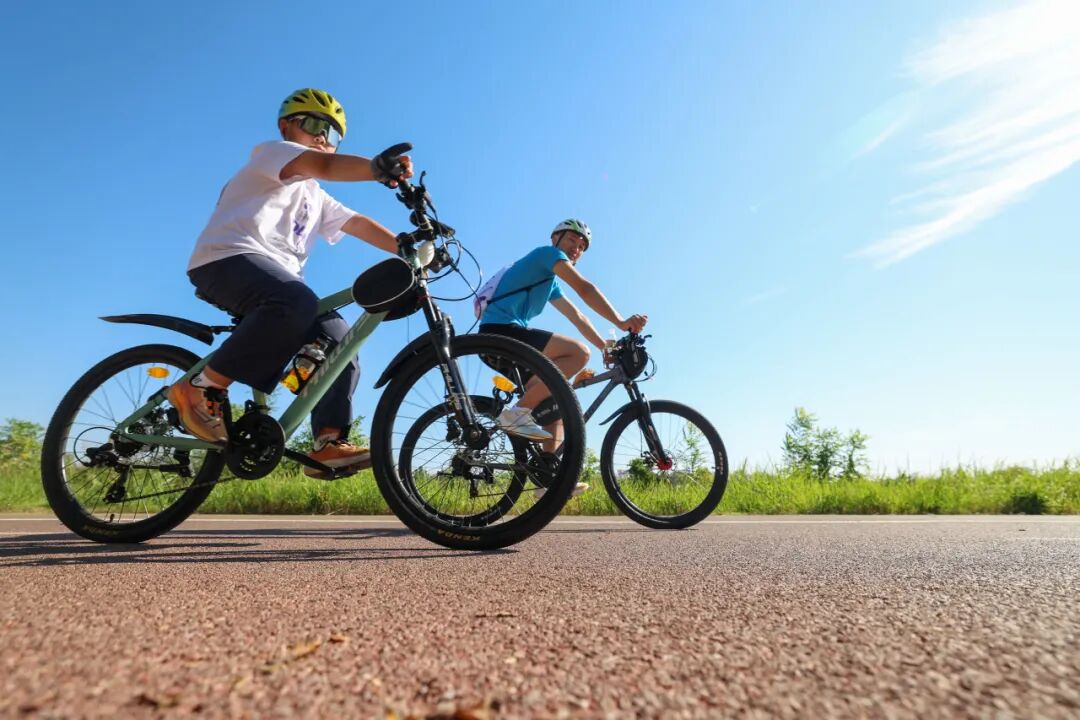
It can be seen that as a mass sport, the popularity of cycling does not seem to have faded significantly. However, the continuously growing enthusiasm for cycling participation has not been fully converted into the performance growth of bicycle manufacturing enterprises.
The 2026 industry report released by ECI, the European bicycle industry organization, shows that the sales volume of bicycles and e-bikes in Europe in 2025 was 15.618 million units, down 2.6% year-on-year. Although the market is gradually stabilizing, the inventory pressure has not completely disappeared.
So why do more and more people like cycling, but bicycles are not selling as well as expected? One of the important reasons is that bicycles are essentially durable consumer goods. Unlike products such as sports shoes and apparel that need to be replaced regularly, the service life of a bicycle is often as long as several years. Consumers can continuously increase their cycling frequency, but they do not necessarily need to buy new bikes frequently.
Especially during the pandemic, the demand for bicycle consumption exploded in a concentrated manner, and some consumers completed their bike purchase plans in advance. At the same time, enterprises and distributors expanded production and increased orders according to the growth expectation at that time. When the new demand declined, the supply-demand relationship that originally supported the rapid growth of the industry reversed.
But from another perspective, the pressure on complete vehicle sales does not mean that the consumer demand generated around cycling is disappearing.
As cycling extends from daily commuting to sports fitness, outdoor leisure and event activities, consumers' expenditure has also begun to expand to fields such as cycling equipment, vehicle upgrading, maintenance and repair.
According to a report by China Sports Daily, in July 2026, the sales of supporting equipment such as helmets, cycling shoes and smart bike computers at a bicycle brand store in Beijing increased by more than 50% year-on-year. Although this is only the operating performance of an individual store, it reflects that cycling consumption is showing more diversified characteristics.
A similar trend also appears overseas. In the retail survey in September 2026, the US bicycle industry media *Bicycle Retailer* found that the income from maintenance, adjustment and related services of some bicycle stores has accounted for 30% to 50% of the total revenue. For these distributors, selling a bicycle no longer means the end of the transaction relationship with consumers.
At the 2026 Beijing International Cycling Sport and Equipment Exhibition, Wu Haiyan, General Manager of Beijing Xidesheng Operation Center, said that 2023 to 2024 was the peak period of the domestic cycling boom, after which the market gradually entered a cooling-off period, and consumers began to shift from impulsive buying to rational consumption. In the future, brands will compete on brand power, while stores will compete more on service capabilities.
This change means that the bicycle industry is gradually bidding farewell to the stage where growth is solely driven by new bike purchase demand. For enterprises, in addition to continuously launching new products, how to extend the consumer value chain through differentiated products, professional services and user operation has also become an important topic.
Looking back over the past four years, the global bicycle industry has experienced a drastic reversal from supply falling short of demand to inventory backlog, from being sought after by capital to enterprise bankruptcy. But cycling sport itself has not lost its appeal because of this. When the industry bids farewell to the irrational prosperity in the pandemic period, what really needs to be re-examined may not be whether people are still willing to ride bicycles, but whether bicycle enterprises can find a business model that no longer relies excessively on the growth of complete vehicle sales.
For the bicycle industry that is going through a new round of reshuffling, this is the key that determines whether an enterprise can go through the cycle.
This article is from the WeChat official account "Titan Sports Economic Observation", author: Yueban, published with authorization from 36Kr.