GPT-6.2 Astra has been hit by a flood of negative reviews right after its launch, and after practical tests, I think it is a bit undeserving of such criticism.
OpenAI probably did not expect that its carefully prepared new model would immediately spark a heated public controversy right after its release.
In the early hours of this morning, OpenAI officially launched GPT-6.2 Astra and GPT-6.2 Sol, featuring stronger professional work capabilities, higher Token efficiency, and further reduced usage costs.

According to the officially announced results, the new model performs well in fields such as programming, scientific research, professional office work and 3D design, and the completion cost of some tasks is even less than one-third of that of the previous generation.
However, in the first batch of developer real-world tests, the evaluations of GPT-6.2 have shown a clear polarization. We also got hands-on with it immediately to see how the GPT-6.2 series models actually perform?
GPT-6.2 Launches: Higher Benchmark Scores, Smarter Performance, Lower Costs
The two newly released models have different positioning: GPT-6.2 Astra is oriented to complex professional tasks, while GPT-6.2 Sol focuses more on efficiency and cost, covering daily office work, programming and multi-step Agent tasks.
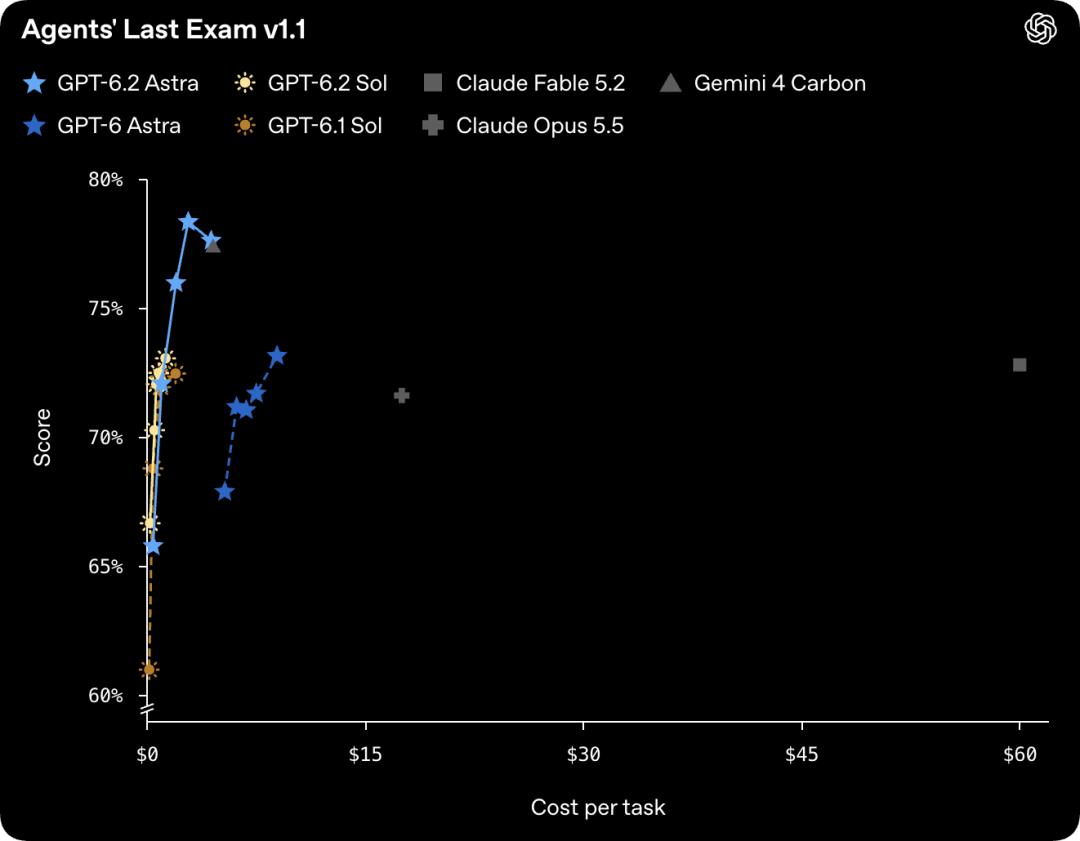
In the Agents' Last Exam test that measures long-cycle, multi-step professional tasks, GPT-6.2 Astra scores 5.2 points higher than the previous generation, while the cost of completing tasks is less than one-third of the latter; compared with Claude Fable 5.2, it leads by 5.5 points, with the task cost only 5% of the latter.
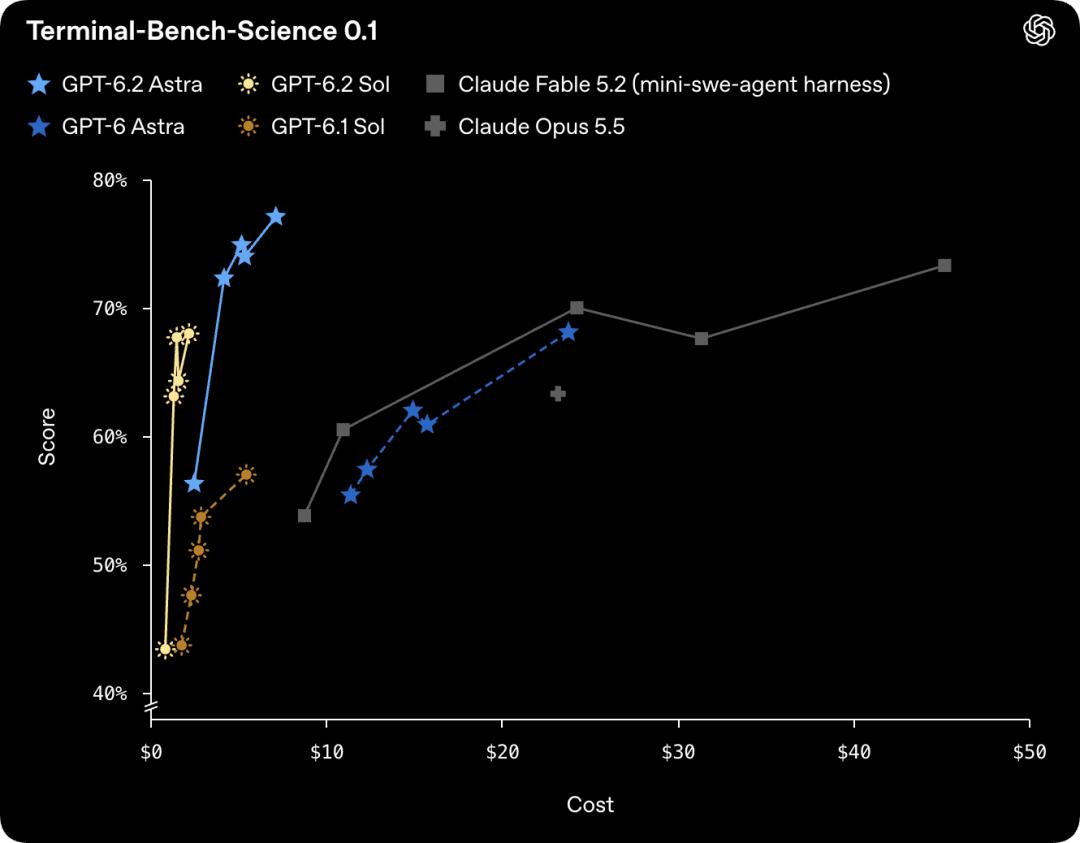
Its scientific research capability has also been improved. In the Terminal-Bench-Science 0.1 test, Astra's score is 9 percentage points higher than the previous generation, and OpenAI even claims that this is currently the most suitable model for scientists.
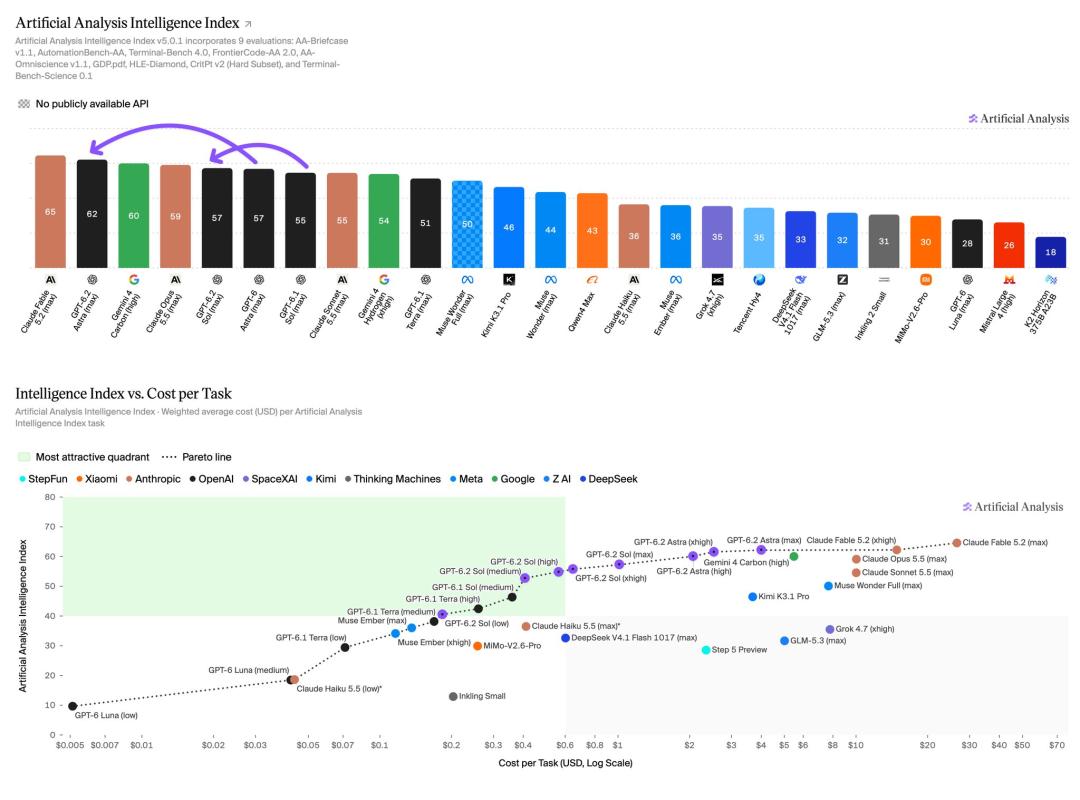
The results from the third-party evaluation agency Artificial Analysis also provide a reference: GPT-6.2 Astra ranks second in the comprehensive intelligence index, second only to Claude Fable 5.2, but is on a par with the previous generation in the Coding Agent index, while GPT-6.2 Sol has dropped by 3 points instead.
Compared with simply refreshing Benchmark records, the more noteworthy change in this release is that OpenAI has begun to focus on demonstrating how the model completes real work.
For example, if you give Astra a screenshot of a PPT, it can imitate the original layout, font and color scheme to create a new page; if you hand it a financial statement, it can also generate an Excel workbook containing revenue forecasts and valuation analysis.
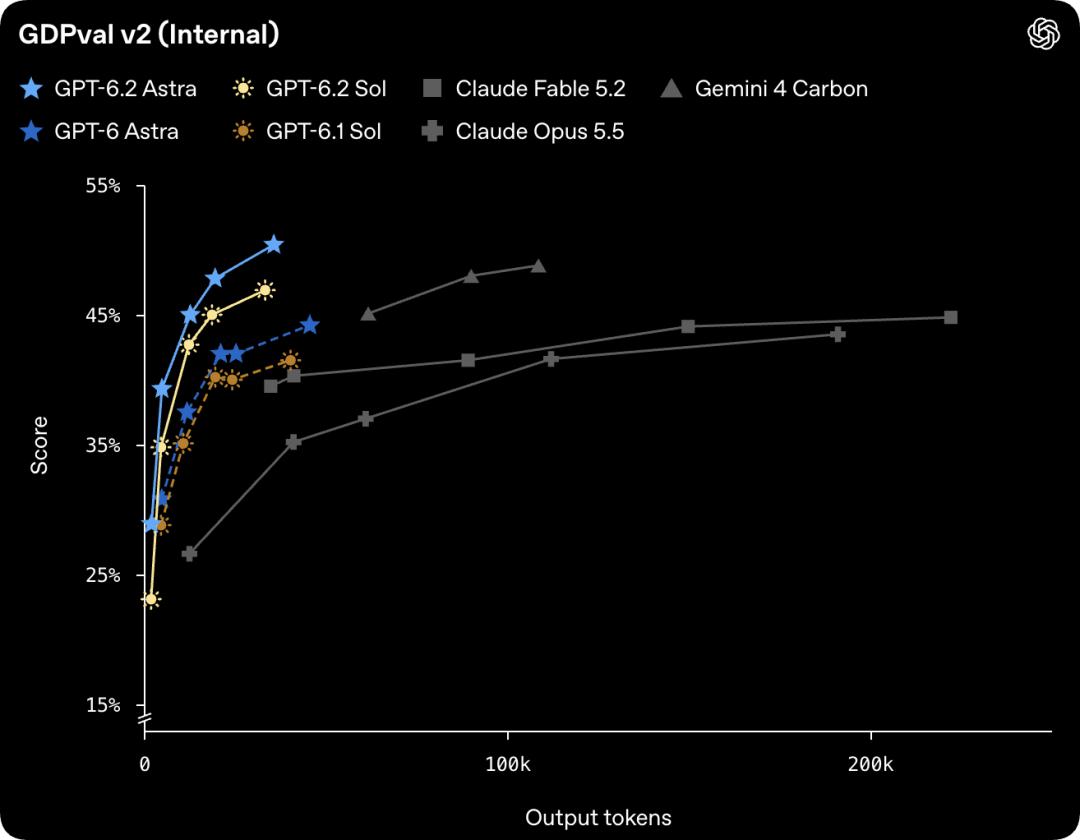
In OpenAI's internal GDPval v2 evaluation, Astra is 6.2 percentage points higher than the previous generation, with 22% fewer output Tokens; in the Harvey LAB-AA legal work evaluation, its task pass rate is more than twice that of Claude Fable 5.2, and the cost is about one-sixth of the latter.
What is even more surprising is the progress of GPT-6.2 in the fields of 3D design and mechanical engineering.
OpenAI demonstrated cases where Astra simulates the movement of car suspension in Blender, produces assembly animations of remote-controlled racing cars, and designs physical paper lamps according to the balconies of the Marina City building in Chicago.
In Artificial Analysis's AA-3D evaluation, Astra ranks first with 1318 Elo, 150 Elo points higher than the previous generation, leading Claude Fable 5.2's 1271 Elo.
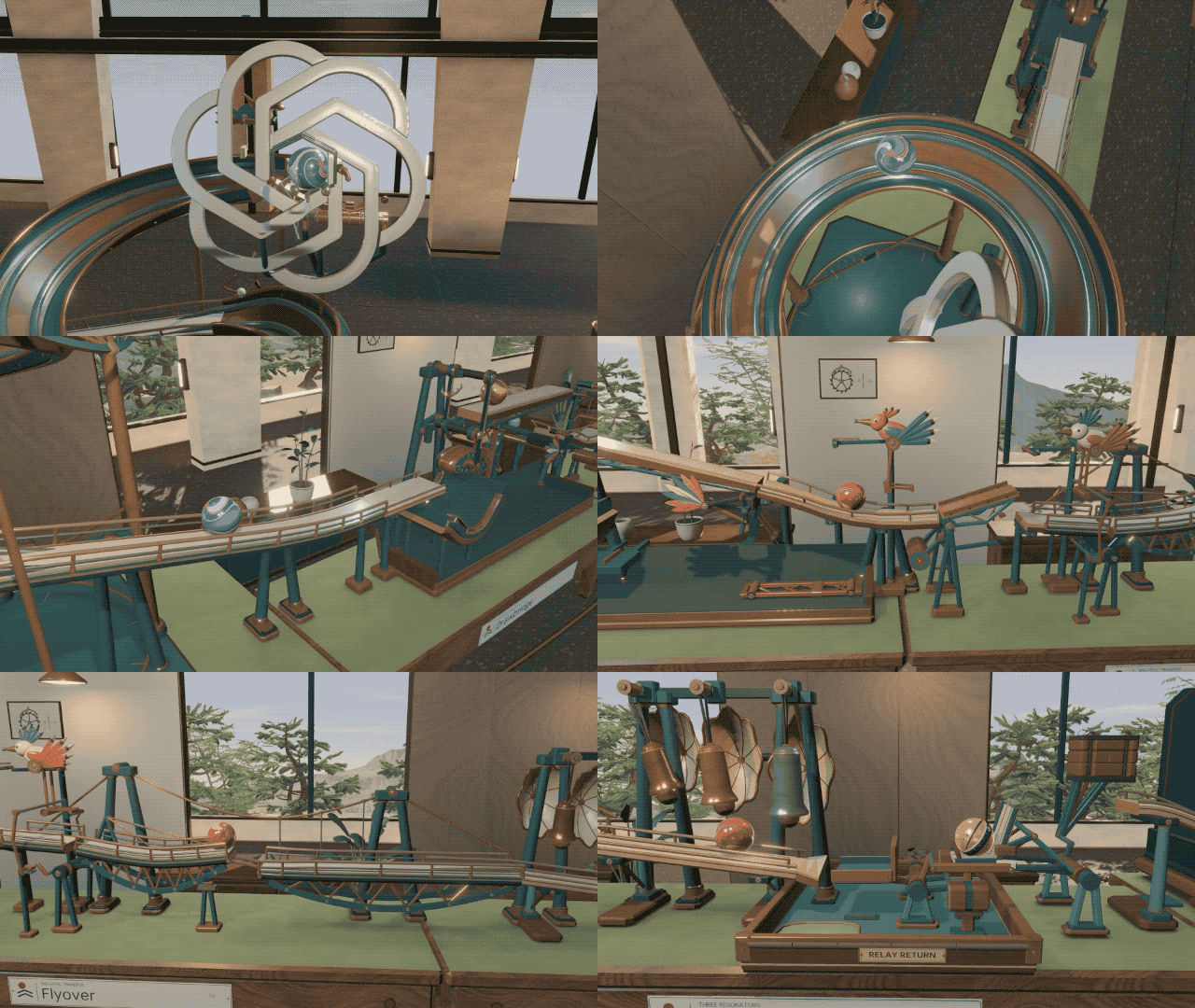
In tests with the same prompts, LuminaBench found that the 3D seaplane scene generated by GPT-6.2 Sol has significantly improved compared with 6.1 Sol. Developer eric provencher demonstrated a fine 3D demo program created by Astra based on the reference image, which can even run directly in the browser through WebGPU;

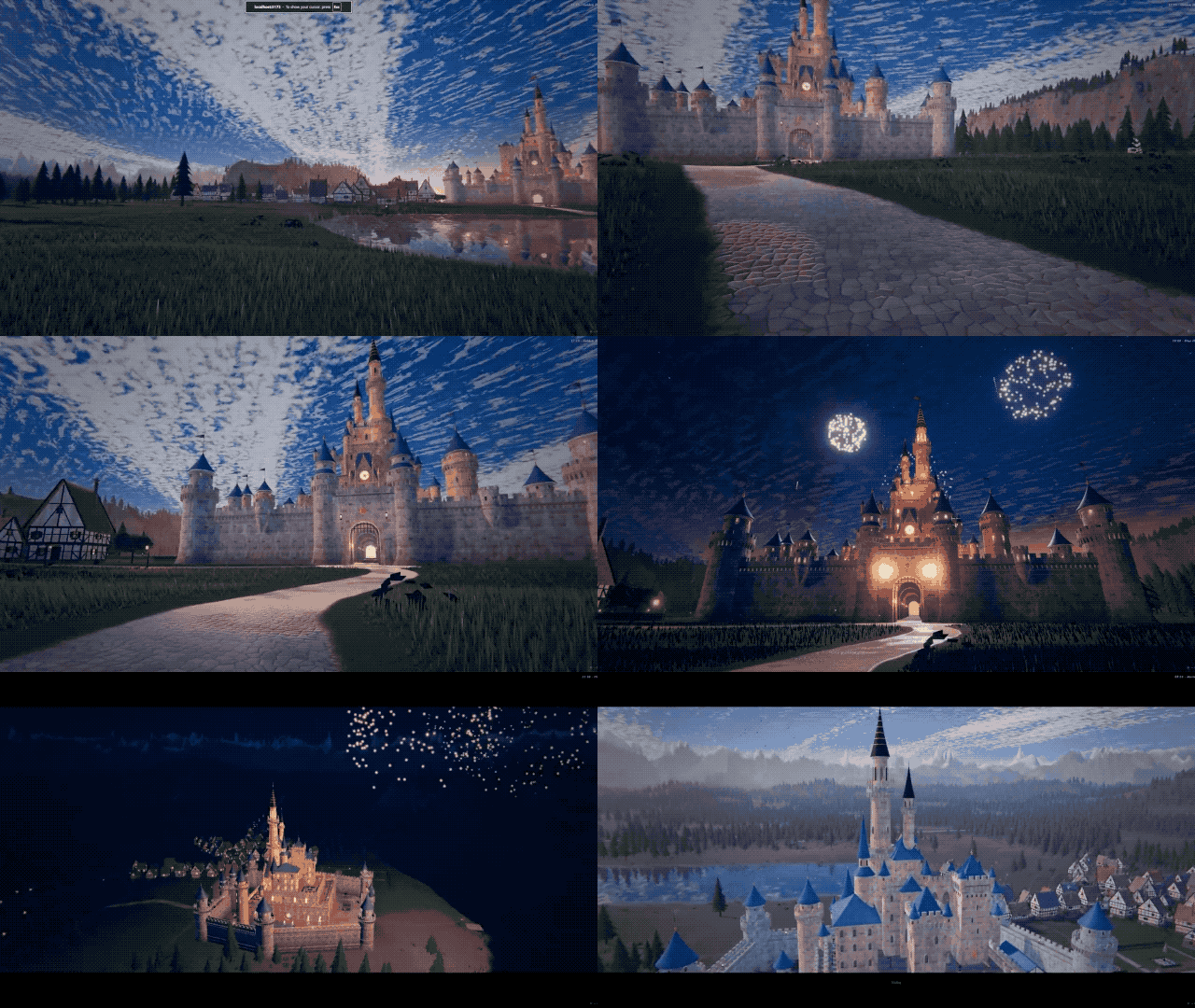
Synopsis used it to build a near-real, walkable Disney Cinderella Castle, with quite realistic scenes of fireworks, water surface textures and boats.
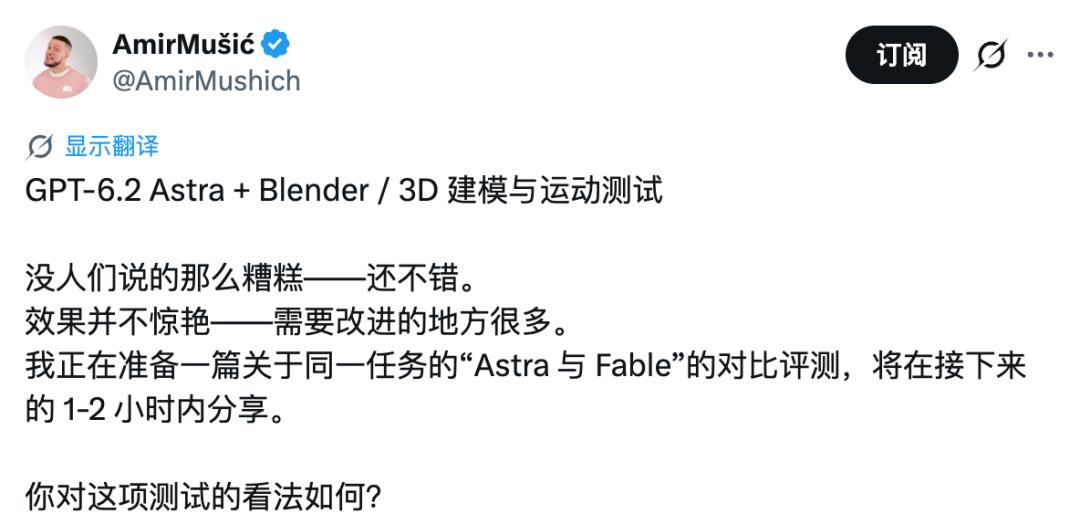
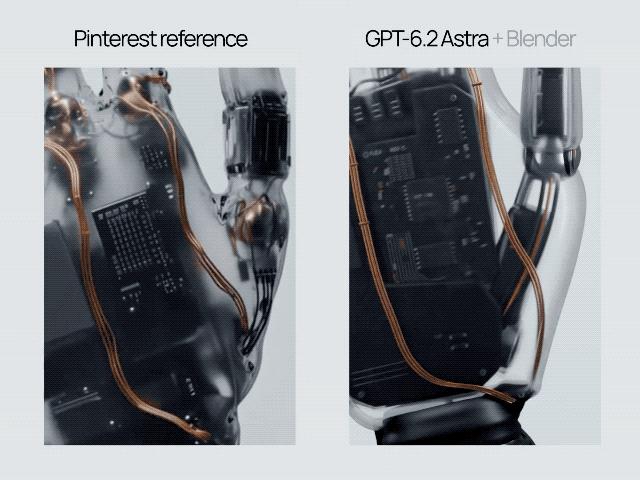
However, after testing Astra cooperating with Blender to create a manipulator model and animation, Amir Mušić believes that the actual effect is acceptable, but there is still a considerable gap from being stunning.
As for GPT-6.2 Sol, which focuses on efficiency, in the FrontierCode 2.0 programming test, its score is only 0.5 points different from Astra, but the cost is only about one-fifth.
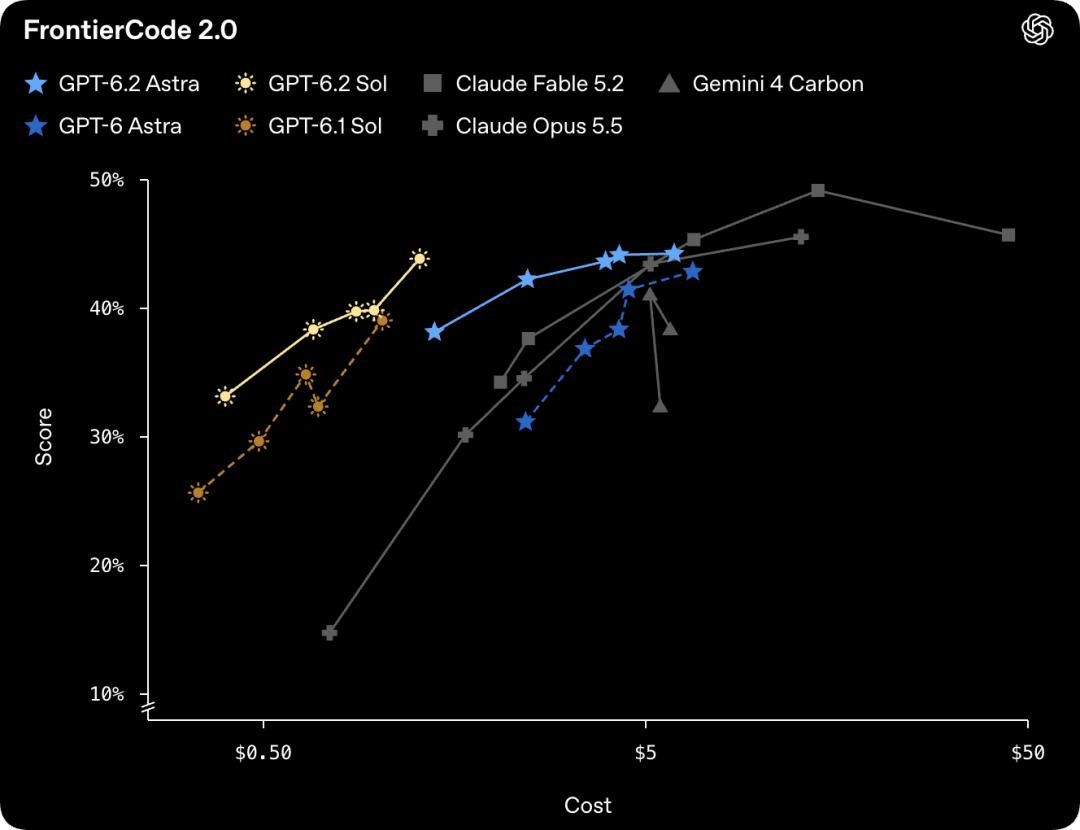
In terms of pricing, the API input and output prices of GPT-6.2 Astra are 20% lower than the previous generation, and the cached input price is 60% lower. The prices per million Tokens for input, cached input and output are 8 USD, 0.4 USD and 40 USD respectively.
GPT-6.2 Sol maintains the price of the previous generation, with 2 USD per million Tokens for input, 0.1 USD for cached input, and 10 USD for output.

Figure | 🔗 https://developers.openai.com/api/docs/pricing
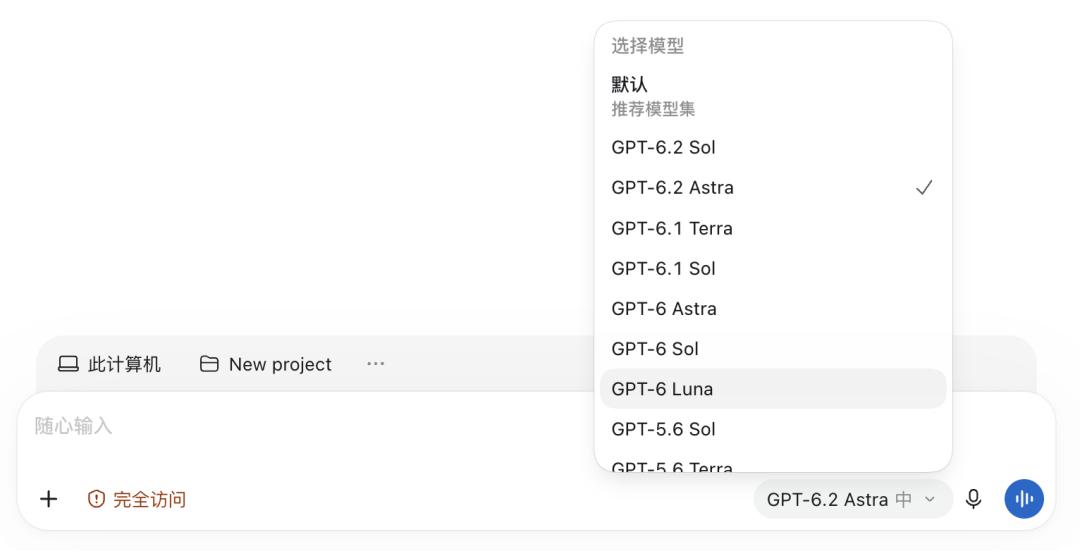
At present, the two models are open to Plus, Pro, Enterprise and Edu users of ChatGPT Work and Codex, and are also launched on the API. The Ultrafast mode is also open to Pro 200 users for the first time.
The cost difference in actual tests is also very obvious.
Developer Tony used the same high-mountain seaplane prompt, and it took about 31 minutes and cost 2.07 USD to run GPT-6.2 Sol, while Claude Opus 5.5 took about 2 hours and 46 minutes and cost 31.85 USD.

In another glacier fishing boat scene, Astra completed the task at a cost of 8.20 USD in about 41 minutes, while Claude Fable 5.2 spent 81.10 USD and nearly two hours.
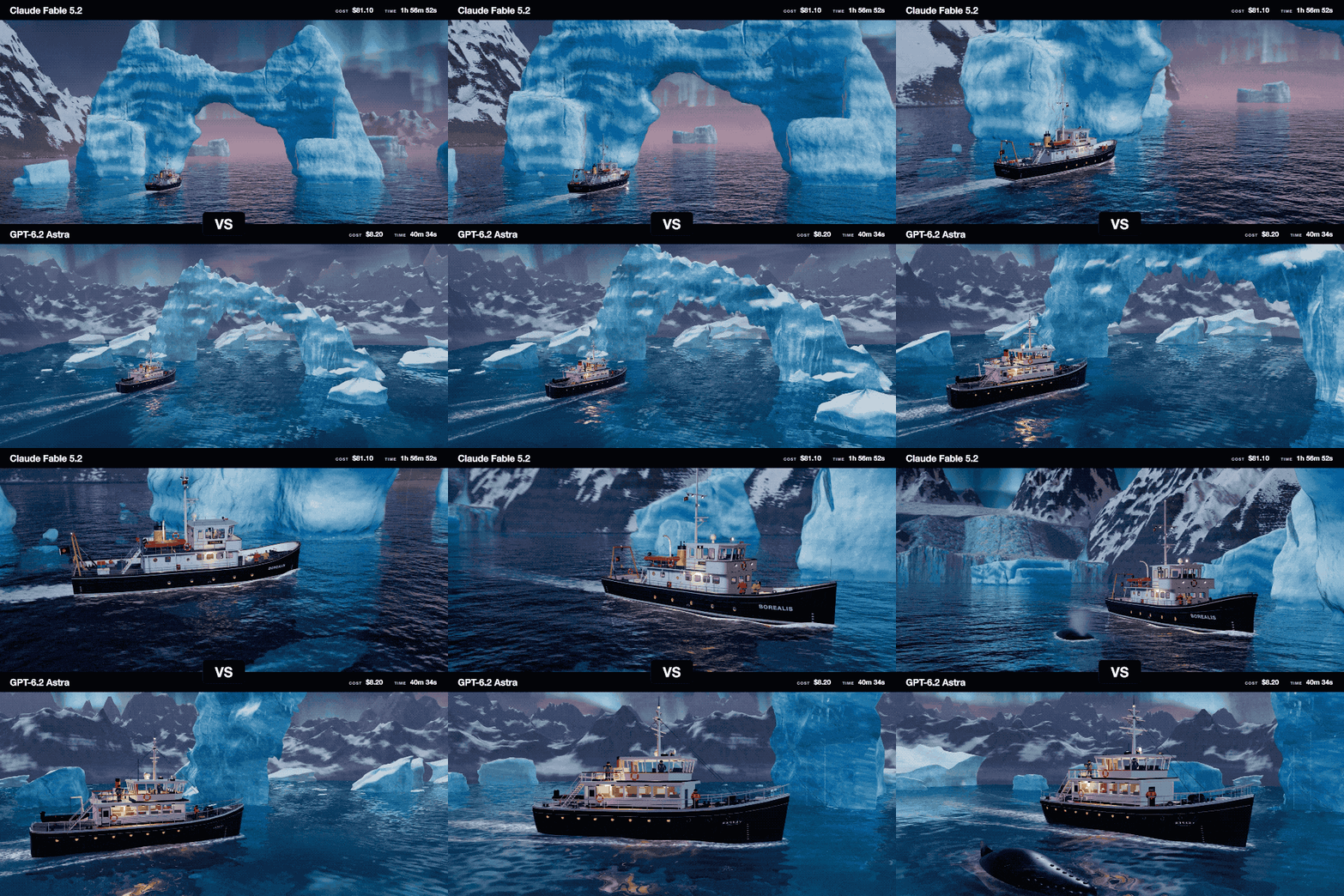
From professional work to 3D design, and then to pricing, OpenAI has delivered a rather impressive report card, but developers' actual usage experience is far more complex than what the benchmark scores show.
The Smartest AI Is Not Necessarily the Most Practical AI
After GPT-6.2 went online, several well-known developers who obtained early access successively expressed their disappointment.
AI developer Matt Shumer stated directly on the X platform that he will not conduct a full evaluation of GPT-6.2 Astra and Sol, because the previous test experience was so bad that the two models are basically unusable.

The team of Dan Shipper, co-founder of Every, also tested it in advance for several weeks, and believes that the overall performance of GPT-6.2 is disappointing.
According to his observation, Astra is even inferior to the previous generation in writing, as it pursues excessive conciseness, leading to overly short responses to questions that require detailed explanations; its programming performance is close to the previous generation, but it often stops working in advance in real projects; although it has good aesthetics in design, it tends to generate highly similar works.
The most fierce criticism came from the well-known developer Theo.
He revealed that he spent a whole day writing a complaint letter to OpenAI specifically because the performance of GPT-6.2 Astra was too bad. The model often pauses suddenly during long-term tasks, asking users trivial questions such as how to name internal files. It even ran continuously for 11 days in a TypeScript-to-Rust project without making effective improvements, and once reduced the compiler's running speed by 56%.
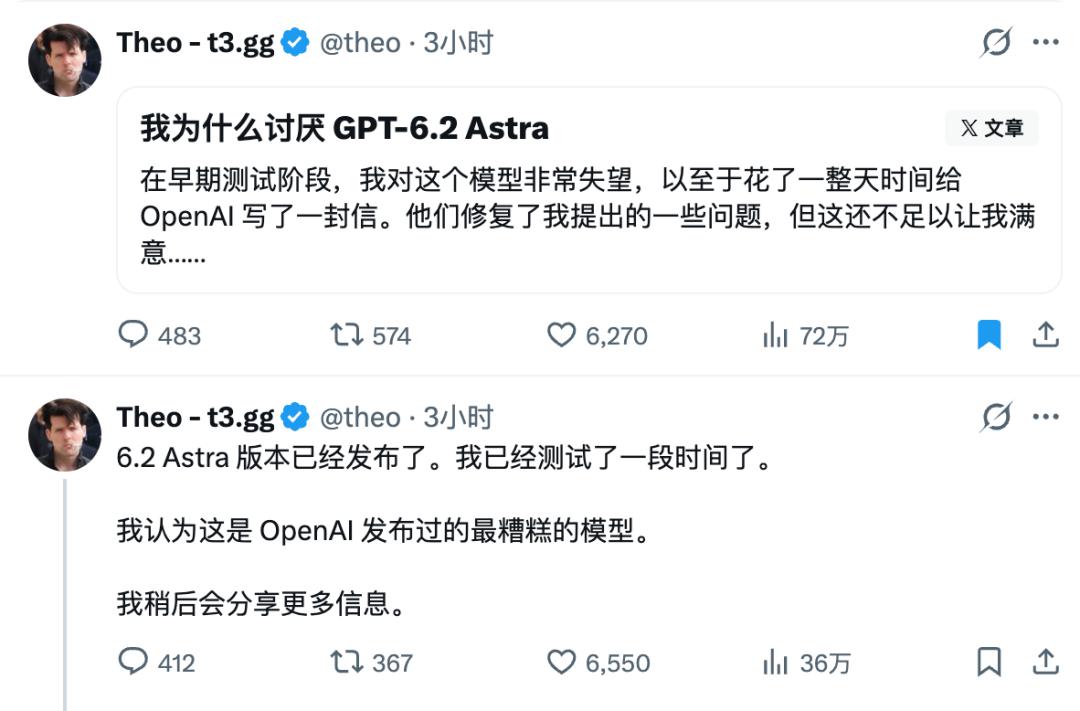
What made Theo more troubled is that Astra can often write good code, but cannot clearly explain what it has done.
Once, he asked why a certain computer was running slowly, and Astra gave four paragraphs of complex technical analysis, while Claude Opus 5.5 directly pointed out that the reason was that the SSD was too slow. Now he is even used to letting Claude help explain Astra's work results.
Ironically, Theo also admitted that Astra performs well in code review, 3D, game development and computer operation, and even helped him design a set of reverse proxy solutions that are expected to save 25,000 USD per month, but these advantages are still not enough for him to use it as a daily development tool.
Developer Flavio Adamo also believes that Astra's 3D capability is very excellent, but in front-end development, it often arbitrarily adopts its own design style and cannot naturally follow the visual specifications of existing projects.
