Insufficient growth? Can organizational strength come to the rescue? The global top 16 beauty enterprises have entered a fierce melee.
In the first three quarters of 2026, the performance of global beauty giants continues to diverge.
L'Oréal continued to widen its scale gap with 35.33 billion euros in sales, posting a 6.9% like-for-like growth; Galderma's revenue is only about one-tenth of that figure, but it has become the most notable growth sample with a 25.1% growth rate at constant exchange rates. Puig maintained mid-single-digit growth, LVMH's Perfumes and Cosmetics business remained stagnant, while Beiersdorf's Consumer Business and Coty were still in the recovery phase.
In the same market, completely different growth rates have emerged.
This trend can no longer be simply explained by enterprise scale or market prosperity. However, two points are clear:
1. Growth is concentrating on a small number of categories, brands and regions: scientific dermatological beauty, perfumes and professional hair care continue to show resilience, and the Chinese market has seen a structural recovery;
2. At the same time, mass-market businesses, weak brands and inefficient organizations are still consuming resources.
After sorting out the Q3 reports and recent management adjustments of multiple multinational groups, FBeauty Future Trace found that the global beauty competitive landscape in 2026 is still reshuffling, but the ranking is only a lagging result. What truly determines the next reshuffle of positions is the speed at which giants convert technological, brand and regional opportunities into growth.
01
L'Oréal holds its unrivaled top position,
The second tier of the global beauty market falls into fierce competition
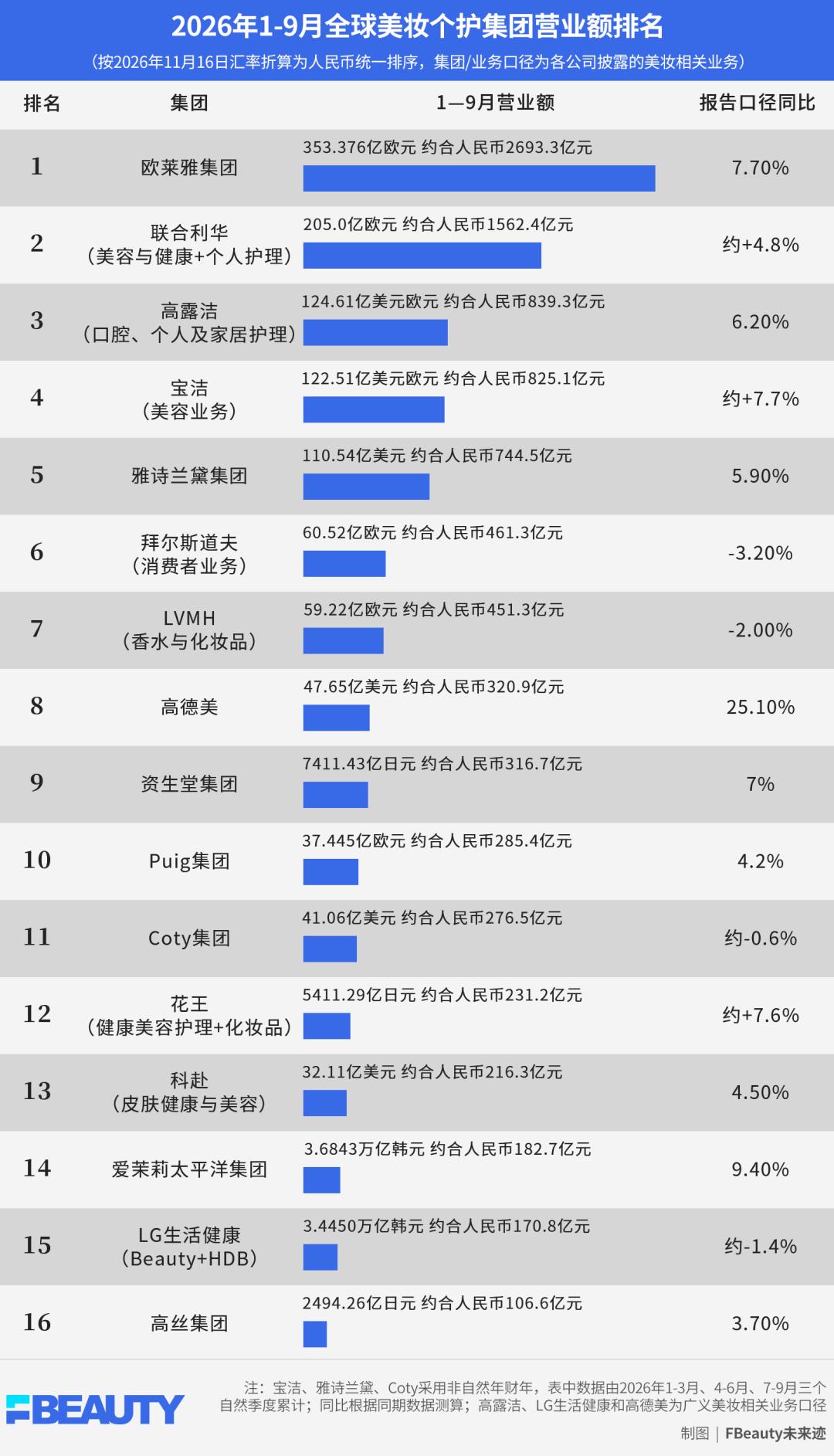
This ranking presents two simultaneous changes: the scale stratification of leading groups remains solid, while the competition in the middle and lower tiers is becoming increasingly crowded.
L'Oréal's sales in the first three quarters reached about 269.3 billion yuan, more than 110 billion yuan higher than the relevant business of the second-ranked Unilever, still the only group with revenue exceeding 250 billion yuan. The 3rd to 5th places fall into a relatively close range: Colgate's related business, P&G Beauty and Estée Lauder recorded about 83.9 billion yuan, 82.5 billion yuan and 74.5 billion yuan respectively.
Starting from the 6th place, the gap narrows further. The difference between Beiersdorf's Consumer Business and LVMH's Perfumes and Cosmetics business is only about 1 billion yuan; Galderma outperformed Shiseido by about 400 million yuan; the gap between Puig and Coty is less than 900 million yuan. In this dense interval, a merger and acquisition, an exchange rate fluctuation, or even the growth acceleration or deceleration of a core brand for two consecutive quarters may rewrite the ranking.
As can be seen from this table, there is still growth in the global beauty industry in 2026, but the incremental growth is no longer evenly distributed.
First of all, scientific dermatological beauty is translating professional capabilities into market growth.
L'Oréal's Dermatological Beauty division recorded a 11.6% like-for-like growth in the first three quarters, and all its three 1-billion-euro brands La Roche-Posay, CeraVe and SkinCeuticals achieved double-digit growth. Beiersdorf's Derma business posted 10.6% organic growth in the third quarter, continuing to outperform the group's overall performance.
Galderma's growth is more representative. Its revenue in the first three quarters reached 4.765 billion US dollars, growing 25.1% at constant exchange rates; among which, dermatological skin care sales hit 1.244 billion US dollars, up 16.2%, while prescription dermatological drugs grew 64.4%.
Strictly speaking, Galderma, which integrates prescription drugs, aesthetic medical injections and skin care into one system, is not a traditional cosmetics group. But its high growth reveals a more noteworthy model: medical resources, professional channels and consumer skin care can share research resources and user access around the same type of skin problems.
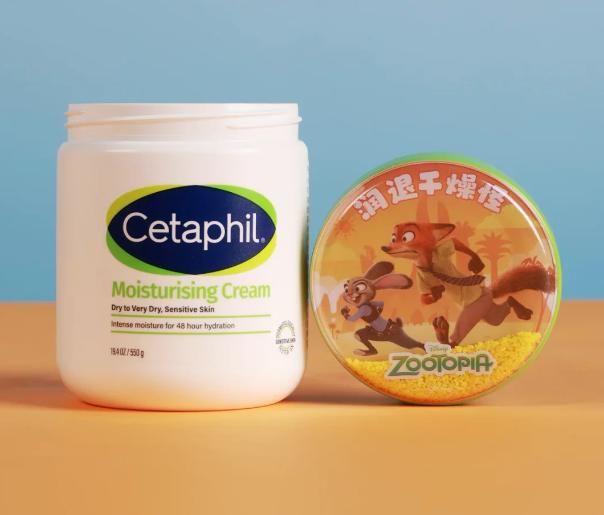
Secondly, perfumes still show resilience, but category dividends are not evenly distributed to every enterprise.
Estée Lauder recorded 20% organic sales growth in perfumes and 93% operating profit growth in its latest quarter, with Le Labo, TOM FORD, Jo Malone London and KILIAN PARIS collectively driving the growth. Puig's niche perfumes continued to maintain double-digit growth, driving the group's like-for-like growth in the third quarter to accelerate to 5.6%.
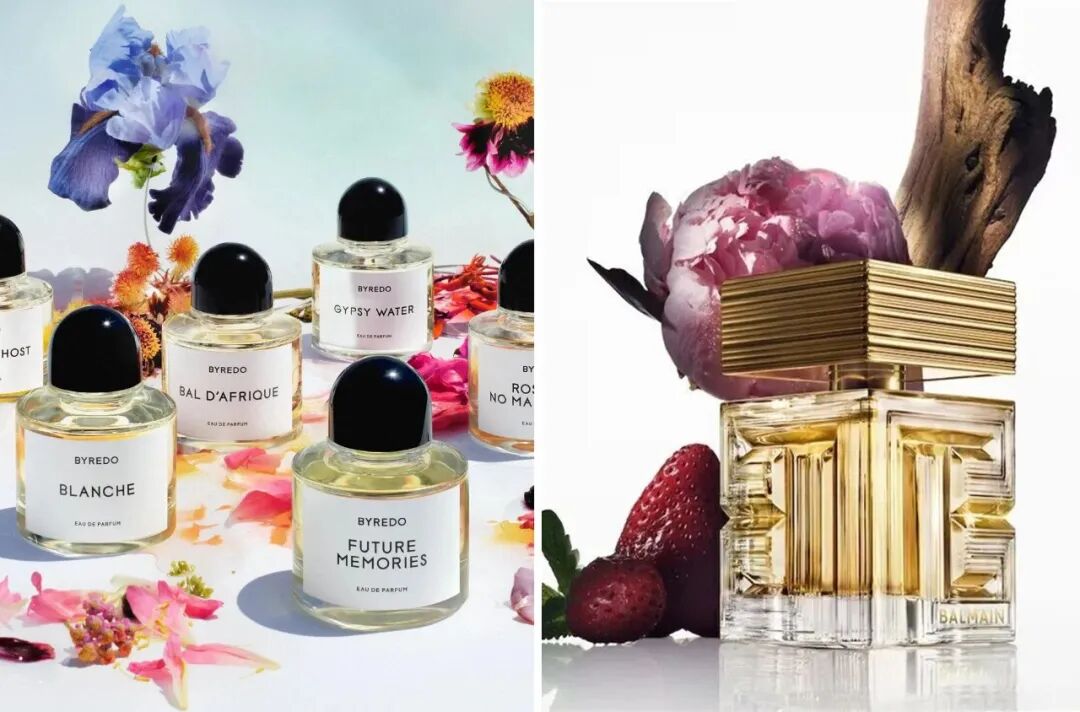
In contrast, LVMH's Perfumes and Cosmetics business posted zero organic growth in the first three quarters, with only 1% growth in the third quarter. In the same perfume boom cycle, the performance of groups still diverges, indicating that category dividends can only provide opportunities, and the final result still depends on new product efficiency, brand portfolio and regional execution.
Third, the coexistence of strong brands and weak businesses is becoming a common state for large groups.
Unilever's Dove, Vaseline, Clear and K18 achieved double-digit growth, while the Health & Nutrition business recorded a high-single-digit decline in the third quarter; Beiersdorf's Derma and La Prairie accelerated, but the Consumer Business still fell 2.9% in the first three quarters; Coty's six core prestige brands recovered 5% like-for-like growth, while mass beauty continued to decline.
Therefore, the dividing line in 2026 is no longer just the size of the group, but the asset density of the business portfolio: how many brands are in the growth cycle, how many technologies can be reused across brands, and how many resources are occupied by inefficient businesses.
02
China is not just a "large market",
but also a global testing ground
The recovery of the Chinese market is a common highlight in the financial reports of foreign beauty groups in 2026.
Take the four groups L'Oréal, Estée Lauder, P&G and Beiersdorf as examples:
· L'Oréal's North Asia market recorded a 7.8% like-for-like growth in the third quarter, mainly driven by China. When the Chinese beauty market only achieved low-single-digit growth, the group's growth rate was nearly three times that of the overall market, with prestige beauty, dermatological beauty and professional hair care as the main driving forces.
· Estée Lauder's Chinese mainland business continued to grow, and travel retail in Asia also recovered from a low base;
· P&G disclosed in its earnings call that organic sales in Greater China grew 8%, and SK-II grew 12%;
· Beiersdorf's La Prairie grew 28% in China in the third quarter, driving the brand to achieve an overall 8.5% organic growth.
This set of data seems to point to a full recovery, but Shiseido's financial report provides the other side of the picture.
Shiseido's China and Travel Retail business recorded a 1.2% year-on-year like-for-like sales growth in the first three quarters, core operating profit increased 28.2%, and profit margin rose 2.8 percentage points. Analysis articles from Boxiaotong point out that the overall Chinese prestige beauty market maintained growth in the third quarter, but the consumer spending amount of Shiseido in the Chinese market still posted a low single-digit year-on-year decline, and part of the sales improvement came from channel restocking.
This means that channel inventory restocking, group report growth and end-consumer recovery are not the same thing. To judge the real temperature of the Chinese market, it is also necessary to observe retail-end sales, inventory, discounts and brand share at the same time.
Travel retail is also at a similar stage.
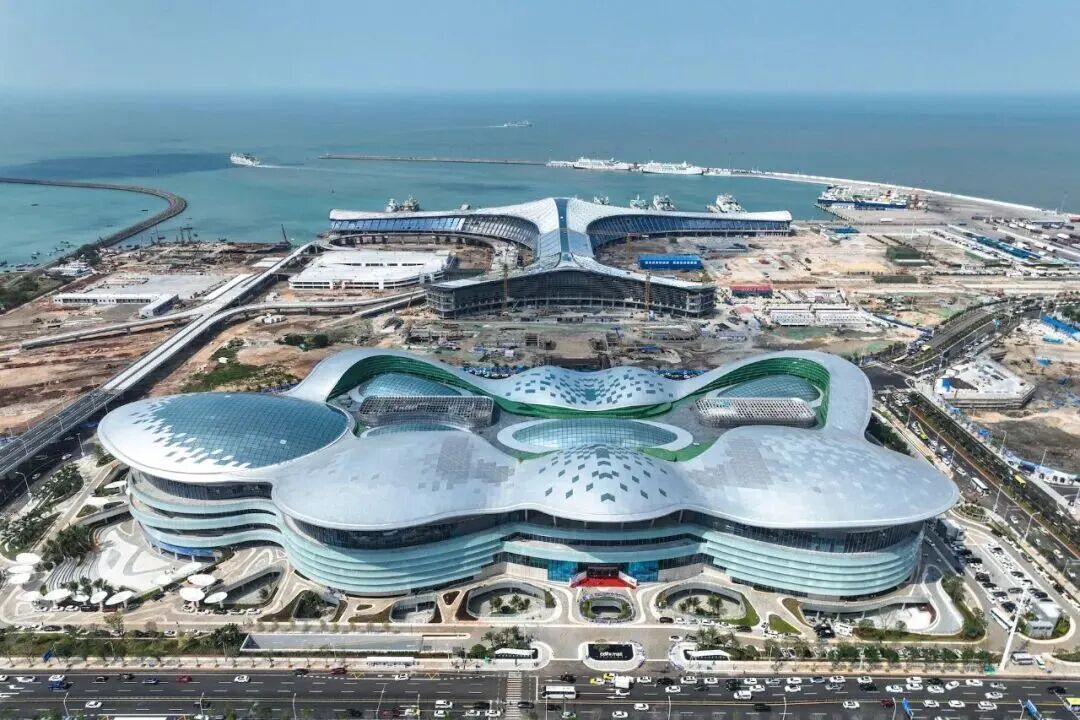
cdf Haikou International Duty Free City, Image source: Xinhua News Agency
L'Oréal's travel retail returned to positive growth in the third quarter; Estée Lauder benefited from restocking at Beijing and Shanghai airports and improved online sales in Hainan; Shiseido is still digesting the impact of channel adjustments. To be more precise, this channel is recovering, but it is far from reaching a state where all groups can benefit together.
However, compared with short-term growth, the more profound changes in the Chinese market are taking place in business operation modes.
L'Oréal China's e-commerce proportion has exceeded 65%, and the proportion of Douyin in online revenue has risen from less than 5% a few years ago to more than 20%, with related operations gradually shifting from external services to in-house teams; Estée Lauder Chinese mainland's online proportion of general trade has exceeded 50%, and 11 brands have entered Douyin; Unilever has maintained an average annual growth of about 40% in China's social e-commerce channels over the past three years.
Multinational beauty groups are upgrading content production, influencer cooperation, ad placement and e-commerce conversion from channel operations to in-house operational capabilities. The ability to understand platform data, control the price system and quickly launch new products into content scenarios has a direct impact on the profits of the China region.
China's position in R&D and product decision-making has also continued to rise accordingly.
L'Oréal China R&D Center currently has more than 400 researchers, and its patent applications in 2025 accounted for about 13% of the group's global total. In May this year, L'Oréal China R&D Center was officially upgraded to a global R&D center after being certified by the Shanghai Municipal Commission of Commerce.
Yosuke Ikebe, Shiseido's new CIO, once emphasized the importance of the Chinese market in an exclusive interview with FBeauty Future Trace, "If you can't win in China, you can't win globally."
As he said, he is pushing the positioning of Shiseido China R&D Center from "In China for China" to "From China for Global", leading the global market with breakthrough innovations originating from China.
The new positioning of Shiseido China R&D will focus on three major directions: continuously exporting China's basic scientific research strength to the world; deepening open innovation cooperation with top local universities, scientific research institutions and medical units; opening up new tracks in the intersection of medical aesthetics and health beauty, and feeding Shiseido's global ecosystem with local Chinese innovation achievements.
From this perspective, China's role in the business of multinational beauty groups has fully transformed from an "emerging market" to a "stress test market": consumers are mature, prices are highly transparent, content e-commerce changes rapidly, and it is equipped with a complete supply chain and R&D talents. Product innovations, social e-commerce and rapid iteration mechanisms that can be verified in China are more likely to be replicated in other markets.
As Stéphane de La Faverie, President and Chief Executive Officer of The Estée Lauder Companies, said: "China is no longer what we call an emerging market. In the beauty sector, it is a mature large-scale market." China is no longer discussed for its growth potential under the separate category of "emerging markets".
Nowadays, the significance of the Chinese market lies in that it has begun to test whether a global group can retain its scale advantage while possessing the reaction speed of a new emerging brand.
03
Carry out internal reforms,
Reshape "Agility"
When incremental growth is concentrated in a few categories and regions, the original organizational structure of large groups exposes problems: brands, categories, regions and functional departments each hold part of the power, but no one takes full responsibility for the final result.
The core of the organizational adjustments of many multinational giants in 2026 lies in redistributing three powers: who decides resource investment, who is responsible for regional profit and loss, and who has the right to stop inefficient businesses.
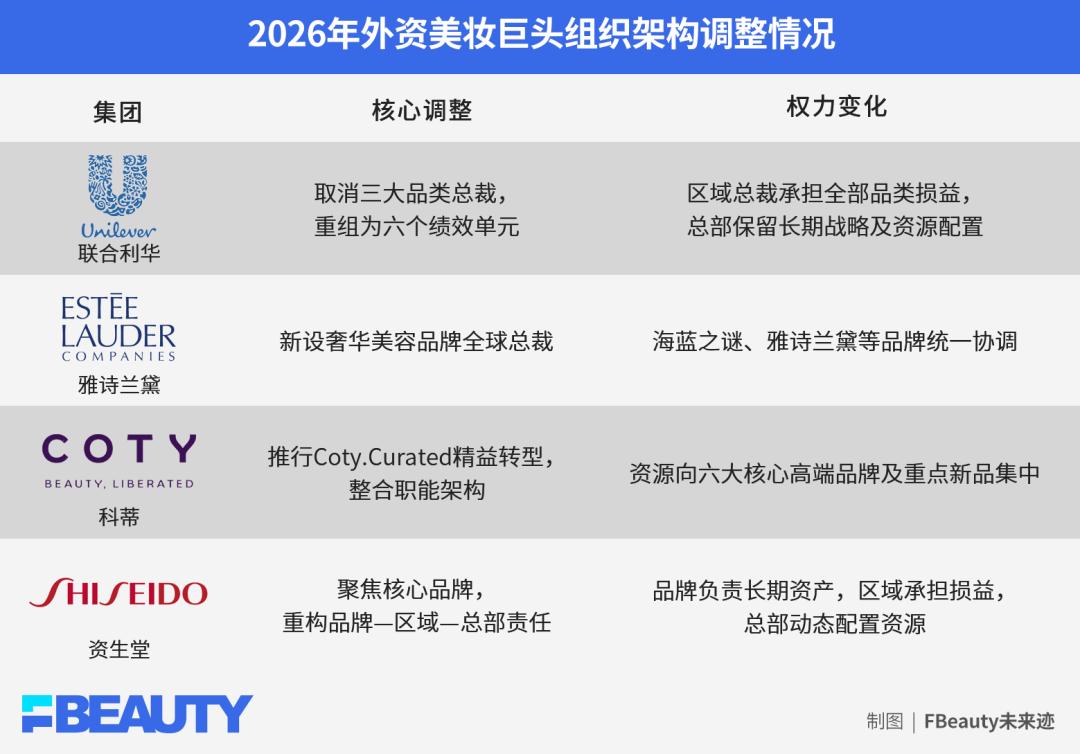
Unilever's adjustment is the most thorough.
With the spin-off of the ice cream business and the proposed merger of the food business with McCormick, the group will further focus on Beauty & Wellbeing, Personal Care and Home Care. The new operating model follows the principle of "global strategy, local execution", dividing the market into six performance units, with regional presidents responsible for the profit and loss of all categories within their jurisdictions.
The headquarters retains the power over brand portfolio, long-term R&D and multi-year resource allocation; local markets are responsible for commercial operations, supply chain, and local collaboration of content, media and e-commerce. The Northeast Asia unit, where China is located, will be led by Aseem Puri, the current head of Unilever Thailand. The new structure will be gradually implemented from 2027, and the group plans to release 1 billion euros of productivity savings by the end of 2029.

Aseem Puri
The key to this reform is not simply cutting management positions, but handing over current business results to people who are closer to the market. Regions gain greater autonomy, and must also be responsible for both growth and profits at the same time.
Estée Lauder has chosen another path: to centralize the decision-making power of prestige brands at the top.
In September this year, the group created a new position of Global President of Luxury Beauty Brands for Justin Boxford, overseeing La Mer, Estée Lauder, AERIN, Darphin and Lab Series, hoping to form stronger synergy between marketing, channels and product development. However, on November 6, WWD reported that Justin Boxford left the company to join Capri Holdings, and no successor has been announced yet.
