Exclusive Interview with Former Vice Chairman of the Federal Reserve Kohn: The cost of the Fed not raising interest rates is higher
At this year's Jackson Hole Economic Policy Symposium in August, Federal Reserve Chair Kevin Warsh used two hiking trails around the venue as a metaphor for two drastically different monetary policy paths: one is the marathon-like "death march" he took with former Vice Chair Donald Kohn, and the other is a relaxing stroll with former Chair Ben Bernanke along the winding trails of the Rockefeller Preserve.
The two hiking routes correspond to two philosophies of interest rate hikes: the former refers to tough, drastic policy tightening, while the latter represents a gradual, controllable policy rhythm.
Warsh joked at the time that policymakers need to first look at the current situation and judge whether today should be a "Kohn day" or a "Bernanke day", a statement that was quickly interpreted by the market as a prediction of the Fed's interest rate hike pace.
By October, at the 2026 Bund Annual Conference co-hosted by the China Finance 40 Forum and Tsinghua University, Kohn gave his judgment in an exclusive interview with *Caijing*: "The current situation belongs to the 'Bernanke-style' interest rate hike, with a slower and steadier pace, rather than the Kohn-style 'death march' tightening."
In mid-September, just one month ago, the Federal Reserve announced a 25-basis-point interest rate hike for the first time in three years, raising the target range for the federal funds rate to 3.75%—4.00%.
As the Fed shifts its monetary policy, the global economy is under simultaneous pressure: persistently high inflation, surging financing boom in the AI (Artificial Intelligence) sector, and emerging sovereign debt risks. The market is also referencing the 2008 financial crisis, which was characterized by global cross-market contagion, to review current risks. What are the essential differences between the policy challenges the Fed faces under these two scenarios?
Kohn is undoubtedly the right person to answer this question. He has served at the Federal Reserve for more than 40 years. When the 2008 financial crisis broke out, as the "second-in-command" of the Fed, he worked with then-Chair Bernanke to launch financial rescue plans and quantitative easing policies.
In Kohn's view, compared with the 2008 crisis, the core proposition of the Federal Reserve at present is not to deal with a sudden financial crisis, but to govern sustained inflation as a long-term battle.
At the end of February 2026, geopolitical conflicts hit the energy market, the Strait of Hormuz was once blocked, and international oil prices once approached 120 US dollars per barrel, further pushing up inflation pressure. Up to now, the year-on-year inflation rate of US Personal Consumption Expenditures (PCE) has been higher than 2% for 67 consecutive months.
Before the conflict, the Federal Reserve was originally in an interest rate cut cycle. The rebound of inflation disrupted the original rhythm, and the Fed chose to hold interest rates unchanged for more than half a year, delaying the start of interest rate hikes. During this period, market risk appetite changed rapidly, and investors began to demand higher risk premiums. The yield on 30-year US Treasury bonds once approached 6%.
"The economic cost of not raising interest rates will be much higher than the cost of raising interest rates itself," Kohn admitted. Interest rate hikes will have a significant impact on some industries, and the US housing market has continued to weaken under high interest rates. However, compared with short-term industry pains, if inflation is allowed to continue to ferment, more aggressive policies will have to be used later to push prices back to the target level, and the cost to pay will be even higher.
Ensuring full employment and stabilizing prices are the Fed's statutory "dual mandate". At present, the continuous expansion of capital expenditure in the AI sector superimposed on the rising scale of government bond issuance has led to competition between the sovereign sector and industrial tracks in the global capital market, which has exacerbated sovereign debt pressure and may pose a test to the independence of the Fed's monetary policy.
"A fiscal-dominant scenario will not occur." In Kohn's judgment, the Federal Reserve has the ability to maintain the independent space of monetary policy. Even if the Trump administration once called for interest rate cuts on the grounds of high deficit financing costs, this demand has not been recognized by the market and academia. In his view, adhering to policy independence and using interest rate hikes to fight inflation when necessary is in the public interest and can also gain broad public support.
Although the Federal Reserve has implemented one round of interest rate hikes in September, the stubbornness of inflation exceeded market expectations. The year-on-year increase in the core Consumer Price Index (CPI) in September was 2.6%, higher than the previous market expectation of 2.5%; in the same month, the year-on-year increase in the Producer Price Index (PPI) reached 6.3%, hitting a new high since December 2022, significantly exceeding the market forecast of 5.3%.
In Kohn's prediction, the Fed still has the possibility of further interest rate hikes in the future. "They should act prudently and avoid excessive tightening: that is, they should not keep raising interest rates until inflation drops significantly, only to find that inflation has fallen below the target level."
At the end of October, the Federal Reserve's interest rate meeting voted 10 in favor and 2 against to keep interest rates unchanged, pressing the pause button for this round of interest rate hike cycle after restarting interest rate hikes in September.
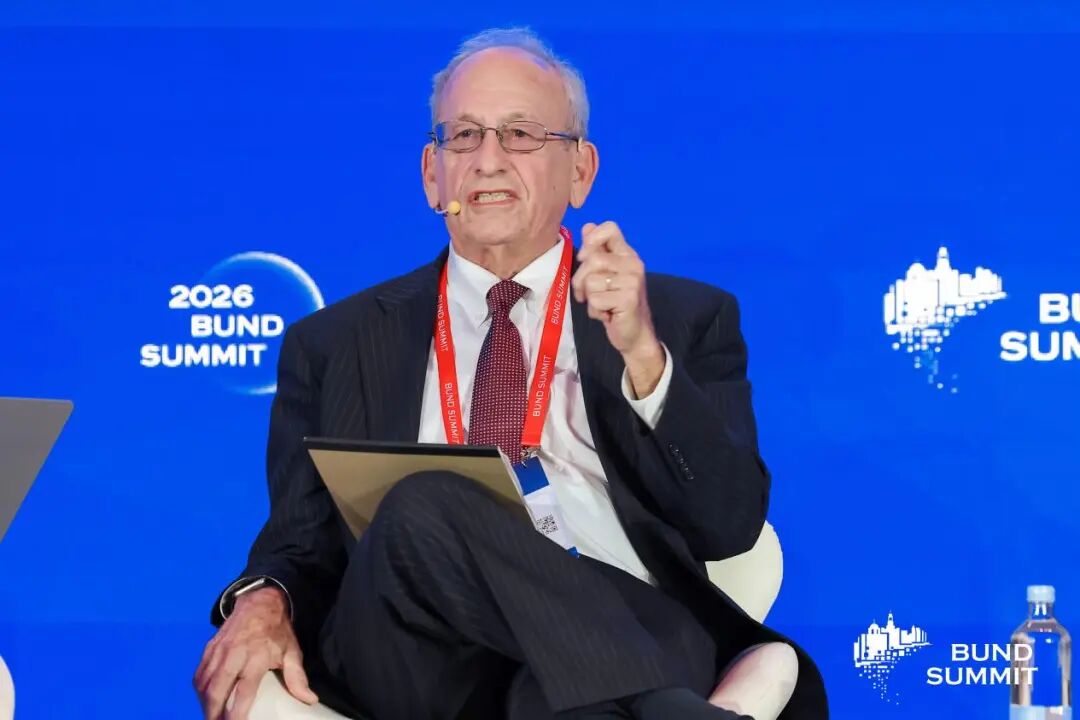
Former Vice Chair of the Federal Reserve Donald Kohn. Source: Bund Annual Conference Organizing Committee
The Fed's Interest Rate Hikes Will Be More Gradual and Steady
*Caijing*: The Fed raised interest rates by 25 basis points in September. Does this meet your expectations? Should the Fed keep raising interest rates until inflation falls back to the 2% target, or pause periodically to observe subsequent effects?
Kohn: The 25-basis-point interest rate hike implemented in September basically meets my and the market's expectations. From the perspective of policy path, the Fed still has room and necessity for further interest rate hikes. However, monetary policy has inherent transmission lag, and policy adjustments need to be based on forward-looking judgments on economic and inflation trends, rather than mechanically anchoring the 2% inflation target to keep tightening. If interest rates are raised rigidly in one direction and policymakers wait until inflation fully meets the standard to stop, it will easily trigger the risk of excessive tightening and cause unnecessary impact on the macroeconomy.
*Caijing*: US inflation has been above the 2% policy target for 67 consecutive months. How do you evaluate the timing of this round of Fed interest rate hikes? What sustained impacts has policy lag brought to the US economy?
Kohn: I think the Fed's interest rate hikes in 2021 and 2022 were too late, but this judgment may also be controversial. At that time, officials may generally predict that inflation will quickly fall back to 2%. It was not until the end of 2021 and the beginning of 2022 that the Fed realized that inflation would persist.
At the current point in time, it is difficult to simply define that recent interest rate hikes have obvious lag. Even if the previous policy rhythm was relatively slow, market inflation expectations have not been systematically de-anchored. The public and institutions still generally recognize the Fed's ability to control inflation, and long-term inflation expectations are still anchored near the 2% target.
At the same time, problems such as the pressure on residents' real income have indeed emerged, but this result is not entirely caused by the lag of monetary policy. The supply-side impact caused by previous trade tariffs, superimposed on the current geopolitical conflict that pushed up international oil prices, multiple external variables jointly aggravated inflation pressure. The current macro environment is highly complex, and it is difficult to attribute the problem solely to policy lag. On the whole, the Fed has returned to the correct policy main line, firmly anchored the price stability target, and is willing to use monetary policy tools to achieve inflation restoration.
*Caijing*: Stabilizing prices and ensuring full employment are the Fed's dual policy goals. What is the core variable restricting the Fed from fighting inflation at present? How does the policy side balance the relationship between inflation control and employment stability?
Kohn: Full employment and price stability are the Fed's statutory dual mandate. In terms of the current fundamentals, the employment market is not the core factor restricting the Fed from tightening policies. At present, the US unemployment rate remains at a low level, the overall employment is sufficiently resilient, and the slowdown of employment growth is more caused by the labor supply contraction brought by immigration policy adjustments, rather than weakening demand.
Against this backdrop, there is no obvious risk on the employment side in the short term, which also allows the Fed to fully focus its policy on inflation governance and give priority to pushing prices back to a reasonable range.
*Caijing*: In the new environment where multiple variables such as high debt, AI, and geopolitical conflicts are intertwined, does the Fed need to re-evaluate the 2% inflation target? Can US inflation fall back to 2% smoothly?
Kohn: I think 2% is still a suitable target. Regarding the positioning of the inflation target, Alan Greenspan once proposed that the ideal inflation level should be so low that households and enterprises do not need to give extra consideration to price fluctuations in the process of economic decision-making, and the 2% target is highly consistent with this. At the same time, in view of the historical situation where interest rates hit the zero lower bound and the space for further policy easing was exhausted, a lower inflation target should be avoided.
If monetary policy maintains a gradual and prudent tightening rhythm, and at the same time various supply-side shocks that previously pushed up inflation gradually subside and do not recur, US inflation is expected to fall back to 2% smoothly without triggering an economic recession.
*Caijing*: The US government debt has exceeded 40 trillion US dollars, facing political demands for interest rate cuts and mortgage interest rates above 7%. Under multiple constraints, how much room for interest rate hikes does the Fed have left?
Kohn: I think the Fed has all the interest rate hike space it needs. Although President Trump has listed the high cost of financing to cover fiscal deficits as a reason for wanting to cut interest rates, the market and economists do not agree with this view. In addition, a fact that has been strengthened in the past few years is that people hate inflation. Inflation will distort their decisions and make it more difficult for them to make plans for the future. Therefore, the Fed's fight against inflation through interest rate hikes when necessary will receive strong public support.
Of course, there is no reason to raise interest rates sharply at present: the labor market remains stable, there is no sign of overheating demand; wage growth is performing steadily, and inflation expectations are relatively controllable.
Need to Guard Against Malfunction in the US Treasury Market
*Caijing*: You experienced the Volcker era, the Greenspan era, and the 2008 financial crisis. Compared with the 2008 financial crisis, what is the biggest difference in the policy dilemma the Fed is facing now?
Kohn: The current policy dilemma faced by the Federal Reserve is significantly different from that in the financial crisis period. At that time, the situation we faced was that the financial system was amplifying the downward impact of the real estate market to the entire global economy, and interest rates had fallen to zero. Therefore, the discussions between Ben Bernanke and I mainly focused on providing liquidity to get the system back in operation, and what measures to take when interest rates had fallen to zero. In contrast, the core policy dilemma faced by the Fed now is not how to deal with the financial crisis, but how to deal with sustained inflation.
*Caijing*: At present, multiple factors including energy, global supply chain, and AI are jointly disturbing inflation. In the face of various price fluctuations, which shocks should the Fed intervene in, and which shocks can it choose to "look through"?
Kohn: At this stage, the Fed needs to make corresponding policy responses, and cannot simply "look through" all kinds of shocks. The core risk at present is that artificial intelligence is bringing disturbances on the demand side, inflation has remained high for a long time, and supply-side shocks have continued to recur. Whenever energy prices show signs of falling, there will be new disturbances in the Middle East, such as disruptions in refining capacity, and oil prices will rebound again. Sustained supply shocks superimposed on the high inflation environment mean that the policy risk of directly choosing to "look through" has risen significantly.
*Caijing*: The yield on long-term US Treasury bonds continues to rise, superimposed on some overseas entities reducing their holdings of US Treasuries. Will high US debt evolve into a debt crisis?
Kohn: At present, I have not seen that the high debt level has triggered a debt crisis, but what is more worthy of vigilance is the liquidity malfunction in the US Treasury market.
Rising interest rates is one thing. Interest rates are rising in many countries and regions around the world, not just in the United States; I think this is mainly related to two factors: one is the financing demand brought by fiscal conditions, and the other is the credit demand brought by AI-related investments. When credit demand exceeds savings supply, rising interest rates are a spontaneous market result.
The bond market failing to function normally is another matter. The US Treasury market is the fundamental market of the US and even the global financial system. Once market transactions are blocked and large transactions cannot be completed at a satisfactory price, it will pose a substantial impact on the global economy.
Up to now, this kind of risk has not yet emerged. The US dollar remains strong, which means that there are still buying forces for the US dollar and US Treasuries in the market. I once talked with a market practitioner, I asked him: During the period when Treasury yields are rising, have you observed liquidity tightening? The other party gave a negative answer, and the current market operation is generally stable.
But I still think this is a medium and long-term potential risk: once investors lose confidence in US Treasury bonds, begin to question the willingness of the US government and taxpayers to repay debts, and then reduce or even refuse to hold US Treasuries, the situation will become extremely severe.
*Caijing*: Capital expenditure in the AI sector and the scale of government bond issuance are rising at the same time, and the industrial and sovereign sectors are competing for global capital together. Does this further push up sovereign debt pressure?
Kohn: The competition for funds between industrial capital and the fiscal sector directly raises the overall financing cost and aggravates the pressure on sovereign debt. On the fiscal side, in the process of debt rollover and deficit financing, the interest payment pressure will continue to rise. If the fiscal side takes the initiative to shrink the deficit and optimize the revenue and expenditure structure, the pressure will be effectively relieved. But in reality, the fiscal department often puts pressure on the central bank to force monetary policy easing to hedge debt pressure.
*Caijing*: Will this force passive adjustment of monetary policy and compress the Fed's policy space?
Kohn: I think the Fed can still adhere to the independence of monetary policy. Although the Trump administration, on the grounds of high deficit financing costs, advocated that the Fed cut interest rates to ease fiscal pressure, this view has not been recognized by the mainstream of academia and the market. Adhering to policy independence and using interest rate hike tools to govern inflation is in line with the long-term public interest and also has broad public support.
The Trump administration's intervention in the independence of the Federal Reserve is an existing severe challenge that cannot be underestimated. The executive side has a tendency to directly intervene in monetary policy decisions. At present, populist thoughts are spreading, and the market's distrust of technocrats and the so-called "deep state" (the hidden power network that is believed to exert influence behind the elected government) has risen, which further amplifies the public opinion soil for policy intervention. From historical experience, once monetary policy is subject to administrative intervention, it will easily lead to runaway inflation. Therefore, the Fed must firmly resist external pressure and hold the bottom line of policy independence.
*Caijing*: If you want to extract a core criterion for the Fed Chair to balance political pressure and policy discipline, what should it be?
Kohn: First, unswervingly anchor the core goal of price stability. In the long-term dimension, price stability is the prerequisite for sustained full employment. Second, maintain transparent and clear policy communication, fully convey the policy logic, economic prospect prediction, and corresponding monetary policy orientation, so that the market and the public can form stable expectations.
AI Has Not Yet Brought Positive Boost to the Economy
*Caijing*: The market generally believes that AI improving production efficiency can support high economic growth and open up space for interest rate cuts. How does AI affect US economic growth and inflation trends?
Kohn: At present, the economic effect of artificial intelligence is still dominated by the demand side. The market is carrying out large-scale investment in AI infrastructure, which puts additional upward pressure on prices. At