Topping the global rankings, the Tsinghua team has secured four consecutive rounds of financing.
As learned from PE Daily, data foundational model firm Wenzun Intelligence has successively completed hundreds of millions of yuan in Series A and Series A+ financing. Among them, investors of the Series A+ round include first-tier institutions such as CDH Investments, Shanghai State-owned Investment Pilot, Xuhui Science and Technology Venture Capital; the Series A round was jointly led by CAS Investment and Yu Capital, with GL Capital acting as the exclusive financing advisor. So far, Wenzun Intelligence has completed four consecutive rounds of financing since its establishment, and has previously received continuous additional investment from well-known institutions including Xiong'an Fund and Oriental Fortune Capital.
Although financing in the primary market has cooled down, the share of Wenzun Intelligence is still highly sought after. PE Daily learned that some institutions failed to get share in the last round and booked their share early in this round; while a top-tier fund that rarely makes moves has locked a large share this time.
Having completed such a counter-trend financing, Cui Peng, Chief Scientist of Wenzun Intelligence, has deep personal feelings about this. This is not only a collective bet from top-tier funds on a technical route defined by the Chinese team itself, but also marks that LDM (Large Data Model) has stepped out of the "cold bench" in the past and into the spotlight.
Different from the LLM track that is being chased all over the world, LDM targets the massive structured industrial and scientific research data of the real economy, and blazes an original technical path different from general large language models.
As the pioneer of the domestic LDM track, Wenzun Intelligence has begun to come to the forefront. People outside the technology circle may not know that its new-generation "Jishu" large data model LimiX-2 has ranked first among all participating models in the comprehensive evaluation of three structured data benchmarks including TabArena, TALENT and BCCO. Even NVIDIA directly included Wenzun Intelligence's LimiX-2 in the performance comparison in its official technical article, introducing the reasoning efficiency of its new model with it as a reference.
The profile of this Tsinghua faculty and student team has become clear in the eyes of investors: outside the LLM track, they have opened up the LDM technical route to reinforce the capability of China's foundational model system for scientific discovery and complex industrial decision-making. Nowadays, at important academic conferences and scientific research forums in the field of causal learning, this team is an unavoidable representative force. The original technical route they have opened up is also becoming the focus that more and more industrial investors pay attention to and deploy.
Tsinghua faculty and students joined hands with Xiong'an state-owned capital to provide the first sum of capital
In the impression of most investors, Wenzun Intelligence has a team style similar to Zhipu AI — a faculty and student startup derived from the Department of Computer Science and Technology of Tsinghua University.
Let's start with Chief Scientist Cui Peng. In 2005, Cui Peng was admitted to the Department of Computer Science and Technology of Tsinghua University to pursue his doctoral degree, focusing on artificial intelligence and big data analysis. After graduating with a doctorate in 2010, he stayed at the university to teach. Over the past ten years, Cui Peng has been successively elected as National Distinguished Young Scholar, Distinguished Scientist of the Association for Computing Machinery (ACM), IEEE Fellow, etc. He won the Second Prize of National Natural Science Award twice in 2018 and 2024, published more than 200 papers in top international conferences and journals, won numerous top awards at home and abroad, and his academic citations exceeded 34,000.
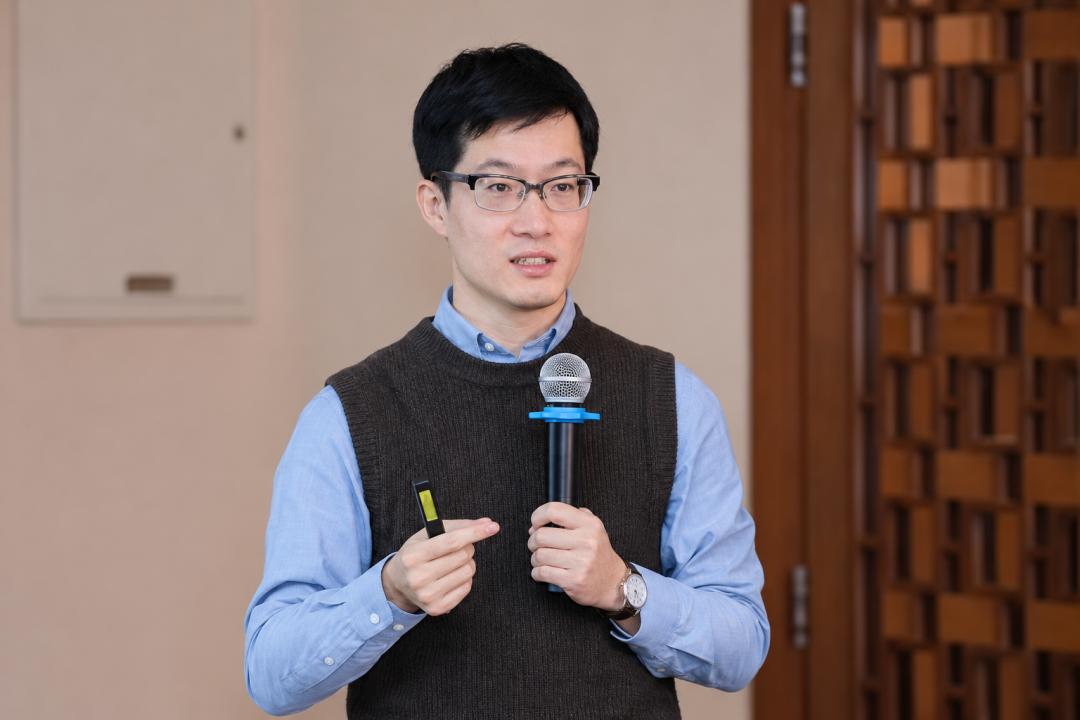
Cui Peng, Chief Scientist of Wenzun Intelligence
When doing research, he prefers directions that enterprises pay special attention to but the academic circle pays little attention to. At Tsinghua, Cui Peng advised his students in the group to stay away from hot spots, "If too many people crowd into one direction, most of the time you can only make trivial incremental progress, and you have no chance to think about underlying and subversive problems." Causal research used to be such a "cold bench" field.
Since 2016, the research group led by Cui Peng has focused on the integration of causality and artificial intelligence, and first proposed and developed the theoretical and methodological system of causality-inspired stable learning in the world, focusing on solving the generalization problem of models in unknown environments — more than ten years of in-depth research has laid a technical theoretical foundation for Wenzun Intelligence's entrepreneurship.
Since 2022, AI research in various fields has accelerated, and the "cold bench" field has gradually become popular, attracting more and more people's attention. In 2022, Cui Peng and Susan Athey, a highly authoritative academician of the National Academy of Sciences of the United States and a professor at Stanford University in the field of causal science, published a perspective paper in *Nature Machine Intelligence*, systematically explaining how stable learning connects causal inference and machine learning; in 2024, the team cooperated with researchers from the National Protein Science Center (Beijing) to publish a study on stable survival analysis in the same journal, further applying causality-inspired stable learning to life science research, which also laid a foundation for the team's modeling work for scientific data.
As the phased academic goals were completed one by one, Cui Peng, who always focuses on solving the pain points of the real industry, found that a gap in the AI landscape has become increasingly obvious —
If large language models correspond to the semantic space and embodied intelligence corresponds to the physical world, then the largest structured data space in the real industry has never had a general foundational model to present the laws and causal correlations within it. This leads to the situation that a large number of tables, sensor time series, process ledgers and other data need "one set of algorithm for one scenario", "one model for one table", "one model for one project". Adding or deleting any variable in it requires the algorithm team to redesign the algorithm and train the model, which takes weeks or even longer, with heavy delivery, poor reusability and high cost-effectiveness ratio.
Enterprises are very concerned about this matter, but it is too unpopular in the academic circle, and few people invest time and energy in it.
Cui Peng decided to start the business on his own.
Since the second half of 2024, he officially started preparing for the startup with his students. Cui Peng pieced together the founding team in his mind from four dimensions: vision, depth, execution, distribution, which correspond to the company's vision (strategic direction), technical depth, execution and delivery, and commercial expansion respectively.
Cui Peng is responsible for vision; Zhang Xingxuan, a postdoctoral fellow with outstanding technical capabilities, serves as CTO; another postdoctoral fellow He Yue serves as COO. The most difficult part to grow out of the laboratory is distribution, which requires good communication skills and marketing sense, so he found Zhang Tianyang, his doctoral student who graduated in 2018 and co-founded PowerLaw Intelligence, to serve as CEO.
In October 2024, Wenzun Intelligence was officially registered and established in Xiong'an New Area. As the main bearing place for the relocation of central and state-owned enterprise headquarters, Xiong'an is gathering a large number of large enterprise headquarters in the fields of petrochemical, energy and metallurgy. The company settled in Xiong'an, standing on the same land as the most core assets of China's real economy from the very beginning.
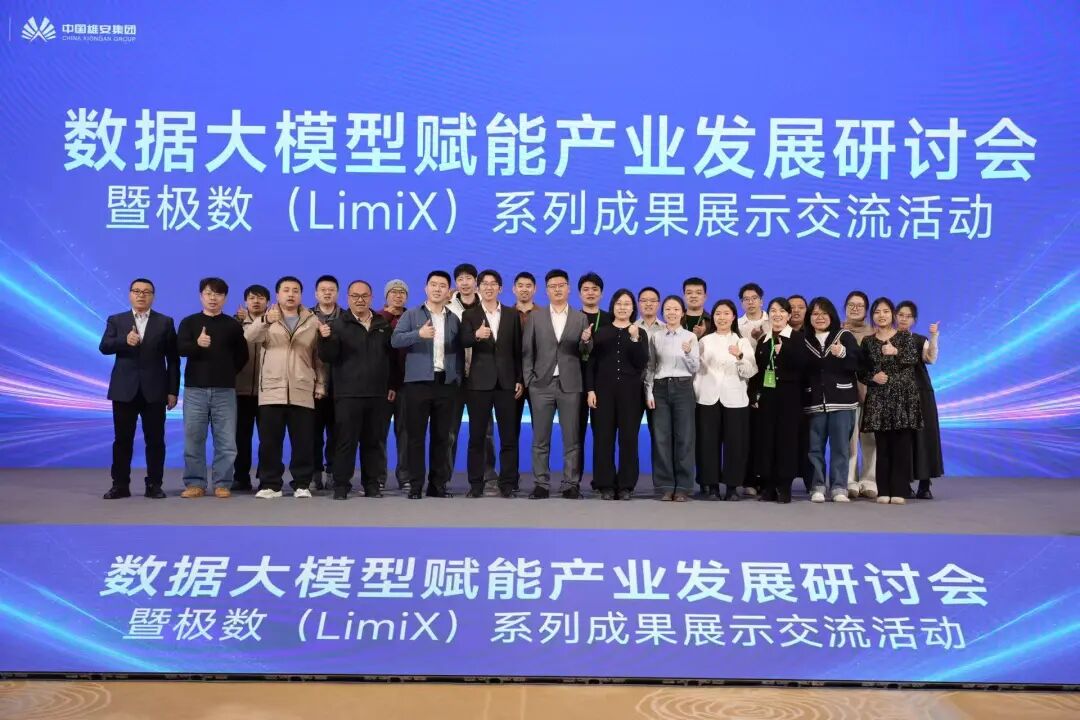
Xiong'an Science and Technology Innovation Angel Fund (Xiong'an Science and Technology Innovation Fund) became the first investor to place a bet — the two sides began to contact in the autumn of 2024, and it took only two months from due diligence, valuation negotiation to final closing and payment. Wenzun Intelligence also became the first project invested by Xiong'an Science and Technology Innovation Fund. This 20 million-yuan angel financing became the first sum of capital for the team to start R&D in the initial stage of entrepreneurship.
After that, the financing opened up the situation: Wenzun Intelligence successively obtained more than 100 million yuan in Pre-A and Series A financing, with investors including Oriental Fortune Capital, CAS Investment, Yu Capital, etc. Until recently, after the completion of the hundreds of millions of yuan Series A+ financing, the valuation of Wenzun Intelligence has increased several times within two years.
CAS Investment, which took the lead in betting on the Series A investment, focuses on AI, intelligent manufacturing and other fields. "We especially expect LimiX to become one of the core foundational large models in China's industrial and scientific research fields, providing important support for the national 'Artificial Intelligence +' strategy." CAS Investment said, "We bet on this team in the early stage, mainly valuing the team's world-leading research achievements and accumulation in the field of causal theory, as well as the team's creativity in combining causal theory with the general training method of large models, and continuously improving the generalization ability of the model through scaling up."
Yu Capital, which has long laid out cutting-edge technology, is one of the co-lead investors of the Series A round. In an interview, it said: "What impresses us most about Wenzun Intelligence is that it has chosen a more difficult original route that is more in line with China's industrial endowment. The team's more than ten years of accumulation in the field of causal learning, plus the combination of Tsinghua faculty and students in technical depth, engineering delivery and commercialization, make it possible for the 'Large Data Model' to move to the forefront of the industry. They have the opportunity to become the definer of the LDM track and a representative Chinese force in global competition."
Breaking records: China's original foundational model reaches the top internationally
Cui Peng talked about a key moment: in 2025, Wenzun Intelligence officially launched the LDM concept and launched the "Jishu LimiX" foundational model.
As two general models, what is the difference between LDM and the well-known LLM?
The most essential difference lies in the source of generality. For example, the generality of LLM comes from that it is an experienced model with extensive knowledge, and the whole world knowledge base is stored in its mind; while the generality of LDM comes from that it is a capability model that understands causality — as long as the model is equipped with the ability to capture the causal relationship behind the data in the pre-training stage, it can be general in any scenario and complete prediction and decision-making.
Behind this is a completely different training paradigm.
In the pre-training stage, the Wenzun team uses the structural causal model to generate synthetic data, covering different variable relationships, generation mechanisms and observation conditions. The model learns causal relationships by restoring the masked data, and infers unknown quantities based on existing information; the architecture designed for structured data models the relationships between variables and between samples at the same time.
This training method aims to endow the model with transferable data modeling capabilities. Facing new research tasks, the model takes the current data as context input, completes the corresponding prediction without retraining a dedicated model for the new task, which provides conditions for reusing the same foundational model in different fields. In the era of model data scarcity, this is a structural advantage.
He made an analogy: people's sensitivity to numbers comes from various math problems they did when they were children. The problems are not real data, but they enable people to form the ability to capture laws. "Capability models do not need real experience, only experience models need it". From shallow to deep, from easy to difficult, the model will naturally emerge with stronger capabilities. "We are equivalent to training the model with Olympiad math problems, and finally the model takes the national college entrance examination in actual combat".
In August 2025, LimiX was officially open-sourced. Many large manufacturers downloaded and tested it, and in scenarios such as key fault diagnosis, new material R&D, equipment maintenance, and power trading, the performance of this general model exceeded that of dedicated models trained by customers with their own years of business data.
With the open source of LimiX, this track has become hot within a year.
In September 2026, the new-generation model LimiX-2 was released, showing a "dominating the list" leading position on the three major international structured data lists of TabArena, TALENT and BCCO, ranking first among all participating models: the same pre-trained model can achieve SOTA in classification, regression and prediction without updating parameters for specific tasks.
In the same month, NVIDIA released Kumo Tabular, directly including LimiX-2 in the performance comparison in its official technical article, and introducing the reasoning efficiency of its new model with it as a reference. This means that the model capability of Wenzun Intelligence has become the benchmark object of leading international technology enterprises.
At the same time, technological breakthroughs have begun to enter the national scientific research system. In August this year, Wenzun Intelligence undertook the new-generation artificial intelligence national science and technology major project "Causality-driven Data-Knowledge Dual Foundational Material Science Agent", promoting the collaborative R&D of large data model and large knowledge model to the key task of material science.
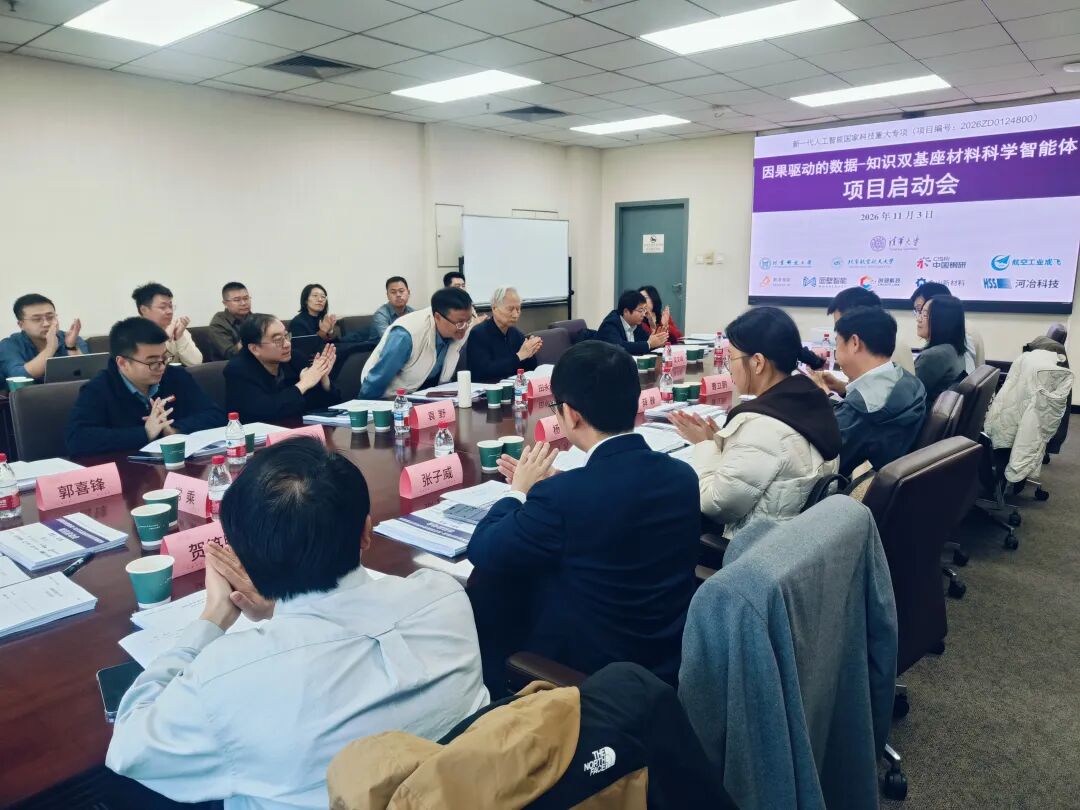
This is the inevitable choice of the path. Large language models have significantly enhanced the capabilities of knowledge acquisition, literature analysis and task planning; while scientific discovery further requires the model to directly process experimental and observation data, establish quantitative relationships, and maintain prediction reliability after research conditions change — the reasoning capability of existing knowledge needs to be combined with the modeling capability for unknown data. This link is related to whether artificial intelligence can deeply participate in scientific research.
For China, the significance of this work lies in forming original foundational capabilities that can develop in coordination with the existing large model system, enabling artificial intelligence to further participate in the discovery of new knowledge and breakthroughs in key technologies.
From a larger perspective, this is not only the entrepreneurial narrative of Wenzun Intelligence, but also an innovative route for Chinese AI based on the endowment of a complete industrial system, which adapts to the local industrial national conditions — moving from technology following to technology leading, and building another pole of foundational force that mutually supports large language models.
Win this battle in the global competition of foundational models
After the direction was verified, forces from all sides poured in eagerly.
As we can feel, the structured data foundational model track has become lively this year — domestic technology enterprises are advancing in the same direction, Xiaomi released the general tabular foundational model Xiaomi-TabLDM; researchers from Ant Group participated in proposing RefineICL to explore the in-context learning mechanism of tabular foundational models.
Looking overseas, in May this year, SAP acquired TabPFN to develop Prior Labs; in June, Google integrated TabFM into BigQuery; after that, NVIDIA acquired Kumo, Amazon launched Mitra... Most of these actions took place after Wenzun Intelligence open-sourced in August 2025.
This track, which was rarely discussed in the past, is attracting more and more entrepreneurs and investors.
What is more breakthrough is that the industrial field is gradually forming a closed loop. At present, Wenzun Intelligence has promoted the implementation of more than 150 scenarios as a whole, and has successively reached strategic cooperation with State Grid Beijing Customer Service Center, Zhongwang United, CNPC (Beijing) Digital Intelligence Research Institute, CISRI International New Material Innovation Center, Eastcompeace, Datang Digital Technology, Liuzhou Iron and Steel, Tencent Cloud, etc. The value of foundational models is ultimately established in real tasks.
In Cui Peng's view, China is a follower in the game of large language models. But in the battle of data foundational models, the theories, open-source foundations and national special projects all grow from China first, plus China owns the most complete industrial system in the world, China holds the winning card.
Of course, this is not an either-or route, which is exactly the meaning of the so-called "dual foundations". Outside large language models, the large data model represented by LDM has an equal status with LLM and a higher development ceiling — one is responsible for understanding semantics and invoking knowledge, and the other is responsible for analyzing experimental and industrial data and identifying variable relationships. The collaboration of the two can support complex decision-making in scientific discovery and real industry.
"We are optimistic about the technical direction of the collaborative development of the 'LLM+LDM' dual foundations. At this stage, increasing investment in the structured data foundational model track not only meets the actual needs of domestic industrial