Working from 7 a.m. to midnight and earning only a dozen yuan per live stream, why do rural women still choose to engage in live streaming?
For these rural women, social media has become the only "job" within their reach, bringing unexpected impacts and changes to their lives.
When Jiang Ziyi was almost arriving at the village where she was conducting field research, she received a message from her interviewee. The interviewee told her that the previously agreed research interview could no longer take place.
From the interviewee's social media account, Jiang Ziyi learned the whole story. Earlier, the interviewee, feeling down, left the village with a female friend to relax in a nearby town and stayed there for one night. The next day, her mother-in-law spread a rumor that she was having an affair, which caused a conflict between her and her husband, who had just returned from working in another city. After that, her husband no longer wanted her to have too much contact with the outside world, including accepting the interview.
Jiang Ziyi is a young creator. Her graduation project focuses on the working conditions of rural female social media creators, and the inspiration for the project comes from the "Bitter Melon Squad" that went viral on Douyin in recent years. The name comes from a teasing summary by netizens of a group of rural female social media bloggers. There are always several key elements in their videos: harsh living environments, long-absent husbands, and young children. Among them, the most well-known and representative blogger is "Xiao Ying's Family", who has more than 4 million followers.
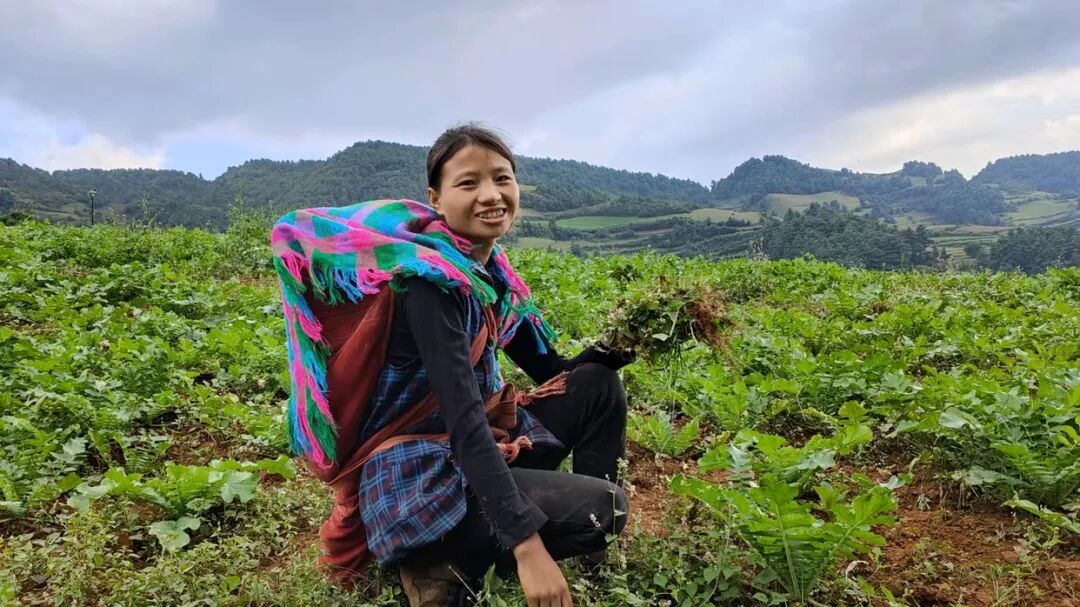
(Photo/@Xiao Ying's Family)
The reasons for the popularity of "Bitter Melon Squad" videos are complicated. The audience sympathizes with their hardships — many "Bitter Melon" bloggers are not actually very old, but because they gave birth early and took on farm work, they often face the so-called "midlife crisis" earlier than their peers, such as haggard looks, marriage conflicts, and reduced income. At the same time, online viewers often rebuke them for being "love-brained" with a mindset of exasperation at their failure to improve, and advise them to "get a divorce quickly and run away". If they fail to do so, they will easily be scolded for having a "little wife mentality", or suspected of just acting out a script.
In addition, since many "Bitter Melon" bloggers come from remote mountain villages in southwest China, their accents sometimes become unexpected viral points. For example, "Xiao Ying's Family" originally became popular because of their catchy catchphrase "mega". People's curiosity about bitter life narratives is also one of the important reasons for the popularity of "Bitter Melon Squad" videos.
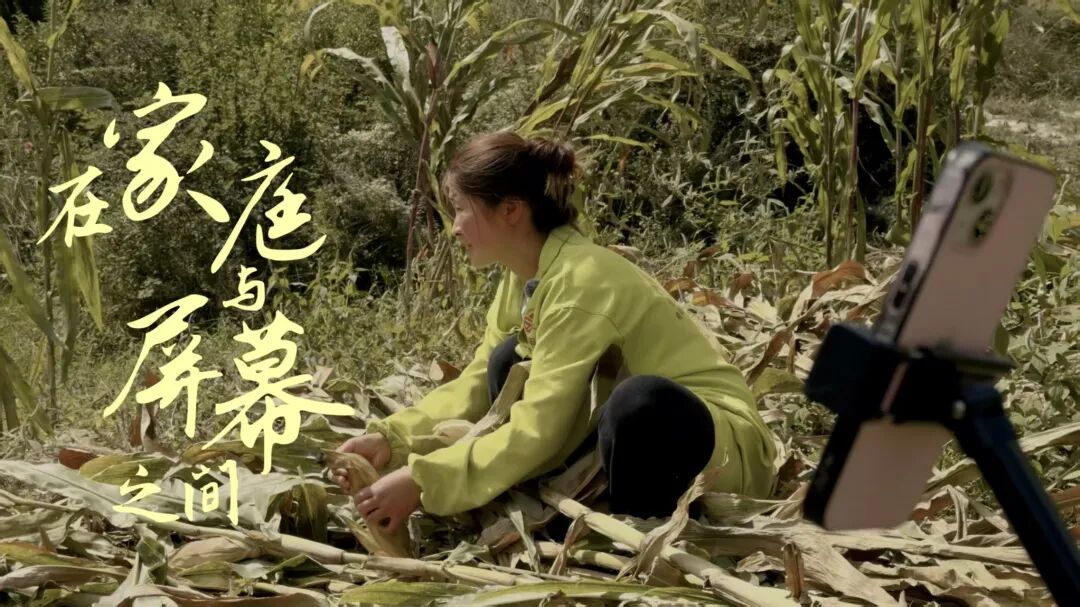
Jiang Ziyi's documentary work Between Home and Screen. (Photo provided by the interviewee)
Jiang Ziyi is more curious about why these people on the screen started shooting videos, and what social media has brought to them. To this end, Jiang Ziyi traveled to rural areas in Yunnan, Guizhou, Guangxi and other provinces with a camera, and shot the short documentary Between Home and Screen.
This short documentary opens a window for people to catch a glimpse of the impacts and changes that the emerging career of social media has brought to rural women.
01
Rural women who start doing social media,
"Working from 7 a.m. to 12 p.m."
Most of the creators Jiang Ziyi contacted are married rural women who have given birth to children. Many of them had experience working in cities before marriage, earning four to five thousand yuan a month in factories. But without exception, they all quit their jobs after giving birth and returned to the village to take care of their children. Their husbands continued to work outside the village, while they stayed at their in-laws' home, shouldering the heavy responsibilities of childcare, housework and farm work.
For them, returning to their hometown to take care of children is almost the "only compulsory path". If they bring their children to the city, it will be difficult for them to live in factory dormitories or shared rental houses as they did before marriage, and they have to rent a whole apartment. Traditional factories or service industries require fixed attendance, which means they also need to ask family members to help take care of the children when they are at work, and the cost of living will suddenly rise to a level that the family cannot afford. Therefore, returning to the village has become their only choice after giving birth.
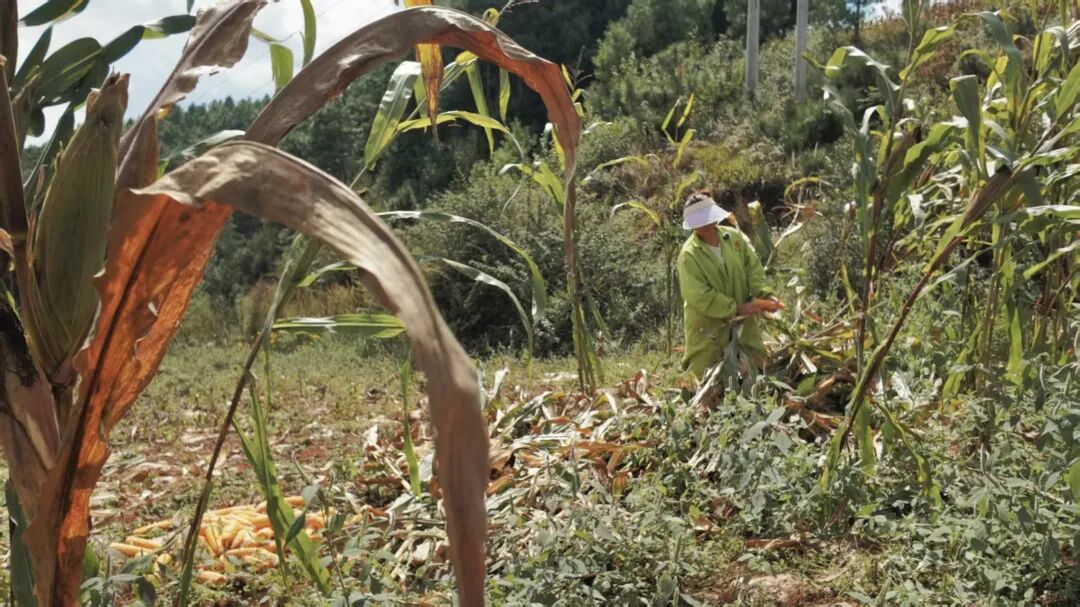
Rural women engaged in social media usually have to undertake both physical labor and digital labor at the same time. (Photo provided by the interviewee)
Jiang Ziyi observed that most of the villages where the interviewees live are scattered in the mountains. It takes one or two hours' drive from the nearest surrounding town to the village. At a glance, more than ten relatively new houses are built along the road, low old houses are scattered on the hillside, and there is nothing else except fields and houses. This means that the villagers have almost no other local career options besides farming.
In this context, doing social media has become the only "job" within the sight of these rural women.
In their opinion, the entry threshold for this job is extremely low. There are many relevant tutorials on short video platforms, and they can start shooting with just a mobile phone and a stand. It also does not delay their daily childcare and work, which seems to be the "destined job" for rural mothers. As for the shooting content, they initially thought it was very simple — just "shoot whatever you are doing", but after actually practicing, they found it not easy. "Almost all interviewees mentioned that they became much more tired after starting to do social media."
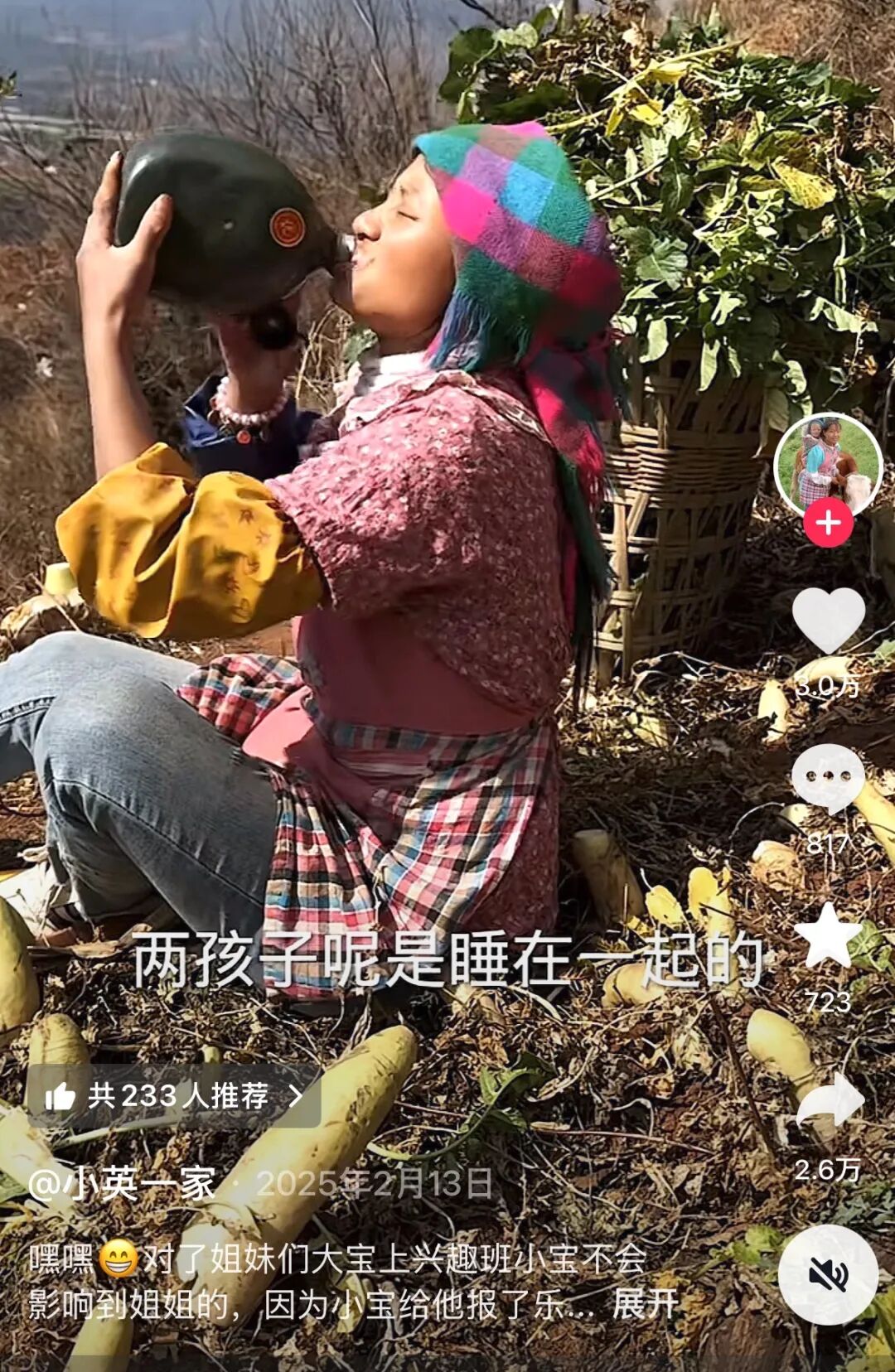
"Bitter Melon" bloggers need to shoot while doing farm work. (Photo/@Xiao Ying's Family)
After summarizing, Jiang Ziyi found that the daily working hours of "Bitter Melon" bloggers can sometimes reach an astonishing 16 hours — they usually get up at six or seven in the morning, prepare breakfast for their family, send their children to school, then go home to prepare dishes, do laundry, feed livestock or work in the fields, with their mobile phones set aside to shoot.
In order to make the picture more varied, they need to stop from time to time in the middle of work to adjust the camera position, and then select usable parts from the scattered shooting materials at night to edit into a finished video. For example, when cooking, they need to shoot not only the full view, but also the close-up of cutting vegetables and stir-frying; when breaking corn in the field, they need to change the shooting angle appropriately. These are the shooting skills they learned from the Internet.
Housework and farm work are their day shifts, and social media work is the highlight of their night shifts. Since eight or nine o'clock in the evening is the peak of live streaming traffic on short video platforms, they will start live streaming after arranging their children, and it is often 11 p.m. when they finish. But the work is not over at this time: the videos shot during the day need to be edited, and the orders and after-sales services in the store window need to be processed and replied to.
The next day, when the sun rises again, the same life repeats.
The digital labor brought by social media is superimposed on the physical labor that these rural women already undertake. Since they have not systematically learned social media operation skills such as live streaming, product selection, and sales, they can only try while observing similar accounts, exploring what kind of titles will attract more people. One violation or account anomaly may interrupt their days of accumulated efforts.
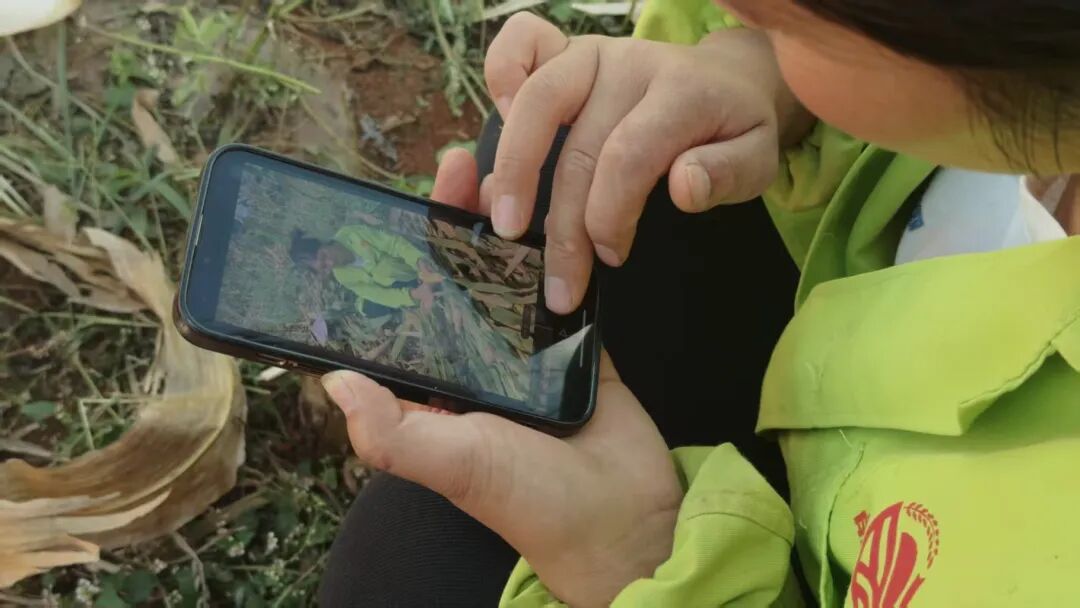
"Bitter Melon Squad" bloggers figure out editing and live streaming skills by themselves. (Photo provided by the interviewee)
However, compared with the large amount of time they invest, the rewards ordinary creators get are far from considerable.
Jiang Ziyi saw the live streaming backend data on the interviewees' mobile phones and found that the income gap between top-tier, mid-tier and new bloggers is very large. Among the interviewees, those who have just started doing social media and currently only have hundreds or thousands of followers may only earn a dozen yuan from a two-hour live stream. For Wang Lin, the blogger with the largest number of followers among the respondents (currently 110,000 followers), her monthly live streaming sales volume is at the level of one to two thousand yuan.
Jiang Ziyi introduced that Wang Lin sells potatoes grown by her family on her account. The one to two thousand yuan refers to the sales generated by live streaming, excluding the commissions she may get at other times. In Jiang Ziyi's view, the time cost these rural women put into social media is not proportional to the material rewards they get, and the income is not as good as what they earned when they worked in cities, but it is still a little better than having no income at home.
Factory work has clear working hours, but this social media work embedded in family life has no clear boundaries. The fields and the kitchen are not only their home, but also their workstations. In Jiang Ziyi's view, social media is a double-edged sword for rural women. It brings new income and new social connections, but also increases their labor burden and mental pressure — almost all interviewees mentioned that they had been criticized by family members or villagers for doing social media.
02
The urban-rural time gap that the Internet failed to eliminate
At present, "live streaming villages" are emerging all over the country. It is very common in the eyes of many people for rural residents to engage in social media, try live streaming and e-commerce.
The well-known "Taobao Village" Wanqian Village in Heze has transformed into a "live streaming village" after the rise of short video platforms. Villagers who originally ran online stores rushed to start live streaming to sell their own products. The local village Party secretary mentioned in an interview that the village is very quiet in the morning, because "most of them live streamed until the early morning the night before, and they all rely on making up sleep in the morning".
However, this "common sense" has a cognitive time gap in a few remote mountain villages. Rural women who are the first to try social media and live stream late into the night with their mobile phones may be regarded as oddities in the local area.
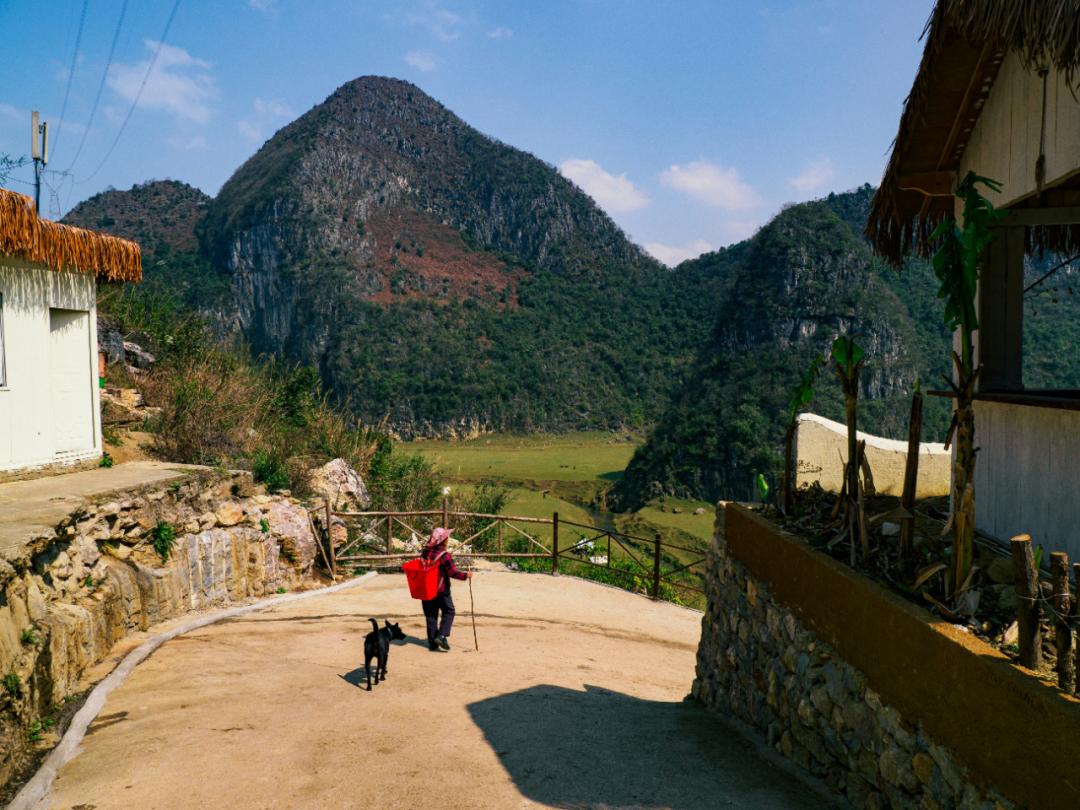
Villagers living in remote mountain villages have limited job opportunities to choose from. (Photo/unsplash)
Almost all the women Jiang Ziyi interviewed have experienced doubts from their family members. When they first walked around the house with their mobile phones, their husbands and parents-in-law did not believe that they could make money from it, and thought they were just playing with their phones. When villagers see someone setting up a stand and talking to the camera, they will also think that person is "crazy" or "not abiding by their duties".
These evaluations are obviously based on traditional expectations for rural women: women should be busy in the fields or around the stove and children, should not appear in the public view frequently, let alone take the initiative to show their faces in public.
The woman mentioned at the beginning of the article who had a conflict with her family, before Jiang Ziyi met her, learned something about her conflicts with her family from her account. Her mother-in-law had strict requirements for her, and was quite critical of whether she worked neatly and took care of the children wholeheartedly. At the same time, her mother-in-law did not think highly of her doing social media, thinking that "shooting short videos is not a proper job". After that, Jiang Ziyi found the local village Party secretary to act as an intermediary, went to the woman's home to communicate with her husband, and finally completed the interview.
Interestingly, the cognitive time gap not only exists in remote mountainous areas, but also among urban netizens. Netizens who often brush up on "Bitter Melon" videos often question that these women's videos are staged. They mentioned helplessly in the interview that they often receive nitpicking comments: "Is there really such a poor place in XX province? Are there still brick stoves? I am from XX province, how come I don't know? It's fake!"

Many netizens question the authenticity of "Bitter Melon" videos. (Photo/screenshot from social media)
Familiarity with the rules and gameplay of Internet traffic makes some netizens naturally more skeptical. They often believe that as long as a blogger has tens of thousands of followers and traffic, they must have made a lot of money.
Once, Wang Lin was favored by a cosmetics company, which invited her to the company's base to participate in product promotion. But the car and house of this company appeared in the shooting footage, and soon some netizens regarded them as her property, and then suspected that the rural life she had shown for a long time was a script.
Similar scrutiny runs through the accounts of these women. Netizens comment on their appearance, hygiene habits, marital status, and parenting methods, and repeatedly ask them why they don't get a divorce and why they don't go out to work.
Jiang Ziyi went directly to the homes of some interviewees. In her view, the life shown by these "Bitter Melon" bloggers in their accounts is relatively consistent with their actual living conditions.
The suggestions put forward by netizens such as going out to work and escaping from the family may be out of kindness, but not everyone has the ability and opportunity to achieve them. Limited savings, remote location leading to limited understanding of the outside world... Many objective reasons limit the life radius of these women. For them, region, marriage, children and income are tightly intertwined. Sometimes when they want to make changes, they must have the determination to overthrow everything.
