Niche preferences in the beauty and personal care sector are growing into a way of life.
This year during the Double 11 Shopping Festival, the items in people's shopping carts are quietly changing.
Damaged hair from perming and dyeing needs repair, the scalp requires pre-wash care, and shampooing is no longer just about cleaning the hair itself.
Besides functional effects, face creams are now expected to deliver the texture of premium fragrances to please people's mood at any time.
People who travel for business pursue efficiency, and need to quickly restore their hair to a good "texture" so that they can go out and meet people decently at any time.
1-liter shampoo bottles and full-range skincare sets are still on the restock list, but there are more "new options" in people's shopping carts to address different issues. Many people are using the Double 11 event as an opportunity to fill the small gaps on their dressing tables and try care experiences they have never had before.
Attention to the details of "top priority" matters, as well as the healing and self-pleasing experience during skincare, have become things that a number of users take very seriously.
Behind this lies a shift in shopping logic: people used to snap up goods by category, but now they look for targeted solutions for specific problems based on scenarios, personal status, and body parts. A restock list is turning into a lifestyle proposal.
This change is also reflected in the data of this year's Tmall Double 11 Shopping Festival.
The change first occurred within product categories. "Oil-based skincare" is booming across the entire beauty and personal care industry. In the past, oil-based products were almost exclusive to international big brands, with facial essential oil as the core. As consumer demands become increasingly refined, oil-based skincare has moved past the general era where "one bottle of oil is used from face to feet", and entered a segmented era where there are dedicated products for the eye area, lips, and different body parts. The roll-on eye oil from Fulumanpu, lip oil from Formia, bath oil from Yujian, and body care oil from Freula have refined oil-based skincare to every part of the whole body. In the personal care industry, bath oil, which was a relatively niche product 5 years ago, has become a preferred bath item for consumers in autumn and winter, solving the problem of dry and flaky skin in cold seasons. It has also spawned a new track of body care oil, which has achieved double-digit high growth and nurtured nearly 50 brands with annual sales of over 1 million yuan.
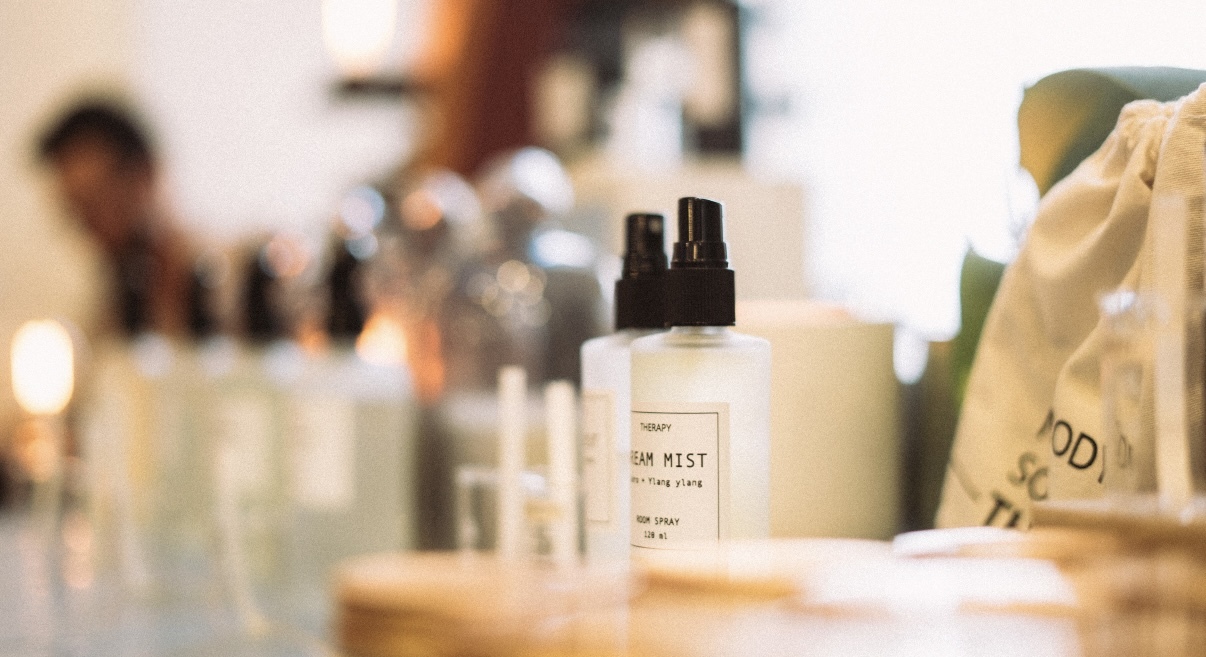
In the past, the most common demands for shampoo were dandruff removal, oil control, hair smoothing and anti-hair loss. But now, the washing and care list in shopping carts is more finely split: the scalp and hair strands need separate care, different products are used for daily washing and long-distance business trips, and people can start their first try with smaller packaging specifications. The scalp is now treated as skin, with scalp serums, hair care essences, sprays, single-use sachets and ampoules emerging one after another. Only for the old demand of anti-hair loss, there are about 100 brands with annual sales of over 1 million yuan.
The most finely segmented part is the body. Consumers used to only favor the single category of body lotion, but now their demands are refined to body serums, hand masks and foot masks. Even for tiny parts like nails, there are segmented products such as cuticle oil and nail repair cream. More and more domestic Chinese brands enter the market based on these segmentation trends, and have grown into million-yuan annual sales brands focused on hand care and detailed care, such as Buglimi, Anye House and Van Reed.
These new brands grown out of specific demands, and the new items in shopping carts, are more like targeted solutions provided by treasure new brands for consumers' specific problems.
01. The washing and care list is getting longer and longer
Among these increasingly segmented demands, a number of new brands have stood out first: brands that treat the scalp as the face, brands that make aromatherapy part of daily life, and brands that build a complete style system. They start from different points, but all begin with solving a specific problem.
Sipasin is one of the earliest brands that captured this change. Founder Zheng Rujing observed in the anti-hair loss clinic for two months, and found that young women are not only troubled by hair loss, but also by excessive oil secretion and flat hair. Dry hair spray can make hair fluffy temporarily, but there are other requirements for daily shampooing. During the 2025 Double 11 event, the transaction proportion of Sipasin's shampoo category exceeded that of dry hair spray for the first time.
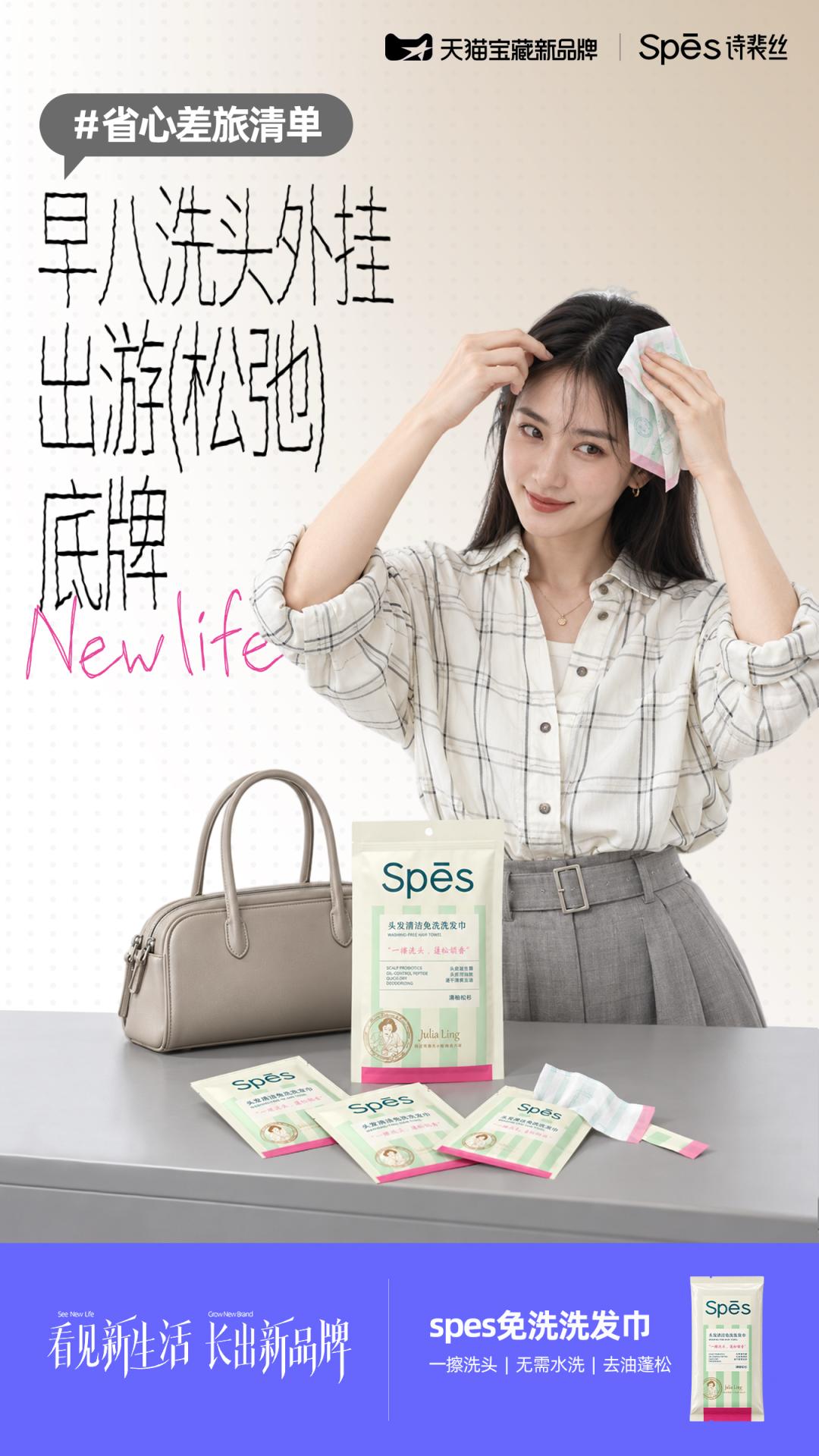
Around the same demand, the brand gradually launched the polypeptide fluffy hair bottle and no-rinse shampoo wipe, completing the usage scenarios in different situations. The market has given positive feedback. The polypeptide fluffy hair bottle ranked first in Tmall's shampoo category as early as February this year, and continued to top the ranking in July, August and September.
The no-rinse shampoo wipe had to pass another threshold first: many people had never used such products before. Combining the trial scenario of Tmall U First and the platform's judgment on the industry, the brand launched a small-sized version for bangs. For consumers, their first attempt can start with lower cost; for the brand, the understanding of user groups has been integrated into product design.
Before the Double 11 event, Sipasin prioritized member sample distribution as a key investment, giving consumers the chance to try products before buying. The cooperation between Sipasin and Tmall Treasure New Brands also focuses on new products and exclusive customized models, guiding the interest generated from off-platform content to in-store search. What it values more is the choice after trial: people who bought the shampoo wipes will later purchase dry hair spray and polypeptide shampoo. In the phased ranking of this year's Double 11, Sipasin ranked first in Tmall's personal care must-buy list, first in the no-rinse hair care spray list, and also took the first place in the Tmall Treasure New Brands personal care list. The trust accumulated from small categories has begun to support the brand to enter the larger washing and care market.
Handeshi targets a group of people who are already used to serious skincare. They will check product ingredients and are used to step-by-step care, and they bring the same requirements to their scalp and hair strands, forming new purchasing standards for washing and care products.
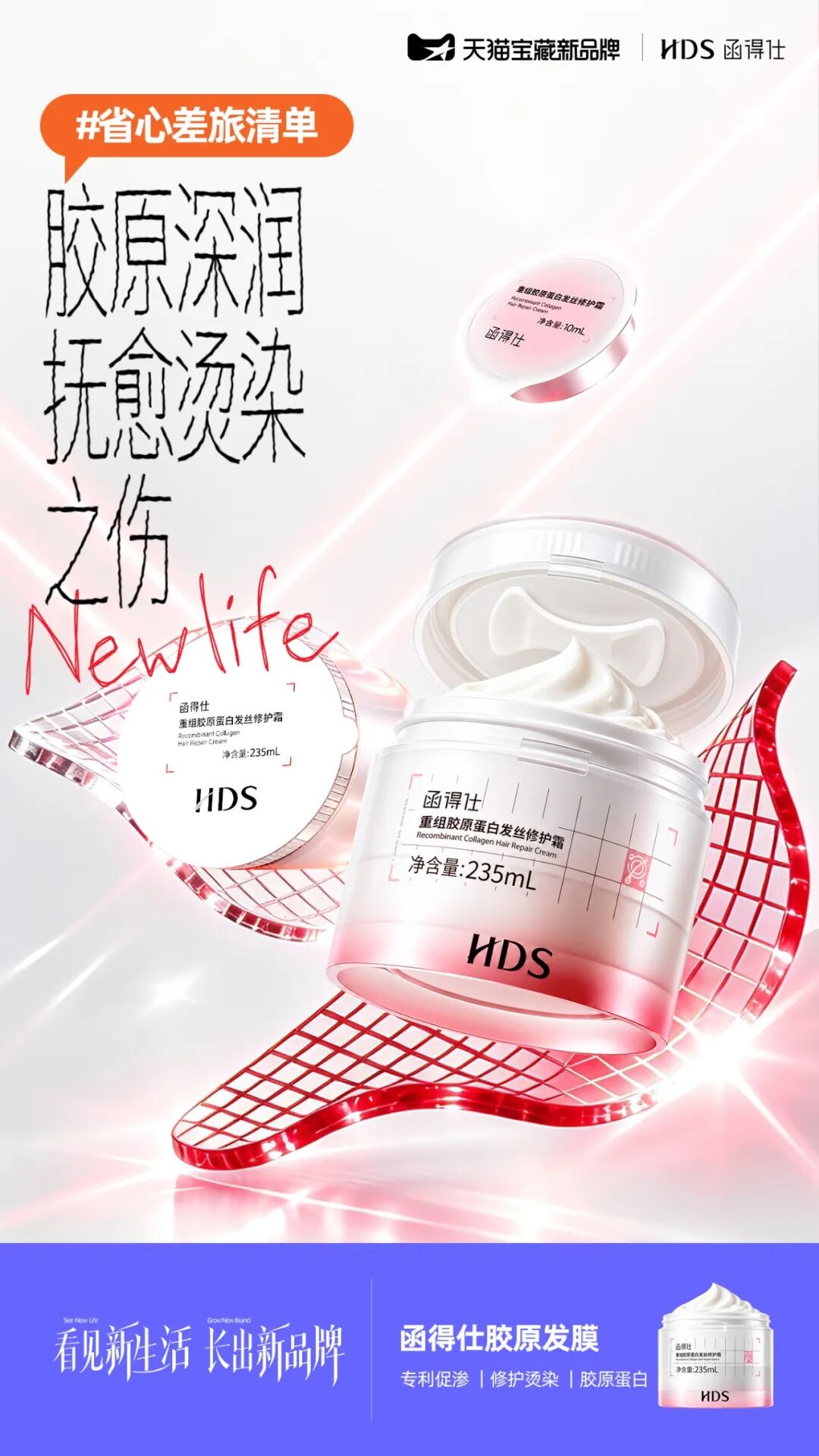
Handeshi applies recombinant collagen to washing and care products, and makes hair masks into single-use individual sachets. The familiar form is easy to understand, and the small packaging makes it easier for consumers to try for the first time. During this year's Double 11 event, the brand continued to boost its core best-selling repair hair mask through top live streamers, and deeply participated in the Tmall U First Sample Festival to attract new customers with low-threshold trials. Sample distribution has also expanded from hair masks to shampoos and anti-hair loss essences, driving new product trials with best-selling items, and improving distribution efficiency with limited-time discounts.
During the Double 11 period, Handeshi's sample distribution storage target completion rate exceeded 100%, and the new customer rate exceeded 80%; the sum of GMV generated from sample distribution and 30-day repurchase GMV contributed more than 20% of the store's total business. Chen Zhangyuan, deputy general manager of Handeshi, told 36Kr that during this year's Double 11, Handeshi mainly promoted the anti-breakage repair shampoo, and used the "Treasure New Brands" resource to reach people with perm and dye damaged hair, so that new products can be seen by consumers in need earlier, while old customers get priority experience through the membership mechanism.
"We are very confident in our products, and we have got a positive feedback loop on Tmall, with the repurchase proportion of old customers stably staying at 40%. For functional new brands, certainty itself is efficiency." Chen Zhangyuan said.
In the past year, Tmall Treasure New Brands has been continuously tracking trends such as scalp care and functional hair care, finding demands from consumers' search and purchase behaviors, and then finding brands that can provide specific solutions. The platform's accompanying support plan is also carried out along this line, helping new products cross the threshold of being put into the shopping cart for the first time, and turning the attention generated during big promotion events into subsequent repurchases.
The demands in shopping carts are getting more and more specific. In the mature market, new reasons for purchase are still emerging. If a new brand can fully take care of a small specific demand, it will have the opportunity to enter the daily life of a group of people starting from one single product.
02. Scent has become a part that people carefully select
Functional effects solve practical problems, while another type of choice takes care of people's feelings. In the beauty and personal care field, usage experience and aesthetic preferences also affect whether people will repurchase products.
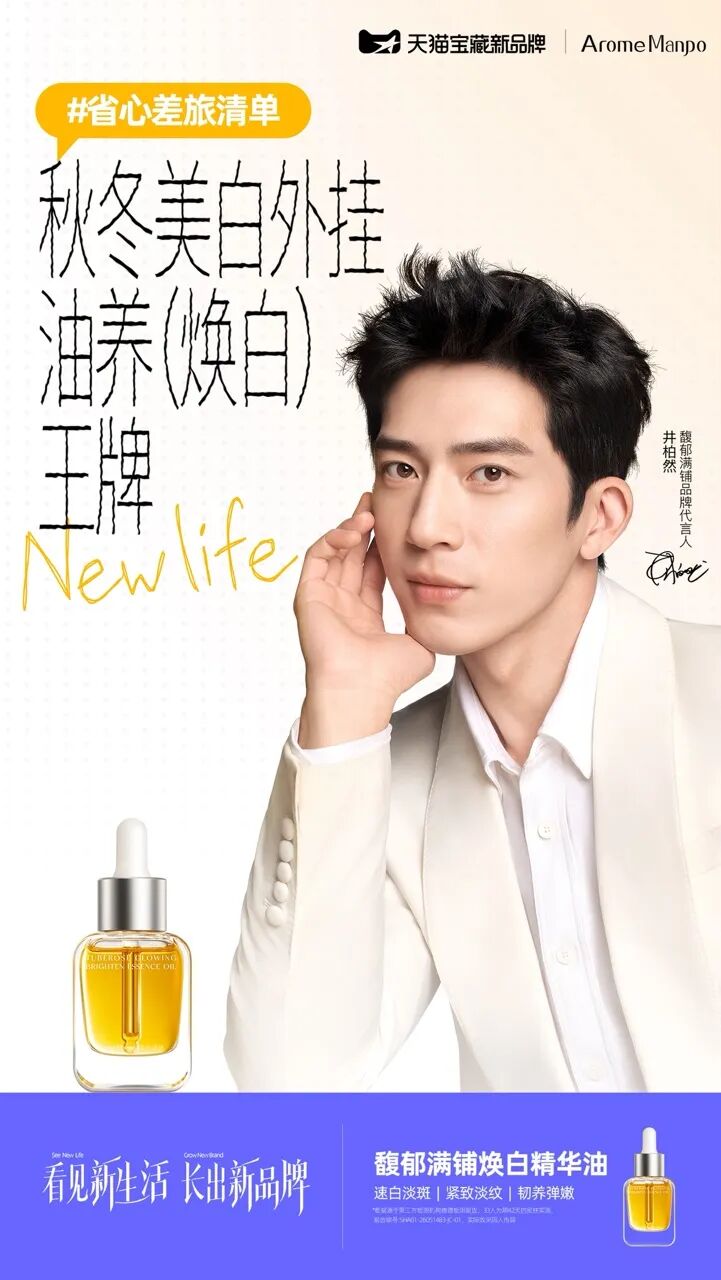
Fulumanpu, the dark horse of domestic Chinese brands, chose tuberose as its core scent, because the process of applying a product itself can also become a reason for purchase. The founder, who used to be an aromatherapist, hoped to provide a relaxing space for customers when running offline small stores; after shifting to online business, this dedication has been brought into daily skincare. In August and September this year, the tuberose face cream and balm mask were successively added to the product line, providing different textures and usage methods for the same preference.
As a result, scent has changed from an attached description of commodities to a part that consumers are willing to carefully select.
This preference is remembered before the concept is formed. Fulumanpu told 36Kr that the number of people searching for the brand name, tuberose and specific products is significantly higher than the number of people searching for "emotional skincare". Consumers may not recognize a trend first, but they can clearly know what they like. The memory left by a certain scent can also add reasons for a skincare product to be chosen again.
After the two new products were launched for the first time on Tmall, Fulumanpu invited members to try them first. The cooperation with Treasure New Brands in the past two years has helped it analyze store operation and industry changes, and reach more potential users in the early stage of new product launch. Zhu Hui, co-founder of the brand, revealed that about 3 hours after the Double 11 sale started, the brand's total transaction volume exceeded the total transaction volume of the entire Double 11 event last year. She said that Fulumanpu increased its investment on Tmall this year, and all new beauty and personal care products it launches will be first released on Tmall.
What supports this decision is a set of user quality data: the repurchase rate of core single products on Tmall can reach more than 30%, which is significantly better than other channels. After the first batch of users who have personally tried the new products are obtained, the kind of experience that cannot be conveyed through the screen will have the opportunity to enter more people's daily life.
03. Cosmetics are the confirmation of a certain aesthetic preference
Moving from good usability to pleasant scent, and then one step further, comes good appearance. The choices in cosmetics are closer to the confirmation of a certain aesthetic preference. During this year's Double 11 event, Flower Knows, a domestic Chinese beauty brand established ten years ago, ranked 6th on Tmall's cosmetics list. As a well-known cosmetics brand acquired by Proya, Flower Knows' core users are women aged 18 to 25 in first-tier and second-tier cities. The brand launches 3 to 4 times a year, with 25 to 30 products each time, unifying packaging, embossing and color matching under one theme. Customers can prefer a certain season's collection, or keep waiting for the next new launch.
For this group of people, cosmetics need to be not only suitable for use, but also in line with their personal aesthetic taste.
Every time a new series is released, Flower Knows quickly starts promotion through cooperation with Tmall, linking internal and external resources to expand exposure, and the Tmall flagship store receives users who have seen the products on content platforms and actively search for the brand.
Yang Zifeng, founder of Flower Knows, told 36Kr that the proportion of old customers accounts for about 30% on ordinary days, and can exceed 60% during new product launch periods. The number of fans of the Tmall flagship store maintains an annual growth rate of over 20%, the number of members increases by more than 35%, and the overall user assets increase by about 50% every year. A sufficiently clear style can become a reason for people to come back repeatedly.
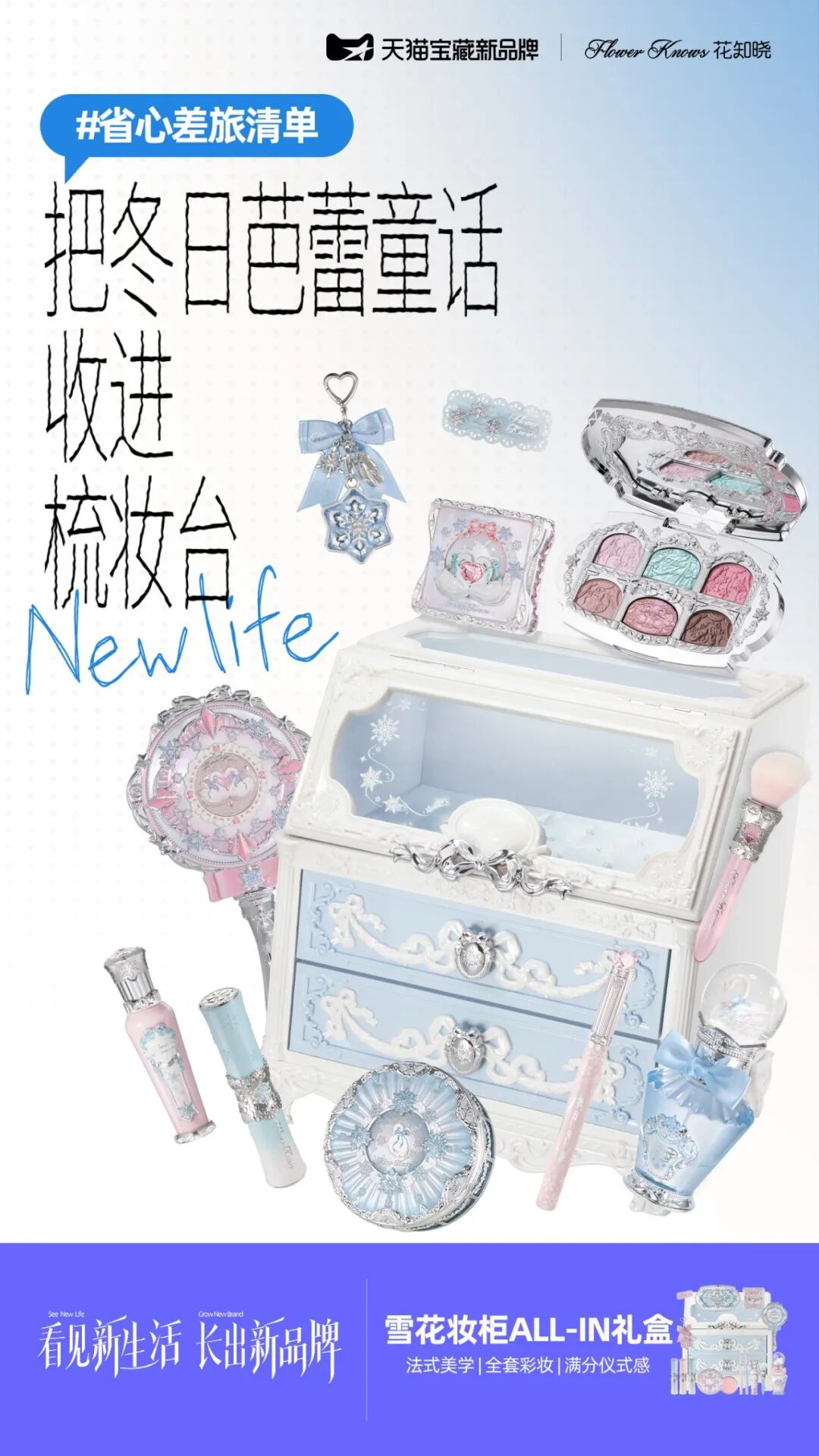
From how to take care of your hair, to what scent you smell during skincare, and whether you like the appearance when opening a cosmetic box, consumers have interpreted "good usability" in a more detailed way. A commodity can stay in people's life, usually because it takes care of this specific demand. The relationship between new brands and users has also become firm from this point.
These scattered choices in shopping carts point to the same change in consumption logic: consumers are more willing to pay for specific demands.
Tmall Treasure New Brands is looking for brands along these clues, and providing operation support at different growth stages of these brands.
Whether a new product can continue to sell well is also related to whether a group of people can find suitable choices for themselves in the long run. Restocking still has its value, and niche preferences can also become a stable lifestyle for a group of people. The market can reserve positions for them. From restocking goods to restocking a certain lifestyle, what is added to the shopping cart is people's more specific proposition for daily life. A mature consumer market deserves to accommodate more diverse lifestyles.