Jensen Huang resigns, can the "Three Queens of Apple Supply Chain" still keep a firm foothold in the NVIDIA supply chain?
Yesterday, Jensen Huang resigned from his positions as NVIDIA President, Chief Executive Officer and Director, a personnel change that shocked the whole world and quickly spread across NVIDIA's supply chain.
As of the close of trading on November 12 Eastern Time, TSMC closed down 1.90%, SK Hynix closed down 3.19%, and ASE closed down 4.05%.
For the "three queens of the Apple supply chain" who have just sat at the gaming table, new variables have been added to the chess game ahead.
Not long ago, Zhou Qunfei of Lens Technology returned to the throne of the richest woman in China. The last time she topped the list was 11 years ago, when the label attached to her was still "Apple supply chain". This time, she just obtained the certification in the direction of NVIDIA cabinets through a detour via an acquisition.
Shortly after Zhou Qunfei, Zeng Fangqin's Lingyi iTech also spent 875 million yuan to acquire Liminda at a premium of more than 34 times, obtaining both AVL and RVL certifications for NVIDIA liquid cooling heat dissipation; Wang Laichun, relying on a high-speed copper cable laid for Apple ten years ago, led Luxshare Precision to meet the rigid demand for AI cabinet wiring and entered Jensen Huang's supplier list early.
More than ten years ago, they honed their hard manufacturing strength under Apple's strict supply chain standards and were crowned the "three queens of the Apple supply chain". Now, they have unanimously transferred their capabilities to AI servers and sat at the same gaming table again.
But at the moment, they not only have to face direct competition with global native computing power players and manufacturing giants, but also deal with the new storms emerging on this table.
A
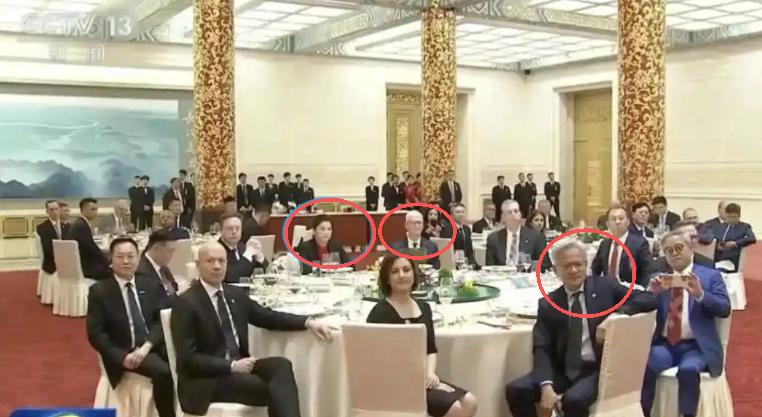
Back in May this year, at the welcome banquet for Trump's visit to China held in the Great Hall of the People, Zhou Qunfei sat between Tim Cook and Elon Musk, with Jensen Huang sitting opposite her.
Cook is an old friend of Zhou Qunfei's. In recent years, Cook has visited China many times. As long as he participates in activities related to the supply chain, Zhou Qunfei can always be seen. Musk is her new friend. "Tesla" appeared for the first time in Lens Technology's 2019 annual report, but in fact, as early as 2017, the year when Model 3 was put into mass production and ramped up, the central control screen glass of Lens Technology had entered Tesla's global supply chain and gradually become its tier-1 supplier.
Jensen Huang, sitting opposite, represents the future that Zhou Qunfei has actively bet on.
At the end of last year, Lens Technology signed a letter of intent to acquire PMG, and took a detour to acquire Zhejiang Yuanshi, which is controlled by PMG. Yuanshi is one of the few manufacturers in the world that have obtained NVIDIA RVL cabinet direction certification. Its products cover AI server racks, slide rails, busbars and integrated liquid cooling modules, which can support NVIDIA's MGX platform.
In the past October, Lens Technology finalized the formal acquisition agreement. If the transaction is completed smoothly, Lens Technology will obtain approximately 63% of the equity of Yuanshi.
In fact, Lens Technology has already laid out production capacity for liquid cooling and server structural parts. When it comes to hardware manufacturing alone, it can completely build its own production lines and polish its products slowly. The reason why it spent a lot of money to acquire Yuanshi is to skip the long certification cycle and directly obtain the scarce admission ticket to NVIDIA's computing power ecosystem.
Zeng Fangqin also obtained the NVIDIA admission ticket through the same "buy and buy" strategy.
20 days after Zhou Qunfei signed the PMG letter of intent, Zeng Fangqin spent 875 million yuan to acquire Liminda. The core goal of this transaction with a premium of more than 34 times is to obtain the NVIDIA AVL and RVL dual certifications held by Liminda, which represent the top supplier qualification in the field of AI server liquid cooling heat dissipation.
At the OCP Global Summit in October this year, Liminda, which has been acquired by Lingyi iTech, has appeared on NVIDIA's ecosystem display wall as a NVIDIA MGX ecosystem partner, showcasing the Inner Manifold water separator and the new generation ZQD quick-release connector on site.
Earlier in June this year, at COMPUTEX 2026 Taipei Computer Show, Jensen Huang raised his glass at the end of his keynote speech to thank global partners. His playful line "You’re so rich now" was called the "Trillion Yuan Feast" of the computing power industry by the market.
On that long list, Luxshare Precision is one of only two A-share companies on the list, standing side by side with TSMC, Foxconn and Amphenol.
Wang Laichun, who came out of the Foxconn assembly line, was the last of the three to enter the "Apple supply chain". In 2011, the year when Cook just took over as Apple's CEO, Wang Laichun spent 580 million yuan to acquire 60% equity of Kunshan Luntuo, which produces iPad connecting wires. Since then, Luxshare has entered Apple's supply system for the first time.
Starting from wires and cables, it successively won the assembly orders for AirPods and Apple Watch, then acquired Wistron's iPhone assembly plant, and gradually expanded its business from components to complete machines.
But few people noticed another hidden line: Luxshare began to independently develop Optamax high-speed copper cable technology back in 2014. At that time, Wang Laichun wanted to solve a very simple problem: high-speed signals running in thin copper wires would degrade once bent and attenuate once the transmission distance was long.
But ten years later, this copper cable suddenly became a hard currency. The demand for interconnection inside AI cabinets exploded. Optical fibers are expensive and complex, while this set of copper cables combines bendability and low signal loss, which perfectly matches the rigid demand for high-density wiring of NVIDIA cabinets.
In 2024, the two sides established a direct cooperative relationship, and Luxshare officially entered NVIDIA's supply chain; at the GTC conference in March last year, Luxshare Precision appeared in the special ecosystem partner exhibition area set up by NVIDIA with its high-speed cable solution, and its MCIO connectors have been shipped at the million-level in global data centers; this year, the high-speed copper backplane around the Rubin platform is also under development.
Whether through acquisition or independent research and development, all three of them finally obtained the admission tickets to NVIDIA's computing power supply chain.
B
He who gets Apple wins the world. In the past 15 years, under the Apple growth dividend, a large number of Chinese "Apple supply chain" enterprises have achieved great success, not only obtaining considerable financial returns and high valuations in the capital market, but also modern management experience and industry-leading technical capabilities.
But making money from Apple is not easy. An important reason why Apple can always maintain an ultra-high gross profit margin is that its cost control for downstream manufacturers is almost harsh. There is a saying circulating in the industry called "take orders in red ink, ship goods in blue ink", which means that when accepting orders according to customer requirements, the company is often in a loss-making state, and only through fine control of the whole process can it achieve profitability when finally shipping the goods.
When the dividend is still there, the strict cost control can be digested by the continuously expanding order volume. But once the growth slows down, the cost pressure will directly erode the profits of Apple supply chain enterprises.
At present, from the market perspective, the smartphone replacement cycle continues to lengthen, and the global overall market increment has peaked. As for Apple itself, its innovation has been insufficient in recent years, the proportion of service revenue is getting higher and higher, and its dependence on the hardware business is getting lower and lower.
At the same time, affected by the tariff war, China's share in Apple's supply chain continues to shrink, and the cake is divided to emerging labor markets such as Vietnam and India.
What lies ahead of the "Apple supply chain" enterprises is not only the shrinking increment, but also the continuously squeezed profit margin. The net profit margin of Luxshare Precision dropped from 11.16% in 2015 to 5.47% in 2025; Lens Technology dropped from a high of 13.41% in 2020 to 5.40% in 2025; Lingyi iTech dropped from 17.49% in 2017 to 4.52% in 2025.
What's more, the Apple supply chain can create wealth, but it can also turn its face quickly. OFILM is a lesson from the past. After its cooperation with Apple was terminated, the production lines built specifically for Apple were almost scrapped, and it lost 2.625 billion yuan in one year.
Therefore, in recent years, the giants of the Apple supply chain have successively bet on emerging tracks to seek new business increment.
Automotive electronics has also become the common choice of Zhou Qunfei and her peers. Luxshare acquired the German automotive wiring harness giant Leoni for about 525 million euros, to provide complete automotive electronic systems for car manufacturers, taking wiring harnesses and connectors as its basic business, while expanding products related to smart cockpits, domain controllers and chassis.
Lingyi iTech has successively acquired two enterprises, Jiangsu Keda and Zhejiang Xianglong, to supply interior and exterior trim parts, transmission parts and other products for mainstream car manufacturers, and promote the "car-machine symbiosis" strategy; Lens Technology has extended from vehicle-mounted panels and cockpit decorative parts to automotive glass, started the construction of window glass production capacity, and focused on laying out multi-functional products such as sky curtains and dimming glass.
But it is difficult for the automotive track to produce a second Apple. This track can bring increment, but it is difficult to replicate the dividend of the consumer electronics era. The whole vehicle market is highly fragmented, trapped in price wars for years, and profits are continuously squeezed to the whole vehicle end, leaving an even thinner profit margin for component manufacturers.
That is precisely why the Apple supply chain giants have begun to divert resources to tracks such as AI computing power, humanoid robots and AI terminals.
C
However, at present, although they have squeezed into Jensen Huang's gaming table, these three enterprises are still "Apple-affiliated" companies in terms of revenue proportion.
In other words, Apple supply chain enterprises do not really want to get rid of Apple, their "bread and butter", they just do not dare to put all their eggs in one basket.
This is not difficult to understand. This year alone, Apple has surpassed NVIDIA twice to top the market capitalization list. The first time was in July, when the Philadelphia Semiconductor Index fell into a technical bear market, and computing power stocks retreated collectively; the second time was in the past October, when Intel's plunge dragged the chip sector to weaken again.
Apple, which lay flat in the AI wave, precisely because it did not participate in the computing power arms race, has solid cash flow and has become a safe haven for funds to hedge the sharp fluctuations of the AI sector.
On the surface, Zhou Qunfei and her peers hold two aces: consumer electronics and AI computing power. On the one hand, the "Apple supply chain" acts as a ballast, contributing stable revenue and steady cash flow; on the other hand, the "NVIDIA supply chain" can not only bring new growth, but also the computing power story can push up valuations and open up room for growth imagination.
Under the double insurance of performance and stock price, Zhou Qunfei and her peers seem to be in a position where they can both advance and retreat.
But Apple's resistance to decline never equals the stability of its Apple supply chain suppliers. Apple supply chain enterprises still have to bear the impact of new phone fluctuations on orders, as well as profit pressure. More importantly, Apple, which is lying in its comfort zone and refuses to invest heavily in AI, may have an advantage in stock price, but it will face the risk of missing the AI era and fall into the terminal innovation bottleneck. At that time, the Apple supply chain enterprises that are highly dependent on Apple will not be able to stay out of trouble.
On the other hand, the computing power business currently only contributes a small part of revenue, which is more of a valuation story in the capital market, and it is difficult to replace consumer electronics as the main business in the short term. At the same time, the computing power track is strongly tied to the capital expenditure cycle of cloud vendors, and order fluctuations are also not small.
What's more, NVIDIA's ecosystem itself is crowded, where there are not only native computing power hardware manufacturers that have been deeply engaged in the field for many years, but also manufacturing giants such as Foxconn Industrial Internet with larger volume and more mature delivery links. "Apple supply chain" enterprises have excellent manufacturing skills, but they still have shortcomings compared with native players.
The seemingly glamorous new track is actually high-investment and full of uncertainty.
The change in stock price reflects the attitude of the capital market. Whenever news related to the three companies obtaining NVIDIA ecosystem certification comes out, their stock prices will experience a round of emotional pulse, but the rising window is very short, and they will fall back within a few weeks, mostly staying at a position higher than before the news was released.
Funds are willing to give an emotional premium for the new story, but continuously generating considerable revenue and stable profits is the key to a strong stock price.
But this does not mean that Zhou Qunfei and her peers have no opportunities. Back then, every one of them who managed to squeeze into the Apple supply chain had to fight their way through a tight passage of thousands of troops, and after years of polishing, they developed the general capability of precision manufacturing under the most stringent standards of the consumer electronics manufacturing industry.
Only this time, there are more competitors and the difficulty is higher. This transformation of the "three queens of the Apple supply chain" is destined to not be easy.
This article is from the WeChat official account "Alphabet List" (ID: wujicaijing), written by Zhang Lin, and published with authorization from 36Kr.