The Early Stories of HF0, the "Monastery" for Silicon Valley Startups, and OpenRouter
HF0 (Hacker Fellowship Zero) is emerging as the hardest-to-access "incubator" in Silicon Valley.
Unlike Y Combinator, which follows a "spray-and-pray" model of recruiting around 200 teams per batch with four batches a year, HF0 only runs three batches annually, selecting roughly ten teams per cohort. Selected founders are required to move into the on-site residence and spend 12 weeks of closed, "monastery-style" life together. Dave Fontenot, the founder of HF0, strives to eliminate all external trivialities and distractions for entrepreneurs, allowing them to focus entirely on their products without any distractions. Many teams have achieved 10x growth in these three months.
In the fall of 2024, Guo Jing (Joe), founder and CEO of ACE Studio, led his team into this mansion, and within three months, grew the product's monthly revenue from $80,000 to $800,000. It was also here that he met Louis, co-founder of OpenRouter, which is a huge hit this year, and witnessed the very early stage of this company.

In this episode of the Silicon Valley 101 podcast, Hong Jun invites Joe to talk about this special entrepreneurial acceleration experience, reveal the details behind HF0's "growth miracle", and share how this group of the most outstanding entrepreneurs in Silicon Valley work and think from his perspective.
Joe believes that the biggest gain he got at HF0 is not any growth tricks, but a monastery-style state: continuously subtracting, focusing on the most important goal, and building an atmosphere full of sense of purpose. Now Joe has brought this accelerator model back to his company, and continues to replicate HF0's growth miracle internally.
The following are highlights of this conversation:
The hardest accelerator to get into: only 10 teams recruited per batch
Hong Jun: Hello, Joe.
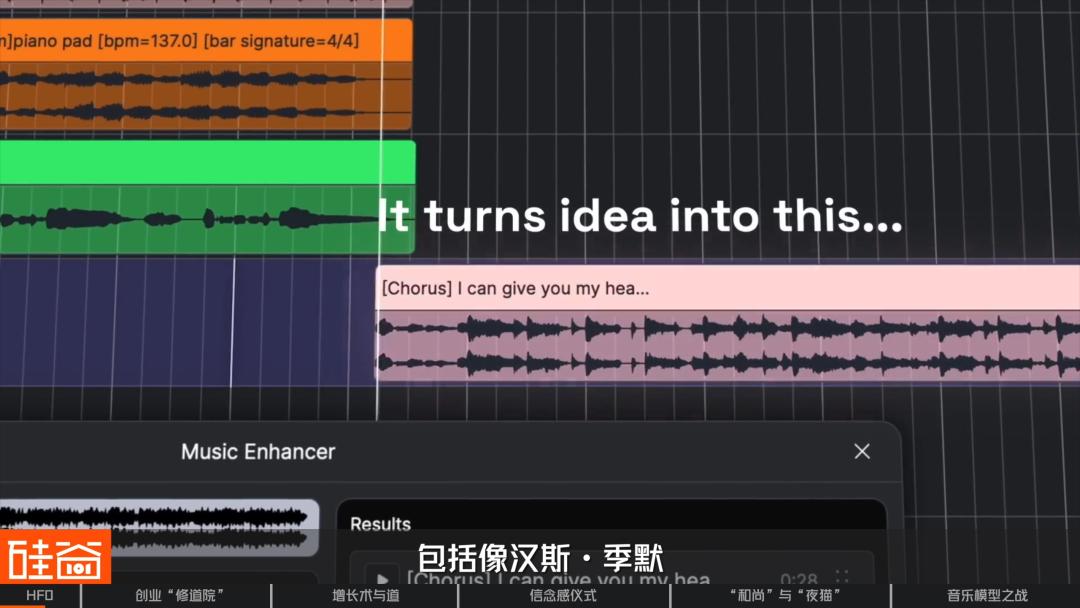
Joe: Hi everyone, I'm Joe, founder and CEO of ACE Studio. What ACE is doing is self-developing AI generative models and building our own professional creation tools. ACE Studio is a relatively mature product for professionals. Music practitioners around the world, including top musicians such as Hans Zimmer, the godfather of American R&B Teddy Riley, and many Grammy winners are our users. We are also developing a brand new AI music creation product for ordinary people now.
Hong Jun: Let's talk about your experience at HF0. It's a very popular incubator in Silicon Valley, isn't its momentum already surpassing Y Combinator to some extent? Between an HF0 offer and a YC offer, which one are entrepreneurs more willing to take now?
Joe: From my understanding, everyone will choose HF0 without hesitation. YC is a big brand for sure, but each of its batches may have hundreds of teams, so it can hardly be described as highly selective. We joke that it is more of a "spray and pray" logic — water everything and pray that someone will make it, there will always be successful cases, which is essentially a matter of probability.
HF0 follows the classic accelerator logic: the earliest accelerators were all residency-based, with dedicated venues to bring a group of people together. But for acceleration, the earlier the stage, the lower the success rate, which requires a larger denominator and more participants. However, physical space is naturally limited and cannot accommodate too many people — these two things are inherently contradictory. That's why HF0 only ever has 10 teams per batch, which requires extremely discerning judgment, and its acceptance rate is far lower than YC.
Hong Jun: One of the core points of HF0 is to provide venues and rooms for all founders, so everyone eats, sleeps and works together, right? What's its final term for equity exchange?
Joe: The terms have been changing, because it is indeed getting better and better. For our batch (Fall 2024), it was $1 million for 5% equity.
Hong Jun: So your batch is relatively late stage. I saw that in its early days, it was $250,000 for 2.5% equity.
Joe: That was a long time ago. Right between the batch before ours and ours, they just adjusted the terms once. As far as I remember, the previous batch was $625,000 for 3% equity.
Hong Jun: Stripe recently acquired OpenRouter. OpenRouter should be a company that participated in the same batch as you, right?
Joe: OpenRouter actually joined one year earlier than us, they officially participated in Fall 2023. The two co-founders are Alex, an American, and Louis, a Vietnamese. Louis didn't get his visa at that time and could only participate remotely, which was quite a pity. By the Fall 2024 batch, Louis finally got his visa sorted out, so HF0 told him that he could come and join again. But Louis didn't attend Demo Day this time, because he was no longer raising funds.
So Louis and I are considered to be in the same batch. HF0 has two work areas, one on the top floor and one in the basement. The basement work area is called Zoom, which emphasizes total immersion in the basement, with lights on 24 hours a day. We and Louis are the two teams that sleep the latest every day: we go to bed at around 5 a.m., and Louis goes to bed at around 3 a.m., then show up at their workstations at 11 a.m. or 12 p.m. Our team stays up late for a reason, because many of our developers are in China, and we need to coordinate with the Chinese side. Louis just genuinely works very late. There is a small lounge in Zoom with several sofas, he would go there to sleep at two or three in the morning, but actually HF0 has assigned very nice rooms to everyone.
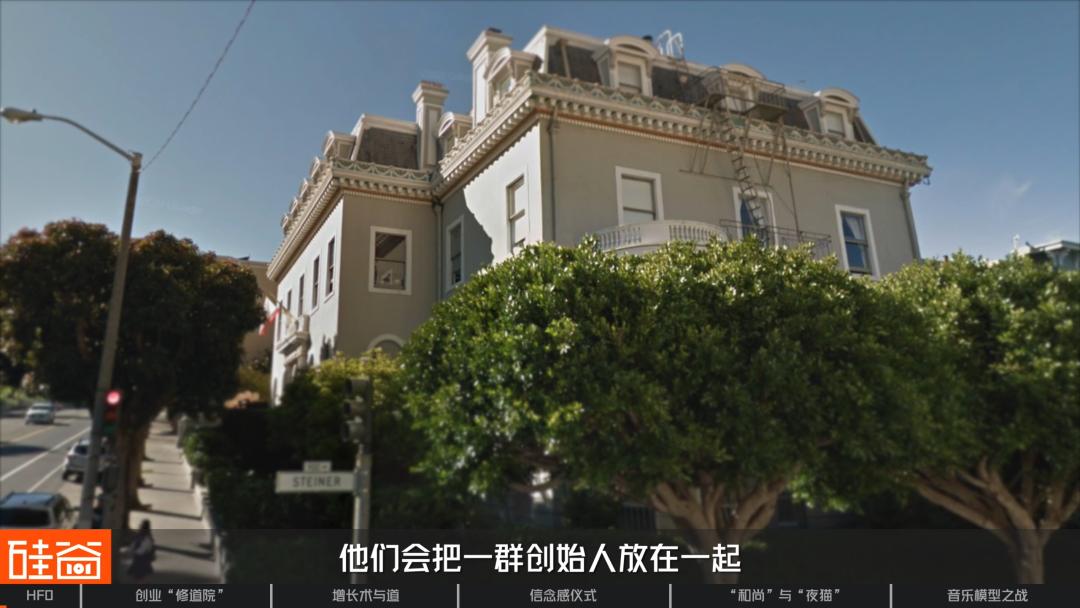
Hong Jun: Is it famous for owning a huge luxury mansion in San Francisco?
Joe: Yes, that house is very beautiful with excellent facilities. They installed Eight Sleep (smart temperature-controlled mattress toppers) for everyone, so people sleep very comfortably. Everyone is also equipped with a Whoop (activity tracker band) to monitor sleep. But Louis never goes back to his own room, he took over that small lounge, with quilts, pillows and toothbrushes all inside, he sleeps there every day, which is really fun.
The core philosophy of HF0: subtraction
Hong Jun: What do you think is the magic of HF0? I know its core is to help startups drive growth. I talked to some companies that have been in HF0, they think this incubator attaches great importance to growth and revenue, and it can create that kind of atmosphere for you. At the same time, I find the experience of founder Dave very interesting. He himself had experience living in a monastery, so the philosophy he advocates is to live a life with minimal material needs but rich spiritual world.
Joe: To describe HF0 in one word, it is subtraction. What Dave said is not actually minimalism for material things, but to remove all unimportant matters. HF0's monastery-style life is not to make entrepreneurs suffer: they arrange everything extremely well for life, hire top chefs to cook all kinds of dishes every day, rotating between Chinese food, Indian food, and also take care of the needs of vegetarians. All three meals a day are arranged perfectly.
There are many facilities in the house. Cold plunge, which is popular in Silicon Valley, has a dedicated set of facilities, plus sauna, gym, free personal trainers, professional masseurs, and even dedicated staff to do your laundry. Its core philosophy is: apart from that one most important thing, you don't need to manage anything else — just focus on making your business a success.
This is the most "monastic" part of HF0's so-called monastery spirit, which is subtraction. In that mansion, we were almost all on the basement floor except when eating, and we saw sunlight no more than four times in three months.
Hong Jun: How do they drive everyone to immerse themselves in this atmosphere?
Joe: Before the official start, they let everyone prepare mentally: they take everyone up the mountain for a retreat, with all kinds of meditation and communication, in short, to bring everyone's mind into a very immersive state.
Finally, everyone sets goals at the meeting, thinks deeply and rehearses in their mind: what level will I grow to after three months, what should it look like. They let everyone visualize first, then reverse deduce what the goal is, and what the weekly goals are.
The demo dinner every Monday is the most important session of HF0. Each team goes on stage to speak for two minutes, talking about the progress of this week: did you grow 20% this week? Others grew 20%, why didn't you?
Hong Jun: Is your progress measured by turnover, or by something else?
Joe: This is a very critical point. When you enter, Evan will discuss with each team. He is one of the founders of HF0, somewhat similar to the post-investment role, he will help everyone figure out: If there can only be one dimension, one "North Star metric", what is that number. It does not necessarily have to be revenue. For example, there was a team in our batch working on the biotech field, doing cutting-edge R&D, so the content they shared every week was naturally different. But Evan will help you find that single unique point.
Hong Jun: He helps you do subtraction.
Joe: Or to say, help you focus on the goal.
Hong Jun: Are the vast majority of goals revenue?
Joe: Not necessarily. For example, OpenRouter's goal was weekly token call volume. Every time Louis shared, he talked about how much the token call volume had increased. After each two-minute sharing, there was one minute for Q&A, and everyone kept asking him "How is your revenue?" "What's your business model?" Louis would say, We don't value revenue that much, our revenue is only enough to buy two cups of coffee.
A couple of days ago when OpenRouter was acquired for $7 billion, Evan sent the news to our batch's alumni group, with only one line of caption: "enough for coffee" — now it's enough to buy coffee.
Hong Jun: Each company only focuses on one goal. Is this goal changing every week or staying the same?
Joe: The goal remains unchanged. For example, our team's goal was revenue.
The art and path of growth: from tricks back to products
Hong Jun: I remember your revenue increased 10 times after you joined, from $80,000 per month to $800,000 per month.
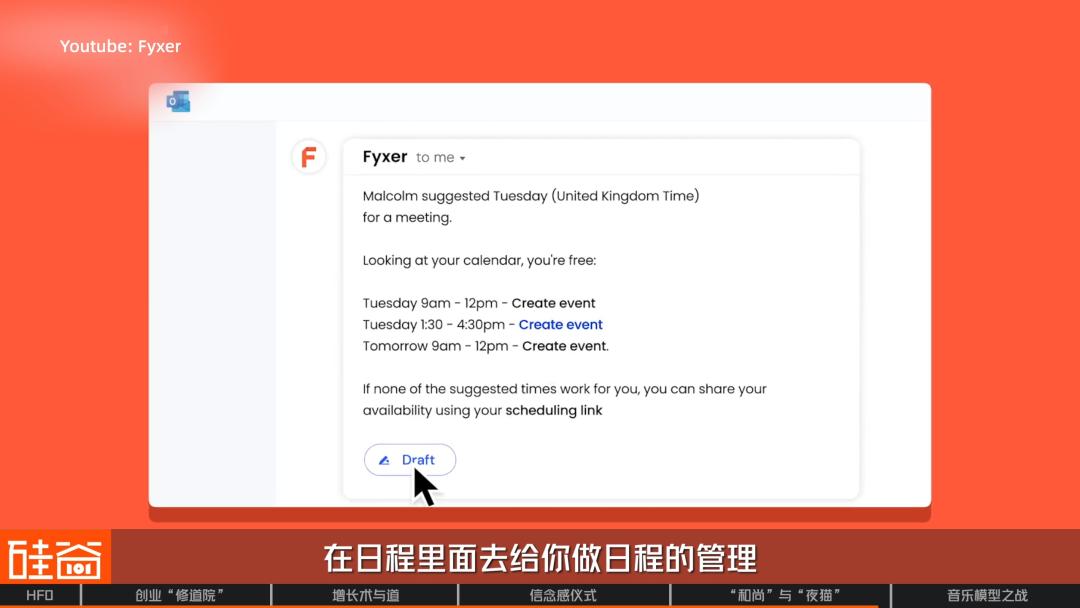
Joe: That's right. But $800,000 was the peak, we did use a lot of methods to hit that number; later our average monthly revenue was around $400,000 to $500,000. We focused on ARR (Annual Recurring Revenue). There was another team in the same batch called Fyxer, which is doing well now and has been selected as one of a16z's 20 must-have productivity tools. They also focused on ARR back then.
HF0 emphasizes that you'd better simplify your goal to the point where you can clearly explain it within two minutes, and let people see the progress. It does not encourage you to talk about how many things you did this week, it only asks about the progress of that unique goal.
Hong Jun: How did you achieve such a multiple of growth in a short period of time?
Joe: Looking back now, from the time I left HF0 to the period between the end of 2024 and the beginning of 2025, I was very obsessed with all kinds of clever growth hacks, to put it plainly, all kinds of tricks and small routines. In addition to several major feature updates of the product, we did use a lot of skills in growth: doing a large number of AB tests, adjusting pricing, and optimizing the conversion funnel.
Every Tuesday someone would come to talk to us. There was an HF0 alumni named Blake Anderson, who made a calorie-tracking product called Cal AI, and is known for his expertise in growth, especially in influencer growth.
I asked him at that time, how to do influencer growth? I always felt that it could explode once or twice, but it couldn't be stable. He asked me, how many influencers do you contact every day? I said, I contacted more than 100 influencers in a few months. He said, I contact 150 every day.
Just this one sentence woke me up. The specific methods he talked about later were not important anymore. What's important is that I realized there was an order-of-magnitude gap between us, which meant there must be something wrong with my system, and I had to rebuild it. After returning, we built an influencer system, which has now iterated to the fourth generation, with deep AI participation, and we can contact 200 influencers a day.
Hong Jun: Will all 200 influencers reply?
Joe: I told Blake at that time that influencer marketing is unstable: they may not reply, even if they reply they may not cooperate, even if they cooperate there may not be a breakout. Blake's response was — for unstable things, when their order of magnitude increases, they will become stable.
So how to make influencer marketing stable? The only thing you can do is to increase the number of people you contact: contact 100 people and one will go viral. If you want 10 times more virality, you should contact 1000 people. And the funnel can still be optimized, there is room for improvement in email templates and closing rates. Up to now, when we contact 200 people, about 40 will reply.
Hong Jun: It is equivalent to turning it from scattered individual actions into a professional, continuously operating system for the team.
Joe: That's right, we summed up a sentence at that time: do growth the same way you do products and algorithms. We have always regarded products and algorithms as a system, and are willing to invest a lot of energy in them; but when it comes to growth, it becomes a hit-and-run approach. But growth, just like products and algorithms, is also a system.