Zhang Yiming has drawn a slow-paced development track for ByteDance AI.
"The earliest possible date is 2029 or 2030"
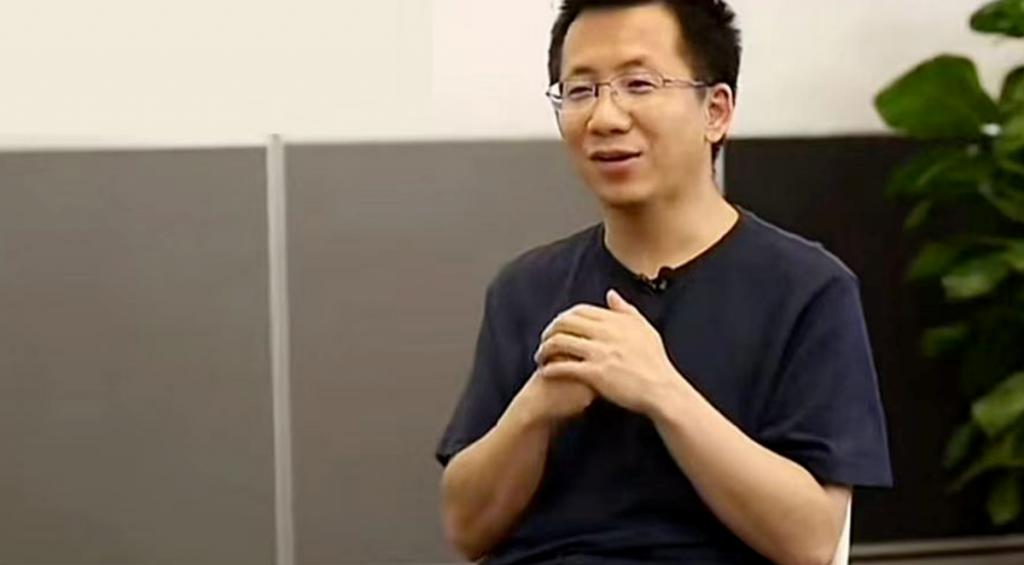
On November 12, it is reported that Zhang Yiming recently talked about the AI business again in an all-hands meeting for the AI team. The 43-year-old, who has stepped back from the front line, still devotes a large amount of time to formulating ByteDance's AI strategy.
At this meeting, he first reassured the team, then outlined a very long timeline: ByteDance has the capability to compete with OpenAI and Anthropic, but to truly catch up with cutting-edge technologies, "the earliest possible date is 2029 or 2030", and ByteDance's large model is positioned to match the international first-tier players.
Confidence and sobriety were then broken down into several specific issues.
The top priority is data. Zhang Yiming admitted frankly that compared with top overseas AI companies, the scale of the pre-training dataset of ByteDance's Seed series models "is still insufficient", which is the most pressing issue to be addressed at present. At the stage where scaling laws still dominate the evolution of large models, the quality and volume of corpora directly determine the upper limit of model capabilities. ByteDance boasts a rich domestic content ecosystem, but it still faces physical barriers and copyright restrictions when acquiring global, multilingual, high-knowledge-density training corpora.
On the route selection, he reaffirmed one rule: ByteDance should not rely on "distillation", that is, using the output of larger models to train its own models, but should focus on long-term goals.
In previous internal meetings, Zhang Yiming proposed that model development should adhere to long-termism and delayed gratification, rather than using others' outputs to exchange for temporary ranking on leaderboards. ByteDance has subsequently adopted measures such as API anomaly detection and open-source model data filtering to prevent R&D personnel from privately invoking third-party model outputs as training sets. The Seed team is pre-training a model with a maximum parameter scale of up to 10 trillion, whose magnitude is comparable to the most high-end model of Anthropic.
Having chosen the slow path, the pace of the team and version iterations naturally cannot be fast.
The Seed team currently has around 1000 researchers and engineers, led by Wu Yonghui who joined from Google DeepMind in 2025.
The last major version update of the main model was Seed 2.1 released in June 2026. The team also acknowledged at that time that the model still has room for improvement in the most challenging open-ended tasks and cutting-edge scientific research problem-solving. Among leading domestic AI companies, Seed has not yet launched a language model that ranks among the world's top in mainstream evaluations, nor has it opened up cutting-edge weights, maintaining a relatively low profile.
The latent state of the underlying model forms a sharp contrast with the prosperity of the application layer.
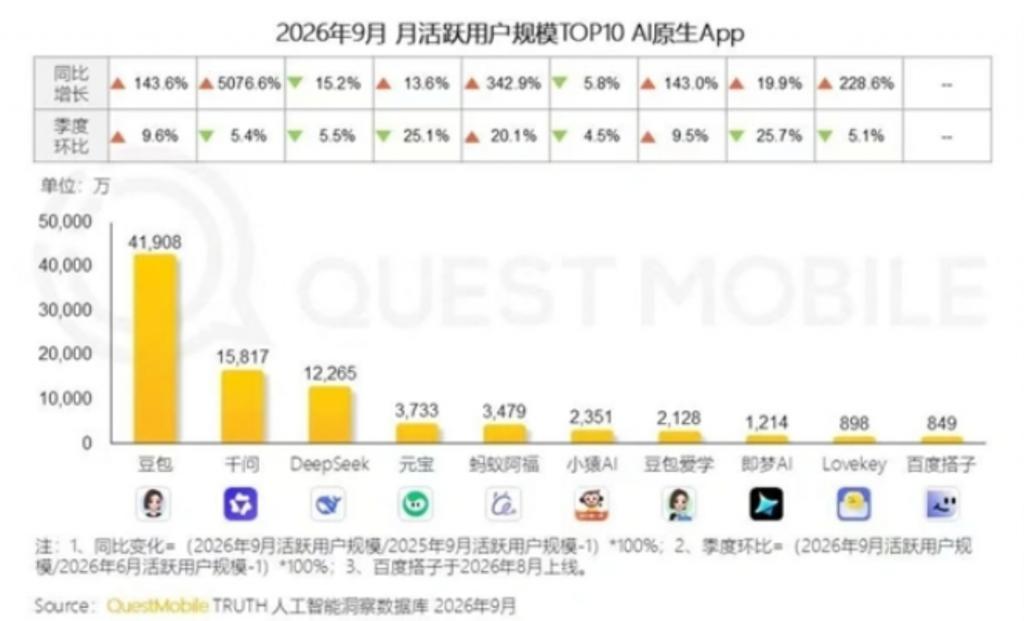
According to QuestMobile data, the monthly active users of the Doubao App reached 419 million in September this year, a year-on-year increase of 143.6%. As of June 2026, the daily average Token call volume of the Doubao large model exceeded 180 trillion, an increase of more than 1500 times compared with the 120 billion at the time of its release in May 2024. In the public cloud MaaS market, Volcano Engine holds a 49.5% share of Token volume, ranking first.
Video generation is another advantageous track for ByteDance. As OpenAI scales down its AI video business and shuts down Sora-related services, Seedance has filled part of the gap. Backed by the video corpora from Douyin and TikTok, it builds a barrier that pure text companies cannot easily replicate.
Investment is still increasing.
According to reports, ByteDance has raised its 2026 capital expenditure budget for AI infrastructure to over 2000 billion RMB, a 25% increase from the previous preliminary plan.
On the product side, citing sources familiar with the matter on November 11, ByteDance plans to launch an AI assistant similar to Muse under Meta in the coming weeks. The personal assistant project codenamed Spell has entered internal beta testing in April 2026, and will later be integrated with Doubao. In October 2026, Seed set up an independent safety and alignment team, making it one of the earlier institutions to make such an arrangement among domestic cutting-edge AI laboratories.
However, the target is moving, and the timeline is not a binding military order. OpenAI and Anthropic will not stay where they are waiting, and what ByteDance is chasing is a continuously moving target. The expansion of pre-training data, the accumulation of original research, and the precipitation of engineering experience all take time to deliver results, while the next-generation models of competitors are also consuming more computing power and data at the same time.
2029 or 2030 is only a prediction, not the end point.