Trillion-scale consumption is surging towards the vast mountains and seas.
Driving from Shanwei to Shenzhen along the Guangdong G228 Coastal Highway, the oysters from Chenzhou Oyster Township have just been fished out of water, and the sunset over the mountains and sea in Yantian is spreading all over the car window. Sa Beining exclaimed in the program: "Step on the accelerator, and the whole world is yours."
This exclamation comes from *Let's Go! Shenzhou's Mountains and Seas*, China's first self-driving culture exploration program jointly created by Shenzhou Car Rental and Yangshipin. As the six episodes of the program travel through the Gobi Desert, rainforests and ancient villages in the south of the Yangtze River, a gradually taking shape Chinese self-driving culture has become clear: taking highways as the context and wheels as the medium, it deeply integrates the landscape of the country's mountains and rivers, regional folk culture, family and friends companionship and a relaxed attitude towards life. Relying on the three-dimensional domestic transportation network, "fast travel for long distances and slow sightseeing for short trips" is becoming a unique paradigm for more and more people to explore distant places, and has become the core carrier driving the development of the highway economy along the routes and county-level cultural tourism.
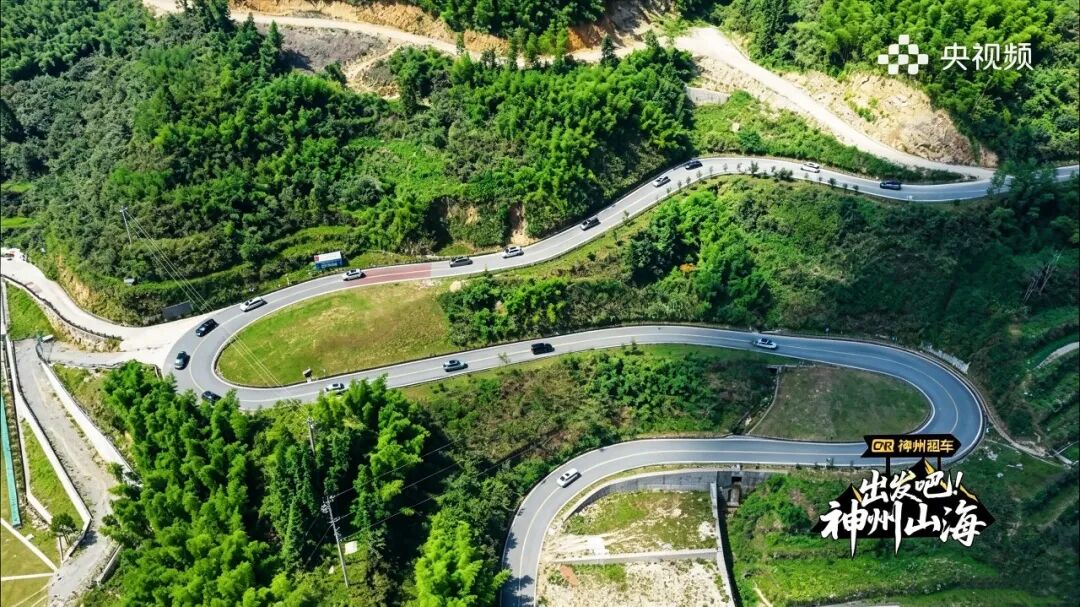
For a long time in the past, tourism consumption was concentrated in scenic spots, and highways were only passages for hurrying to destinations. Nowadays, more and more people are willing to stop at any time for a roasted tea house deep in the mountains or a coffee post beside the rainforest highway, and catering, accommodation, energy replenishment and local experiences are starting to spread along the highways. The economic attribute of highways has also changed accordingly, shifting from a simple passage for transit to a consumption corridor during the journey.
However, there are essential differences between highway consumption and traditional urban business districts. The business formats in business districts are highly concentrated, while charging piles, post stations, restaurants and homestays along the highway are distributed on hundreds of kilometers of road networks, scattered and lack of linkage. For self-driving tourists, they often need to search across platforms and piece together information temporarily to figure out where to replenish energy midway, where to stop, and which small villages and shops along the route are worth visiting. This means that only paved highways and scattered business formats are not enough, and the market still needs an entrance that can integrate scattered on-the-way services.
In the travel chain composed of people, vehicles, roads, landscapes and networks, roads and bridges, gas stations and scenic spots only touch a single link of the journey. Only car rental runs through the whole trip, and naturally has the entrance attribute of connecting the whole process of consumption. This also explains why Shenzhou Car Rental wants to break away from the traditional positioning of a transportation tool: when renting a car becomes a consumption pass to unlock niche distant places and access the "car life" along the route in one stop, what kind of future consumption picture is this directly-operated car rental enterprise that has been deeply rooted in the industry for 19 years opening up on the wheels?
When "the road is open" meets the steering wheel, activating niche distant places and one-stop "car life"
The evolution of highways into consumption corridors first benefits from the synchronous extension of the national road network and supporting facilities along the routes.
As car rental and high-quality self-driving tourist highways are included in the relevant plans for building a strong transportation country and expanding domestic demand, a national high-quality self-driving tourist highway network with a planned total mileage of about 60,000 kilometers, structured as "three rings, four horizontal lines and five vertical lines", is being rolled out at an accelerated pace. Departments such as natural resources and cultural tourism have also relaxed land use restrictions, allowing gas stations, post stations and simple camps far away from towns to be arranged outside the urban development boundary.
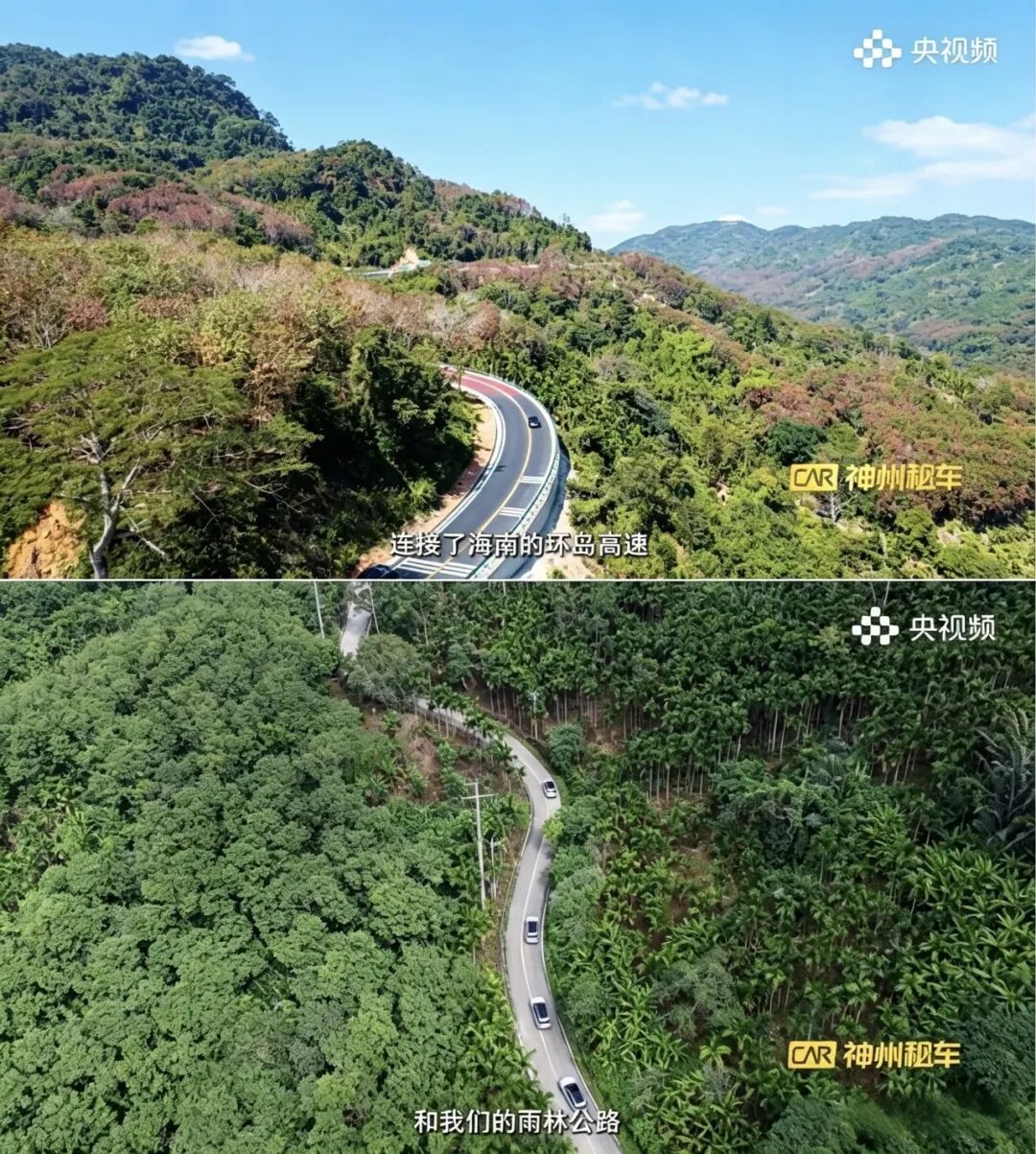
Translated to ordinary people, these macro plans mean that "hitting the road" is no longer a hassle, and "going out to play" no longer requires making up one's mind long in advance. In the Gobi Desert in northwest China, with the opening of the new road at the border between Gansu and Xinjiang, the "Dahai Road" of the ancient Silk Road that was interrupted for thousands of years is passable again. In Hainan, the two tourist highways around the island and around the tropical rainforest connect mountains and seas, and the wilderness and bays that used to be only passed by in a hurry now have sea-view post stations and rainforest cafes.
The roads are easy to drive on and there are places to stop along the way, so the huge passenger flow of travel is transformed into real consumption. According to statistics from the Ministry of Transport, during the 2026 National Day holiday, self-driving trips accounted for nearly 80% of the 1.96 billion highway trips across the country, car rental travel increased by more than 25%, and the peak of daily car rental orders exceeded 950,000. The value-added tax invoice data from the State Taxation Administration also shows that the average daily sales revenue of tourism, sightseeing and entertainment services during the holiday increased by 23.6%. As Luo Zhiheng, chief economist of Yuekai Securities, analyzed, the holiday data shows that residents do not lack the willingness to consume. The key is to convert the strong travel demand into consumption more fully and sustainably, so that cultural tourism consumption can run through multiple links such as transportation, accommodation, catering and entertainment.
When the consumption scenarios spill over from the enclosed walls of traditional scenic spots to the open highway sides, car rental is right at the key connection position. At present, car rental is extending from a single transportation service to diversified, high-quality and scenario-based services, connecting people, vehicles, roads, landscapes and networks, and becoming an important entrance for consumption expansion.
When people pick up the car at the airport or station and hold the steering wheel, the first commercial change that emerges is that niche destinations that were difficult to reach via fixed routes in the past are truly activated because they are "accessible by self-driving". In the past few years, many counties and ancient villages have high-quality local scenery, but they were often restricted by the fact that trunk transportation and tour buses could only deliver passenger flow to mature large scenic spots, making it difficult to form stable consumption retention. The popularization of self-driving car rental is equivalent to adding a flexible connector at the end of trunk transportation - tourists control the steering wheel and the pace of stops by themselves, and the consumption radius can spread to deeper mountains and seas. The *2026 Mid-Autumn and National Day Self-Driving Travel Big Data* released by Shenzhou Car Rental shows that long-term rental orders for more than 9 days during the holiday increased by 55%, and niche cities such as Aba, Zhongwei, Yichun, Hami and Shizuishan are seeing a sharp rise in popularity.
In the footage of *Let's Go! Shenzhou's Mountains and Seas*, this deeply expanding consumption vitality can be intuitively seen. The motorcade drove into the Shen'ao Ancient Village in Tonglu, Zhejiang. Lao Ma, a young entrepreneur who moved to the countryside, set up a tea stove in the old house. Boiling water poured into the hot Pu'er pottery jar made a loud "thunder sound", attracting the guests to gather around the stove for a night chat. When traveling along the Guangdong coastal and Hainan rainforest highways, the newly fished oysters from Chenzhou Oyster Township in Shanwei and the Dafeng Post Station of Mushan Coffee next to the zero-kilometer marker of the tropical rainforest tourist highway became the real highlights of the trip.

Guest Wang Ning exclaimed in the program that the significance of self-driving culture lies in how deep you can go. As highways extend into the hinterland of counties, more and more young people like Lao Ma choose to start businesses in the countryside, opening farmhouses, homestays and artistic roasted tea houses in ancient villages and mountains and seas. Because these farmhouses, homestays and roasted tea houses scattered in mountains and seas are "accessible by self-driving", they have received stable passenger flow and become real consumption scenes. Car rental has thus become the link for two-way flow of consumption, energy, cultural tourism and humanity.
As the wheels go further and people spend more time on the road, the one-stop "car life" centered on the derivative needs during the journey has also opened up another commercial space.
Statistics from Shenzhou Car Rental show that in 2026, cross-city new energy orders during the National Day holiday increased by more than 228%, and new energy vehicles in the fleet account for nearly half. From the perspective of industry evolution, when self-driving people drive deep into the Gobi, forests and cross-provincial highways, the service boundary of car rental enterprises is no longer limited to the moment when the key is delivered - users will continuously encounter cross-scenario needs such as refueling and charging, highway stops, route query and accommodation booking on the road. In the past, these services were scattered on different platforms with different standards and prices, and the demands of self-driving tourists have long been more than just renting a transportation vehicle.
In response to this change, Shenzhou Car Rental released the "Car Life" one-stop self-driving travel service system in June 2026. In terms of driving guarantee, "Car Life" connects refueling and charging services along the route, valet parking at transportation hubs and the intelligent companion function "AI Xiaozhou", helping self-driving tourists inquire about replenishment stations at any time and get answers to questions about battery life and stops. In terms of consumption along the route, Shenzhou Car Rental complies with the policy-encouraged one-stop product direction of "rental + ticket" and "rental + hotel", and is gradually accessing services such as exclusive airport waiting, cultural tourism discounts, scenic spot ticket booking and hotel reservation. It also cooperates with self-driving associations from ten provinces and cities to develop themed routes such as "Bohai Bay Seafood Food Tour", and promotes the modular free combination of "car rental + folk custom / food / accommodation" in different scenarios.
The extension of highways is opening up a new trillion-yuan industrial context - a rented car is changing from a simple transportation tool to a consumption pass connecting the commercial vitality along the route.
The 19-year choice of "heavy asset operation" supports the freedom of travelers to set off and builds "industry infrastructure"
The continuously intensively woven three-dimensional transportation and tourist highway network across the country has made the "physical roads" accessible first. But to allow cross-regional self-driving tourists to connect smoothly after landing and go deeper into the mountains and seas, a widely covered ground car rental network is needed to cooperate with it.
19 years ago when Shenzhou Car Rental just started, most people regarded car rental as a "stopgap measure for temporary car use". At the fork between light asset matching and heavy asset direct operation, Shenzhou Car Rental chose a heavier and slower path - building self-operated outlets and purchasing its own fleet, managed uniformly by the headquarters, to achieve standardized service, clear rules and transparent prices.
In the highly scattered car rental market, heavy asset direct operation means high capital investment and a long cultivation cycle, but it also builds a barrier for stable cross-regional performance. Looking at it today, this direct operation network covering more than 360 cities across the country has just become the infrastructure to undertake the wave of cross-city self-driving. This is not luck, but the 19-year choice of "heavy asset operation" that has ushered in an era of "open roads".
When the direct operation network is connected with the national road network, the intuitive feeling of self-driving tourists is the freedom brought by the travel mode shifting from "people adapting to the car" to "the car adapting to people".
In the past, for long-distance self-driving trips, you had to go to the store to queue and negotiate before departure, and you also had to worry about how to drive the car back to the original place after traveling far. Now at the departure stage, when traveling with the elderly and children, carrying a lot of luggage or arriving late at night, you can book the "door-to-door car delivery and collection" service to get the car delivered to you on time. Nearly 90% of the vehicles across the country support 24-hour full-process self-service car pickup and return, and tourists can get the car and set off after a few minutes of operation on their mobile phones after landing. According to Shenzhou Car Rental's statistics for the 2026 National Day holiday, car pickup orders from 22:00 at night to 6:00 the next day increased by 58% year-on-year, and more and more travelers no longer need to adapt to the business hours of the outlets.
When the trip spans multiple cities, the "free cross-city return" service relying on the layout of national direct operation outlets allows long-distance roaming travelers to avoid taking the same way back. Whether driving from Shanwei to Shenzhen along Guangdong G228, or traveling on cross-regional routes from Dali to Lijiang, Chengdu to Lhasa, Harbin to Yichun, tourists can move forward in one direction and return the car at a nearby outlet in the destination city. During this National Day holiday, Shenzhou Car Rental's cross-city orders increased by 52%, and nearly a quarter of users used the free cross-city return service for the first time.
At the same time, Shenzhou Car Rental has newly purchased and launched about 100,000 vehicles since 2025, providing more than 260 optional models, and is equipped with "AI Xiaozhou" on-board intelligent Q&A. In cross-city self-driving trips, the more free the traveler's itinerary is and the lighter the decision-making is in the front end, the more it relies on the heavy investment of the back-end performance system. The tedious operation links from vehicle preparation before departure, battery life management during the trip to handover at cross-city outlets are undertaken by the direct operation system in the background, which brings users the smooth experience of "pick up and go after landing, move forward in one direction" at the front end.
Furthermore, as the on-the-way consumption market continues to expand, it is difficult for a single enterprise with its own fleet scale to undertake the cross-regional service demand of the whole industry alone. The transport department has also clearly proposed in the relevant special plan of the "15th Five-Year Plan" to accelerate the supply of car rental standards and give play to the leading role of head enterprises. When self-driving becomes a normalized lifestyle, the new problem faced by the industry is how to establish unified service specifications and underlying coordination mechanisms in the scattered market.
In a mature business ecosystem, the long-term value of head enterprises is often reflected in setting standards and opening up infrastructure. At this turning point of the industry, Shenzhou Car Rental has begun to play the role of an industry "promoter": at the standard level, it has sorted out the six benchmark services explored over 19 years into a perceivable and traceable systematic specification, and as one of the main drafting units, it participated in the formulation of the national standard GB/T 29911-2025 *Specification for Automobile Rental Services*. At the level of ecological collaboration, Shenzhou Car Rental hosted the car rental industry ecological conference in June 2026, taking the lead in opening underlying modules such as maintenance management and used car circulation to peers.
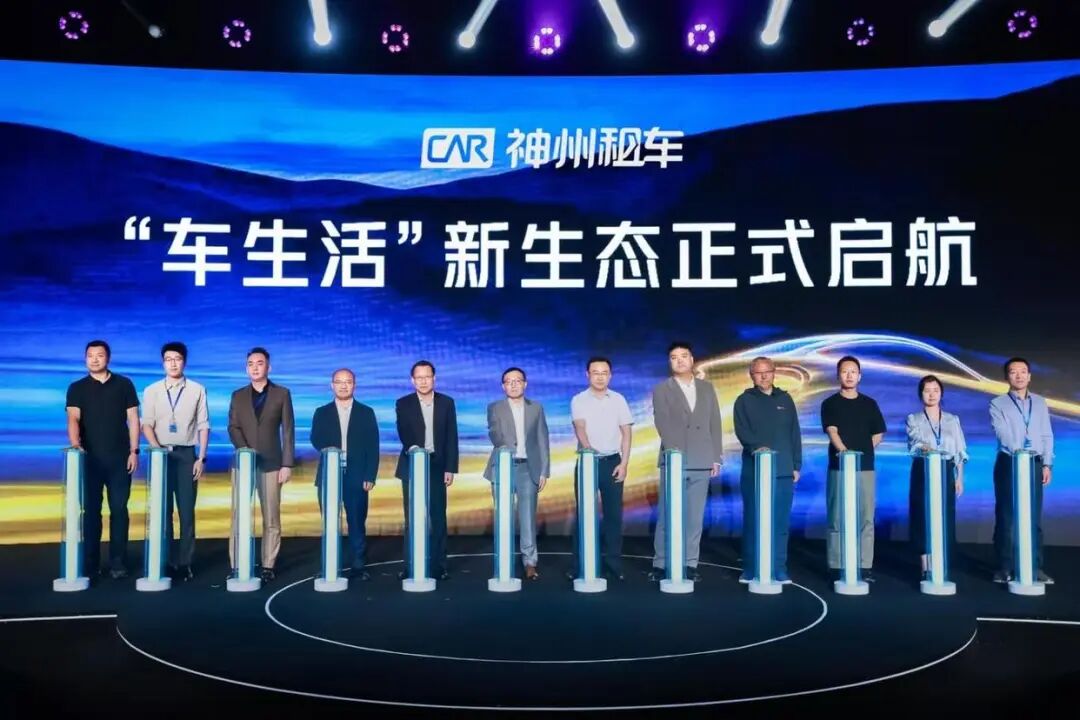
The new "Car Life" ecosystem of Shenzhou Car Rental officially kicks off
From a simple market competitor to an exporter of industry standards, a partner for national policy implementation and a co-builder of the industrial ecology, the complete set of