Why does Brazil, a major global agricultural country, have a special preference for Chinese drones?
Let's start with a set of statistics.
According to information disclosed by Brazil's National Civil Aviation Agency, as of August 2026, there are a total of 13,224 registered agricultural drones in Brazil, of which Chinese brands account for more than 90%.
Brazil is a veritable major agricultural country.
Western countries have significant advantages in agricultural machinery (just as I mentioned in a previous article, U.S. agriculture is "industrialized agriculture").
Why have Chinese drones gained unrivaled popularity on Brazilian farms?
When 90% of farmland crop protection spraying operations are powered by Chinese drones
Here is another set of statistics.
Brazil is the world's second largest soybean producer and the largest coffee producer.
Brazil's soybean planting area has expanded from 10.6 million hectares in 1993 to 44.6 million hectares in 2023, and will soon exceed 48 million hectares.
In terms of coffee, Minas Gerais state alone contributes more than half of Brazil's total coffee output.
With such a vast area of farmland, pesticide spraying has become a critical and arduous task.
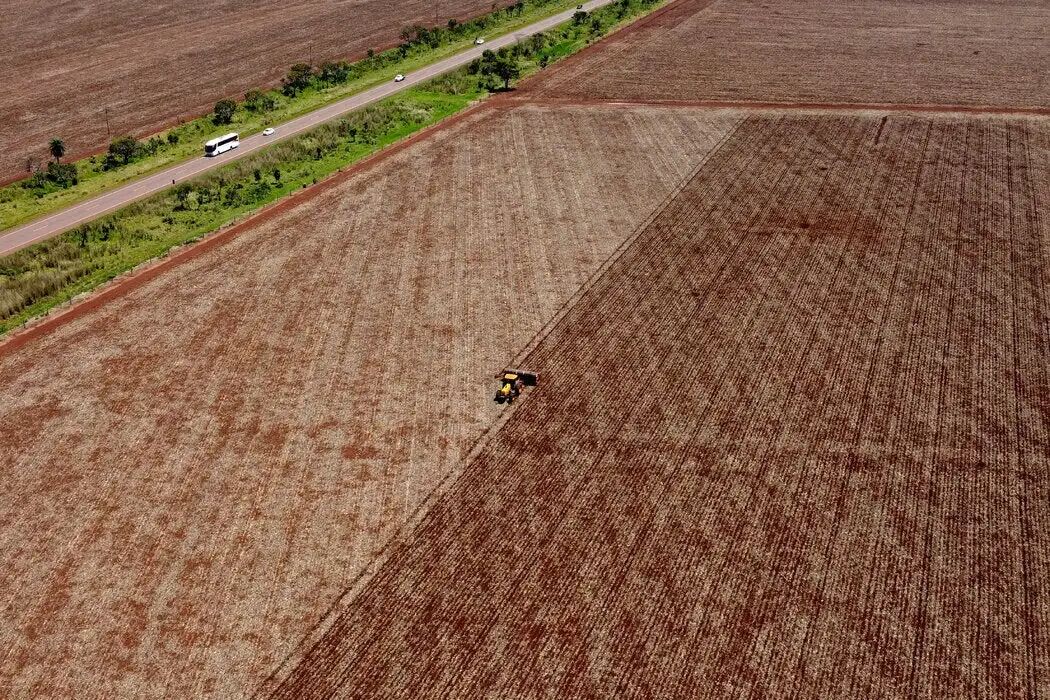
Central-western Brazil is the core main producing area of soybeans
In the past, Brazilian farms mainly relied on three methods to spray pesticides on crops: boom sprayers pulled by ground tractors, manned fixed-wing aircraft, and manual labor.
The first two methods have high efficiency, but each has its own drawbacks: tractors running on farmland will crush seedlings and compact the soil; manned aircraft have high flight costs and are subject to weather restrictions. As for manual spraying, not to mention its low efficiency, rapidly rising costs, and high risk of pesticide poisoning for workers.
The emergence of plant protection drones has precisely addressed this pain point.
However, Chinese enterprises are not the only manufacturers of drones. There are agricultural technology companies in the United States, Europe and Japan. So why are Chinese brands the ones that stand out in the end?
Data from Frost & Sullivan gives the answer: in 2024, more than 75% of the global agricultural drone market share is occupied by two Chinese companies — DJI ranks first with a 59% market share, and XAG ranks second with 17.1%. The combined share of the two companies has almost taken over the entire global market.
In Brazil, this market concentration is even higher. According to the registration data of Brazil's National Civil Aviation Agency in August 2026, Chinese brands account for more than 90% of the local registered agricultural drones.
What is more noteworthy is the repurchase rate.
Long-term repurchases, continuous procurement of consumables, and continuous renewal of maintenance services — this is not a one-time transaction, but a clear sign that farmers truly regard the equipment as a means of production.
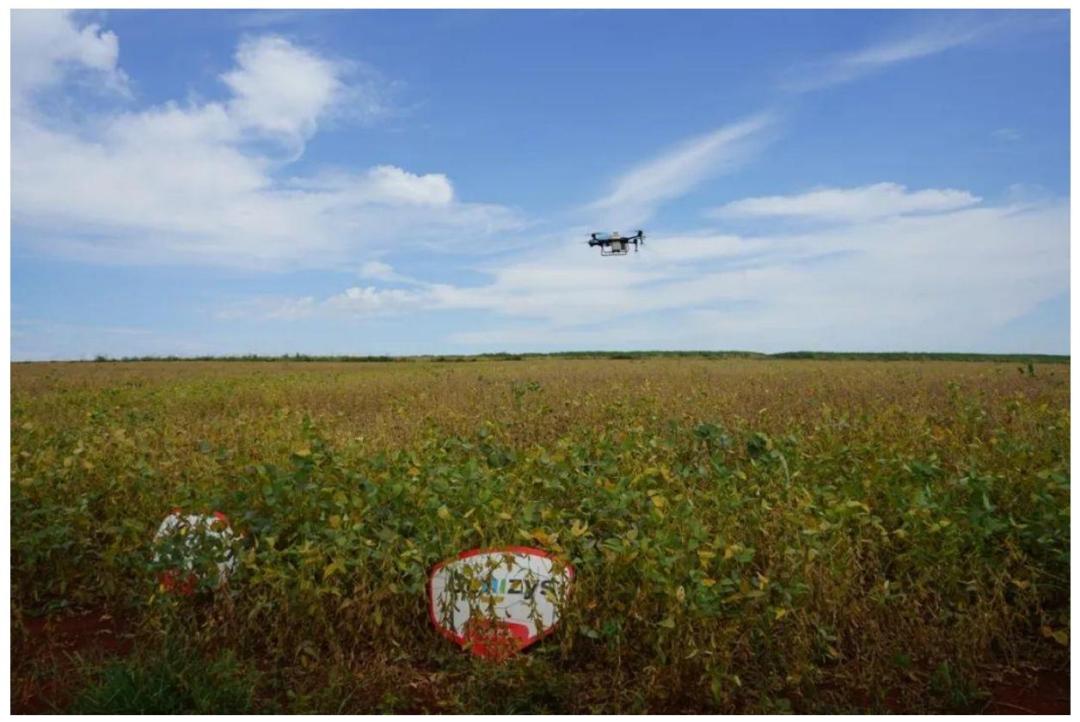
Brazilian farmers favor Chinese drones
Why do Brazilian farmers recognize Chinese drones?
There are three main reasons:
Brazil's terrain limits the operation of traditional agricultural machinery
Brazil's agricultural landscape is far more complex than just "a vast plain".
The main soybean producing area is in the Cerrado savanna in central Brazil, where the terrain is relatively flat and suitable for large-scale mechanization. But the main coffee producing areas are different — a large number of coffee plantations in Minas Gerais, São Paulo and Espírito Santo states are distributed in plateau mountains and hilly areas.
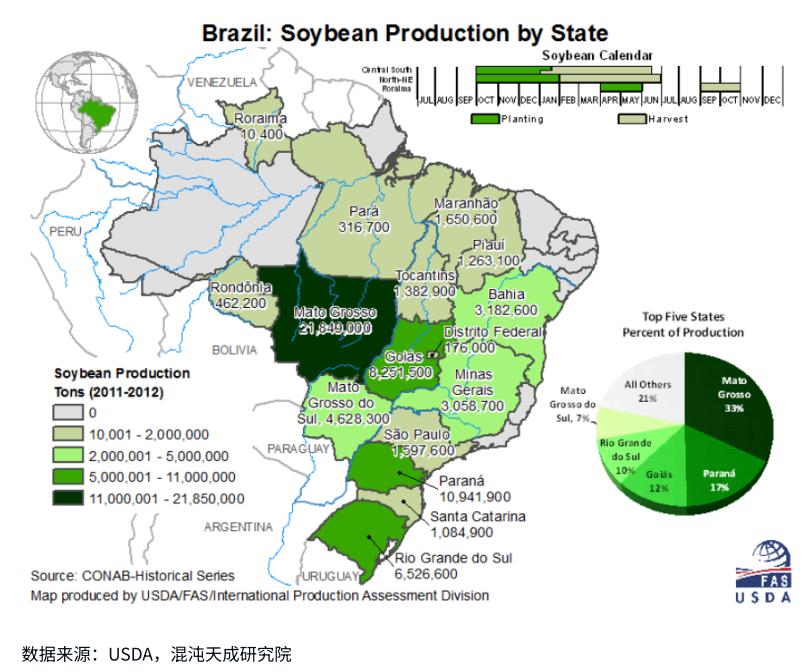
Soybean production in Brazil by state
A journalist's note from Xinhua News Agency in October 2026 mentioned that the Camocim Manor in Domingos Martins, Espírito Santo state, is located on a plateau mountain surrounded by the Atlantic rainforest, with hundreds of thousands of coffee trees planted on undulating hillsides.
Tractors cannot operate at all on this kind of terrain. Even if you barely drive them up, the tires will crush a large area of crops and the tractors are prone to rollover. As for manned fixed-wing aircraft? If they fly too low, they are easy to hit trees; if they fly too high, the pesticide liquid drifts seriously and cannot be sprayed evenly.
Drones operate in the air, do not touch the ground, do not crush seedlings, and are not restricted by terrain — this precisely solves the pain points of mountain orchards and hilly farmland in Brazil.
Lu Liangyuan, head of overseas sales expansion at Eyesee Robot, put it very bluntly to Xinhua reporters at the 2026 Brazil AgriTech Show: "Brazil's agricultural terrain is relatively complex with a wide variety of crops, which puts higher requirements on the stable recognition and path judgment capabilities of agricultural drones."
Price is far lower than traditional large agricultural machinery
Let's do another economic calculation.
At the 2025 Brazil AgriTech Show, Xinhua reporters recorded a comparison: taking XAG's agricultural drone as an example, its cost is only 1/6 of that of traditional large agricultural machinery, but it can achieve similar operation effects.
What does that mean? A traditional large self-propelled boom sprayer imported into Brazil often costs hundreds of thousands or even millions of reais. While a Chinese-made agricultural drone is only priced at 40,000 to 50,000 RMB in the domestic market.
Converted to reais, that is only 100,000 to just over 200,000 reais. For those large Brazilian farms that cover thousands or tens of thousands of mu, this threshold is much lower.
Moreover, the operation is not complicated. Traditional large agricultural machinery requires specialized drivers, with long training cycles and high labor costs. The training cycle for agricultural drone operators is much shorter — after a few days to one or two weeks of practical training, ordinary farmers can start operating the drones.
Millions of smallholder farmers in Brazil are particularly price-sensitive. When a Chinese agricultural science team conducted field research in Brazil in 2025, they found that although large Brazilian farms mostly adopt large-scale planting modes, millions of smallholder farmers prefer Chinese-made agricultural machinery with high cost-effectiveness and easy operation. The low threshold of drones has exactly brought these smallholder farmers into the scope of modern plant protection.
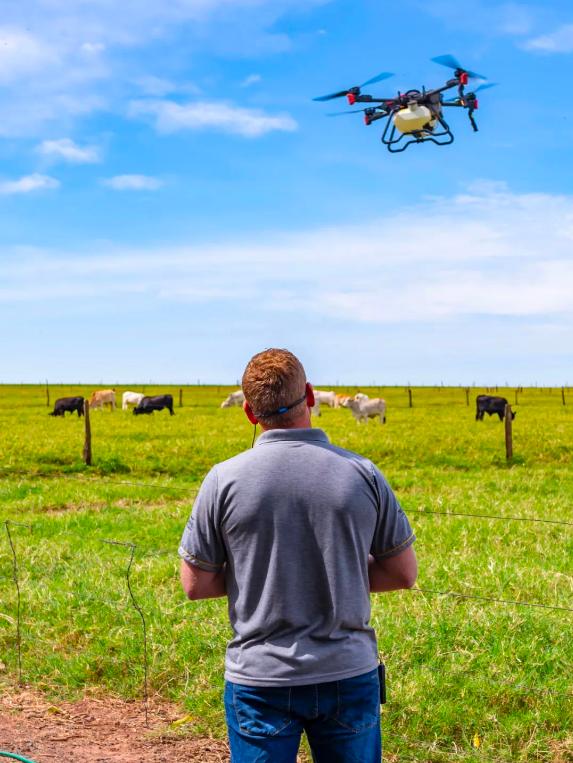
Brazilian users operate XAG agricultural drones with their mobile phones
Local after-sales service and parts warehouses solve maintenance problems
What is the most common complaint about overseas agricultural equipment? It is not just performance or price, but how soon the machine can be put back into use if it breaks down.
If a large agricultural machinery breaks down during the busy farming season, it may delay the entire growing season. Shipping a spare part from Europe or the United States takes two to three months by sea. Can farmers afford to wait that long?
Chinese manufacturers realized this problem very early.
DJI has established a local agent system in Brazil. DJI Agriculture has also specially released an industry white paper for the Brazilian market to popularize knowledge of compliant flight and safe operation, and established a local technical support team to provide a complete localized service system.
XAG has gone even further — they not only sell drones in Brazil, but also sell Chinese-made electric pickups and large drones as a combined package. The pickup is equipped with a dedicated drone operation platform that can not only carry drones, but also directly charge the drones during field operations. This "vehicle + drone" combined solution solves the practical problems of transit and battery life on large farms.
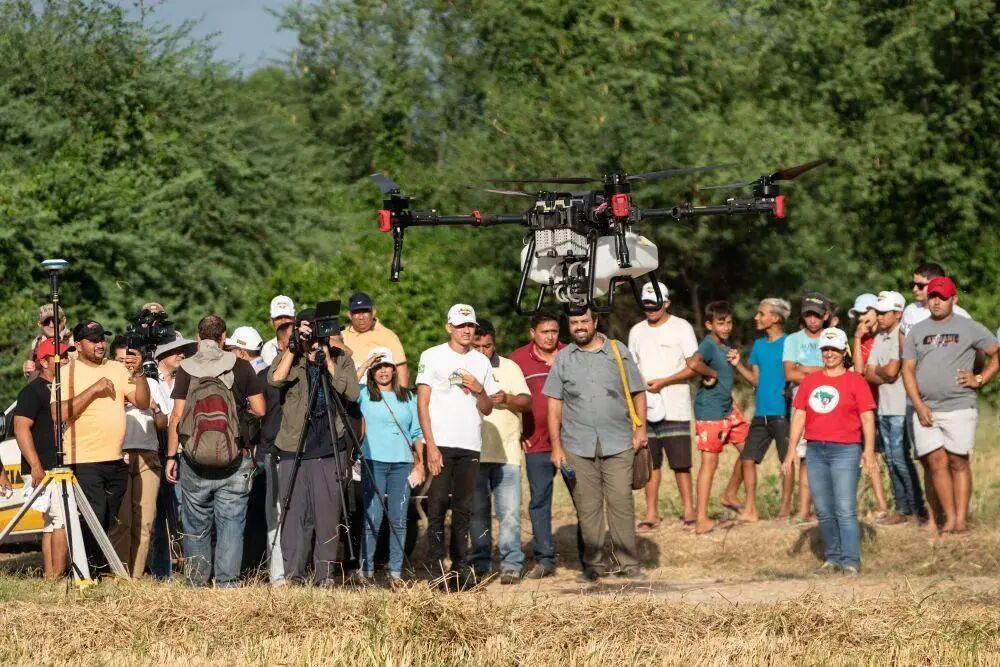
XAG agricultural drone conducting field demonstration operation
Only with reliable after-sales support will farmers dare to purchase drones in batches and use them for a long time.
Making technology closer to the market
If cost-effectiveness and after-sales service are the entry tickets, what really allows Chinese drones to gain a firm foothold in Brazil is the in-depth R&D carried out by various enterprises for local Brazilian scenarios.
DJI Agriculture: Optimize spraying system for local Brazilian scenarios
DJI Agriculture's overseas expansion path has a feature: it follows the crops.
According to National Business Daily, DJI's overseas expansion follows the "crop similarity principle": it starts from rice planting areas such as Japan, South Korea and Southeast Asia, and then expands to Latin American markets dominated by dryland crops such as Brazil and Mexico. By 2026, the cumulative global sales of DJI agricultural drones have exceeded 700,000 units, covering more than 100 countries and regions.
After entering Brazil, the first thing DJI did was to conduct tests in the fields.
Brazil's soybeans have a number one enemy — Asian soybean rust. This fungal disease can cause 10% to 90% yield loss in Brazil. Data from Brazil's agricultural department shows that since 2001, the cumulative economic loss caused by soybean rust in Brazil has reached 31.5 billion US dollars.
Rust control puts extremely high requirements on the timeliness and accuracy of spraying: pesticides must be sprayed within the shortest possible time after the disease is detected, and the liquid must evenly cover both the front and back of the leaves without drifting and causing waste.
DJI optimized its spraying system for this scenario. Take the T50 model as an example. It is equipped with a dual atomization spraying system that can adjust the droplet size according to wind speed — when the wind is strong, the droplets are adjusted to be coarser to prevent pesticide drift; when the wind is weak, the droplets are adjusted to be finer to improve coverage density. At the same time, DJI completed model certification with the Brazilian Civil Aviation Agency (ANAC), specially adapting to Brazil's tropical climate and local pesticide formulas.
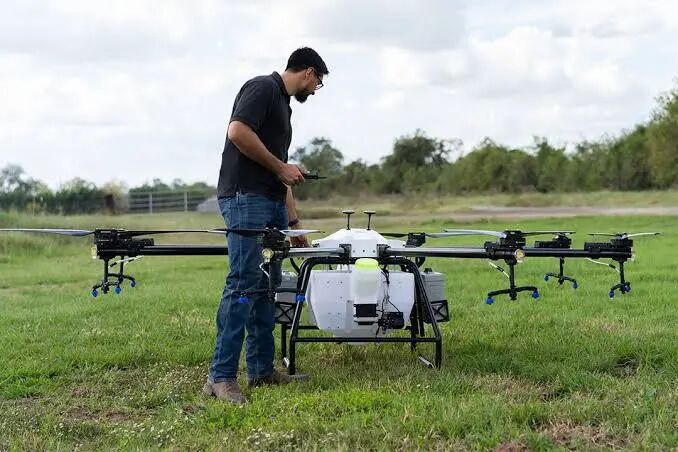
DJI T50
At the 2026 Brazil AgriTech Show, the new model exhibited by DJI also added a lifting and transporting function, which can undertake the transportation of agricultural materials and agricultural products in mountainous environments — this directly addresses the difficulty of agricultural transportation in Brazil's high-altitude mountain areas.
XAG: Open up the market with large-load models in cooperation with local Brazilian agricultural machinery dealers
In May 2025, at the Brazil Agricultural Expo, XAG and CNH Industrial jointly launched the first intelligent agricultural drone, which took the lead in entering the Latin American market.
What is the background of CNH Industrial? This company owns century-old agricultural machinery brands such as Case IH and New Holland, has been deeply engaged in the field of precision agriculture for decades, and its global sales network covers every major agricultural producing area in Brazil. XAG provides drone technology, and CNH Industrial provides channels and local services — this "technology + channel" combination allows XAG's heavy-load models to quickly reach large-scale large farms in Brazil.
XAG focuses on promoting large-load models in Brazil. The P200 agricultural drone released in November 2025 has a maximum take-off weight of 149.9 kg, and the capacities of both the pesticide tank and the spreading hopper have been greatly improved — this heavy-load model is designed for Brazil's super-large farms that often cover tens of thousands of hectares.
Brazil's soybean fields are not flat and unobstructed, but are contiguous plots with undulations and slopes. XAG's radar terrain-following flight function allows the drone to automatically fly along the terrain in undulating farmland, maintaining a constant spraying height to ensure that crops on mountains and gentle slopes can also be sprayed evenly.
A report from Farmers' Daily in May 2025 mentioned that CNH Industrial's global sales network and XAG's drone technology form a strong combination, providing local farmers with a one-stop solution of "drone + intelligent agricultural machinery". This approach of deeply tying up with local agricultural machinery channels allows XAG to skip the long process of building a sales network from scratch.
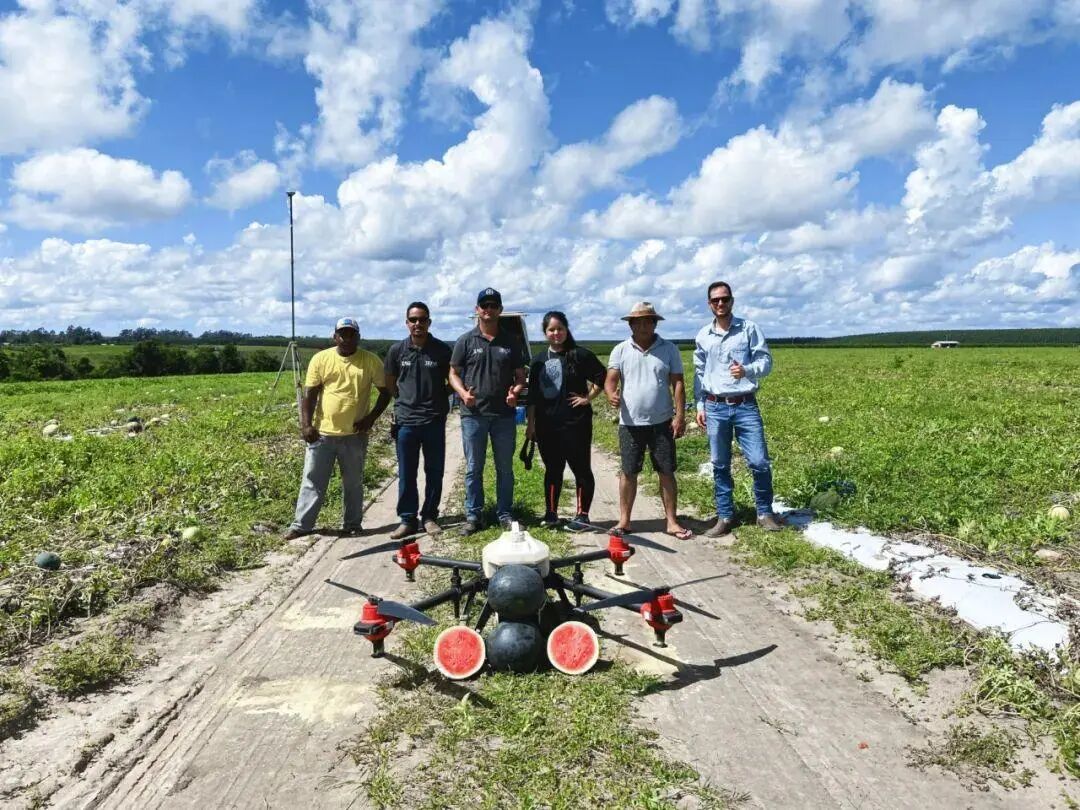
XAG agricultural drones are recognized by Brazilian fruit farmers
Eyesee Robot: Obstacle avoidance technology in complex orchard environments
If DJI and XAG focus on field crops, then Eyesee Robot is tackling the tough challenge — orchards.
Brazil's coffee orchards and citrus orchards have dense trees and undulating terrain, which is one of the most difficult scenarios for plant protection drones to operate in. Ordinary drones will hit tree branches if they are not careful when flying into orchards.
Eyesee Robot's solution is "full-domain perception". Through the integrated system of sensors such as lidar and high-computing-power AI chips, Eyesee realizes omnidirectional perception and "anthropomorphic obstacle avoidance" — that is, drones can judge where to fly and where to avoid like humans in plots with many trees and complex obstacles.
What is even more impressive is its low-light operation capability. In the tropical regions of Brazil, the light changes rapidly in the evening, and traditional optical cameras become "blind" when it gets dark. Eyesee's system actively emits laser to detect the environment through lidar, does not rely on visible light, and can fly and operate stably in low-light or even nighttime environments.
Wang Hui, head of Eyesee's Latin American market, told Xinhua reporters as early as 2023 that compared with Brazil's traditional pesticide spraying methods using sprayers, manned aircraft and tractors, drone spraying has multiple advantages such as less residue, more flexible operation time, more accurate coverage and higher economic benefits.
Three years later, this statement has been voted for by more Brazilian farmers with real money.
The reason why Chinese drones are unbeatable on Brazilian farms lies in the right combination of favorable timing, geographical conditions and human support.
China has 1.8 billion mu of cultivated land. From the large plains in the northeast to the h