Next year, the automotive export industry must make a fundamental shift in its development mindset.
Recently, the Australian Automotive Dealers Association (AADA), which represents the interests of 3,900 dealerships, has issued a ban appeal, calling for a suspension and restriction on the import of Chinese-brand vehicles, and the implementation of a licensing system in the future.
The reason is straightforward: Australian local dealerships can barely hold on any longer.
Although new car deliveries in Australia broke through the 103,000-unit mark in October, with a year-on-year increase of 3.8%, the average net profit margin of new car dealerships in the third quarter of this year has dropped to -0.2%, and selling cars is no longer profitable. This is the first occurrence since the fourth quarter of 2008. After 18 years, Australian dealerships have fallen into losses again.
Compared with 2021, the annual sales volume of the Australian market has increased by about 200,000 units, while the number of automotive brands has increased by 16. It is estimated that there will be 80 automotive brands in the market by 2028, of which 37 are Chinese brands, accounting for nearly half.
In other words, Chinese automakers regard Australia as an incremental market, but the sales targets they set exceed the carrying capacity of Australia's market size. The AADA now requires dealerships to have the right to reject excess inventory beyond their affordability, and their original commercial incentives or rebates shall not be cancelled.
This is a warning to Chinese brands, and also a situation that they have to face. How to deal with it has become a severe challenge for Chinese automakers in the next stage of going global.
See the Whole Picture from a Single Detail
Compared with mature markets, the current supply of automotive brands in Australia is severely oversupplied, and Chinese brands have contributed significantly to this situation. Australian dealerships, having never received relevant training in the Chinese market, cannot adapt to the new business models either.
The Australian market is so crowded that every 1 million new car sales correspond to 54 automotive brands. In comparison, the figure is 19.8 in the UK, 18.9 in Canada, 16.4 in Germany, 6.6 in Japan, and only 1.8 in the United States.
Under such circumstances, just like in the domestic market, price wars are inevitable. As James Voortman, CEO of AADA, said, dealerships are facing a "catastrophic disaster".
It is not only Australia that is flooded with massive imported vehicles. At present, major global markets except the United States have all become export destinations for Chinese automakers.
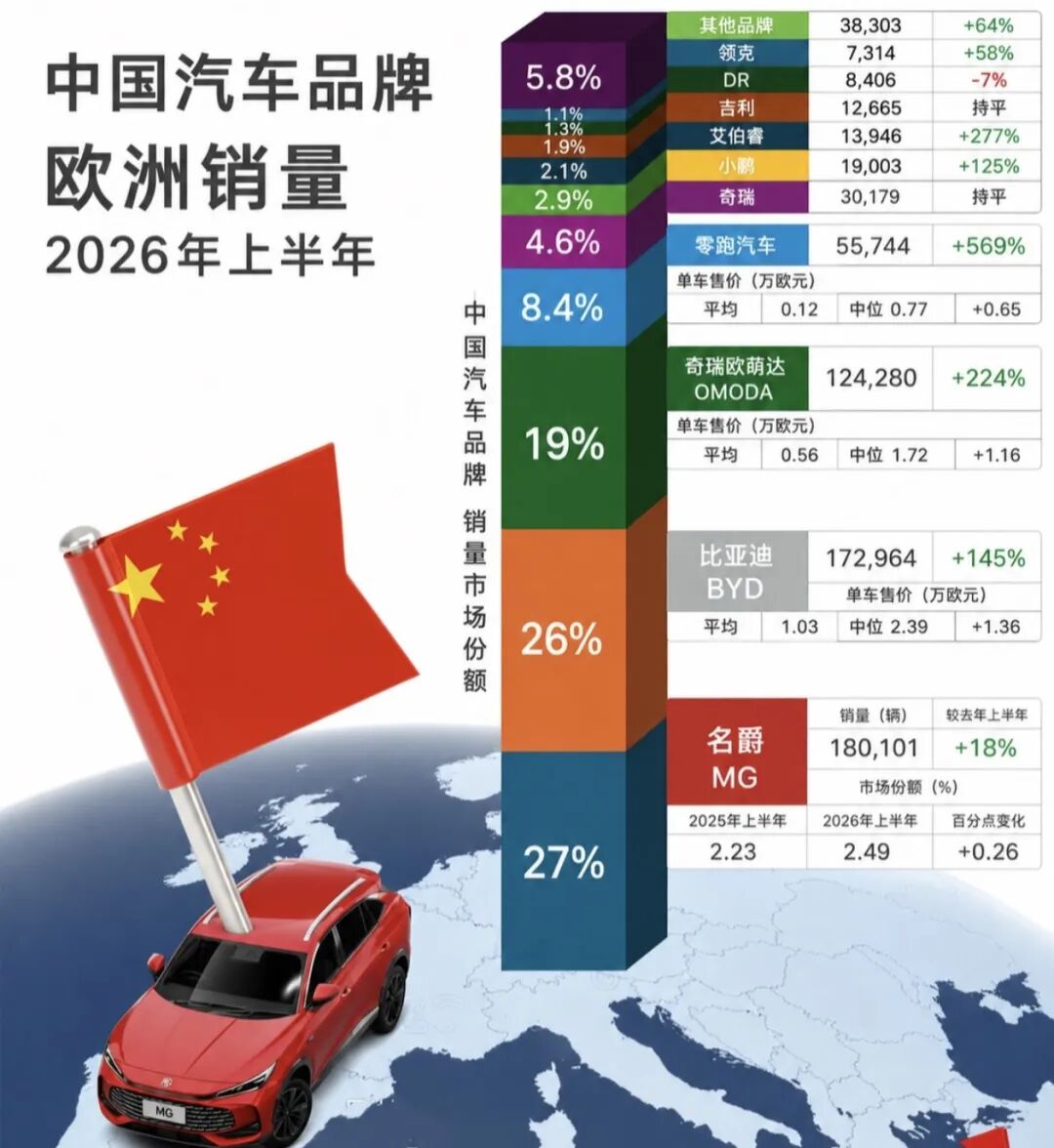
Take the UK as an example. It has become the bridgehead and top priority for Chinese automakers to enter the European market. In October, sales of Chinese brands in the UK reached 33,800 units, a year-on-year increase of 107.6%, exceeding the total sales of Japanese and Korean automotive brands combined. The market share of Chinese brands also reached 22.1%, up 10.9% year-on-year. The cumulative sales volume from January to October exceeded 350,000 units, ranking second after European automotive brands and becoming the second largest camp in this market.
The market trend of Spain in Southern Europe is similar to that of the UK. In 2025, the total sales of passenger vehicles in Spain reached 1.149 million units, with a year-on-year increase of 12.9%. Chinese brands sold 116,755 units, a sharp year-on-year surge of 140%. Their market share rose from 6.65% in 2024 to 10.2%, reaching double digits for the first time.
Data from the Spanish Association of Car Dealerships also shows that the market share of Chinese brands in Spain has risen to 10.2%, nearly twice the average level of the European Union. By the first quarter of 2026, the sales volume of Chinese brands in Spain exceeded 40,000 units, and their market share further rose to 13.5%, surpassing Korean automotive brands for the first time.
The situation in Southeast Asia is more obvious. In the Thai market in 2019, the market share of Japanese brands was still 87.06%, while that of Chinese brands was only 2.86%. By 2025, the share of Japanese brands dropped to 68.4%, while that of Chinese brands rose to 22.2%. BYD alone sold 41,180 units in Thailand, ranking among the top three in total brand sales.
In terms of the overall export performance, China's cumulative automobile exports from January to September 2026 reached 8.205 million units, a year-on-year increase of 65.8%. Among them, new energy vehicle exports reached 4.006 million units, up 127.9% year-on-year, which means on average 1 out of every 3 exported vehicles is a new energy vehicle.
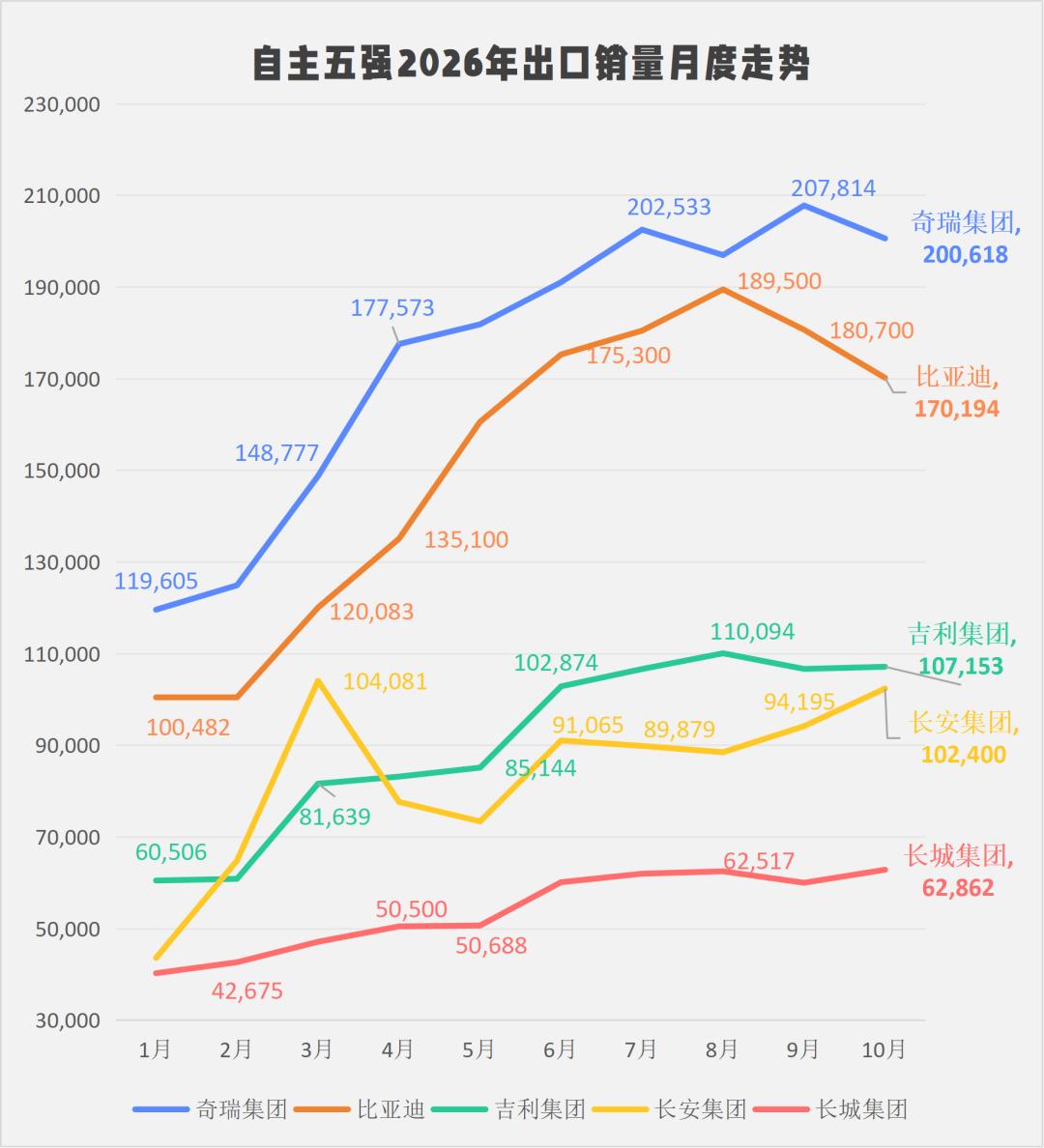
In the whole October, the top six exporters were Chery, BYD, SAIC Motor, Geely, Changan Automobile and Great Wall Motors, with sales of 200,600 units, 169,600 units, 162,500 units, 107,100 units, 102,400 units and 62,900 units respectively. Overseas markets have become the main source of sales for these automakers, and Chery's export sales even account for more than 70% of its total sales.
In terms of revenue, based on the public financial reports available at present, the total overseas revenue of the five leading mainstream Chinese independent automakers in the first half of 2026 is about 454.4 billion yuan. According to the estimates of securities firms, the total overseas revenue of all Chinese self-owned brand complete vehicles in the first half of 2026 is roughly in the range of 5200 to 560 billion yuan, accounting for about 38% to 42% of the total revenue of all independent automakers. Among them:
BYD's overseas revenue in the first half of 2026 reached 181.268 billion yuan, accounting for 52.57% of its total revenue, marking the first time that its overseas revenue exceeded domestic revenue;
Chery Automobile's overseas revenue in the first half of 2026 reached 98.968 billion yuan, accounting for 69.1% of its total revenue, making it the independent automaker with the highest proportion of overseas revenue;
Great Wall Motors' overseas revenue in the first half of 2026 reached 56.288 billion yuan, accounting for 55.1% of its total revenue;
Changan Automobile's overseas revenue in the first half of 2026 reached 21.942 billion yuan, accounting for about 35% of its total revenue;
Geely Automobile's overseas revenue in the first half of 2026 was about 96 billion yuan, accounting for about 55% of its total revenue.
The reason for this situation is no other than the extremely fierce competition in the domestic market, which makes every automaker face a hard time, and even the survival of some second-tier automakers is threatened. Going global has become their only expectation and hope. But fundamentally, the massive "stagnant flood" generated by the spillover caused by insufficient domestic sales and excess production capacity has also made countries around the world feel intimidated.
Fortunately, the Chinese government has also realized this point. This year, the export tax rebate rate for new energy vehicles has been reduced from 13% to 9%. The 4 percentage point difference is a real blow to players who rely on "low prices for volume", especially hitting the new energy sector that relies most on price advantages. Raising the threshold will in turn promote the quality of overseas expansion.
Next, a stable external environment in overseas markets will become extremely important for Chinese brands. The common low-price high-volume model for going global is increasingly unsustainable, and it is time to test the system capabilities of Chinese automakers.
The Inflection Point Has Arrived: Pursuing Quality Is the Antidote, Pursuing Volume Is the Poison
To survive, Chinese automakers have tried their best. But against the backdrop of oversupply, while promising domestic industry authorities not to engage in malicious internal competition overseas, they are still habitually launching fierce price wars in foreign markets.
Another set of macro data also points to this trend. China's trade surplus has exceeded 1 trillion US dollars for the first time, and the increasingly unbalanced trade relationship with the European Union accounts for nearly one third of it. Among this one third, automobile exports, especially new energy vehicle exports, are one of the most direct related items.
The imbalance on the trade account will eventually be reflected on products in the form of policies.
In fact, what overseas markets despise most is the spillover of domestic price wars. Although seizing market share in the short term through low prices can quickly gain market share, it will compress profits, easily strengthen overseas users' impression that Chinese brands are "low price and low quality", and may also lead to anti-dumping and anti-subsidy investigations.
Not long ago, the Thai cabinet officially approved the adjustment plan for automobile consumption tax, which will be implemented on January 1, 2027. For brands that have no plan to build factories in Thailand and rely entirely on complete vehicle import sales, the tax rate will be directly increased from 10% to 35%. The policy orientation is very clear: if you want to do long-term business in this market, you have to move your production lines here.
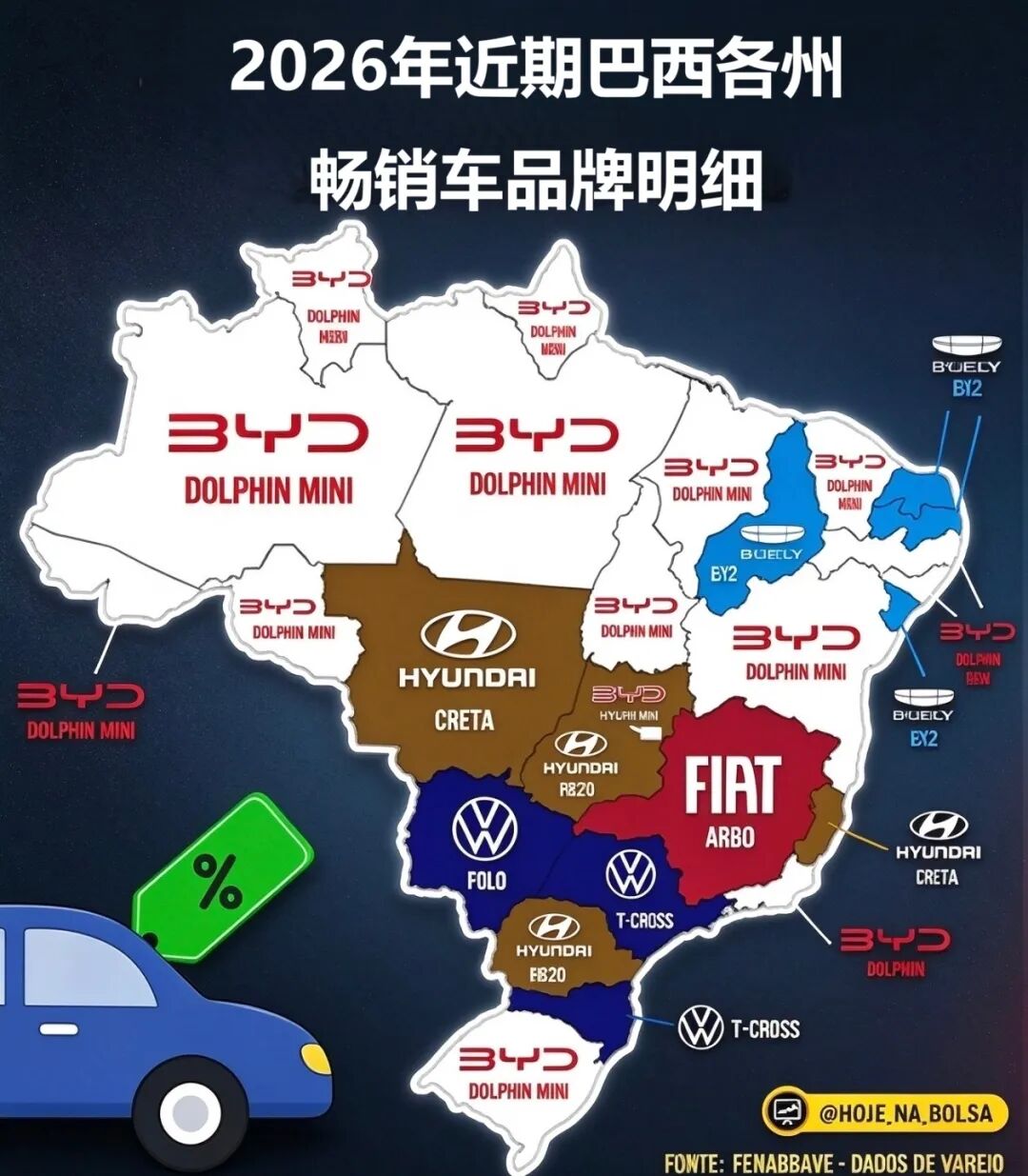
Brazil's logic is almost exactly the same. For brands that do not build factories in Brazil and rely entirely on complete vehicle imports, a temporary surtax will be levied, which has now been raised to 35%, but this is not the upper limit. This round of adjustment is the result of lobbying by the Brazilian Automobile Manufacturers Association. It is still in the stage of compliance research and is expected to be implemented as soon as the first half of 2027.
The European Union is discussing a quota system, and rumors say it will be planned based on the 2025 sales volume of 350,000 units. How many vehicles can still be exported to the EU market next year is a huge unknown in itself.
From the large-scale entry of Chinese automakers into overseas markets to the successive restrictions set by countries around the world, the intensity of reaction has far exceeded previous expectations.
The solution to this restrictive situation is difficult but also simple: pursue quality instead of volume. However, the short-term cost is very high, and not every Chinese automaker is willing to restrain itself and raise its bottom line.
Therefore, under the high base, the difficulty of export in 2027 has been written in advance by several sets of data. There are various opinions in the market on the prediction for 2027, and there are also sober-minded people. Cui Dongshu, Secretary-General of the China Passenger Car Association, judged that the growth rate of automobile exports will slow down significantly next year, which is expected to be only about 10%.
But Yin Tongyue, Chairman of Chery Automobile, believes that "exports are likely to decline next year. Therefore, our past single pursuit of volume may not be the right way out. I think we should really focus on building brands. The so-called 'volume, price and profit', the foundation of price is actually the brand."
"Real internationalization is not the internationalization of just selling products out, but the internationalization of being accepted. To make various markets accept Chinese vehicles, we must take root locally." Yin Tongyue said.
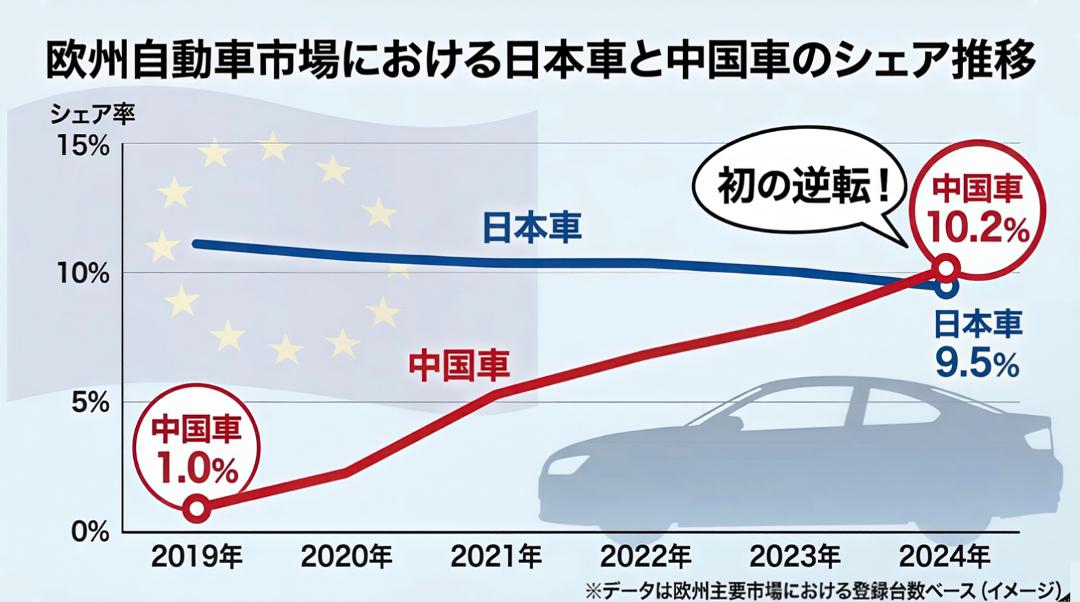
There is also a landmark detail: Nissan announced that it will open the idle production lines of its Sunderland plant in the UK as early as fiscal year 2027 to do OEM manufacturing for Chinese brand Chery. For the first time, a mainstream Japanese automaker will produce vehicles for a Chinese automaker in the core European market.
Twenty years ago, Chinese automakers lined up to invite multinational companies to establish joint ventures; twenty years later, the script has been completely reversed.
However, Chinese automakers should not be too optimistic. Building local factories is far more complicated than simple export. Although local production can ease tariff pressure, it requires a large amount of capital investment, and also needs to deal with local employment, taxation, suppliers and cultural differences. For example, in Europe, the cost of layoffs is high and the trade unions are powerful. Copying the domestic management model is likely to cause labor conflicts.
There is another important issue: selling a large number of vehicles does not mean everything is settled. More challenging tasks lie ahead - after-sales service must also be improved. Local maintenance outlets, spare parts supply, insurance, road rescue and used car residual value will all affect user reputation. For new energy models, it also depends on charging facilities and professional maintenance personnel. A single recall or long-term difficulty in vehicle repair may cause more damage to the brand than the small sales volume brought by price reduction promotions.
Exchange rate risk and logistics risk are also huge pitfalls. Although it seems profitable when selling vehicles, the profit may shrink due to foreign exchange settlement and become "all in vain". In the first half of 2026, the overseas profit of several independent automakers was affected by the exchange rate by more than 20 billion yuan. After all, overseas, most of the automakers' revenue is in foreign currencies, while their costs include RMB expenditures, sea freight, insurance and overseas operations. Exchange rate fluctuations, tight ro-ro ship capacity, transportation risks in the Red Sea and other issues may all eat up the original gross profit.
Therefore, to judge the quality of an automaker's overseas expansion, three things are very important: whether the net profit grows synchronously while overseas sales grow; whether the local after-sales network is fully covered; and whether the pricing can get rid of pure low-price competition.
2027 will be the inflection point of going global, and also the 3.0 stage of overseas expansion. What this stage really needs to answer is not how many more units can be sold, but whether it can take a long-term foothold in a market, convert tariff costs into local production capacity, convert sales advantages into brand premium, and convert one-time delivery into a sustainable service system. If these three points cannot be achieved, no matter how beautiful the export figures are, they are only delaying the risks for one more year.
This article is from the WeChat official account "Auto Community" (ID: iAUTO2010), authors: Wang Xiaoxi, Du Yuxin, published with authorization from 3