3.4 Trillion, Super Tech Empire, Elon Musk Means Business
Recent market rumors say that substantive breakthroughs have been made in the negotiation of the merger between SpaceX and Tesla.
People familiar with the matter revealed that the two parties may officially announce this super M&A deal as soon as December this year, which also falls into the discussion range of the alternative plan released in early 2027.
This significant advance in the schedule breaks the window in the first half of next year that was widely predicted by the market earlier.
$3.4—$3.6 Trillion
Tesla is about to hold its annual general meeting of shareholders on December 3, and this key time node highly overlaps with the potential merger announcement window. At that time, a number of core directors including Elon Musk, Chairperson Robyn Denholm and JB Straubel will face a new round of election voting with a term expiring in 2029.
From the underlying logic of capital operation, the integration direction of this transaction has clearly pointed to the absorption and merger of Tesla by SpaceX, which has a higher valuation. The huge valuation gap between the two companies in the current private and public markets directly establishes the asymmetric status of the M&A entities.
Calculated according to the recent valuation benchmarks of the public market and private equity, the overall valuation of SpaceX has steadily stayed above $1.9 trillion, while Tesla's market capitalization fluctuates around $1.5 trillion.
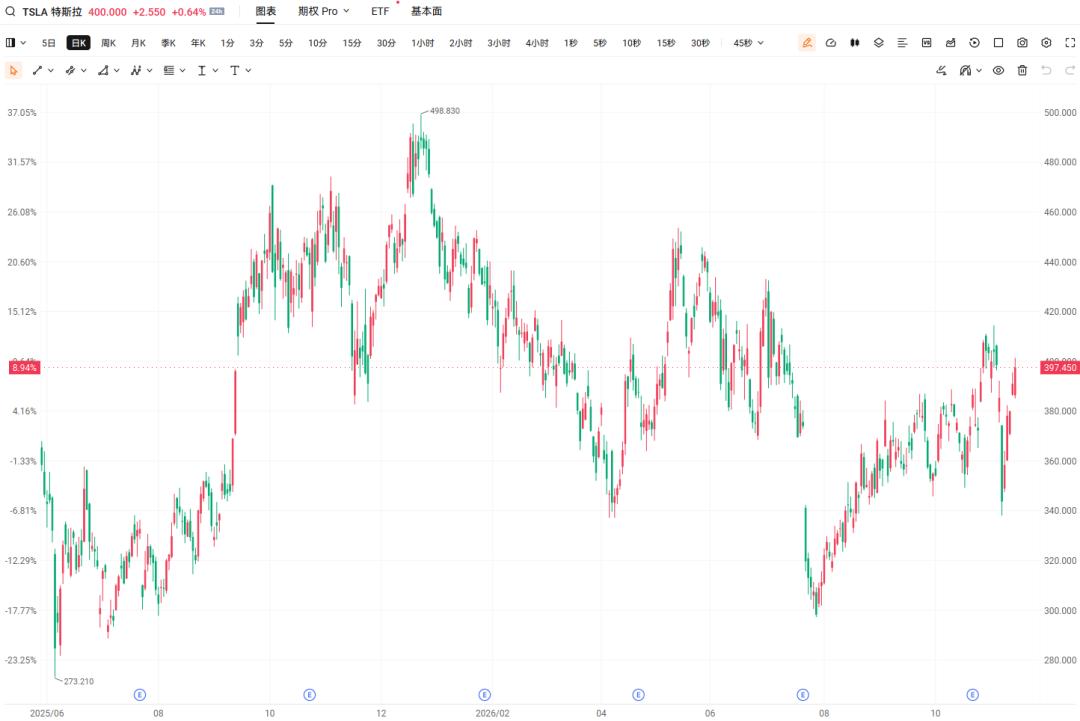
This means that the total market value of the new entity after the merger will historically break through the grand range of $3.4 trillion to $3.6 trillion.
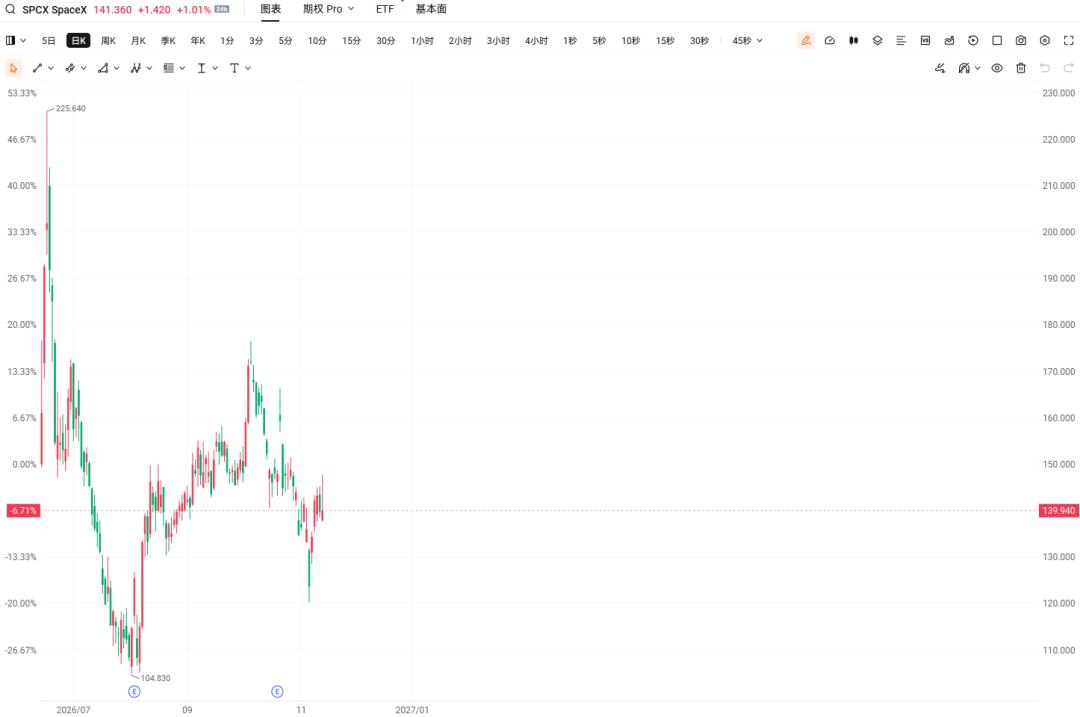
Such a huge entity size not only completely refreshes the highest record in the history of global capital M&A, but also completely marginalizes the traditional historical M&A peak of Vodafone's acquisition of Mannesmann for more than $180 billion in the early millennium. Even SpaceX's capital move to acquire xAI for $250 billion earlier this year is only equivalent to a partial asset puzzle in front of this century-level mega-merger.
The core game focus on the negotiation table is concentrated on the design of the precise share exchange ratio and the fair conversion of the rights and interests of Tesla's existing minority shareholders. Since Tesla is a fully tradable public listed company, while SpaceX is characterized by highly concentrated private equity, how to balance the liquidity premium of the two has become the top priority of the special committee.
There is an essential asymmetry in the power distribution of the two companies at the governance structure level. With his super-voting shares, Musk firmly controls about 85% of the absolute voting rights of SpaceX, while his shareholding ratio in Tesla has long remained at around 20%.
This huge gap in the equity structure will lead to significant dilution of voting rights for Tesla shareholders after the assets are merged. The new entity after the merger will be highly converged to a single core controller at the governance level, which will constitute a complex game variable for institutional investors pursuing traditional corporate governance norms.
The final implementation of the transaction terms also needs to effectively solve the problem of accelerated triggering of Tesla's executive compensation and equity incentive plans under the condition of change of control. The huge compensation plan that has sparked widespread discussion before will usher in a systematic re-evaluation of its exercise boundary and dilution effect after being incorporated into the super giant with a market value of more than $3 trillion.
The cyclical change of the political environment adds more uncertainty risks to the transaction. As the Democratic Party regained control of Congress in the US midterm elections, the opposition has publicly promised to launch a full range of congressional hearings and compliance investigations into Musk's business empire and political activities.
In addition to the transnational review at the national security level, the US domestic anti-monopoly regulatory authority will also launch a long and strict hearing procedure for this super-large merger case. Crossing political resistance and the anti-monopoly red line will be a realistic stumbling block that must be removed before the formal signing of the merger agreement.
Business Synergy
In fact, the underlying synergy between the two companies at the business level has long been quietly launched, and has formed deep interlocking in multiple key dimensions. Public financial documents show that there are stable connected transactions of automobile sales and technical services between Tesla and SpaceX in daily operations.
In the fields of energy transition and artificial intelligence infrastructure, the capital bond between the two sides is also extremely close. Tesla previously sold hundreds of millions of dollars worth of Megapack energy storage battery systems to xAI, and as xAI was officially incorporated into the SpaceX ecosystem earlier this year, this internal synergy effect has been further deepened.
The more strategically significant hardware synergy is reflected in the field of semiconductor manufacturing.
The two sides are currently pooling equivalent resources in Texas to jointly promote the construction of a high-end semiconductor manufacturing plant named Terafab, aiming to open up customized chip production capacity for future autonomous driving and embodied intelligence.
With the accelerated advancement of merger negotiations, cross-company commercial procurement and technology licensing, which originally belonged to two independent legal persons, will be completely transformed into synergistic settlement in the internal income statement in the future. This internal closed loop of the supply chain will greatly reduce intermediate transaction costs and improve asset operation efficiency.
The seamless connection of in-vehicle terminal interconnection and low-orbit satellite communication is also a potential synergy highlight. After the merger, Starlink's ability to directly provide broadband communication services to millions of Tesla electric vehicles will no longer be subject to complex commercial licensing negotiations, thus accelerating the full implementation of the direct-to-satellite function.
This is not the first time Musk has implemented large-scale asset relocation and sector restructuring in his business territory. Looking back at his past development history, whether it was the incorporation of solar energy asset SolarCity into Tesla in those years, or the subsequent privatization and restructuring of the social media platform X, all show his strong federal-style empire integration style.
The initial reaction of the capital market to this rumor shows a rational and positive undertaking trend. In the overnight US stock market, Tesla's stock price strengthened against the trend and recorded a significant intraday increase, becoming a core target with relatively strong resistance to decline among the seven major tech giants.
In contrast, the US stock market index and some leading semiconductor stocks in the same period encountered obvious capital diversion and valuation correction pressure. This partial capital preference reflects that some on-market funds have begun to try to hedge the expected asset premium brought by large-scale strategic restructuring in advance.
Analysts from top Wall Street institutions generally believe that the essence of this transaction is not a simple short-term order and production capacity transaction, but an ultimate architecture upgrade for Musk's core assets.
By forcibly binding electric vehicles, energy networks, commercial aerospace, low-orbit satellites and artificial intelligence, it attempts to build a super tech ecological closed loop that cannot be easily deconstructed in the capital market.
However, from the perspective of valuation model and discounted cash flow, there is a natural mismatch between the asset attributes of SpaceX and Tesla. SpaceX is a typical commercial aerospace and global satellite internet target with capital expenditure intensity and high dependence on cutting-edge technological breakthroughs, and its long-term R&D investment has extremely high uncertainty.
In contrast, although Tesla carries the grand valuation narrative of Robotaxi and humanoid robots, its core fundamental base still highly relies on the large-scale sales of global automobile manufacturing and energy storage hardware. The merger of the two will completely change the financial statement structure and free cash flow performance of the original listed entity.
The interweaving of the capital expenditure curves of space satellite internet and ground new energy vehicles will reshape the capital allocation strategy of the entire merged entity. The stable high-gross-margin subscription revenue brought by Starlink is expected to hedge Tesla's continuously high R&D losses in the fields of autonomous driving and embodied intelligence to a certain extent in the future.
Holding Breath
From the macro perspective of the balance sheet, the merger of the two can achieve extremely efficient sharing of R&D resources. Whether it is the Starship R&D for the Mars program or the supercomputing cluster for ground autonomous driving, the optimal allocation of resources can be completed on a unified capital platform.
With the negotiation details gradually emerging, the focus of the capital market game in the follow-up will quickly move to the upcoming proxy statement and shareholder voting intention. Investors need to closely evaluate whether the share exchange ratio finally disclosed by the special committee can truly reflect the endogenous value of the two companies.
The asset allocation preference of top international investors will also undergo a profound rebalancing in this merger. Some public funds that were originally only willing to participate in new energy vehicle manufacturing will have to passively hold high-risk assets with both commercial aerospace and national defense military attributes in the future.
The pricing logic of the capital market is jumping from the traditional single-entity earnings P/E ratio model to a comprehensive ecological valuation system spanning aerospace, mobility and AI. This upgrade of narrative dimension endows the new entity with unique scarcity pricing power among the core assets of US stocks.
As the consultant teams of all parties continue to push forward due diligence, clues about consideration details and cash option in the coming weeks will become the core clues for hedge funds to capture arbitrage opportunities. Any small rumor about loose terms or regulatory resistance will trigger violent fluctuations in the options and stock secondary markets.
Although there is still a long regulatory run to go before the final legal closing, the concept of this century-level merger has completely changed the pricing benchmark of the secondary market for related assets.
No matter whether the final announcement is heavily launched in December or slightly delayed as expected, Musk is trying to reshape the competition pattern of the global technology industry again with an extremely aggressive capital wrist.
Looking forward from the current time point, global investors are holding their breath waiting for the possible official signals released at Tesla's annual general meeting of shareholders on December 3.
This century-level game between capital and power has just kicked off.
This article is from the WeChat official account "Gelonghui APP" (ID: hkguruclub), written by Aragon, authorized for release by 36Kr.