Jensen Huang resigns as CEO of NVIDIA, does China's domestic computing power usher in a window of opportunity?
On November 12, the board of directors of NVIDIA announced that Jensen Huang, the founder of the company, has resigned from his positions as President, Chief Executive Officer and member of the board of directors, effective immediately. Colette Kress, the current Executive Vice President and Chief Financial Officer, will serve as interim CEO and continue to hold the position of CFO before a formal successor is confirmed. The board of directors has simultaneously launched the selection process for the new CEO, and will consider both internal and external candidates. The board of directors has additionally appointed Harvey C. Jones as the first chairman of the board.
Since Colette Kress joined NVIDIA in September 2013, she has worked in finance at technology companies including Cisco and Microsoft for nearly 25 years before that. Jones has more than 30 years of experience as an entrepreneur, technology executive and venture capitalist, and previously served as CEO and Executive Chairman of Synopsys. Jensen Huang founded NVIDIA in 1993 and led the company for 33 years.
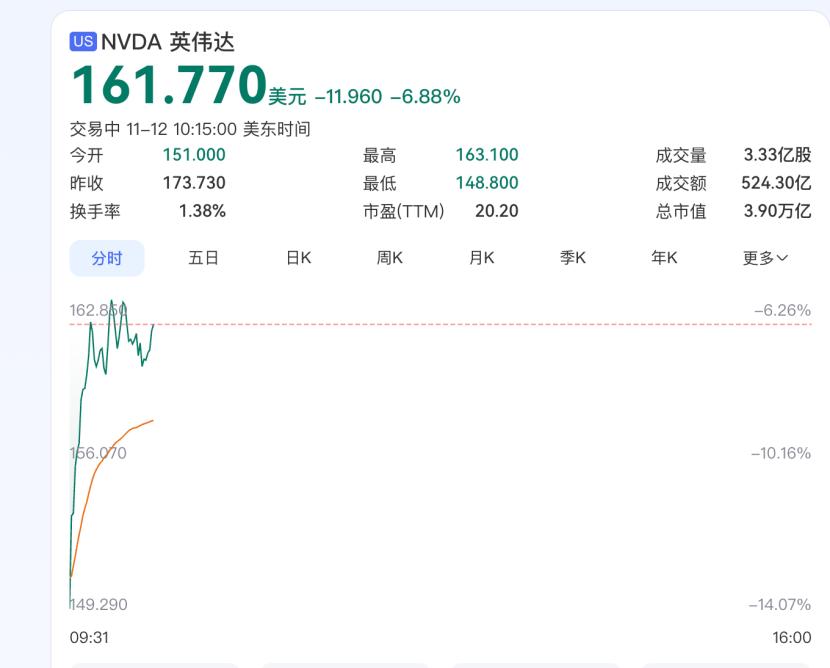
The news of Jensen Huang's resignation has sent shockwaves through the capital market. Ahead of U.S. stock trading on November 12, NVIDIA's share price once fell by more than 10%, a sharp drop from the closing price of $173.73 on the previous trading day. It rebounded slightly after the market opened. As of 10:15 Eastern Time, NVIDIA's share price stood at $161.77, down 6.88%. The market is reassessing the operational and governance risks of this AI chip giant after losing its founder.
What the global AI industry is more concerned about is another matter: after Jensen Huang leaves, can NVIDIA's product roadmap, customer relationships and supply chain commitments remain stable?
"The first thing the new CEO may do is compliance review, to check the supply chain and customers," a senior insider told the reporter of IT Times. "The management during the transition period also needs to stabilize the expectations of customers and the supply chain. Whether existing orders can be delivered on schedule and how to arrange production capacity next year is more important than telling new stories."
The official announcement stated that Jensen Huang's contribution is "far-reaching", and the board of directors and the company "sincerely thank" him. However, as of press time, Jensen Huang himself has not made any public statement. After he steps down, for NVIDIA's downstream customers, what they need to recalculate is no longer "whether NVIDIA can still perform well", but "where to get the GPUs for the next expansion and how long it will take to receive them".
The certainty of the Southeast Asian computing power market is declining
In recent years, leading global technology enterprises are all optimistic about the Southeast Asian region, where they build industrial parks and rent server cabinets.
On November 4, Google announced that it will invest 15 billion US dollars in Malaysia to expand its data center and cloud business. The new industrial parks will be located in Selangor and Negeri Sembilan, with the investment period from 2027 to 2028, which is about 7.5 times of its 2 billion US dollar commitment in 2024. Microsoft's data center near Kuala Lumpur is under construction, with a total investment of 2.2 billion US dollars in Malaysia, and it launched its first cloud region in Indonesia in May 2025. Amazon Web Services launched its Asia Pacific (Thailand) region in early 2025.
Some Chinese enterprises also rely on their own resources and connections to purchase servers and accelerator cards through overseas channels. According to Caixin reports, among the approximately 1.5GW of data center projects approved in Thailand, projects with Chinese capital background or mainly serving large Chinese-funded customers account for 60% to 70%.
While the infrastructure is expanding, the "predictability" of supply is declining.
When the reporter of IT Times inquired about prices from multiple computing power leasing channels as a buyer, some channel providers said that high-end computing power that can be stably leased out now is "increasingly difficult to lock in", and some channels "cannot guarantee" whether the lease can be renewed next year.
A person from a server manufacturer told the reporter that Southeast Asia, Europe and other regions are still the choices for some customers to obtain overseas computing power at this stage, but the uncertainty on the supply side is increasing. In addition to rising prices, customers must also consider risks such as contract renewal, continuous resource supply and future changes in regulatory policies.
On the other hand, NVIDIA's high-end computing power is still very popular in the leasing market. Some complex training and high-performance computing scenarios still give priority to NVIDIA GPUs, and it is difficult to fully replace them in the short term. But price has become the most direct variable. Channel providers have found that since the beginning of this year, the number of customers inquiring about Chinese computing power solutions has increased significantly.
Supply side variables push domestic GPUs to the forefront
The uncertainty comes from the extension of rule expectation.
On January 12, 2026, the U.S. House of Representatives passed the Remote Access Security Act with 369 votes in favor and 22 votes against. The act attempts to fill the regulatory gap of current export controls on remote access to advanced computing resources, with the core of extending the jurisdiction of export controls from "items leaving the country" to "remote access".
As of November, the act has not entered the next legislative procedure and has not taken effect. However, for enterprises that obtain high-end computing power through overseas data centers, whether the regulatory boundary will further extend to the cloud has become a new risk variable.
Supply side variables push domestic GPUs to the forefront.
Data from IDC for the first half of 2026 shows that the total shipment of AI accelerators in China's data centers is about 2.008 million units, of which 991,000 are GPUs, down 26% year on year, and 1.016 million are non-GPU accelerators including inference chips, up nearly 80% year on year, exceeding GPUs in shipment volume for the first time. NVIDIA shipped 678,000 units, accounting for 33.8% of the market share, down 44% year on year; Huawei shipped 572,000 units, accounting for 28.5%; Alibaba T-Head shipped 133,000 units, accounting for about 7%; Cambricon shipped 92,000 units, accounting for about 5%; Kunlunxin accounts for about 4%; Haiguang accounts for about 3%; Moore Threads shipped 56,000 units, accounting for about 3%, ranking first among domestic GPU manufacturers.
Many industry insiders told the reporter of IT Times that the current domestic GPU echelon is clearly layered. The first echelon consists of Huawei Ascend and T-Head: the former leads in scale and has achieved stable deployment in government, enterprise, operator and cloud systems; the latter's production capacity first serves Alibaba's own cloud and AI system, with limited increment of external customers. An industry insider revealed to the reporter that some old models of T-Head flowed into the market last year, and now it is almost impossible to buy its GPUs on the market this year, "it is very difficult to get the goods". But from the feedback of actual use, the product quality of T-Head has a good reputation in the industry.
Alibaba announced in its announcement on November 10 that it has submitted a spin-off plan for the independent listing of T-Head on the Main Board of the Hong Kong Stock Exchange, and T-Head has submitted Form A1 in confidential form on September 11. If the spin-off and listing is finally completed, T-Head is expected to obtain a more independent financing channel and a higher capital market valuation. However, whether T-Head's Zhenwu chip can shift from mainly serving Alibaba's internal demand to larger external supply still depends on production capacity, customer structure and business strategy.
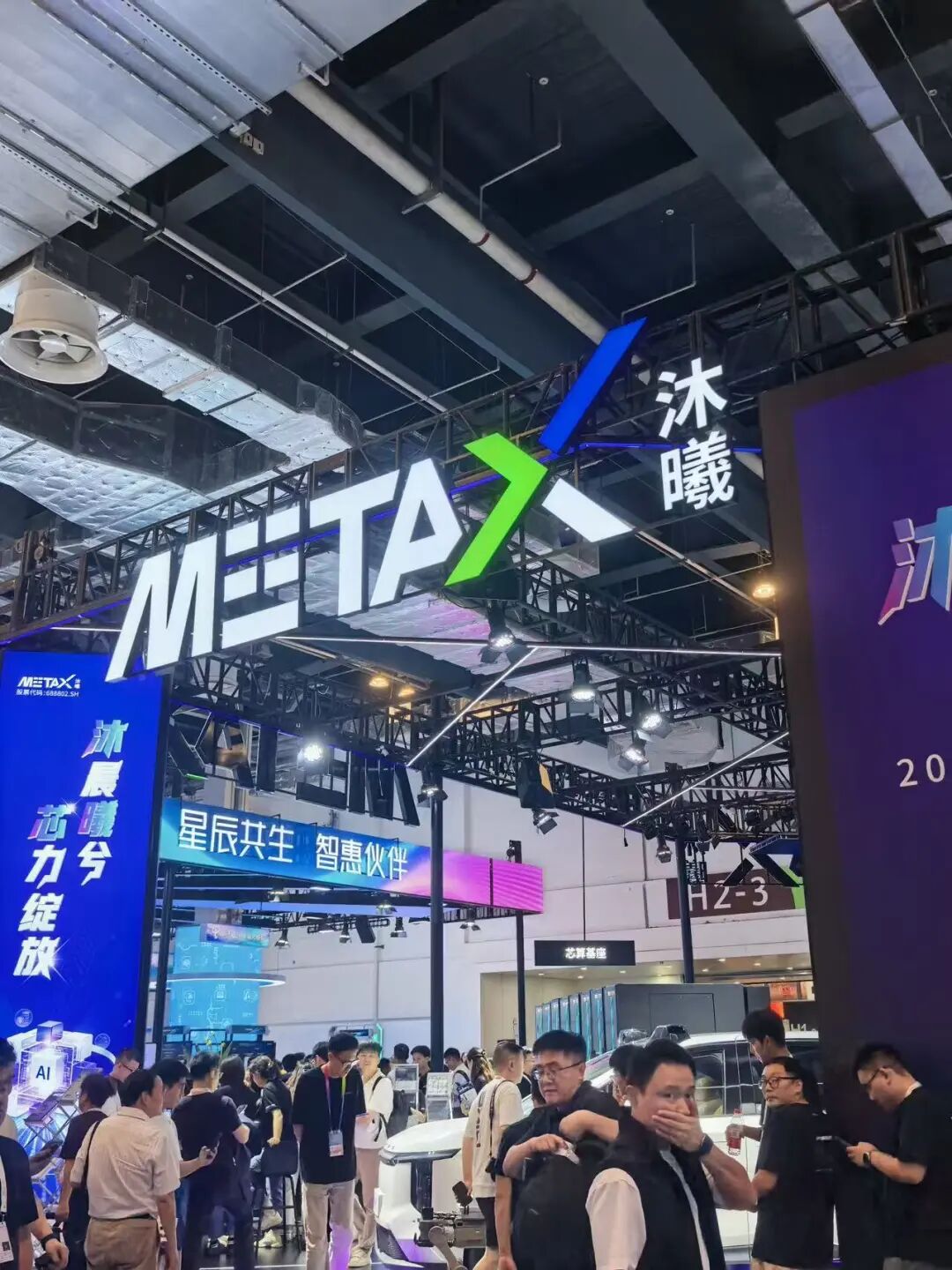
MetaX, Iluvatar CoreX, Moore Threads, Enflame and Biren Technology are all in the second echelon, among which MetaX and Iluvatar CoreX are at the top of this echelon, with relatively leading comprehensive scale, ecological maturity and system-level delivery capabilities.
The MetaX Xiyun C600 is equipped with 144GB HBM3e video memory, which was mass-produced in May 2026. It has realized the closed loop of domestic supply chain from design, manufacturing, packaging to software stack, and passed the national "Safety and Reliability Assessment" in the first batch in the first half of the year. The Iluvatar CoreX Tiangai 300, in the third-party actual measurement completed in July this year, achieved an end-to-end throughput per card equivalent to 1.05 times that of the international mainstream high-end GPU under the typical PD separation deployment, which it disclosed as the first general-purpose GPU in China to reach this level in this dimension.
Kunlunxin accounts for about 4% of the market share in terms of shipment volume, still in the second echelon. It submitted a listing application to the Hong Kong Stock Exchange in confidential form in January this year, and launched the listing tutoring on the Sci-Tech Innovation Board in May, advancing through the dual A+H channels. Baidu responded to the market rumor that "Kunlunxin's listing time has been delayed" that it is not true.
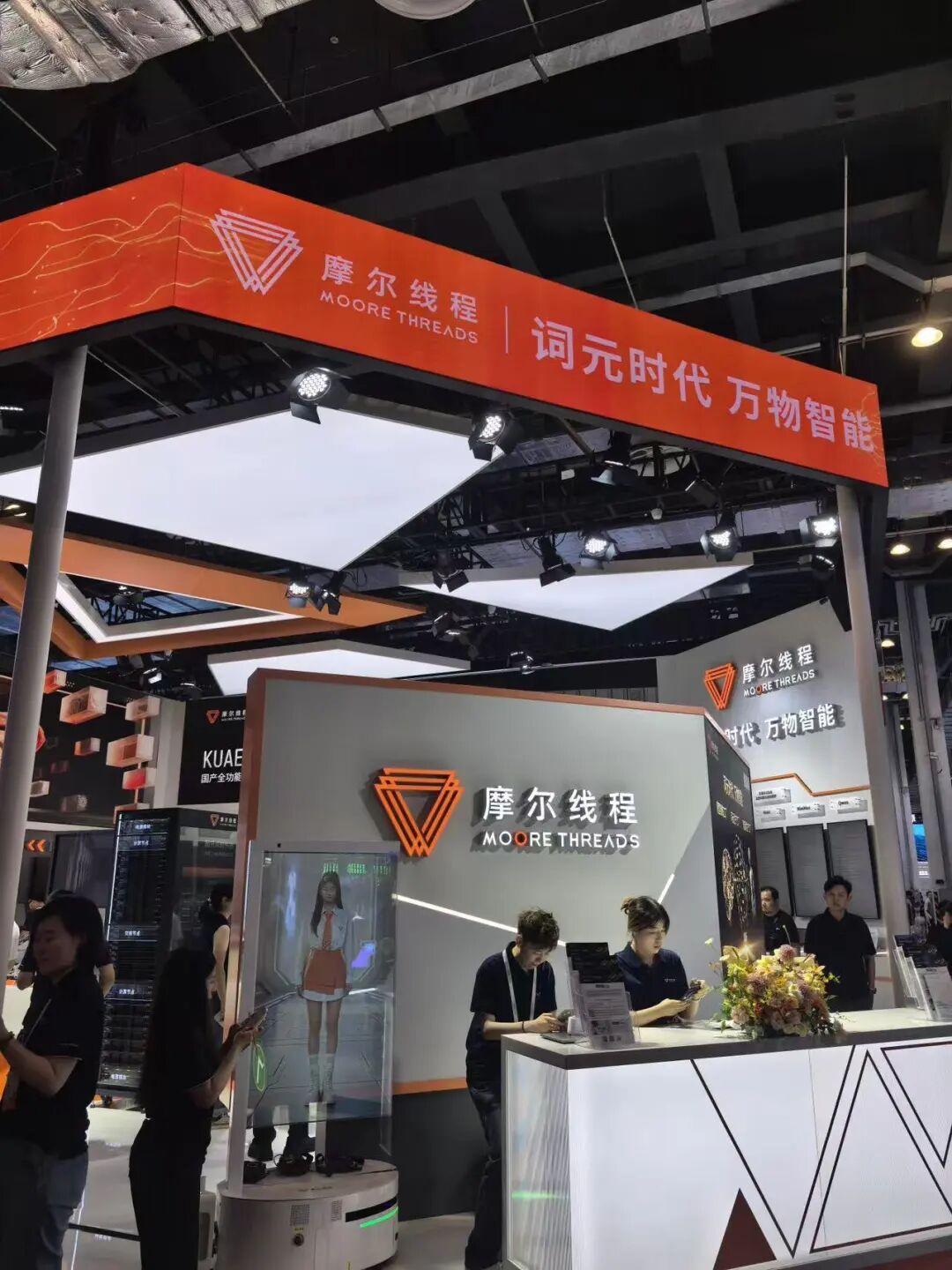
The semi-annual report released by Moore Threads on August 9 shows that its operating revenue in the first half of the year was 1.736 billion yuan, up 147.42% year on year, exceeding the total annual revenue of 2025. The net profit attributable to shareholders was a loss of 11.5631 million yuan, narrowing the loss year on year. Its shipment volume ranks first among domestic GPU manufacturers, and its ecological maturity and system-level delivery experience are still accumulating.
However, NVIDIA's business performance has not weakened. Its revenue in the second quarter of fiscal year 2027 (as of July 26, 2026) was 96.22 billion US dollars, up 106% year on year, and its data center business revenue was 89 billion US dollars, up 117% year on year. The official announcement stated that the third quarter financial report will still be released as scheduled on November 17.
The predictability of supply is declining. The question that enterprises need to answer now is no longer "whether there are GPUs available", but "who holds the GPUs and whether the supply can be in place for the next expansion". How large the window for domestic computing power can be opened depends on whether the first echelon can release production capacity and whether the second echelon can turn the measured performance data into continuous delivery.
This article is from the WeChat Official Account "IT Times" (ID: vittimes), author: Mao Yu, editor: Hao Junhui, Sun Yan, published with authorization from 36Kr.