Led by miHoYo, Tencent, NetEase and miHoYo have started intense competition in the new social track.
Life simulation games seem to be paying increasing attention to social design.
Judging from the games that have already launched tests, life simulation games share the same core in life gameplay despite various forms: farming, fishing, bug catching, home decoration... The biggest difference may lie in whether players stay in the small-scale peasant economy by doing all the planting work themselves, or enter the industrial/magic era by using combined seeders or superpowers.
For a batch of new life simulation games that have entered the testing stage, how to provide players with more recognizable and interesting experiences beyond life gameplay such as farming, collection and home building has gradually become an unavoidable issue.
Therefore, social gameplay has naturally become an important differentiated breakthrough point for life simulation games. The launched Heartbeat Town has put a lot of effort into neighborhood interaction. Among the products under development, Starry Valley has attracted a lot of players' attention with AI NPCs. Lili's Lilliput which has been tested twice, and Adventures in Mountains and Seas which has just announced its second test, are also exploring joint activities and interactions with strangers. Manufacturers are trying different solutions.
For the convenience of discussion, the author tries to summarize the currently observed social designs into three types: friend relationship type, encounter relationship type and NPC relationship type, starting from the establishment method of player relationships and interaction objects. Of course, such division is more for sorting out the diverse demands behind different designs and facilitating writing, not a strict type definition.
Before the new wave of life simulation games goes online, we may push the problem a little further: look at what demands these social designs try to respond to, and understand why the product chooses such a social mechanism.
What kind of social interaction is needed?
When it comes to understanding user demands, the McDonald's milkshake once provided a quite enlightening research case. Researchers initially surveyed the typical consumer portrait through questionnaires, and made improvements according to the taste and price suggestions put forward by customers, but the sales volume did not improve much.
So the research team changed their thinking. After further observing the purchasing behavior, they found that some consumers would buy milkshakes during their morning commute. These people buy milkshakes not just because they like its taste, but also hope it can provide a sense of fullness during the long commute and make the journey less boring. So their real demand is that the product can help kill time, solve hunger and support one-handed operation conveniently.
The research team thus found that the same product may undertake different tasks in different scenarios. The product improvements proposed around these demands also made milkshakes achieve significant sales growth in some markets.
This is also a typical application of the so-called JTBD (Jobs To Be Done) idea. Its interesting point is that its question shifts from "What products do consumers like?" to "In what scenarios do consumers need it? What do they hope to accomplish through it?"
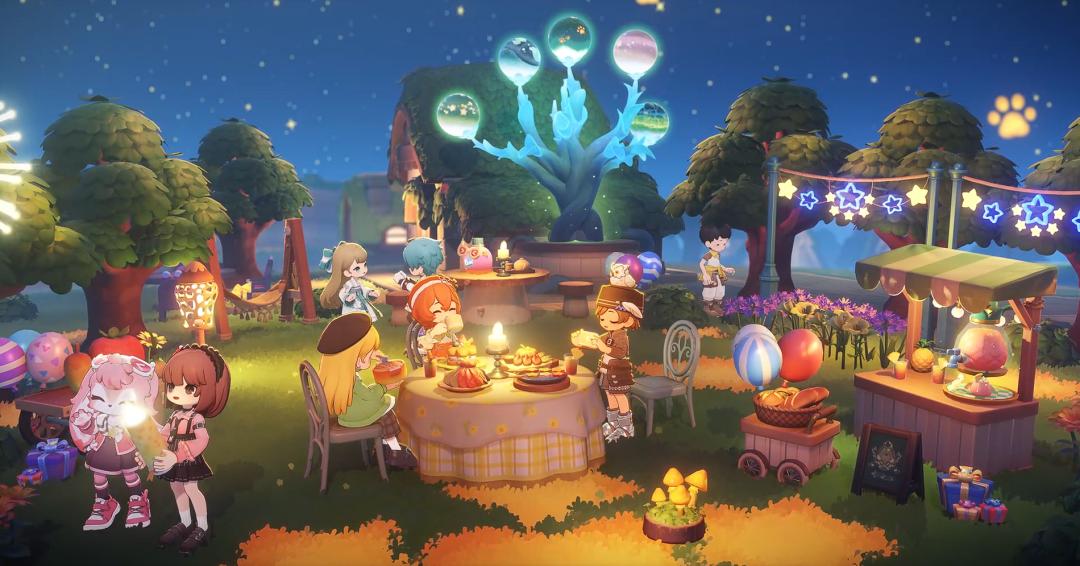
This idea starting from usage scenarios and actual demands can also be used to understand the social design of life simulation games. If you only ask players "What social functions do you want?", the answers you get may be friend system, public map, chat, teaming up or NPC interaction. But these functions themselves cannot explain why players need them.
Some people hope to visit their friends' homes, maybe to show off their own decoration results, or just to see what their friends have been doing in the game recently; some people wander around on the public map, not necessarily to actively make new friends, but just to enjoy the scenery of the game world and have fun exploring the map, and the coming and going of people in the background just makes the exploration process less deserted.
There are similar differences in NPC interaction: players may want NPCs to initiate topics actively to relieve boredom when they are alone; they may also want NPCs to organize group activities, so that they do not have to take the pressure of actively breaking the ice.
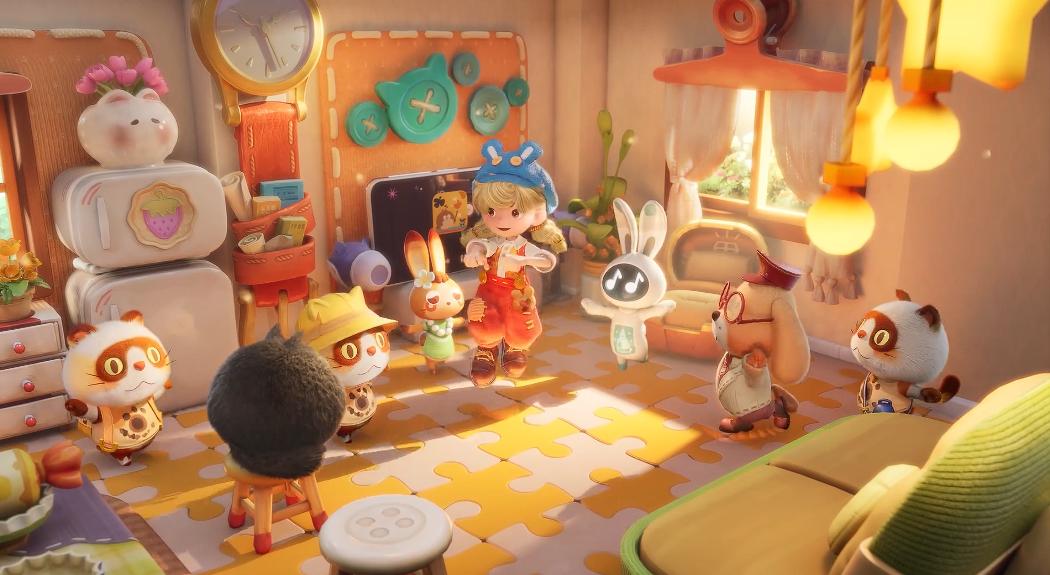
Back to the three types of social designs mentioned earlier, the player demands they respond to are actually different. Friend-relationship-based social interaction usually corresponds to scenarios where players want to share daily game moments with familiar people and maintain long-term interactions; encounter-relationship-based social interaction occurs more in exploration and daily activities, allowing players to connect with others even without fixed social partners; the demands involved in NPC-relationship-based social interaction are more diverse, which may be wanting a stable companion, or using NPCs to organize activities to create communication opportunities for themselves and other players.
The three types of social relationships often blend in a long-running life simulation game, and players' demands for social interaction will also change with their mood, time and game scenarios. Then next, we might as well go back to the specific game scenarios to see how manufacturers convert player demands into specific social scenarios and gameplay mechanisms.
Live next door by chance, or meet by fate?
When talking about life simulation games in the domestic market, we cannot fail to mention Heartbeat Town.
In Heartbeat Town, players can meet different neighbors every time they log in, and have the opportunity to meet new friends on the way to cut trees, fish and complete daily tasks. Such encounters happen naturally, no need to make an appointment in advance, nor do you have to establish a friend relationship with the other person first.
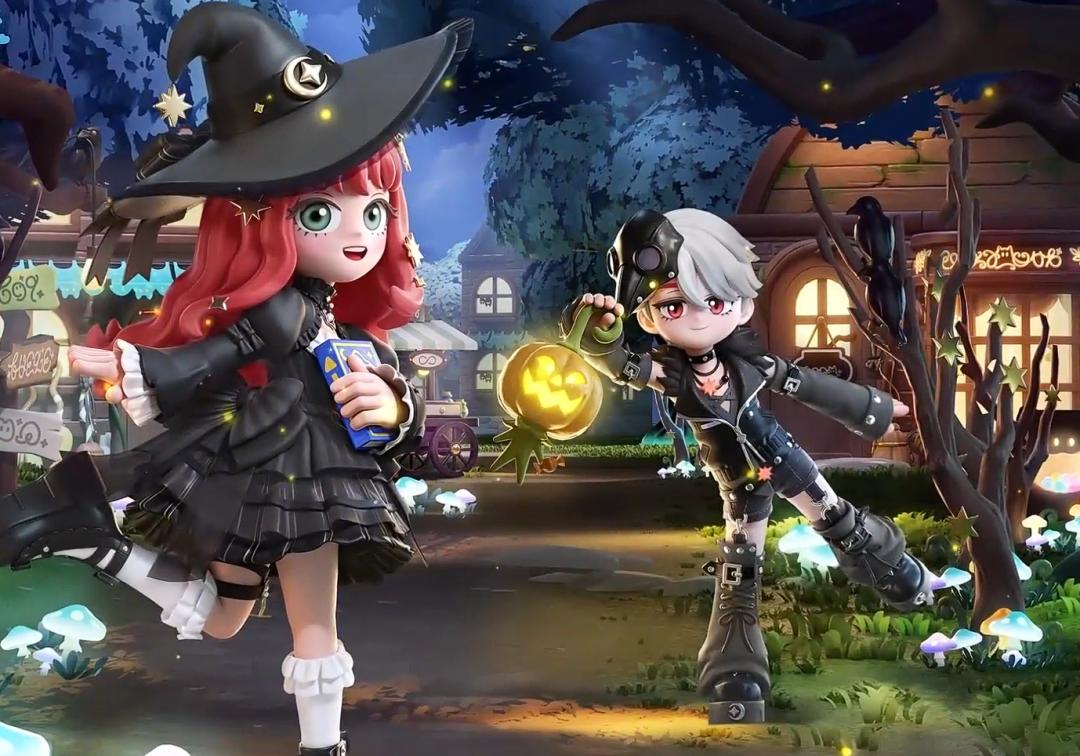
This kind of design reduces the startup cost of initial contact. Players can observe, visit, or even just interact briefly first, and decide for themselves whether to add friends further. For players who want to experience the lively atmosphere of the town but do not necessarily want to actively manage relationships, such weak connections are a relatively easy way to participate. It also makes the home no longer just a personal production and decoration space, but a life display window that can be passed by, visited and appreciated.
The same encounter-based design is reflected in many under-development life simulation products, probably because manufacturers have unanimously realized that for some players, the fun of life simulation games lies in the fact that people come and go in the daily space. Seeing other people's homes when passing by, saying hello occasionally, or finding that someone is also fishing by the lake, adds a little life atmosphere to the activities carried out alone, which is enough.
The stranger social interaction in Adventures in Mountains and Seas happens naturally in the process of game gameplay. In the game, players often need to go to Xinwan and Wind Vane Community to complete tasks and collect resources. In this process, players can not only meet other players on the map, but also see other players' camper vans in the clouds on the way to the central island. In addition, Adventures in Mountains and Seas also supports setting anonymous status, allowing players to contact each other first with low identity pressure, and cancel anonymity after becoming friends.
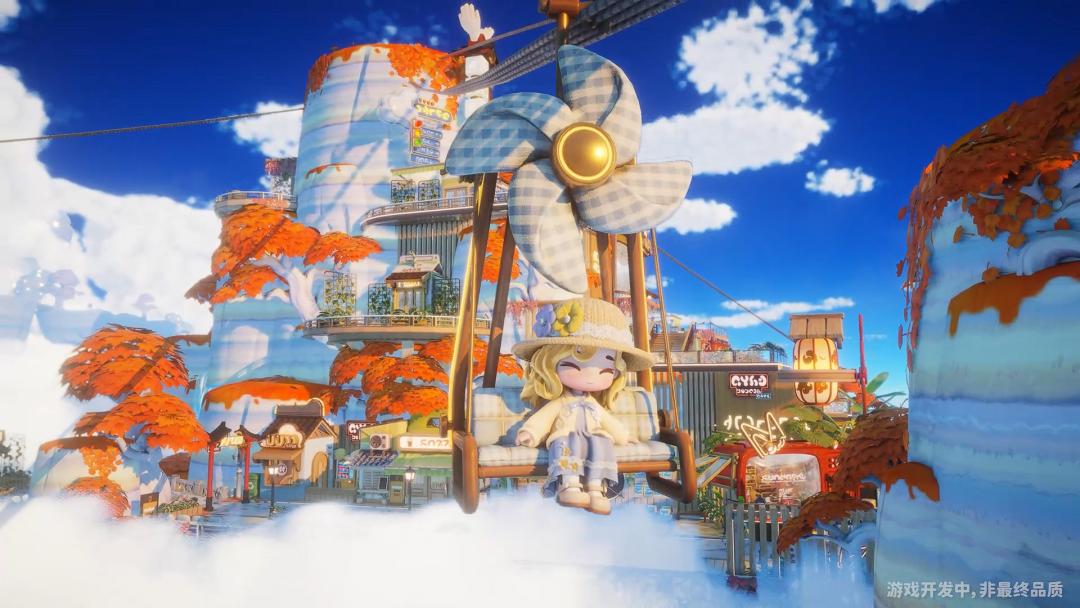
In the previous test version of Starry Valley, when players look up at the sky in the game, they can see other players' planets, choose to visit them, or just let them hang quietly in the sky. Even in online maps like Starry Market, players need to sit in the corresponding chat area to communicate with other players who are also sitting down. If you just meet someone on the road, you cannot see text messages, and you can only say hello through actions.
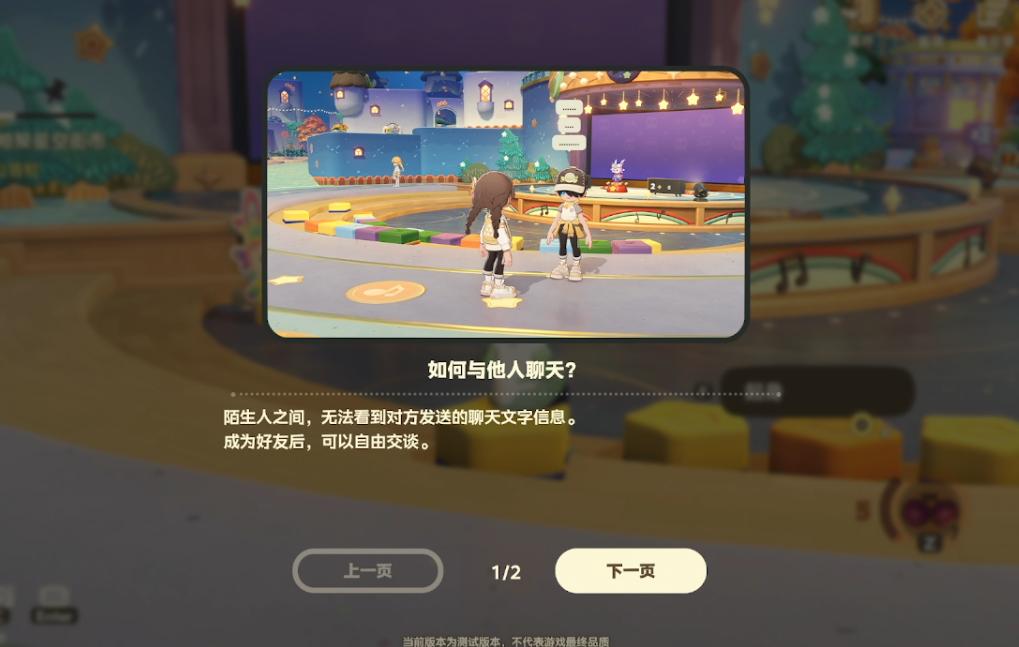
For players who are willing to further contact, the next step after encounter is how to interact. In life simulation games that emphasize no pressure, the next step of social design is often not tough and radical, but provides players with a natural enough ice-breaking opportunity.
Corresponding to the products, we can also find that the social design of each life simulation game in the ice-breaking link is quite elaborate. Heartbeat Town once lowered the trigger threshold of "passing-by stories" according to test feedback, and added friend business cards, so that players can exchange business cards and send friend requests more conveniently. After the relationship is established, content such as chat and two-person actions unlocked as the friend level increases provides space for both sides to get familiar with each other further.
Adventures in Mountains and Seas which introduces the superpower setting, in its first test, the superpower of one of the characters is related to social gameplay. After the player casts the superpower, a dance floor will be formed around them, and other players who enter this range to interact can get rewards. Guided by the rewards, even strangers have a reason to interact together.
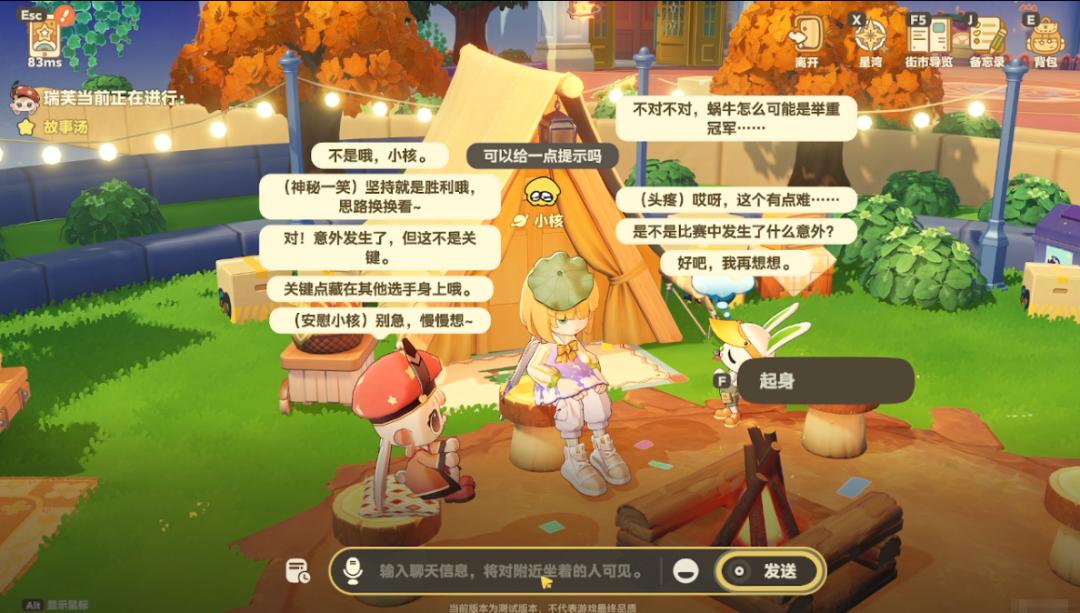
The AI NPCs on the online map take on the ice-breaking responsibility of Starry Valley. These NPCs will organize activities such as turtle soup puzzle and idiom solitaire, and players can participate as long as they sit together. The meme acquisition competition initiated by Alai also encourages players to make up stories and follow memes around designated items. AI NPCs play the role of hosts here, providing topics and activity rules for players. Even people who are not good at taking the initiative to talk to others can join the communication by participating in the same activity.
Lili's Lilliput emphasizes more on gradually building relationships in joint activities. Players can help each other when exploring the public map, and then increase interactions through mutual home visits, social toys, tea parties and ensemble performances after getting familiar with each other. Challenges that require cooperation such as Dark Star Deep Well provide clearer common goals for players who want to cooperate further. However, the development team also emphasized that they do not want to force social interaction through rewards, and relevant challenges reserve space for single-player completion, allowing players to decide for themselves the extent of their participation in social interaction.
Players have different expectations for real-person social interaction: some only need to feel the presence of others, some are willing to meet new friends, and some hope to complete more things with familiar partners. What manufacturers do is to provide corresponding entrances for different levels of interaction. Players can choose to stay in a short encounter, or gradually build a more stable connection.
Live with NPCs
Both friend and encounter-based social interaction require the participation of other players, but players do not want to actively contact others every time they log in. Real-life social interaction requires time, energy and response, and sometimes it is accompanied by the pressure of maintaining relationships. The NPC-relationship-based social interaction in life simulation games can meet another demand: players hope that there are people in the world who can accompany and respond to them, but do not necessarily want to undertake the continuous communication required by a real-person relationship.
Of course, NPCs in life simulation games not only undertake social functions. They are often also an important part of plot, tasks and gameplay content, and are roles that promote players to explore the game world. Therefore, what is worth paying attention to about NPC-relationship-based social interaction is whether NPCs can further become emotional companions that players are willing to repeatedly contact and get familiar with in daily life, rather than just simple content providers.
Lili's Lilliput pays special attention to NPC design. The initial version of the game has already stored more than 1.5 million words of NPC dialogue text, more than 90 emoticon dialogues, and more than 80 different life situation interpretations. The NPC "Lili" has more than a hundred races alone, each Lili has its own unique setting, and there will also be fetters and relationships between Lilis. These NPCs are positioned more like the player's friends in this virtual world, rather than tools to promote the plot. They are not only the aborigines of this Shake Granary Township, but also important life partners of the player.
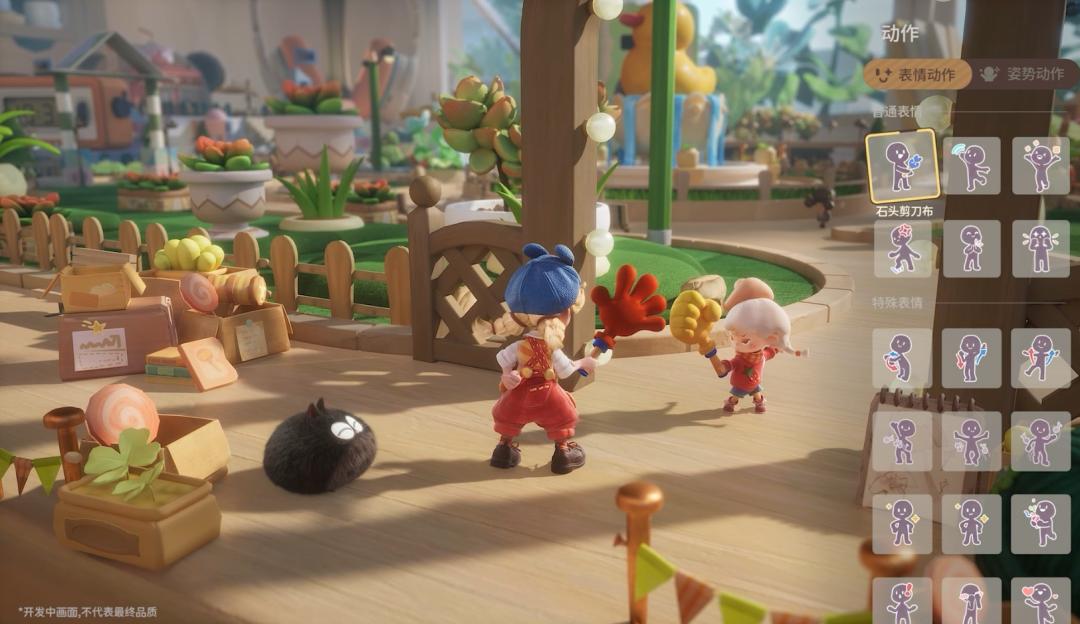
What is more noteworthy is that Lili can remember the moments spent with the player, and form future behavior preferences according to the content of the dialogue. The interaction between players and them will also be generated in combination with specific situations, instead of completely relying on pre-arranged fixed scripts. For players who want to get a sense of companionship in the game, whether NPCs can remember the experiences they spent together and show a certain continuity in subsequent interactions determines whether this relationship can go beyond one-time content consumption.
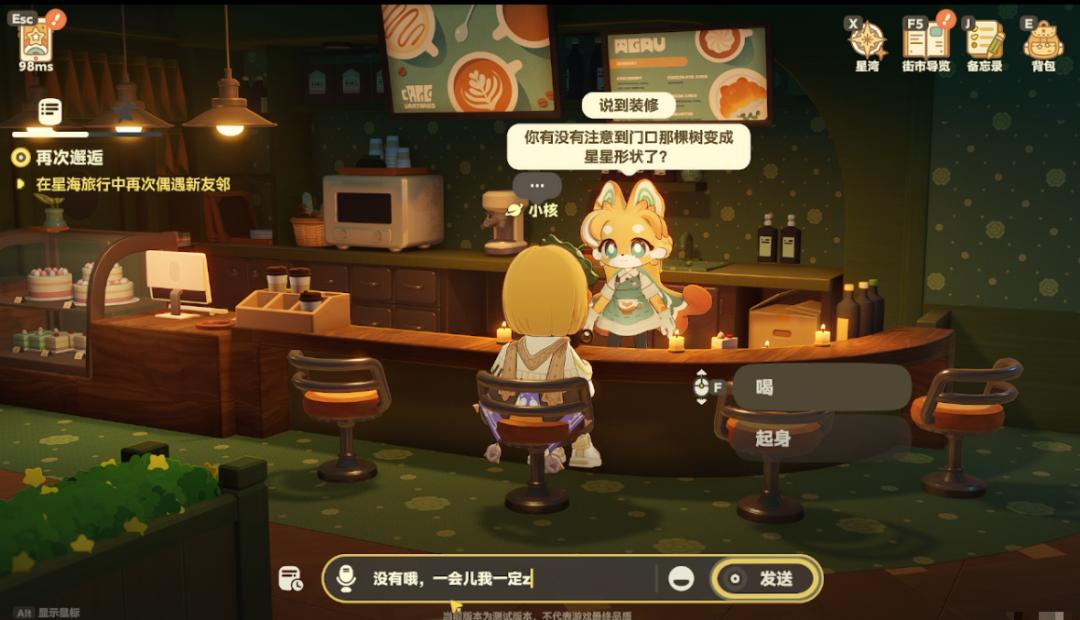
The NPCs in Starry Valley have two noteworthy directions. One is the AI-accessed NPCs: in addition to the AI NPCs that act as hosts in the ice-breaking link mentioned above, there are also AI NPCs that make friends with players. For example, Naluo in the coffee shop can communicate with players and remember previous chat content. It has been loved by many players since its launch.
The other is the neighbors who live with the player on the planet. According to the performance of the third test, some neighbor characters may have version-limited attributes and will exit the current acquisition range with the version update. For players, obtaining and keeping a certain neighbor may also mean leaving a specific version of life memory on their own planet. When these neighbor characters appear on the planet, this space that was originally managed by the player alone may also have more life atmosphere because of them.
From these designs, players' demands for NPCs are not limited to getting tasks and plots. Compared with real-person social interaction, NPCs can provide an interactive relationship that is easier to start at any time, and there is no need to worry about whether the other party is online. For life simulation games, this may also be one of the reasons why players are willing to stay in a virtual world for a long time.
Social interaction may be an important path for life simulation games to find new differentiated space after the basic gameplay gradually converges. Compared with continuously adding friend systems, online activities and NPC interactions, how to allow players to find a way of getting along that matches their current mood in different game scenarios seems to be the social direction that life simulation games are currently exploring.
After all, some people want to share daily moments with familiar friends, some like to meet strangers briefly on the way of exploration, and some prefer to be accompanied by NPCs in the game