4K Image Generation in 10 Seconds: MiniMax Unveils New Open-Source SOTA Again
"GPT is cooked."
Over the past two days, this line has been repeatedly circulating across the AI community. What has everyone restless with excitement is the newly released image model from MiniMax, MiniMax H3 Image.
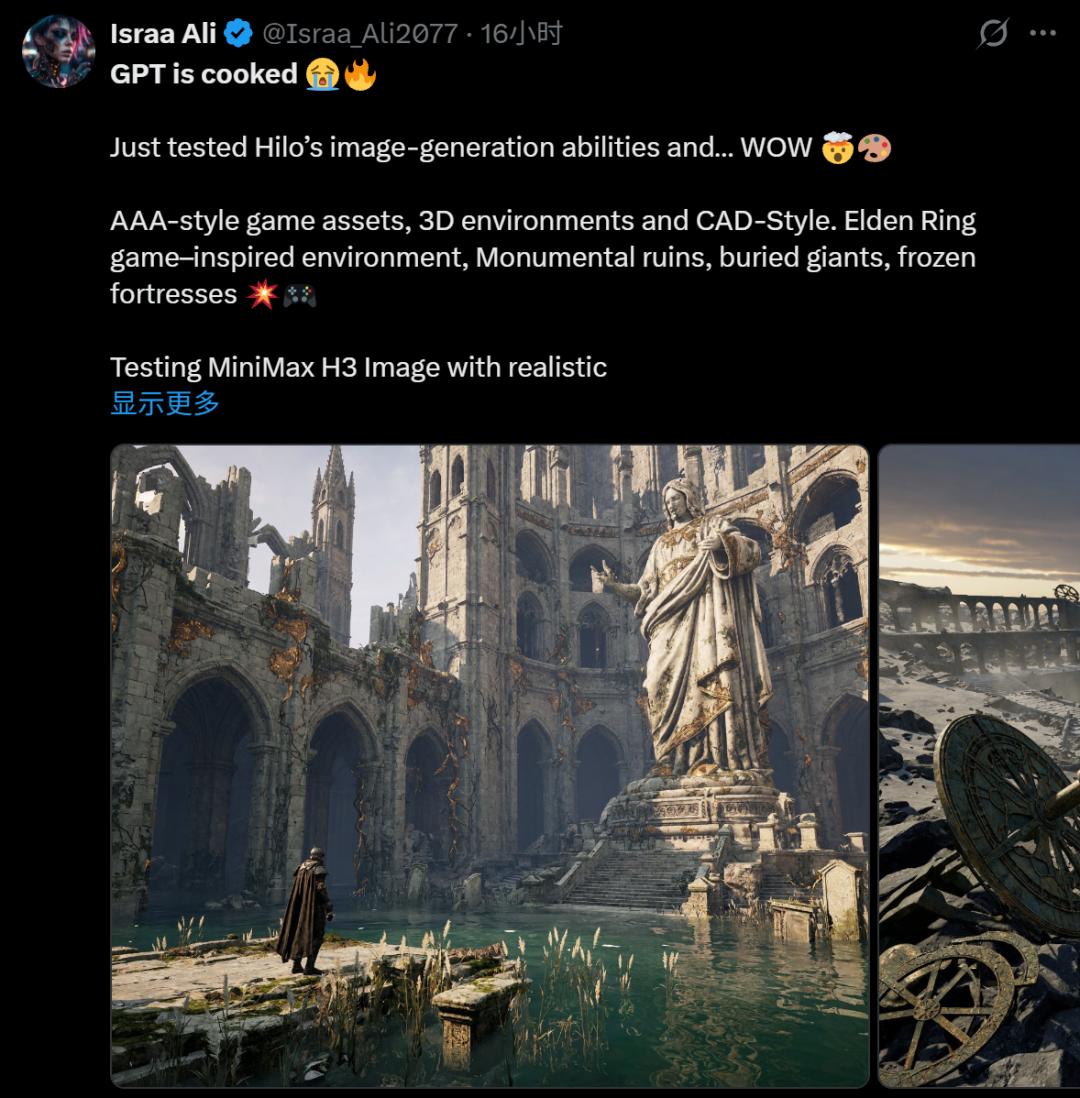
This is a model that outputs native 4K images directly, completes generation in 10 seconds, and supports 16 reference images. It was just open-sourced this Tuesday, setting a new SOTA for open-source image models. Judging from the first wave of reactions from the community, this claim hardly sounds exaggerated at all.
Developers who got early access to the internal beta have run a large number of tests. In the outputs of the new model, the "plastic-like artificial texture" that used to haunt AI-generated portraits is gone, with pores, freckles, and fine hairs all clearly visible. People are full of praise for its capabilities in game design, character setting, and 3D scene creation.
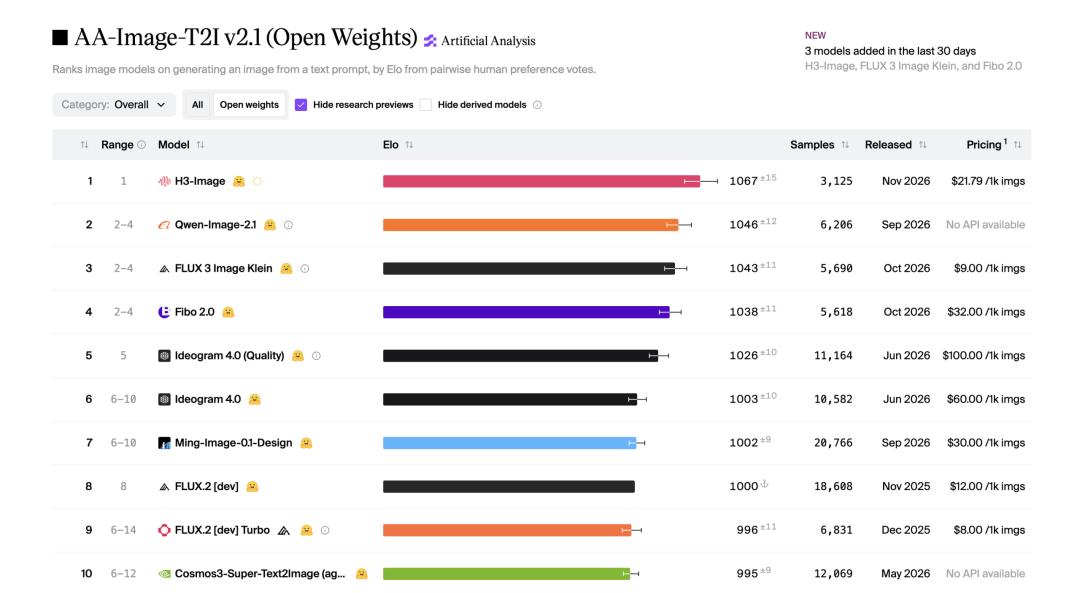
On the Artificial Analysis ranking updated today, MiniMax H3-Image ranks first among all open-weight models in both text-to-image and image editing categories.
MiniMax H3 Image supports direct use on the web, and can also be used via API in MiniMax Code or other harnesses to complete complex tasks. And since it is open-source, some users have already started working on local deployment.
GitHub: https://github.com/MiniMax-AI/MiniMax-H3-Image
HuggingFace: https://huggingface.co/MiniMaxAI/MiniMax-H3-Image
We got access to the new model as soon as possible, and tested it to show you its actual performance level.
Redefining Visual Aesthetics and "Sense of Realism"
This new model is already launched in MiniMax Code. When you open it, you will find it supports up to 16 reference images, and the generated images can reach a maximum resolution of 4K.
From the perspective of an ordinary user, we tested the scenarios that people use in daily life across four capability dimensions: we first checked its realism performance, then tackled the two classic pain points of text rendering and human face generation, and finally tried secondary creation with image-to-image generation.
Realistic output is the first checkpoint. The things that most easily expose AI traces are often the objects we look at every day, such as the WeChat chat interface.
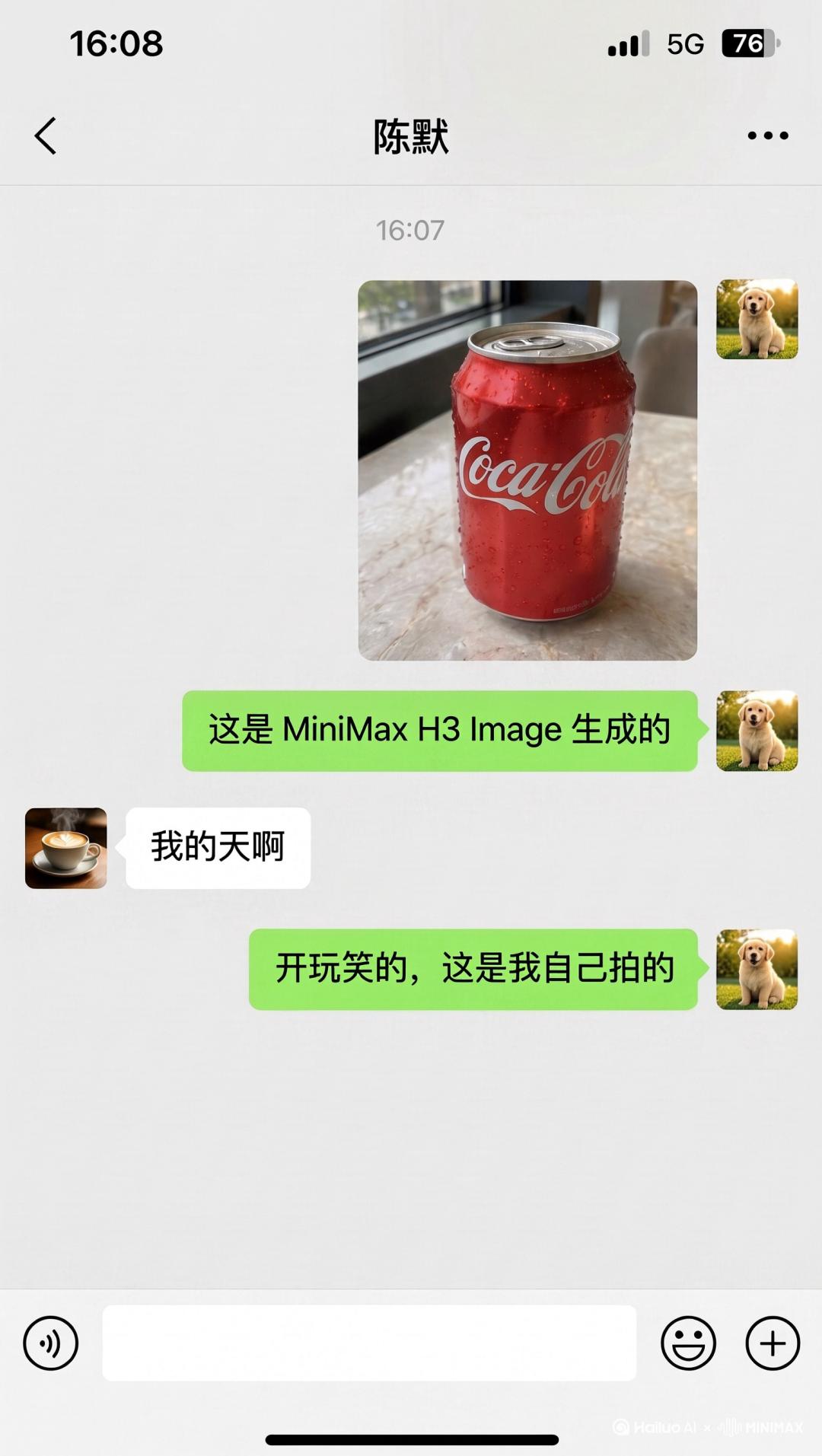
Prompt: Generate a realistic WeChat chat screenshot: I first send the other party a very realistic photo of a Coca-Cola, and say "This is generated by MiniMax H3 Image", the other party replies "Oh my god", then I say "Just kidding, I took this photo myself". Make sure the screenshot includes highly realistic details of the iPhone status bar, including time, battery level and signal strength.
We only input this single prompt, and MiniMax H3 Image generates a complete WeChat chat screenshot right away.
The reason why this kind of daily interface is hard to generate is that the human eye has an extremely low fault tolerance rate for familiar scenes. The WeChat interface has relatively fixed visual specifications: if the font is slightly thicker, the spacing of chat bubbles is off, or the proportion of status bar icons is incorrect, the flaw will be spotted immediately.
When many models generate similar chat screenshots, either the interface elements are misplaced and deformed, or the product photos have unnatural highlights, which greatly reduces the sense of realism.
In the images generated by MiniMax H3 Image, details including the iPhone status bar, WeChat UI layout, chat bubbles, and avatars are all quite in place. The Coca-Cola photo is also realistic enough, with natural condensation on the bottle body, light and shadow reflection, and desktop texture, leaving almost no trace of AI generation.
Next comes the long-standing pain point of image generation models: text rendering. Previous models would output typos, garbled characters, or broken spelling. This time we directly asked H3 Image to take on a complex task: generate a graffiti:
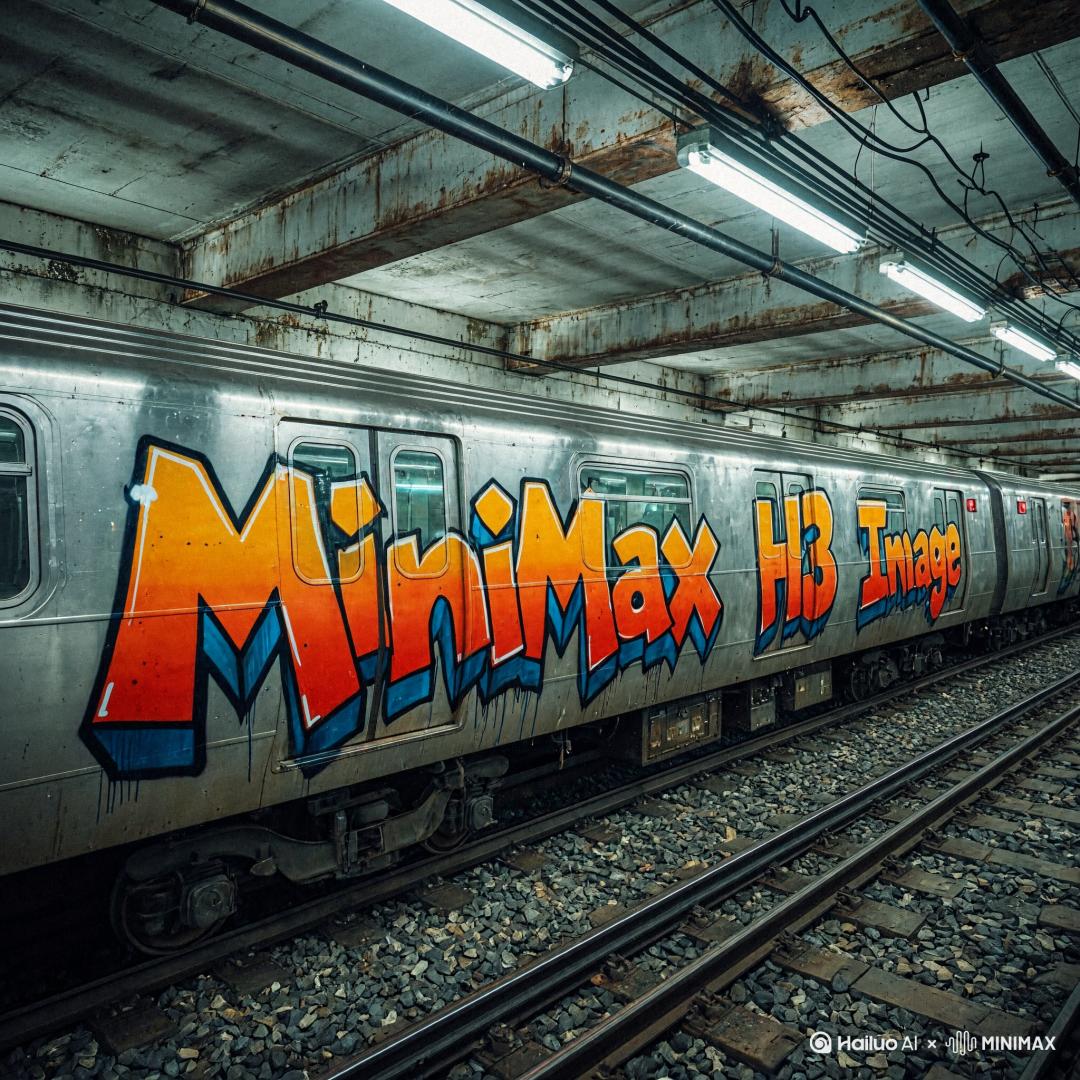
Prompt: This is a realistic vertical composition photo, in which a row of silver stainless steel subway cars with traces of years are parked in a rough underground station. The side of the car is covered with a huge wild-style graffiti that spans the entire row of windows. The graffiti is made up of angular 3D block letters that spell out "MiniMax H3 Image"; the inside of the letters is filled with bright orange with gradient effects, paired with dark blue 3D projections, thick black outlines, and thin white highlight lines, and you can even see the dripping traces left by fresh spray paint. In the background, the industrial-style ceiling is exposed, with rusty steel beams, pipes, cables, and cool-toned fluorescent tubes visible; the concrete walls are covered with stains and grime, and below are the rails and gravel ballast. The picture presents a cool fluorescent light sense and metal reflection texture, processed with cinematic color grading, with fine film grain and a slight vignetting effect, creating an authentic New York subway atmosphere. The whole photo looks like it was shot with a 35mm lens, rich in details, showing the raw and realistic urban street photography style.
The long string of letters "MiniMax H3 Image" not only has complete spelling, but also presents 3D shapes, gradient filling and spray paint effects. Achieving such level of text capability already shows a certain level of graphic design proficiency.
To produce stunning portrait photos, it is not only about the beauty of the subject, but also requires excellent facial depiction, clothing details, and light and shadow atmosphere. We challenged a set of backstage Victoria's Secret style shots:
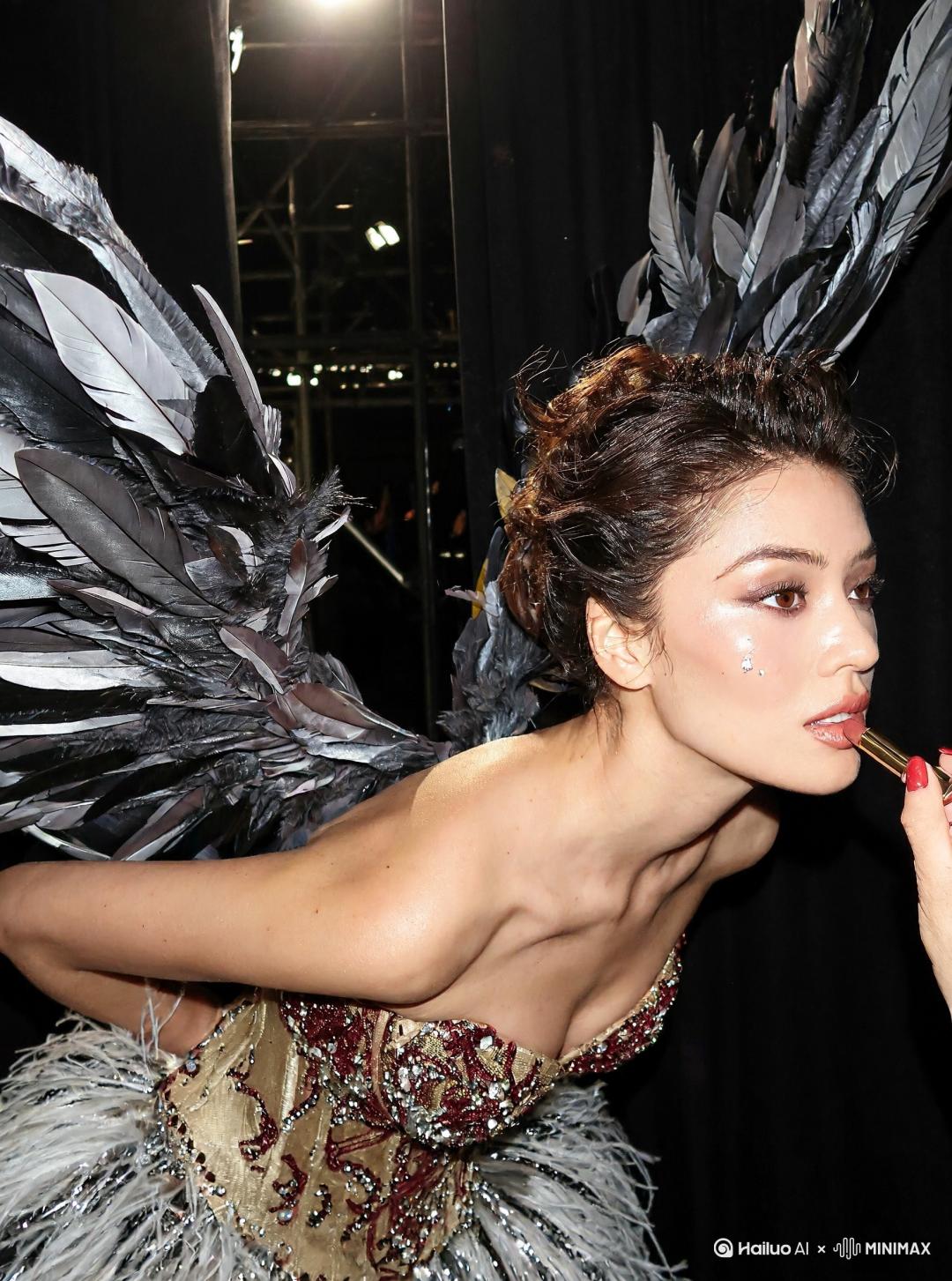
Prompt: Create a glamorous photoshoot in the style of Victoria’s Secret. A young woman attached in the uploaded reference image ( Keep the face of the person 100% accurate from the reference image ) stands almost sideways, slightly bent forward, during the final preparation for the show. Makeup artists apply lipstick to her (only her hands are visible in the frame). She is wearing a corset decorated with beaded embroidery and crystals with a short fluffy skirt, as well as large feather wings. The image has a "backstage" effect.The background is a darkly lit room, probably under the podium. The main emphasis is on the girl’s face and the details of her costume. Emphasize the expressiveness of the gaze and the luxurious look of the outfit. The photo is lit by a flash from the camera, which emphasizes the shine of the beads and crystals on the corset, as well as the girl’s shiny skin. Victoria’s Secret style: sensuality, luxury, glamour. Very detailed. Important: do not change the face.
The complex elements such as crystal beading and feather wings are rendered with full details. With direct flash lighting, the luster of the model's skin and the reflective layers of the costume are distinct, making the generated photo look exactly like a spread in a fashion magazine.
Switching to another style, we tried cinematic portrait photography:
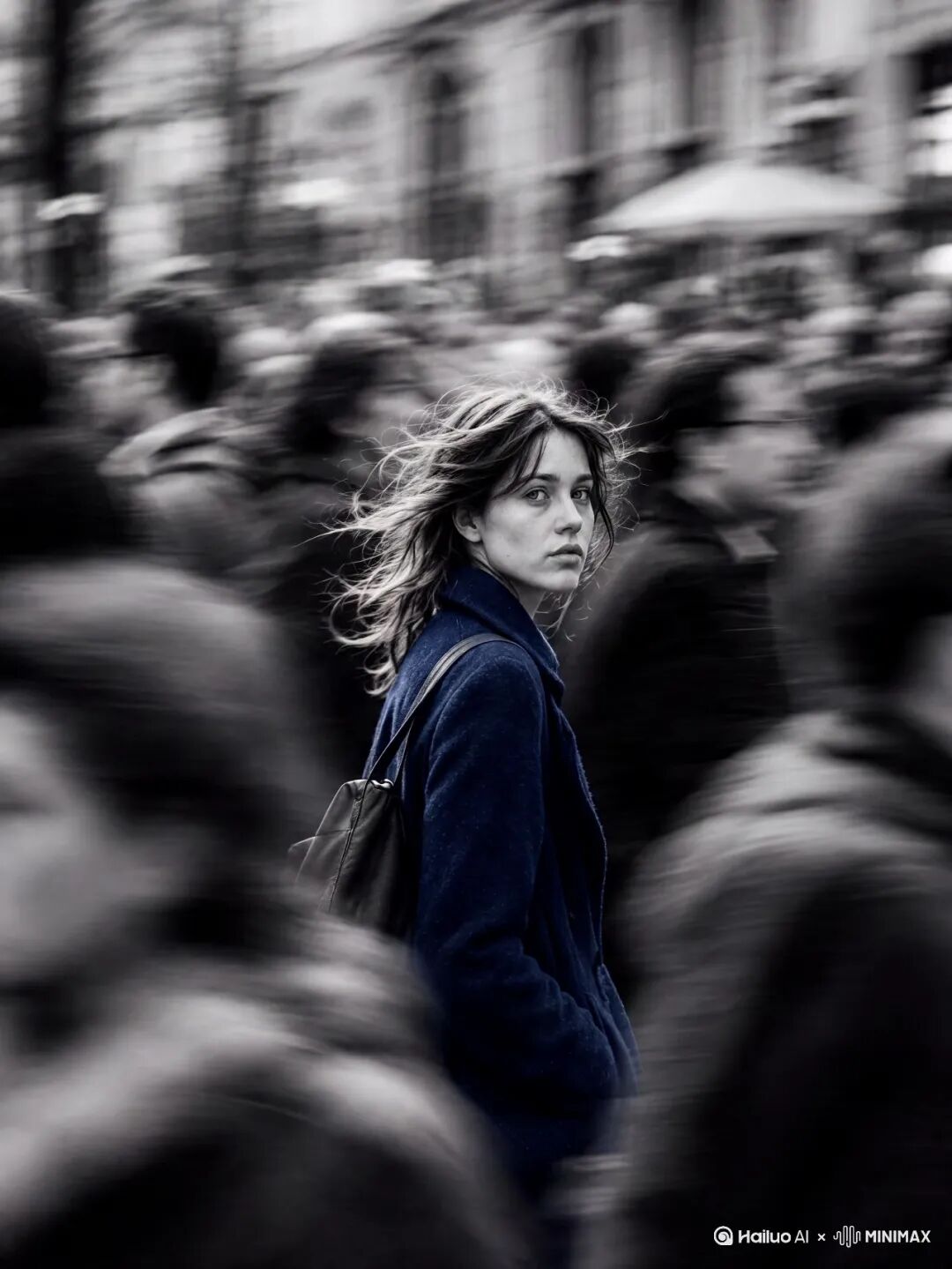
This street portrait feels exactly like a movie screenshot. The moment the character looks back is clearly frozen, while the surrounding pedestrians are processed with large dynamic motion blur. The contrast between stillness and motion instantly brings out the visual tension, and the overall atmosphere, lens sense, and emotional expression are all on point.
We also tested the millennium retro portrait style.
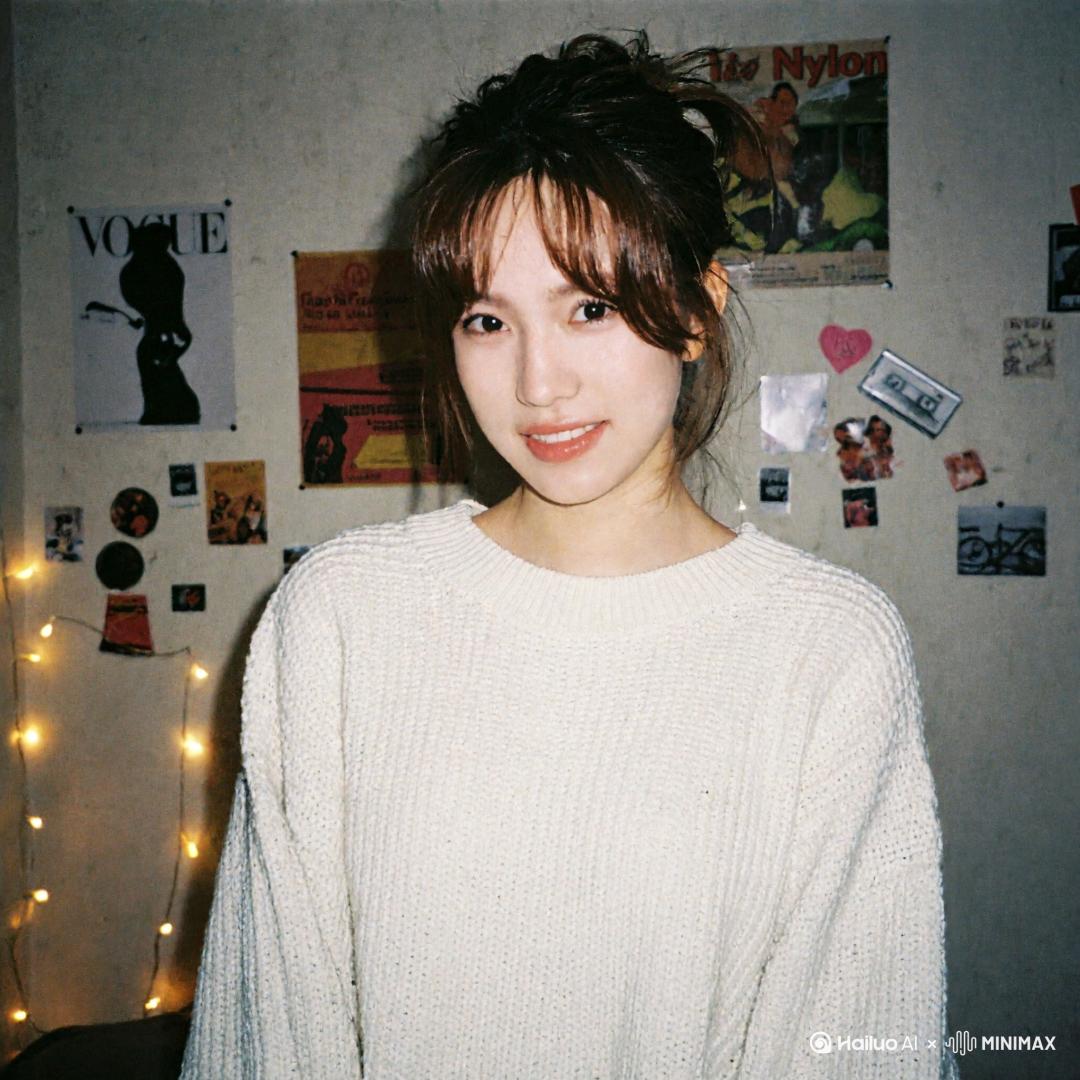
Prompt: Without changing her original face, create a portrait of a beautiful young woman with porcelain-white skin, captured with a 1990s-style camera using a direct front flash. Her messy dark brown hair is tied up, posing with a calm yet playful smile. She wears a modern oversized cream sweater. The background is a dark white wall covered with aesthetic magazine posters and stickers, evoking a cozy bedroom or personal room atmosphere under dim lighting. The 35mm lens flash creates a nostalgic glow.
The film texture with slight noise, old magazine posters on the wall, and warm yellow string lights instantly bring people back to the 2000s, and the slight overexposure also perfectly presents the feel of old digital cameras. Those trivial atmosphere details in the prompt are all restored.
After checking text-to-image generation, we tried image-to-image generation. This part requires the AI model to understand the original image, and then modify it according to the instructions.
First we tried a fun test with Elon Musk: we uploaded a photo, and asked the model to turn him into a funny hand-drawn WeChat emoji. The original expression of the character is exaggerated and amplified, paired with the crooked handwritten text "So Dumb", sweat drops and question marks, making an emoji that can be directly used in chat.
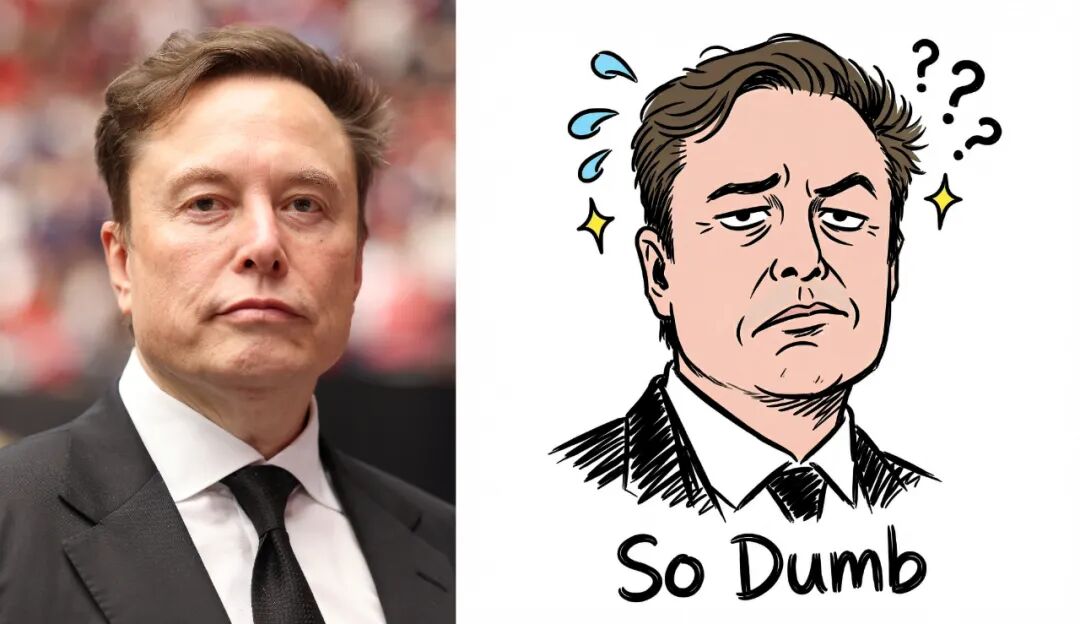
Prompt: Draw it as a funny hand-drawn WeChat emoji. Use a minimalist cute and quirky line art style, with a casual doodle feel, pure white background. Based on the character's expression in the original photo, exaggerate his shocked, disgusted, or lazy look. Add cute doodles such as a few drops of sweat, question marks, or sparkling little stars around the head. Add the handwritten English text "So Dumb" at the bottom, with crooked handwriting that looks casual and funny.
Next we raised the difficulty level: we uploaded a street CCTV surveillance photo, and asked the model to identify the people in the frame, add white face bounding boxes for each person one by one, and generate a high-definition zoomed-in close-up for the most prominent person.
The generated result retains the scene layout and surveillance perspective of the original image. The main frame maintains the proper noise and slight distortion, while the face in the zoomed-in box is much clearer. The whole result looks very much like the analysis frame automatically generated by a surveillance system.
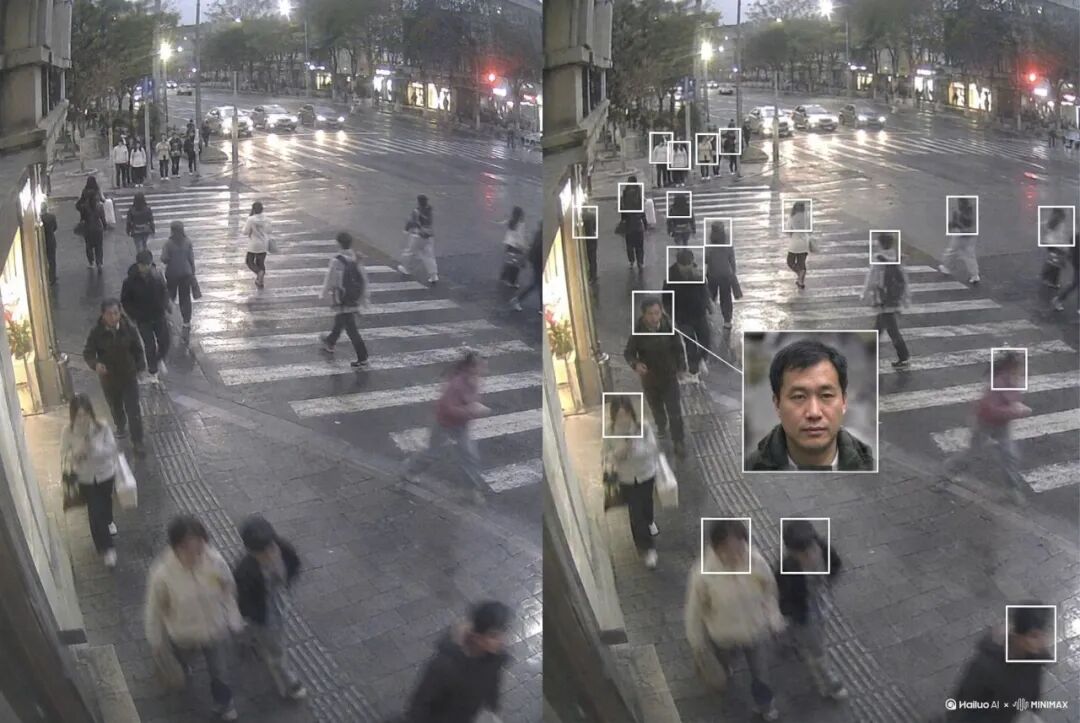
Prompt: Create a high angle CCTV surveillance shot using the uploaded image as the source. Detect every visible person in the image and automatically draw a white rectangular bounding box around each face. For the most prominent person, add a large zoom in inset: a sharp, enhanced close-up of their face displayed in a floating rectangular frame connected with a thin white line.Keep the main image slightly noisy and security camera like (soft grain, slight distortion, muted colors), while the zoom in face box should be clearer, brighter, and more detailed. No text, no timestamps, no overlays except the boxes and connecting line. Maintain the original scene layout, angle, and environment of the uploaded image.
If you want to do style transfer, we can turn a realistic style image into a 2D collage style, and the result also looks quite good.
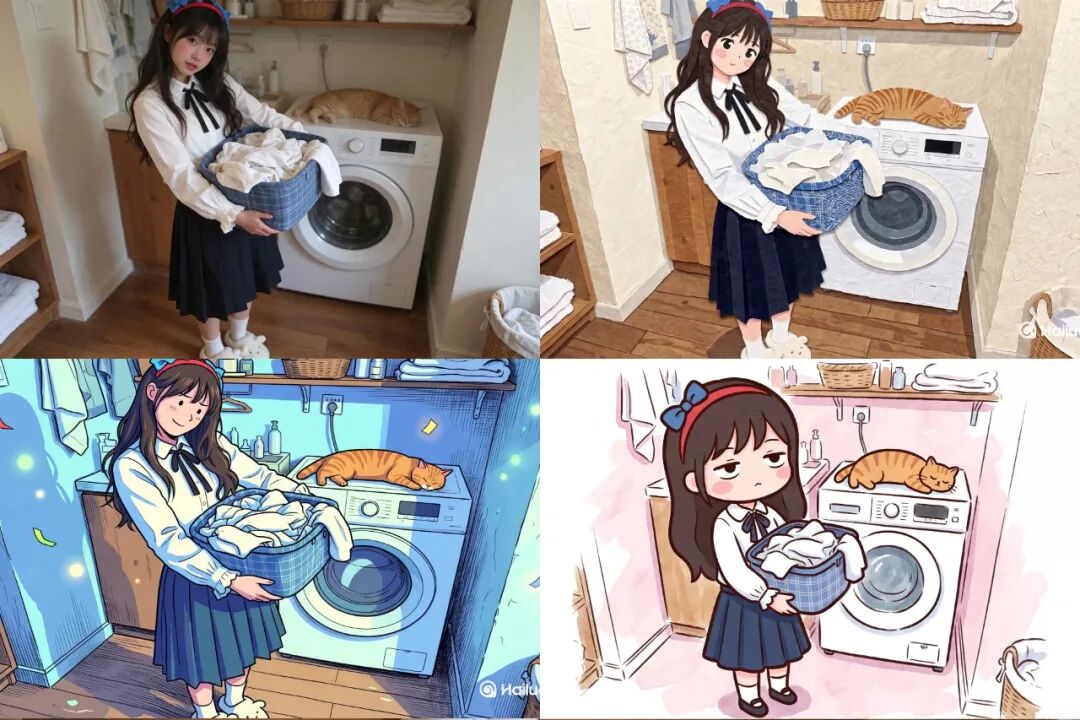
It is clear that MiniMax H3 Image can not only generate photo-level beautiful images, but also help you realize your creative ideas, and even generate fun emojis for chatting. Its performance this time is improved compared to previous models, with full sense of realism and very little obvious AI trace. It is also worth mentioning its excellent instruction following capability: when facing the complex information we provided, the model can understand it well and output appropriate results.
This makes us eager to test its performance in practical work scenarios.
Physical World Understanding and Instruction Following
Most of the tests above focus on the realism of AI-generated images. Next we will examine more hardcore capabilities: whether the model truly "understands" the content it draws, which is very important for practical design work.
In this aspect, the model needs to have a correct understanding of the structure and material of the physical world, be able to organize information clearly when there are dense information points, and accurately follow instructions to make adjustments.
We started with a highly difficult task: asking MiniMax H3 Image to generate an industrial exploded view. The key here is not only aesthetics, the model