When Li Jiaqi starts selling "computing power", the Double 11 gameplay has changed.
In 2026, the market ushered in the first Double 11 Shopping Festival empowered by AI. In the AI era, the gameplay of this year's Double 11 is completely different. On the evening of November 2, Li Jiaqi's live stream put on a special product, the monthly personal membership card of Qwen Office, with an original price of 28 yuan and a promotional price of 0.01 yuan. Half an hour after the sale started, nearly 100,000 copies were sold, corresponding to about 2 trillion Tokens. For consumers who are used to buying lipstick, home appliances and snacks in live streams, this kind of invisible and intangible "computing power product" has become a quite novel scene in this year's Double 11.
From paper towels, cosmetics to mobile phones, home appliances, and then to AI services, the changes in shopping carts reflect the changes in retail supply. JD.com launched spot sales in advance, Tmall retained pre-sales and strengthened member benefits, Douyin focused on direct price reduction for individual items, Pinduoduo continued the 10 billion-yuan subsidy, and Meituan Instant Delivery brought branded products into the instant retail scenario.
Although major e-commerce platforms no longer announce their sales figures in a high-profile manner as before, the 2026 Double 11 still achieved steady slight growth. By the end of October, the total sales of comprehensive e-commerce platforms had exceeded 1.03 trillion yuan, a year-on-year increase of 2.36%. Rather than simply comparing sales figures, what deserves more market attention this year may be the ongoing changes in promotion methods, consumption structure, platform governance and AI commercialization.
01 Extended Promotion Cycle, More Straightforward Benefit Presentation
The complicated discount rules of previous Double 11 events were widely criticized, and one notable change of this year's Double 11 is that platforms no longer take "deposit pre-sale, final payment settlement, cross-store order pooling" as the only main line.
Among them, JD.com launched spot sales on the evening of October 12 without setting deposit pre-sales; Tmall opened pre-sales on the evening of October 15, entered the spot stage on the evening of October 20, and the event lasted until November 13; Douyin Mall's Double 11 Good Things Festival started on October 15 and continued until November 11; Pinduoduo continued to attract users with its 10 billion-yuan subsidy and daily low prices.
At the same time, the discount methods have also changed. The common "spend 300, get 50 off" in the past required consumers to repeatedly calculate the amount in their shopping carts, and sometimes they had to buy unnecessary products just to meet the threshold.
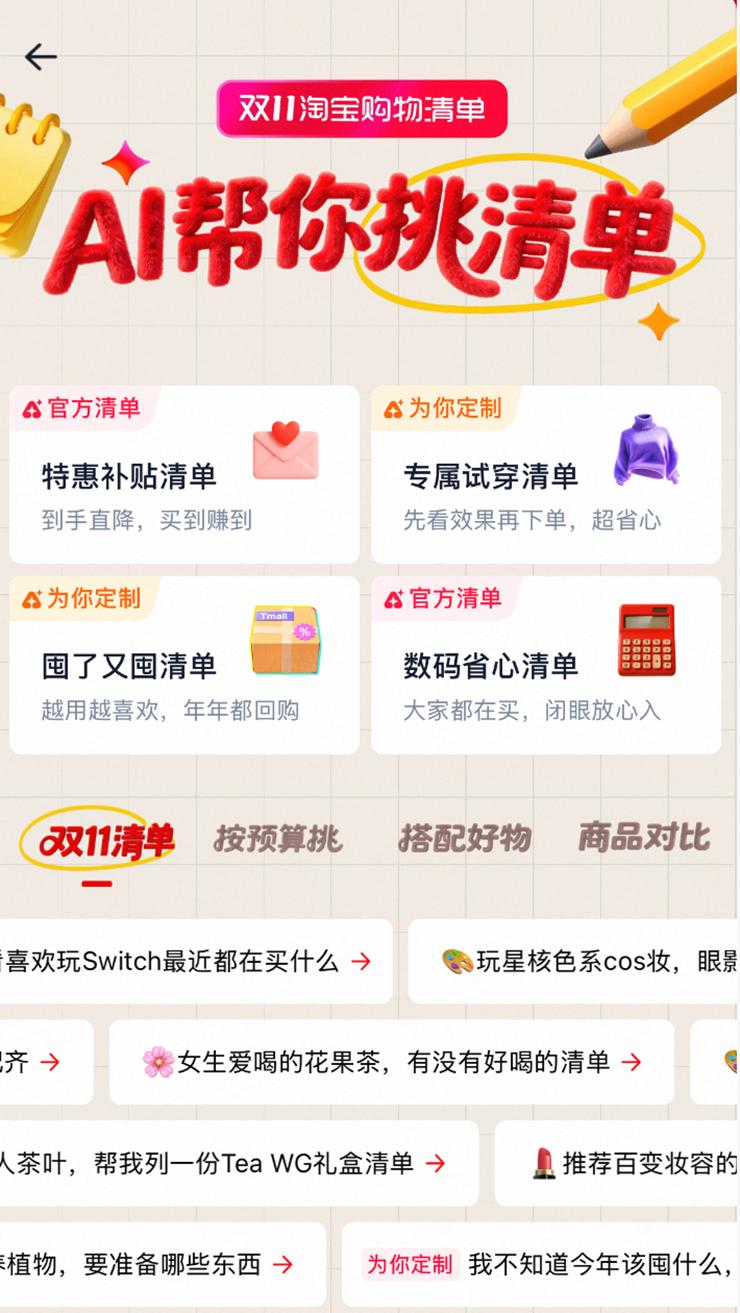
Image source: Taobao APP
This year, official instant discounts, direct price cuts for individual items and platform consumption vouchers have become more prominent entries. Among them, Douyin E-commerce provides "instant discount" and "direct price cut for one item"; Tmall and JD.com also put more emphasis on displaying the discounted price on product pages. Of course, cross-store full reduction, store coupons and red envelopes have not completely disappeared on all platforms and categories, and the specific rules are still subject to the settlement page.
Different from previous years, the discounts of platforms this year are more straightforward. Tmall provides multiple exclusive consumption vouchers for 88VIP members, and users can choose the coupon denomination according to the amount in their shopping carts, for example, upgrading "spend 480, get 60 off" to "spend 800, get 100 off"; some products can also be superimposed with store discounts, platform coupons and national subsidies. JD.com increased direct price cuts for individual items and exclusive subsidies for PLUS members during the peak period; Douyin distributed platform consumption vouchers in the mall, live streams and different content entries.
Instant retail also joined this consumption festival. Meituan Instant Delivery launched the official brand flagship lightning warehouse, cooperated with brands to pre-position inventory, and issued free order coupons and category discounts. When consumers buy beauty, digital, alcohol and beverage products, they are not only comparing prices, but also delivery timeliness and official channel guarantees.
02 Large-ticket Consumption and Brand Operation Remain the Main Force
Affected by the transformation of old and new driving forces of China's economy and changes in the external environment, the current domestic consumer market is under certain pressure, but online retail still shows structural growth. Data from the National Bureau of Statistics shows that in the first three quarters of 2026, the total retail sales of consumer goods reached 37 trillion yuan, a year-on-year increase of 1.1%; the total online retail sales of physical goods across the country reached 9.51 trillion yuan, a year-on-year increase of 3.8%.
The phased data released by platforms shows the structural changes in the consumer market. Four hours after Tmall's sale started, 124 brands had a transaction volume of over 100 million yuan, and more than 27,000 brands had a higher transaction volume than their full-day performance in last year's Double 11. In the beauty category, Proya Ruby Cream sold more than 450,000 units in 4 hours after the sale started, and SkinCeuticals Age Cream's transaction volume exceeded 300 million yuan on the first day of sale; brands such as Apple, UNIQLO and adidas also achieved rapid growth in the early stage of the sale.
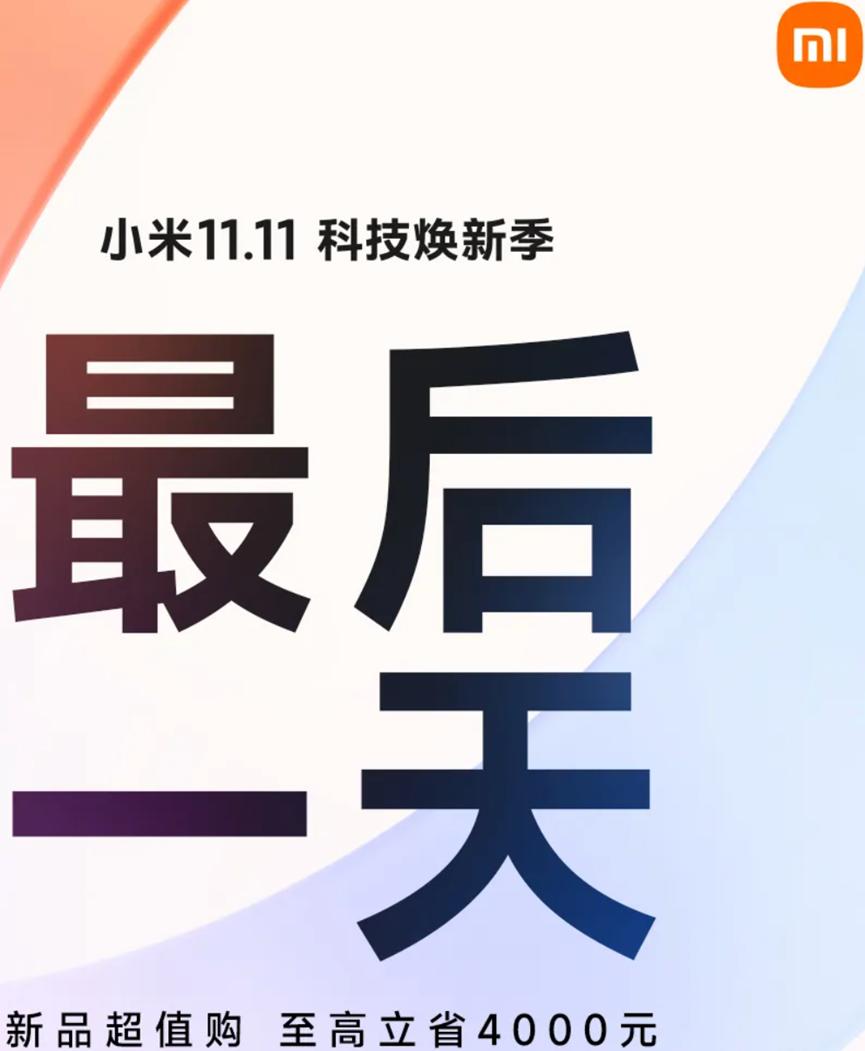
Image source: Xiaomi Official WeChat Account
JD.com's data reflects the driving effect of home appliances, home furnishing and service consumption. As of October 30, more than 1,700 home appliance and home furnishing brands on JD.com saw their transaction volume increase by 100% year-on-year, and brands such as Haier, Midea, Hisense, TCL and Xiaomi had transaction volume exceeding 1 billion yuan; in the first half of JD 11.11, 150 million service orders were generated, and more than 20 million AI products were sold. The growth of service orders such as home appliance cleaning and domestic cleaning also indicates that consumption scenarios are expanding from physical goods to life services.
In terms of content e-commerce, during the good start period from October 15 to 18 on Douyin, the number of merchants whose transaction volume exceeded 100 million yuan driven by platform consumption vouchers increased by 200% year-on-year, and the number of new merchants whose store live stream transaction volume exceeded 10 million yuan increased by 133%.
Meituan Instant Delivery disclosed that within 24 hours after the launch of the promotion on October 31, the sales of nearly 800 brands increased by more than 100% year-on-year, the overall sales of official brand flagship stores increased by 300%, mobile phone sales increased by about 2 times, and Baijiu sales increased by more than 5 times.
In terms of specific operations, brands have also shifted their strategies from relying on a single platform and top anchors to omnichannel operation. Home appliance brands increase customer unit price through new product debut, online-offline linkage and delivery and installation services; beauty brands strive for repurchase through ingredient upgrading, set combination and member operation; brands such as Apple, Moutai and Friso use the offline stores and pre-positioned warehouses of instant retail platforms to meet instant demand.
03 Platform Competition Returns to Operational Efficiency
In order to boost market confidence, the government has launched a number of stimulus policies in recent years, so this year's Double 11 is more closely integrated with consumption policies.
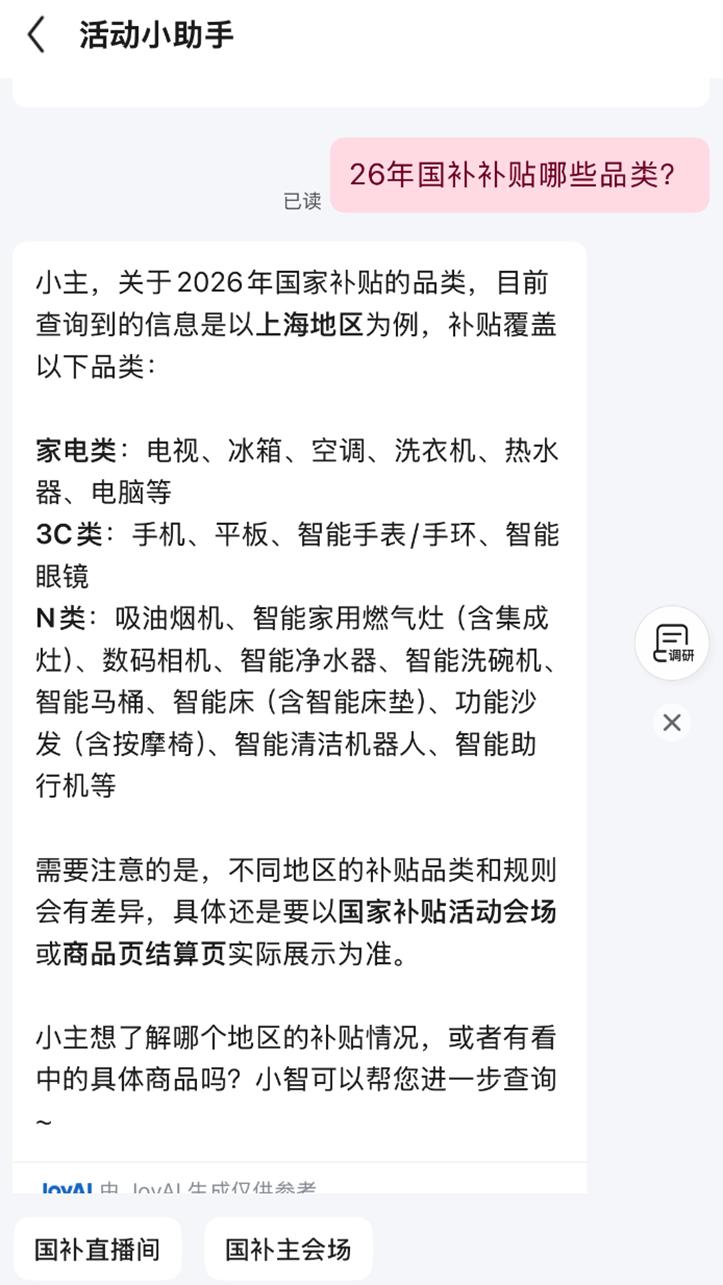
Image source: JD APP
The National Development and Reform Commission disclosed in September that the 250 billion yuan ultra-long-term special national debt fund to support the trade-in of consumer goods for the whole year of 2026 has been fully allocated; by the end of August, the sales of trade-in related products reached 1.55 trillion yuan, and the subsidies benefited 208 million person-times. The policy supports categories such as home appliances, mobile phones, tablets, smart watches and smart glasses, providing demand support for the renewal of durable goods during the Double 11 period.
According to the 2026 subsidy arrangement, individuals who purchase refrigerators, washing machines, TVs, air conditioners, water heaters and computers that meet the first-level energy efficiency or water efficiency standards can enjoy a 15% subsidy based on the final sales price after deducting all links of discounts, with a maximum of 1500 yuan per item; for purchasing mobile phones, tablets, smart watches (bands) and smart glasses with a single item price not exceeding 6000 yuan, they can also enjoy a 15% subsidy based on the final sales price, with a maximum of 1 item per category per person and a maximum of 500 yuan. The subsidy qualification and application method shall comply with the local implementation rules.
For consumers, the superposition of national subsidies and platform discounts does reduce the purchase threshold of some digital and home appliance products, but not all products are eligible, and the maximum subsidy cannot be understood as a cash discount that everyone can enjoy.
In addition to subsidies, platform competition rules are also being adjusted. The "Rules for the Price Behavior of Internet Platforms" implemented since April 2026 requires rectifying disorderly price competition, price fraud and opaque rules, clarifying that platforms shall not force or force merchants to reduce prices or follow prices in a disguised form. On November 6, the State Administration for Market Regulation issued the Double 11 compliance reminder, requiring the standardization of promotion publicity, clearly marked prices and live stream operations, preventing "raising prices first then reducing prices" and brush-sales fraud, and respecting the independent operation rights of merchants.
This echoes the industry's active adjustment of operation methods. In the past, some platforms overemphasized low prices and traffic. Merchants kept reducing prices in order to enter the event venue and get recommendations, but the growth of sales could hardly be converted into profits. At the same time, it also put pressure on the logistics industry and caused a high proportion of returns.
Nowadays, platforms have increased investment in traffic support, operation tools and service guarantees, and merchants also pay more attention to order profits, return costs and repurchase rates. Anti-involution does not mean giving up price competition, but avoiding forced low prices, false promotions and cost transfer.
04 AI Brings New Products and New Challenges
The other side of large e-commerce promotions is often returns and after-sales disputes. CCTV previously reported that the comprehensive e-commerce return rate during the 2025 Double 11 was 61.5%, and the return rate in the clothing live stream sector even exceeded 80%. This is not the real-time data of this year, but it reflects the pressure of the industry. Inconsistency of size, material with expectation, difference between live stream display and actual product, and impulsive order placement will all increase the cost of logistics, warehousing and product loss.
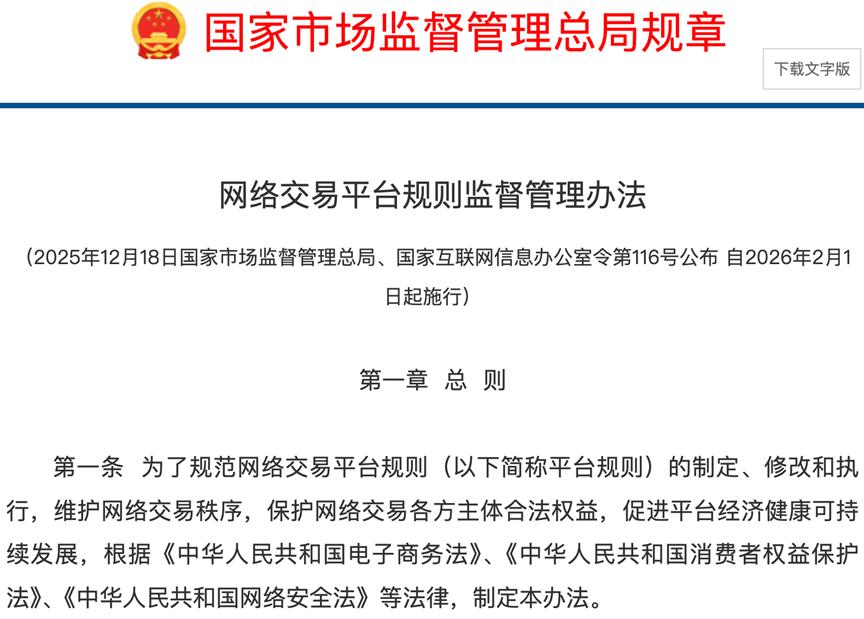
Image source: State Administration for Market Regulation official website
"Refund only" has therefore become an important issue in platform governance. The "Measures for the Supervision and Administration of Online Trading Platform Rules" implemented since February 2026 clearly states that platforms shall not use rules to force merchants to assume after-sales responsibilities such as "refund without returning goods"; when platforms make unfavorable decisions on merchants or consumers, they shall state the facts and reasons, provide convenient appeal channels, and review the appeal in a timely manner. If the decision is made solely through artificial intelligence, and the appellant requests manual judgment, the platform shall handle it manually.
The rule adjustment does not mean the cancellation of consumer protection. In case of inconsistent goods, counterfeit and shoddy products, damaged goods or false publicity, consumers still have channels to return and exchange goods and safeguard their legitimate rights and interests according to law; products that meet the conditions for seven-day no-reason return shall also be handled in accordance with regulations. This time, platforms cannot simply replace factual judgment with "refund only", consumers' legitimate rights protection can still be supported, and merchants also have space for proof and appeal when facing malicious refunds.
AI has moved from a back-end tool to a front-end product in this year's Double 11. Intelligent customer service, digital human live streaming, content generation and AI shopping guides are reducing the operating costs of merchants and helping consumers compare products.
At the same time, Tokens are packaged into monthly membership cards and model call quotas, entering the live streams of top anchors. On November 2, Li Jiaqi's live stream sold the monthly personal membership card of Qwen Office at 0.01 yuan, selling nearly 100,000 copies in half an hour, corresponding to about 2 trillion Tokens, showing that AI services are moving towards mass consumption scenarios.
However, Token is not a completely standardized ordinary product. The measurement methods, call permissions, validity periods and applicable scenarios of different models are different. When purchasing, consumers should not only compare the quantity, but also see clearly which models can be used, what functions are included and what the usage restrictions are.
For platforms and brands, AI not only brings new demands, but also raises the requirements for product description, service delivery and content authenticity. However, if there is a deviation between digital human live streaming and AI-generated materials and the actual products or services, it may trigger new after-sales disputes.
From spot sales to direct price cuts for individual items, from the entry of national subsidies to the listing of Tokens, the 2026 Double 11 shows a more obvious trend of daily retail. At present, the significance of the Double 11 large promotion is shifting from concentrating on creating transaction peaks to improving price transparency, product supply and service efficiency. For platforms, whoever can balance consumers' sense of gain and merchants' reasonable profits will have more opportunities to establish long-term advantages in the stock competition.
How much have you consumed in this year's Double 11? You are welcome to leave a message, comment and repost.
This article is from the WeChat official account "Investor Network - Thinking Finance", author: Wu Wei, published with authorization from 36Kr.