AI can now pinpoint pathogenic cells from DNA, and Google AlphaGenome 2 helps discover new drug targets for diabetes and cancer.
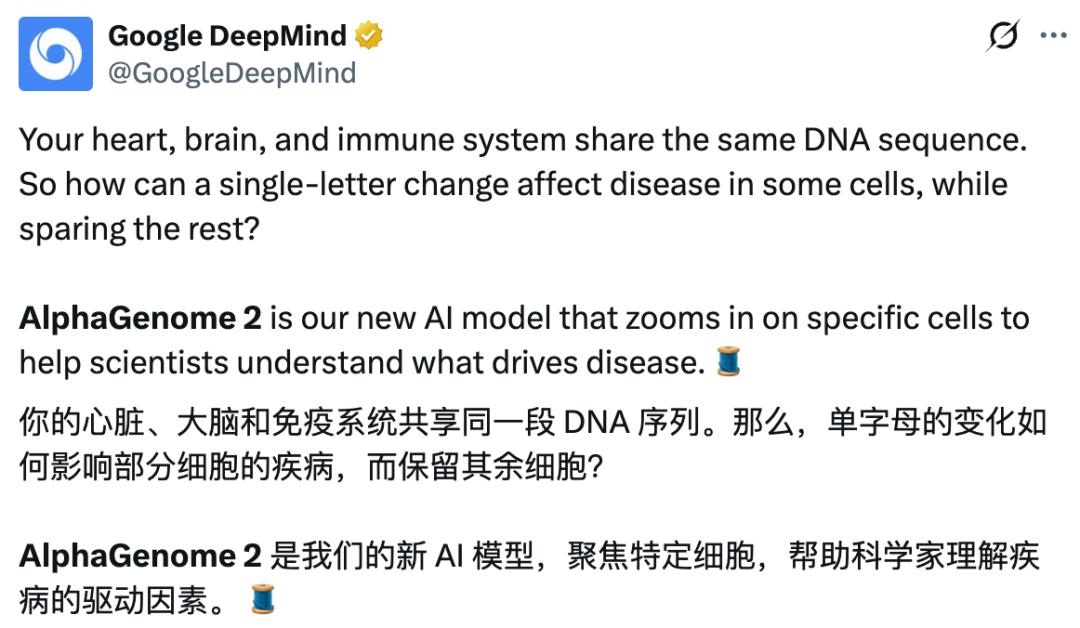
In which type of cell will DNA mutations cause diseases? Now, AI can also help us find the answer!

Now, Google DeepMind has released a new-generation DNA sequence prediction model AlphaGenome 2.
It can not only predict which type of cells DNA mutations act in and which genes they affect, but also help scientists trace the root causes of diseases, find more accurate drug targets, and provide new directions for targeted treatment of diseases such as cancer and diabetes.
Moreover, its performance this time has really amazed a large number of scientists.
For example, it took James Lee's team a year and a half of experiments to find clues related to inflammatory bowel disease, while AlphaGenome 2 only spent half an hour to reproduce the key findings through calculation.
This made James Lee couldn't help exclaiming in an interview with Nature:
They got the answer in just 30 minutes, while we spent a full year and a half doing the experiment back then...

What's more, AlphaGenome 2 can even be used immediately after configuration without retraining.
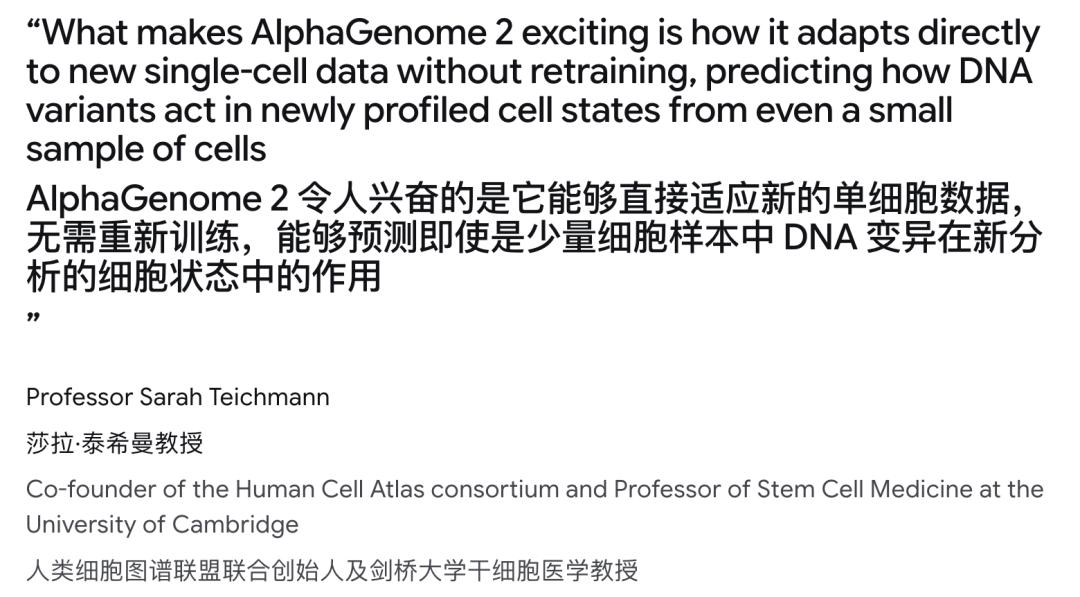
In this regard, Sarah Teichmann, co-founder of the Human Cell Atlas Consortium and professor of medicine at the University of Cambridge, also could not hide her excitement:
The most exciting part of AlphaGenome 2 is that it can directly adapt to new single-cell data without retraining;
Even with a small number of cell samples, it can predict how DNA variants will function in newly detected cell states.
Audience netizens also praised it greatly:
Perfect, this is exactly what I hope AI can improve!

Some people have even begun to imagine the future of living past 100 years old, hoping that AI can really help. (doge)


AI Trained on 100 Million Cells Can Finally Trace DNA Variants to Specific Cells
By the way, why can AlphaGenome 2 help scientists trace the effects of DNA mutations?
Sundar Pichai, CEO of Google, put forward a very interesting concept when introducing this achievement:
Cells in our body basically all carry the same DNA blueprint, but different types of cells, such as cardiomyocytes and immune cells, interpret this blueprint in different ways.
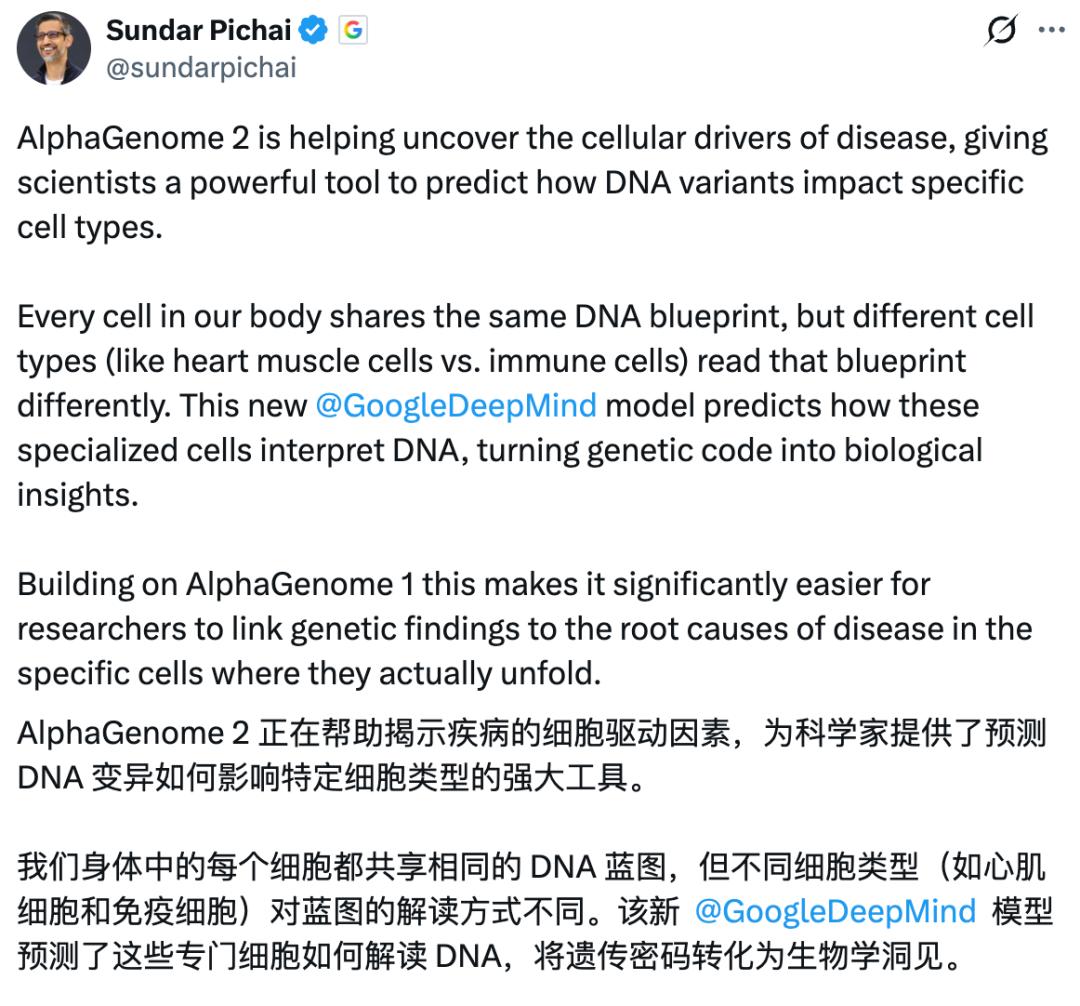
That is to say, for the same segment of DNA, some cells will read certain genes in it, while others will turn them off and not use them.
Therefore, the same DNA variant may only have an effect in a specific type of cell.
This has puzzled scientists.
It is clearly known that a certain segment of DNA is related to the disease, but it is very difficult to figure out exactly which cell and which gene has the problem.

Now AlphaGenome 2 can help.
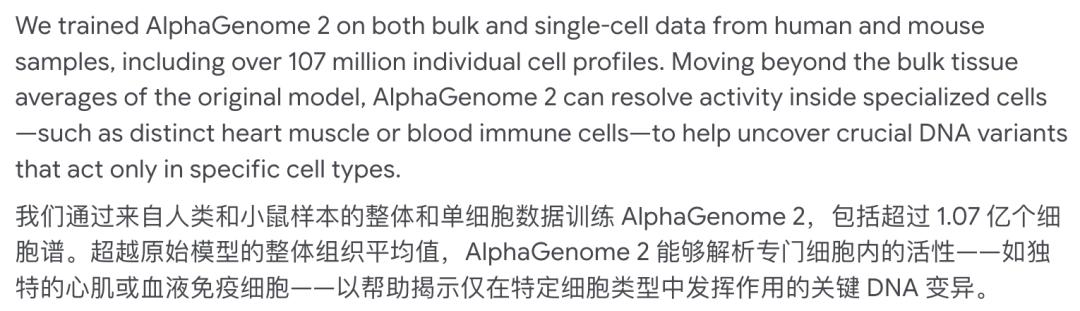
In order to teach AI to understand DNA in different cells, DeepMind arranged a huge scale of biological training for it.
The training data covers 68 types of tissues, more than 107 million cells, including both human cells and mouse cells.
After absorbing so much data, the performance of the new model is also quite impressive.
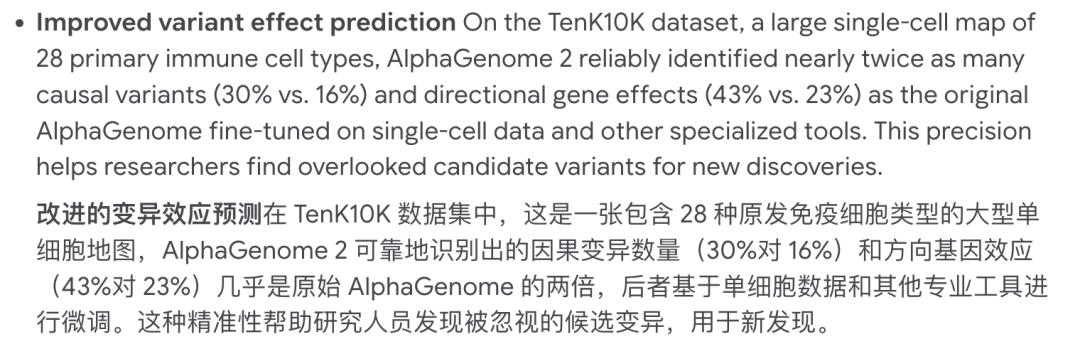
In the TenK10K test covering 28 types of immune cells, the recall rate of AlphaGenome 2 for identifying key causal variants reached 30%, while the score of the previous generation after fine-tuning with single-cell data was only 16%, almost doubling.
Its ability to judge whether these variants will enhance or weaken gene activity has also soared from 23% to 43%.
So how exactly does it do that?

The key is that AlphaGenome 2 has changed the way it reads DNA.
(The previous generation of AlphaGenome reads about 1 million DNA bases at a time, and then simultaneously predicts their molecular activities in a large number of tissues and cell lines; although this way of handling multiple prediction tasks at one time is very efficient, it is not easy to distinguish the subtle differences between similar cell types.)
Now, scientists can precisely specify the cell type or state they want to study, and let the model specifically predict how this segment of DNA will function under that condition.
(It is equivalent to the previous way of correcting a large number of examination papers of different subjects at one time, and now you can specify the subject and check them one by one carefully.)
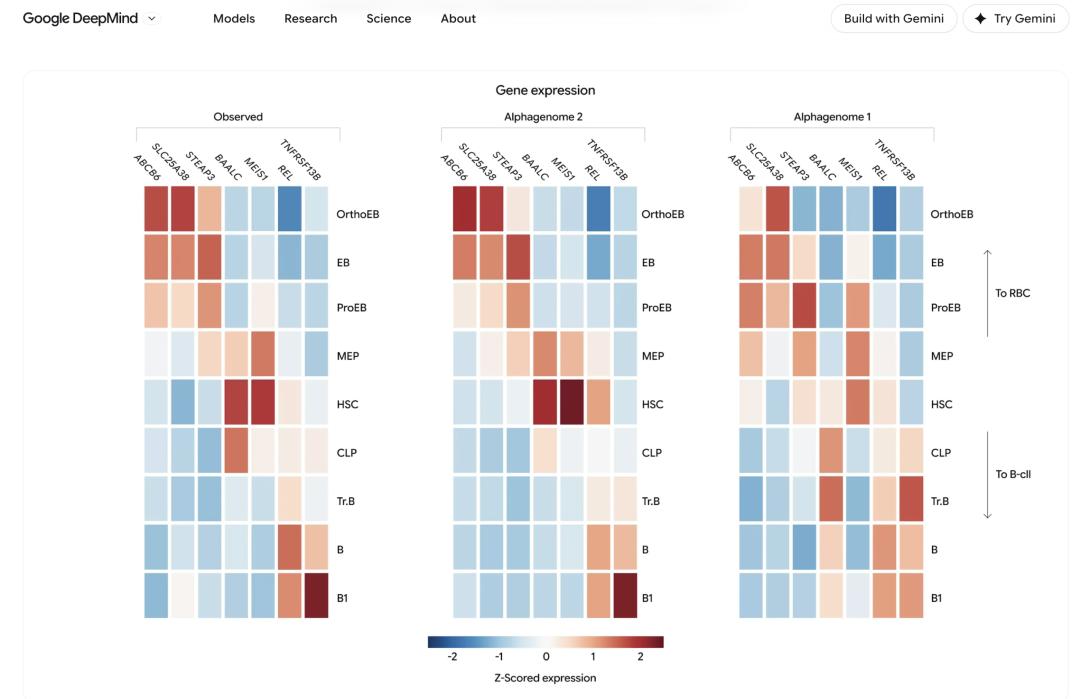
△
Not only that, the new model has also learned to predict DNA methylation, and can even infer unmeasured molecular features such as chromatin accessibility based on the measured gene activity.
In this way, scientists can gradually narrow the research scope to further lock in which segment of DNA and which gene has gone wrong quietly in specific cells.

Okay, the theoretical part is finished, next, let's look at the most exciting actual combat!
From Looking for a Needle in a Haystack to Precise Locking! AlphaGenome 2 Reproduces One and a Half Years of Experimental Findings in Half an Hour
So how exactly does AlphaGenome 2 help scientists find disease clues?
Take the inflammatory bowel disease mentioned at the beginning as an example.
The British scientist James Lee's team spent a full year and a half doing experiments before finally figuring out that a DNA variant hidden in the "gene desert" will over-activate the ETS2 gene in intestinal immune cells, thereby triggering intestinal inflammation.
But for AlphaGenome 2, things are much simpler.
Google asked it to check 7 suspicious DNA variants at one go, and the model quickly locked the key one, and accurately predicted which gene it would affect and in which type of immune cell it would function.
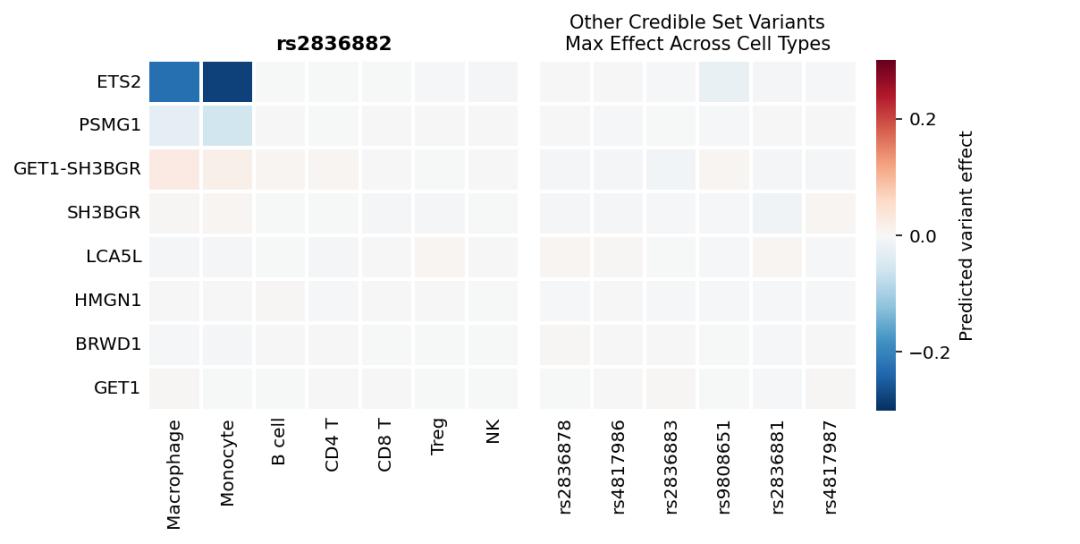
△
Not only that, Google also applied AlphaGenome 2 to the research of complex diseases such as type 2 diabetes, helping scientists filter out more suspicious clues from massive DNA variants, lock in related cells and genes, and then carry out targeted experiments to find potential drug targets.
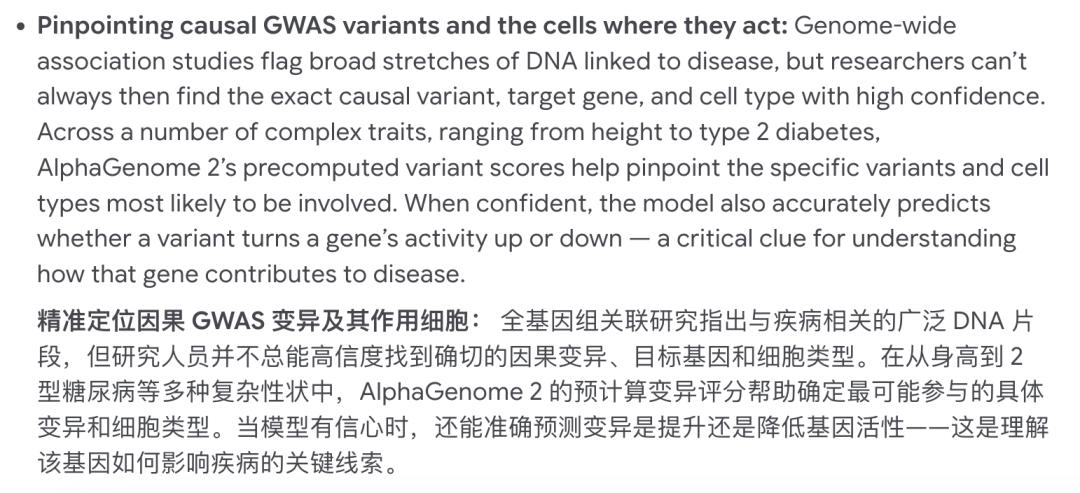
This means that in the face of complex diseases such as cancer and diabetes, scientists finally have a powerful AI helper that can quickly find pathogenic clues and find potential drug targets, opening up new ideas for developing more accurate treatment methods.
And those patients who have long been troubled by diseases will also have the opportunity to usher in more accurate and more targeted treatment plans in the future.
Great, this is exactly what we most want to see: AI benefits mankind!

One More Thing
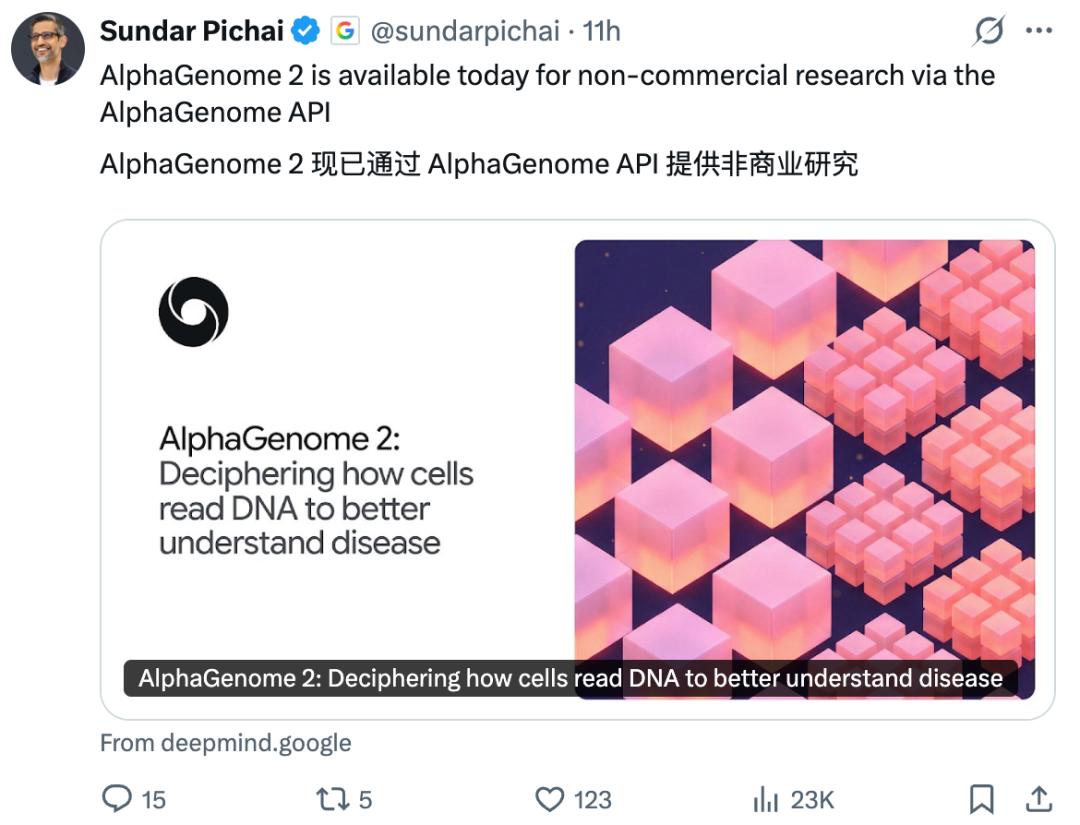
The good news is that AlphaGenome 2 has been open to non-commercial research!
Everyone can call the new model through the AlphaGenome API, and refer to the interactive Colab tutorial provided by Google to run experiments with their own single-cell experimental data.
Moreover, Google is also preparing to add it to the Agent toolbox.
Next, AlphaGenome 2 Skills will also land on Google Antigravity, allowing all users to access this DNA prediction model into their own Agent workflow.
Interested friends, go and try it out~
