In the first year of venturing overseas, plan your global business from the very initial stage.
In the past few years, cross-border e-commerce has continuously broadened the paths for Chinese enterprises to enter the global market.
An increasing number of enterprises with solid product, brand or supply chain foundations have started to directly engage with overseas consumers. This track has gradually evolved from a few pioneers' experimental attempts into a conventional choice for enterprises to seek new growth drivers.
Customs statistics show that from 2020 to 2024, the total import and export volume of China's cross-border e-commerce rose from 1.69 trillion yuan to 2.63 trillion yuan; in the first half of 2026, this figure further reached 1.45 trillion yuan, marking a year-on-year increase of 5.8%. As of May 2024, there were over 120,000 cross-border e-commerce entities nationwide in China.
Data disclosed by Amazon also shows that the number of Chinese sellers who generated sales across multiple sites in their first year of launch in 2025 achieved double-digit year-on-year growth.
It is clear that cross-border e-commerce remains a high-potential market for many enterprises to pursue growth. Behind the continuous expansion of the cross-border e-commerce market lies not only the product and manufacturing capabilities supported by China's supply chain, but also the increasingly mature cross-border infrastructure. Services including cross-border e-commerce platforms, cross-border payment, and overseas advertising are all improving day by day.
AI is also reshaping the way cross-border sellers enter the global market.
In the past, new sellers usually started with a single site. It would take the team one year or even longer to fully understand the local language, consumption habits, platform rules and inventory preparation rhythm before they could decide whether to enter a second market.
Nowadays, AI can help cross-border sellers organize information from different markets and generate multi-language product content. Data tools present search and purchase demands in a more specific manner. The compliance, cross-site operation and logistics capabilities provided by platforms also start to connect previously scattered links. When cross-border sellers expand into new overseas markets, they can leverage AI to incorporate more markets into their overall planning from the initial stage, realizing the vision of "Go Global From Day One".
The missions of new sellers in their first year of going global have begun to change: in addition to opening a store and completing the first order, they also need to start building a set of operational capabilities that can be reused for subsequent market expansion. Amazon provides targeted support for cross-border sellers at key links.
Build Capabilities for Global Opportunity Assessment and Risk Identification From Day One
In the past, an enterprise's decision on which market to enter largely relied on experience.
A product that sells well domestically, or gains popularity on overseas social media, cannot directly prove that it will generate confirmed sales in a specific country. Different markets vary in usage scenarios, price ranges and competition intensity: for the same beauty product, color preferences may differ, and for the same household item, demands for size and functions may also change across regions.
Identifying and confirming business opportunities is both highly important and challenging.
When the makeup brand Judydoll entered Amazon's US site, it was not a brand starting from scratch. It already had a relatively complete product matrix, and some of its SKUs had already gained popularity on overseas social media. However, the team soon found that discussions on social platforms could not directly answer what consumers would search for on e-commerce platforms and what they were willing to pay for.
For example, a light skin tone contour product with ordinary popularity on overseas social media had clear search demand on Amazon. Judydoll adjusted its keywords and advertising strategy accordingly, and the product entered the Top 100 Best Sellers in its niche category one month after launch.
In fact, for sellers, social media popularity is only one of the performance indicators. They need to further understand what consumers are searching for, whether existing products have fully met such demands, which price range still has untapped potential, and which market is more suitable for their product capabilities to start with.
To this end, Amazon provides a variety of tools to support sellers.
Specifically, Amazon Opportunity Explorer is built on buyers' search and purchase behaviors, classifies relevant search terms and products into niche markets, and presents indicators such as search volume, sales volume and price. Product Selection Compass, through category analysis, provides information including the target category's market capacity, competition intensity, growth potential, entry risks and consumer preferences. These two tools integrate the keyword, price and competition information that previously required separate collection by the team into the same decision-making process. Data will not make product decisions for enterprises, but it can reduce blind, experience-based guesswork in the first round of assessment.

If demand assessment is only the first step of judgment, then compliance is one of the core factors that need to be evaluated when entering a new market, which once stumped many enterprises that expanded overseas.
The same children's toy sold to the US and the EU may respectively involve material and structure testing, certificates, tracking labels, responsible persons based in the EU and online safety information display; products with batteries, cosmetics and medical health commodities all have their own distinct requirements.
Compliance is not just about submitting an additional document before listing. Any non-compliance in materials, components, packaging, manuals and labels may lead to re-sampling and re-testing of the product, and even delay the entire launch timeline.
To address this issue, Amazon Compliance Reference can help enterprises look up the requirements of target markets, and the SPN (Service Provider) network connects third-party services such as testing and certification. Its Global Test Once (GTO) program initially covers the toy category, which supports compliance review of relevant products across multiple Amazon sites through a single testing process.
Merely listing the rules is not enough.
Enterprises that enter overseas markets for the first time often do not know the proper sequence to promote different matters, and find it hard to judge whether a certain requirement will change the product cost and launch timeline. In addition to providing tools to help enterprises understand compliance issues, Amazon's local account managers and category experts will also assist enterprises in determining the processing sequence, cost structure and launch rhythm of different matters.
Chen Xiaoping, CEO of VIOMI Technology, said that when the company settled in Amazon in its first year, Amazon's strategic key account team participated in links including market analysis, product selection strategy, logistics and compliance.
The first step of "Go Global From Day One" is not just to distribute products to more sites as soon as possible, but to fully understand local demands and market access requirements in advance before the first batch of goods is produced. On the one hand, enterprises figure out where their products are likely to sell well, and on the other hand, they confirm what costs they need to pay to enter the market.
Implement Global Planning into Products, Operations and Supply Chain
For cross-border e-commerce sellers, after products are listed, "global operation" will turn into a series of specific and trivial tasks. The title for the US site, keywords for the German site, images for the French site and measurement units for the Japanese site need to be processed separately; after sales start, the team also needs to continuously check reviews, adjust advertisements, and manage inventory and account status. These tasks seem to be only operational details, but they share the common features of being repetitive, high-frequency and with relatively clear rules — which are exactly the parts that AI tools can prioritize to assist cross-border sellers with.
The *2026 AI Index Report* from Stanford University shows that in 2025, 88% of surveyed enterprises have used AI in at least one business function, and 79% of surveyed enterprises frequently use generative AI in at least one business function. AI is evolving from experiments conducted by a small number of technical teams, and is now integrated into daily workflows such as content creation, marketing, customer service and data analysis.
For cross-border e-commerce sellers and potential sellers, a large amount of multilingual content, product data, advertising feedback and user reviews are generated online, and many standardized and repetitive tasks can be processed with higher efficiency with the help of AI.
Amazon's *2026 White Paper on China's Cross-Border E-Commerce Export Development Trends* shows that over 98% of surveyed Chinese cross-border e-commerce enterprises have already used AI tools in their operations, but only 16% have further deployed AI workflows or agents.
This gap means that while AI tools have been widely adopted among cross-border sellers, most cross-border e-commerce enterprises are still exploring how to integrate AI from a simple translation and copywriting tool into their full operational workflows.
There are a wide variety of AI tools for cross-border e-commerce sellers in the market, and choosing which one to use and how to use it has itself become a threshold for many players.
Back to Amazon, considering that most cross-border e-commerce sellers are still exploring the usage of AI, the AI tools prepared by Amazon aim to cover different stages of a product from preparation to operation, lowering the AI usage threshold for cross-border e-commerce sellers and improving their operational efficiency.
In the preparation stage, Amazon provides data and AI tools to assist cross-border e-commerce sellers in organizing market, rule and product materials; in the launch stage, Gen AI Listing can generate the first draft of category attributes and 5-point product descriptions, and the "One-Click Global Listing" feature synchronizes product information from the source site, completes basic translation and measurement unit conversion; after entering the operation stage, the seller assistant for cross-border e-commerce sellers can be used to query inventory, expenses and operational anomalies, and creative tools provide basic versions of images and videos.
The AI-enabled process designed by Amazon for cross-border e-commerce sellers reduces the time spent on repeatedly creating and searching for information, rather than handing over operational decisions to AI. When a product enters the second site, the page structure can be reused, but the local consumers' language and focus points cannot be copied directly. AI can complete the first draft, while operation staff still need to review the content based on search terms, reviews and real usage scenarios, and decide when to launch the product, where to allocate the budget, and whether the selling points on the page are accurate.
Take CZUR, the smart scanner brand operating on Amazon, as an example. It once used the product information of the US site as the basis, spread it to other markets with the help of the cross-site synchronization tool, and then used AI to supplement local scenarios and keywords. Its multi-site launch cycle was shortened from 7 days to 2 days, the workload of manual customer service was reduced by 20%, and the return rate dropped by 5% year-on-year. Page synchronization saves the time of repeated creation, and subsequent localized modifications help avoid the mechanical copying of the same set of expressions to all countries.
AI can help cross-border e-commerce sellers complete listing and operation faster, but when entering unfamiliar markets, some judgments still require local experience: how many units to ship for the first batch, whether the pricing can cover logistics and advertising costs, and when to launch promotions and restocking.
Amazon is integrating local services into the above links.
As of March 2026, Amazon Global Selling has set up 5 regional centers and 12 offices across China; the "Spring Planting Program" plans to enter more than 130 key industrial belts in 10 provinces nationwide, bringing operational experience of different sites and categories to enterprises through incubation camps, enterprise visits and online courses.
Services are not limited to general training. For qualified manufacturers and brand enterprises, the "Amazon Flagship New Enterprise Incubation Program" will involve category experts in the launch stage, integrating product selection, cost, brand registration, page setup, compliance and restocking into one unified operational arrangement. It cannot make decisions for enterprises, but it reduces the time spent on searching for scattered answers when entering a new market for the first time.
Of course, product pages can be modified on the same day, but inventory cannot be rearranged at any time. The transaction chain for going global is very long, and logistics and inventory are both critical links.
In the past, the appeal of Fulfillment by Amazon (FBA) was that after enterprises shipped goods to the operations centers, the platform could take over warehousing, picking, delivery, returns and exchanges, and customer service. New enterprises did not need to find warehouses and last-mile delivery providers from scratch in every country, and could directly use the local fulfillment network.
However, the premise of smooth logistics fulfillment is that enterprises can make basic judgments on product inventory. Many enterprises that expanded overseas in the past suffered huge losses due to overstocking or understocking.
When an overseas enterprise only operates in one market, it is already a difficult problem to decide how many units to stock; after the number of sites increases, the same batch of goods needs to be split and shipped to different countries. If a certain market sells faster than expected, stockouts may occur quickly; on the other hand, if sales are lower than expected, inventory, warehousing fees and cash will all be tied up overseas.
Cross-border logistics involves first-mile transportation, customs declaration, customs clearance, warehousing in the destination country and last-mile delivery. Any delay in any link may amplify restocking errors.
Amazon Global Warehouse Hub (GWD) tries to postpone the decision on which market the goods will finally flow to. Enterprises can first store a large batch of goods in the source warehouse in Shenzhen, and then allocate small batches of goods to Amazon operations centers overseas according to changes in sales and inventory. Warehousing, customs declaration and clearance, cross-border transportation and inventory allocation are integrated into one unified chain, and connected to the FBA network via Amazon Global Logistics (AGL).
At present, Shenzhen GWD supports restocking to Amazon operations centers on the US site, while Europe and Japan are still in the follow-up expansion plan. It supports small-batch restocking with no minimum shipping volume requirement; Amazon disclosed that compared with the AWD warehousing cost in the US, the storage cost of GWD can be reduced by up to 45%.
With the support of GWD, inventory is changed from "pre-shipped to a certain country in advance" to "first concentrated at the source location, then allocated according to actual demand", which has reshaped the way new enterprises test markets. This also connects the overseas fulfillment capability of FBA and the source location inventory into the same chain: the former is responsible for delivering products to consumers, while the latter allows enterprises to decide the exact destination of goods at a later time.
From product content to inventory arrangement, Amazon has implemented global planning into specific practical matters: whether a set of products can be reused for subsequent markets, whether repeated testing is required, whether pages can be localized while retaining basic information, and whether goods can flow according to real demands. Markets can be entered in phases, but the earlier these capabilities are formed, the less repeated work enterprises need to do when expanding to the next market.
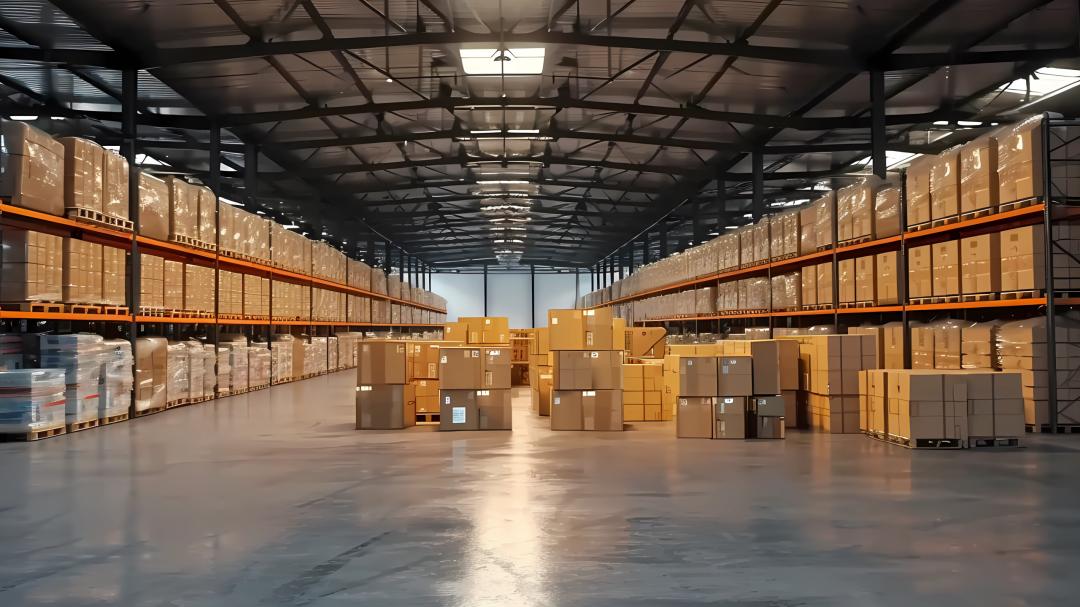
In fact, the value left by the first stop of going global is not just orders. Search and purchase data help enterprises better understand their products, the compliance process precipitates reusable materials for subsequent markets, AI and cross-site tools for cross-border e-commerce sellers reduce repeated operations, and FBA, AGL and GWD are respectively responsible for overseas fulfillment, cross-border transportation and source location inventory management.
All links together form the foundation of Amazon's "Go Global From Day One" vision. The platform cannot judge every product for enterprises, nor can it eliminate the risks of entering overseas markets; what it provides is a more complete set of operational conditions, allowing enterprises to see demands and rules at an earlier stage, and control repeated investment and inventory pressure when the market is not fully confirmed.
At present, the 2027 Amazon Global Selling new seller enrollment has officially started, and a new batch of enterprises will go global through this channel. The global market is never a land with the same rules, and language, consumption habits and operating environment will all change. However, with Amazon's support, enterprises do not need to start from scratch for every new market entry: the product, compliance, operation and supply chain capabilities accumulated in the first year of going global can continue to support their expansion into broader markets. "Go Global From Day One" is not just about distributing products to more sites, but enabling an enterprise to set its sights on the entire global market from the moment it opens its first store, and gradually build up the capability to operate on a global scale. Stand taller, see further.
Data Sources:
[1] General Administration of Customs of China: China's cross-border e-commerce import and export volume reached 1.69 trillion yuan in 2020: https://www.mofcom.gov.cn/zwjg/jmxw/md/art/2021/art_d5accee0cb8b408faa4520dcf9acf504.html
[2] General Administration of Customs of China: China's cross-border e-commerce import and export volume reached 2.63 trillion yuan in 2024: https://www.xinhuanet.com/20250113/1ccd7d895f6