The gust of the AI comic drama boom cannot blow ordinary people's dreams of striking it rich forward.
Come on, stop overhyping AI manhua dramas.
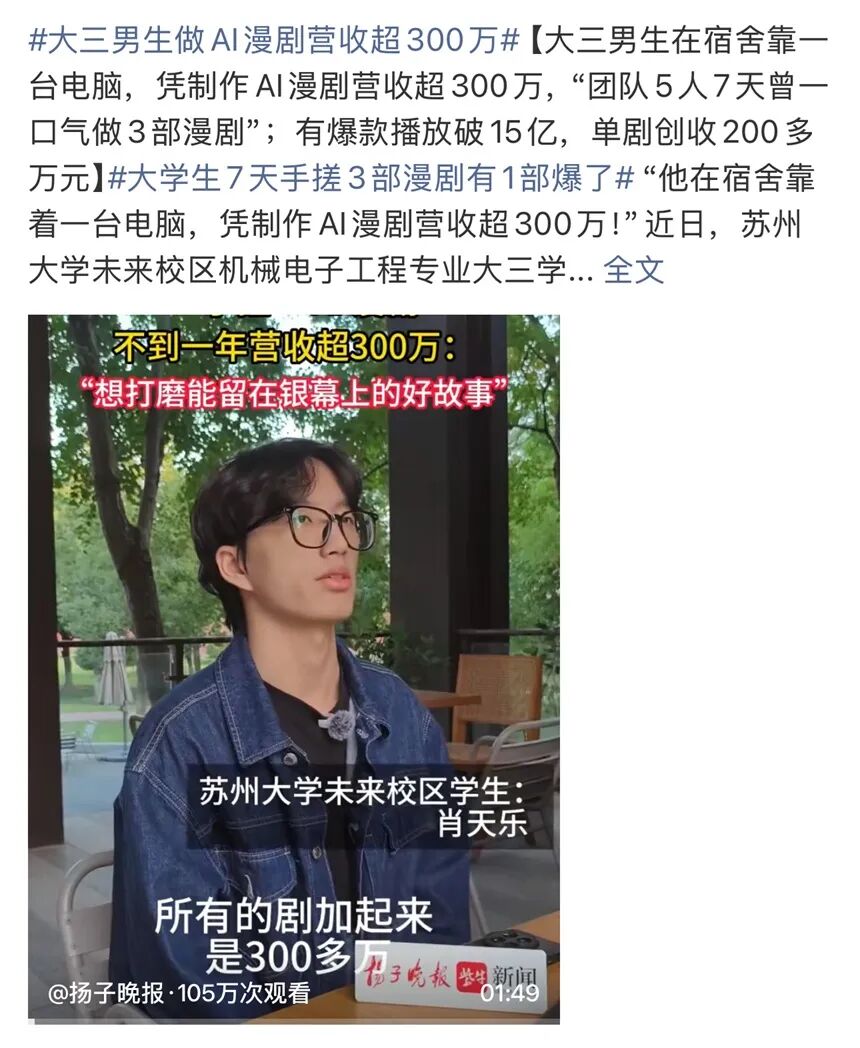
Have you noticed that trending topics about how popular, profitable, and overwhelmingly superior AI manhua dramas are compared to live-action dramas pop up from time to time recently. Click into these posts, and you will usually find nothing but unreserved praise for AI manhua dramas: some creators have racked up hundreds of millions of views with a single work, some have earned over one million yuan in revenue from AI manhua dramas, and others have even achieved financial freedom in just a few months.
One rags-to-riches story after another keeps emerging, as long as you catch this trend, ordinary people can also get a chance to change their fate.
Alongside these success stories, there are more and more advertisements for AI manhua drama training and franchise. From zero-based entry to quick order receiving, from low-cost entrepreneurship to stable returns, all kinds of institutions are sending a signal to ordinary people: it is the perfect time to step into this field now.
But is that really the truth? Can ordinary people really get a slice of the pie when they enter the AI manhua drama track? And who is constantly selling such wealth opportunities to them?
01 Can everyone get a slice of the pie?
For ordinary people who want to step into the AI manhua drama field, a cold splash of reality is necessary: the current AI manhua drama market is hot, but that does not mean you can make money lying down, let alone that everyone can get a share of the profits.
Let's look at the overall market performance first. According to data from DataEye Research Institute, in the first half of this year, 221,900 new AI dramas and manhua dramas were launched on Douyin, among which only 1055 works had views exceeding 100 million, accounting for about 0.48%. If we take the 50 million views set by DataEye as the break-even reference line, there are only 2886 works reaching this scale, accounting for about 1.3%. While a large number of works pour into the market, only a few of them can actually recover the cost.
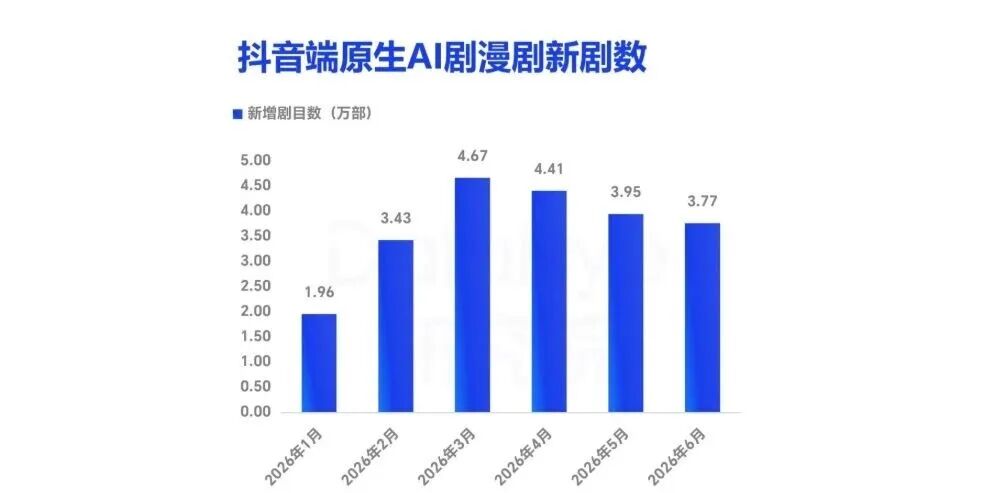
As for the actual income that the public cares most about, the situation is also not optimistic.
According to feedback from practitioners, the playback revenue of AI manhua dramas has been declining rapidly since the beginning of this year. A person in charge of an AI manhua drama company revealed in an interview with *China Newsweek* that previously, for a work with over 100 million views, the revenue per 10,000 views exceeded 100 yuan; but by May this year, it had dropped to 30 to 50 yuan. Now half a year has passed, the situation is even more unpromising.
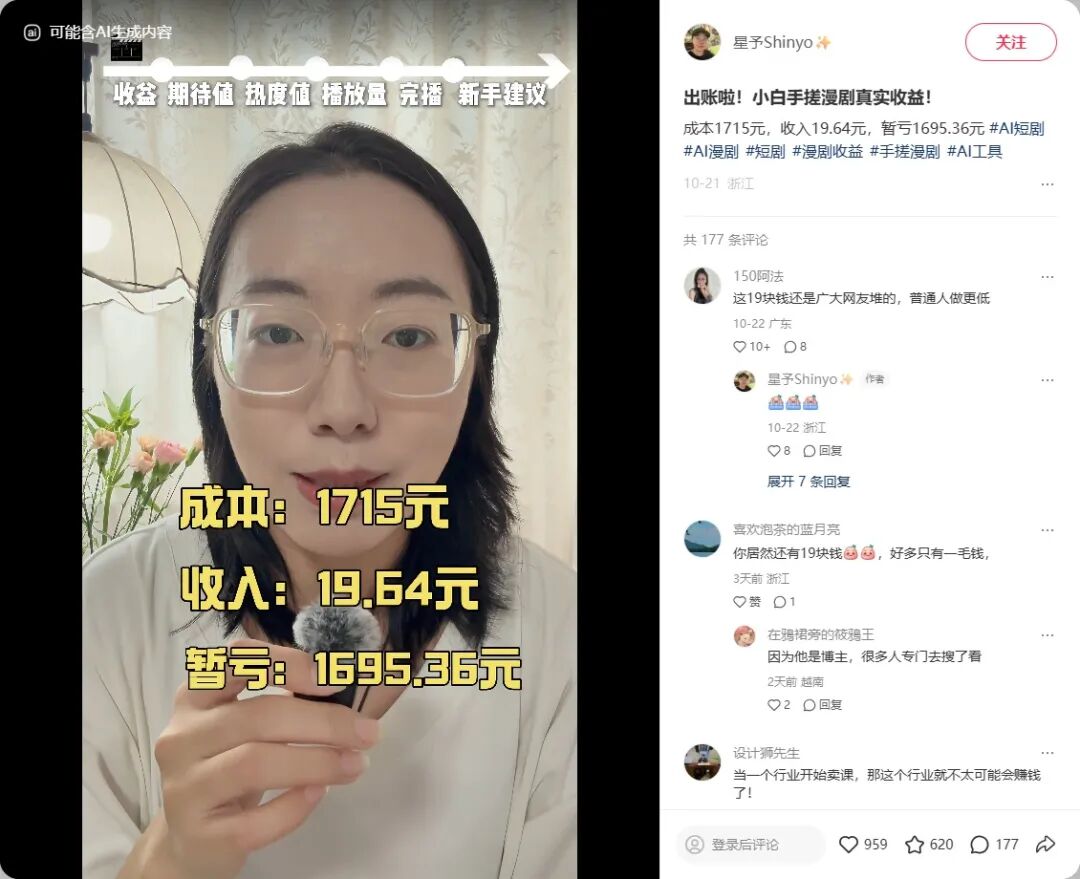
For individual creators, the actual income may be even lower. The creator Xingyu Shinyo once shared her experience of making AI manhua dramas manually on Xiaohongshu: her independently produced work *I Become the Most Eloquent Spokesperson for My Father the Emperor* has 12 episodes in total, with a production cost of 1715 yuan. One month after its launch, its popularity value reached 14.85 million, the actual views exceeded 49,000, but the income was only 19.64 yuan, and the revenue per 10,000 views was only 3.97 yuan. It is obvious that for individual creators who lack capital and experience, it is not easy to recover the cost with a single work.
Even if the problem of work production is solved, traffic acquisition is also an unavoidable problem.
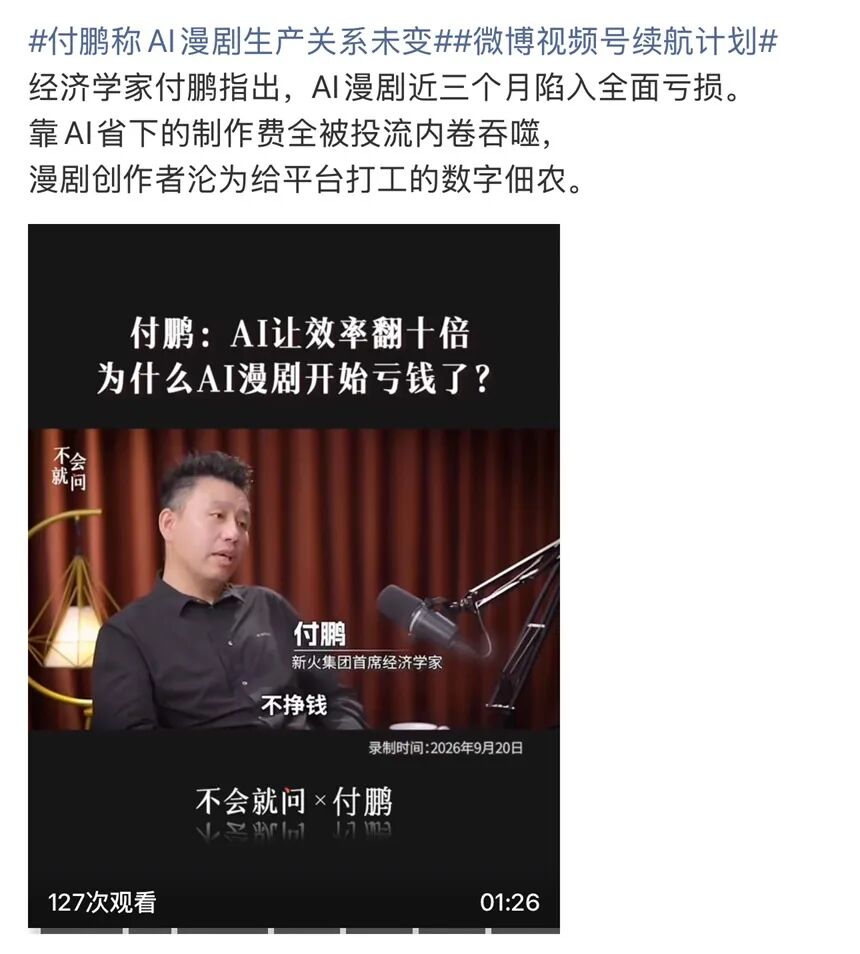
Recently, Fu Peng, economist of Xinhuo Group, publicly pointed out that almost all AI manhua dramas have suffered losses in the past three months. According to his estimation, if you choose to invest in traffic promotion by yourself, the cost of buying traffic accounts for about 80% to 90% of the total cost, the computing power cost accounts for about 10%, plus hardware depreciation, the final profit left for the project is only about 5%.
He even compared creators to "digital tenant farmers" who work for platforms, saying that as a new productive force, AI has greatly improved the efficiency of content production, but has not changed the old logic of platform bidding distribution and benefit distribution. The cost saved at the production end is soon swallowed up by traffic buying. The higher the production efficiency, the thinner the income returned per unit of content.
Of course, the high traffic investment cost mentioned by Fu Peng mainly corresponds to the business model that requires you to bear the cost of buying traffic yourself, and it is not fully applicable to the distribution system of platforms such as Fanqie. Taking the Changdu content distribution platform under Fanqie as an example, creators only need to deliver the finished film after obtaining IP authorization, and distributors independently select products, pay for traffic investment, and get a share of the revenue based on conversion from promotion.
But this does not mean that producers can completely get rid of the uncertainty of traffic and revenue. Whether the work can obtain platform resources, how much traffic it can get after launch, and how much revenue it can finally share, are still affected by content quality, platform project screening, traffic distribution and revenue sharing rules.
Take the copyright investment model as an example, the platform will rate the project according to the script outline, character setting, planning document and Demo submitted by the production team, and high-quality IP will only be opened to a few head contractors. The "Guoran Plan" previously launched by Hongguo has set up a clear project screening mechanism. In terms of AI script cooperation, Hongguo has also set different minimum guarantee policies according to content ratings. According to the latest policy announced on November 12, the minimum guarantee for S-level AI scripts is 15,000 yuan, A-level scripts have no minimum guarantee, and B-level scripts are not accepted for cooperation.
Therefore, whether the work itself is competitive is also a hard threshold. The revenue sharing ratio of works of different qualities varies greatly. High-quality dramas with more refined scene polishing and higher production investment can get several times or even more revenue per 10,000 views than ordinary low-end works.
Recently, the conversation between Xiaoguogege, the creator of the hit short drama *The Little Carpenter from Anhui*, and Pan Luan, a media practitioner, also confirmed this point. He gave an example that the revenue per 10,000 views of the low-end drama he produced was only 1.5 yuan, while that of high-quality dramas could reach 12 yuan, a difference of 8 times. This also shows that even for works from the same creator, entering the same platform and adopting similar distribution methods, their revenue performance can be vastly different.
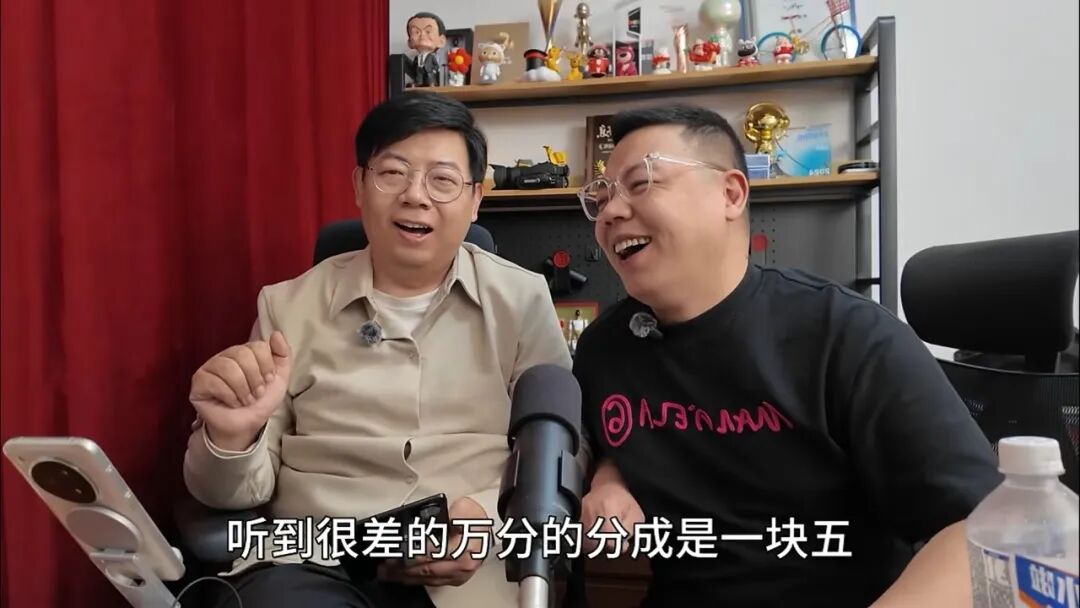
As for the question of whether ordinary people should enter this field, he also gave specific suggestions: people with experience in shooting, editing, self-media or novel promotion can try it on a small scale, while people with no relevant experience at all should not participate blindly.
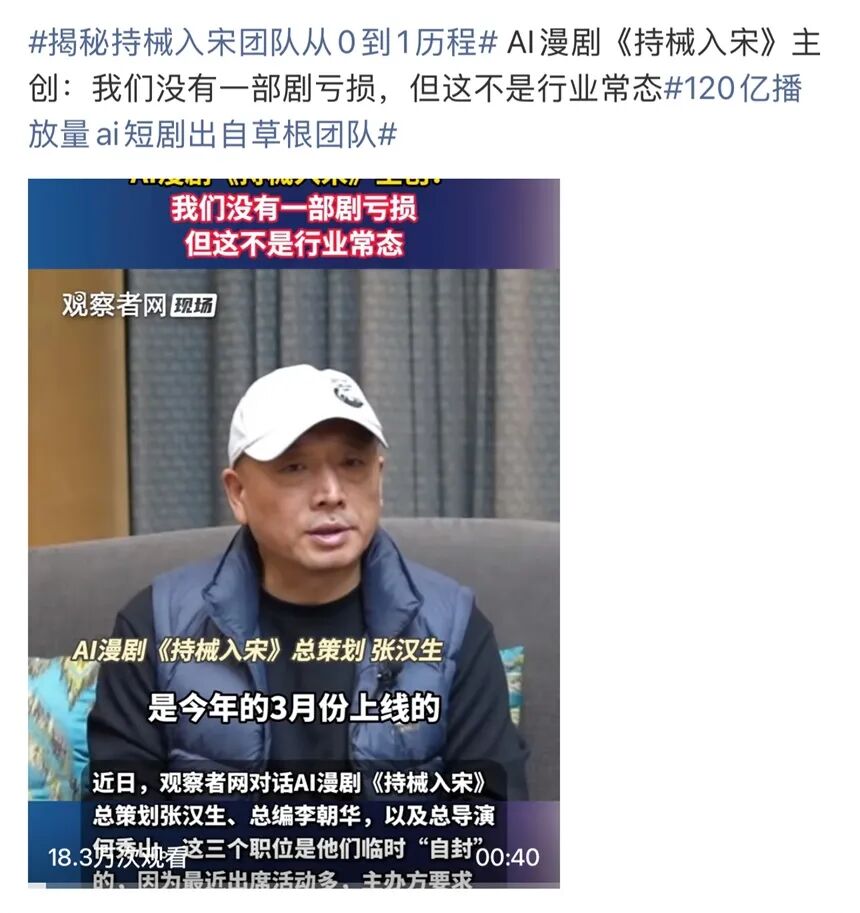
This view coincides with that of Zhang Hansheng, chief planner of *Travel to Song Dynasty with Weapons*. In his opinion, AI equality only means equal opportunities to use the model. The reduction of technical threshold does not mean that the creation threshold has disappeared. To make better works, the key still lies in content and creative ideas. Because "AI itself has no emotions, many feelings of family and country, emotions and moods need to be endowed by creators". He also reminded that do not package AI manhua dramas as a business where you can make hit works and make money easily just by signing up for a training course.
At the end of the day, the "free pie falling from the sky" that ordinary people see is never that simple in reality.
Recently, the story of Xiao Tianle, a junior student at Soochow University, earning more than 3 million yuan in revenue from AI manhua dramas became a trending topic. But a closer look at his entrepreneurial experience shows that behind this achievement is continuous accumulation of content production and commercial business. In less than a year, his team has produced hundreds of manhua dramas, among which there is only one real hit. In addition, his team also takes commercial orders for manhua dramas, and the income is not purely from platform revenue sharing.
In a word, AI tools do lower the entry threshold, but they do not make it easier to make money. From work competition to traffic acquisition, and then to content creation, ordinary people still have a long way to go if they want to get real returns from this track.
02 Who is fooling ordinary people into entering the field?
Then, since AI manhua drama is not a guaranteed profitable business, who is constantly attracting ordinary people to enter this field?
Obviously, training institutions attach the most importance to this business. I believe everyone has seen AI manhua drama training advertisements on social platforms or short video platforms, ranging from 9.9-yuan introductory courses to systematic training courses costing thousands or even tens of thousands of yuan. The promotional words are often highly similar: you can learn it even with zero foundation, master the production process in three days, get orders and realize revenue in a week, no professional team or film and television experience is required.
But in fact, mastering the basic operation of AI tools is totally different from having the ability to produce works independently. From image generation, video generation to script adaptation and shot design, long-term practice and repeated trial and error are required. Short-term training may teach students some basic operations, but it is difficult to ensure that they can independently complete works, let alone make money by taking orders. Many people buy these AI courses, but in the end they just pay for a useless "stupidity tax".

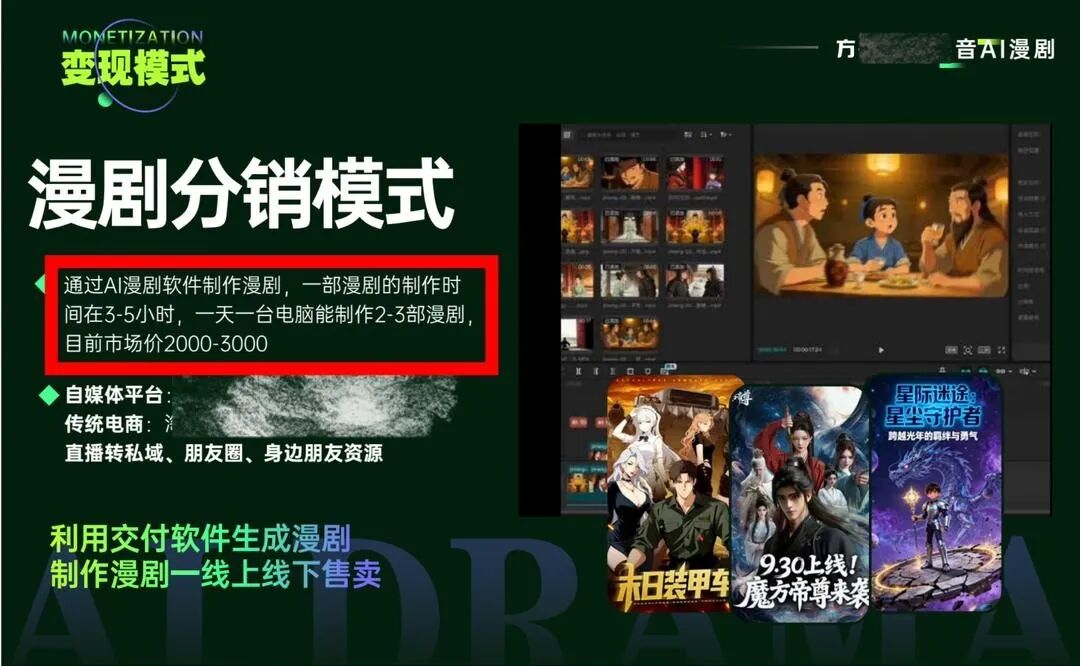
Secondly, there are investment promotion and system service providers. Compared with selling courses, such institutions go a step further, directly packaging AI manhua drama as a franchise business: buy the production system, pay the franchise fee, and cooperate with the so-called platform resources and stable orders, then you can have your own AI manhua drama studio.
According to Entertainment Voice, a consumer in Hubei was once charged 59,800 yuan by a network company in Jinan in the name of "regional agent" to purchase a set of AI manhua drama production system. The other party promised that the operation could be learned in half an hour, and you could also get a share of the revenue by developing lower-level agents. But after signing the contract, he found that the so-called self-developed system was actually just public resources on the Internet, and the promised exclusive regional agency right could not be fulfilled.
For these institutions, the real important thing is to sell production systems, franchise qualifications and computing power packages.
In addition, there are relevant MCN institutions and project intermediaries. The production of AI manhua dramas requires a lot of manpower, and some companies will recruit individual creators and small studios to take orders. Normal project cooperation itself is no problem, but there are also intermediaries who recruit creators under the banner of platform orders, minimum guaranteed revenue and internal resources, and then charge computing power fees, deposits, or transfer production costs and rework risks to individuals through multi-layer subcontracting. For inexperienced creators, even if they get orders, they may find that the income is not enough to cover the production cost.
Beyond these business models, there is also the boost from platforms, tool manufacturers and industrial parties. Platforms need more content, tool manufacturers hope to expand the usage scale of models and computing power, production companies need production capacity, and local governments are also promoting the implementation of related industries. These factors together raise the popularity of the industry, and endow AI manhua dramas with new growth imagination.
When these real industrial opportunities are packaged layer by layer, they finally turn into a simpler and more attractive story: entering the AI manhua drama field now means seizing the next wealth trend.
From this perspective, the path AI manhua dramas are taking is exactly the same as that of live-action short dramas in the past.
In the early stage, live-action short dramas attracted a large number of teams to enter the market with short production cycles, low cost and quick return. But as market supply increases, it is difficult to form competitive advantage simply by relying on low-cost and mass production. Content quality and traffic acquisition have gradually become important factors that determine the performance of works. The same is true for AI manhua dramas. Technological progress has greatly reduced the production cost of a single work, allowing more individuals and teams to enter the market at the same time, and content supply has increased rapidly accordingly.
Thus it can be seen that what AI manhua dramas are experiencing is not just a technical dividend period, but a process from low-threshold production to fierce market competition. As the advantage of production cost is gradually diluted, creators will eventually return to the content itself, and solve the problems of traffic acquisition and commercial realization.
