A "penny stock" company with a share price of HK$0.66 is set to spend 70 million Hong Kong dollars to purchase UBTECH robots?
400 robots, orders totaling 67.92 million yuan, calculated at retail price. The signing party is a luxury car dealer with a market capitalization of only 1.2 billion Hong Kong dollars, a price-to-book ratio of 0.13 times, and a loss of 5 billion yuan last year.
On November 11, UBTECH announced that Yongda Auto will purchase 400 U1 Pro super bionic robots, to be delivered within the year.
The press release called it "the first disclosure of a large order for super bionic robots". The figure of 67.92 million yuan looks quite impressive. Riding on the recent rebound of the robot sector in recent days, UBTECH's Hong Kong stock has risen for four consecutive days, and continued to surge sharply by more than 4% on November 12.
But why does this car dealer need to purchase so many robots?
The "penny stock" that can hardly sell cars
The large order of 400 robots pushed up UBTECH's share price, but Yongda Auto's share price fell instead of rising, down 0.76% on November 11. Just on November 9, the company's share price plummeted by 8.76%, with the closing price of HK$0.625 hitting a record low, and the total market value was only about 1.2 billion Hong Kong dollars, which has entered the ranks of "penny stocks" whose price has fallen below the par value.
Yongda Auto (03669.HK) is a veteran luxury car dealer in China, whose agency brands include Porsche, BMW, Mercedes-Benz, Audi and other brands. It still made 200 million yuan in profits in 2024, but directly lost 5.071 billion yuan in 2025. Its revenue dropped all the way from 74.3 billion yuan in 2023 to 54.6 billion yuan last year, with a gross profit margin of only 7.86%.
Such a bold car dealer has been impacted by domestic new energy vehicles in recent years, and the sales volume of joint-venture luxury brands has been getting worse and worse. In the face of the continuous decline in its share price, the company announced on November 9 to repurchase 500,000 shares for HK$327,000, and this repurchase amount is too small to be mentioned publicly.
What does a price-to-book ratio of 0.13 mean? It means the company is sold at a 13% discount on its net assets. The market believes that the assets of this company are not worth the price on the book, which is equivalent to an 87% discount on net assets.
In its research report in September this year, CICC gave a target price of HK$1.13, which still has a 70% upside from yesterday's closing price of HK$0.66, but the rating given by CICC is "outperform the industry", which implies that other peers are in a worse situation than it.
It is such a company that announced today that it will spend nearly 70 million yuan to buy 400 robots.
Are 4S stores going to sell robots?
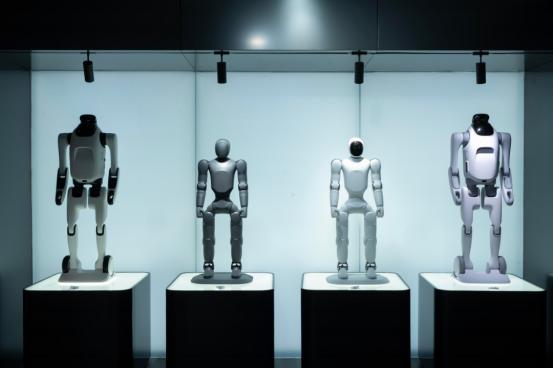
The press release did not make it clear what exactly these robots are used for, but a close look at the terms shows that Yongda is probably not the end user.
The release stated that the purpose of purchasing these robots is to "carry out cooperation in product experience, sales promotion and customer service", "form a replicable and popularized consumer-end sales and service model for anthropomorphic robots", "in-store boutique, joint display and experience", "improve delivery, operation and maintenance, after-sales capabilities, and expand the sales and service network".
From this statement, it is very likely that Yongda will act as a channel partner for UBTECH, placing robots as exhibits in 4S stores and selling them by the way.
UBTECH has actually played this trick for several rounds. It seems that it wants to sell robots like cars, but instead of opening its own directly-operated stores, it intends to make use of the automobile distribution channels.
According to public media reports, on July 15, it signed an identical sales strategic cooperation agreement with the Boss Group, Mercedes-Benz's strategic partner in China.
In order to sell its products, UBTECH is looking for channels everywhere. Not only automobile channels, but all channels that have the potential to sell goods have been expanded.
On July 15 this year, UBTECH signed a sales strategic cooperation agreement with the Boss Group, providing retail and leasing services for high-end customer groups. Just like Yongda Auto, the Boss Group should also be a channel partner rather than the final purchaser.
On November 9, the day before yesterday, UBTECH just signed a three-year sales cooperation agreement for 100,000 units with China Telecom E-surfing Terminal. Together with Yongda's deal announced today, UBTECH has signed three channel partners in the past two months, each more aggressive than the last.
Delivery plan cut by 80%
The problem is, how was this robot promoted in the first place?
When the U1 series was launched on June 30 this year, the company positioned it as a "family emotional companion robot". The company also announced that the total channel orders for the U1 series had exceeded 13,361 units, and delivery would start in September. Founder Zhou Jian even said on site that "we guarantee the delivery of 10,000 units this year".
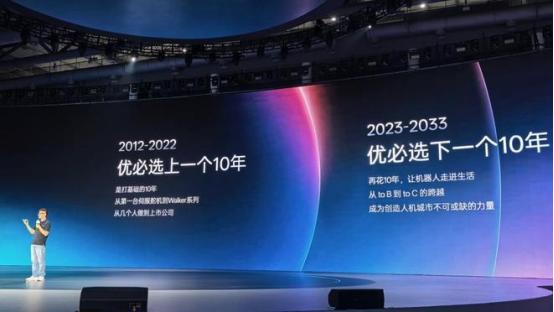
However, at the financial report conference call at the end of August, the CFO cut the annual delivery volume to 1,500 to 2,000 units, which has shrunk by more than 80%. Such a huge gap in expectations is astonishing. Is this false publicity and violation of information disclosure regulations?
Why was the delivery plan cut so much? Because these so-called procurement plans are not all mandatory, and the orders at the launch event are even not valid. A deposit of 3,000 yuan can lock in a quota, and the final payment will not be paid until July 16, with unconditional refund available before paying the final payment. According to industry media reports, the actual conversion rate of final payment may be less than 20%.
What is even more embarrassing is the first batch of delivery on September 16. The three customers are Shanghai Yongda, Beijing Boss, and South Korea's Galaxy Robot Park. None of them entered ordinary families, and all of them were placed in 4S stores and amusement parks.
What was promised to "enter thousands of households" ended up "standing in luxury car showrooms to greet guests".
The logical paradox between a car and a robot
Of course, we also need to notice that there are almost no globally applied robots in practice. For example, the humanoid robot Optimus is at the forefront of the world in productivity transformation, but it is still very difficult to get buyers to purchase robots in large quantities. So Elon Musk also said that the first batch of customers are likely to adopt the leasing model.
What configuration does UBTECH's U1 Pro have?
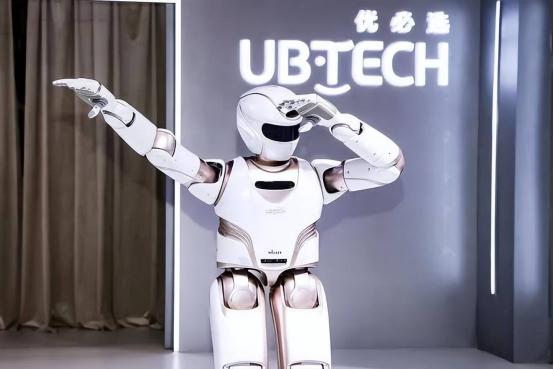
The full-body version currently sells for about 169,800 yuan per unit, with 88 active joints, 33 micro-expressions on the face, platinum silicone skin, and is mainly positioned for chat and companionship. But it has several fatal flaws: it cannot cook, cannot clean, cannot run errands, the mainstream version cannot even walk autonomously, and the top version has a battery life of 2 to 4 hours.
Jiao Jichao, UBTECH's own vice president, once said that it will take "at least 8 to 10 years" for humanoid robots to enter ordinary families.
Who would pay 170,000 yuan for a bionic robot that can only stand and talk to you and needs to be charged every two hours?
Yongda's logic is that luxury car 4S stores are full of high-net-worth customers. People who buy Porsche or BMW may take a 170,000-yuan robot home for their children to play with, or place it in the living room as a "futuristic decoration", which seems to make sense.
But this logic is also flawed. Yongda has more than 150 outlets in 48 cities across China. If 400 U1 Pro units are distributed to these outlets, each store will only get 2 to 3 units on average. Most of them are just exhibits and drainage tools, and only the robots that are actually sold can bring profits.
The conversion logic that luxury car owners will buy a robot by the way when buying a car has not been verified by any data. The consumption decision-making logic of people who buy millions of luxury cars is completely different from that of buying a chat companion robot.
On the other hand, Yongda only has 2.2 billion yuan in cash in hand, with interest-bearing liabilities of nearly 4 billion yuan and a net debt ratio of 12%. At this time, it spends 60 to 70 million yuan to advance funds as a robot channel agent. Whether this money can be recovered is even more uncertain than whether the robots can be sold out.
The real dilemma of commercialization
UBTECH's Hong Kong stock price is about HK$75 today, with a total market value of about 38 billion Hong Kong dollars, which has shrunk by more than half compared with its peak in March 2024 after listing. The company has accumulated 800 million yuan in orders this year relying on its industrial robot Walker series, which represents real demand in real industrial scenarios.
However, for consumer-end bionic robots like the U1 series, the story is getting more and more convoluted, from 13,361 pre-orders to 1,500 delivery units, and then to being digested by 4S store channels.
The cooperation with China Telecom plans to sell 100,000 units in three years, Yongda will take delivery of 400 units within the year, and Boss will develop channels for Mercedes-Benz car owners.
But are these so-called strategic cooperations legally binding?
Does Party A really need to purchase that many units, or is it just a letter of intent for procurement?
The company has not explained in the announcement, can these channel partners really guarantee that they will purchase so many units?
We need a more reliable explanation, so as to avoid the situation that both parties claim that it is only a letter of intent and there is no agreement to purchase so many units as scheduled.
UBTECH knows this clearly in its own mind, so the wording in the announcement repeatedly emphasizes "forming a replicable consumer-end sales and service model". To put it bluntly, it still has no idea whether robots can be sold in 4S stores.
It doesn't matter who pays the bill, what matters is that the robot has achieved "commercialization" once again.
This article is from the WeChat official account "Deep Water Finance", author: Liu Chuanfeng, published by 36Kr with authorization.