Is "Gambler" Masayoshi Son folding his cards?
Masayoshi Son's SoftBank Group posted a staggering loss of 1.115 trillion yen (about 7 billion U.S. dollars) in a single quarter.
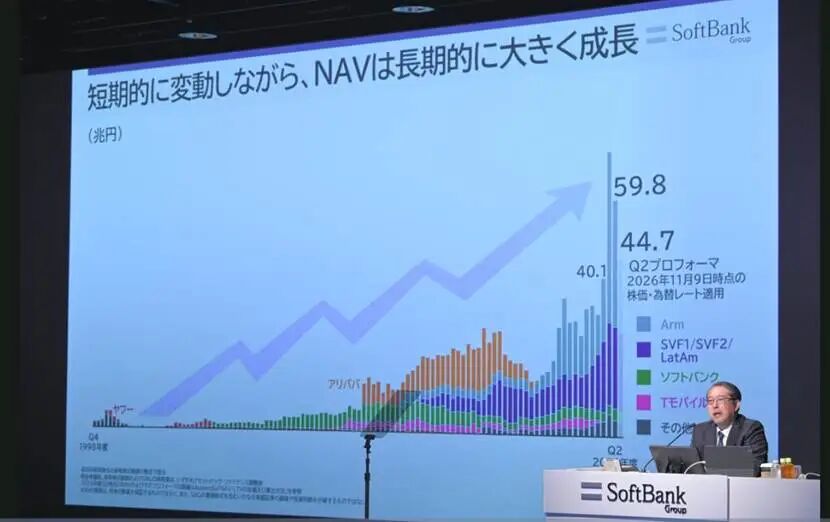
The photo shows the scene of SoftBank Group's earnings briefing. Source: SoftBank Group
On local time November 10, SoftBank Group (hereinafter referred to as "SoftBank") released its financial report for the second quarter of fiscal year 2026, marking its first quarterly loss in nearly two years. The next day, SoftBank Group (TSE: 9984) saw its stock price plunge sharply in early trading, with the maximum drop exceeding 10%.
The core factor dragging down performance is a nearly 600 billion yen (about 3.7 billion U.S. dollars) loss from gas turbine procurement. This loss is not a passive loss from a failed project, but SoftBank actively cut off part of the pre-locked production capacity reserve. According to reports from The Financial Associated Press, the involved computing power parks include the Ohio project in OpenAI's "Stargate" initiative.
Masayoshi Son, known for betting heavily on every wave of technological innovation, why did he voluntarily fold his cards at the AI gambling table?
01 Misplaced power generation equipment investment, paying a $3.7 billion tuition fee
The entity that incurred the huge loss is SilverBands7 (hereinafter referred to as SB7), a SoftBank subsidiary responsible for AI infrastructure, whose sole mission is to secure the production capacity of power generation equipment in advance before large-scale deployment of AI data centers in the United States.
The reason for this move is that the bottleneck of AI computing power competition has quietly shifted from chips to electricity.
In the United States, ultra-large computing power parks with power consumption of several gigawatts at every turn have long exceeded the power supply limit of the public grid. Building self-owned gas-fired power stations has become the industry standard, and heavy-duty gas turbines are the most core and most scarce equipment used for power generation.
A data center can be put into operation in as fast as 18 months from the start of construction to the deployment of GPUs, but the delivery schedule of a heavy-duty gas turbine from blanking to delivery has been postponed to 2030.
There are only three manufacturers in the world capable of manufacturing high-power gas turbines: GE Vernova, Siemens Energy, and Mitsubishi Heavy Industries, which together occupy more than three-quarters of the market share.
The order books of these three companies are already completely full. GE Vernova disclosed at its Q3 2026 earnings call that its contracted gas turbine capacity on hand has reached 122 gigawatts, with the production capacity schedule extended directly to delivery in 2032; among all orders, traditional power customers account for about 80%, and the share explicitly used for data centers is only 20%, leaving very limited production capacity allocated to AI infrastructure.
On the demand side, according to data from JPMorgan Chase, new global gas turbine orders in the second quarter of 2026 surged to 38GW, hitting a single-quarter historical record. Full-year orders are expected to be around 120GW, while the global annual effective production capacity is only 60–70GW, meaning backlogged orders are equivalent to two to three years of total output of the entire industry.
In order to secure a spot in the seller's market where production capacity is extremely tight, starting from April 2025, SB7 has paid a total of about 9.5 billion U.S. dollars in advance payments to power generation equipment manufacturers through production capacity reservation agreements and equipment procurement contracts.
Although SoftBank has never publicly disclosed the complete supplier list, the market generally believes that it is the U.S. gas turbine giant GE Vernova. According to a report by the Financial Times, SoftBank reserved about 170 gas turbines through SB Energy, the actual operator of the project, with an order value of about 10 billion U.S. dollars.
Under normal circumstances, in a seller's market where production capacity is fought over fiercely, SoftBank should have held tightly to the spots it had secured.
But the facts disclosed in the financial report are exactly the opposite. SB7 voluntarily revised the entire procurement plan, cut nearly 30% of the equipment reservation and procurement orders, directly resulting in a loss of 597.2 billion yen (about 3.73 billion U.S. dollars) in the current period.
Of this amount, 457 billion yen is the non-refundable advance payment for production capacity reservation clearly specified in the contract terms, and the remaining 140.2 billion yen comes from the contract modification and termination settlement after mutual negotiation between the two parties.
After the adjustment, about 6.6 billion U.S. dollars worth of equipment out of the 9.5 billion U.S. dollars advance payment will still be put into use, covering the power generation project of the Portsmouth-Pike Technology Park in Ohio (one of the largest single projects under the "Stargate" initiative) and other retained computing power parks, while the rest of the procurement projects are completely removed from the revised plan.
Although SoftBank CFO Yoshimitsu Goto explicitly emphasized at the earnings briefing that the scale of the core Ohio project has not been reduced and is still advancing normally, market doubts have not been dispelled.
On the one hand, the results of the U.S. midterm elections are reshaping the policy environment for AI infrastructure.
The Democratic Party has won successive victories in key data center hubs such as Ohio, Texas, and Georgia, and multiple candidates who campaigned on "suspending data center approval" have been elected. More than 30 local referendums restricting data centers have been passed across the United States. While the federal level is still promoting AI infrastructure, local-level resistance is rising rapidly, and the uncertainty of project implementation rhythm has increased sharply.
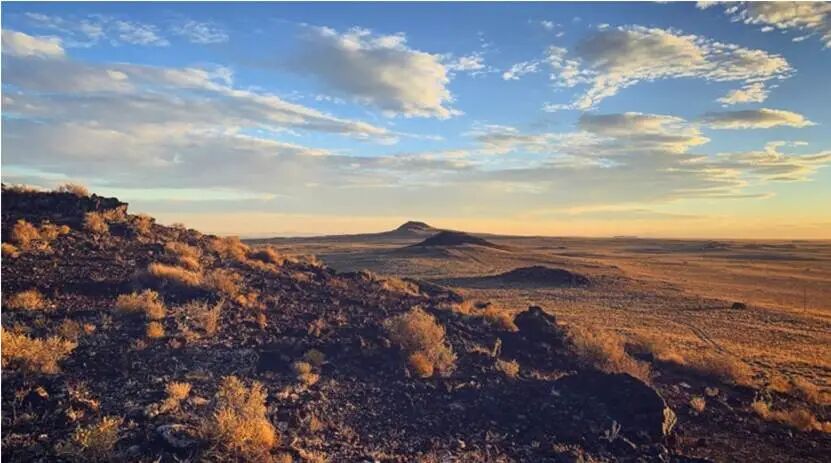
The photo shows Santa Teresa, New Mexico, where the "Jupiter Project" park is located. Source: Ethan Wright-Magoon
On the other hand, risk signals within the "Stargate" system have long emerged. In September, the "Jupiter Project" in New Mexico, which also belongs to the Stargate system, saw its core tenant Oracle issue a force majeure notice to the project developer, citing the delayed approval of natural gas pipelines and reserving the right to postpone rent payment for up to three years.
The core tenant has taken the lead in building a financial firewall for project delays, casting a shadow over the production schedule of the entire Stargate initiative.
Now that SoftBank, the largest funder, has cut the equipment order first, the market has good reason to suspect: Could this be the first domino that leads to the contraction of the entire super project?
As for why it voluntarily cut orders during the period of tight production capacity, SoftBank CFO Yoshimitsu Goto only gave a vague explanation at the earnings briefing: "The plan that was considered the most suitable one or two years ago may no longer apply today."
This ambiguous statement makes the market more uneasy than the loss figure itself.
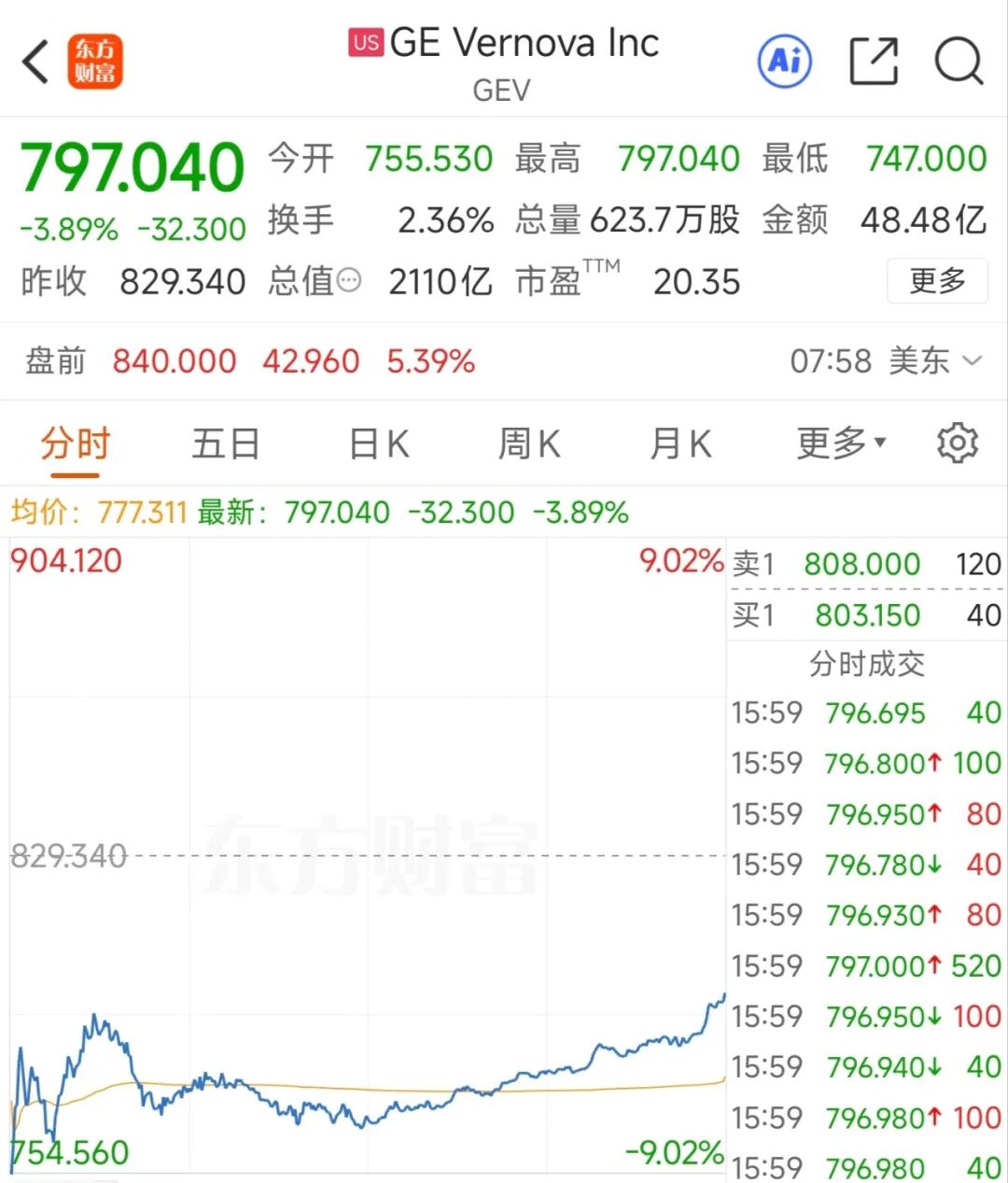
The chart shows the intraday trend of GE Vernova (GEV) U.S. stock. Source: Eastmoney
On the day the news was released, GE Vernova's stock price plunged more than 8% during the trading session, and SoftBank Group (TSE: 9984) saw its stock price plummet more than 10% in early trading the next day.
The reason for market panic is that for the first time, people see Masayoshi Son's SoftBank scrambling to adjust its chips in the big AI bet.
02 Masayoshi Son, the stop-loss instinct of a pachinko player
To understand this $3.7 billion loss recognition, we have to go back to the starting point of Masayoshi Son's life - the pachinko parlor in Tosu, Saga Prefecture.
Masayoshi Son's grandfather Son Jong-kyung crossed the sea from the Korean Peninsula to Kyushu, first worked in a coal mine, and later made a living by raising pigs in a village with a Korean ethnic enclave.
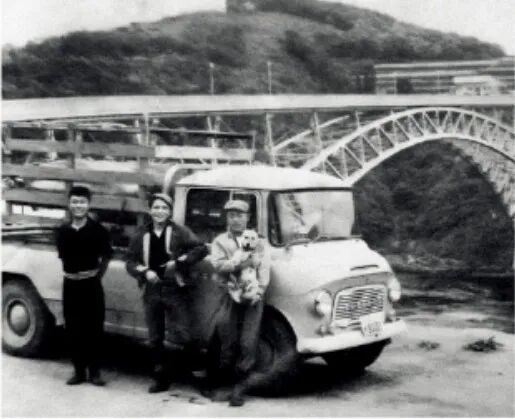
The photo shows Masayoshi Son's father Son Saburo (first from left), taken around 1960. Source: *The Betting Man: The Adventure of Masayoshi Son, Founder of SoftBank*
Son Saburo, his father, had a sharper business acumen. He first brewed rice wine privately and sold it from street to street, using the distillers' grains to feed pigs to form a circular business. Later, he took over pachinko parlors, and at his peak, he owned 56 pachinko machine stores.
Masayoshi Son was immersed in the business logic of pachinko from childhood: The vast majority of steel balls bounce off nails and leave empty-handed, only a very small number fall into the special prize slot to bring a return of 5,000 times.
It does not rely on precise calculation, but on probability, waiting for the one big prize that is enough to cover all costs.
It doesn't matter if you lose ten rounds, as long as you win one round, you can win back all your chips.
Masayoshi Son's entire business territory in his life is essentially a pachinko board magnified millions of times.
His code of conduct has always been: secure a seat at the table first, then polish your hand cards slowly, take the lead in grabbing scarce resources, and adjust the right or wrong decisions later.
The most classic battle was securing the exclusive distribution right of iPhone in Japan.
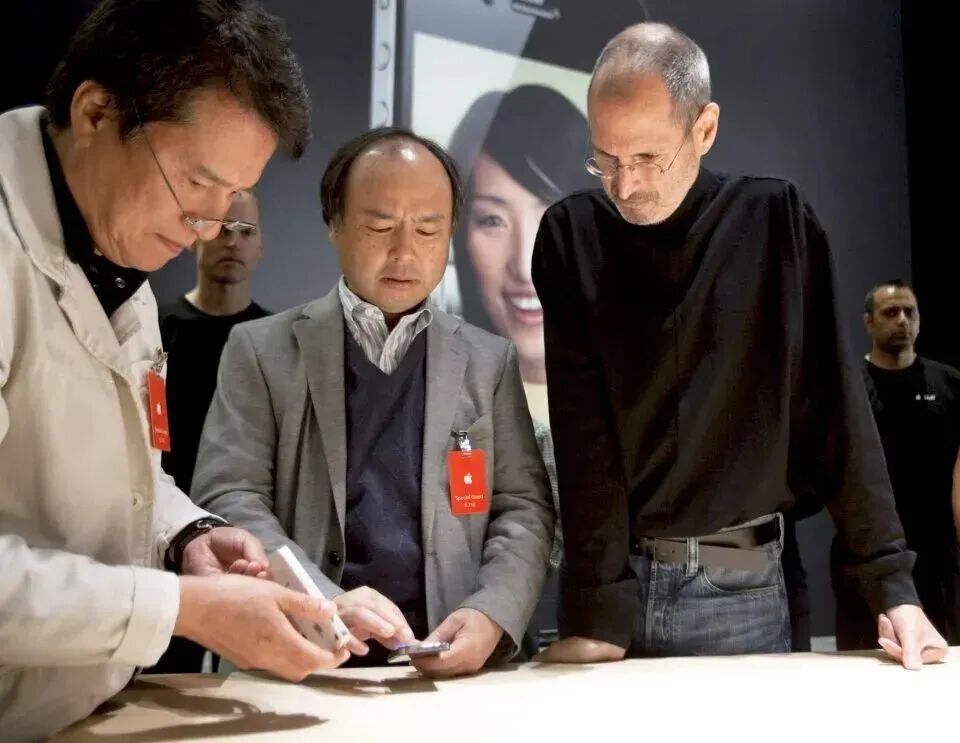
The photo shows Masayoshi Son and Steve Jobs looking at the iPhone prototype together. Source: Reuters
In the summer of 2005, he saw a blurry sketch of a mobile phone prototype at Jobs' home, before he even figured out the official name of the product, he verbally confirmed the exclusive distribution right for the Japanese market. Immediately afterwards, he spent about 11.9 billion U.S. dollars to acquire Vodafone's Japanese business, buying an entire operator chassis first for a product that had not even been released yet.
All senior executives around him opposed the move, and even Jobs joked with a smile that "You are really crazy."
Three years later, the iPhone 3G officially landed in Japan, and SoftBank directly advanced from a second-tier operator to the top tier, with its mobile business market share rising from 17% to 23%. That verbal agreement became the fulcrum of his entire telecom empire.
The same strategy was replicated in the Internet era.
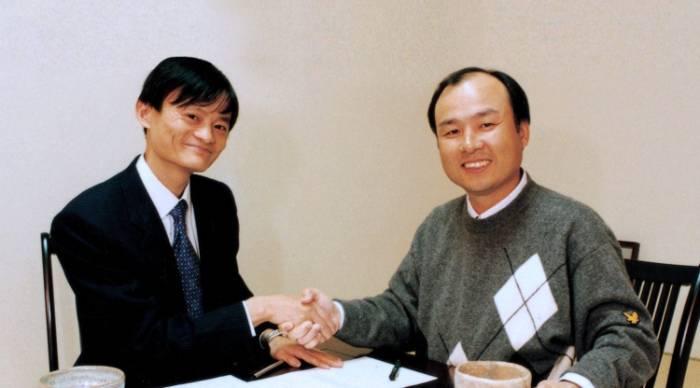
The old photo shows Jack Ma and Masayoshi Son shaking hands at the Alibaba financing signing ceremony. Source: SoftBank Group
In 2000, after only a few minutes of conversation with Jack Ma, he decided to invest 20 million U.S. dollars in Alibaba.
At that time, China's e-commerce was still in its early wild stage, and no one could see the final outcome, but he was convinced that it was the core entry point of the information revolution, so he transferred the money to secure the seat first. Later, this investment returned more than hundreds of times, and that one winning steel ball filled the loss gap of dozens of previous projects.
Of course, there are also times when he misses the target.
WeWork used to be the global leader in the shared office track, and its valuation was blown up by the story of "co-working community".
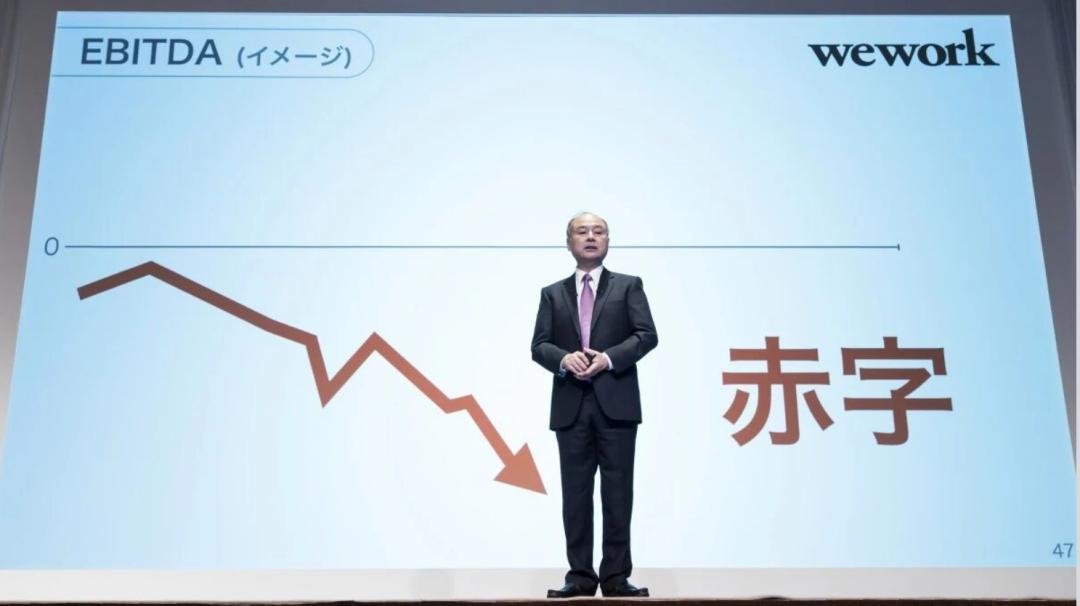
The photo shows Masayoshi Son explaining WeWork's losses at SoftBank's earnings briefing. Source: SoftBank Group
At its peak, its valuation reached 47 billion U.S. dollars, and SoftBank invested more than 10 billion U.S. dollars in total, making it the largest external investor. Eventually, the listing failed, the bubble burst, and the valuation plummeted by more than 90%.
The outside world mocked him for being a rich fool, but he did not stubbornly hold on to the end.
He first ousted founder Adam Neumann, spent 9.5 billion U.S. dollars to take over and get 80% controlling stake, then immediately started contraction, launched large-scale global layoffs, cut non-core businesses such as kindergartens, and even withdrew part of the share repurchase rescue plan halfway, quickly locking the loss within the boundary.
It doesn't matter how many times you lose, don't die before the big prize comes, this is the survival instinct engraved in Masayoshi Son's bones.
This gas turbine order cut, rather than a rout and exit, is more like a textbook-level Masayoshi-style stop-loss.
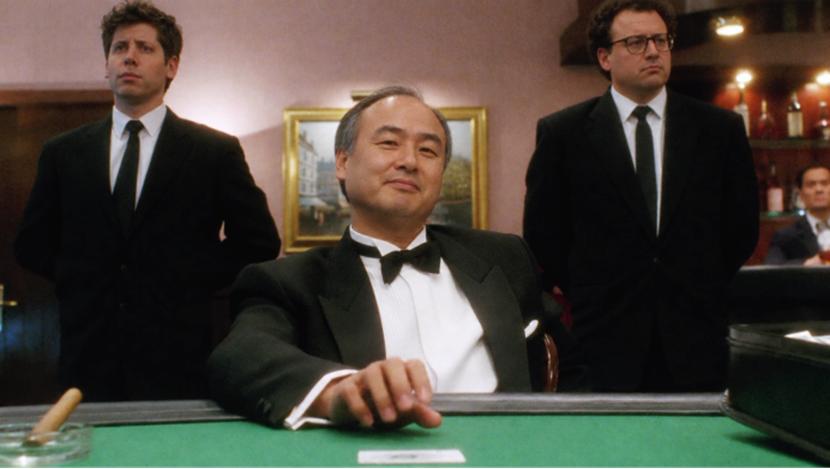
Image generated by AI. Source: Internet
However, the size of the chips in this AI round has exceeded any bet in his career.
According to SoftBank Group's February 20