WorkBuddy and Codex are pushing AI competition toward task delivery, where reliability has become a hard threshold.
Asking AI to answer "how to make a business analysis" and asking it to read sales tables, calculate metrics, generate charts and deliver a report are product requirements at two different levels. The practices of WorkBuddy and Codex show that large model applications are starting to take on more practical operations, and users' judgment of products has extended from whether the answer is excellent to whether the task is completed.
Large model applications are entering the competition of task delivery, and reliable execution has become the threshold for implementation. A verifiable deliverable requires the model to understand the goal, as well as the joint participation of up-to-date information, tool operations, business rules and result checks. The enhancement of model capabilities is redefining the responsibilities of these links.
This also explains why fine-tuning, RAG, workflows and Agents continue to intersect: they improve model capabilities, task information and execution processes respectively. To understand the evolution of the roadmap, we should first look at how the system organizes a single response into a work that can be completed, reviewed and delivered.
01 WorkBuddy and Codex enable AI to directly process files and deliver results
WorkBuddy and Codex are worth observing together, because they bring task execution capabilities into the real working environment that users use. Users provide goals, materials and the scope of allowed operations, the system reads information, calls tools and generates files, and the results return to the original work process. The responsibilities undertaken by the product thus extend from providing answers to organizing an actual execution.
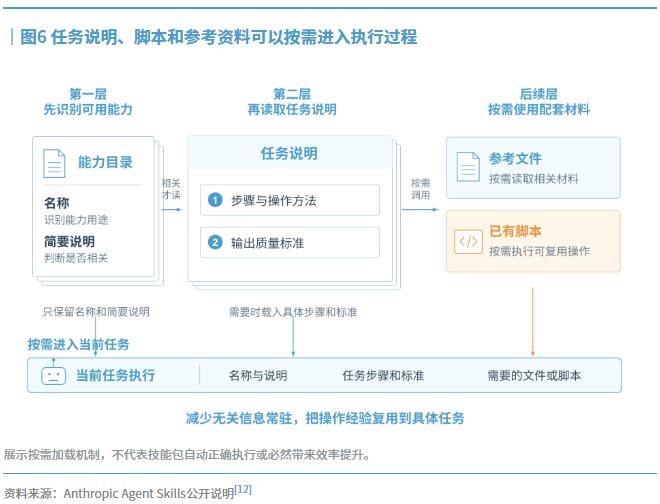
Tencent's WorkBuddy product page regards local file operations, autonomous planning and result delivery as core capabilities. More specific official practice documents take business analysis as an example: users provide Excel or CSV, specify metrics and time ranges, and the product reads data, performs statistics and generates charts or reports. The skill document also states that scripts and workflows can be used to expand the capabilities of specific tasks. Professional knowledge, existing programs and model judgments thus enter the same task process.
The development of Codex presents an extension from code tasks to a wider range of knowledge work. When it was released in 2025, it had organized reading and writing code, executing commands and running tests into tasks; in June 2026, OpenAI disclosed that knowledge work use cases further include reports, spreadsheets, presentations and research analysis. In its platform article in August, it opened the execution loop as an integrable Harness, allowing other applications to retain their own business interfaces, contexts and tools.
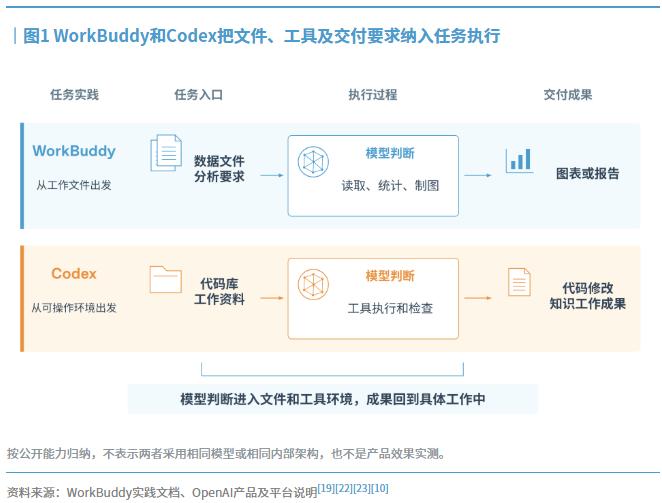
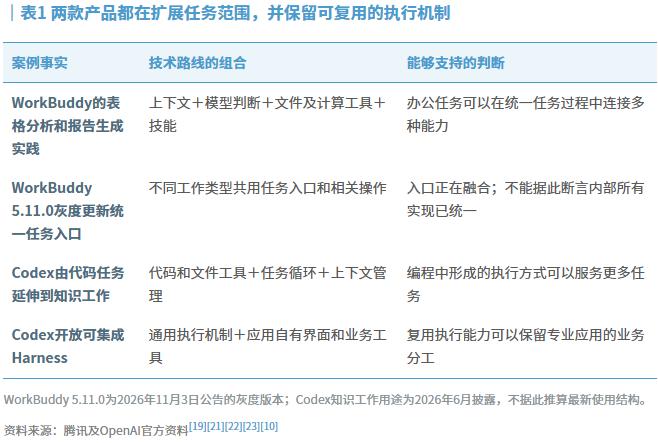
These two cases suggest that professional capabilities can be formed by general models, task descriptions, professional materials, tools and execution control together. WorkBuddy's "domain expert" or a Codex task cannot be identified as an independently trained vertical model just by its name. Application specialization is gaining more implementation methods, and model specialization is only one of them.
02 General model enhancement is pushing the focus of application development to complete tasks
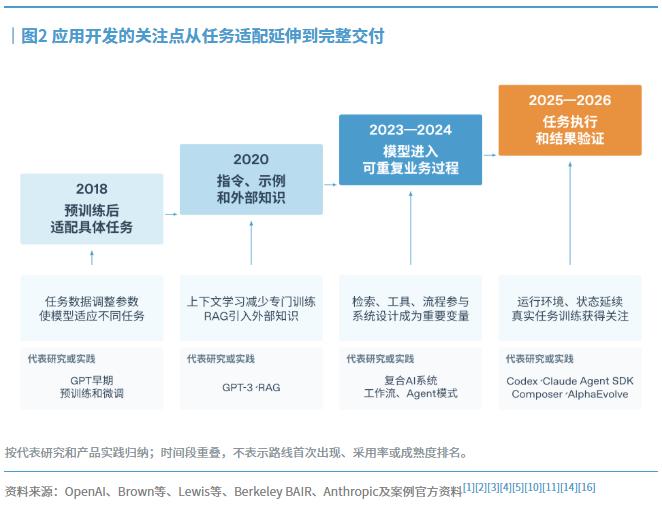
The better general models can understand instructions, process long documents and call tools, the less developers need to design separate processing logic for each expression. Some tasks that originally had to rely on a large number of sample training can be completed through instructions and examples; some steps that originally required manual connection can also be adjusted by the model according to execution results. Application development thus gains greater room for choice.
This change has a clear technical context. In 2018, early GPT research adopted the method of pre-training followed by task-specific fine-tuning; GPT-3 in 2020 demonstrated the ability to complete multiple types of tasks through task descriptions and examples in the context. In the same year, RAG research introduced external retrieval into the generation process. By 2024, Berkeley BAIR had used "composite AI system" to summarize the practice of models, retrievers and external tools completing tasks together.
Several routes have intersected from the very beginning. RAG did not emerge after fine-tuning disappeared, nor did workflows gain value until the advent of agents. Arranging them into an elimination chain will obscure the real change: The general capabilities undertaken by the model are expanding, and the content that the application system needs to supplement is changing accordingly.
03 Enterprise knowledge requires continuous access, and vertical models are only one way of specialization
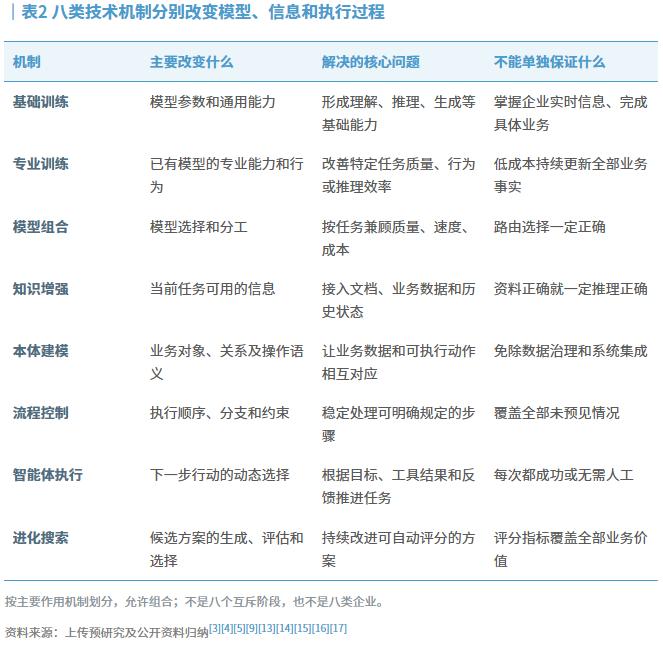
Model parameters are suitable for carrying relatively stable capabilities that can be reused across tasks; the specific facts required for a task often change. Contracts just uploaded by customers, current day's inventory, and materials that a certain employee can view cannot wait for the next round of training before being used. Providing this information to the model at execution time is usually easier to update, and easier to retain sources and permissions.
RAG thus solves a type of knowledge access problem. But enterprise information does not only exist in documents, it also includes database records, business system status and tool return results. As tasks get longer, the system also needs to continuously filter materials, retain intermediate conclusions, and clean up irrelevant information. The object of context engineering thus expands to all the information the model currently needs. Anthropic also discussed the selection and maintenance of information in the continuous execution process in its 2025 engineering article.
Professional training solves another type of problem: even with complete materials, the model may still repeatedly adopt wrong processing methods, or cannot stably meet professional result requirements. At this time, training can improve behavior, reasoning and tool usage. Choosing between retrieval and training depends first on whether the shortcoming comes from lack of information or inability to complete tasks stably; when both shortcomings exist at the same time, a combination is required.
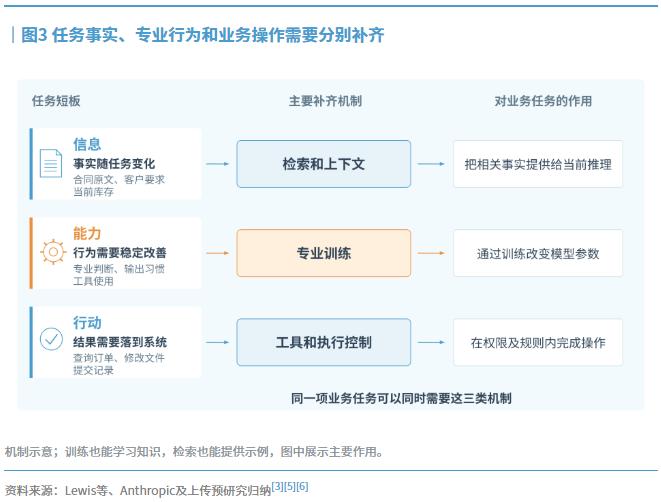

04 Workflows are accommodating Agents, and key business rules still require program control
When the model can look up materials, select tools and adjust steps on its own, workflows that specify every single operation will appear cumbersome. But there are two types of steps in enterprise processes: one type changes with the situation and requires interpretation and judgment; the other type has clear rules and needs to be executed as required every time. The former is suitable for adding model judgment, while the latter is still suitable for program control.
Dify puts Agents into workflow nodes, allowing the model to iteratively call tools inside the nodes; in March 2026, through the Human Input node, it turned suspension, manual review and resumption of execution into native links of the workflow. Autonomous judgment and human participation thus enter the same set of orchestration.
Salesforce illustrates the same problem from the other side. Its Agentforce technical documentation clearly separates deterministic logic from model reasoning: conditional judgment, action sequence and other parts can be executed as code, and the model is called only where understanding or judgment is truly required. The evolution direction of enterprise agents is to more accurately delineate the division of labor boundaries; the degree of autonomy itself is not a sufficient indicator of product capabilities.
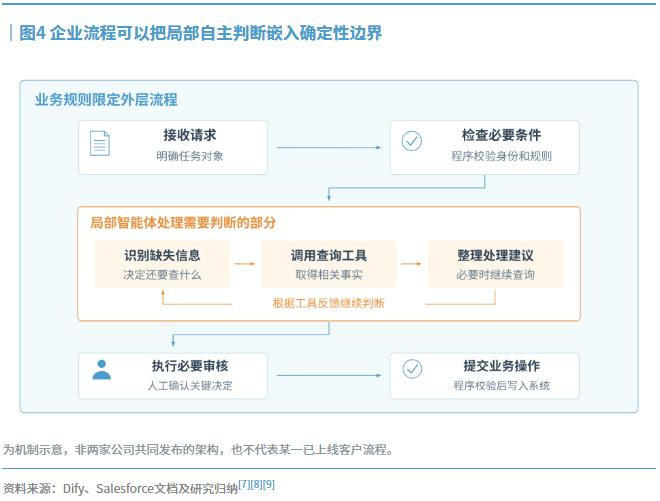
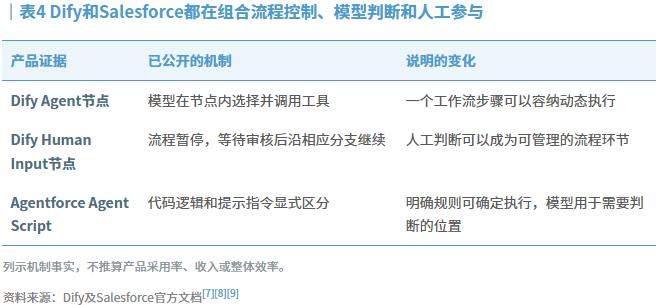
05 Large-scale AI office requires stable execution and verifiable deliverables
Putting a model in a loop and letting it call tools continuously is not enough to form a reliable task execution product. A task may last for dozens of minutes, going through multiple file modifications, tool failures and context updates. The system must know what has been completed, what the next step is based on, where to resume after an error occurs, and whether the final result meets the requirements.
In its Codex platform article, OpenAI calls the execution system around the model that undertakes context, tool interaction, status and boundary management the Harness. Anthropic's engineering practice for long-running tasks enables subsequent executions to resume previous work through initial environment setup, progress files and version records. These mechanisms together illustrate: The model's ability to determine the next step requires the execution system to transform it into continuous, verifiable work.
When products start to deliver files, code and business records, the operating environment also becomes part of product capabilities. Where files are stored, whether execution can be isolated, whether tasks can be resumed, and how operation results are checked will all affect the actual results users get. Only comparing the quality of model responses will miss these differences.
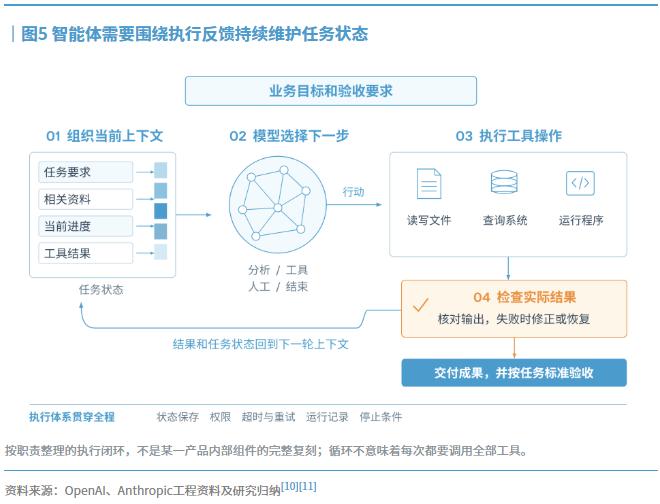
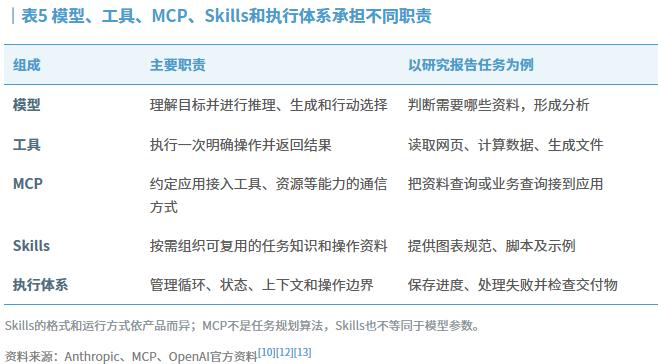
New components also need to be put back in their respective positions. Tools provide specific operations, MCP provides a protocol to connect tools and resources, Skills organize reusable descriptions, scripts and reference materials; the execution system is responsible for using them in tasks. Components are getting richer, but naming itself cannot prove task completion capabilities.
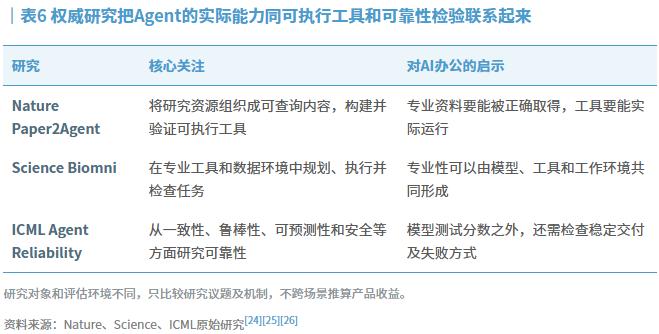
Authoritative research is advancing around the same question: how to make Agents reliably use tools and complete practical operations. Nature's Paper2Agent research organizes papers and related resources into a queryable resource layer, and builds and verifies executable tools when conditions permit; Science's Biomni research incorporates professional tools, data and code execution into the scientific research task process. They focus on runnable and verifiable systems.
Capability improvement also needs to pass reliability tests. A 2026 ICML study evaluated 15 models and pointed out that recent capability gains only bring small improvements in reliability; a single accuracy indicator cannot fully reflect repeated runs, input changes and failure consequences. Therefore, one successful demonstration is not enough to represent stable delivery, and task quality, repeated execution performance, manual review and total cost should be observed together.
This article is from WeChat Official Account "Yiou Think Tank" (ID: EOintelligence2017), author: Zhu Luman, published with authorization from 36Kr.